
On 11 April 2026, Saudi Arabia’s Ministry of Defence confirmed the arrival of a massive Pakistani military contingent at its King Abdulaziz Air Base. Approximately 13,000 troops joined the 10,000 Pakistani personnel already stationed in the Kingdom. This brings the total to over 23,000. Between 10 and 18 Pakistan Air Force fighter jets, support aircraft, and missile interceptors arrived alongside them. The last comparable Pakistani deployment to the Gulf was during the 1991 Gulf War. This military move is of consequential significance at a time when the Middle East is on fire.
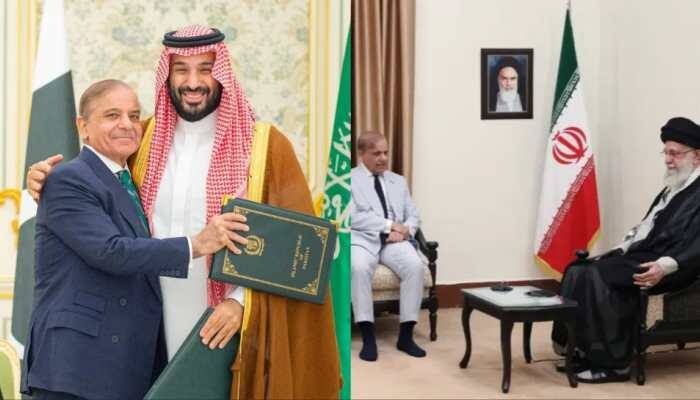
Strategic Mutual Defence Agreement (SMDA). Pakistan and Saudi Arabia signed the SMDA on 17 September 2025. Previous cooperation between them was limited to military training, advisory roles, and limited support on security matters. The SMDA fundamentally changed the character of their relationship. It also has a collective security clause that suggests that “an attack on one country is considered an attack on both”. The recent deployment of Pakistani troops and fighter jets in Saudi Arabia marks the first major operational activation under the SDMA. It represents a significant escalation from earlier engagements between the two countries.
Pakistani Deployment. The deployment of PAF assets and ground forces suggests that the reality is considerably more serious than a symbolic gesture. The strategic logic of the deployment’s location is also noteworthy. King Abdulaziz Air Base is located in the heartland of Saudi Arabia’s energy infrastructure. Important oil infrastructure, i.e. the Abqaiq processing facility and the Ras Tanura terminal, is in this region. Reportedly, the missile interceptors were dispatched earlier following Iranian strikes on Gulf targets in March 2026. The phased deployment suggests that it is a deliberate, staged increase of Pakistan’s forces in the Kingdom. The air assets provide enhanced interception capability against the drone and missile threats that have characterised Iranian and Houthis’ offensive operations. The ground forces serve a dual purpose: deterring Houthi incursions from the south and freeing Saudi forces for higher-technology defensive and offensive operations.
Political Signalling. Some analysts still characterise the SMDA as primarily a political signal of solidarity. Pakistani officials have been careful with their framing. The forces are “not there to attack anyone.” The deployment is a form of defensive cooperation under an existing bilateral agreement. Saudi officials described it as aimed at “enhancing joint military coordination, raising operational readiness, and supporting security and stability at both the regional and international levels.” The language is measured. The military footprint is not. This transforms Pakistan from a secondary security provider into a primary deterrent.
The Diplomatic Tightrope. What makes Pakistan’s position uniquely complex is what was happening in Islamabad at the same time. Even as Pakistani jets were landing in the Eastern Province, Pakistan was hosting direct US-Iran ceasefire negotiations in its capital. Pakistan’s Army Chief, General Asim Munir, visited Riyadh and Tehran during this period. It indicates that Pakistan is trying to maintain both relationships simultaneously. Reuters reported that PAF jets provided a military escort for Iranian officials coming to Islamabad for the peace talks. Pakistan was, in the same week, escorting Iranian diplomats to safety and sending troops to Saudi Arabia against Iran. The diplomatic tightrope does not get more precarious than that.
Economic Dimension. Pakistan’s involvement cannot be understood without its economic context. Pakistan’s economy has been under severe stress. Gulf remittances are a structural pillar of its balance of payments. Saudi financial bailouts have repeatedly given Islamabad breathing room to prevent default. The troop deployment reflects a relationship that is simultaneously strategic, institutional, transactional, and above all, symbiotic. Pakistan is providing the military power and the associated nuclear umbrella. In return, Saudi Arabia would provide the financial support to keep Pakistan’s economy afloat. Concurrent with this military deployment, Saudi Arabia and Qatar pledged an additional $5 billion in financial support to Pakistan. The Jerusalem Post and Gulf analysts have described this bluntly as a “military repayment” system.
Regional Stakeholder. How the key actors read this deployment reveals the full complexity of what Pakistan has stepped into.
-
- Saudi Arabia views the SMDA’s activation as long overdue. A formalisation of “Muslim brotherhood” solidarity and a critical component of strategic diversification at a moment when the widening conflict in West Asia has strained US reassurances. For Riyadh, Pakistani forces provide a tangible backstop that no amount of American diplomatic signalling can substitute.
-
- Iran officially welcomed the SMDA when it was signed, labelling it as part of a “regional security system.” However, the circumstances for this deployment are different. A nuclear-armed state has deployed its doorstep, on the side of its principal regional adversary. The risk of Iranian miscalculation cannot be dismissed.
-
- Israel faces more intricate repercussions. Pakistan’s presence constrains Iranian offensive options against Saudi targets. In some ways, it serves Israeli interests by restricting the opening of multiple fronts. But it also brings a nuclear-armed hostile state into the region. Israel would be watching the developments with sustained attention.
-
- India is monitoring closely and quietly. The combat experience Pakistani forces will accumulate in a high-intensity multi-domain environment, the financial windfalls from Gulf support, and the deepening military-institutional ties with well-equipped Gulf partners. All of this has implications for India’s security calculus. The Line of Control is not the Eastern Province. But armies learn, adapt, and bring lessons home. India would be unwise to treat this deployment as a matter of purely West Asian concern.
Challenges. Pakistan’s military is already involved with the Afghan border, the Line of Control with India, and domestic counterterrorism operations. Now, a major overseas deployment in an active conflict zone has been added to the commitments. Sustaining 23,000 personnel in the Gulf while maintaining domestic readiness is a significant challenge for resources and logistics. The escalation risk is also equally real. Pakistani forces are positioned in a high-readiness status region. In this region, miscalculations have already produced multiple unintended engagements. If Iranian strikes resume against Saudi energy infrastructure, Pakistani personnel could be caught in the crossfire. The SMDA’s collective defence clause obligates a legal and political response. Defensive cooperation can rapidly escalate into direct involvement. Pakistan is a nuclear-armed state. Its conventional forces in the Gulf operate under the implied umbrella of that deterrent. Every actor in the region is aware of this. It shapes calculations in ways that are difficult to model and impossible to predict.
Concluding Thoughts.
It is the first time since 1991 that Pakistan has committed forces at this scale to an active crisis zone outside its immediate neighbourhood. The SMDA has moved from paper to practice. A nuclear-armed state is now a frontline participant in the most volatile regional security environment on the planet.
Pakistan’s deployment to Saudi Arabia is either one of five things, or a combination of them.
-
- Honouring of the treaty obligation.
- Sustenance of financial relationship.
- Diplomatic signalling.
- Establishment of deterrence posture.
- Acceptance of strategic risk.
The move could either strengthen deterrence and contribute to de-escalation or deepen polarisation and raise the risk of miscalculation. It will depend on decisions made in Tehran, Riyadh, Washington, and Islamabad in the weeks ahead.
What is already clear is that Pakistan has crossed a threshold (willingly or under duress). The coming months will determine whether that crossing was wise.
Please Add Value to the write-up with your views on the subject.
For regular updates, please register your email here:-
References and credits
To all the online sites and channels.
Pics Courtesy: Internet
Disclaimer:
Information and data included in the blog are for educational & non-commercial purposes only and have been carefully adapted, excerpted, or edited from reliable and accurate sources. All copyrighted material belongs to the respective owners and is provided only for wider dissemination.
References: –
- “Pakistan sends military force, jets to Saudi Arabia under 2025 defence pact”, Al Arabiya English, 11 Apr 26. https://english.alarabiya.net (or relevant article URL)
- “The Saudi defence ministry says military force from Pakistan reached King Abdulaziz Air Base” Arab News, 11 Apr 26. https://www.arabnews.com
- “Pakistan sends a military force to Saudi Arabia as part of a pact”, Bloomberg, 11 Apr 26. https://www.bloomberg.com/news/articles/2026-04-11/pakistan-sends-military-force-to-saudi-arabia-as-part-of-pact
- “Understanding the Pakistan–Saudi defence agreement”, Global Security Review, 03 Nov 25.
- “Why did Pakistan deploy soldiers and fighter jets to Saudi Arabia?”, The New Arab, Apr 26. https://www.newarab.com/news/why-did-pakistan-deploy-soldiers-fighter-jets-saudi-arabia
- “US-Iran war: Pakistan-Saudi defence pact, Strategic Mutual Defence Agreement details”, NDTV, Apr 26. https://www.ndtv.com/world-news/us-iran-war-pakistan-saudi-secret-defence-pact-strategic-mutual-defence-agreement-details-11355801
- “Pakistan sends fighter jets to Saudi Arabia under a mutual defence pact”, Reuters, 11 Apr 26. https://www.reuters.com/world/asia-pacific/saudi-arabia-says-pakistan-sends-fighter-jets-kingdom-under-defence-pact-2026-04-11/
- “Saudi Arabia, nuclear-armed Pakistan sign mutual defence pact”, Reuters, 17 Sep 25. https://www.reuters.com/world/asia-pacific/saudi-arabia-nuclear-armed-pakistan-sign-mutual-defence-pact-2025-09-17/
- “Saudi Arabia-Pakistan Strategic Mutual Defence Agreement: Implications for India”, Vivekananda International Foundation, 30 Sep 26. https://www.vifindia.org/2025/september/30/Saudi-Arabia-Pakistan-Strategic-Mutual-Defence-Agreement
- “Pakistan’s dual role is that of a mediator and military ally”, WION, Apr 26. https://www.wionews.com/world/pakistan-saudi-smda-pact-us-iran-war-1776144006783