805: REIGNITED DEBATE: FIGHTER JETS VS. LONG-RANGE VECTORS AND DRONES


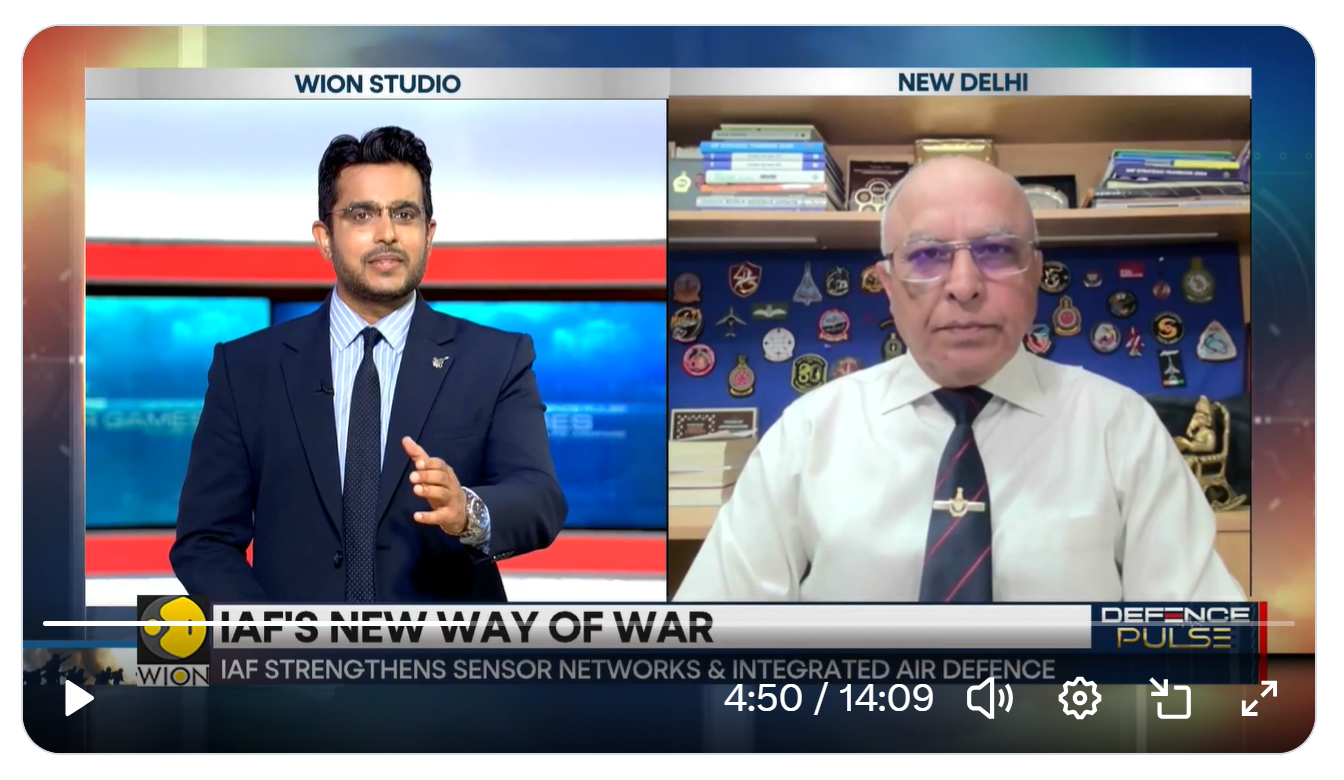
The Russian-Ukrainian war and the US-Israel-Iran War have reignited the debate about the cost-benefit analysis of fighter jets vis-à-vis long-range vectors and drones. Some analysts feel that the fighter aircraft have become obsolete.


The Cost-Benefit Reality

The approximate cost of various air platforms and weapon systems is as follows: –

    • A modern aircraft would cost anywhere between 100 and 120 million dollars.
    • A loitering munition would cost approximately 20,000–50,000 dollars.
    • A cruise missile would cost around 2 million dollars.

On a per-unit cost basis, the cost asymmetry among fighter aircraft, loitering munitions, and cruise missiles is stark. However, the cost-benefit analysis in warfare is not purely a function of unit cost. It depends on the effect achieved (Bang for Buck). It is measured across the full mission profile, including survivability, reusability, flexibility, and escalation management.

Fighter jets are reusable. A modern fighter that completes a strike mission and returns to base amortises its $100 million price tag across every sortie it flies over a 30-year service life. A cruise missile or kamikaze drone is single-use. When you factor in sortie economics across a full operational life, the per-strike cost of a modern multi-role fighter often competes favourably with standoff missiles for missions that don’t require deep penetration of layered air defences.

The greater cost-benefit advantage of long-range vectors and drones lies in scenarios with high attrition risk. This is the genuine strategic logic behind standoff weapons. It is not that they are cheaper in absolute terms, but that they preserve the most expensive and irreplaceable asset in the equation, i.e. the trained pilot. It takes a decade and an enormous investment to produce a combat-ready fighter pilot. A cruise missile battery can be replenished within months if the industrial base is functioning.

Drones depend on datalinks, GPS navigation, and communications.  In a sophisticated EW environment, these dependencies become vulnerabilities. Fighter jets, on the other hand, with onboard avionics, EW self-protection suites, and pilot judgment, prove to be more robust.


Obsolescence / Relevance Deliberation

The short answer is that the recent wars have not signalled the obsolescence of fighter aircraft. However, they have issued a clear warning about the utilisation pattern.

The Ukraine conflict has demonstrated that surface-launched systems can achieve kill rates against aircraft. It makes conventional air operations near the front line prohibitively expensive. The aircraft do not become irrelevant, but they are forced to operate at the outer edge of the threat envelope. They serve as a standoff launch platform.

The drone utilisation in the war in Ukraine is revolutionary. Cheap FPV drones could destroy air and ground platforms worth millions. They could disrupt logistics and even impose psychological costs.

The US-Israel-Iran exchanges offer a different set of lessons.  This is the cost-benefit problem in reverse: defending against mass drone and missile attacks with expensive interceptors is fiscally unsustainable in repeated exchanges.

The broader conclusion these conflicts bring out is that fighter jets have not become obsolete. However, their employment methodology has evolved. They are not the sole instrument of the kill chain of air combat.


Noteworthy Changes to be Adapted

Three things have genuinely changed, and air forces need to absorb them.

    • First, forward basing of high-value aircraft is more dangerous than ever. The logic of static forward basing is being superseded by the demands of survivability, dispersal, and mobility.
    • Second, electronic warfare and EW resilience are now as important as kinetic capability. Investment in the electromagnetic dimension of air combat is no longer optional.
    • Third, the cost-comparison (between incoming projectiles and defence weapons) problem is real and demands a structural response. The answer is to develop a layered response that places cheap effectors against cheap threats and reserves expensive ones for high-value targets.


Fighter jets remain the most flexible, survivable, and capable instruments of air power available for high-end contested environments.

Fighter jets are the most capable instruments of air power. However, no single platform or vector can win the modern air war. The answer lies in integrating manned fighters, Long-range standoff weapons, drones, and layered air defences into a coherent operational architecture.

The air forces that will prevail in future conflicts are not those with the most aircraft, nor those that have replaced aircraft with drones. The ones that will prevail are the ones that have integrated the full spectrum of air power tools under a doctrine sophisticated enough to deploy them appropriately.


Please Add Value to the write-up with your views on the subject.


1878
Default rating

Please give a thumbs up if you  like The Post?


For regular updates, please register your email here:-

Subscribe


References and credits

To all the online sites and channels.

Pics Courtesy: Internet

Disclaimer:

Information and data included in the blog are for educational & non-commercial purposes only and have been carefully adapted, excerpted, or edited from reliable and accurate sources. All copyrighted material belongs to the respective owners and is provided only for wider dissemination.
 

804: PAKISTAN’S MILITARY DEPLOYMENT IN SAUDI ARABIA: A TIGHTROPE WALK OR A STRATEGIC MASTER STROKE


On 11 April 2026, Saudi Arabia’s Ministry of Defence confirmed the arrival of a massive Pakistani military contingent at its King Abdulaziz Air Base. Approximately 13,000 troops joined the 10,000 Pakistani personnel already stationed in the Kingdom.  This brings the total to over 23,000. Between 10 and 18 Pakistan Air Force fighter jets, support aircraft, and missile interceptors arrived alongside them. The last comparable Pakistani deployment to the Gulf was during the 1991 Gulf War. This military move is of consequential significance at a time when the Middle East is on fire.


Strategic Mutual Defence Agreement (SMDA). Pakistan and Saudi Arabia signed the SMDA on 17 September 2025.  Previous cooperation between them was limited to military training, advisory roles, and limited support on security matters. The SMDA fundamentally changed the character of their relationship. It also has a collective security clause that suggests that “an attack on one country is considered an attack on both”. The recent deployment of Pakistani troops and fighter jets in Saudi Arabia marks the first major operational activation under the SDMA. It represents a significant escalation from earlier engagements between the two countries.


Pakistani Deployment. The deployment of PAF assets and ground forces suggests that the reality is considerably more serious than a symbolic gesture. The strategic logic of the deployment’s location is also noteworthy. King Abdulaziz Air Base is located in the heartland of Saudi Arabia’s energy infrastructure. Important oil infrastructure, i.e. the Abqaiq processing facility and the Ras Tanura terminal, is in this region. Reportedly, the missile interceptors were dispatched earlier following Iranian strikes on Gulf targets in March 2026. The phased deployment suggests that it is a deliberate, staged increase of Pakistan’s forces in the Kingdom. The air assets provide enhanced interception capability against the drone and missile threats that have characterised Iranian and Houthis’ offensive operations. The ground forces serve a dual purpose: deterring Houthi incursions from the south and freeing Saudi forces for higher-technology defensive and offensive operations.


Political Signalling. Some analysts still characterise the SMDA as primarily a political signal of solidarity. Pakistani officials have been careful with their framing. The forces are “not there to attack anyone.” The deployment is a form of defensive cooperation under an existing bilateral agreement. Saudi officials described it as aimed at “enhancing joint military coordination, raising operational readiness, and supporting security and stability at both the regional and international levels.” The language is measured. The military footprint is not.  This transforms Pakistan from a secondary security provider into a primary deterrent.

The Diplomatic Tightrope. What makes Pakistan’s position uniquely complex is what was happening in Islamabad at the same time. Even as Pakistani jets were landing in the Eastern Province, Pakistan was hosting direct US-Iran ceasefire negotiations in its capital. Pakistan’s Army Chief, General Asim Munir, visited Riyadh and Tehran during this period. It indicates that Pakistan is trying to maintain both relationships simultaneously. Reuters reported that PAF jets provided a military escort for Iranian officials coming to Islamabad for the peace talks. Pakistan was, in the same week, escorting Iranian diplomats to safety and sending troops to Saudi Arabia against Iran. The diplomatic tightrope does not get more precarious than that.


Economic Dimension. Pakistan’s involvement cannot be understood without its economic context. Pakistan’s economy has been under severe stress. Gulf remittances are a structural pillar of its balance of payments. Saudi financial bailouts have repeatedly given Islamabad breathing room to prevent default. The troop deployment reflects a relationship that is simultaneously strategic, institutional, transactional, and above all, symbiotic. Pakistan is providing the military power and the associated nuclear umbrella. In return, Saudi Arabia would provide the financial support to keep Pakistan’s economy afloat. Concurrent with this military deployment, Saudi Arabia and Qatar pledged an additional $5 billion in financial support to Pakistan. The Jerusalem Post and Gulf analysts have described this bluntly as a “military repayment” system.


Regional Stakeholder. How the key actors read this deployment reveals the full complexity of what Pakistan has stepped into.

    • Saudi Arabia views the SMDA’s activation as long overdue. A formalisation of “Muslim brotherhood” solidarity and a critical component of strategic diversification at a moment when the widening conflict in West Asia has strained US reassurances. For Riyadh, Pakistani forces provide a tangible backstop that no amount of American diplomatic signalling can substitute.
    • Iran officially welcomed the SMDA when it was signed, labelling it as part of a “regional security system.” However, the circumstances for this deployment are different. A nuclear-armed state has deployed its doorstep, on the side of its principal regional adversary. The risk of Iranian miscalculation cannot be dismissed.
    • Israel faces more intricate repercussions. Pakistan’s presence constrains Iranian offensive options against Saudi targets. In some ways, it serves Israeli interests by restricting the opening of multiple fronts. But it also brings a nuclear-armed hostile state into the region. Israel would be watching the developments with sustained attention.
    • India is monitoring closely and quietly. The combat experience Pakistani forces will accumulate in a high-intensity multi-domain environment, the financial windfalls from Gulf support, and the deepening military-institutional ties with well-equipped Gulf partners. All of this has implications for India’s security calculus. The Line of Control is not the Eastern Province. But armies learn, adapt, and bring lessons home. India would be unwise to treat this deployment as a matter of purely West Asian concern.


Challenges. Pakistan’s military is already involved with the Afghan border, the Line of Control with India, and domestic counterterrorism operations.  Now, a major overseas deployment in an active conflict zone has been added to the commitments. Sustaining 23,000 personnel in the Gulf while maintaining domestic readiness is a significant challenge for resources and logistics. The escalation risk is also equally real. Pakistani forces are positioned in a high-readiness status region.  In this region, miscalculations have already produced multiple unintended engagements. If Iranian strikes resume against Saudi energy infrastructure, Pakistani personnel could be caught in the crossfire.  The SMDA’s collective defence clause obligates a legal and political response. Defensive cooperation can rapidly escalate into direct involvement.  Pakistan is a nuclear-armed state. Its conventional forces in the Gulf operate under the implied umbrella of that deterrent. Every actor in the region is aware of this. It shapes calculations in ways that are difficult to model and impossible to predict.


Concluding Thoughts.

It is the first time since 1991 that Pakistan has committed forces at this scale to an active crisis zone outside its immediate neighbourhood. The SMDA has moved from paper to practice. A nuclear-armed state is now a frontline participant in the most volatile regional security environment on the planet.

Pakistan’s deployment to Saudi Arabia is either one of five things, or a combination of them.

    • Honouring of the treaty obligation.
    • Sustenance of financial relationship.
    • Diplomatic signalling.
    • Establishment of deterrence posture.
    • Acceptance of strategic risk.

The move could either strengthen deterrence and contribute to de-escalation or deepen polarisation and raise the risk of miscalculation. It will depend on decisions made in Tehran, Riyadh, Washington, and Islamabad in the weeks ahead.

What is already clear is that Pakistan has crossed a threshold (willingly or under duress). The coming months will determine whether that crossing was wise.


Please Add Value to the write-up with your views on the subject.


1878
Default rating

Please give a thumbs up if you  like The Post?


For regular updates, please register your email here:-

Subscribe


References and credits

To all the online sites and channels.

Pics Courtesy: Internet

Disclaimer:

Information and data included in the blog are for educational & non-commercial purposes only and have been carefully adapted, excerpted, or edited from reliable and accurate sources. All copyrighted material belongs to the respective owners and is provided only for wider dissemination.


References: –

  1. “Pakistan sends military force, jets to Saudi Arabia under 2025 defence pact”, Al Arabiya English, 11 Apr 26. https://english.alarabiya.net (or relevant article URL)
  1. “The Saudi defence ministry says military force from Pakistan reached King Abdulaziz Air Base” Arab News, 11 Apr 26. https://www.arabnews.com
  1. “Pakistan sends a military force to Saudi Arabia as part of a pact”, Bloomberg, 11 Apr 26. https://www.bloomberg.com/news/articles/2026-04-11/pakistan-sends-military-force-to-saudi-arabia-as-part-of-pact
  1. “Understanding the Pakistan–Saudi defence agreement”, Global Security Review, 03 Nov 25.

Understanding the Pakistan–Saudi Defense Agreement

  1. “Why did Pakistan deploy soldiers and fighter jets to Saudi Arabia?”, The New Arab, Apr 26. https://www.newarab.com/news/why-did-pakistan-deploy-soldiers-fighter-jets-saudi-arabia
  1. “US-Iran war: Pakistan-Saudi defence pact, Strategic Mutual Defence Agreement details”, NDTV, Apr 26. https://www.ndtv.com/world-news/us-iran-war-pakistan-saudi-secret-defence-pact-strategic-mutual-defence-agreement-details-11355801
  1. “Pakistan sends fighter jets to Saudi Arabia under a mutual defence pact”, Reuters, 11 Apr 26. https://www.reuters.com/world/asia-pacific/saudi-arabia-says-pakistan-sends-fighter-jets-kingdom-under-defence-pact-2026-04-11/
  1. “Saudi Arabia, nuclear-armed Pakistan sign mutual defence pact”, Reuters, 17 Sep 25. https://www.reuters.com/world/asia-pacific/saudi-arabia-nuclear-armed-pakistan-sign-mutual-defence-pact-2025-09-17/
  1. “Saudi Arabia-Pakistan Strategic Mutual Defence Agreement: Implications for India”, Vivekananda International Foundation, 30 Sep 26. https://www.vifindia.org/2025/september/30/Saudi-Arabia-Pakistan-Strategic-Mutual-Defence-Agreement
  1. “Pakistan’s dual role is that of a mediator and military ally”, WION, Apr 26. https://www.wionews.com/world/pakistan-saudi-smda-pact-us-iran-war-1776144006783

802: AIR WARFARE IN THE 2026 IRAN WAR (ANALYTICAL SUMMARY WITH LESSONS)


(Facts and figures are from open sources. These could have been inflated or repressed as part of the propaganda/Information warfare. A clearer picture would emerge with the passage of time)


900 strikes in 12 hours. Supreme Leader eliminated on Day 1. 15,000 targets struck by Day 14. Six weeks and Iran is still fighting.

Tactical dominance does not mean a strategic outcome.


The Opening Salvo

  • US and Israel launched (on 28 Feb) the most intensive air campaign since Iraq 2003.
  • Israel flew about 200 fighters, including F-35I Adirs. The IAF’s largest combat sortie in history.
  • US committed B-2 Spirits, B-1Bs, B-52s, carrier aircraft, F-15Es, and hundreds of Tomahawks.
  • Approximately 200 Iranian air defence systems were struck in the opening hours. Air control over western Iran to central Tehran was established within 24 hours.
  • John Warden’s five-ring model was applied in planning and execution.
  • Theory was sound, Execution was technically flawless, but the strategic outcomes did not match the expectations.

Air power can destroy (punish). It cannot always compel.


Coalition Air Campaign

The scale was extraordinary. 60% of mission-capable B-1s flew from RAF Fairford. Two carriers operated in the theatre. Some relevant aspects for consideration are: –

  • Munitions Scalability. After Day 10, JDAM-class munitions were used instead of the standoff weapons. Precision munitions deplete faster than assumed during planning. Numbers matter as much as quality. Ukraine taught the lesson, and Iran has confirmed it.  Indigenous production capacity must match operational tempo.
  • Basing Vulnerability. Iran struck Prince Sultan Air Base — destroying an E-3G AWACS and multiple KC-135 tankers. Forward bases are lucrative targets. Depth, dispersion, and resilience are important. (The Indian Air Force’s own 2022 dispersal doctrine has been validated — in someone else’s war).
  • Losses. Reportedly, 4 F-15Es were lost (3 in a friendly fire incident, a coalition coordination). 1 F-35A damaged. 1 A-10C shot down. 17 MQ-9s downed by Iranian air defences. Poorly integrated air defence networks with limited combat experience cost lives.
  • Inter-service jointness failures are not unique to any one military. Jointness failures are doctrinal and training failures, not technical ones.

The F-35 being tracked is the campaign’s most significant disclosure. Stealth does not mean invisibility. The margin is further narrowing as detection technology proliferates. Air warfare is gradually shifting from platform-centric to weapon-centric. Any air plan built around the stealthy penetration capability of new-generation platforms requires reassessment.


Iran’s IADS

  • Iran’s IADS is a hybrid, layered network. It consists of the S-300 (long-range), Bavar-373, Khordad-15 (medium-range), and point-defence platforms (short-range).
  • Three traits made it resilient. layered architecture, mobility, and redundancy.


Air superiority is not binary in nature; there are shades. It exists on a spectrum. The prevailing conditions across the spectrum determine the operational options. An honest assessment of that position is vital for planners.


Mosaic Defence (Reason for Decapitation Failure)

The strategic shock was not that Iran’s air defences survived. It was that Iran’s will and capacity to fight survived the killing of its supreme leader.

  • Mosaic Defence was formalised under Gen Mohammad Jafari in 2005. It was stress-tested for the first time.
  • IRGC restructured into 31 autonomous provincial commands. Each with independent weapons, intelligence, and command systems.
  •  Successors were already named three ranks deep for every position. Decapitation activated resilience mechanisms specifically engineered for exactly this contingency.
  • Iran’s Foreign Minister stated it directly on 1 Mar: “Bombings in our capital have no impact on our ability to conduct war. Decentralised Mosaic Defence enables us to decide when and how war will end.”

China’s systems destruction warfare operates on precisely the same logic. It has designed its offensive capability to execute decapitation (at numerous levels). For India, planning against both adversaries simultaneously makes this aspect the defining operational challenge.


Iran’s Air Campaign (Asymmetry Counter Air)

  • Iran’s conventional air force could not survive in contested airspace. Most were destroyed on the ground.
  • Ballistic missiles and Shahed-style drones ensured strategic achievement. Multi-speed attacks, i.e., slow drones first to saturate the radar network, followed by ballistic missiles.
  • Coalition claimed an interception rate of 80–90% by networked Patriot, THAAD, Arrow, and Aegis.
  • The ballistic missile launches declined by approximately 90% by mid-March. But drone attacks persisted.  Drones can be manufactured in civilian facilities from commercially available components faster than they can be expended or suppressed. Quantity is a quality of its own.
  • The exchange economics: –
  • Shahed drone: Approx cost $20,000,
  • Patriot interceptor: $4 million
  • Arrow 3 interceptor: significantly more
  • Exchange ratio: decisively favourable to the attacker
  • It reiterates the need for destroying the launch capability besides neutralising the incoming projectiles.

This is the democratisation of warfare made operational. It is an era of low-cost systems as the primary weapons of air warfare. The drone swarms and loitering munitions in adequate numbers are a must. Counter-drone capabilities that do not rely on expensive interceptors as the primary response are equally urgent. Project Kusha points in the right direction. The counter-drone dimension needs equivalent investment.


Strait Of Hormuz

  • 20% of the world’s oil passes through the Strait. Closure is creating a global energy crisis.
  • Iran is still dominating the Strait despite the destruction of its Navy. Thousands of airstrikes on Iranian territory have not reopened 20 miles of water.
  • Geographic chokepoints confer an asymmetric defensive advantage.

India’s energy security depends substantially on hydrocarbons from the Gulf. Closure of the Strait has direct and severe economic consequences for India. It is a wake-up call. Energy security requires a holistic review (sources, supply routes, alternative energy, and indigenous capabilities).


Some Tactical Aspects

  • In all the contemporary air campaigns, non-kinetic offensive action has preceded the kinetic attacks.  The cyber and EW warfare offensives create chaos by disabling enemy sensors and C2 centres.
  • AI-driven battle management systems enable coordination among multiple stakeholders at speeds beyond human-led cycles.
  • ISR dominance (SIGINT, HUMINT, real-time intelligence) is the key to an effective air campaign.
  • Underground and Hardened Assets are essential for survival. Iran stored its missiles in dispersed underground storage facilities. The tunnel entrances to these storage facilities can be targeted, but deeply buried assets remain safe.


What the Campaign Could Achieve: –

  • Destruction of Infrastructure on a large scale.
  • Suppression of conventional IADS.
  • Elimination of Leadership with precision.
  • Establishment and holding of Air superiority.

What the Campaign Couldn’t Achieve: –

  • Translation of dominance into collapse (Regime change).
  • Complete elimination of dispersed, mobile, production-capable war-fighting capabilities.
  • Reopening of a maritime chokepoint.
  • Forcing a political outcome against a prepared adversary


The Bottom Line


Iran apparently spent 20 years studying American air power and designing a system specifically to absorb its most devastating application.

India must study this campaign (along with other contemporary ones) with rigour.

The lessons are glaring. Institutional will is required to learn and implement them rather than relearning the hard way.


Please Add Value to the write-up with your views on the subject.


1878
Default rating

Please give a thumbs up if you  like The Post?


For regular updates, please register your email here:-

Subscribe


References and credits

To all the online sites and channels.

Pics Courtesy: Internet

Disclaimer:

Information and data included in the blog are for educational & non-commercial purposes only and have been carefully adapted, excerpted, or edited from reliable and accurate sources. All copyrighted material belongs to the respective owners and is provided only for wider dissemination.


English हिंदी