859: BOOK REVIEW: BIRD’S-EYE VIEW OF CYBER SECURITY V 2.0 BY BISWAJIT SAHU


By Air Marshal Anil Khosla


Cybersecurity has become essential to modern life as individuals, businesses, governments, and institutions increasingly depend on digital technologies. A key part of cybersecurity education is the human element. Technical security controls alone cannot eliminate cyber risk. Weak passwords, phishing, social engineering, unsafe browsing practices, poor access management, and inadequate awareness can all contribute to security incidents. A broad treatment of cybersecurity can help readers appreciate the relationship between technology, people, processes, and organisational policies.

The book “Bird’s-Eye View of Cyber Security v2.0,” written by Biswajit Sahu, addresses this important topic by offering a broad, accessible account of cybersecurity. The title suggests the author aims to offer readers a comprehensive survey of the cybersecurity field rather than focus on a single technical aspect.

Biswajit Sahu is a Sr. Cybersecurity Consultant at Starlight Data Solutions (Bengaluru), with prior roles as a security engineer, presales engineer, and security analyst in Indian cybersecurity firms.  The 134-page book (V2.0 edition, published March 2025, with paperback editions appearing in 2026) reflects his half-decade-plus industry experience and his work related to educating the cybersecurity community.

The book bridges the gap between foundational security concepts and the rapidly evolving technological frontiers reshaping domain defence. It is a concise, high-level map of the digital security landscape. The book systematically covers basic cyber hygiene, attack surface mapping, network security fundamentals, and Security Operations Centre (SOC) dynamics. 

The 2.0 version goes beyond conventional IT security to include key operational areas such as Industry 4.0/OT systems, the security of critical national infrastructure, and the integration of autonomous or AI-powered threat detection. Because Sahu focuses on this subject, the text stresses the need for organisations to prepare for the coming post-quantum cryptography (PQC) era, explaining that they must adapt before existing encryption standards become vulnerable to quantum attacks.

True to its title, the text offers a thorough macro-level survey without getting into detailed code or vendor-specific settings. It draws on practical experience in real-world situations across critical infrastructure, defence and intelligence sectors, and law enforcement systems. A major advantage of a wide-ranging cybersecurity reference is that it helps readers understand the overall security ecosystem. The book’s concise structure makes it easy for decision-makers, cross-domain managers, and technical generalists who need a quick introduction to current cyber resilience requirements.

The main potential limitation of a high-level cybersecurity book is that breadth can sometimes come at the expense of technical depth. Readers with substantial experience in penetration testing, digital forensics, security engineering, malware analysis, or incident response may need more specialised resources for practical and advanced study. Thus, the book is particularly valuable as an overview and foundation, while specialised texts and hands-on laboratories remain important for developing advanced skills.

The topic is particularly relevant because cyber threats keep evolving as technology advances. Nowadays, organisations place greater trust in cloud services, connected devices, digital payments, remote working arrangements, and online platforms. As a result, cybersecurity needs to include not only technological protections but also user awareness. An effective introductory book on this subject should prompt readers to view security as an ongoing process which involves prevention, detection, response, and recovery.

Bird’s-Eye View of Cyber Security v2.0 can be viewed as a work aimed at developing a wider understanding of cybersecurity and its importance in the digital era. Its broad perspective is potentially useful for readers who want to understand how different aspects of cyber protection fit together. For students and newcomers to cybersecurity, such an approach can provide a foundation for further exploration of specialised areas. The book is a practical, quick-read executive briefing. It is particularly well-suited for military/defence leaders transitioning into multi-domain digital security, corporate executives seeking high-level risk literacy, or practitioners needing a broad framework to align emerging tech with threat readiness.


Please Add Value to the write-up with your views on the subject.


2133
Default rating

Please give a thumbs up if you  like The Post?


For regular updates, please register your email here:-

Subscribe


References and credits

To all the online sites and channels.

Pics Courtesy: Internet

Disclaimer:

The information and data in this blog are for educational & non-commercial purposes only and have been carefully adapted, excerpted, or edited from reliable and accurate sources. All copyrighted material belongs to the respective owners and is provided only for wider dissemination.

 

840: BOOK REVIEW: CAREER TREK: YOUR PROFESSIONAL BUDDY (By Coach Ram)


Reviewed by: Air Marshal Anil Khosla


Career Trek: Your Professional Buddy by Coach Ram is a practical, engaging book that helps readers navigate the challenges of professional life.  It is built around a mentor–mentee dynamic and addresses real-world challenges in today’s volatile, uncertain, complex, and ambiguous workplace. Rather than reading like a textbook, it functions as an engaging, reflective coaching session designed to help early- and mid-career professionals navigate forks in their career path with intent and clarity. It addresses concerns such as stagnation, toxic organisational cultures, office politics, unclear career progression, personal branding and the anxiety associated with mid-career transitions.

Coach Ram (Ramakrishna Rao) is a senior human-resources professional, leadership-development specialist and International Coaching Federation-certified coach with more than two decades of experience in coaching, talent management and organisational transformation. His work particularly focuses on mid-career professionals and CXOs seeking clarity, growth and fulfilment.

One of the book’s strongest features is its relatable, conversational style. Coach Ram makes careers easier to understand by connecting them to situations professionals commonly experience. The book explores important themes such as self-awareness, defining success, networking, personal branding, decision-making, continuous learning and dealing with career uncertainty.

One of its most useful ideas is the “Bullseye versus Compass” model. The bullseye represents a specific career target (a particular designation, organisation, salary level or role). The compass, in contrast, represents direction: whether a person is learning, growing, exploring and moving towards a meaningful professional life. The idea is particularly relevant to mid-career professionals. At the beginning of a career, the next step may appear relatively clear. With increasing seniority, however, the path becomes less certain. A functional specialist may have to choose between becoming a generalist, entering consulting, developing a portfolio career, becoming an entrepreneur or continuing in a corporate role with a different definition of impact.

Coach Ram identifies symptoms such as a slowing pace of growth, uncertainty about future roles and anxiety about professional relevance. These concerns can be intensified by organisational pyramids, shrinking opportunities at senior levels and the fear that one’s skills may become replaceable.

Career Trek also addresses the need for professionals to communicate their value. In a crowded and highly visible professional environment, competence alone may not be sufficient. Personal branding, networking and the ability to showcase one’s impact have become important elements of career management. The book presents these not as exercises in self-promotion, but as ways of making one’s contribution visible and understandable.

An equally significant theme is the changing meaning of career success. Early in professional life, individuals may prioritise salary, designation, organisational reputation and rapid advancement. Later, the emphasis may shift towards learning, fulfilment, meaningful contribution and legacy. Coach Ram’s observations suggest that career priorities evolve with age and experience rather than remaining fixed throughout one’s working life.

The book does not encourage impulsive resignation or dramatic reinvention. Instead, it emphasises reflection, skill mapping and the development of a broader professional identity. Professionals are encouraged to examine not only the jobs they have held but also the situations they have handled, the problems they have solved and the capabilities they can offer in different contexts.

The book’s mentor–mentee format makes it accessible, although readers who prefer highly structured career manuals may find the conversational approach less systematic. Some ideas are familiar from other career-development literature, but presenting them through realistic questions and mentoring conversations gives them a practical edge.

Career Trek’s greatest strength is its accessibility. Its ideas come from coaching conversations and practical workplace experience, making the book relatable to students, young professionals, managers, and executives. The dialogue-based presentation also makes the subject less formal and more approachable.

Career Trek is a thoughtful and timely guide for anyone who feels uncertain about the direction of their professional life. Its central message is that a career need not follow a predetermined straight line. Progress can also mean acquiring a new skill, exploring an adjacent role, discovering a different form of contribution or developing the confidence to make an informed transition.

The book will be especially useful for professionals facing stagnation, mid-career anxiety or uncertainty about their next chapter. It encourages readers to replace passive career management with curiosity, self-awareness and deliberate experimentation.

Ultimately, Career Trek reinforces the idea that a career is not simply a destination but a journey, one that requires self-awareness, learning, relationships, adaptability and deliberate choices.


Please Add Value to the write-up with your views on the subject.


2133
Default rating

Please give a thumbs up if you  like The Post?


For regular updates, please register your email here:-

Subscribe


References and credits

To all the online sites and channels.

Pics Courtesy: Internet

Disclaimer:

Information and data included in the blog are for educational & non-commercial purposes only and have been carefully adapted, excerpted, or edited from reliable and accurate sources. All copyrighted material belongs to the respective owners and is provided only for wider dissemination.
 

815: BOOK REVIEW: WE TOO WERE THERE: INDIANS AT GALLIPOLI


Book Review published in the May 26 edition of “The Book Review Literary Trust” Publication.


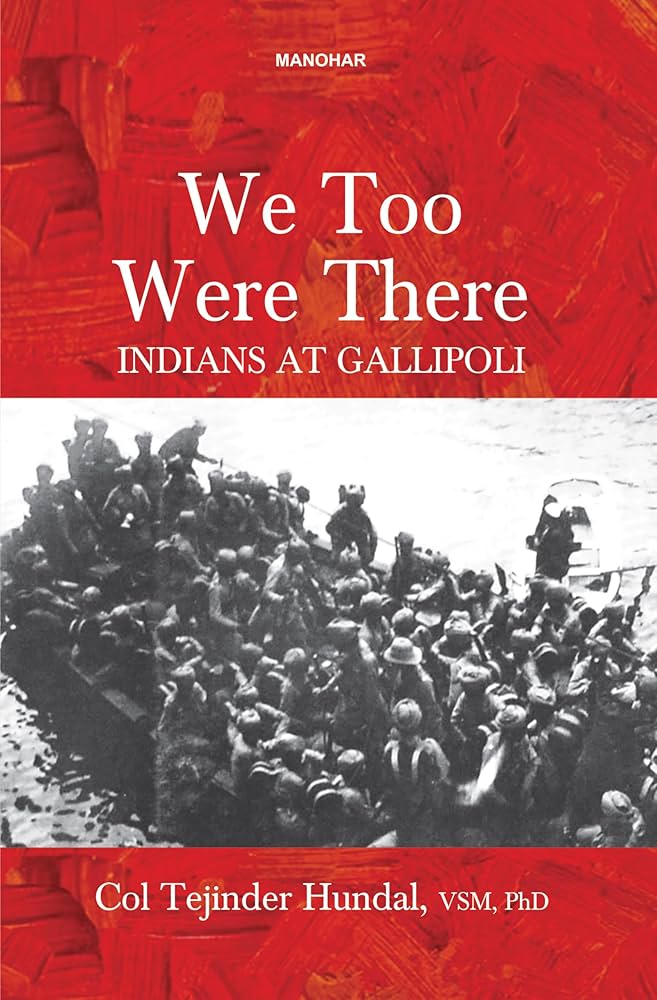
WE TOO WERE THERE: INDIANS AT GALLIPOLI


Written by : (By Col Tejinder Hundal)


Reviewed by: Air Marshal Anil Khosla (Retd) PVSM, AVSM, VM


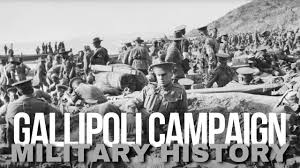
The Gallipoli campaign (also called the Dardanelles campaign, the Defence of Gallipoli, or the Battle of Gallipoli) was a military operation during the First World War on the Gallipoli Peninsula (now Gelibolu) from 19 February 1915 to 9 January 1916. The Allied powers, Britain, France, and the Russian Empire, aimed to capture the Ottoman Empire, one of the Central Powers, by gaining control of the Turkish straits. This would have exposed the Ottoman capital at Constantinople to bombardment by Allied warships and cut it off from the Asian part of the empire. With the Ottoman Empire defeated, the Suez Canal would be protected, and the Bosphorus and Dardanelles straits would be open to Allied supplies to the Black Sea and Russian warm-water ports.


In February 1915, the Allied fleet failed to force a passage through the Dardanelles. An amphibious landing on the Gallipoli peninsula began in April 1915. Gallipoli was the first major amphibious operation in modern warfare. British (including troops from the British Empire) and French troops landed on the Ottoman-held peninsula in the Dardanelles Straits. In January 1916, after eight months’ fighting, with approximately 250,000 casualties on each side, the campaign was abandoned, and the invasion force was withdrawn. It was a costly campaign for both the Allied powers and the Ottoman Empire.


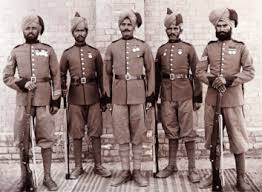
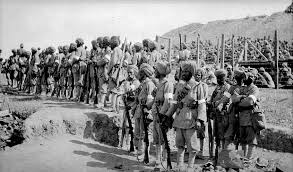
Indian troops played crucial roles in several key battles during the 1915 Gallipoli Campaign, suffering heavy casualties while supporting Allied efforts against Ottoman defences. On 12 May 1915, the 29th Indian Brigade, including the 1/6th Gurkha Rifles, captured a coastal hill feature west of Krithia, named Gurkha Bluff for their effective action; this marked their first significant engagement in the Helles area. In the third Battle of Krithia, fought on 4 June 1915, the 14th Sikhs (Jat Sikhs) from the 29th Indian Brigade charged Turkish positions at Gully Ravine amid intense machine-gun fire and barbed wire, suffering 82% casualties as nearly the entire battalion was wiped out in close-quarters fighting. Indian units repelled Turkish assaults on 3 and 5 July 1915 near Gully Spur and Gurkha Bluff, with Gurkha battalions pushing back the enemy by 1,000 yards over eight days of counterattacks, while sustaining 40% casualties. In the August 1915 offensive, the 29th Indian Brigade landed at ANZAC Cove on 5-6 August and assaulted Sari Bair Ridge; on 9 August, the 1/6th Gurkha Rifles briefly crested the summit before artillery and counterattacks forced a retreat.


The histories of Gallipoli have traditionally focused on the ANZACs (Australia and New Zealand) and British forces.  The book “We Too Were There: Indians at Gallipoli” by Col Tejinder Hundal is a detailed military history that focuses on the Indian Army’s role (over 16,000 Indian troops) in the Gallipoli Campaign during the First World War. Hundal’s book seeks to restore the Indian soldiers’ service, sacrifices, and experiences to the narrative. Hundal argues that the “spirit of Gallipoli” wasn’t just an Anglo-Saxon phenomenon. It was a multicultural crucible where Indian soldiers earned the respect of their peers through sheer grit and professionalism. The book follows the 13th Frontier Force Rifles, the Indian Mountain Artillery, and the thousands of mule drivers and medical personnel who served on the rugged Turkish peninsula. Hundal doesn’t just provide a dry military report; he reconstructs the campaign through a lens of shared sacrifice.


Author Col. Tejinder Hundal is a serving Indian Army officer with a PhD in Defence and Strategic Studies. He has a keen interest in the participation of Indian Army troops in the two World Wars. At over 600 pages, his book is comprehensive and deeply researched. The book is built from extensive research into primary sources, including war diaries, personal letters, and regimental records. These sources document the deployment of Indian infantrymen, artillery units, mule transport and logistic corps, and the hardships they endured on the Dardanelles peninsula from April to December 1915. The book includes maps and sketches that help visualise the Dardanelles’ impossible terrain. It doesn’t just recount battles; it delves into mobilisation, logistics, adaptation to harsh conditions, and the administrative challenges of war from an Indian perspective. These topics are rarely covered in mainstream histories of Gallipoli.


Hundal highlights how Indian mountain batteries provided the only effective artillery support for the Anzacs in the early days of the landing.  A significant portion is dedicated to the 6th Gurkha Rifles and their legendary capture of “Sari Bair,” the highest point reached by Allied troops. Beyond the frontline, the book also emphasises the Indian mule corps, who navigated treacherous terrain under constant fire to deliver water and ammunition.


The first Chapter of the book “The Activation” unravels the decisions and strategies of the belligerents (mainly Britain and Turkey) in their efforts to capture and defend the peninsula, respectively. The chapter also discusses the origins of the various Indian Expeditionary Forces and their deployments in the various theatres of war. It finally covers the operations of the 29th Indian Infantry Brigade’s troops in the peninsula.


The second chapter of the book “The Arrangements” provides a detailed analysis of the recruitment system, patterns, Incentives, and the state of the Indian Army (Infantry, Artillery, and the Imperial Service Troops) in 1914. It also briefly includes the oft-neglected component of the Burma Military Police, which was part of the Indian Brigade at Gallipoli. The third chapter of the book “The Affirmation” is dedicated to the participation and contributions of the Indian Troops in the various battles fought in the peninsula.


The penultimate chapter of the book “The Administration” discusses the personal arms and ammunition, food, water, medical supplies, and the pay and allowances of the Indian Troops at Gallipoli. The chapter also deals with the issues of reinforcements and reporting of casualties of the Indian forces. The last chapter of the book, “The Acknowledgement”, is dedicated to the memories of the soldiers who sacrificed their lives at Gallipoli. The chapter delves into the trials and tribulations of the Indian soldiers. Stories of three sikh soldiers who participated in the campaign are also painstakingly developed.


Hundal’s central aim is to acknowledge and honour the Indian troops whose contributions have been historically overlooked. The narrative draws attention to the courage, discipline, and heavy casualties suffered by formations like the Sikh infantry and support units.  Hundal’s work also serves as a corrective to colonial-era histories that minimised the Indian role in favour of Western front perspectives. This makes the book not just historical but also commemorative, appealing to readers interested in hidden or marginalised war narratives.


Hundal’s writing is deeply researched, striking a balance between military strategy and human emotion. It is a vital read for anyone interested in how the Indian Army became a world-class fighting force. The book is most useful for military historians, defence professionals, students of World Wars, and readers interested in the overlooked role of Indian soldiers in global wars.


Please Add Value to the write-up with your views on the subject.


2133
Default rating

Please give a thumbs up if you  like The Post?


For regular updates, please register your email here:-

Subscribe


References and credits

To all the online sites and channels.

Pics Courtesy: Internet

Disclaimer:

Information and data included in the blog are for educational & non-commercial purposes only and have been carefully adapted, excerpted, or edited from reliable and accurate sources. All copyrighted material belongs to respective owners and is provided only for wider dissemination.


English हिंदी