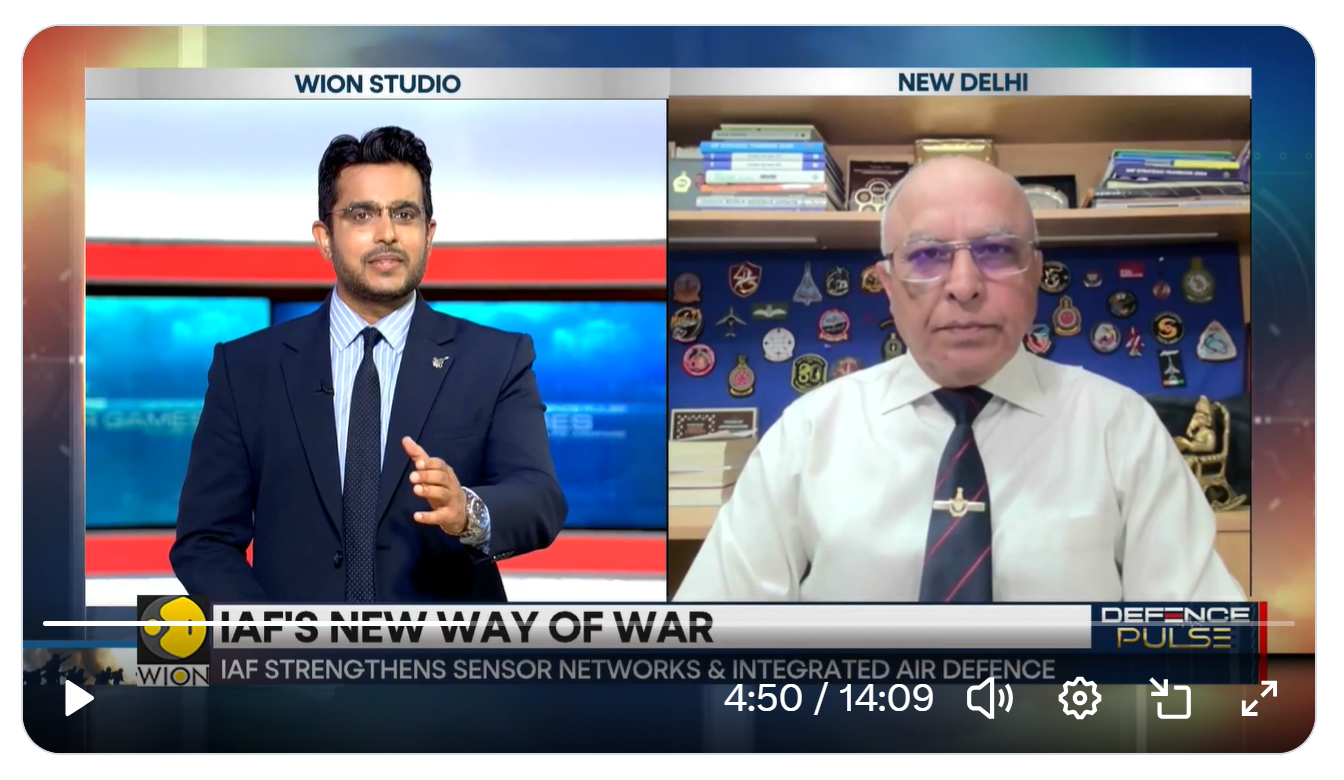
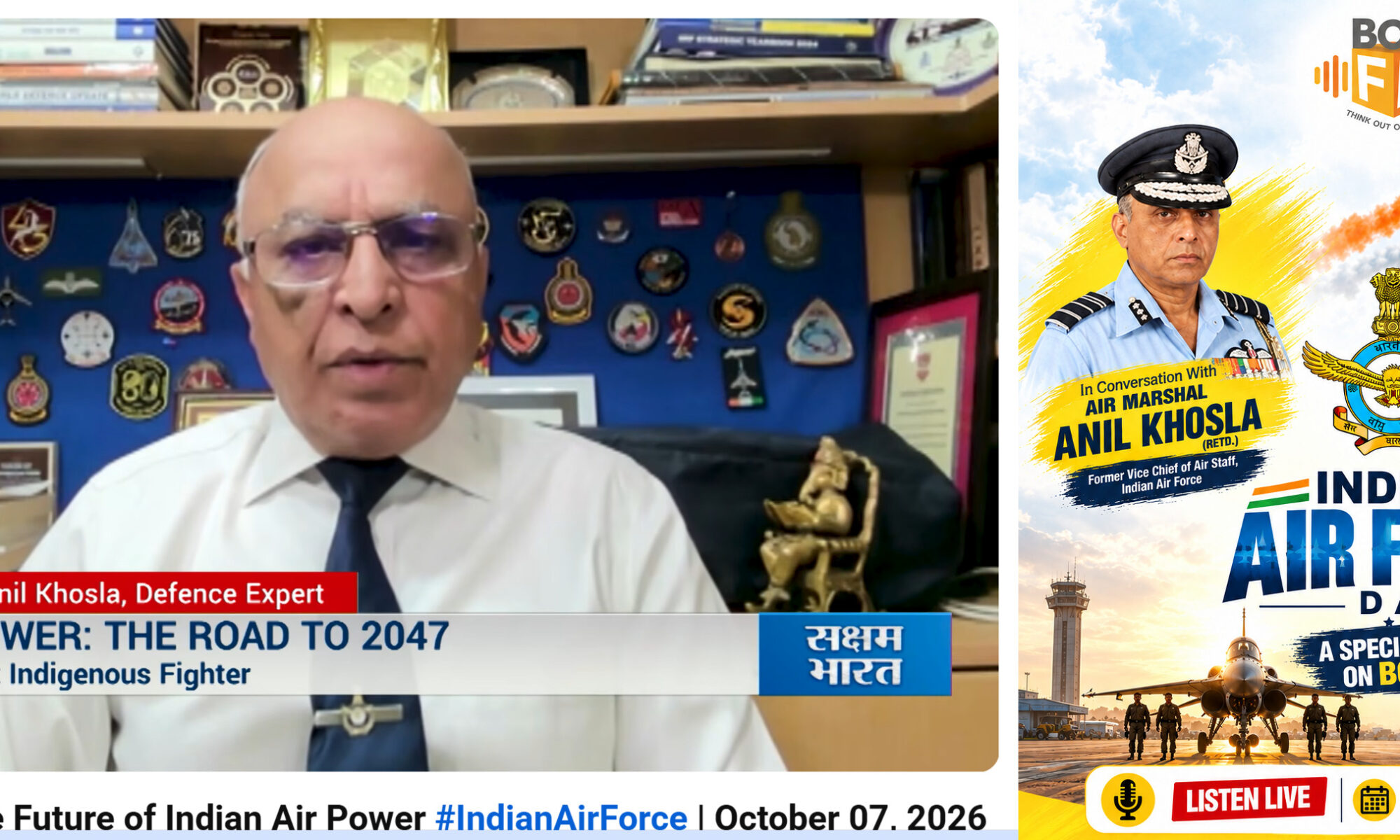
841: Indegenous Jet Engine: Single Most Technical Vulnerability


Inputs to the journalists on the subject


Q1. Has dependence on foreign engines been a major constraint in building more fighter jets?

Yes, the trend is becoming more pronounced. The Tejas program exemplifies this clearly. India has undertaken the design and manufacturing of the aircraft; however, its domestically developed Kaveri engine failed to meet the necessary performance standards, resulting in dependence on GE’s F404 engine. More recently, delays in F404 deliveries have delayed the handover of completed Tejas Mk1A aircraft.

The problem is therefore not just cost or foreign exchange. It creates a bottleneck in the production chain. The dependence also extends into future programmes. Tejas Mk2 is planned around the GE F414, while the initial AMCA configuration is also expected to rely on a foreign engine.

India has displayed the capability to design and build airframes, integrate avionics and weapons, and increase its manufacturing capacity. However, the most important component (the engine) continues to be a bottleneck. The reliance on foreign engines has become a major constraint and a strategic weakness.


Q2. Is it critical for India to end this dependence?

It is strategically important for long-term military autonomy, operational readiness, and industrial self-reliance. Foreign dependence brings about several risks, such as vulnerability to interruptions or delays in supply (as was the case with the F404 engines), the possibility of the supplier country exercising leverage, greater lifecycle costs for spares and upgrades and for maintenance, repairs and overhaul (MRO), export restrictions (since engine OEM approvals are usually required), and a restricted capacity to fully optimise or upgrade the aircraft on one’s own.

 However, India cannot realistically wait for a completely indigenous engine before expanding its fighter fleet. The IAF needs aircraft now, so foreign engines remain necessary for programmes such as Tejas Mk1A and Mk2.

The more important objective is to ensure that future Indian fighters cannot be held hostage by the availability, pricing or export-control decisions of another country. This matters particularly because India expects a very large requirement for fighter engines.  GTRE estimated a need for roughly 1,100 engines through 2035. For AMCA and subsequent programmes, India therefore needs access to the underlying technology, not merely an Indian factory assembling a foreign-designed engine.


Q3. What are the advantages of securing access to engine technology possessed by only a handful of countries?

The list of nations that can genuinely design a modern high-thrust military jet engine remains limited to the United States, the United Kingdom, France, and Russia, with China having made still-contested progress. India has been exploring major partnerships with companies such as Safran and Rolls-Royce for high-thrust fighter propulsion. In August 2026, Reliance Industries and Rolls-Royce also announced a partnership to explore co-developing and manufacturing an engine for the AMCA programme.

Modern fighter engines involve high-temperature materials, turbine blades, coatings, cooling systems, compressors, combustion processes, digital controls, and precision manufacturing. Only a small number of countries have the full range of technological knowledge needed for such engines, and accessing these technologies through a co-development programme would be advantageous.

Strategic Autonomy. India would have much greater control over the availability, modification and upgrading of its fighters. It reduces the risk of export restrictions, supply interruptions, political pressure, unexpected price increases, and dependence on foreign approval for upgrades. It would give India the freedom to design future fighters. The engine constrains an aircraft designer. If you control the propulsion system, you can optimise the aircraft around your own requirements rather than designing around what a foreign engine supplier offers.

Faster Technological Learning. This may actually be more valuable than the first indigenous engine itself. India needs to learn how to design and manufacture the core technologies of an advanced turbofan. Once that knowledge exists domestically, subsequent engines can evolve rather than start from scratch. The Kaveri programme generated valuable expertise but did not achieve the required fighter performance. A genuine technology partnership could help India bridge precisely those gaps.

Aerospace Ecosystem. A successful engine programme would build capabilities in Superalloys, single-crystal blades, coatings, precision manufacturing, sensors, FADEC, testing, metallurgy, and additive manufacturing. Those technologies have applications beyond fighter engines, including UAVs, missiles, helicopters and civil aerospace.

Export Potential. If India eventually owns sufficient intellectual property and manufacturing capability, it could export engines or aircraft without needing permission from a foreign engine designer for every major modification. That would transform India from primarily an aircraft buyer/manufacturer into an aerospace technology power.

Bottom Line

India’s dependence on foreign suppliers is perhaps the single biggest technological vulnerability in its aerospace ecosystem, and developing an indigenous engine is a non-negotiable priority. As India considers these offers, the question is whether these companies will share the deepest layers of their process knowledge.


Link to the quoted article on the subject

https://www.defensenews.com/global/asia-pacific/2026/08/27/rolls-royce-safran-vie-for-indias-next-generation-fighter-engine/


Please Add Value to the write-up with your views on the subject.


2044
Default rating

Please give a thumbs up if you  like The Post?


For regular updates, please register your email here:-

Subscribe


References and credits

To all the online sites and channels.

Pics Courtesy: Internet

Disclaimer:

Information and data included in the blog are for educational & non-commercial purposes only and have been carefully adapted, excerpted, or edited from reliable and accurate sources. All copyrighted material belongs to the respective owners and is provided only for wider dissemination.

 

839: EXPLAINED: WHY LEASE WHEN YOU ARE BUYING THEM


Inputs to questionnaire from journalists


India has operated leased SeaGuardians since 2020. India leased them because the Navy needed persistent ISR capability while the much larger procurement moved through the system. The Indian Navy has found them useful and has flown them for thousands of hours.

The new lease contract has reportedly been signed on17 August 2026. It includes a 30-month lease for two MQ-9B Sea Guardian drones from General Atomics Aeronautical Systems. The contract is valued at approximately ₹1,943 crore. 

On the face of it, ₹1,943 crore for two MQ-9B SeaGuardians for only 30 months looks extremely expensive. The ₹1,943 crore price tag is not a basic rental fee for two airframes. It represents a Company-Owned, Company-Operated (COCO) capability package. The value proposition includes sensors, communications, ground-control infrastructure, technical support, maintenance, operators/support personnel, availability, etc.

    • Complete Operational Burden. General Atomics (GA-ASI) provides the entire ecosystem (possibly including Ground Control Stations (GCS), satellite communication bandwidth, continuous payload integration, spare parts, and on-site engineering support).
    • Assured Flight-Hours. The cost includes availability of a guaranteed number of operational flight hours. The manufacturer would bear the cost associated with airframe degradation, maintenance cycles, component failures, and logistics overhead.
    • Specialised Payload Rent. The lease includes high-end, mission-specific sensor suites (360-degree maritime surface search radars, synthetic aperture radars (SAR), electro-optical/infrared (EO/IR) balls, and signals intelligence (SIGINT) packages).

The lease would buy time and capability.  India entered into the agreement in October 2024 for 31 MQ-9Bs (specifically 15 SeaGuardians and 16 SkyGuardians). India’s acquisition of 31 aircraft does not mean they will become operational right away; reports indicate the first deliveries will not take place until late 2028 or early 2029. Since we need the capability right now, there will be a gap of several years. To sum up, the purchase is the long-term solution, while the lease is a short-term remedy.

There’s another way of looking at it. The lease would be a training and transition bridge. The new lease could allow personnel, maintenance teams, operators and mission planners to continue building experience while the larger fleet is inducted. It would allow operational availability, training, experience, maintenance support, sensors, contractor support, insurance/replacement risk, and immediate access. Rather than a redundant expense, the lease would serve as a high-readiness bridge. It would provide immediate maritime surveillance capacity while laying the tactical groundwork for the larger fleet’s arrival.

In short, the two newly leased Sea Guardians are not a standalone act but a deliberate interim measure that keeps the Navy’s IOR surveillance posture strong and operationally continuous while the larger, permanent 31-aircraft tri-service fleet is manufactured and delivered.

The bigger picture

The drones complement, rather than replace, the P-8I fleet. India’s surveillance architecture is increasingly layered:

    • MQ-9B SeaGuardian: long-endurance unmanned surveillance, able to remain on station for extended periods.
    • P-8I Poseidon: manned long-range maritime patrol aircraft with sophisticated radar and anti-submarine warfare capabilities.
    • Satellites: wide-area, space-based observation.
    • Coastal and island-based sensors/radars: persistent monitoring closer to shore and around strategic maritime chokepoints.
    • Other naval assets: ships, submarines and aircraft that can investigate or act on information generated by the surveillance network.

A layered network:

Satellites → see broadly

MQ-9Bs → stay over an area for a long time.

P-8Is → investigate and conduct sophisticated maritime/ASW missions.

Ships/submarines → physically respond.

The MQ-9B lease fits into that picture as the tactical, tasking-responsive layer of a system whose outer layers are space-based sensing and coastal radar, and whose command layer is the fusion-centre network.


Link to the report on Wion TV:-


Please Add Value to the write-up with your views on the subject.

2044
Default rating

Please give a thumbs up if you  like The Post?


For regular updates, please register your email here:-

Subscribe


References and credits

To all the online sites and channels.

Pics Courtesy: Internet

Disclaimer:

Information and data included in the blog are for educational & non-commercial purposes only and have been carefully adapted, excerpted, or edited from reliable and accurate sources. All copyrighted material belongs to the respective owners and is provided only for wider dissemination.


836: MUM-T DEMONSTRATION: POSEIDON TASKING TRITON


On 05 Aug 26, Boeing and Northrop conducted a lab demo test teaming the manned P-8A Poseidon maritime patrol aircraft and the unmanned MQ-4C Triton high-altitude long-endurance (HALE) ISR platform.

The P-8A operator sent machine-readable/machine-actionable mission tasking to a simulated Triton. The Triton then autonomously planned and executed the mission (e.g., transit to an area, collect intelligence with its sensors), processed data onboard via AI algorithms, and returned processed intelligence to the Poseidon.

The demo showed the first automated collaboration using an open systems architecture and the Universal Command and Control Interface. The announcement’s emphasis on universal standard interfaces is significant. Rather than using proprietary, platform-specific software, standard interfaces allow different systems to exchange information more easily.


Even though the P-8A and MQ-4C are both surveillance platforms, they have very different strengths.

P-8A Poseidon. Manned, multi-mission platform optimised for anti-submarine warfare (ASW), anti-surface warfare, response/agility (including lower-altitude operations), high-resolution imagery, weapons delivery, and rapid prosecution of contacts. Its crews operate in a dynamic tactical environment.

MQ-4C Triton. Unmanned HALE platform for persistent, wide-area maritime domain awareness. It has long endurance of more than 24 hours, and operates at high altitude (50,000+ feet). It has broad sensor coverage including multi-int radar, EO/IR, SIGINT.


Key Benefits for Operators

The key idea in teaming them up is about letting each do what it does best. Instead of both independently searching the same ocean, the Triton can automatically detect and cue the Poseidon. It reduces the workload on human operators.

It would reduce operator workload, speed up decision-making, enable more flexible and responsive manned-unmanned teaming, and leverage their complementary strengths for broader, more efficient maritime ISR and related missions. Key benefits would be: –

Reduced Workload and Cognitive Burden. The demonstration focuses on automating tasking, planning, execution, and the use of onboard AI. As a result, P-8 operators will no longer have to manually coordinate all the individual aspects or depend on ground stations when making routine intelligence requests or assigning tasks. Instead, they will be able to concentrate on higher-level mission management, tactical decisions, and using the fused picture, rather than closely monitoring the unmanned asset. This reduces the operator’s workload and speeds up the intelligence cycle.

Faster, More Responsive Decision-Making and Targeting. Direct machine-to-machine exchange delivers processed maritime intelligence much faster. This supports quicker cueing for follow-on actions. In contested or time-sensitive environments, this improves the overall kill chain decision speed.

Direct In-Flight Tasking and Greater Tactical Flexibility. Currently, Tritons are typically controlled from distant ground stations. The demo establishes a foundation for P-8 crews to issue tasking and receive results in flight (via realistic links such as satellite relay) without routing everything through the ground control station. This extends the Poseidon’s effective reach, allows dynamic retasking based on the manned aircraft’s real-time situational awareness, and improves the composite battlespace picture under the control of the airborne crew.

Better Use of Complementary Capabilities Without Redundancy. Triton handles the long-endurance, broad-area “look” mission persistently. Poseidon handles responsive, close-in, multi-mission work (including ASW that Triton does not perform). Automated teaming lets them operate more seamlessly as a unit rather than operating in relative isolation or with slower human-mediated coordination. Shared standards also ease training synergies (some operators cross-qualify) and common operating pictures.

Broader Interoperability and Future Scalability at Lower Cost/Risk. Use of universal/open standards rather than proprietary links allows collaboration with other platforms. This makes integration easier and more cost-effective, and also supports evolutionary upgrades on existing fleets.


Summary

By combining the two surveillance platforms, the team created a more closely integrated system. The operators gain in efficiency (because there is less manual coordination), in speed (since the intelligence and decisions can be made more quickly), in reach and flexibility (through direct control from the air) and in effectiveness (due to the continuous coverage and the ability to carry out a variety of missions in a responsive manner). This is especially valuable in the case of large areas of responsibility over seawater where both persistence and rapid response are essential. The demonstration carried out in the laboratory represents an initial stage in the way these capabilities can be put into operational use.


Please Add Value to the write-up with your views on the subject.

2044
Default rating

Please give a thumbs up if you  like The Post?


For regular updates, please register your email here:-

Subscribe


References and credits

To all the online sites and channels.

Pics Courtesy: Internet

Disclaimer:

Information and data included in the blog are for educational & non-commercial purposes only and have been carefully adapted, excerpted, or edited from reliable and accurate sources. All copyrighted material belongs to the respective owners and is provided only for wider dissemination.


English हिंदी