863: IAF @94: A KALEIDOSCOPE THROUGH THE AIR MARSHAL’S LENS


Indian Air Force celebrates its 94th anniversary on October 8, 2026.

Good wishes to all air warriors on AF Day.


The IAF is celebrating under the theme “Indian Air Force – Infallible, Impervious and Precise.”

The IAF has evolved from its October 8, 1932, origins (when it had a few Westland Wapiti biplanes and a handful of pilots) into a modern, network-centric, multi-domain strategic force.


A compilation of links to some of the posts on the Indian Air Force (from the blog “Air Marshal’s Perspective”) is listed below: –


Articles/Writeups

  1. Evolution of IAF: Historic Perspective.

https://55nda.com/blogs/anil-khosla/2023/04/26/evolution-of-iaf-historic-perspective/

  1. IAF: Guardians of the sky (Article published in the Millennium Post.

https://55nda.com/blogs/anil-khosla/2024/10/08/indian-air-force-guardians-of-the-skies/

  1. IAF: Strategies – Past, Present and Future (Article published in the Gyan Chakra book on Military Strategy).

https://55nda.com/blogs/anil-khosla/2023/06/26/iaf-strategies-past-present-and-future/

  1. Doctrinal Evolution of IAF.

https://55nda.com/blogs/anil-khosla/2023/04/25/doctrinal-evolution-iaf/

  1. Role of IAF in India’s policy of Punitive Deterrence (Article published on the “Life of Soldier” website.

https://55nda.com/blogs/anil-khosla/2025/10/01/753indias-policy-of-punitive-deterrence-against-state-sponsored-terrorism-pivotal-role-of-the-indian-air-force/

  1. IAF Flight Path @ 92 (Article published in the “News Analytics” journal)

https://55nda.com/blogs/anil-khosla/2024/10/07/518-indian-air-force-flight-path-92/

  1. IAF Challenges and Future Trajectory (Article Published in the “News Analytics” Journal).

https://55nda.com/blogs/anil-khosla/2024/07/08/indian-air-force-challenges-and-future-trajectory/

  1. Indian Air Force @91

https://55nda.com/blogs/anil-khosla/2023/10/05/indian-air-force91/

  1. Aero India 2025: Key Solutions for the IAF Challenges (Article Published in the SP Aviation).

https://55nda.com/blogs/anil-khosla/2025/02/11/595-aero-india-2025-and-key-solutions-for-iafs-challenges/

  1. Future Conflict Scenario: Implications for IAF (Part 1).

https://55nda.com/blogs/anil-khosla/2021/03/15/future-conflict-scenarios-implications-for-iaf-part-1/

  1. Future Conflict Scenario: Implications for IAF (Part 2).

https://55nda.com/blogs/anil-khosla/2021/03/16/future-conflict-scenario-implications-for-iaf-part-2/


Acquisitions/Capability Enhancement

  1. IAF Aerospace Capability Building (Article published in the USI Strategic Yearbook 2021).

https://55nda.com/blogs/anil-khosla/2021/07/20/iaf-aerospace-capability-building-article-published-in-usi-strategic-year-book-2021/

  1. MRFA Acquisition for a future Ready IAF (Article published in the “Life of Soldier” Journal)..

https://55nda.com/blogs/anil-khosla/2025/02/02/591-transforming-indias-skies-the-mrfa-acquisition-for-a-future-ready-iaf/

  1. IAF’s Deterrence Capability (Summary of Aspects).

https://55nda.com/blogs/anil-khosla/2023/10/05/inputs-iaf-deterrence-capability/

  1. Inputs to Questionnaire from Media bout IAF.

https://55nda.com/blogs/anil-khosla/2023/10/02/q-a-series-iaf-ai-powered-unmanned-platforms-space-ops-and-future-challenges/

  1. IAF Supporting Self-Reliance.

https://55nda.com/blogs/anil-khosla/2022/10/04/indian-air-force-always-supports-atmanirbharta-part-2/

  1. IAF supporting Atmanirbharta

https://55nda.com/blogs/anil-khosla/2022/09/23/indian-air-force-always-supports-atmanirbharta/

  1. Wings of Indigenisation: IAF-HAL Saga (Article published in the “Life of Soldier” journal).

https://55nda.com/blogs/anil-khosla/2025/04/02/635-iafs-wings-of-indigenisation-the-iaf-hal-saga/

  1. ISTAR for IAF: Redefining Strategic Surveillance (Article published in the “Eurasian Times”)

https://55nda.com/blogs/anil-khosla/2025/07/09/698-the-istar-to-redefine-strategic-surveillance-for-the-indian-air-force/

  1. Women in IAF (Article published in the Air Force Association Journal).

https://55nda.com/blogs/anil-khosla/2024/09/21/women-air-warriors-in-indian-air-force/

  1. Exercise Iniochos 2025: IAF on Broader Charioteer (Article published in “Eurasian Times”).

https://55nda.com/blogs/anil-khosla/2025/04/01/634-exercise-iniochos-25-iaf-on-board-charioteer/


Podcasts and Talks


  1. Strategic Evolution of IAF (Talk on “Thus Spake General”).

https://55nda.com/blogs/anil-khosla/2023/09/02/strategic-evolution-of-indian-air-force/

  1. IAF Challenges and Preparedness (Talk on News Time)

https://55nda.com/blogs/anil-khosla/2024/12/26/565chat-with-mr-dinesh-k-vohra-on-news-time-about-iaf-challenges-and-preparedness/

  1. Life in IAF (Chat with Gaurav).

https://55nda.com/blogs/anil-khosla/2023/10/15/af-day-special-part-1-2/

  1. IAF Challenges (Chat with Gaurav).

https://55nda.com/blogs/anil-khosla/2023/10/15/af-day-special-iaf-broader-issues-personal-beliefs-part-23-3/

  1. IAF Fighter Aircraft Strength (Chat on “DEF Talks”).

https://55nda.com/blogs/anil-khosla/2021/06/18/def-talks-iaf-fighter-sqn-strength-and-rafales/

  1. IAF: Expectations and Capability Building (Chat on DEF Talks”).

https://55nda.com/blogs/anil-khosla/2021/05/21/def-talks-expectations-from-iaf-vis-a-vis-capability-building/

  1. IAF: Modernisation and Technology advancement (Chat on “VJTI Technovanja”)

https://55nda.com/blogs/anil-khosla/2021/03/02/talk-on-modernisation-and-technology-advancement-in-iaf-during-technovanja-of-vjti/


Constructive remarks and value additions are most welcome

859: BOOK REVIEW: BIRD’S-EYE VIEW OF CYBER SECURITY V 2.0 BY BISWAJIT SAHU


By Air Marshal Anil Khosla


Cybersecurity has become essential to modern life as individuals, businesses, governments, and institutions increasingly depend on digital technologies. A key part of cybersecurity education is the human element. Technical security controls alone cannot eliminate cyber risk. Weak passwords, phishing, social engineering, unsafe browsing practices, poor access management, and inadequate awareness can all contribute to security incidents. A broad treatment of cybersecurity can help readers appreciate the relationship between technology, people, processes, and organisational policies.

The book “Bird’s-Eye View of Cyber Security v2.0,” written by Biswajit Sahu, addresses this important topic by offering a broad, accessible account of cybersecurity. The title suggests the author aims to offer readers a comprehensive survey of the cybersecurity field rather than focus on a single technical aspect.

Biswajit Sahu is a Sr. Cybersecurity Consultant at Starlight Data Solutions (Bengaluru), with prior roles as a security engineer, presales engineer, and security analyst in Indian cybersecurity firms.  The 134-page book (V2.0 edition, published March 2025, with paperback editions appearing in 2026) reflects his half-decade-plus industry experience and his work related to educating the cybersecurity community.

The book bridges the gap between foundational security concepts and the rapidly evolving technological frontiers reshaping domain defence. It is a concise, high-level map of the digital security landscape. The book systematically covers basic cyber hygiene, attack surface mapping, network security fundamentals, and Security Operations Centre (SOC) dynamics. 

The 2.0 version goes beyond conventional IT security to include key operational areas such as Industry 4.0/OT systems, the security of critical national infrastructure, and the integration of autonomous or AI-powered threat detection. Because Sahu focuses on this subject, the text stresses the need for organisations to prepare for the coming post-quantum cryptography (PQC) era, explaining that they must adapt before existing encryption standards become vulnerable to quantum attacks.

True to its title, the text offers a thorough macro-level survey without getting into detailed code or vendor-specific settings. It draws on practical experience in real-world situations across critical infrastructure, defence and intelligence sectors, and law enforcement systems. A major advantage of a wide-ranging cybersecurity reference is that it helps readers understand the overall security ecosystem. The book’s concise structure makes it easy for decision-makers, cross-domain managers, and technical generalists who need a quick introduction to current cyber resilience requirements.

The main potential limitation of a high-level cybersecurity book is that breadth can sometimes come at the expense of technical depth. Readers with substantial experience in penetration testing, digital forensics, security engineering, malware analysis, or incident response may need more specialised resources for practical and advanced study. Thus, the book is particularly valuable as an overview and foundation, while specialised texts and hands-on laboratories remain important for developing advanced skills.

The topic is particularly relevant because cyber threats keep evolving as technology advances. Nowadays, organisations place greater trust in cloud services, connected devices, digital payments, remote working arrangements, and online platforms. As a result, cybersecurity needs to include not only technological protections but also user awareness. An effective introductory book on this subject should prompt readers to view security as an ongoing process which involves prevention, detection, response, and recovery.

Bird’s-Eye View of Cyber Security v2.0 can be viewed as a work aimed at developing a wider understanding of cybersecurity and its importance in the digital era. Its broad perspective is potentially useful for readers who want to understand how different aspects of cyber protection fit together. For students and newcomers to cybersecurity, such an approach can provide a foundation for further exploration of specialised areas. The book is a practical, quick-read executive briefing. It is particularly well-suited for military/defence leaders transitioning into multi-domain digital security, corporate executives seeking high-level risk literacy, or practitioners needing a broad framework to align emerging tech with threat readiness.


Please Add Value to the write-up with your views on the subject.


2182
Default rating

Please give a thumbs up if you  like The Post?


For regular updates, please register your email here:-

Subscribe


References and credits

To all the online sites and channels.

Pics Courtesy: Internet

Disclaimer:

The information and data in this blog are for educational & non-commercial purposes only and have been carefully adapted, excerpted, or edited from reliable and accurate sources. All copyrighted material belongs to the respective owners and is provided only for wider dissemination.


842: OPERATION SINDOOR REVISITED


Operation Sindoor was a multi-domain, mostly non-contact military operation India carried out in the early hours of 7 May 2025. In the first phase, India carried out attacks on nine terrorist facilities associated with groups including Lashkar-e-Taiba and Jaish-e-Mohammed in Pakistan and in illegal Pakistan-occupied Kashmir. When the situation escalated, phase two was carried out with strikes being launched at military targets in Pakistan. Hostilities continued for about 88 hours before a ceasefire agreement was reached on 10 May.


Former CDS Gen Anil Chauhan (retired) delivered a talk on “Operation Sindoor and its Aftermath” on 25 August 2026.  This talk is significant from an analytical perspective.


Analytical Perspective and Takeaways

  • Military power serves as an instrument of political policy; the armed forces set their own military objectives based on the political aim. The military plans accordingly. This matters because it shows that Sindoor was designed as a limited, controlled operation rather than an open-ended war.
  • Political direction and freedom of action. The clear political directive was to send an unambiguous message that India will not tolerate cross-border terrorism. Therefore, the directive was that the action should be unthinkable, with no political pressure for immediate action, and carried out without failure and with suitable evidence. Clear intent and operational autonomy are ideal for the military.
  • Tactical Shift and evolution of India’s retaliatory doctrines (to preserve surprise and prevent operational predictability). Unlike the land route used post-Uri (2016) or the high-altitude/large-force air engagements used post-Pulwama/Balakot (2019), Operation Sindoor employed a “third option”: leveraging the lower airspace. Low-altitude operations kept the conflict threshold controlled, maximised surprise, and delivered high mission assurance without triggering immediate full-scale escalation. It was not about what weapons India possessed. It was about how those weapons were employed against the adversary’s surveillance and air-defence architecture. In military terms, this illustrates the importance of operational creativity over simply having superior hardware.
  • Redefining the area below the nuclear threshold. The operation has shown that India is capable of carrying out precise conventional strikes at targeted terrorist infrastructure within a carefully controlled time frame which remains below the nuclear escalation threshold, thus countering the ‘stability-instability paradox’ which adversaries rely upon.
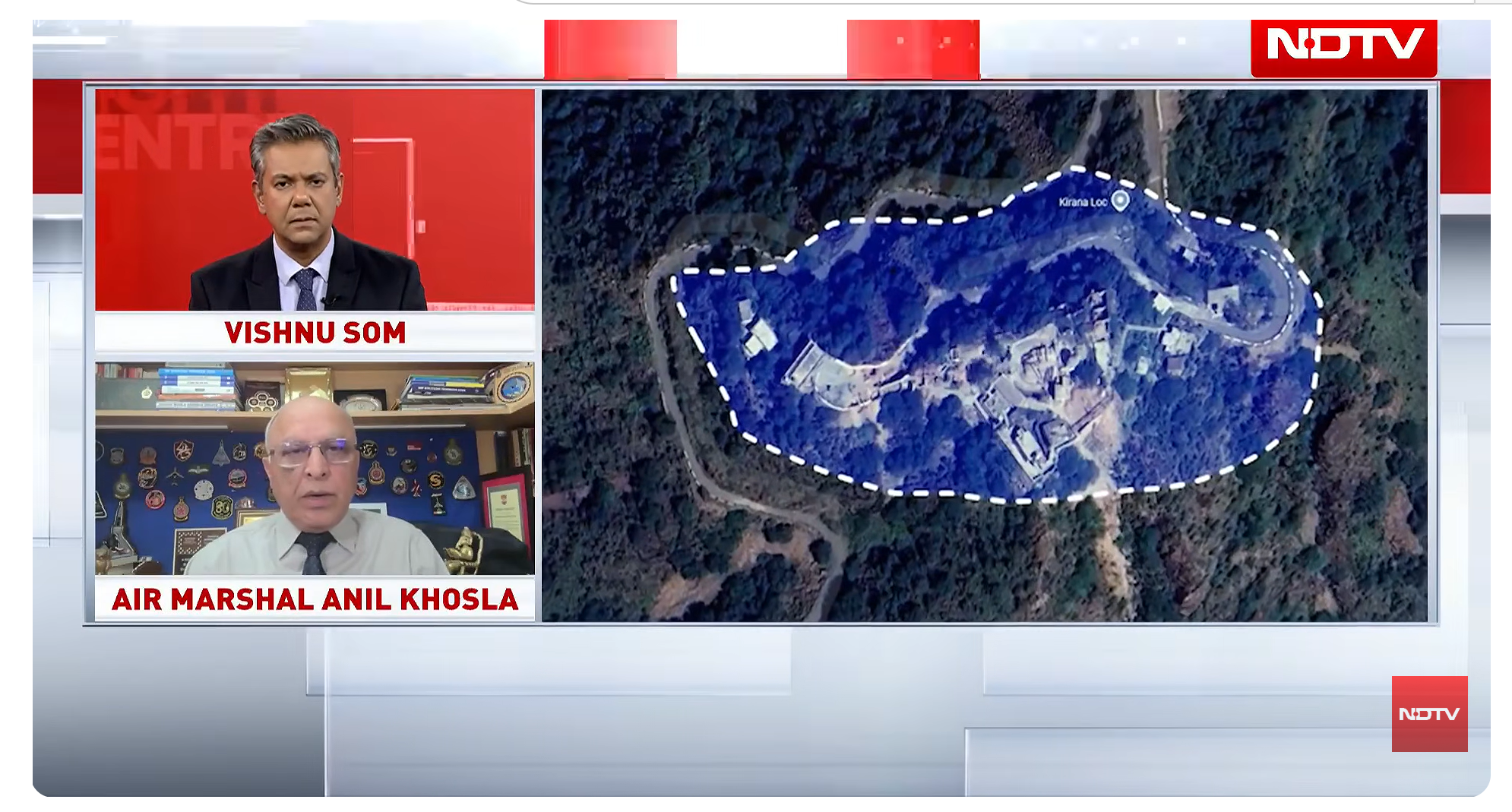
  • The fact that the strike hit the Kirana Hills has important strategic implications since it was not intended to target Pakistan’s nuclear infrastructure; if an intentional strike had been made on a nuclear-related facility, it might have been seen as an attempt to attack Pakistan’s strategic deterrent and would therefore have led to a very different escalation scenario. 
  • Skardu as a possible target. Skardu was a possible target but had to be changed to Bholari due to weather constraints. This shows India had multiple military options, rather than a single predetermined strike package. It also demonstrates the resilience and flexibility of IAF capability and planning.
  • On 10 May 2025, Pakistan pleaded for a ceasefire. India responded in its own time. This indicates that the aim was not merely to retaliate and jump at the first diplomatic opportunity. Instead, India chose to achieve its military objectives before agreeing to end the operations. This is an ideal example of aligning the military end-state with the political objectives.


  • Preparedness creates political choices. Peacetime shapes the options available during a crisis. If a military lacks long-range precision weapons, drones, ISR, electronic warfare, air defence and integration, political leaders have fewer options when a crisis occurs. Therefore, Sindoor resulted from years of military modernisation and capability development.
  • Multi-Domain Operation. It was India’s genuine multi-domain operation, involving the Army, Navy, and Air Force, along with cyber and information-warfare elements. The integration achieved during the operation validated the direction India had taken toward jointness.
  • Operation Sindoor was a controlled demonstration of India’s ability to calibrate force and capability to punish aggression without necessarily allowing every confrontation to become a full-scale war. The major lesson is that modern warfare is increasingly about precision, information, speed, networking and decision superiority rather than simply manpower or territorial capture.
  • Pakistan’s post-operation adjustments include reorganising its military command (by setting up a new CDF post) and seeking security agreements (the Mecca joint defence agreement between Pakistan, Saudi Arabia and Turkey), showing it is changing its approach.


Strategic Implications

The above analysis underscores a permanent shift in India’s strategic doctrine.  It indicates a pairing of firm political intent with evolving, technologically driven military execution. By adapting tactics every time (i.e. from ground raids to high-altitude strikes and now low-altitude/loitering assets), India maintains operational unpredictability while establishing clear redlines against cross-border terrorism.

Operation Sindoor is still going on. Although the official line since 10 May 2025 has been that a ceasefire or pause was agreed upon after Pakistan asked for it, the operation has not officially ended. By keeping it going in this way, India indicates that it sees its position following the Pahalgam incident (the “new red line”, the change from a policy of deterrence to one of declaring a willingness to take direct action) as a continuing stance, not as a single, one-off punitive operation which has now finished.


Discussed these aspects with Vishnu Som of NDTV on the Program “Left Right and Centre”.

Link to the discussion:-

Please Add Value to the write-up with your views on the subject.


2182
Default rating

Please give a thumbs up if you  like The Post?


For regular updates, please register your email here:-

Subscribe


References and credits

To all the online sites and channels.

Pics Courtesy: Internet

Disclaimer:

Information and data included in the blog are for educational & non-commercial purposes only and have been carefully adapted, excerpted, or edited from reliable and accurate sources. All copyrighted material belongs to the respective owners and is provided only for wider dissemination.


English हिंदी