834: INTEGRATING AIR OPERATIONS FOR CREDIBLE CONVENTIONAL DETERRENCE


Article published in the inaugural issue of 

ADITI NATIONAL STRATEGY MAGAZINE


Credible conventional deterrence is not a function of numerical superiority alone. It is the demonstrated capacity to impose unacceptable costs on an adversary. The cost is imposed at short notice, with sufficient speed, precision, and integration across all domains, with a message that aggression will not be rewarded but punished. In this sense, deterrence is as much a matter of perception as of capability. The adversary must believe that the costs of military action will outweigh any conceivable gain. That belief must rest on something more substantial than a declaratory posture. It must rest on observable, tested, and credible military power.

For India, the architecture of conventional deterrence has been evolving gradually. At its heart is the transformation in how the three services fight, plan, and operate together. Jointness, once an aspirational buzzword, is now the necessary operative principle behind India’s warfighting doctrine. The nation’s security establishment has recognised that the conventional deterrent value of its armed forces is only as strong as the degree to which those forces can act in concert, with speed, precision, and lethality, across all domains simultaneously.

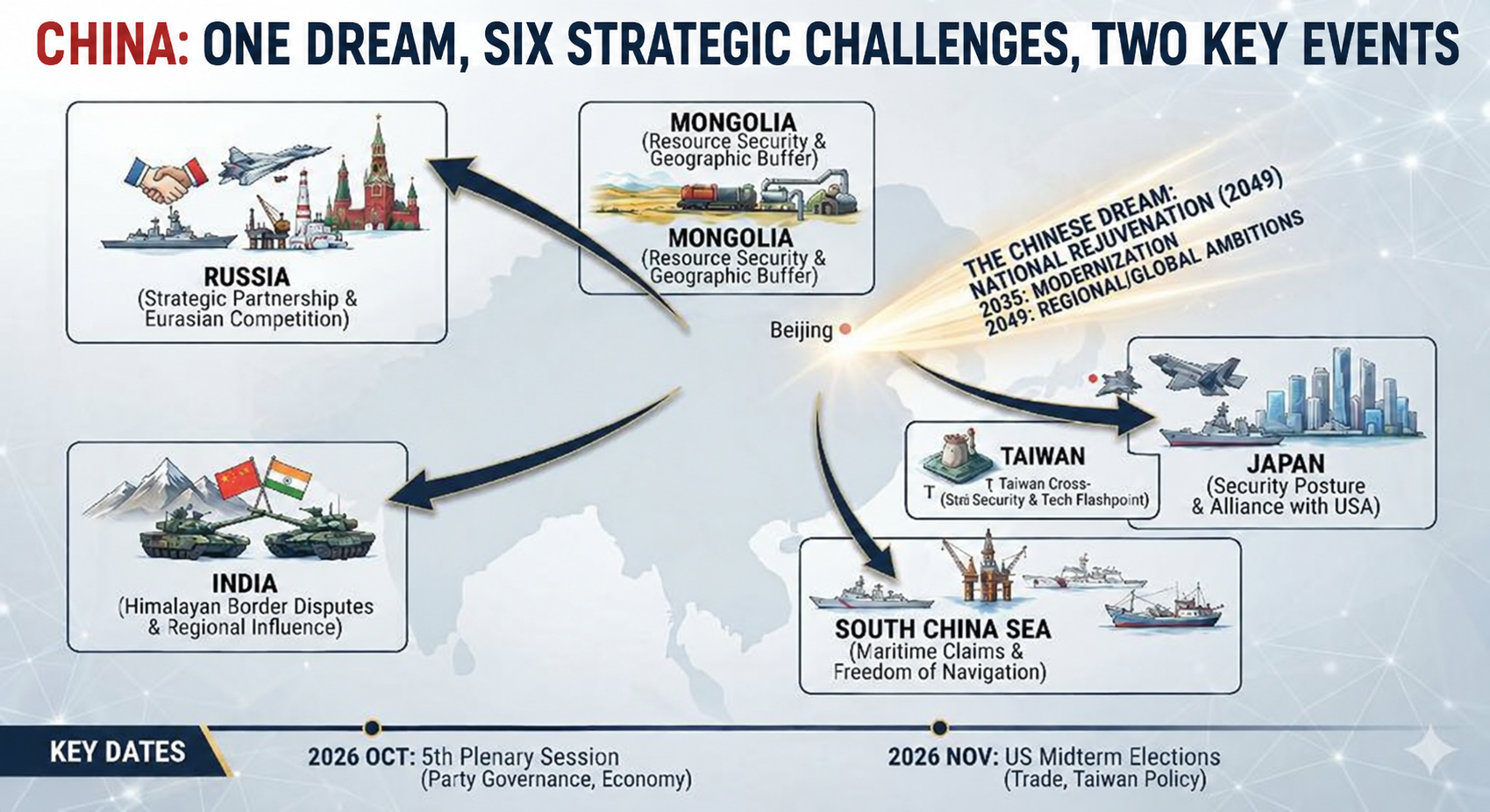
A Collusive Threat Environment. Understanding why joint operations matter to conventional deterrence requires first understanding the threat environment in which India operates. India faces a collusive threat and the possibility of concurrent or coordinated military pressure from both China and Pakistan. This is not merely a theoretical construct. The deepening military-to-military ties between Beijing and Islamabad, evidenced by technology transfer, co-developed weapons systems, and coordinated diplomatic positions, mean that India cannot plan its conventional responses in a sequential or siloed manner. It must be prepared to fight on multiple fronts and in multiple domains simultaneously.

Doctrine of Punitive Deterrence. Pakistan’s long-standing strategy has been of sponsoring cross-border terrorism while sheltering behind its nuclear umbrella (bleed India through a thousand cuts).  It has compelled India to rethink and change its conventional response. For decades, India’s posture was one of strategic restraint (absorbing provocations diplomatically and avoiding military action). That calculus has fundamentally changed as India has shifted toward a doctrine of punitive deterrence. Air strikes on terror camps have been carried out (Balakot in 2019 and Op Sindoor in 2025) as an instrument of punitive action.


Airpower Contribution to Conventional Deterrence. Deterrence refers to the ability to prevent an adversary from undertaking hostile action. It is achieved by convincing the enemy that the costs of aggression will outweigh any potential gains. Air power is an important part of military deterrence. It provides rapid military response options and creates strategic uncertainty for adversaries. The ability to strike with speed, precision, and unpredictability produces disproportionate strategic effects relative to the scale of force employed.


Misunderstood Roles. The Indian Air Force has repeatedly demonstrated that it can conduct joint operations while independently shaping strategic outcomes. Yet scepticism persists among some observers. Some view air power as an auxiliary arm supporting surface operations. This perspective is flawed as it ignores the inherent flexibility and reach of air power. Viewing air power through the narrow lens of close air support ignores its role in shaping the entire battlefield before the surface engagement begins.  To relegate the IAF to a support arm is to ignore the vertical dimension that prevents conflict from degenerating into attritional, terrain-bound warfare.


Air Superiority as an Enabler of Joint Operations. No element of joint warfighting is more foundational to conventional deterrence than air superiority. Control of the air domain enables all other joint force activities: it shields ground and maritime forces from enemy air attack, provides real-time intelligence that improves situational awareness across the force, and enables deep strike against adversary command nodes, logistics centres, and critical infrastructure. Conversely, the absence of air superiority exposes every other component of the joint force to attrition and denial. The objective is not to achieve a permanent air superiority across an entire area of operations. A window to enable uninterrupted operations would suffice.

SEAD/DEAD as the Gateway. The Suppression and Destruction of Enemy Air Defences mission is neither a secondary nor a preliminary task. It is the gateway through which the joint force enters the contested battlespace. An adversary’s integrated air defence network is its primary tool for denying the air superiority required for joint operations. The systematic suppression and destruction of that network (radars, fire-control systems, surface-to-air missile batteries, and command nodes) is therefore among the most operationally significant tasks the IAF performs and among the most strategically visible. An adversary that knows its air defence architecture can be comprehensively degraded in the opening hours of a conflict must factor that vulnerability into its pre-conflict calculations. That factoring is deterrence.


Demonstrated Capability and the IAF’s Evolution. The IAF has transformed from a tactical air force to a broad-spectrum aerospace power. The induction of airborne early warning and control systems gave the IAF the ability to manage the air battle across a vast area in real time. Aerial refuelling tankers extended strike ranges to operational depths. These capabilities fundamentally altered the adversary’s assessment of which assets were at risk. Stand-off precision capability enabled the IAF to engage hardened targets deep inside adversary territory without entering the engagement envelopes of the most capable surface-to-air missile systems.

Jointness as a Force Multiplier. While air power possesses independent strategic utility, its effectiveness increases when integrated into a joint operational framework. For India, the importance of this integration is amplified by the need for two-front planning. No single service has sufficient capacity to address the full scope of requirements on both fronts simultaneously. Joint planning that optimises the employment of air power across combat zones, that allocates strike, surveillance, airlift, and air defence assets according to operational priority rather than service entitlement, and that fuses the intelligence from all domains into a single coherent picture for commanders at every level, is the only organisational response adequate to the problem India faces.

The Maritime Dimension. Conventional deterrence is not a purely continental affair for India. The Indian Ocean Region is India’s strategic backyard and the artery of its economic prosperity. More than 80 per cent of India’s energy imports transit these waters. Any adversarial interdiction of these sea lanes, or a hostile maritime presence in the IOR, represents a direct threat to national interest. The Distributed Maritime Operations (DMO) concept being employed by the maritime forces aligns with India’s broader strategy to control key chokepoints and sustain an uninterrupted supply chain in the IOR. Airpower (integral with IN and AF), operating within a networked joint framework, makes the maritime deterrent credible against both state and grey-zone threats.

The Emerging Domain Space and Intelligence. The exploitation of space has become indispensable to joint conventional operations. Space assets provide the persistent surveillance, early warning, precision navigation, and communications infrastructure upon which joint warfighting depends. The key challenge that India’s joint space and intelligence architecture must address is fusing multi-source intelligence into a single, coherent operational picture that field commanders can act upon with confidence. Space-based surveillance, airborne radar, electronic intelligence, and human intelligence currently flow through separate chains before being reconciled at higher levels of command. An intelligence fusion center, is required to create a Common Operational Picture.


Building a Credible Joint Deterrence Architecture. An adversary assessing India’s military balance would also evaluate mobilisation speed, reinforcement capacity, and sustainment resilience as carefully as it evaluates weapon and platform inventories. Several priorities emerge for India in translating these principles into a credible conventional deterrent.

    • Strengthening joint planning at the operational and strategic levels must be institutionalised. The Joint Operations Control Centre, bringing all three services together into a single, real-time command-and-control node, is a critical step in this direction.
    • Military reorganisation should prioritise meeting future challenges. A command-level joint structure for the space and cyber domains is a high priority. The existing joint Command (Andaman and Nicobar Command) on the eastern seaboard needs to be strengthened, and a similar structure needs to be established on the western seaboard.
    • The theatre command concept is one means of achieving jointness, not an ultimate panacea. Its relevance is greater for expeditionary operations conducted with adequate resources, far from the homeland. The challenge is to formulate a model suitable for domestic needs.
    • Expanding indigenous capability in critical systems enhances strategic resilience. It reduces dependence on foreign supply chains.
    • Developing a multi-domain doctrine that genuinely integrates air, land, maritime, cyber, and space operations would enhance the deterrence value.
    • Aerospace Doctrine’s assertion (that “space exploitation is integral to achieving national security objectives”) needs to be translated into institutional practice.


Concluding Thoughts

The character of warfare is changing rapidly. In contemporary warfare, the actions in space affect outcomes on the ground, electronic warfare shapes the effectiveness of kinetic strikes, and information operations condition the political environment. In such a scenario, no single service can act alone.  The interconnectedness of the modern battlespace demands a high level of integration and coordination. The necessity of integrated multi-domain operations will increase as the security environment grows more complex.

India faces a two-front threat environment, has vast maritime responsibilities, and growing strategic obligations across the Indo-Pacific.

Joint air operations are the cornerstone for achieving credible conventional deterrence. The integration of aerospace power with land, maritime, cyber, and space capabilities is the work on which India’s deterrent credibility ultimately rests. All-around integration is required across planning, doctrine, and command architecture. An institutional culture needs to be shaped so that officers from all three services understand one another’s roles. India’s journey toward a credible conventional deterrent is inseparable from the journey toward jointness.  The future of deterrence will depend on how effectively India integrates all domains into a coherent, credible, and lethal strategic instrument.


Please Add Value to the write-up with your views on the subject.


1995
Default rating

Please give a thumbs up if you  like The Post?


For regular updates, please register your email here:-

Subscribe


References and credits

To all the online sites and channels.

Pics Courtesy: Internet

Disclaimer:

Information and data included in the blog are for educational & non-commercial purposes only and have been carefully adapted, excerpted, or edited from reliable and accurate sources. All copyrighted material belongs to the respective owners and is provided only for wider dissemination.


References: –

Cohen SP and Dasgupta S. “Arming without aiming: India’s military modernisation”, Brookings Institution Press (BIP). 2010.

Crowell  L.  “Multi-domain operations and the future of joint warfare”. Naval Institute Press (NIP). 2023.

Deptula, D. A. “Effects-based operations: Change like warfare”. Aerospace Education Foundation,  2001.

Government of India, Ministry of Defence. “Joint Doctrine of the Indian Armed Forces”. Headquarters, Integrated Defence Staff. 2023.

Gupta, A., “Building an arsenal: The evolution of regional power force structures”. Praeger. 2019.

Kapila, S., India’s defence modernisation: Structural constraints and strategic imperatives”. Journal of Defence Studies. 2021.

Air Mshl Anil Khosla. “Punitive deterrence: India’s evolving conventional response”. Blog “Air Marshal’s Perspective”, 2023. https://55nda.com/blogs/anil-khosla  

Air Mshl Anil Khosla. “Air superiority and joint operations: The SEAD/DEAD imperative”. Blog “Air Marshal’s Perspective”, 2024. https://55nda.com/blogs/anil-khosla

Ladwig, W. C. Indian military modernisation and conventional deterrence in South Asia. “Journal of Strategic Studies”, https://doi.org/10.1080/01402390.2014.942937, 2020.

Singh, S. “India’s military transformation: Challenges and imperatives”. Strategic Analysis 2020.

833: THE BATTLE FOR THRUST: INDIA’S QUEST FOR INDIGENOUS JET ENGINES


Article published in the Aug 26 edition of the “Life Of Soldier” Magazine. 


The commercial discussions between GE Aerospace and India for the F414 have hit a serious roadblock. The per-unit cost has reportedly nearly tripled, from an initial estimate of approximately ₹70-80 crore to well over ₹200 crore. Moreover, the critical technologies, including the Full Authority Digital Engine Control system, are reported to remain under GE’s control. The Tejas Mk-2, the AMCA, and the Twin Engine Deck-Based Fighter have all been built around the F414’s specific dimensions, meaning any switch now entails a structural redesign, new air-intake engineering, and full recertification that takes years.

Only a small group of countries, including the United States, Russia, France, and the United Kingdom, possesses the technological capability to independently design and manufacture advanced military and civilian aircraft engines. Despite decades of effort, India remains dependent on foreign suppliers for fighter aircraft engines. This dependence represents perhaps the single most important technological vulnerability in India’s aerospace ecosystem. The Kaveri programme, which was meant to resolve the problem, did not do so. Understanding why it did not and what it would genuinely take to do so is the most important defence-industrial question India currently faces.


Engine Development Challenges. Aero engines are among the most sophisticated engineering systems ever developed. Modern jet engines operate under extreme temperatures and pressures while delivering high efficiency, reliability, and performance. Developing a high-performance military turbofan is arguably the most complex engineering challenge in modern industry. It requires the precise synchronisation of thermodynamics, fluid mechanics, advanced metallurgy, and digital controls. The engine must operate reliably under extreme conditions, with turbine entry temperatures that frequently exceed the melting points of its components. The four technologies that need to be focused on are: –

    • Advanced Hot-Section Metallurgy to manufacture single-crystal turbine blades.
    • Thermal Barrier Coatings (TBC) to prevent advanced alloys from failing at temperatures exceeding 1,500°C.
    • Aerothermal Design and Core Codes to design codes to predict airflow, flame stability, and thermal stress accurately, enabling independent modifications and derivative engine designs.
    • Full Authority Digital Engine Control (FADEC) to manage everything from fuel metering to variable stator vanes in real-time.


Kaveri Experience

The Gas Turbine Research Establishment in Bengaluru began developing the Kaveri engine in the mid-1980s. The mandate was to develop an indigenous turbofan capable of producing around 80 kilonewtons of thrust with afterburner. The original completion target was 1996, which was later extended to 2009. The engine did not achieve the required thrust-to-weight ratio. Development challenges included compressor efficiency, turbine blade durability, excessive engine weight, and inadequate afterburner performance.  The programme reached a development plateau with a thrust level of approximately 73 kilonewtons. It was formally decoupled from the Tejas programme in 2008. The GE F404 was adopted as the primary powerplant.

But the Kaveri program was not a total waste. It produced important assets, including indigenous FADEC work, certified materials, accumulated engine test hours, and experience in integration and high-altitude testing. It created India’s first indigenous knowledge base in turbine engine design. It established testing facilities, trained engineers, developed computational design capability, and exposed India’s scientific community to the realities of high-performance propulsion engineering. Recent progress includes continued development of Kaveri derivatives for unmanned combat aerial vehicles (UCAVs) such as the Ghatak.

Effect of Technology Denial. Western nations imposed severe restrictions on sensitive technology transfer after India’s nuclear tests. These adversely affected India’s engine development challenges. India’s nuclear tests in 1998, in particular, triggered a period of comprehensive sanctions that froze several cooperative technology relationships at a particularly sensitive moment in the Kaveri programme’s development. Later, India was admitted to the Missile Technology Control Regime in 2016 and the Wassenaar Arrangement in the same year, and to the Australia Group and the Nuclear Suppliers Group waiver arrangement in earlier periods. These admissions improved India’s position as a purchaser of controlled technology. They did not automatically transfer the knowledge embedded in the manufacturing processes.  This reflects a broader reality: countries rarely transfer technologies that determine long-term military competitiveness.


Global Approach

Nations capable of manufacturing aircraft engines show that successful aero-engine ecosystems rely on long-term national commitment. The US combined wartime demand, government-funded research, a competitive industry, and strong collaborations among government, academia, industry, and military to build a competitive engine sector. France also followed a state-led approach. It regarded engine development as a strategic sovereign task and ensured programme continuity and the preservation of knowledge. The UK focused on excellence in materials science and turbine engineering. The government, on the other hand, helped to prevent setbacks such as Rolls-Royce’s near-collapse. Russia gave priority to self-reliance. It incurred high costs to maintain specialised design bureaus and industrial infrastructure. It took China 40 years to progress from the WS-10 to the WS-15 engines. China’s perseverance highlights the importance of continued investment, iterative learning, and constant policy support. Analysis of these approaches reveals four universal lessons: –

    • National self-sufficiency in propulsion is vital for national security.
    • Institutional continuity & state support are essential to preserve knowledge and retain institutional expertise.
    • Strategic Patience and project funding are required to achieve sovereignty despite slow initial results.
    • Synergistic ecosystems demand long-term partnerships among government, academia, R&D establishments, and private manufacturers.


Renewed Indian Effort: National Aero Engine Mission

Forty-four years after the Gas Turbine Research Establishment first began serious work on what became the Kaveri engine, India has launched something with a different institutional character. The National Aero Engine Mission was formalised in February 2026. NAEM is not another laboratory programme with an open-ended timeline. It is an organisational structure designed to coordinate amongst the agencies involved in aircraft engine development and manufacture. The ₹61,000-crore initiative aims to achieve self-reliance (Aatmanirbharta) in the design, development, and manufacturing of high-thrust fighter jet engines. Driven by the Gas Turbine Research Establishment, the mission aims to break decades of import dependence by 2035.

Task. The task of NAEM is cut out. Develop a defined product with a hard operational deadline, not a research thrust target, or a demonstrator. An engine with a specified performance envelope, a specified platform application, and a date by which it must be ready for flight testing, with the aircraft programme formally committed to using it. The Tejas Mk-2 and the AMCA are the obvious candidates. The AMCA, in particular, intended to be India’s first fifth-generation fighter, will require an engine in the 110-kilonewton class. If that engine is not developed indigenously, India will be forced to import the powerplant for its most strategically sensitive aircraft programme, thereby recreating exactly the dependency the AMCA is meant to resolve.

Aims and Objectives of the National Aero Engine Mission. The central aim of the mission is to establish India as an independent aero engine development nation. Key objectives include: –

    • Development of High-Thrust Engines. Co-develop a 120 kN-class engine (scalable to 130–140 kN) primarily for the AMCA Mk2 and future platforms. This engine would enable supercruise, stealth capabilities, high manoeuvrability, and an enhanced payload.
    • Indigenous Manufacturing Ecosystem. Establish domestic capabilities for design, testing, certification, and large-scale production.
    • Testing Infrastructure. The mission would effectuate the timely establishment of the National Aero Engine Test Complex (NAETC) to provide comprehensive ground and high-altitude testing.
    • Human Resources and Skills. Create thousands of specialised jobs in aerospace engineering, materials science, and advanced manufacturing. It will foster a robust talent pipeline through collaborations with academic institutions.
    • Dual-Use Technologies. Advances in high-temperature composites, coatings, and alloys will benefit civil aviation, power generation, and space sectors. India’s booming civil aviation market stands to gain significantly.


Success Imperatives.

Private sector participation with real accountability is essential to aerospace manufacturing. The Defence Research and Development Organisation’s laboratory structure has proven ill-suited to the iterative, commercially pressured development process required for engine production. A future engine program should integrate advanced manufacturing companies, startups, and research universities. What is needed is a structure in which one or more private sector aerospace companies, properly capitalised and with access to GTRE’s existing knowledge base, take on programme risk alongside the government. This is not a privatisation argument. It is an argument about what kinds of institutional incentives actually produce functional hardware.

A materials and manufacturing foundation is the need of the hour. The turbine blade problem cannot be solved by importing blades and assembling engines around them. India needs domestic capability in single-crystal casting, thermal barrier coatings, and the high-temperature alloy supply chain. Several Indian private-sector metallurgical companies have demonstrated capabilities in these areas.

Technology induction is required to speed up the development process. Structured access to technology through existing partnerships seems to be the only way out. Licence production is not the answer; knowledge of manufacturing methods needs to be shared. Companies such as Rolls-Royce, GE Aviation, Safran, and Pratt & Whitney have their own commercial and contractual reasons for not sharing the deepest layers of their process knowledge. The negotiation of that distinction matters enormously and should be a specific, explicitly stated objective of the technology transfer agreement rather than an outcome hoped for as a byproduct. It won’t be easy, and it won’t be cheap.


Concluding Thoughts

India’s aerospace ambitions cannot be fulfilled without mastering aero engine technology. An aero engine takes between fifteen and twenty-five years to move from concept to operational maturity, even under favourable conditions, and considerably longer under unfavourable ones. However, the engine problem is not unsolvable. It is genuinely hard, takes a long time, and requires sustained institutional commitment. France, Britain, the United States and Russia have solved it. China is in the process of solving it.

The success of the National Aero Engine Mission is a non-negotiable national priority. It needs to become India’s next successful strategic technology initiative through dedication, perseverance and institutional support. The Mission will not be judged by its initial test results or its early industry partnerships. It will be judged, a decade or more from now, by whether an Indian fighter is flying on an engine fully owned by India.


Please Add Value to the write-up with your views on the subject.


1995
Default rating

Please give a thumbs up if you  like The Post?


For regular updates, please register your email here:-

Subscribe


References and credits

To all the online sites and channels.

Pics Courtesy: Internet

Disclaimer:

Information and data included in the blog are for educational & non-commercial purposes only and have been carefully adapted, excerpted, or edited from reliable and accurate sources. All copyrighted material belongs to the respective owners and is provided only for wider dissemination.


References: –

  1. India Today. “India-US GE F414 AMCA fighter jet engine deal in limbo amid nearly 300 per cent increase in cost”. (24 Jun 2026). https://www.indiatoday.in/
  1. New Indian Express. “AMCA engine deal hits roadblock over GE’s threefold price demand”. (24 Jun 2026). https://www.newindianexpress.com/
  1. Times of India. “You have 5-7 years to develop 6th gen aero engines: Rajnath’s challenge for DRDO scientists”. (17 Feb 26). https://timesofindia.indiatimes.com/
  1. Defence Research and Development Organisation. (n.d.). “Gas Turbine Research Establishment (GTRE)”. Ministry of Defence, Government of India. https://www.drdo.gov.in/labs-establishment/gtre
  1. Ministry of Defence. “Tie-up processes under the National Aero Engine Mission launched”. Press Information Bureau. (2026, February 16). https://pib.gov.in/
  1. Defence Metallurgical Research Laboratory. Reports on single-crystal turbine blade technology and near-isothermal forging. DRDO Publications.(2021–2026).
  1. Rao, R. S. Why are engines the bottleneck in fighter jet manufacturing in India? Eurasia Review. (2026). https://www.eurasiareview.com/
  1. Gunston, B. “The development of jet and turbine aero engines” (4th ed.). Haynes Publishing.(2006).
  1. Mattingly, J. D. (2006). “Elements of propulsion: Gas turbines and rockets” (2nd ed.). American Institute of Aeronautics and Astronautics. https://doi.org/10.2514/4.861768
  1. Sarkar, S. (Ed.). “India’s defence industry: Challenges and opportunities”. Routledge. (2020).

832: PROJECT KUSHA on Battle Cry (India Today) and Republic TV


All About Project Kusha

One of the Important Pillars of India’s Sudarshan Chakra

Indigenous Air Defence Shield


Link Below:-


The same subject was also discussed on Republic TV:-


Please Add Value to the write-up with your views on the subject.


[ays_poll id=2


For regular updates, please register your email here:-

Subscribe


References and credits

To all the online sites and channels.

Pics Courtesy: Internet

Disclaimer:

Information and data included in the blog are for educational & non-commercial purposes only and have been carefully adapted, excerpted, or edited from reliable and accurate sources. All copyrighted material belongs to the respective owners and is provided only for wider dissemination.


English हिंदी