

842: OPERATION SINDOOR REVISITED


Operation Sindoor was a multi-domain, mostly non-contact military operation India carried out in the early hours of 7 May 2025. In the first phase, India carried out attacks on nine terrorist facilities associated with groups including Lashkar-e-Taiba and Jaish-e-Mohammed in Pakistan and in illegal Pakistan-occupied Kashmir. When the situation escalated, phase two was carried out with strikes being launched at military targets in Pakistan. Hostilities continued for about 88 hours before a ceasefire agreement was reached on 10 May.


Former CDS Gen Anil Chauhan (retired) delivered a talk on “Operation Sindoor and its Aftermath” on 25 August 2026.  This talk is significant from an analytical perspective.


Analytical Perspective and Takeaways

  • Military power serves as an instrument of political policy; the armed forces set their own military objectives based on the political aim. The military plans accordingly. This matters because it shows that Sindoor was designed as a limited, controlled operation rather than an open-ended war.
  • Political direction and freedom of action. The clear political directive was to send an unambiguous message that India will not tolerate cross-border terrorism. Therefore, the directive was that the action should be unthinkable, with no political pressure for immediate action, and carried out without failure and with suitable evidence. Clear intent and operational autonomy are ideal for the military.
  • Tactical Shift and evolution of India’s retaliatory doctrines (to preserve surprise and prevent operational predictability). Unlike the land route used post-Uri (2016) or the high-altitude/large-force air engagements used post-Pulwama/Balakot (2019), Operation Sindoor employed a “third option”: leveraging the lower airspace. Low-altitude operations kept the conflict threshold controlled, maximised surprise, and delivered high mission assurance without triggering immediate full-scale escalation. It was not about what weapons India possessed. It was about how those weapons were employed against the adversary’s surveillance and air-defence architecture. In military terms, this illustrates the importance of operational creativity over simply having superior hardware.
  • Redefining the area below the nuclear threshold. The operation has shown that India is capable of carrying out precise conventional strikes at targeted terrorist infrastructure within a carefully controlled time frame which remains below the nuclear escalation threshold, thus countering the ‘stability-instability paradox’ which adversaries rely upon.
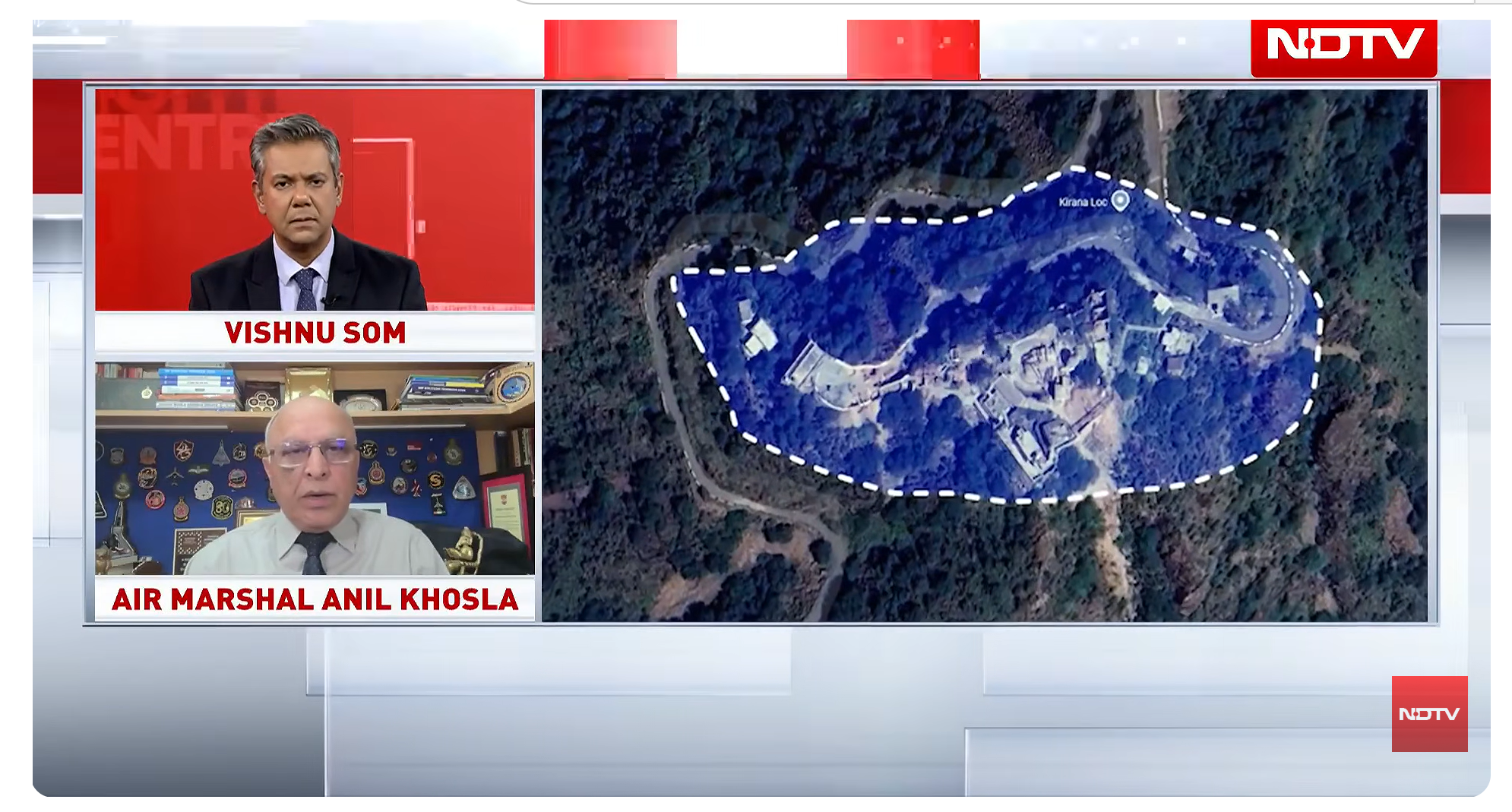
  • The fact that the strike hit the Kirana Hills has important strategic implications since it was not intended to target Pakistan’s nuclear infrastructure; if an intentional strike had been made on a nuclear-related facility, it might have been seen as an attempt to attack Pakistan’s strategic deterrent and would therefore have led to a very different escalation scenario. 
  • Skardu as a possible target. Skardu was a possible target but had to be changed to Bholari due to weather constraints. This shows India had multiple military options, rather than a single predetermined strike package. It also demonstrates the resilience and flexibility of IAF capability and planning.
  • On 10 May 2025, Pakistan pleaded for a ceasefire. India responded in its own time. This indicates that the aim was not merely to retaliate and jump at the first diplomatic opportunity. Instead, India chose to achieve its military objectives before agreeing to end the operations. This is an ideal example of aligning the military end-state with the political objectives.


  • Preparedness creates political choices. Peacetime shapes the options available during a crisis. If a military lacks long-range precision weapons, drones, ISR, electronic warfare, air defence and integration, political leaders have fewer options when a crisis occurs. Therefore, Sindoor resulted from years of military modernisation and capability development.
  • Multi-Domain Operation. It was India’s genuine multi-domain operation, involving the Army, Navy, and Air Force, along with cyber and information-warfare elements. The integration achieved during the operation validated the direction India had taken toward jointness.
  • Operation Sindoor was a controlled demonstration of India’s ability to calibrate force and capability to punish aggression without necessarily allowing every confrontation to become a full-scale war. The major lesson is that modern warfare is increasingly about precision, information, speed, networking and decision superiority rather than simply manpower or territorial capture.
  • Pakistan’s post-operation adjustments include reorganising its military command (by setting up a new CDF post) and seeking security agreements (the Mecca joint defence agreement between Pakistan, Saudi Arabia and Turkey), showing it is changing its approach.


Strategic Implications

The above analysis underscores a permanent shift in India’s strategic doctrine.  It indicates a pairing of firm political intent with evolving, technologically driven military execution. By adapting tactics every time (i.e. from ground raids to high-altitude strikes and now low-altitude/loitering assets), India maintains operational unpredictability while establishing clear redlines against cross-border terrorism.

Operation Sindoor is still going on. Although the official line since 10 May 2025 has been that a ceasefire or pause was agreed upon after Pakistan asked for it, the operation has not officially ended. By keeping it going in this way, India indicates that it sees its position following the Pahalgam incident (the “new red line”, the change from a policy of deterrence to one of declaring a willingness to take direct action) as a continuing stance, not as a single, one-off punitive operation which has now finished.


Discussed these aspects with Vishnu Som of NDTV on the Program “Left Right and Centre”.

Link to the discussion:-

Please Add Value to the write-up with your views on the subject.


2071
Default rating

Please give a thumbs up if you  like The Post?


For regular updates, please register your email here:-

Subscribe


References and credits

To all the online sites and channels.

Pics Courtesy: Internet

Disclaimer:

Information and data included in the blog are for educational & non-commercial purposes only and have been carefully adapted, excerpted, or edited from reliable and accurate sources. All copyrighted material belongs to the respective owners and is provided only for wider dissemination.


775: Podcast with Anmol


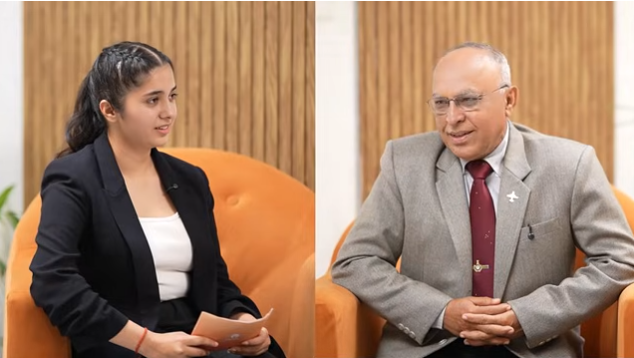
Had a very lively chat with Anmol. We talked about a variety of topics, ranging from personal life to life in the air force. The chat included aspects related to motivation, stress management, decision making, air power, deterrence, new domains of war, Info warfare and a whole lot of other issues.  One of the best podcasts.


Link to the podcast:-


Comments, views and suggestions are most welcome.


2071
Default rating

Please give a thumbs up if you  like The Post?


For regular updates, please register your email here:-

Subscribe


References and credits

To all the online sites and channels.

Pics Courtesy: Internet

Disclaimer:

Information and data included in the blog are for educational & non-commercial purposes only and have been carefully adapted, excerpted, or edited from reliable and accurate sources. All copyrighted material belongs to respective owners and is provided only for wider dissemination.


769: Trumpetrics on Nuclear Testing


  • Trump announced that the United States will “immediately” resume nuclear weapons testing, saying he’s instructed the Department of Defence (which he referred to as the “Department of War”) to “start testing our Nuclear Weapons on an equal basis” because other countries are allegedly doing so. 


  • He claimed that the U.S. “has more Nuclear Weapons than any other country”, and that Russia is second, China third — though he warned China could catch up in 5 years. 


  • When asked whether the testing would include underground/explosive nuclear tests, he did not rule out the possibility, saying: “You’ll find out very soon … we’re going to do some testing, yeah … if they’re going to do it, we’re going to do it.”


  • However, the Secretary,  Department of Energy  clarified the tests planned “will not involve nuclear explosions” (i.e., no full yield nuclear detonation) but rather “system tests … non-critical explosions” of parts/components. 


Discussion on the subject with Gaurav Sawant

on India Today TV.


On this special report, the focus is on a potential new global nuclear arms race, with insights from former Vice Chief of Air Staff, Air Marshal Anil Khosla, and ORF’s Sushant Sarin. The discussion delves into Russia’s new Poseidon ‘doomsday’ torpedo, China’s rapidly growing arsenal, and pronouncements from the US on nuclear testing. Air Marshal Anil Khosla gives his personal view on India’s strategic options, stating, ‘we can always unsheat the Saber, you know, Polish it and may be put it back and that that will suffice to give some signals.’ The programme explores whether these global shifts necessitate a revision of India’s long-standing ‘No First Use’ nuclear policy, especially in the context of persistent threats from nuclear-armed neighbours, China and Pakistan. The panel also analyses whether statements from Washington are mere posturing or signal a significant change in the international dynamic.


Comments and Value Additions are welcome.


2071
Default rating

Please give a thumbs up if you  like The Post?


For regular updates, please register your email here:-

Subscribe


References and credits

To all the online sites and channels.

Pics Courtesy: Internet

Disclaimer:

Information and data included in the blog are for educational & non-commercial purposes only and have been carefully adapted, excerpted, or edited from reliable and accurate sources. All copyrighted material belongs to respective owners and is provided only for wider dissemination.


English हिंदी