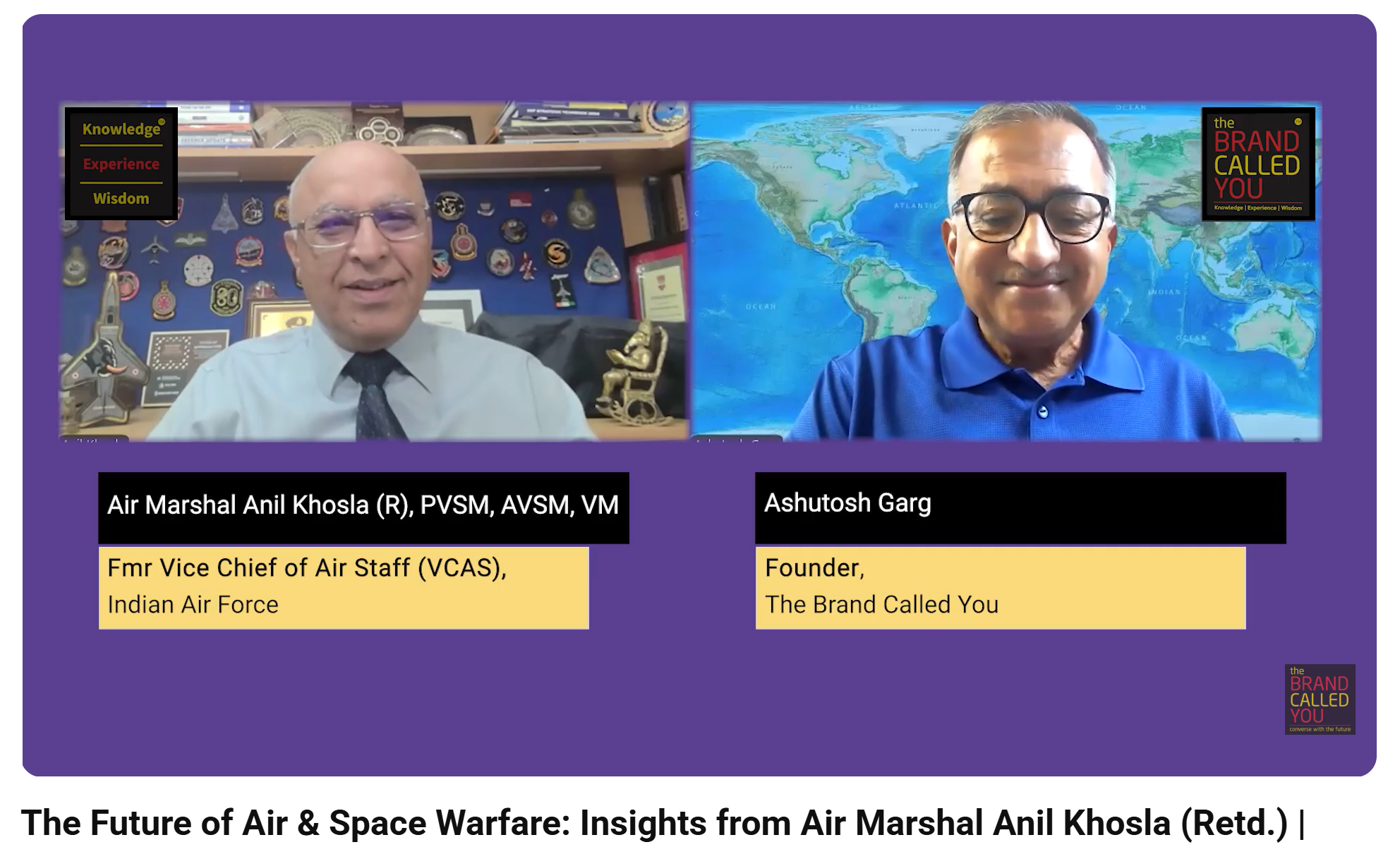
I was privileged to be hosted at “The Brand Called You (TBCY)”. I had an interesting, thought-provoking conversation with Ashutosh Garg on the rapidly evolving landscape of air and space warfare.
The conversation explored the changing nature of warfare, lessons from recent global conflicts, emerging technologies, and the capabilities needed for a resilient and future-ready aerospace ecosystem.
Adapt Quickly to Technological Change: The future of warfare is moving beyond pilot- and platform-centric models toward integrated ecosystems involving drones, AI, networked assets, and advanced technologies. Anticipating technological shifts will be increasingly important for future preparedness.
Build Resilience and Self-Reliance: Recent conflicts have highlighted the importance of indigenous capabilities, resilient supply chains, and secure infrastructure. From satellites and aerospace systems to cyber capabilities, resilience is becoming increasingly important.
Understand Information Warfare and AI: Modern conflicts extend beyond the physical battlefield into the information and cognitive domains. AI-enabled misinformation and perception management highlight the importance of media literacy, responsible AI development, and stronger information resilience.
Please Add Value to the write-up with your views on the subject.
For regular updates, please register your email here:-
Information and data included in the blog are for educational & non-commercial purposes only and have been carefully adapted, excerpted, or edited from reliable and accurate sources. All copyrighted material belongs to the respective owners and is provided only for wider dissemination.
The review was published in the IIRF Strategic Yearbook 2026
Co-authored with Rishi Athreya
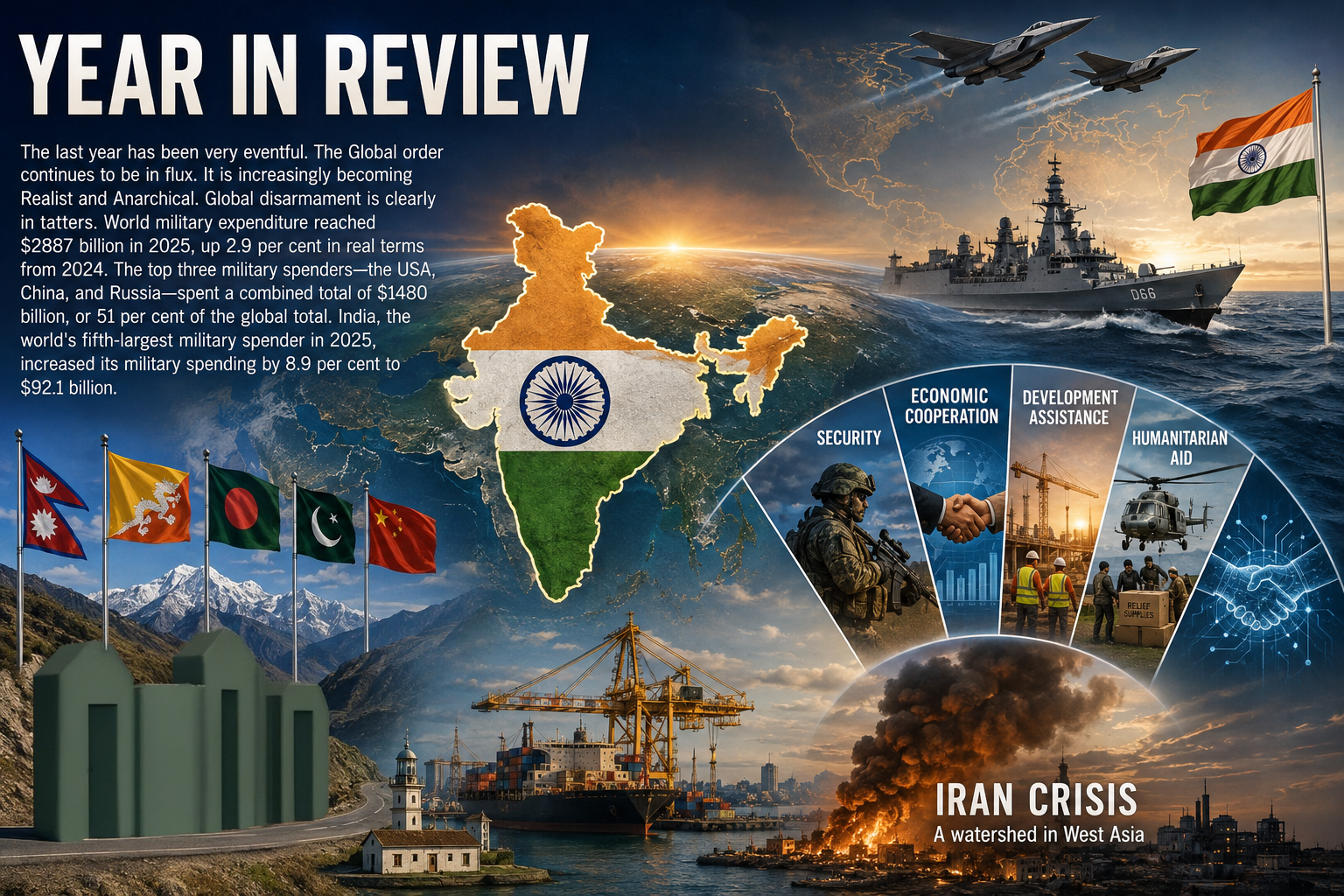
The last year has been very eventful. The Global order continues to be in flux. It is increasingly becoming Realist and Anarchical. Global disarmament is clearly in tatters. World military expenditure reached $2887 billion in 2025, up 2.9 per cent in real terms from 2024. The top three military spenders—the USA, China, and Russia—spent a combined total of $1480 billion, or 51 per cent of the global total. India, the world’s fifth-largest military spender in 2025, increased its military spending by 8.9 per cent to $92.1 billion[1].
Immediate Neighbours
Continental neighbours are of relevance to India.
Nepal: Nepal has a new government. This is a change to the entire political order. India continues to provide development assistance to Nepal[2]. India has resumed land trade with China through the Lipulekh Pass in Uttarakhand, Shipki La Pass in Himachal Pradesh, and Nathu La Pass in Sikkim[3]. India continues to have close ties with Bhutan[4].
Bangladesh: Bangladesh elections have restored an elected government. The current Prime Minister, Tarique Rehman of the Bangladesh National Party, represents a change from the Awami League. This government creates an opportunity for India to restore ties that had dipped during the Yunus caretaker government[5]. Here too India continues to assist in the political, security, economic and cultural domains[6].
Pakistan: OP SINDOOR has changed the entire South Asian scenario. One result is Pakistan’s rapid military modernisation. Pakistan’s military spending increased by 11 per cent to $11.9 billion[7]. Further, Pakistan is acquiring advanced military hardware that brings it nearly on par with India. However, this is largely driven by borrowing and overseas support. Moreover, Pakistan is integrated into collective security with Saudi Arabia[8]. Pakistan continues to be a global hub of terror. Pakistan is a base of operations and/or target for numerous armed, non-state militant groups, some of which have existed since the 1980s. The Lashkar-e-Taiba, Jaish-e-Mohammed, Harakat-ul Jihad Islami, Harakat ul-Mujahidin, and Hizbul Mujahideen are the main anti-India groups[9]. Pakistan has a unique ability to chase with the hounds and run with the hares[10].
China: China remains active along its borders with India and neighbouring countries. China’s establishment of new administrative counties near the tri-junction of Xinjiang, Afghanistan, and Pakistan-Occupied Kashmir (POK) must be understood not merely as an internal adjustment but as part of a geopolitical strategy with significant implications for India’s territorial sovereignty and regional security[11]. China is engaging in the Sinicisation of Tibet to reduce the legitimacy of the Tibetan Government in exile in India. Further, it is building dams on the rivers in Tibet to restrict water flow to India and increase the danger of flooding. These create threats that India would need to address[12].
Maritime Scenario: As a largely maritime nation, India faces vital challenges in this sphere[13]. India’s ‘Neighbourhood First’ policy and Vision MAHASAGAR, i.e. Mutual and Holistic Advancement for Security and Growth Across Regions[14]. The entire Indian Ocean Region remains important to India[15]. As part of its global strategy, China has been developing ports and other infrastructure in littoral countries of the Indian Ocean Region for many years. It has a maritime presence in the Indian Ocean Region, including anti-piracy escort missions, port calls, and the deployment of research and survey vessels. India’s relations with regional countries are distinct from those with other countries[16]. India continues to have security links with several littoral states. It also has links in economic, developmental, humanitarian, and technological spheres[17]. The recent crisis in Iran has disrupted maritime security[18].
Iran Crisis
The attacks by the US on Iran commencing 28 Feb 2026, titled OP EPIC FURY, are a mark of the greatest watershed in the West Asia region in several decades. These attacks are the culmination of several decades of effort by the US, Europe, Oman, and the IAEA to curtail Iran’s nuclear programme. Notwithstanding various efforts, Iran remained nuclear-capable. The US and Israel claim to have attacked because they feared an Iranian strike[19]. Israel launched OP ROARING LION on Iran alongside the US. Besides removing nuclear installations, the objective was the overall degradation of Iran’s missile capability. Both the US and Israel expected a short operation of around 72 Hrs. Israel has, for over a year, been targeting Iran[20]. This has clearly been a miscalculation. There are fears of long-term strategic overreach by the US[21]. In response, Iran claims to have never started a war. It claims that starting with the coup in 1953, and later support for Iraq in the war, the US has been hostile to Iran. Iran claims that US bases in the region pose a threat to it. Iran condemns the destruction of their infrastructure. Further, it claims a legitimate right to defend itself[22]. Iran continues to claim readiness to respond to attacks, even as mediation continues[23].
Doubtful Planning: As pointed out in a RUSI Commentary, there has been poor planning by the US in anticipating the implications for maritime security, especially in the Strait of Hormuz. While the US and Israel deployed aerial power, they provided little maritime support. Iran enjoys a geographic advantage and operational readiness in the region[24]. As highlighted in an NMF Commentary, the maritime aspect is a serious casualty of the US-Iran conflict. The US has apparently damaged parts of the Iranian Navy assets using land-based air power. However, the IRGC Navy (Sepah), a distinct entity, has not been damaged. The US has assets through CENTCOM. However, these may not be deployable in the narrow waters of the Strait of Hormuz and the Gulf of Oman[25]. Any US naval asset deployed in the region becomes a soft target[26].
Hormuz Strait: Iran has blocked the Strait of Hormuz. While a few ships are selectively allowed, any ship deemed affiliated with the USA or Israel is not permitted. In response, the USA has blockaded the Strait and is stopping ships bound for Iranian ports[27]. Saudi Arabia has reportedly expressed concern to the US administration that its action may encourage the Iran-backed Houthis to attack and disrupt Red Sea shipping routes, as was the case from 2023 to 2025. Iran has said that it would threaten trade in the Persian Gulf, Red Sea and Gulf of Oman if the US “create[s] insecurity for Iran’s commercial vessels”, describing the US action as a “prelude to a violation of the ceasefire”[28]. Irrespective of a ceasefire being announced, the US claims that it is serving as a deterrent to Iran[29]. The Strait of Hormuz remains a flashpoint. The USA claims to be enforcing a blockade on Iranian ships[30]. However, Iran claims that its ships are crossing the Hormuz Strait[31]. At another level, Iran is treating US actions as piracy and terrorism[32].
Negotiations: Pertinently, the USA has released a statement claiming that there is ample legal justification for the attack on Iran. They claim that even after June 2025, hostilities between Iran, Israel and the USA continued. They also assert that negotiations with Iran failed[33]. Conversely, Iran claims that the attack was launched amid negotiations[34]. A day before the commencement of OP EPIC FURY, Iran released a statement that claimed that negotiations were going well[35].
Israel Factor: Iran considers the US a proxy for Israel[36]. A noteworthy point is that the USA has openly supported Israel[37]. In some ways, Israel is a major factor in the West Asian scenario. Israel and the US said that Pakistan’s agreement did not include Lebanon. Iran said any negotiations with the US would be “unreasonable” if the Israel–Hezbollah conflict were to continue[38].
GCC Countries: Iran’s strategy to cause a rift between the Arab states and their US and Israeli allies appears to have failed; rather, it had an opposite effect of unifying them in their opposition to Iran and improving their security bond with America and possibly with Israel further. At the High-level GCC summit in Jeddah on 28 April 2026, the six GCC members Bahrain, Kuwait, Oman, Qatar, Saudi Arabia and the United Arab Emirates supported American action. Emphasising the need to secure the Strait of Hormuz’s opening, which impedes the flow of one-fifth of the world’s oil and liquefied natural gas supplies, the US must caution that any finalised deal must result in a permanent, long-term arrangement[39]. At a deeper level, the GCC Countries have a larger oil supply than Iran. Moreover, they have invested in Artificial Intelligence and technology. This gives them a clear edge over Iran, as well as China and the USA[40].
Russian Stance: Russia remains a major player in the region and globally. It is an active party in the war in Ukraine. It is also present geographically in the West Asian context. Russia is a continental neighbour of Iran. Their relationship has long been troubled, driven by pragmatic considerations. The Comprehensive Strategic Partnership was signed in 2025[41]. It is not a mutual defence agreement. Russia was quick to condemn the attacks on Iran. A key point was that these attacks occurred while Iran was engaged in negotiations, including on the nuclear issue. Russia claims this attack is akin to the 2003 attack on Iran, based on false claims of weapons of mass destruction[42]. Most recently, the Iranian Foreign Minister Abbas Araghchi visited Russia and met President Vladimir Putin. Russia commended Iran for facing the American aggression[43]. Russia appreciates India’s multi-pronged foreign policy and respects it unconditionally. However, it believes in the particularly privileged strategic partnership with Russia[44].
Sanctions: The USA has applied sanctions on China for buying and refining Iranian Oil[45]. These target independent “teapot” oil refineries in China, primarily in Shandong Province, because they continue to import and refine Iranian crude oil[46].
Talks and Mediation: Pakistan is mediating talks between the US and Iran, and issues under discussion include freedom of navigation through the Strait of Hormuz, Iran’s nuclear and ballistic programme, reconstruction and sanctions, and a long-term peace agreement. On 11 April, talks were held in Islamabad, Pakistan’s capital. Both sides reported progress, but they reached no agreement. No further talks have been confirmed[47]. Pakistan has been facilitating talks between the USA and Iran. This is an example of Pakistan’s effective Perception Management. It has long been very effective in the Cognitive and Information domains.
Challenges for India: The recent crisis in Iran has once again posed a maritime challenge[48]. There is the targeting of civilians, of infrastructure and of commercial shipping. It also raises economic concerns, including energy, fertilisers, and food security[49]. The sinking of IRIS Dena by the US is a diplomatic incident with extensive consequences[50]. From India’s perspective, the issue has raised questions about whether the entire Indian Ocean could be seen as India’s sphere of influence. While India is not expansionist, deeper strategic challenges remain[51].
Multilateral Reactions. The current situation in the Strait of Hormuz has drawn the attention of multilateral organisations, especially the International Maritime Organisation, and the United Nations Security Council.
IMO Task Force: A major concern has centred on the safety of merchant mariners. The International Maritime Organisation has raised this issue[52]. France and the UK chaired a conference on the Strait of Hormuz Maritime Navigation Initiative. The conference brought together around fifty non-belligerent states[53]. The meeting underlined the international community’s determination to support freedom of navigation, uphold international law, and safeguard global economic stability and energy security. France and the United Kingdom confirmed that they are establishing an independent, strictly defensive multinational mission. It would protect merchant vessels, reassure commercial shipping operators, and conduct mine-clearance operations. Further planning is underway to implement this multinational force[54].
United Nations Resolution: the SC Resolution of 11 March 2026, which demanded that Iran stop the attacks on its neighbours[55]. The UN Security Council has failed to adopt a resolution aiming to boost security in the Strait of Hormuz as the critical shipping corridor remains largely closed to global trade and the transport of humanitarian aid, with war continuing to rage across the region. Bahrain submitted the text alongside Jordan, Kuwait, Qatar, Saudi Arabia, and the United Arab Emirates. Eleven countries voted in favour of the draft, which the permanent members vetoed. China and Russia voted in favour, while Colombia and Pakistan abstained. One concern of China and Russia was that the resolution was biased against Iran and failed to mention the role of the USA and Israel in initiating the attack[56].
UN Open Debate: The United Nations Security Council held a High-Level Open Debate on the Safety and Protection of Waterways in the Maritime Domain[57]. The Secretary-General highlighted the current disruption to global shipping caused by the blockade of the Strait of Hormuz. He mentioned the humanitarian effects, including in energy and food security. The SG also mentioned the dangers faced by seafarers and commercial vessels. Other issues raised were piracy, terrorism, and damage to critical maritime infrastructure. The Black Sea Initiative is cited as a successful example of a humanitarian navigational agreement, even during a war[58]. Several member nations raised broader concerns about commercial vessels, seafarers, economics, piracy, and shadow fleets[59]. China made a statement condemning the attack by Israel and the USA on Iran. China commended Pakistan’s mediation efforts. Further, China raised issues of UNCLOS, Piracy, and Ocean Governance[60]. China also expressed concern about the situation in Gaza and the humanitarian fallout. They believe that Israel is unnecessarily attacking Gaza, and the two-state solution is non-negotiable[61]. Russia continues to hold the USA and Israel responsible for the war in Iran. Further, they hold that in times of war, a coastal State under attack may limit navigation in its territorial waters for security purposes. Russia also raised concerns about energy, the economy, fertilisers, and food security[62]. The USA also lamented China and Russia vetoing the aforementioned resolution. The USA also mentioned the blockade of the Strait of Hormuz. The support by Iran of the Houthis in the Red Sea and the Gulf of Aden is also condemned. They highlighted the issue of nuclear non-proliferation. A concern raised was around sea mines supposedly planted by Iran. Finally, the USA called for commercial shipping, maritime finance and insurance, humanitarian aid agencies, and militaries to come together to address this situation. The USA mentioned the need for an anti-piracy force in the Strait of Hormuz[63]. The Baltic states also share concerns about navigation in the Strait of Hormuz[64]. The UK condemned the veto on the UN resolution. They stressed the need to open the Strait of Hormuz and highlighted their joint efforts with France[65]. In this context, the IMO mentioned freedom of navigation without tariffs. They also said seafarers are being evacuated[66].
Ukraine War
The war in Ukraine continues unabated, with several consequences.
Military Spending: The main contributor to the global increase in military spending in 2025 was a 14 per cent rise in Europe to $864 billion. Spending by Russia and Ukraine continued to grow in the fourth year of the war in Ukraine. At the same time, ongoing rearmament by European NATO members drove the sharpest annual growth in spending in Central and Western Europe since the end of the Cold War. Russia’s military spending grew by 5.9 per cent in 2025 to $190 billion, bringing its military burden to 7.5 per cent of GDP. Ukraine, the seventh-largest spender in 2025, increased spending by 20 per cent to $84.1 billion, or 40 per cent of GDP. The USA made no new allocation for Ukraine in 2025[67].
Changing US Stance: The USA has reduced assistance to Ukraine. The European Union, the UK and NATO are picking up the tab[68]. Some argue Europe should emerge as a military bloc independent of the USA[69]. There are calls to use the European Defence Industrial Programme to build more weapons within Europe. Europe is described as a sleeping giant[70]. Ukraine, for its part, calls for more support from Europe and NATO. It links the broader European safety from Russia to the Ukrainian front. There is even a view that the USA is appeasing Russia to the detriment of Ukraine and even Europe[71].
Maritime Aspects: Russia, at another level, accuses Ukraine of armed attacks on civilian vessels flying the Russian flag or transporting Russian energy resources in different waterways around the globe. These concerns affect seafarers, energy, the environment, and trade. Russia claims that attacks are occurring on the coasts of countries supporting Ukraine, which raises questions about their complicity in these attacks. The Black and Mediterranean Seas, and the Bosphorus Strait, are mentioned as sites of these attacks. Russia suggests upholding UNCLOS 1982 to prevent future incidents[72]. On the other hand, the EU is concerned that Shadow Fleets support the Russian war economy[73]. Nordic countries also worry about Russia’s interference with the satellite navigation system in the Baltic Sea[74].
Minerals Deal: The US and Ukraine signed a deal granting the US access to Ukraine’s vast mineral wealth, including Critical Minerals[75]. This is supposed to give the US access to mining while recognising Ukraine’s ownership. This pact would make it difficult for the USA to recognise Russian sovereignty over Ukrainian territory and deter further territorial claims[76].
China Factor: Some view China as supporting Russia in the war in Ukraine. China has supplied military supplies, including Drones. China is also buying oil from Russia[77].
Sanctions: The USA has applied sanctions on both Iran and Russia. These are in response to Iran’s support for Russia in the Ukraine War[78].
Global Energy Scenario
Both wars are affecting the global supply of natural resources and their prices[79].
Oil: A major consequence of this crisis is the need to use alternative, often more expensive, sea routes[80]. Around 20% of global petroleum and 20% of liquefied natural gas traverse the strait each year. Pre-conflict, around 3,000 vessels used the strait each month. Their numbers now stand at around 5% of this level. This has pushed up global oil and gas prices (benefiting both Russia and, temporarily, Iran). Several Arab states were forced to cut or suspend oil production due to Iranian attacks[81]. Russia remains India’s leading supplier of Hydrocarbons[82].
Effect on Fertiliser: The sustained reduction in LNG production and/or shipments from the Gulf (Qatar supplies around 10% of globally traded natural gas) will affect worldwide nitrogen fertiliser production. Natural gas is both a key feedstock and the primary energy source for producing ammonia, the building block for all nitrogen fertilisers. Other ingredients include urea, Phosphate, and Sulphur. India is particularly affected by these shortages[83]. Fertiliser shortages also threaten major global food insecurity[84].
Alternative Energy Routes: Only Saudi Arabia and the UAE have operational crude oil pipelines that could reroute flows to bypass the Strait of Hormuz. While additional capacity may exist in major pipelines to bypass the Strait, the logistics and supply chains needed to reroute and export substantial flows have not been tested under stress[85].
Maritime Insurance: Opening the Strait of Hormuz remains a grave issue. A deeper problem is whether commercial underwriters will insure vessels at reasonable rates. This would essentially need a political solution[86]. One suggestion is for India to have national Protection and Indemnity Clubs[87]. Most recently, the Government of India has approved this in principle[88].
Indian Energy Situation. India has made significant strides in energy and climate change.
Power Generation: India is successfully balancing the twin goals of meeting rising electricity demand and promoting sustainability. According to the International Energy Agency, 85% of the increase in global electricity demand over the next three years will come from emerging and developing economies. As one of the fastest-growing major economies, India plays a central role in the global energy transition. India’s share in global primary energy consumption is projected to double by 2035. Electricity generation has increased from 1,168 billion units (BU) in 2015–16 to an estimated 1,824 BU in 2024–25. Similarly, total installed capacity has grown from 305 gigawatts (GW) in 2015–16 to a projected 475 GW in 2024–25[89].
Multiple Energy Sources: India’s energy journey is no longer defined by a single source; it’s now drawing strength from solar parks, rooftop panels, hydrogen pilots, modernised nuclear frameworks, smart meters, and digital platforms. Milestones such as expanding renewable capacity, advancing the National Green Hydrogen Mission, strengthening DISCOMs, and building the India Energy Stack reflect a structured, forward-looking transition. Policy reform, infrastructure investment, technological innovation, and global cooperation support this transformation. As India moves toward its Net Zero 2070 commitment, the evolving energy mix shows that growth and sustainability can go hand in hand. India is redesigning how power is produced, delivered, and shared for a future that is secure, sustainable, and self-reliant[90]. India is increasing its use of renewable energy, and the country now ranks third globally[91].
Emerging Trends
Events over the past year point to a few emerging trends to watch in the coming years. The war in Ukraine remains a stalemate. The West Asia scenario got more complicated with the US-Israel attacks on Iran. This is also an asymmetric conflict and remains inconclusive. Both these conflicts show the chasm in NATO. While continental Europe is fighting against Russia in the Ukraine War, the USA has reduced its support. While the EU and even the UK offer diplomatic support to the USA in West Asia, this does not translate into military backing. Russia is the active party in the war in Ukraine. Iran has been supporting Russia. The USA sanctioned this. China has also been supporting Russia. Currently, both Russia and China are providing diplomatic support to Iran against the USA. The partnership agreement, while not necessarily military, has political objectives. While it may not be obvious, there are currently two powers, namely the USA and Russia, at war, where the other supports the adversary. China, while not a party to either war, is on the opposite side to the USA.
Both wars are linked in the maritime sphere. Discussing one leads to the other. There are concerns about maritime aggression by both the USA and Russia. Russia, for its part, accuses Ukraine of maritime hostility. China, while apparently concerned about the USA’s maritime belligerence in the Iran War, is itself confrontational in the South China Sea. The concerns of the UN and the IMO, supported by France and the UK, show that the Hormuz Strait has morphed from a military issue to a constabulary one. The IMO is taking positive steps to address humanitarian issues.
The Iran War is also in the Cognitive domain, with both sides making claims and counterclaims. While specific battles and incidents are a matter of detail, the underlying issue is around the legitimacy of the USA and Israel invading Iran. Moreover, there is the whole issue of whether Iran is justified or not in building up an arsenal, including nuclear weapons.
Please Add Value to the write-up with your views on the subject.
For regular updates, please register your email here:-
Information and data included in the blog are for educational & non-commercial purposes only and have been carefully adapted, excerpted, or edited from reliable and accurate sources. All copyrighted material belongs to the respective owners and is provided only for wider dissemination.
[22] Government of the Islamic Republic of Iran, (02 April 2026), President Pezeshkian says Iran has never initiated war, https://irangov.ir/detail/479346
[32] Ministry of Foreign Affairs, Iran, (21 April 2026), Statement by the Ministry of Foreign Affairs regarding the US attack on an Iranian commercial vessel and the hostage-taking of Its crew and their families, https://en.mfa.gov.ir/portal/newsview/786655
[34] Government of the Islamic Republic of Iran, (02 April 2026), President Pezeshkian says Iran has never initiated war, https://irangov.ir/detail/479346
[35] Government of the Islamic Republic of Iran, (27 Feb 2026), Significant Progress Made in Third Round of Iran–U.S. Talks in Geneva, FM Says, https://irangov.ir/detail/478575
[36] Government of the Islamic Republic of Iran, (02 April 2026), Ibid
[37] US Department of State, (21 April 2026), Ibid
[41] Ministry of Foreign Affairs of the Russian Federation, (02 Oct 2025), Foreign Ministry statement in connection with the entry into force of the Treaty on Comprehensive Strategic Partnership between the Russian Federation and the Islamic Republic of Iran, https://mid.ru/en/foreign_policy/news/2050909/
[42] Permanent Mission of the Russian Federation to the UN, (28 Feb 2026), Statement by Permanent Representative Vassily Nebenzia at UNSC Briefing in connection with US and Israeli Strikes against Iran, https://russiaun.ru/en/news/28022026
[44] The Ministry of Foreign Affairs of the Russian Federation, (25 April 2026), Foreign Ministry Spokeswoman Maria Zakharova interview with an Indian news website Firstpost, April 25, 2026, https://mid.ru/ru/detail-material-page/2100214/?lang=en
[59] United Nations, (27 April 2026), Immediately Restore Freedom of Navigation through Strait of Hormuz, Speakers Urge in Security Council Condemning Critical Waterway’s Use as ‘Bargaining Chip’, SC/16349, https://press.un.org/en/2026/sc16349.doc.htm
[62] Permanent Mission of the Russian Federation to the UN, (27 April 2026), Statement by Permanent Representative Vassily Nebenzia at a UNSC Briefing on the Safety and Protection of Waterways in the Maritime Domain, https://russiaun.ru/en/news/27042026
[64] Permanent Mission of Iceland to the UN Statements, (27 April 2026), N5 Statement at the Security Council Open Debate on the Safety and Protection of Waterways in the Maritime Domain
[70] European Commission, (10 Feb 2026), Speech by Commissioner Kubilius at the Plenary Session of the European Parliament “Building a stronger European defence in light of an increasingly volatile international environment”, https://ec.europa.eu/commission/presscorner/detail/en/speech_26_367
[72] Permanent Mission of the Russian Federation to the UN, (27 April 2026), Ibid
[73] Delegation of the European Union to the United Nations, (27 April 2026), EU Statement – UN Security Council: The Safety and Protection of Maritime Waterways
[82] The Ministry of Foreign Affairs of the Russian Federation, (25 April 2026), Foreign Ministry Spokeswoman Maria Zakharova interview with an Indian news website Firstpost, April 25, 2026, https://mid.ru/ru/detail-material-page/2100214/?lang=en
On 11 April 2026, Saudi Arabia’s Ministry of Defence confirmed the arrival of a massive Pakistani military contingent at its King Abdulaziz Air Base. Approximately 13,000 troops joined the 10,000 Pakistani personnel already stationed in the Kingdom. This brings the total to over 23,000. Between 10 and 18 Pakistan Air Force fighter jets, support aircraft, and missile interceptors arrived alongside them. The last comparable Pakistani deployment to the Gulf was during the 1991 Gulf War. This military move is of consequential significance at a time when the Middle East is on fire.
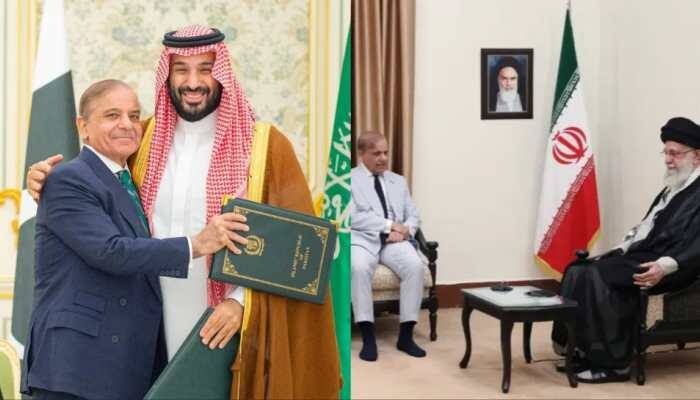
Strategic Mutual Defence Agreement (SMDA). Pakistan and Saudi Arabia signed the SMDA on 17 September 2025. Previous cooperation between them was limited to military training, advisory roles, and limited support on security matters. The SMDA fundamentally changed the character of their relationship. It also has a collective security clause that suggests that “an attack on one country is considered an attack on both”. The recent deployment of Pakistani troops and fighter jets in Saudi Arabia marks the first major operational activation under the SDMA. It represents a significant escalation from earlier engagements between the two countries.
Pakistani Deployment. The deployment of PAF assets and ground forces suggests that the reality is considerably more serious than a symbolic gesture. The strategic logic of the deployment’s location is also noteworthy. King Abdulaziz Air Base is located in the heartland of Saudi Arabia’s energy infrastructure. Important oil infrastructure, i.e. the Abqaiq processing facility and the Ras Tanura terminal, is in this region. Reportedly, the missile interceptors were dispatched earlier following Iranian strikes on Gulf targets in March 2026. The phased deployment suggests that it is a deliberate, staged increase of Pakistan’s forces in the Kingdom. The air assets provide enhanced interception capability against the drone and missile threats that have characterised Iranian and Houthis’ offensive operations. The ground forces serve a dual purpose: deterring Houthi incursions from the south and freeing Saudi forces for higher-technology defensive and offensive operations.
Political Signalling. Some analysts still characterise the SMDA as primarily a political signal of solidarity. Pakistani officials have been careful with their framing. The forces are “not there to attack anyone.” The deployment is a form of defensive cooperation under an existing bilateral agreement. Saudi officials described it as aimed at “enhancing joint military coordination, raising operational readiness, and supporting security and stability at both the regional and international levels.” The language is measured. The military footprint is not. This transforms Pakistan from a secondary security provider into a primary deterrent.
The Diplomatic Tightrope. What makes Pakistan’s position uniquely complex is what was happening in Islamabad at the same time. Even as Pakistani jets were landing in the Eastern Province, Pakistan was hosting direct US-Iran ceasefire negotiations in its capital. Pakistan’s Army Chief, General Asim Munir, visited Riyadh and Tehran during this period. It indicates that Pakistan is trying to maintain both relationships simultaneously. Reuters reported that PAF jets provided a military escort for Iranian officials coming to Islamabad for the peace talks. Pakistan was, in the same week, escorting Iranian diplomats to safety and sending troops to Saudi Arabia against Iran. The diplomatic tightrope does not get more precarious than that.
Economic Dimension. Pakistan’s involvement cannot be understood without its economic context. Pakistan’s economy has been under severe stress. Gulf remittances are a structural pillar of its balance of payments. Saudi financial bailouts have repeatedly given Islamabad breathing room to prevent default. The troop deployment reflects a relationship that is simultaneously strategic, institutional, transactional, and above all, symbiotic. Pakistan is providing the military power and the associated nuclear umbrella. In return, Saudi Arabia would provide the financial support to keep Pakistan’s economy afloat. Concurrent with this military deployment, Saudi Arabia and Qatar pledged an additional $5 billion in financial support to Pakistan. The Jerusalem Post and Gulf analysts have described this bluntly as a “military repayment” system.
Regional Stakeholder. How the key actors read this deployment reveals the full complexity of what Pakistan has stepped into.
Saudi Arabia views the SMDA’s activation as long overdue. A formalisation of “Muslim brotherhood” solidarity and a critical component of strategic diversification at a moment when the widening conflict in West Asia has strained US reassurances. For Riyadh, Pakistani forces provide a tangible backstop that no amount of American diplomatic signalling can substitute.
Iran officially welcomed the SMDA when it was signed, labelling it as part of a “regional security system.” However, the circumstances for this deployment are different. A nuclear-armed state has deployed its doorstep, on the side of its principal regional adversary. The risk of Iranian miscalculation cannot be dismissed.
Israel faces more intricate repercussions. Pakistan’s presence constrains Iranian offensive options against Saudi targets. In some ways, it serves Israeli interests by restricting the opening of multiple fronts. But it also brings a nuclear-armed hostile state into the region. Israel would be watching the developments with sustained attention.
India is monitoring closely and quietly. The combat experience Pakistani forces will accumulate in a high-intensity multi-domain environment, the financial windfalls from Gulf support, and the deepening military-institutional ties with well-equipped Gulf partners. All of this has implications for India’s security calculus. The Line of Control is not the Eastern Province. But armies learn, adapt, and bring lessons home. India would be unwise to treat this deployment as a matter of purely West Asian concern.
Challenges. Pakistan’s military is already involved with the Afghan border, the Line of Control with India, and domestic counterterrorism operations. Now, a major overseas deployment in an active conflict zone has been added to the commitments. Sustaining 23,000 personnel in the Gulf while maintaining domestic readiness is a significant challenge for resources and logistics. The escalation risk is also equally real. Pakistani forces are positioned in a high-readiness status region. In this region, miscalculations have already produced multiple unintended engagements. If Iranian strikes resume against Saudi energy infrastructure, Pakistani personnel could be caught in the crossfire. The SMDA’s collective defence clause obligates a legal and political response. Defensive cooperation can rapidly escalate into direct involvement. Pakistan is a nuclear-armed state. Its conventional forces in the Gulf operate under the implied umbrella of that deterrent. Every actor in the region is aware of this. It shapes calculations in ways that are difficult to model and impossible to predict.
Concluding Thoughts.
It is the first time since 1991 that Pakistan has committed forces at this scale to an active crisis zone outside its immediate neighbourhood. The SMDA has moved from paper to practice. A nuclear-armed state is now a frontline participant in the most volatile regional security environment on the planet.
Pakistan’s deployment to Saudi Arabia is either one of five things, or a combination of them.
Honouring of the treaty obligation.
Sustenance of financial relationship.
Diplomatic signalling.
Establishment of deterrence posture.
Acceptance of strategic risk.
The move could either strengthen deterrence and contribute to de-escalation or deepen polarisation and raise the risk of miscalculation. It will depend on decisions made in Tehran, Riyadh, Washington, and Islamabad in the weeks ahead.
What is already clear is that Pakistan has crossed a threshold (willingly or under duress). The coming months will determine whether that crossing was wise.
Please Add Value to the write-up with your views on the subject.
For regular updates, please register your email here:-
Information and data included in the blog are for educational & non-commercial purposes only and have been carefully adapted, excerpted, or edited from reliable and accurate sources. All copyrighted material belongs to the respective owners and is provided only for wider dissemination.
References: –
“Pakistan sends military force, jets to Saudi Arabia under 2025 defence pact”, Al Arabiya English, 11 Apr 26. https://english.alarabiya.net (or relevant article URL)
“The Saudi defence ministry says military force from Pakistan reached King Abdulaziz Air Base” Arab News, 11 Apr 26. https://www.arabnews.com
“Pakistan sends a military force to Saudi Arabia as part of a pact”, Bloomberg, 11 Apr 26. https://www.bloomberg.com/news/articles/2026-04-11/pakistan-sends-military-force-to-saudi-arabia-as-part-of-pact
“Understanding the Pakistan–Saudi defence agreement”, Global Security Review, 03 Nov 25.
“Why did Pakistan deploy soldiers and fighter jets to Saudi Arabia?”, The New Arab, Apr 26. https://www.newarab.com/news/why-did-pakistan-deploy-soldiers-fighter-jets-saudi-arabia
“Pakistan sends fighter jets to Saudi Arabia under a mutual defence pact”, Reuters, 11 Apr 26. https://www.reuters.com/world/asia-pacific/saudi-arabia-says-pakistan-sends-fighter-jets-kingdom-under-defence-pact-2026-04-11/
“Saudi Arabia-Pakistan Strategic Mutual Defence Agreement: Implications for India”, Vivekananda International Foundation, 30 Sep 26. https://www.vifindia.org/2025/september/30/Saudi-Arabia-Pakistan-Strategic-Mutual-Defence-Agreement
“Pakistan’s dual role is that of a mediator and military ally”, WION, Apr 26. https://www.wionews.com/world/pakistan-saudi-smda-pact-us-iran-war-1776144006783