
Article published in the jun 26 edition of the News Analytics Magazine
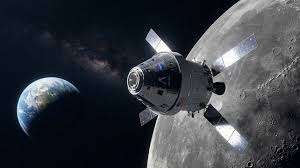
On April 1, 2026, the Space Launch System ignited at Launch Pad 39B at Kennedy Space Centre and punched the Orion spacecraft into a clear Florida sky. Onboard were Commander Reid Wiseman, Pilot Victor Glover, Mission Specialist Christina Koch, and Canadian Space Agency astronaut Jeremy Hansen. Ten days and 1.4 million kilometres later, having looped around the far side of the Moon on a free-return trajectory and broken the distance record set by Apollo 13, they splashed down in the Pacific off San Diego. Artemis II was complete.
It is humanity’s first crewed journey to the vicinity of the Moon in more than fifty years. It was also the first test of Orion’s life-support systems with humans aboard in deep space. The Orion capsule’s computers ran 20,000 times faster than those used during Apollo, while the European Service Module, built by ESA, provided propulsion, power, water, and oxygen throughout. The Space Launch System, generating roughly 15 per cent more thrust than the Saturn V, performed without issue. Technicians were already beginning work on the hardware for Artemis III before the recovery ships reached the crew.
But the mission’s significance goes far beyond the engineering feat. Artemis II is a move in a geopolitical contest. The stakes are much higher than Apollo’s. The second space race has started, and this time the prize is not prestige alone.
From Apollo to Artemis. The first space race was about ideology. The United States claimed a symbolic victory over the Soviet Union when Neil Armstrong stepped onto the Moon in July 1969. Then the urgency collapsed for several reasons. These included budget constraints, a shift toward the Space Shuttle and low-Earth orbit, and the thawing of the Cold War. The pace became a domain of cautious cooperation, culminating in the International Space Station. Even that era is over now. The Artemis programme, announced in 2017, has revived lunar ambition on entirely different terms. The Artemis Program is built around a sustained presence and a plan to use the Moon as a proving ground for Mars.
Racing Blocs. The geopolitical architecture of the second space race is hardening into two distinct coalitions.
-
- The American-led bloc is around the Artemis Accords. It has now been signed by 61 nations, establishing principles for transparency, interoperability, and the legality of resource extraction under existing international law. The partners include Canada, ESA member states, Japan, the UK, Australia, and the UAE.
-
- China’s answer is the International Lunar Research Station, co-founded with Russia in 2021. Russia has become a junior partner in a China-led programme. China has recruited 13 countries to the ILRS framework, including Pakistan, Belarus, South Africa, and Venezuela, and is aggressively expanding that list through a “5-5-5” initiative. The initiative aims to enrol 50 nations, 500 institutions, and 5,000 researchers in lunar science by the early 2030s. Beijing is offering low-interest loans for ground stations, technology transfer guarantees and payload slots on Chinese missions.
-
- India occupies the middle ground. India has signed the Artemis Accords while simultaneously building indigenous capability. While joining the Accord, India is not a direct participant in the NASA-led Artemis Programme’s mission-driven hardware development, but rather a partner in its guiding principles. By joining, India aligns with international principles for space exploration. These include transparency, interoperability, and the peaceful use of space resources. The agreement fosters strengthening space cooperation between the Indian Space Research Organisation (ISRO) and NASA.
South Pole: Ground Zero for the Next Space Race. Every major programme (Artemis, the Chinese Lunar Exploration Program, and Chandrayaan) targets the same narrow strip of terrain. The reason is water ice, preserved for billions of years in permanently shadowed craters at temperatures around -173°C. Through electrolysis, that ice can be split into hydrogen and oxygen (which are useful for rocket propulsion). A reliable South Pole water supply could turn the Moon into what planners call a gas station in the sky. There is also helium-3 stock, deposited by solar wind over billions of years. It is estimated at around one million tonnes across the lunar surface. Helium-3 holds promise as a fuel for aneutronic fusion reactions that produce far less radioactive waste than conventional fission. The South Pole’s value is as much strategic as it is geological. Both Artemis and the ILRS are fixated on the same area.
US Increasing the Pace. The Artemis programme, announced in 2017, is built around a sustained presence around the moon. Artemis II was the crewed proof of concept for that ecosystem. Artemis III will test lunar landing equipment in Earth orbit in 2027. Artemis IV, carrying the first crew actually to land at the South Pole, is targeted for 2028. Each member of the accord is contributing hardware or expertise (Canada’s Canadarm3 for the Gateway, ESA’s service modules, and Japan’s logistics). The programme also integrates the private industry. SpaceX holds the Artemis IV lander contract, and Blue Origin holds the Artemis V contract. Intuitive Machines and Firefly Aerospace are conducting robotic precursor missions under NASA’s Commercial Lunar Payload Services programme.
China Maintaining the Momentum. In roughly two decades, the China National Space Administration has gone from launching its first taikonaut in 2003 to landing a rover on the lunar far side, returning samples from the surface, operating its own space station, and sending a rover to Mars. The Chang’e programme has been methodical: Chang’e-4 became the first mission to soft-land on the far side in 2019; Chang’e-5 returned near-side samples in 2020; Chang’e-6 brought back far-side samples in 2024, the first time that had been done. Chang’e-7, scheduled for late 2026, will survey the south pole for water ice. Chang’e-8, in 2028, will test in situ source utilisation. China is targeting a crewed landing by 2030. The crewed mission will adopt a dual-launch architecture. The Long March 10 rocket will carry the Mengzhou spacecraft, which will carry three taikonauts. Another one will deliver the Lanyue lander. The two vehicles will rendezvous in lunar orbit. Two crew members will descend to the surface while a third remains above. The ILRS envisions a permanent facility near the Lunar South Pole being built and operationalised in three phases—reconnaissance through 2025, construction from 2026 to 2035, and full utilisation from 2036.
Indian Effort. India’s space programme has, in a short span, moved from ambition to achievement. In August 2023, Chandrayaan-3’s soft landing near the lunar south pole was a landmark moment. No nation had touched down on that terrain before. The feat placed the Indian Space Research Organisation in a category, until then occupied only by the United States, the Soviet Union, and China, in terms of demonstrated lunar landing capability. The follow-up mission, Chandrayaan-4, targets the MM-4 site on Mons Mouton at nearly 84 degrees south latitude. The return mission planned for 2028 will push India’s indigenous capability further still.
The Stakes. The Apollo contest was primarily a demonstration of ideological and technological superiority. The Artemis contest is about infrastructure and norms. Leadership in space is not symbolic. It shapes standards, partnerships and long-term strategic influence. Whoever builds the first permanent presence at the South Pole gains the standing to set the terms for everyone who follows. These include docking interfaces, communication protocols, and resource-extraction norms. The United States set them for the internet. China is making a methodical bid for the lunar space. The stakes are much higher than in the 1960s race. The logic is simple. Resources are needed to sustain presence, but presence is needed to access resources. What matters is who reaches first.
What Next. The Artemis programme is moving, but so is China’s IRLS. The ILRS coalition continues to add members. Artemis II proved the hardware works with people inside. The Orion heat shield held, the SLS performed, and the European Service Module delivered. Work on Artemis III and IV is already underway. On the other hand, China’s Chang’e-7 is planned for launch later in 2026 to map resources at the South Pole. The Long March 10 crewed vehicle is approaching its maiden flight. The window to set multilateral governance frameworks before the first permanent infrastructure goes into the ground is closing.
The Moon that humanity walked away from after Apollo 17 in December 1972 is returning to the centre of global attention. This time, not as a destination for brief visits but as a domain to be occupied, developed, and contested. The second space race is not a metaphor or a rhetorical convenience. It is a structural feature of twenty-first-century great-power competition. The race, playing out at a quarter-million miles, is just warming up.
Please Add Value to the write-up with your views on the subject.
For regular updates, please register your email here:-
References and credits
To all the online sites and channels.
Pics Courtesy: Internet
Disclaimer:
Information and data included in the blog are for educational & non-commercial purposes only and have been carefully adapted, excerpted, or edited from reliable and accurate sources. All copyrighted material belongs to the respective owners and is provided only for wider dissemination.
References: –
- NASA, “Artemis II: First crewed Orion & SLS flight test”, 2026. https://www.nasa.gov/mission/artemis-ii
- NASA, “NASA’s plan for sustained lunar exploration and development”, 2017. https://www.nasa.gov/artemis
- NASA, “The Artemis Accords”, 2020. https://www.nasa.gov/artemis-accords
- China National Space Administration, “China and Russia sign a MoU to construct the International Lunar Research Station”, CNSA, 2021. http://www.cnsa.gov.cn
- China Manned Space Agency, “Long March 10 and crewed lunar mission architecture”, 2026. http://www.cmse.gov.cn
- Jones A, “Chang’e-6 returns first samples from the Moon’s far side”, Space News, 25 Jun 2024. https://spacenews.com
- Indian Space Research Organisation, “Chandrayaan-3 mission: Successful soft landing on lunar south pole”, 2023. https://www.isro.gov.in/Chandrayaan3
- Indian Space Research Organisation, “Chandrayaan-4: Site selection for sample return at Mons Mouton”, Apr 2026. https://www.isro.gov.in
- Ministry of External Affairs, GOI, “Joint statement from the United States and India: A partnership for the 21st century”, 2023. https://www.mea.gov.in
- Lowy Institute, “Artemis II and the geopolitics of the second space race”, Apr 2026. https://www.lowyinstitute.org