820: ARTEMIS II AND THE SECOND SPACE RACE FOR THE LUNAR RESOURCES


Article published in the jun 26 edition of the News Analytics Magazine


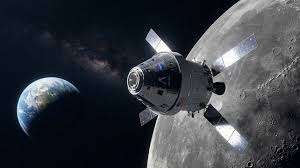
On April 1, 2026, the Space Launch System ignited at Launch Pad 39B at Kennedy Space Centre and punched the Orion spacecraft into a clear Florida sky. Onboard were Commander Reid Wiseman, Pilot Victor Glover, Mission Specialist Christina Koch, and Canadian Space Agency astronaut Jeremy Hansen. Ten days and 1.4 million kilometres later, having looped around the far side of the Moon on a free-return trajectory and broken the distance record set by Apollo 13, they splashed down in the Pacific off San Diego. Artemis II was complete.

It is humanity’s first crewed journey to the vicinity of the Moon in more than fifty years. It was also the first test of Orion’s life-support systems with humans aboard in deep space. The Orion capsule’s computers ran 20,000 times faster than those used during Apollo, while the European Service Module, built by ESA, provided propulsion, power, water, and oxygen throughout. The Space Launch System, generating roughly 15 per cent more thrust than the Saturn V, performed without issue. Technicians were already beginning work on the hardware for Artemis III before the recovery ships reached the crew.

But the mission’s significance goes far beyond the engineering feat. Artemis II is a move in a geopolitical contest. The stakes are much higher than Apollo’s. The second space race has started, and this time the prize is not prestige alone.

From Apollo to Artemis. The first space race was about ideology. The United States claimed a symbolic victory over the Soviet Union when Neil Armstrong stepped onto the Moon in July 1969. Then the urgency collapsed for several reasons. These included budget constraints, a shift toward the Space Shuttle and low-Earth orbit, and the thawing of the Cold War. The pace became a domain of cautious cooperation, culminating in the International Space Station. Even that era is over now. The Artemis programme, announced in 2017, has revived lunar ambition on entirely different terms.  The Artemis Program is built around a sustained presence and a plan to use the Moon as a proving ground for Mars.

Racing Blocs. The geopolitical architecture of the second space race is hardening into two distinct coalitions.


    • The American-led bloc is around the Artemis Accords. It has now been signed by 61 nations, establishing principles for transparency, interoperability, and the legality of resource extraction under existing international law. The partners include Canada, ESA member states, Japan, the UK, Australia, and the UAE.


    • China’s answer is the International Lunar Research Station, co-founded with Russia in 2021. Russia has become a junior partner in a China-led programme. China has recruited 13 countries to the ILRS framework, including Pakistan, Belarus, South Africa, and Venezuela, and is aggressively expanding that list through a “5-5-5” initiative. The initiative aims to enrol 50 nations, 500 institutions, and 5,000 researchers in lunar science by the early 2030s. Beijing is offering low-interest loans for ground stations, technology transfer guarantees and payload slots on Chinese missions.
    • India occupies the middle ground. India has signed the Artemis Accords while simultaneously building indigenous capability. While joining the Accord, India is not a direct participant in the NASA-led Artemis Programme’s mission-driven hardware development, but rather a partner in its guiding principles. By joining, India aligns with international principles for space exploration. These include transparency, interoperability, and the peaceful use of space resources. The agreement fosters strengthening space cooperation between the Indian Space Research Organisation (ISRO) and NASA.

South Pole: Ground Zero for the Next Space Race. Every major programme (Artemis, the Chinese Lunar Exploration Program, and Chandrayaan) targets the same narrow strip of terrain. The reason is water ice, preserved for billions of years in permanently shadowed craters at temperatures around -173°C. Through electrolysis, that ice can be split into hydrogen and oxygen (which are useful for rocket propulsion). A reliable South Pole water supply could turn the Moon into what planners call a gas station in the sky. There is also helium-3 stock, deposited by solar wind over billions of years. It is estimated at around one million tonnes across the lunar surface. Helium-3 holds promise as a fuel for aneutronic fusion reactions that produce far less radioactive waste than conventional fission. The South Pole’s value is as much strategic as it is geological. Both Artemis and the ILRS are fixated on the same area.

US Increasing the Pace. The Artemis programme, announced in 2017, is built around a sustained presence around the moon. Artemis II was the crewed proof of concept for that ecosystem. Artemis III will test lunar landing equipment in Earth orbit in 2027. Artemis IV, carrying the first crew actually to land at the South Pole, is targeted for 2028. Each member of the accord is contributing hardware or expertise (Canada’s Canadarm3 for the Gateway, ESA’s service modules, and Japan’s logistics). The programme also integrates the private industry. SpaceX holds the Artemis IV lander contract, and Blue Origin holds the Artemis V contract. Intuitive Machines and Firefly Aerospace are conducting robotic precursor missions under NASA’s Commercial Lunar Payload Services programme.

China Maintaining the Momentum. In roughly two decades, the China National Space Administration has gone from launching its first taikonaut in 2003 to landing a rover on the lunar far side, returning samples from the surface, operating its own space station, and sending a rover to Mars. The Chang’e programme has been methodical: Chang’e-4 became the first mission to soft-land on the far side in 2019; Chang’e-5 returned near-side samples in 2020; Chang’e-6 brought back far-side samples in 2024,  the first time that had been done. Chang’e-7, scheduled for late 2026, will survey the south pole for water ice. Chang’e-8, in 2028, will test in situ source utilisation. China is targeting a crewed landing by 2030. The crewed mission will adopt a dual-launch architecture. The Long March 10 rocket will carry the Mengzhou spacecraft, which will carry three taikonauts. Another one will deliver the Lanyue lander. The two vehicles will rendezvous in lunar orbit. Two crew members will descend to the surface while a third remains above. The ILRS envisions a permanent facility near the Lunar South Pole being built and operationalised in three phases—reconnaissance through 2025, construction from 2026 to 2035, and full utilisation from 2036.

Indian Effort. India’s space programme has, in a short span, moved from ambition to achievement. In August 2023, Chandrayaan-3’s soft landing near the lunar south pole was a landmark moment. No nation had touched down on that terrain before. The feat placed the Indian Space Research Organisation in a category, until then occupied only by the United States, the Soviet Union, and China, in terms of demonstrated lunar landing capability. The follow-up mission, Chandrayaan-4, targets the MM-4 site on Mons Mouton at nearly 84 degrees south latitude. The return mission planned for 2028  will push India’s indigenous capability further still.

The Stakes. The Apollo contest was primarily a demonstration of ideological and technological superiority. The Artemis contest is about infrastructure and norms. Leadership in space is not symbolic. It shapes standards, partnerships and long-term strategic influence. Whoever builds the first permanent presence at the South Pole gains the standing to set the terms for everyone who follows.  These include docking interfaces, communication protocols, and resource-extraction norms. The United States set them for the internet. China is making a methodical bid for the lunar space. The stakes are much higher than in the 1960s race. The logic is simple. Resources are needed to sustain presence, but presence is needed to access resources. What matters is who reaches first.


What Next. The Artemis programme is moving, but so is China’s IRLS. The ILRS coalition continues to add members. Artemis II proved the hardware works with people inside. The Orion heat shield held, the SLS performed, and the European Service Module delivered. Work on Artemis III and IV is already underway. On the other hand, China’s Chang’e-7 is planned for launch later in 2026 to map resources at the South Pole. The Long March 10 crewed vehicle is approaching its maiden flight. The window to set multilateral governance frameworks before the first permanent infrastructure goes into the ground is closing.


The Moon that humanity walked away from after Apollo 17 in December 1972 is returning to the centre of global attention. This time, not as a destination for brief visits but as a domain to be occupied, developed, and contested. The second space race is not a metaphor or a rhetorical convenience. It is a structural feature of twenty-first-century great-power competition. The race, playing out at a quarter-million miles, is just warming up.


Please Add Value to the write-up with your views on the subject.

1948
Default rating

Please give a thumbs up if you  like The Post?


For regular updates, please register your email here:-

Subscribe


References and credits

To all the online sites and channels.

Pics Courtesy: Internet

Disclaimer:

Information and data included in the blog are for educational & non-commercial purposes only and have been carefully adapted, excerpted, or edited from reliable and accurate sources. All copyrighted material belongs to the respective owners and is provided only for wider dissemination.


References: –

  1. NASA, “Artemis II: First crewed Orion & SLS flight test”, 2026. https://www.nasa.gov/mission/artemis-ii
  1. NASA, “NASA’s plan for sustained lunar exploration and development”, 2017. https://www.nasa.gov/artemis
  1. NASA, “The Artemis Accords”, 2020. https://www.nasa.gov/artemis-accords
  1. China National Space Administration, “China and Russia sign a MoU to construct the International Lunar Research Station”, CNSA, 2021. http://www.cnsa.gov.cn
  1. China Manned Space Agency, “Long March 10 and crewed lunar mission architecture”, 2026. http://www.cmse.gov.cn
  1. Jones A, “Chang’e-6 returns first samples from the Moon’s far side”, Space News, 25 Jun 2024. https://spacenews.com
  1. Indian Space Research Organisation, “Chandrayaan-3 mission: Successful soft landing on lunar south pole”, 2023. https://www.isro.gov.in/Chandrayaan3
  1. Indian Space Research Organisation, “Chandrayaan-4: Site selection for sample return at Mons Mouton”, Apr 2026.  https://www.isro.gov.in
  1. Ministry of External Affairs, GOI, “Joint statement from the United States and India: A partnership for the 21st century”, 2023. https://www.mea.gov.in
  1. Lowy Institute, “Artemis II and the geopolitics of the second space race”, Apr 2026. https://www.lowyinstitute.org

653:INDIAN SPACE PROGRAM’S HISTORIC LEAP: GROUP CAPTAIN SHUBHANSHU SHUKLA SET TO EMBARK ON A LANDMARK JOURNEY TO THE SPACE STATION


My Article published on The EuraisianTimes website on 19 Apr 25.


Indian Air Force Group Captain Shubhanshu Shukla will become the first Indian astronaut to visit the International Space Station (ISS) as part of Axiom Space’s Ax-4 mission, launching no earlier than May 29, 2025, from NASA’s Kennedy Space Centre in Florida aboard a SpaceX Crew Dragon spacecraft. Group Captain Prasanth Balakrishnan Nair is his backup. Shukla, a test pilot and Gaganyaan mission astronaut-designate, will serve as the mission pilot for the 14–21-day mission, commanded by former NASA astronaut Peggy Whitson, with mission specialists Sławosz Uznański-Wiśniewski (Poland) and Tibor Kapu (Hungary).

Shukla will conduct seven scientific experiments, including studies on muscle loss, microgravity screen time effects, and bio-farming, supporting ISRO’s Gaganyaan research. He will also promote Indian culture by carrying artefacts and practising yoga on the ISS. The Ax-4 mission, a collaboration between NASA, Axiom Space, and ISRO, includes 60 experiments from 31 countries. This historic mission, India’s first astronaut trip to the ISS and the second Indian in space since Rakesh Sharma’s 1984 Soyuz mission, highlights India’s rising prominence in global space exploration.

Established in 1969, the Indian Space Research Organisation (ISRO) has transformed India into a global space powerhouse. From humble beginnings with sounding rockets to executing complex interplanetary missions, ISRO’s journey reflects a blend of scientific excellence, frugal engineering, and ambitious vision.

The Indian Space Program: A Journey of Innovation and Ambition

Origins and Early Development. India’s space program began under the visionary leadership of Dr. Vikram Sarabhai, who recognised space technology’s potential to address national challenges like communication, education, and resource management. The Indian National Committee for Space Research (INCOSPAR), formed in 1962, laid the groundwork for ISRO. The first significant milestone was the launch of the Nike-Apache sounding rocket from Thumba in 1963, marking India’s entry into space research. ISRO’s early focus was on developing indigenous satellite and launch vehicle technologies. The launch of Aryabhata, India’s first satellite, in 1975 aboard a Soviet rocket, was a pivotal moment. By 1980, ISRO achieved a breakthrough with successfully launching the Rohini satellite using the Satellite Launch Vehicle (SLV-3), making India the sixth nation capable of independently launching satellites.

Building Capabilities. In the 1980s, ISRO developed the Polar Satellite Launch Vehicle (PSLV), a versatile rocket that became the backbone of India’s space program. The PSLV’s first successful launch in 1994 enabled India to place satellites in polar and geosynchronous orbits, supporting applications like remote sensing and communication. The INSAT series, starting with INSAT-1A in 1982, revolutionised telecommunications, television broadcasting, and weather forecasting, bridging India’s rural-urban divide.  In the 1990s, ISRO expanded its Earth observation capabilities with the Indian Remote Sensing (IRS) satellite series. These satellites provided critical agriculture, disaster management, and urban planning data. The program’s emphasis on self-reliance led to developing the Geosynchronous Satellite Launch Vehicle (GSLV), designed to carry heavier payloads into geostationary orbits. Despite initial setbacks, the GSLV’s success in the 2000s bolstered India’s space ambitions.

Breakthroughs in the 21st Century. The 21st century marked a turning point for ISRO, with missions that showcased its technological prowess and global competitiveness. The Chandrayaan-1 mission, launched in 2008, was India’s first lunar probe. It made headlines with the discovery of water molecules on the Moon’s surface, a finding confirmed by its Moon Impact Probe. This mission, costing just $80 million, exemplified ISRO’s cost-effective approach, earning global acclaim. In 2013, ISRO achieved another milestone with the Mars Orbiter Mission (Mangalyaan), making India the first Asian nation to reach Martian orbit and the first globally to succeed on its maiden attempt. Mangalyaan, developed at a modest $74 million, demonstrated ISRO’s ability to deliver high-impact science on a lean budget. The mission’s longevity, with the orbiter still operational in 2025, underscores ISRO’s engineering excellence. ISRO’s Chandrayaan-2 mission 2019 aimed to soft-land a rover on the Moon’s South Pole. Although the Vikram lander crashed, the orbiter continues to provide valuable lunar data. The mission showcased India’s growing ambition to tackle complex challenges. In 2023, Chandrayaan-3 achieved a historic soft landing near the lunar South Pole, making India the fourth nation to land on the Moon and the first to explore this region. The Pragyan rover’s findings on lunar soil composition have added to global lunar science.


Societal Impact and Applications

ISRO’s space program extends beyond scientific exploration, delivering tangible benefits to Indian society. The INSAT and GSAT series have enabled tele-education and telemedicine, reaching remote areas with limited infrastructure. The Navic navigation system, operational since 2018, provides precise positioning services, enhancing transportation, agriculture, and defence sectors.

ISRO’s remote sensing satellites support disaster management by monitoring cyclones, floods, and droughts. The Cartosat and Resourcesat series aid in urban planning, water resource management, and crop forecasting, contributing to food security. ISRO’s data-sharing initiatives with global agencies also strengthen international cooperation in climate monitoring and disaster response.

The space program has spurred economic growth by fostering a domestic space industry. Companies like Antrix Corporation, ISRO’s commercial arm, and private startups like Skyroot Aerospace and Agnikul Cosmos are expanding India’s space ecosystem. ISRO’s technology transfers have enabled healthcare and renewable energy innovations, amplifying its socioeconomic impact.


Challenges

Despite its Successes, ISRO faces challenges. Limited funding, with a 2024-25 budget of approximately $1.6 billion, constrains its ability to scale ambitious projects compared to NASA ($25 billion) or China’s space program. Human spaceflight, a key frontier, has progressed slowly. The Gaganyaan mission, aiming to send Indian astronauts to low Earth orbit, faced delays due to technical complexities and the COVID-19 pandemic but is now targeted for 2026.

ISRO’s reliance on government funding limits its agility in a rapidly commercialising global space sector. While private sector participation grows, regulatory hurdles and bureaucratic processes hinder faster integration. Critics also point to occasional mission failures, like the GSLV’s early setbacks or Chandrayaan-2’s partial success, as areas needing improvement. However, ISRO’s ability to learn from failures and deliver subsequent successes reflects its resilience.


Future Prospects

ISRO’s roadmap is ambitious, with plans to solidify India’s position in global space exploration. The Gaganyaan mission will mark India’s entry into human spaceflight, with four astronauts training in collaboration with international partners. The Aditya-L1 solar observatory, launched in 2023, is studying the Sun’s corona, contributing to space weather forecasting. Chandrayaan-4, planned for 2028, aims to retrieve lunar samples, while a Venus orbiter mission is under development.

ISRO is also advancing its launch capabilities. The Small Satellite Launch Vehicle (SSLV) targets the growing demand for small satellite launches, while the Next-Generation Launch Vehicle (NGLV) will support heavier payloads, including space station modules. ISRO’s proposed Bharatiya Antariksh Station (Indian Space Station) by 2035 aligns with global trends in space infrastructure.

International collaboration is a priority, with ISRO partnering with NASA, ESA, and JAXA on missions like NISAR, a joint Earth-observation satellite. ISRO’s cost-effective model positions it as a preferred partner for emerging space nations and commercial entities. To stay competitive, the organisation also explores reusable launch vehicles and space robotics.


Conclusion

The Indian space program, driven by ISRO’s ingenuity and vision, has evolved from a nascent initiative to a global partner in space exploration. Its achievements, from lunar landings to interplanetary missions, reflect a commitment to scientific discovery and societal progress. While challenges like funding and commercialisation persist, ISRO’s track record of overcoming obstacles bodes well for its future.

As India aims for human spaceflight, a space station, and deeper planetary exploration, ISRO’s frugal yet impactful approach will continue to inspire. The program advances India’s technological capabilities and positions it as a key player in shaping the future of global space exploration, proving that ambition and innovation can transcend resource constraints.


Please Add Value to the write-up with your views on the subject.


1948
Default rating

Please give a thumbs up if you  like The Post?


For regular updates, please register your email here:-

Subscribe

Link to the article on the website:-

From Nike-Apache To Space Station – Indian Astronaut’s Landmark ISS Visit In May-End Another Big Feat For ISRO


References and credits

To all the online sites and channels.

Pics Courtesy: Internet

Disclaimer:

Information and data included in the blog are for educational & non-commercial purposes only and have been carefully adapted, excerpted, or edited from reliable and accurate sources. All copyrighted material belongs to respective owners and is provided only for wider dissemination.


References:-

  1. Times Now. (2025, April 18). Who Is Shubhanshu Shukla? Indian Astronaut-designate Group Captain to Fly to International Space Station In May.
  1. ET Now. (2025, April 18). This is a major step for India’s space journey! Astronaut Shubhanshu Shukla will travel to space next month, the Modi government confirmed.
  1. NDTV. (2025, April 18). Indian Astronaut-Designate Shubhanshu Shukla To Fly To Space Station in May.
  1. The Times of India. (2025, April 18). An international space mission carrying Indian astronaut Shubhanshu Shukla is set to fly in May.
  1. India Today. (2025, April 11). India’s Shubhanshu Shukla will study how screen time affects the human brain in space.
  1. Republic World. (2025, April 2). IAF’s Shubhanshu Shukla to Become First Indian Astronaut Aboard SpaceX Dragon.
  1. Chandrayaan Mission Pages: Detailed mission objectives, payloads, and outcomes for Chandrayaan-1, -2, and -3. Accessible via ISRO’s mission-specific portals: Chandrayaan-2, Chandrayaan-3.
  1. Mishra, S. K. (2020): Indian Space Program: Evolution, Achievements, and Challenges. Journal of Space Exploration, 9(2), 45-56. A peer-reviewed article analysing ISRO’s growth and cost-effective strategies.
  1. Narayanan, N. (2017): The Making of ISRO: Vikram Sarabhai’s Vision. HarperCollins India. A comprehensive book on the origins of ISRO and Sarabhai’s contributions.
  1. The Hindu (August 24, 2023): “India Becomes First Nation to Land Near Lunar South Pole with Chandrayaan-3.” News article covering the historic Chandrayaan-3 landing.
  1. Lele, A. (2014): Mission Mars: India’s Quest for the Red Planet. Springer. A detailed account of the Mars Orbiter Mission’s development and significance.
  1. SpaceNews (March 15, 2025): “India Approves Chandrayaan-5 and LUPEX Mission with JAXA.” Reports on recent mission approvals and international collaborations.
  1. ISRO Annual Report 2024-25: Outlines budget, ongoing projects, and commercial activities of Antrix Corporation. Available at: ISRO Annual Reports.
  1. Bagla, P., & Menon, V. (2019): Reach for the Stars: The Evolution of India’s Space Programme. Bloomsbury India. A book detailing ISRO’s societal impacts and technological milestones.
  1. NASA-ISRO Synthetic Aperture Radar (NISAR) Mission: Information on ISRO’s collaboration with NASA. Available at: nisar.jpl.nasa.gov.
English हिंदी