820: ARTEMIS II AND THE SECOND SPACE RACE FOR THE LUNAR RESOURCES


Article published in the jun 26 edition of the News Analytics Magazine


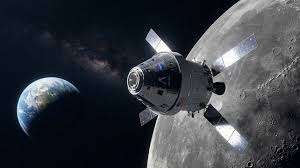
On April 1, 2026, the Space Launch System ignited at Launch Pad 39B at Kennedy Space Centre and punched the Orion spacecraft into a clear Florida sky. Onboard were Commander Reid Wiseman, Pilot Victor Glover, Mission Specialist Christina Koch, and Canadian Space Agency astronaut Jeremy Hansen. Ten days and 1.4 million kilometres later, having looped around the far side of the Moon on a free-return trajectory and broken the distance record set by Apollo 13, they splashed down in the Pacific off San Diego. Artemis II was complete.

It is humanity’s first crewed journey to the vicinity of the Moon in more than fifty years. It was also the first test of Orion’s life-support systems with humans aboard in deep space. The Orion capsule’s computers ran 20,000 times faster than those used during Apollo, while the European Service Module, built by ESA, provided propulsion, power, water, and oxygen throughout. The Space Launch System, generating roughly 15 per cent more thrust than the Saturn V, performed without issue. Technicians were already beginning work on the hardware for Artemis III before the recovery ships reached the crew.

But the mission’s significance goes far beyond the engineering feat. Artemis II is a move in a geopolitical contest. The stakes are much higher than Apollo’s. The second space race has started, and this time the prize is not prestige alone.

From Apollo to Artemis. The first space race was about ideology. The United States claimed a symbolic victory over the Soviet Union when Neil Armstrong stepped onto the Moon in July 1969. Then the urgency collapsed for several reasons. These included budget constraints, a shift toward the Space Shuttle and low-Earth orbit, and the thawing of the Cold War. The pace became a domain of cautious cooperation, culminating in the International Space Station. Even that era is over now. The Artemis programme, announced in 2017, has revived lunar ambition on entirely different terms.  The Artemis Program is built around a sustained presence and a plan to use the Moon as a proving ground for Mars.

Racing Blocs. The geopolitical architecture of the second space race is hardening into two distinct coalitions.


    • The American-led bloc is around the Artemis Accords. It has now been signed by 61 nations, establishing principles for transparency, interoperability, and the legality of resource extraction under existing international law. The partners include Canada, ESA member states, Japan, the UK, Australia, and the UAE.


    • China’s answer is the International Lunar Research Station, co-founded with Russia in 2021. Russia has become a junior partner in a China-led programme. China has recruited 13 countries to the ILRS framework, including Pakistan, Belarus, South Africa, and Venezuela, and is aggressively expanding that list through a “5-5-5” initiative. The initiative aims to enrol 50 nations, 500 institutions, and 5,000 researchers in lunar science by the early 2030s. Beijing is offering low-interest loans for ground stations, technology transfer guarantees and payload slots on Chinese missions.
    • India occupies the middle ground. India has signed the Artemis Accords while simultaneously building indigenous capability. While joining the Accord, India is not a direct participant in the NASA-led Artemis Programme’s mission-driven hardware development, but rather a partner in its guiding principles. By joining, India aligns with international principles for space exploration. These include transparency, interoperability, and the peaceful use of space resources. The agreement fosters strengthening space cooperation between the Indian Space Research Organisation (ISRO) and NASA.

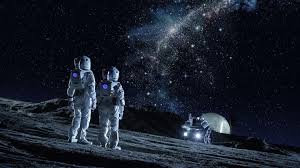
South Pole: Ground Zero for the Next Space Race. Every major programme (Artemis, the Chinese Lunar Exploration Program, and Chandrayaan) targets the same narrow strip of terrain. The reason is water ice, preserved for billions of years in permanently shadowed craters at temperatures around -173°C. Through electrolysis, that ice can be split into hydrogen and oxygen (which are useful for rocket propulsion). A reliable South Pole water supply could turn the Moon into what planners call a gas station in the sky. There is also helium-3 stock, deposited by solar wind over billions of years. It is estimated at around one million tonnes across the lunar surface. Helium-3 holds promise as a fuel for aneutronic fusion reactions that produce far less radioactive waste than conventional fission. The South Pole’s value is as much strategic as it is geological. Both Artemis and the ILRS are fixated on the same area.

US Increasing the Pace. The Artemis programme, announced in 2017, is built around a sustained presence around the moon. Artemis II was the crewed proof of concept for that ecosystem. Artemis III will test lunar landing equipment in Earth orbit in 2027. Artemis IV, carrying the first crew actually to land at the South Pole, is targeted for 2028. Each member of the accord is contributing hardware or expertise (Canada’s Canadarm3 for the Gateway, ESA’s service modules, and Japan’s logistics). The programme also integrates the private industry. SpaceX holds the Artemis IV lander contract, and Blue Origin holds the Artemis V contract. Intuitive Machines and Firefly Aerospace are conducting robotic precursor missions under NASA’s Commercial Lunar Payload Services programme.

China Maintaining the Momentum. In roughly two decades, the China National Space Administration has gone from launching its first taikonaut in 2003 to landing a rover on the lunar far side, returning samples from the surface, operating its own space station, and sending a rover to Mars. The Chang’e programme has been methodical: Chang’e-4 became the first mission to soft-land on the far side in 2019; Chang’e-5 returned near-side samples in 2020; Chang’e-6 brought back far-side samples in 2024,  the first time that had been done. Chang’e-7, scheduled for late 2026, will survey the south pole for water ice. Chang’e-8, in 2028, will test in situ source utilisation. China is targeting a crewed landing by 2030. The crewed mission will adopt a dual-launch architecture. The Long March 10 rocket will carry the Mengzhou spacecraft, which will carry three taikonauts. Another one will deliver the Lanyue lander. The two vehicles will rendezvous in lunar orbit. Two crew members will descend to the surface while a third remains above. The ILRS envisions a permanent facility near the Lunar South Pole being built and operationalised in three phases—reconnaissance through 2025, construction from 2026 to 2035, and full utilisation from 2036.

Indian Effort. India’s space programme has, in a short span, moved from ambition to achievement. In August 2023, Chandrayaan-3’s soft landing near the lunar south pole was a landmark moment. No nation had touched down on that terrain before. The feat placed the Indian Space Research Organisation in a category, until then occupied only by the United States, the Soviet Union, and China, in terms of demonstrated lunar landing capability. The follow-up mission, Chandrayaan-4, targets the MM-4 site on Mons Mouton at nearly 84 degrees south latitude. The return mission planned for 2028  will push India’s indigenous capability further still.

The Stakes. The Apollo contest was primarily a demonstration of ideological and technological superiority. The Artemis contest is about infrastructure and norms. Leadership in space is not symbolic. It shapes standards, partnerships and long-term strategic influence. Whoever builds the first permanent presence at the South Pole gains the standing to set the terms for everyone who follows.  These include docking interfaces, communication protocols, and resource-extraction norms. The United States set them for the internet. China is making a methodical bid for the lunar space. The stakes are much higher than in the 1960s race. The logic is simple. Resources are needed to sustain presence, but presence is needed to access resources. What matters is who reaches first.


What Next. The Artemis programme is moving, but so is China’s IRLS. The ILRS coalition continues to add members. Artemis II proved the hardware works with people inside. The Orion heat shield held, the SLS performed, and the European Service Module delivered. Work on Artemis III and IV is already underway. On the other hand, China’s Chang’e-7 is planned for launch later in 2026 to map resources at the South Pole. The Long March 10 crewed vehicle is approaching its maiden flight. The window to set multilateral governance frameworks before the first permanent infrastructure goes into the ground is closing.


The Moon that humanity walked away from after Apollo 17 in December 1972 is returning to the centre of global attention. This time, not as a destination for brief visits but as a domain to be occupied, developed, and contested. The second space race is not a metaphor or a rhetorical convenience. It is a structural feature of twenty-first-century great-power competition. The race, playing out at a quarter-million miles, is just warming up.


Please Add Value to the write-up with your views on the subject.

1947
Default rating

Please give a thumbs up if you  like The Post?


For regular updates, please register your email here:-

Subscribe


References and credits

To all the online sites and channels.

Pics Courtesy: Internet

Disclaimer:

Information and data included in the blog are for educational & non-commercial purposes only and have been carefully adapted, excerpted, or edited from reliable and accurate sources. All copyrighted material belongs to the respective owners and is provided only for wider dissemination.


References: –

  1. NASA, “Artemis II: First crewed Orion & SLS flight test”, 2026. https://www.nasa.gov/mission/artemis-ii
  1. NASA, “NASA’s plan for sustained lunar exploration and development”, 2017. https://www.nasa.gov/artemis
  1. NASA, “The Artemis Accords”, 2020. https://www.nasa.gov/artemis-accords
  1. China National Space Administration, “China and Russia sign a MoU to construct the International Lunar Research Station”, CNSA, 2021. http://www.cnsa.gov.cn
  1. China Manned Space Agency, “Long March 10 and crewed lunar mission architecture”, 2026. http://www.cmse.gov.cn
  1. Jones A, “Chang’e-6 returns first samples from the Moon’s far side”, Space News, 25 Jun 2024. https://spacenews.com
  1. Indian Space Research Organisation, “Chandrayaan-3 mission: Successful soft landing on lunar south pole”, 2023. https://www.isro.gov.in/Chandrayaan3
  1. Indian Space Research Organisation, “Chandrayaan-4: Site selection for sample return at Mons Mouton”, Apr 2026.  https://www.isro.gov.in
  1. Ministry of External Affairs, GOI, “Joint statement from the United States and India: A partnership for the 21st century”, 2023. https://www.mea.gov.in
  1. Lowy Institute, “Artemis II and the geopolitics of the second space race”, Apr 2026. https://www.lowyinstitute.org
631: COLONISING SPACE: OPPORTUNITIES AND CHALLENGES


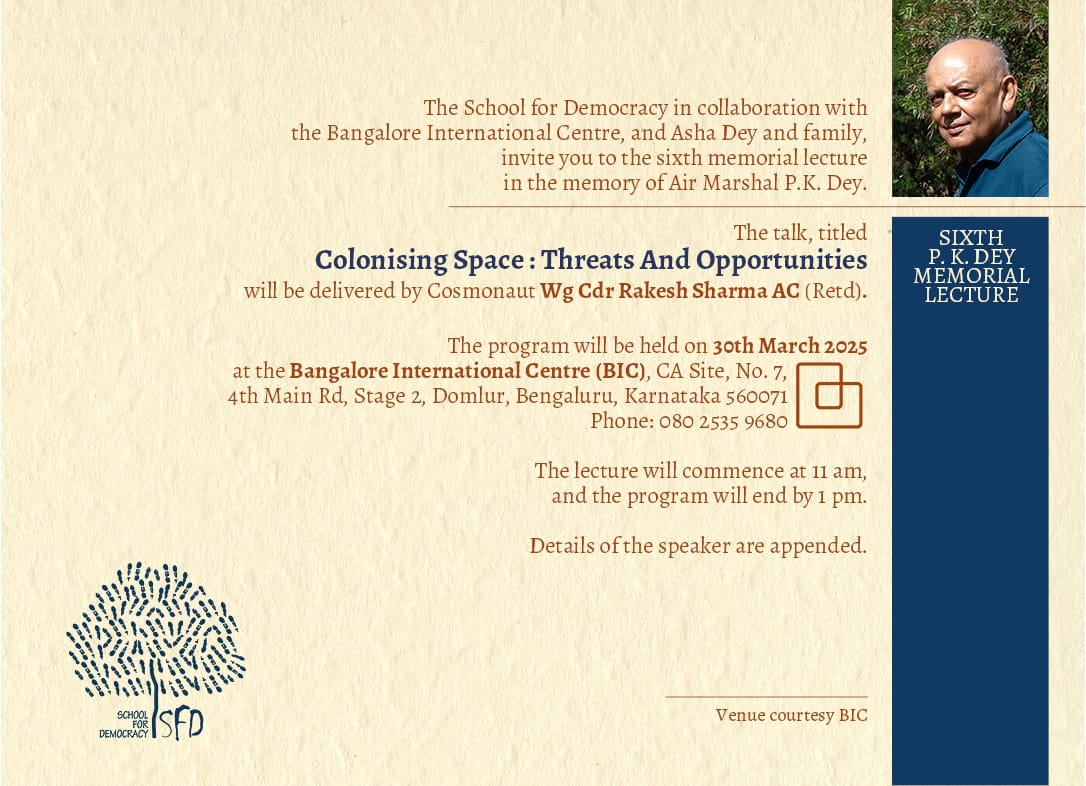
The sixth Air Marshal PK Dey Memorial Lecture was held on 30 March 25.


Organised by the Dey Family & School for Democracy

at Bangalore International Center


Topic

Colonising Space: Threats and Opportunities.


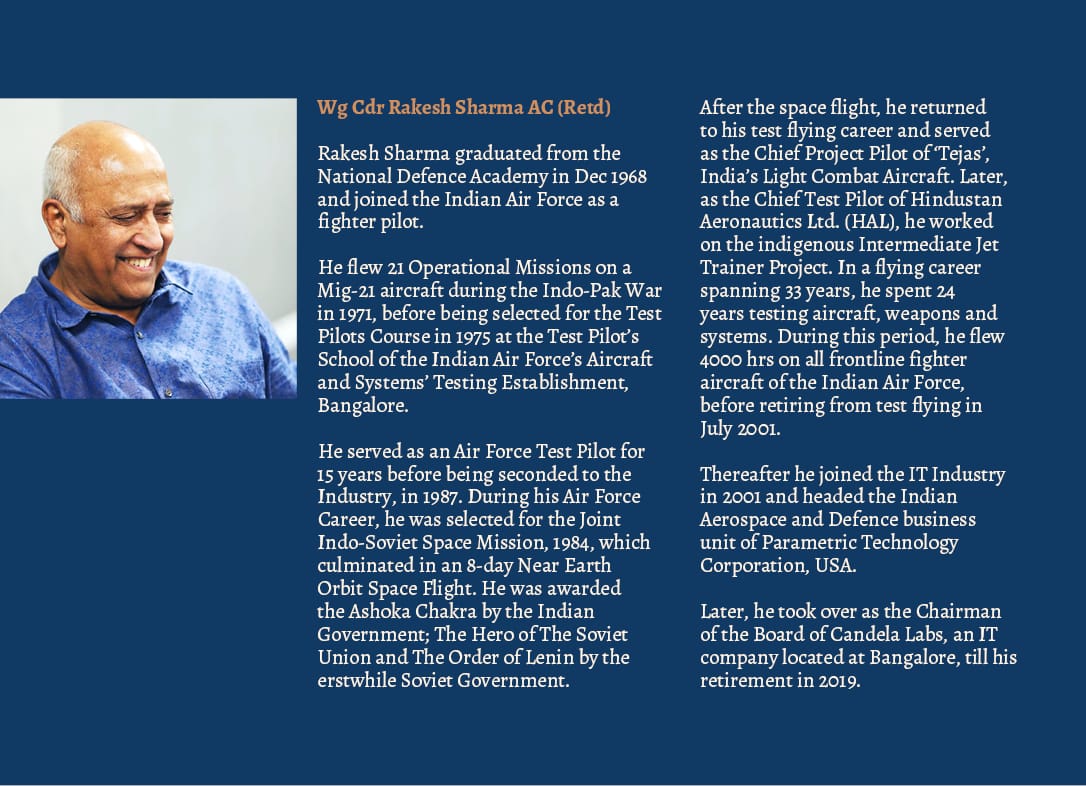
The lecture was delivered by Wg Cdr RK Sharma (Retd)


My article on the subject: –


SPACE COLONISATION: OPPORTUNITIES AND CHALLENGES.


The idea of colonising space has long captured human imagination, from the early musings of science fiction writers to the serious scientific discussions of today. With rapid technological advancements, space colonisation is shifting from fantasy to a potential reality. Space agencies such as NASA and ESA and private enterprises like SpaceX and Blue Origin actively develop plans for human settlement beyond Earth. However, while space colonisation offers numerous opportunities, it also presents significant threats. Space colonisation offers potential benefits but also has its associated challenges.


Opportunities

Resource Extraction and Economic Growth. One of the primary motivations for space colonisation is the immense untapped wealth available in space. Asteroids contain vast amounts of precious metals like platinum, gold, and rare earth elements, which are critical for modern technology. The Moon and Mars are also resource rich. Commercialising these resources could reduce dependence on Earth’s limited resources.

Expansion of Human Civilisation. Colonising space would allow humanity to expand beyond Earth, reducing the risks associated with overpopulation, resource depletion, and environmental degradation. Establishing permanent human settlements on the Moon, Mars, or space habitats would ensure that civilisation continues to thrive even if Earth faces catastrophic events such as nuclear war, pandemics, or climate change.

Technological and Scientific Advancements. Space colonisation requires ground breaking innovations in various fields, including artificial intelligence, robotics, life-support systems, and sustainable energy production. The technological advancements necessary for sustaining life in space could lead to solutions that improve life on Earth, such as more efficient renewable energy systems, improved medical technologies, and enhanced AI-driven automation.

Inspiration and Cultural Evolution. The prospect of colonising space has the potential to inspire new generations to pursue careers in science, engineering, and space exploration. The cultural impact of becoming a multi-planetary species could also lead to new art forms, philosophy, and human identity as societies adapt to living in extra-terrestrial environments.

Survival of the Human Species. One of the most compelling arguments for space colonisation is ensuring humanity’s survival. Earth is vulnerable to existential threats such as asteroid impacts, super volcanic eruptions, and global pandemics. Establishing colonies in space would safeguard against such catastrophes, ensuring that human civilisation endures despite planetary-scale disasters.


Challenges

Harsh and Hostile Environments. Space is an inherently hostile environment. Extreme temperatures, high radiation levels, and the absence of breathable air make it challenging for humans to survive. The psychological and physiological impacts of prolonged space travel and living in confined habitats could pose serious risks to human health and well-being.

Technological and Logistical Challenges. Building and maintaining colonies in space will require significant advancements in technology and logistics. Current propulsion technologies make space travel slow and expensive. Additionally, establishing self-sustaining colonies that can produce food, oxygen, and water without constant resupply from Earth is a major challenge that needs to be addressed before large-scale colonisation can occur.

Economic and Ethical Concerns. Space colonisation will likely be dominated by wealthy nations and private corporations, raising concerns about economic inequality and ethical issues. If access to space remains restricted to a select few, it could lead to exploiting extra-terrestrial resources by powerful entities, exacerbating global inequalities. There are also ethical questions regarding the potential displacement or destruction of extra-terrestrial microbial life, should it be discovered.

Geopolitical and Military Conflicts. The competition for space resources and strategic locations could lead to conflicts among nations. Just as territorial disputes exist on Earth, similar conflicts could emerge over the ownership of the Moon, Mars, and valuable asteroids. The militarisation of space poses another serious threat, as countries and corporations could use space-based weapons for strategic dominance, leading to a new form of the space race with potentially dangerous consequences.

Environmental Risks and Contamination. Human activities in space could have unforeseen ecological consequences. Space debris is already a growing problem, with thousands of defunct satellites and debris fragments posing collision risks. Additionally, the potential for planetary contamination—both forward (Earth microbes contaminating other planets) and backward (extra-terrestrial microbes posing risks to Earth)—raises concerns about irreversible ecological damage.


The Options and Possibilities

There are several options for human expansion beyond Earth, each with unique possibilities and challenges.

Colonising the Moon. The Moon, Earth’s closest celestial body, is the most immediate and realistic option for colonisation. NASA, China, and private companies like SpaceX and Blue Origin have expressed plans to establish permanent lunar bases. The Moon offers several advantages, such as lower gravity (1/6th of Earth’s), which makes launching spacecraft cheaper, and water ice in polar craters, which can be used for drinking water and fuel production. Challenges include extreme temperature variations, lack of a breathable atmosphere, and solar and cosmic radiation exposure. However, underground bases or structures made from lunar regolith could mitigate some risks. The Moon could serve as a stepping stone for deeper space missions, providing a platform for spacecraft refuelling and construction.

Mars: The Next Earth. Mars is the most frequently discussed candidate for colonisation due to its similarities to Earth, including a 24.6-hour day, an atmosphere (though thin and mainly carbon dioxide), and water ice. Elon Musk’s SpaceX is working toward making Mars colonisation a reality with its Starship rocket. Mars presents opportunities for self-sustaining agriculture, resource extraction, and potential terraforming. However, colonising Mars has significant challenges like long travel times (6-9 months), harsh radiation, low temperatures, and low atmospheric pressure. Some scientists propose living in underground lava tubes or using domed habitats until a more permanent solution is developed.

Orbital Space Stations and Artificial Habitats. Instead of colonising planets, some scientists advocate for massive space stations or O’Neill cylinders—gigantic rotating habitats capable of simulating Earth-like gravity. These structures could be built in Earth’s orbit, the Moon’s orbit, or at Lagrange points, where gravitational forces create stable positions. The advantage of space stations is that they can be designed to optimise conditions for human life, including controlled gravity, radiation shielding, and resource recycling. However, building such mega structures would require vast amounts of materials and energy, likely sourced from the Moon or asteroids.

Colonising the Asteroid Belt. Asteroids contain abundant raw materials, including metals like iron and nickel and rare elements critical for industry. Some suggest hollowing out large asteroids and converting them into space habitats could provide self-sustaining colonies. The biggest challenges would be providing artificial gravity, possibly through rotation, and securing a long-term food and water supply.

Interstellar Colonisation: The Long-Term Dream. Beyond our solar system, humanity could look toward exo-planets as future homes. Concepts like generation ships, suspended animation, and warp drives have been proposed for interstellar travel, but current technology is far from making such missions viable. However, discoveries of exo-planets in distant stars’ habitable zones suggest that future propulsion and life-support systems breakthroughs could one day enable interstellar colonisation.


Potential Strategies for Safe and Sustainable Space Colonisation

Developing Advanced Propulsion Technologies. Faster and more efficient propulsion systems, such as nuclear propulsion or ion drives, could make space travel more practical and cost-effective. Reducing travel time to Mars or beyond would mitigate many health risks associated with prolonged exposure to space radiation.

Creating Self-Sustaining Habitats. Developing closed-loop life-support systems that recycle air, water, and waste will be crucial for long-term space habitation. Hydroponic farming, 3D printing, and advanced robotics can help create self-sufficient colonies that minimise reliance on Earth for supplies.

International Collaboration and Regulation. International cooperation is necessary to prevent conflicts over space resources and ensure ethical practices. Treaties and agreements similar to the Outer Space Treaty of 1967 should be expanded to address new challenges, ensuring that space remains a peaceful and accessible domain for all humanity.

Ethical Exploration and Environmental Protection. Space exploration should be conducted with moral considerations, ensuring that planetary environments are preserved and any potential extra-terrestrial life is studied responsibly. Establishing guidelines for planetary protection can help prevent harmful contamination and ensure sustainable practices in space exploration.

Public Engagement and Education. Encouraging public interest and investment in space colonisation is essential for long-term success. Governments, educational institutions, and private companies should work together to promote space science and exploration through outreach programs, media engagement, and educational initiatives.


Conclusion

Space colonisation is no longer a fantasy but a future goal within humanity’s reach. It presents a unique combination of opportunities and threats. While it holds the promise of economic expansion, technological progress, and the survival of humanity, it also brings challenges related to environmental risks, ethical dilemmas, and geopolitical tensions. A balanced approach that prioritises sustainable development, international cooperation, and ethical considerations will be necessary to ensure that humanity’s venture into space is a success. If done responsibly, colonising space could begin a new era for human civilisation—one where our destiny is no longer confined to Earth but extends into the vastness of the cosmos. While technological, ethical, and financial hurdles remain, ongoing efforts in lunar and Martian exploration and orbital habitat development suggest that this century’s first human colonies beyond Earth may be established. As science and technology progress, the dream of becoming an interplanetary species moves closer to reality, opening up new frontiers for exploration, survival, and human ingenuity.


Please Do Comment.


1947
Default rating

Please give a thumbs up if you  like The Post?


For regular updates, please register your email here:-

Subscribe


References and credits

To all the online sites and channels.

Pics Courtesy: Internet

Disclaimer:

Information and data included in the blog are for educational & non-commercial purposes only and have been carefully adapted, excerpted, or edited from reliable and accurate sources. All copyrighted material belongs to respective owners and is provided only for wider dissemination.


References:-

  1. Crawford, Ian A. “Space Colonization and Energy Supply: A Scenario for the 21st Century.” Space Policy, vol. 27, no. 4, 2011, pp. 217–222.
  1. Metzger, Philip T. “Space Resources Fundamentals: Implications for Human Settlement.” Acta Astronautica, vol. 173, 2020, pp. 37–52.
  1. Cockell, Charles S. “The Ethical Challenges of Space Colonisation.” New Space, vol. 2, no. 3, 2014, pp. 113-118.
  1. Szocik, Konrad et al. “Political and Legal Challenges of Space Colonization: Space Settlers and Earth Independence.” Space Policy, vol. 51, 2020, p. 101337.
  1. Grinspoon, David. “Colonizing Other Planets: Prospects for the Future of Humanity.” Philosophical Transactions of the Royal Society A: Mathematical, Physical and Engineering Sciences, vol. 376, no. 2134, 2018, pp. 1-15.
  1. Blue Origin. “The Road to Space Colonization.” Blue Origin, 2023.
  1. Impey, Chris. Beyond: Our Future in Space. W. W. Norton & Company, 2015.
  1. O’Neill, Gerard K. The High Frontier: Human Colonies in Space. William Morrow, 1976.
  1. Sagan, Carl. Pale Blue Dot: A Vision of the Human Future in Space. Random House, 1994.
  2. Zubrin, Robert. The Case for Mars: The Plan to Settle the Red Planet and Why We Must. Free Press, 2011.

English हिंदी