
718: INDIA’S HUMAN SPACEFLIGHT REVIVAL: A STRATEGIC LEAP IN THE GLOBAL SPACE RACE


Article Published in the Aug 25 edition of

the “News Analytics” Journal.


On June 25, 2025, India marked a historic milestone in its space exploration journey when Group Captain Shubhanshu Shukla, a distinguished Indian Air Force (IAF) test pilot, soared into orbit aboard the Axiom-4 (Ax-4) mission. As the second Indian astronaut to reach space and the first to visit the International Space Station (ISS), Shukla’s achievement, 41 years after Wing Commander Rakesh Sharma’s 1984 flight aboard a Soviet Soyuz, signifies India’s triumphant return to human spaceflight. The Ax-4 mission, a collaborative effort involving NASA, the Indian Space Research Organisation (ISRO), the European Space Agency (ESA), and Axiom Space, underscores India’s ambition to become a global space power. This milestone is a pivotal step for the Gaganyaan program, India’s first indigenous human spaceflight initiative, and reflects its broader strategic vision in a rapidly evolving space race.


Shubhanshu Shukla: A National Icon. Born on October 10, 1985, in Lucknow, Group Captain Shukla is a seasoned IAF test pilot with over 2,000 hours of flight experience on aircraft like the Su-30 MKI, MiG-21, and Jaguar. Commissioned in 2006 after graduating from the National Defence Academy with a Bachelor’s in computer science, he later earned a Master’s in aerospace engineering from the Indian Institute of Science. As the mission pilot for Ax-4, launched on a SpaceX Falcon 9, Shukla monitored flight systems, supported docking, and ensured crew safety during the 28-hour journey to the ISS.

Axiom-4: A Landmark in Collaboration. Launched from NASA’s Kennedy Space Centre, Ax-4, led by veteran astronaut Peggy Whitson, included mission specialists from Poland and Hungary, marking their return to human spaceflight after decades. The 14 – to 21-day mission involves over 60 experiments from 31 countries. India’s seven experiments focus on microgravity plant growth (fenugreek and green gram), microbial behaviour, muscle regeneration, and tardigrade resilience, advancing space agriculture, biotechnology, and health sciences for long-duration missions and Earth applications. The mission reflects a shift toward commercial spaceflight. A 2024 U.S.-India agreement allocated a NASA seat to ISRO, enabling NASA to prioritise deep-space missions while Axiom Space manages low Earth orbit operations. For India, Ax-4 provides operational experience, de-risking Gaganyaan and enhancing ISRO’s capabilities.


The New Space Race: A Multipolar Frontier

The 21st century has transformed space from a realm of scientific exploration into a strategic arena of geopolitical rivalry, commercial opportunity, and national interest. Once dominated by superpowers vying for prestige through moon landings, space is now a multipolar landscape where the United States, China, Russia, India, and private entities compete for influence, profit, and security. The stakes are high, encompassing military capabilities, resource extraction, and technological supremacy, as nations and companies race not just to explore but to shape the future.

Military Stakes: The Weaponisation. Space is increasingly militarised, with nations developing anti-satellite (ASAT) weapons, directed energy systems, and cyber tools to disrupt critical assets like GPS, reconnaissance, and communication satellites. The U.S., China, and Russia have tested ASAT capabilities, while India demonstrated its prowess with a 2019 ASAT test. The doctrine of “space deterrence” is now integral to defence strategies, with satellite resilience and redundancy becoming priorities. Orbital debris from such tests poses a threat to commercial satellites and international cooperation, yet the absence of binding global norms heightens the risk of escalation.

Long-Term Gains: Technology, Resources, and Influence. Space exploration drives innovation in AI, robotics, materials science, and propulsion, bolstering national competitiveness. Breakthroughs in hypersonics, nuclear propulsion, and in-situ resource utilisation (ISRU) could revolutionise defence and interplanetary travel, with civilian applications enhancing industrial leadership. Resources like lunar helium-3, a potential fusion fuel, and asteroid metals critical for electronics offer economic promise. Diplomatically, space power translates to geopolitical influence. Navigation systems like GPS, Galileo, and BeiDou confer strategic leverage.

Commercial Momentum: A New Gold Rush. The commercialisation of space is a transformative trend. Companies like SpaceX, Blue Origin, Virgin Galactic, and OneWeb are pioneering technologies that redefine access to orbit. Reusable rockets have slashed launch costs, satellite mega-constellations like Starlink provide resilient communication, and space tourism is becoming a reality. Lunar and asteroid mining, although still in its early stages, promises access to resources such as helium-3 and rare metals, potentially reshaping the global economy. The 2015 U.S. Commercial Space Launch Competitiveness Act, allowing private entities to claim celestial resources, has sparked debates over international space treaties, raising concerns about monopolisation and governance.


Global Players in the Space Race

United States: Sustained Dominance. The United States has maintained its space superiority since the Apollo era. However, its focus has shifted from symbolic missions to systemic control in recent years. NASA’s Artemis program, which aims to return astronauts to the Moon and eventually launch a mission to Mars, reflects scientific ambition and a strategic desire to secure permanent infrastructure beyond Earth. At the same time, the U.S. Space Force, established in 2019 as the sixth branch of the U.S. military, demonstrates an explicit acknowledgement that space is now a warfighting domain. Beyond governmental initiatives, U.S. strategy heavily relies on public-private collaboration. SpaceX, in particular, has revolutionised launch technology with reusable rockets, significantly reducing costs and increasing launch frequency. These capabilities not only benefit commercial goals but also provide logistical and tactical advantages in a military context. The deployment of Starlink,  A satellite internet constellation, offers dual-use utility, with the potential to provide secure communications during terrestrial conflicts, as seen in Ukraine.

China: The Strategic Challenger. China has emerged as the most formidable challenger to U.S. dominance in space. With the Chinese Communist Party’s state-backed, long-term strategic planning, space is central to China’s ambitions to become a global superpower. The China National Space Administration (CNSA) has launched missions to the Moon (Chang’e series), Mars (Tianwen-1), and built its space station, Tiangong, in low Earth orbit. China’s doctrine emphasises “civil-military fusion,” integrating civilian scientific missions with military readiness. The BeiDou satellite navigation system is a clear example, providing independence from U.S.-controlled GPS and enhancing the precision of China’s missile systems. China has also demonstrated anti-satellite (ASAT) capabilities, raising concerns about the weaponisation of space. In 2007, its successful ASAT test against one of its satellites marked a turning point in the strategic perception of space conflict.

Russia: Resilient Legacy. Russia’s space program, led by Roscosmos, builds on its Soviet-era legacy with reliable Soyuz rockets and extensive experience in crewed missions. The Luna-25 mission, though unsuccessful in 2023, reflects ongoing lunar ambitions, while partnerships with China on the International Lunar Research Station signal strategic alignment. Russia’s anti-satellite (ASAT) capabilities and GLONASS navigation system underscore its focus on maintaining military and technological influence in space.


India: The Cost-Effective Contender

India has become a rising space power through its cost-effective and technologically ambitious missions. The Indian Space Research Organisation (ISRO) has demonstrated its capacity with landmark missions such as Chandrayaan (Moon), Mangalyaan (Mars), and most recently, Chandrayaan-3, which made India the first country to land on the Moon’s South Pole. With its 2019 Mission Shakti ASAT test, India joined the exclusive club of nations capable of disabling satellites in orbit, underscoring its intention not only to explore space but also to defend its national interests there. As India plans its first crewed mission (Gaganyaan), its space ambitions are increasingly aligned with long-term geopolitical calculus.

Gaganyaan: India’s Indigenous Leap. Scheduled for 2027, Gaganyaan aims to send three astronauts to a 400-kilometer orbit for three days, showcasing India’s independent human spaceflight capability. Shukla, alongside Group Captains Prasanth Balakrishnan Nair, Ajit Krishnan, and Angad Prathap, trained in Russia and Bengaluru. ISRO’s development of a human-rated launch vehicle (HLVM3), life support systems, and precursor missions, such as the Space Docking Experiment (SpaDeX) and PS4-Orbital Experiment Module (POEM-4), ensures readiness. Shukla’s Ax-4 docking experience will refine Gaganyaan’s operations.

Strategic Vision and Global Impact. Gaganyaan is a cornerstone of India’s ambitions, including the establishment of the Bharatiya Antariksh Station (BAS) by 2035, with its first module launching in 2028, and a lunar mission by 2040. Engaging over 500 Micro, Small, and Medium Enterprises (MSMEs), ISRO aims to capture 8% of the global space market by 2033, building a $44 billion space economy and positioning India among elite spacefaring nations. Ax-4 reflects India’s strategy of balancing indigenous development with international collaboration. The mission’s hands-on experience prepares ISRO for BAS and lunar goals while elevating India’s global standing.


Conclusion

Space is no longer a remote frontier of science fiction; it is the ultimate high ground in a multipolar world. Whether through state actors racing to establish dominance, private companies transforming exploration into enterprise, or militaries securing orbital advantage, the dynamics of space are shaping the 21st-century balance of power. Group Captain Shubhanshu Shukla’s Ax-4 mission marks a new chapter in India’s space journey. By carrying the Indian flag to the ISS, he paves the way for Gaganyaan, BAS, and lunar ambitions. Rooted in global collaboration and strategic vision, the mission positions India as a rising space power. As Shukla declared, “This is the beginning of India’s human spaceflight,” a call to action for a nation poised to touch the stars with glory.


Please Add Value to the write-up with your views on the subject.


1879
Default rating

Please give a thumbs up if you  like The Post?


For regular updates, please register your email here:-

Subscribe


References and credits

To all the online sites and channels.

Pics Courtesy: Internet

Disclaimer:

Information and data included in the blog are for educational & non-commercial purposes only and have been carefully adapted, excerpted, or edited from reliable and accurate sources. All copyrighted material belongs to respective owners and is provided only for wider dissemination.


References:-


  1. Johnson, M. (2024, August 15). NASA and ISRO Announce Joint Collaboration on Axiom-4 Mission. NASA Press Release.


  1. Indian Space Research Organisation (ISRO). (2025). Gaganyaan Programme: Human Spaceflight Mission.


  1. Press Trust of India. (2025, June 26). Group Captain Shubhanshu Shukla Becomes Second Indian in Space Aboard Ax-4 Mission—The Times of India.


  1. European Space Agency (ESA). (2025). Ax-4 Mission: International Collaboration and Scientific Experiments.


  1. The Hindu. (2025, June 25). Shukla’s Space Journey: From Lucknow to the ISS.


  1. SpaceX. (2025). Falcon 9 and Dragon: Axe-4 Mission Profile and Falcon 9 and Dragon spacecraft: Technical specifications.


  1. Indian Institute of Science (IISc). (2025). Microgravity Experiments for Ax-4 Mission.


  1. Press Information Bureau, Government of India. “Cabinet Approves India’s First Human Space Flight Programme Gaganyaan.” Press Release, December 28, 2018.


  1. Prasad, N. (2025, June 27). Group Captain Shukla’s Ax-4 mission: A milestone for India’s Gaganyaan. The Hindu.


  1. Kumar, S. (2025, June 26). Shubhanshu Shukla’s historic flight: India’s return to human spaceflight. The Times of India.


  1. Economic Times. “ISRO Gearing Up for Gaganyaan, Conducts Successful Tests of Crew Module Systems.” ETTech, February 2024.


  1. NDTV Science. “Gaganyaan Mission to be Launched in 2025, Says ISRO Chief.” NDTV.com, January 2025.


  1. United Nations Office for Outer Space Affairs (UNOOSA). “International Cooperation in the Peaceful Uses of Outer Space: India’s Contributions.” UNOOSA Annual Report, 2023.


  1. Xinhua News Agency. (2024, December 10). China’s space ambitions: Tiangong and beyond.


  1. Aliberti, M., & Tugnoli, M. (2016). The Chinese space programme in the public and private spheres. European Space Policy Institute.


  1. Lele, A. (2020). India’s evolving space strategy: From technology demonstration to strategic autonomy. Journal of Asian Security and International Affairs, 7(2), 145–162.


  1. Bharadwaj, A. (2023). India’s rise as a space power: Strategy and symbolism. Observer Research Foundation.
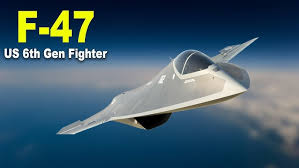
663: ROLE OF AMERICA’S F-47 SIXTH-GENERATION FIGHTER JET  IN A SHIFTING DEFENCE LANDSCAPE


My Article was published in the  May edition of the “Life of Soldier” journal.


The evolution of military aviation has reached a revolutionary moment with the advent of sixth-generation fighter jets. These jets, representing a transformative leap in military aviation, are set to redefine air combat with their revolutionary technologies like advanced stealth, artificial intelligence (AI), hypersonic speeds, and networked warfare capabilities. As nations like the United States and China race to develop these next-generation platforms, the global balance of power is shifting, with significant implications for countries like India. This article explores what constitutes a sixth-generation fighter, delves into the specifics of the US’s Next Generation Air Dominance (NGAD) platform, compares it to the existing F-22, and assesses its potential to transform US defence. It also examines the intensifying US-China defence rivalry and India’s current standing amidst these global developments.


Sixth-Generation Fighter Jet

A sixth-generation fighter jet is the next evolutionary step beyond the current fifth-generation aircraft, such as the U.S.’s F-22 Raptor and F-35 Lightning II, the Russian SU-57 and the Chinese J-20. While fifth-generation jets introduced advanced stealth, supercruise (sustained supersonic flight without afterburners), and integrated sensor systems, sixth-generation fighters aim to push the boundaries further. Their defining features include:-

Enhanced Stealth. These jets will have an even lower radar cross-section than their predecessors, using advanced materials, coatings, and aerodynamic designs to become nearly invisible to enemy detection systems.

Artificial Intelligence (AI). AI will be deeply integrated, enabling real-time decision-making, autonomous operations, and coordination with unmanned systems, such as drones acting as “loyal wingmen.”

Hypersonic Speeds. Capable of exceeding Mach 5, these aircraft could drastically reduce response times and enhance their ability to penetrate contested airspace.

Directed-Energy Weapons. Innovations like laser systems could provide precise, cost-effective means to neutralise threats like missiles or enemy aircraft.

Advanced Networking. Sixth-generation jets will operate as nodes in a vast battlefield network, sharing data with satellites, ground stations, and other platforms to achieve total situational awareness.

Advanced Avionics and Sensors. They would incorporate superior sensor fusion for unparalleled situational awareness.

Optionally Manned Capabilities. These fighters will be flexible enough to operate with or without a pilot, adapting to mission requirements.

These capabilities mark a shift from traditional air combat to multi-domain warfare, a concept in which air, space, cyber, and electronic domains are seamlessly integrated. This integration allows for a more comprehensive approach to warfare, focusing on dominating future conflicts through technological superiority and adaptability.


Speciality of the U.S.’s “F-47” Fighter Jets & Differences from the Existing F-22.

The F-22 Raptor, operational since 2005, is a fifth-generation stealth air superiority fighter renowned for its agility, stealth, and advanced avionics. However, after two decades, it faces limitations in an evolving threat era. The NGAD is envisioned as a “family of systems” rather than a single aircraft, comprising a manned fighter and supporting unmanned drones.  It will differ significantly. The NGAD (F-47) fighter’s specialities would include:-

Next-Level Stealth. The F-22’s stealth is exceptional, but the NGAD will likely use next-generation materials and designs to achieve even greater invisibility, including against emerging radar technologies. Building on the F-22’s stealth technology, the NGAD will likely incorporate broadband stealth, reducing detectability across a broader range of radar frequencies.

AI and Autonomy. The F-22 relies on human pilots for all decisions, whereas the NGAD will integrate AI to handle complex tasks, potentially reducing pilot workload or enabling autonomous missions. The jet may feature AI systems that manage flight, combat, and coordination with unmanned drones, potentially allowing for unmanned variants.

Hypersonic Capability. The F-22 can supercruise at Mach 1.5, but the NGAD may reach hypersonic speeds (Mach 5+), vastly improving its ability to strike and evade. While specifics are classified, the NGAD could achieve speeds far exceeding the F-22’s Mach 1.5 supercruise, possibly entering the hypersonic realm.

System Integration. The F-22 has limited data-sharing capabilities compared to the NGAD, which will operate within a highly networked environment, linking with other assets for real-time battlefield awareness. The NGAD is not just a standalone aircraft but part of a broader “family of systems,” including drones, advanced sensors, and cyber tools, all working together to dominate the battlespace. The NGAD could control or be supported by unmanned drones, expanding its operational flexibility.

Range, Endurance and Payload. The F-22 has a range of approximately 1,850 miles with external tanks, whereas NGAD is engineered for greater range, endurance and potentially larger weapon capacity. It will be designed for long-range missions critical for operations in expansive regions like the Indo-Pacific.

Flexible Architecture. Its modular design could enable rapid upgrades and mission-specific configurations, ensuring longevity and adaptability. The NGAD is a forward-looking platform designed for future warfare, while the F-22, though formidable, reflects the priorities of an earlier era. These features position the NGAD as a revolutionary platform designed to address the challenges of modern warfare against technologically advanced adversaries.


Likely Game Changer for U.S. Defence

The Next-Generation Air Dominance (NGAD) program can redefine U.S. defence strategy, ushering in a new era of air superiority, enhanced deterrence, and reinforced multi-domain integration. The anticipation and excitement surrounding this potential transformation are palpable.

Air Superiority. The NGAD is designed to outperform near-peer adversaries like China’s J-20 and Russia’s Su-57. Its cutting-edge stealth, enhanced range, and AI-driven capabilities will allow the U.S. to dominate contested airspaces, even in heavily defended environments.

Deterrence. A formidable leap in air combat technology, the NGAD will discourage potential adversaries from challenging U.S. air dominance. Knowing they face a next-generation fighter capable of overwhelming their defences, adversaries may be deterred from aggressive actions.

Multi-Domain Dominance. The NGAD is not just a fighter but a networked system that integrates with space, cyber, and land-based forces. This interconnectivity allows it to act as a force multiplier, relaying battlefield intelligence and coordinating attacks with other assets, thus extending its impact far beyond traditional air combat.

Air Dominance. Successfully fielding the NGAD will ensure U.S. air dominance and reaffirm the nation’s position as the global leader in military innovation. Its advancements in AI, unmanned teaming, and next-gen propulsion could have spillover benefits for civilian aerospace, cyber warfare, and autonomous systems, instilling a sense of pride and confidence in the audience.

Despite its promise, the NGAD faces significant hurdles, including a projected per-unit cost of hundreds of millions of dollars and the challenge of integrating multiple breakthrough technologies. However, if these obstacles are overcome, the NGAD will shape the future of U.S. airpower for decades, ensuring its dominance in a rapidly evolving strategic landscape.


China’s Sixth-Generation Stealth Fighter and U.S.-China Competition.

China is also advancing its sixth-generation stealth fighter, with reports of prototypes being sighted. China’s program remains shrouded in secrecy, and the details are limited. The recent flying of sixth-generation prototypes suggests it is committed to matching or surpassing U.S. capabilities. This development coincides with the U.S. Pentagon’s NGAD efforts, highlighting fierce competition between these two powers.

Both nations are pouring resources into AI, hypersonics, and stealth, aiming to deploy sixth-generation fighters first and gain a strategic edge. A sixth-generation jet would enhance China’s influence in the Asia-Pacific, particularly in disputed areas like the South China Sea and near Taiwan. The U.S.-China rivalry extends beyond military hardware, shaping economic and diplomatic alignments worldwide. This competition drives rapid innovation and escalates tensions, with both nations seeking to outpace each other in defence technology. This close contest shapes global defence dynamics, influencing nations like India.


Impact on India

The US-China rivalry in sixth-generation fighters has significant implications for India, which faces opportunities and challenges. India faces threats from China and Pakistan, both of which are modernising their air forces. A Chinese sixth-generation fighter could tip the balance in regional conflicts, pressuring India to modernise its air force. India must counter Beijing’s growing military strength. India balances ties with the US and Russia while pursuing indigenous programs.

India’s airpower combines legacy and modern systems, reflecting its multi-source procurement strategy. It includes Russian Su-30MKI, MiG-29, French Mirage-2000, Rafale and indigenous Tejas fighters. The AMCA aims to deliver fifth-generation capabilities, though it’s still years from operational service. India’s fleet is smaller and comparatively less advanced, lacking operational fifth-generation fighters. It trails in AI, stealth, and hypersonic research. India is modernising through foreign purchases (Rafale), indigenous efforts (Tejas Mk2, AMCA), and partnerships with the U.S., France, and Israel. Limited resources spread across multiple programs hinder rapid progress. However, it must accelerate to keep pace with its rivals.

India’s reliance on Russian aircraft and systems risks U.S. sanctions, straining its ties with Washington despite a growing partnership. India must diversify its defence suppliers to reduce foreign dependence while boosting indigenous programs like the Advanced Medium Combat Aircraft (AMCA). The U.S.-China race underscores the urgency for India to enhance its technological and military capabilities to safeguard its interests.

India has defence deals with the U.S., but has not purchased U.S. fighter jets. Discussions about acquiring the F-35 Lightning II, a fifth-generation stealth fighter, are being speculated. The F-35 could bolster its air force, but its expense and restrictions might divert resources from the AMCA, India’s fifth-generation fighter in development. With China advancing rapidly, India cannot afford delays but needs a cost-effective, strategically aligned solution.

The NGAD, however, remains a U.S.-exclusive program, a highly classified initiative focused on developing a sixth-generation fighter for the U.S. Air Force. Its sensitive technologies and strategic importance make it unlikely to be shared with foreign partners soon.


Conclusion

As exemplified by the U.S.’s NGAD and China’s emerging platform, sixth-generation fighter jets are set to redefine air combat with unprecedented technology. For the U.S., the NGAD will ensure air dominance, while China’s efforts signal its rise as a military superpower. India, caught between these giants, faces a complex path. It lacks direct involvement with NGAD but must leverage U.S. ties, navigate CAATSA, and decide on deals like the F-35, all while pushing indigenous development.

India’s air power is at a crossroads in a world of rapid geopolitical and technological change. Modernisation is underway, but closing the gap with China will require strategic focus, investment, and innovation. The sixth-generation race is not just about jets—it’s about the future of warfare, and India must position itself to thrive in this new era.


Please Do Comment.


1879
Default rating

Please give a thumbs up if you  like The Post?


For regular updates, please register your email here:-

Subscribe


References and credits

To all the online sites and channels.

Pics Courtesy: Internet

Disclaimer:

Information and data included in the blog are for educational & non-commercial purposes only and have been carefully adapted, excerpted, or edited from reliable and accurate sources. All copyrighted material belongs to the respective owners and is provided only for wider dissemination.


References:-

  1. Krepinevich, Andrew. The Evolution of Air Dominance: Sixth-Generation Fighters and the Future of Air Combat. Center for Strategic and Budgetary Assessments, 2023.
  1. Gunzinger, Mark, and Bryan Clark. The Role of NGAD in Sustaining U.S. Air Superiority in the Pacific. Center for Strategic and International Studies, 2024.
  1. RAND Corporation. Next-Generation Fighter Aircraft: Strategic Considerations for the U.S. Air Force. RAND, 2023.
  1. Mehta, Aaron. U.S. Airpower in the Indo-Pacific: The NGAD’s Role in Detering China. Atlantic Council, 2024.
  1. Callaghan, John. “Sixth-Generation Fighter Jets and the Shift in U.S. Defence Strategy.” Journal of Strategic Studies 47, no. 1 (2024): 33-58.
  1. Holbrook, Sarah. “AI and Human-Machine Teaming in Next-Gen Fighters: Tactical Advantages and Challenges.” Air & Space Power Journal 38, no. 2 (2023): 45-70.
  1. Miller, James. “The Role of NGAD in Joint All-Domain Operations (JADO).” Military Review 104, no. 3 (2023): 22-41.
  1. Roberts, Ethan. “Geopolitical Implications of America’s Next Fighter Jet in the Indo-Pacific.” Defence and Security Analysis 40, no. 4 (2024): 90-112.
  1. Boeing Defence. Stealth, AI, and the Future of Sixth-Generation Fighters. Chicago, IL: Boeing Corporation, 2024.
  1. Northrop Grumman. Multi-Domain Warfare and NGAD: A Defence Industry Perspective. Falls Church, VA: Northrop Grumman, 2024.
  1. Jane’s Defence Weekly. Sixth-Generation Fighters: Key Developments and Program Milestones. London: Jane’s Information Group, 2024.
  1. Trevithick, Joseph. “What We Know About the U.S. Air Force’s Secret Sixth-Gen Fighter.” The War Zone (The Drive), January 18, 2024.
  1. Insinna, Valerie. “America’s NGAD Program and the Future of Air Superiority.” Defence News, February 7, 2024.
  1. Mizokami, Kyle. “The Air Force’s Future Fighter Jet: How the F-47 Will Change U.S. Airpower.” Popular Mechanics, March 5, 2024.
  1. Axe, David. “The Cost and Strategy Behind NGAD.” Forbes Defence, April 12, 2024.
  1. Thompson, Loren. The Aerospace Revolution: How Next-Generation Fighters Will Change Warfare. Washington, D.C.: Lexington Institute, 2023.

598: FROM ALLY TO ADVERSARY: US SANCTIONS HIGHLIGHT PAKISTAN MISSILE THREAT


On December 19, 2024, U.S. Deputy National Security Adviser Jon Finer described Pakistan’s missile developments as an “emerging threat,” noting the increasing sophistication of its missile technology and the potential to reach targets beyond South Asia, including the United States. In response, the U.S. has imposed new sanctions on Pakistan’s ballistic missile development, including on the state-run defence agency overseeing the program.  This recent imposition of sanctions by the United States on Pakistan’s missile program has raised significant concerns about the trajectory of their bilateral relationship. Once regarded as a strategic ally in the Cold War and the War on Terror, Pakistan now finds itself under renewed scrutiny as Washington seeks to address emerging security threats. These developments not only highlight the growing apprehension in the U.S. about Pakistan’s missile capabilities but also reflect broader geopolitical shifts and challenges in maintaining regional stability.


The Rise and Fall of a Partnership. The U.S.-Pakistan relationship has seen dramatic shifts over the decades. During the Cold War, Pakistan emerged as a critical ally for the United States in its containment strategy against the Soviet Union. The alliance shaped regional geopolitics, from military aid to intelligence sharing. One key event was Pakistan’s facilitating the U.S.-China rapprochement in the 1970s. Islamabad’s diplomatic efforts, particularly under leaders like Zulfikar Ali Bhutto, earned it significant goodwill from Washington. Following the events of September 11, 2001, Pakistan became a “frontline state” in the U.S.-led War on Terror. Billions of dollars in military and economic aid flowed to Islamabad as it supported American operations in Afghanistan. However, the relationship began to sour due to allegations of double-dealing. U.S. officials accused Pakistan of harbouring militant groups like the Haqqani network, which targeted American forces in Afghanistan.


Missile Development in Pakistan: A Strategic Imperative. Pakistan’s missile program’s evolution reflects Pakistan’s desire to maintain strategic parity with India while deterring external threats. The program began in earnest during the 1980s, driven by its strategic rivalry with India. The need for a credible deterrent grew more acute following India’s advancements in ballistic missile technology and its nuclear tests in 1974. Early development relied heavily on foreign assistance, with China and North Korea playing significant roles. The Hatf missile series, for example, showcased the fusion of indigenous efforts and imported technology. Over the decades, Pakistan’s missile arsenal expanded to include short-range, medium-range, and cruise missiles capable of delivering both conventional and nuclear payloads. Key missile developments include:-


    • Ghauri Missile. A medium-range ballistic missile developed with North Korean assistance.
    • Shaheen Series. A family of solid-fueled missiles with improved accuracy and range.
    • Babur Cruise Missile. A subsonic cruise missile with advanced targeting capabilities.


Recent Advancements in Pakistan’s Missile Program. Pakistan has made significant strides in its missile program, enhancing its strategic capabilities by developing Multiple Independently Targetable Re-entry Vehicles (MIRVs) and exploring hypersonic technologies.


    • MIRV. A notable advancement is the development of the Ababeel missile, designed to carry MIRVs. The Ababeel is a medium-range ballistic missile with a reported range of approximately 2,200 kilometers, capable of delivering multiple warheads to different targets independently. This capability enhances Pakistan’s deterrence by enabling it to penetrate advanced missile defence systems. The first publicly announced test of the Ababeel was conducted on January 24, 2017, with subsequent tests, including one on October 18, 2023, confirming its MIRV capabilities.


    • Hypersonic Technologies. While Pakistan does not currently have an indigenous hypersonic weapons program, there have been developments suggesting interest in this area. The Pakistan Air Force has indicated the development of a hypersonic-capable missile as part of a broader modernisation effort to counter evolving threats. A video released by the Pakistan Air Force featured the CM-400AKG anti-ship missile, a Chinese-manufactured missile that allegedly travels at hypersonic speeds.


Strategic Implications and Proliferation Risks. These recent advancements have raised concerns internationally.  U.S. officials fear these capabilities could destabilise the region and enable Pakistan to project power beyond South Asia. The U.S. has long been wary of Pakistan’s role in global proliferation networks. The infamous A.Q. Khan network, which supplied nuclear technology to countries like Iran, Libya, and North Korea, underscored the risks of unchecked development. One of Washington’s primary concerns is the intensifying arms race between India and Pakistan. Both countries have developed increasingly sophisticated missile systems, raising the risk of miscalculation and escalation.


Involvement of Pakistani Firms. The United States imposed sanctions on four Pakistani firms for their involvement in aiding Pakistan’s ballistic missile program, which is closely linked to its nuclear program. The sanctioned entities were found to be involved in the transfer of critical technologies and materials used in the development of ballistic missile systems. These technologies included components necessary for guidance systems, propulsion, and control mechanisms, which are vital for both missile and nuclear weapons development. The transfer of these technologies represents a significant concern for the U.S., as they could potentially enhance Pakistan’s ability to develop more advanced nuclear delivery systems. Some of these Pakistani firms were collaborating with foreign entities and institutions that are under U.S. and international sanctions. This collaboration allowed the transfer of sensitive technologies and expertise, which accelerated the development of Pakistan’s missile capabilities. These firms were directly involved in the design, development, and testing of ballistic missile systems. The U.S. identified these entities as providing essential support, including material assistance and technical expertise, which allowed Pakistan to improve its missile technology. This development raised concerns about the potential for these missile systems to be used in a nuclear context, thereby complicating global security dynamics.


Sanctions. These sanctions are aimed at curbing the spread of missile technology and preventing the enhancement of Pakistan’s military capabilities that could pose risks to regional stability and U.S. security interests. The latest sanctions specifically target entities involved in Pakistan’s missile development. These include National Development Complex (NDC), a state-owned organisation central to missile research and production, and Karachi-based Companies (Akhtar and Sons Private Limited, Affiliates International, and Rockside Enterprise), accused of supplying critical components and technology. The sanctions include freezing U.S.-based assets of the targeted entities, prohibiting American businesses and individuals from conducting transactions with them, and restricting access to international financial systems. These sanctions aim to disrupt Pakistan’s ability to acquire advanced technology and materials critical for its missile program.


Pakistan’s Response. Islamabad has strongly condemned the sanctions, describing them as “discriminatory” and counterproductive. The Pakistani Foreign Ministry issued a statement arguing that the sanctions undermine regional peace and stability. Pakistan claims that its missile program is purely defensive and aimed at maintaining strategic balance, and the U.S. is applying double standards, as similar concerns are not being raised about India’s missile developments. Within Pakistan, the sanctions have sparked a wave of nationalist rhetoric. Political leaders and media outlets have framed the U.S. actions as an affront to Pakistan’s sovereignty, bolstering anti-American sentiment.


Broader Implications and Realignments. The U.S. troop withdrawal from Afghanistan in 2021 marked a turning point in U.S.-Pakistan relations. Washington’s diminished reliance on Islamabad for logistical support in the region has led to a reassessment of the partnership. As U.S.-Pakistan relations cool, Islamabad has sought closer ties with China and Russia. The China-Pakistan Economic Corridor (CPEC) and growing military cooperation with Beijing underline this shift. At the same time, Pakistan’s increasing engagement with Moscow signals a diversification of its strategic alliances. The sanctions could exacerbate tensions in South Asia. With Pakistan feeling cornered, there is a risk of accelerated arms development or even closer alignment with adversaries of the U.S., such as China.


The U.S. sanctions on Pakistan’s missile program mark a significant moment in their bilateral relationship. While Washington’s concerns about proliferation and regional stability are valid, the move risks further alienating Islamabad at a time when global alliances are shifting. For Pakistan, the sanctions underscore the possibility of diversification of partnerships. For the U.S., they reflect the delicate balancing act of addressing security threats while maintaining influence in a critical region. As the two nations navigate these challenges, the question remains: Can they find common ground, or will their paths continue to diverge?


Please Do Comment.


1879
Default rating

Please give a thumbs up if you  like The Post?


For regular updates, please register your email here:-

Subscribe


References and credits

To all the online sites and channels.

References:-

  1. Landay, Jonathan S. “U.S. Imposes Sanctions on Pakistani Firms over Missile Proliferation.” Reuters, December 14, 2024.
  1. Haider, Kamran. “Pakistan Criticizes U.S. Sanctions, Calls Them Unjustified.” Dawn, December 15, 2024.
  1. Burns, John F. “Pakistan’s New Missiles Worry U.S. and India.” The New York Times, October 20, 2024.
  1. Tellis, Ashley J. “The Evolution of US-Pakistan Relations: Prospects for the Future.” The Washington Quarterly 34, no. 4 (2011): 109–123.
  1. U.S. Department of Defense. Military and Security Developments Involving the Islamic Republic of Pakistan 2023. Washington, DC: Office of the Secretary of Defense, 2023.
  1. Federation of American Scientists (FAS). Pakistan Missile Program Overview. Washington, DC: FAS, 2022.
  1. Arms Control Association. “Pakistan’s Missile Capabilities.” December 2024. https://www.armscontrol.org
  1. Nuclear Threat Initiative (NTI). “Pakistan’s Nuclear and Missile Programs: A Profile.” Updated October 2024. https://www.nti.org
  1. Kampani, Gaurav. “Pakistan’s Evolving Missile Strategy: Implications for Deterrence and Security.” South Asian Strategic Review 18, no. 2 (2023): 22–34.
  1. Tariq, Mohammad. “US-Pakistan Relations: From Strategic Alliance to Mutual Distrust.” Pakistan Horizon 71, no. 3 (2024): 15–37.


Disclaimer:

Information and data included in the blog are for educational & non-commercial purposes only and have been carefully adapted, excerpted, or edited from reliable and accurate sources. All copyrighted material belongs to respective owners and is provided only for wider dissemination.

English हिंदी