

595: AERO INDIA 2025 AND KEY SOLUTIONS FOR IAF’S CHALLENGES


My Article published in the SP Aviation’s

Aero India  special e-magazine on 10 Feb 25.


Aero India. Aero India is a premier aerospace and defence exhibition held biennially in India, serving as a vital platform to showcase the nation’s advancements in aviation technology, defence capabilities, and aerospace innovation. Organised by the Ministry of Defence, it attracts global defence manufacturers, policymakers, and military leaders, fostering collaboration and strategic partnerships. The event aligns with India’s “Atmanirbhar Bharat” (self-reliant India) initiative, emphasising indigenous manufacturing and technology development. Aero India is crucial in enabling collaborations with global players and enhancing India’s defence exports and procurement programs. The event highlights key emerging trends, including artificial intelligence, space-based defence systems, and unmanned aerial vehicles (UAVs).  Overall, Aero India is a crucial event that strengthens India’s defence ecosystem.


IAF Challenges. The Indian Air Force (IAF) faces significant challenges due to shortages in fighter aircraft, force multipliers, and key operational assets, impacting its ability to meet long-term strategic goals. One of the most pressing concerns is the shortfall in fighter squadrons. While the induction of advanced platforms such as the Rafale has boosted capability, the slow pace of procurement and delays in indigenous programs like the Tejas Mark 2 and the Advanced Medium Combat Aircraft (AMCA) have created capability gaps. The IAF also faces shortages in critical force multipliers such as Airborne Early Warning and Control (AEW&C) systems, aerial refuelling tankers, and drones essential for extending the operational reach and maintaining air superiority in prolonged conflicts. Additionally, the service faces numerous other challenges. Progress remains slow despite efforts to address these issues through the Make in India initiative and increased defence budgets. Bridging these gaps requires accelerated procurement and streamlined production of indigenous platforms.


Adversarial Threats. The Indian Air Force (IAF) faces growing challenges due to the rapid modernisation and expansion of both the Pakistan Air Force (PAF) and the People’s Liberation Army Air Force (PLAAF), which are enhancing their capabilities through advanced platforms and strategic cooperation. With significant support from China, the PAF has made notable progress in fleet modernisation by inducting advanced fighter jets such as the JF-17 Thunder Block III, equipped with AESA radars and beyond-visual-range (BVR) missiles. The PAF’s procurement of Chinese J-10C fighters, featuring advanced avionics and electronic warfare capabilities, has further narrowed the technological gap with the IAF. Pakistan’s focus on enhancing its air defence network, integrating long-range surface-to-air missile systems (SAMs), and investing in unmanned combat aerial vehicles (UCAVs) pose asymmetric threats to India’s air dominance. Meanwhile, the PLAAF presents an even greater challenge with its rapid expansion and technological advancements. China’s deployment of fifth-generation stealth fighters such as the J-20 and an extensive fleet of modern aircraft like the J-16 and H-6K bombers enhances its capability for long-range strikes and air superiority missions. It has even flown the sixth generation prototypes. The PLAAF’s focus on network-centric warfare, integrating artificial intelligence, electronic warfare, and space-based assets, gives it a strategic edge. Furthermore, China’s expanding airbases in Tibet and Xinjiang, with enhanced infrastructure and support systems, allow for sustained air operations along the Indian border. The combined threat from the PAF and PLAAF places immense pressure on the IAF to modernise its fleet rapidly, enhance its force multipliers, and enhance its operational readiness.


Aero India 2025.  Aero India 2025 presents a crucial opportunity for the Indian Air Force (IAF) to address its operational challenges by exploring advanced aerospace and defence technology solutions. It would provide a critical opportunity to find sustainable solutions through international collaboration and Indigenous innovation. The IAF must leverage the event to accelerate procurement, foster strategic partnerships, and enhance Indigenous capabilities. Furthermore, global defence suppliers (foreign and Domestic) would gain an understanding of India’s military modernisation plans.


Major Challenges Faced by the Indian Air Force


Squadron Strength Shortfall. One of the most significant challenges for the IAF is the depletion of fighter squadrons. The sanctioned strength of 42 squadrons is essential to counter a potential two-front war scenario. However, the IAF currently operates around 31-33 squadrons, mainly due to the phased retirement of ageing MiG-21s and delays in acquiring replacements. The induction of platforms such as the Rafale has helped, but further acquisitions and indigenous production are crucial to bridge the gap.


Force Multiplier Shortages. The Indian Air Force (IAF) faces challenges in enhancing its force multiplier capabilities, which are critical for maintaining a strategic edge in modern warfare. Force multipliers such as airborne early warning and control (AEW&C) systems, mid-air refuelling tankers, electronic warfare (EW) platforms, drones, and advanced intelligence, surveillance, and reconnaissance (ISR) assets play a pivotal role in extending the IAF’s operational reach and effectiveness. However, the current fleet of these assets is limited, constraining the IAF’s ability to sustain prolonged operations, especially in high-intensity conflict scenarios.


Dependence on Imported Technology. Despite significant strides in indigenous production, the IAF remains dependent on foreign suppliers for critical platforms, components, and weapon systems. This dependence affects operational readiness and strategic autonomy, making accelerating domestic research and development imperative.


Adapting to Changes in Warfare. The Indian Air Force (IAF) faces significant challenges in adapting to the rapidly evolving nature of modern warfare, characterised by advancements in technology, cyber threats, and the increasing importance of multi-domain operations. The growing emphasis on unmanned systems, artificial intelligence, and network-centric warfare demands a paradigm shift in operational tactics and procurement strategies. Cyber security threats also pose a significant risk, as adversaries invest heavily in electronic and information warfare capabilities. The IAF must enhance its capabilities in space-based surveillance, drone warfare, and electronic warfare to stay ahead in a rapidly changing battlefield environment.


Infrastructure Challenges. The Indian Air Force (IAF) also faces infrastructure challenges that directly impact its operational readiness, modernisation efforts, and ability to respond swiftly to emerging threats. One of the concerns is the airbases, particularly those located in remote and strategically sensitive regions in the northeastern states. Many of these bases require substantial upgrades to support the deployment and maintenance of modern fighter jets. The lack of sufficient hardened aircraft shelters (HAS) and blast pens leaves critical assets vulnerable to enemy strikes, especially in high-tension areas like Ladakh and Arunachal Pradesh. Another challenge is the storage and handling of advanced weaponry and ammunition. Modern air warfare demands the deployment of precision-guided munitions, long-range missiles, and advanced electronic warfare suites, all requiring specialised storage and maintenance infrastructure.


Maintenance and Logistics Challenges. The Indian Air Force (IAF) faces maintenance and logistics challenges impacting operational readiness and efficiency. With a diverse fleet comprising legacy aircraft alongside modern platforms, maintaining a seamless supply chain for spare parts and repairs is a complex task. Dependence on foreign suppliers for critical components often leads to delays due to geopolitical and logistical hurdles. IAF’s maintenance, repair, and overhaul (MRO) infrastructure and supply chain management require upgrades to meet the demands of modern warfare.


Expected Solutions


To mitigate its challenges, the Indian Air Force (IAF) must prioritise modernisation, self-reliance, and operational efficiency. Investing in indigenous production under the “Make in India” initiative can reduce dependency on foreign suppliers and ensure a steady supply of spare parts.  Strengthening force multipliers such as AWACS, aerial refuelling, drones, and ISR assets is crucial for strategic superiority. Improved logistics management and cyber security enhancements will further bolster the IAF’s combat readiness in future conflicts. Upgrading maintenance, repair, and overhaul (MRO) facilities and adopting advanced technologies like artificial intelligence and predictive maintenance will enhance fleet availability. Aero India 2025 will be a convergence point for industry leaders, defence manufacturers, and policymakers to explore solutions to these pressing challenges. Some of the thrust areas include:-


Capability vis-à-vis Capacity. Warfighting capabilities and the capacity to sustain operations are both essential. It is a combination of quality and quantity. While the capabilities of Indian air power (e.g., reach, high altitude operations, precision, standoff, all-weather operations, airlift capability, etc.) have developed well, the numerical strength of air assets like fighter aircraft, combat enablers, AWACS, AAR, Drones, etc., needs to be increased.


Aircraft Type and Capability. The type of aircraft being used, their capabilities, payload capacity, and mission versatility significantly affect how effectively and efficiently air operations can be sustained. Therefore, a balance between quality and quantity needs to be maintained. In the Indian context, besides inducting the LCA to make up the numbers, an adequate number of advanced fighter aircraft must also be inducted. Aero India 2025 will showcase options for modern fighter jets to augment the IAF’s capabilities.


Boosting Indigenous Production. In the long run, Self-reliance is the only way. The Indian Air Force has always encouraged the development of indigenous defence production capability, and it is one of its key result areas. The event will emphasise indigenous defence production under the Make in India and Atmanirbhar Bharat initiatives. It will also focus on partnerships with global defence companies for technology transfer, joint ventures, and local manufacturing of critical systems such as engines, avionics, and radars.


Advanced Force Multipliers. In addition to increasing their numbers, integrating force multipliers seamlessly with combat aircraft and ground-based systems requires advanced networking and data-sharing capabilities. To overcome these challenges, the IAF must accelerate indigenous development, enhance interoperability with allied forces, and invest in cutting-edge technologies such as artificial intelligence and space-based ISR to bolster its force multiplier capabilities and maintain air superiority in future conflicts. Aero India 2025 will provide a platform to evaluate and procure force multipliers such as AEW&C systems, aerial tankers, drones, and enhanced electronic warfare systems.


Unmanned Aerial Systems (UAS) and Drone Warfare. The use of unmanned platforms and systems is growing in warfare. This shift is expected to continue as technology advances and the capabilities of unmanned systems improve further. Drones of various sizes and capabilities are taking over the tasks of conventional platforms. Their use is spread across the entire spectrum of threats, ranging from sub-conventional and conventional to long-range attacks. Investment in anti-drone systems is also a need of the hour. Aero India 2025 will showcase the latest advancements in Unmanned Combat Aerial Vehicles (UCAVs), drone swarms, and counter-drone technologies—Indigenous platforms such as the DRDO’s Rustom and Tapas UAVs.


Situational Awareness & Decision Making. One effect of advanced technology on air warfare is the increased pace and intensity of air operations. In such a scenario, the decision-making process must quickly keep up with the OODA cycle. The three most important contributing factors are high situational awareness, a robust and fast network system for information sharing, and AI-based decision-support systems. The solutions may be found in the Aero India.


Space-Based Capabilities.  The term airpower has changed to aerospace power, with the aerial warfare envelope expanding to the space domain. Space-based systems and applications are embedded in every aspect of aerial warfare. In Grey zone warfare, the involvement of space-based equipment and systems is even larger. Space-based systems are becoming increasingly crucial in air warfare, providing capabilities such as navigation, targeting, communication, early warning of missile launches and space-based surveillance.  The integration of these systems with air assets is expected to continue, providing new opportunities for offensive and defensive operations. Aero India 2025 will highlight these solutions and satellite-based intelligence, surveillance, and reconnaissance (ISR), with the possibility of collaboration with ISRO and global space technology firms.


Cyber and Electronic Warfare Capabilities. Aero India 2025 will emphasise the need to strengthen the IAF’s capabilities in electronic warfare and cyber defence. Solutions like AI-driven cyber threat detection, electronic jamming systems, and next-generation radar technologies will likely be showcased.


Investment in Technology.  The Air Force is a technology-intensive service; converting technology into capability is time-consuming. To stay on top of the challenges, there is a need to invest in emerging technologies and ideate about their use in warfare. Technologies impacting the air war include quantum computing, hypersonics, AI, unmanned platforms (including drones and swarm technology), and a network-centric environment. Defence companies would display new defence systems incorporating these technologies.


Loyal Wing Man Concept. Both man- and unmanned platforms have their respective advantages and disadvantages. The thought process for the next generation of platforms is to harness both benefits and develop networked systems in which both can work in an integrated manner. Research is being done in many countries on the “loyal wingman” concept. HAL is likely to disclose the progress of its CATS Program.


Hypersonic. The development of hypersonic platforms and weapons will likely significantly impact air strategy. Hypersonic weapons provide new opportunities for rapid response and long-range strike capabilities with precision. They also pose new challenges in terms of protection and air defence.  The high speed and unpredictability of hypersonic weapons will require the development of new air defence strategies, as traditional air defence systems may be unable to detect or intercept these weapons. This could lead to the development of new technologies, such as directed energy weapons or advanced sensors, to counter the threat posed by hypersonic weapons. Also, protective infrastructure would be required to withstand these weapons’ destructive power. These aspects would find their way into Aero India.


Smart Training Aids. The Indian Air Force (IAF) is leveraging modern training aids such as simulators, artificial intelligence (AI), and virtual reality (VR) to enhance combat readiness and operational efficiency. Advanced flight simulators provide realistic, mission-specific training while reducing costs and wear on actual aircraft. AI-driven analytics help personalise training programs, analyse pilot performance, and optimise mission planning. VR technology immerses trainees in highly realistic combat environments, improving situational awareness and decision-making under pressure. These cutting-edge training solutions would find a place in the air show.


Smart Logistics and Supply Chain Management. Efficient and reliable logistics networks and supply chains are crucial for providing fuel, ammunition, weapons, spare parts, other critical supplies, and resources to sustain air operations. Well-maintained supply chains are essential for operational readiness and sustaining a protracted conflict. Industry leaders will present solutions to streamline the IAF’s logistical operations, including tools powered by artificial intelligence, automated inventory management, and improved supply chain networks to ensure the availability of critical spare parts.


Conclusion. Aero India 2025 represents a significant opportunity for the IAF to address its critical challenges and prepare for future readiness. By leveraging cutting-edge technologies, fostering international collaborations, and enhancing indigenous capabilities, the IAF can address the existing gaps. The outcomes of Aero India 2025 will have far-reaching strategic implications for India’s air power capabilities. The event will catalyse India’s vision of becoming a self-reliant aerospace and defence powerhouse, ensuring a robust, future-ready air force.


Please Do Comment.


1879
Default rating

Please give a thumbs up if you  like The Post?


For regular updates, please register your email here:-

Subscribe


References and credits

To all the online sites and channels.

References:-

  1. “Modernizing the Indian Air Force: Issues and Challenges” – Journal of Strategic Studies
  1. “The Role of Aerospace Technology in Enhancing National Security” – Defence and Technology Journal
  1. “India’s Aerospace Industry: Present Challenges and Future Directions” – Economic and Political Weekly

Government Reports & White Papers

  1. “Aero India 2025: Indian Aerospace and Defence Industry Report” – Ministry of Defence, India
  1. “Aero India 2025: What to Expect?” – The Economic Times
  1. “India’s Aerospace Industry in 2025: A Strategic Overview” – India Today
  1. “How Aero India is Shaping Future Air Combat” – The Hindu
  1. “The Role of Technology in the Modernisation of the Indian Air Force” – Institute for Defence Studies and Analyses (IDSA)
  1. “Challenges and Solutions in Air Force Modernisation” – Centre for Air Power Studies (CAPS)

Disclaimer:

Information and data included in the blog are for educational & non-commercial purposes only and have been carefully adapted, excerpted, or edited from reliable and accurate sources. All copyrighted material belongs to respective owners and is provided only for wider dissemination.
589: WINDS OF CHANGE IN GLOBAL DEFENCE


Pic Courtesy Net


My Article published on the Life of Soldier website on 29 Jan 25


The global defence landscape is transforming significantly, driven by technological advancements, shifting geopolitical dynamics, and evolving security threats. Nations increasingly prioritise developing cutting-edge technologies such as hypersonic missiles, artificial intelligence, and quantum radar to enhance military capabilities. The rise of non-traditional threats, including cyber-attacks and space-based warfare, also reshapes defence strategies. As countries adjust to these changes, the winds of change in global defence are prompting nations to rethink military priorities, strategies, and international relations. The winds of change in global defence are characterised by rising defence spending and a shift toward advanced military technologies. Countries are increasing their military budgets in response to escalating geopolitical tensions and emerging threats. This surge in defence spending reflects a global shift toward preparedness, emphasising modernisation, strategic alliances, and a more proactive approach to defence.


New Weapons and Dimensions of Warfare


AI-Powered Autonomous Weapons. The first fully autonomous AI-controlled weapon systems have been deployed in active combat zones. The deployment of AI-powered autonomous weapons in active combat zones marks a significant leap in military technology, raising concerns over their implications for global security. These systems, capable of making real-time decisions without human intervention, are being tested in conflicts such as those in the Middle East and Eastern Europe. While proponents argue they enhance precision and reduce human casualties, critics fear they could lead to uncontrolled escalation, with machines making life-and-death decisions. Ethical dilemmas arise over accountability for actions taken by autonomous systems, and there are growing calls for international regulations to govern the development and use of such advanced weapons.


Intensification of the Hypersonic Missile Arms Race. The hypersonic missile arms race has intensified as countries like the United States, China, and Russia race to develop advanced, high-speed weaponry capable of travelling at speeds greater than five times the speed of sound. These missiles can manoeuvre unpredictably, making them difficult to intercept with existing defence systems. This technological leap raises concerns about the potential for destabilising global security as nations vie for strategic advantage in an increasingly competitive and unpredictable arms race. The growing development and testing of hypersonic missiles signal a new era in military warfare, potentially altering the balance of power and escalation risks worldwide.


Cyber Attacks on Critical Infrastructure. Cyber attacks on critical infrastructure have become a growing threat to national security and economic stability. These attacks target essential sectors such as energy, transportation, finance, and healthcare, aiming to disrupt operations, steal sensitive data, or cause widespread damage. Notable incidents, including the 2021 Colonial Pipeline attack in the U.S. and various ransomware campaigns, highlight vulnerabilities in critical systems. As cyber warfare becomes an increasingly prominent tactic, governments and organisations are prioritising cyber security measures and investing in advanced technologies to prevent, detect, and mitigate such threats. These attacks’ rising frequency and sophistication emphasise the urgent need for robust cyber defence strategies globally.


Militarisation of Space. Space-based weapons systems are emerging as a new frontier in global defence. Several countries (the U.S., China, India, and France) have unveiled plans for orbital weapons platforms, signalling the militarisation of space and threatening existing space treaties to prevent such developments. These systems, which include anti-satellite missiles, directed energy weapons, and satellite-based lasers, are designed to target and neutralise adversary satellites or other space assets. The growing militarisation of space raises concerns over the potential for conflict beyond Earth’s atmosphere as nations seek to secure space-based resources and gain strategic advantage. The development of space-based weapons could disrupt communications, navigation, and surveillance capabilities, escalating tensions and prompting calls for international regulation of space militarisation.


Quantum Radar Military Breakthrough. Quantum radar represents a ground-breaking military technology with the potential to revolutionise defence systems. Unlike conventional radar, which relies on radio waves, quantum radar uses quantum entanglement to detect objects with unprecedented accuracy. This technology can potentially detect stealth aircraft and missiles, which are designed to evade traditional radar. By exploiting the quantum properties of light, quantum radar can function in environments where traditional systems struggle, such as in electronic warfare scenarios. As nations like China and the United States race to develop quantum radar, it could significantly alter the balance of military power, enhancing defence capabilities and complicating interception strategies. China has announced the development of quantum radar technology, which has the potential to render stealth aircraft obsolete and revolutionise detection capabilities in military operations.


Research on Genetic Bioweapons. Leaked documents have revealed ongoing research into genetic-based bioweapons, heightening fears of engineered pandemics and the ethical implications of such advancements. Research on genetic bioweapons has raised significant concerns over the moral, legal, and security implications of manipulating biological agents for warfare. Advances in genetic engineering, particularly CRISPR technology (Clustered Regularly Interspaced Short Palindromic Repeats enable precise editing of genes), have made it possible to modify pathogens, potentially creating more lethal or targeted biological weapons. The idea of designing diseases that could specifically target specific populations based on genetic markers adds a disturbing dimension to bioweapons research. Although international treaties like the Biological Weapons Convention aim to prevent such developments, the growing accessibility of genetic technologies makes the risk of bioengineered weapons a pressing global concern, necessitating stronger regulations and monitoring.


Successful Test of EMP Weapons. Successful electromagnetic pulse (EMP) weapons tests have raised alarms about the potential impact on global security. EMP weapons generate intense bursts of electromagnetic radiation capable of disabling electronic systems, including power grids, communication networks, and military technologies. In recent tests, countries like the United States, China, and Russia have demonstrated the destructive potential of EMPs, which could paralyse critical infrastructure on a large scale. While EMP weapons are seen as strategic tools for disrupting adversaries, their use also carries significant risks of unintended global consequences, including widespread civilian suffering and the collapse of essential services.


Devastating Swarm Drones.  Swarm drones, groups of autonomous or semi-autonomous drones operating in coordination, are emerging as a devastating new tool in modern air warfare. These drones can be deployed in large numbers, overwhelming enemy defences with precision strikes and creating significant disruption. Equipped with advanced sensors and artificial intelligence, swarm drones can navigate complex environments, target multiple objectives simultaneously, and adapt to changing conditions. Their use in military conflicts has raised concerns about their potential for widespread destruction, especially when used for surveillance, sabotage, or large-scale attacks. As drone technology evolves, swarm drones are expected to become a significant threat to global security.


Neural Interface Weapons. Neural interface weapons represent a new frontier in military technology, leveraging direct connections between the human brain and machines to control or disrupt enemy forces. These weapons could potentially manipulate neural functions, influencing behaviour and decision-making, or even incapacitating individuals through targeted brain stimulation. Research into brain-machine interfaces (BMIs) is advancing rapidly, opening possibilities for offensive and defensive warfare applications. While these technologies could enhance soldier performance or create new forms of non-lethal warfare, they raise significant ethical, privacy, and security concerns. Developing neural interface weapons could redefine the nature of conflict, blurring the lines between technology and human cognition.


Military Expenditure & Arms Race Trends


Record-Breaking Global Military Expenditure. Global military expenditure has reached unprecedented levels, with countries worldwide allocating record-breaking budgets for defence in recent years. In 2023, global military spending surpassed $2.44 trillion, marking a 3.7% increase from the previous year. This surge is driven by escalating geopolitical tensions, the ongoing war in Ukraine, and growing security concerns, particularly in regions like the Indo-Pacific. Nations like the United States, China, and Russia are leading the charge with significant investments in advanced technologies, including cyber capabilities and artificial intelligence. This increase in military spending raises concerns about global stability and resource allocation.


China’s Military Growth. China’s military growth has been a defining feature of its rise as a global power. The country has significantly expanded its defence budget in recent years, investing heavily in advanced technologies such as artificial intelligence, cyber capabilities, and next-generation weaponry. China’s (official) defence budget has grown over the past decade, totalling $296 billion in 2023. However, defence spending could be at least triple that value, closing in on the U.S. figures of about $1 trillion. Modernising its armed forces includes developing sophisticated missile systems, stealth aircraft, and a growing naval fleet, positioning China as a formidable military presence, especially in the Indo-Pacific region. This rapid military expansion is fuelled by Beijing’s strategic goals of asserting territorial claims, enhancing regional influence, and strengthening its global geopolitical stance amidst rising tensions with the West.


China’s Growing Influence in the Global Defence Industry. China’s growing influence in the global defence industry has become increasingly evident as the country emerges as a leading producer and exporter of military technology. Five Chinese firms now rank among the world’s top 12 defence companies, with the Aviation Industry Corporation of China (AVIC) securing the second position globally. China’s military exports are expanding across Africa, Asia, and the Middle East, offering competitive alternatives to Western suppliers. The country’s focus on innovation and its strategic partnerships and initiatives like the Belt and Road position China as a key player in reshaping the global defence landscape and challenging traditional arms-exporting powers.


Escalation in East Asia’s Defence Budgets. Defence budgets in East Asia are escalating rapidly as regional security concerns intensify, driven by the growing influence of China and its military advancements, as well as North Korea’s continued missile tests. Countries like Japan, South Korea, and Taiwan are significantly increasing their military spending to counter these threats and bolster national defence capabilities. Japan is modernising its forces with advanced missile defence systems and fighter jets, while South Korea is focusing on strengthening its air and missile defence systems. This regional arms build-up reflects heightened tensions, with countries investing in cutting-edge technologies such as hypersonic missiles, cyber security, and naval assets to safeguard their security.


Surge in Japan and South Korea Defence Sales. Japan and South Korea have seen a significant rise in defence sales, driven by increasing regional security concerns and growing defence budgets. In 2023, both nations ramped up military spending, fuelled by North Korea’s missile threats and heightened tensions with China. Traditionally focused on self-defence, Japan is expanding its defence capabilities, including advanced missile defence systems and fighter jets. South Korea is boosting its arms production, particularly in defence technology such as drones and military vehicles. This surge in defence sales highlights both countries’ shifts towards more proactive defence strategies amidst evolving security dynamics in the Indo-Pacific region.


Rise in EU Defence Spending. European Union defence spending has sharply increased recently, reflecting growing concerns over regional security and the need for stronger military deterrence. In 2023, EU member states collectively raised their defence budgets by over 10%, with countries like Germany, France, and Poland leading the charge. The Russian invasion of Ukraine drives the surge, prompting EU nations to reassess their defence strategies and military preparedness. Increased investments are being directed toward modernising the armed forces, enhancing cyber defence, and strengthening NATO collaborations. This rise in defence spending signals a shift towards greater military autonomy and readiness within Europe.


Boost in Russian Defence Budget. Russia has significantly increased its defence budget recently, primarily driven by ongoing military operations in Ukraine and growing security concerns over NATO expansion. Russia’s defence spending is set to reach unprecedented levels in the coming years. The Kremlin plans to allocate 13.5 trillion roubles ($145 billion) to military expenditures in 2025, a 25% increase from the 2024 budget of 10.4 trillion roubles. This boost reflects Russia’s strategy to enhance its military readiness and maintain a robust defence posture amidst international sanctions and geopolitical isolation. The surge in defence spending also aims to reinforce Russia’s strategic interests, both domestically and globally.


Middle East Arms Race. The Middle East is witnessing an escalating arms race as regional powers invest heavily in military technology to assert influence and ensure security. Nations like Saudi Arabia, Iran, and the United Arab Emirates are significantly expanding their defence budgets, purchasing advanced weaponry, including missile defence systems, fighter jets, and drones. Tensions surrounding Iran’s nuclear ambitions, the conflict in Yemen, and rivalries between Sunni and Shia factions fuel the competition. This arms race intensifies the region’s instability, as military buildups may provoke further conflict and exacerbate existing geopolitical rivalries. The influx of modern arms also poses challenges for regional and global security. Iran has announced plans to triple its military budget for the upcoming fiscal year. Government spokeswoman Fatemeh Mohajerani has revealed the proposed 200% increase in defence funding. Iran’s current military spending is estimated at $10.3 billion.


North African Arms Race. The North African arms race is intensifying as countries in the region ramp up military spending in response to regional instability, terrorism, and geopolitical rivalries. Nations like Algeria, Egypt, and Morocco are significantly increasing their defence budgets, investing in advanced weaponry, including fighter jets, tanks, and missile systems. The competition is fuelled by territorial disputes, especially over Western Sahara, and concerns over militant groups operating in the Sahel region. In addition to conventional arms, there is growing interest in acquiring cutting-edge technologies, such as drones and cyber warfare capabilities. This arms race threatens to exacerbate tensions and destabilise an already volatile region. Morocco and Algeria are driving a regional military spending surge, accounting for 82% of North African and 45.5% of total African defence expenditure, intensifying the arms race on the continent.


Technology for Conflict Prevention


Advancements in technology are playing a crucial role in conflict prevention by enhancing early warning systems, improving diplomacy, and facilitating timely interventions. AI-driven data analysis can predict potential hotspots by monitoring social, political, and economic trends and identifying signs of instability before they escalate into violence. Satellite surveillance and geospatial technologies help track military movements, border disputes, and natural resource conflicts. Additionally, communication platforms allow for quicker international coordination, enabling global response mechanisms. Technologies like blockchain can foster transparency in peace agreements. At the same time, social media monitoring tools provide real-time insights into public sentiment, empowering governments and organisations to take preventive action effectively.


Please do Comment.


Link to the article on the website:-

Winds of Change in Global Defence


1879
Default rating

Please give a thumbs up if you  like The Post?


For regular updates, please register your email here:-

Subscribe


References and credits

To all the online sites and channels.

References:-

  1. “The Future of Defense: AI, Cybersecurity, and Emerging Technologies”, Journal of Strategic Studies (2022).
  1. “Hybrid Warfare: The New Face of Conflict”, The RUSI Journal (2023).
  1. “2024 Global Defense Outlook”, Jane’s Defence.
  1. “The Future of Military Technologies”, RAND Corporation (2023).
  1. “Global Trends 2040: A More Contested World”, National Intelligence Council (NIC) (2021).
  2. “Defense Expenditure Trends in Asia-Pacific”, Stockholm International Peace Research Institute (SIPRI) (2022).
  1. “Global Security in the Twenty-First Century” by Sean Kay.

Disclaimer:

Information and data included in the blog are for educational & non-commercial purposes only and have been carefully adapted, excerpted, or edited from reliable and accurate sources. All copyrighted material belongs to respective owners and is provided only for wider dissemination.
 

485: COUNTERING HYPERSONIC WEAPON THREAT: A DIFFICULT BUT MANAGEABLE PROBLEM


Article published on the Chanakya Forum Site.


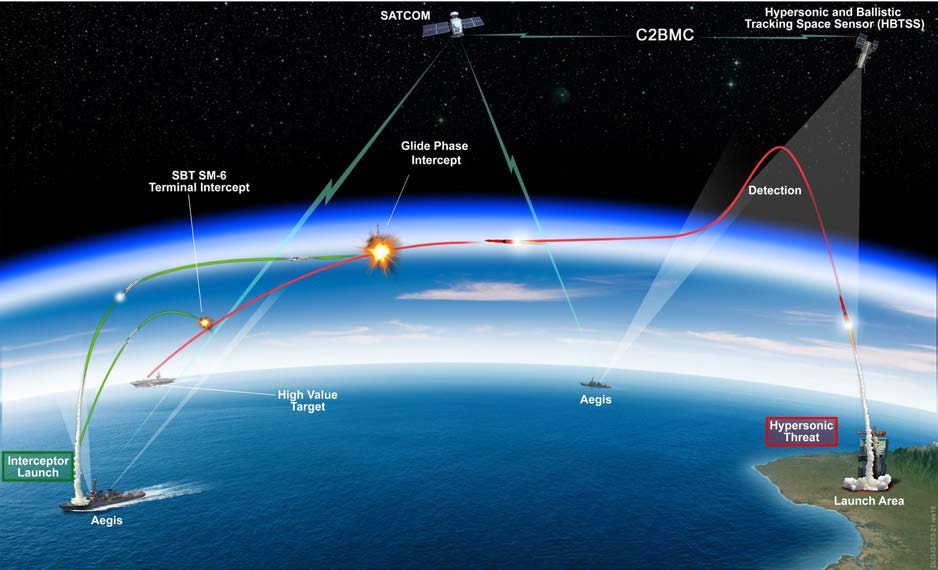
Depiction of Aegis Layered Hypersonic Defense

Source: Missile Defense Agency.

Introduction

Decades ago, ballistic missile defence was developed to intercept predictable targets outside the atmosphere. Since then, the missile threat spectrum has broadened, becoming more endo-atmospheric and manoeuvrable. Hypersonic weapons, a new breed of threat, combine the speed and range of ballistic missiles with a cruise missile’s low-altitude and manoeuvrable flight profile. Defending against hypersonic missiles is not just necessary; it’s a complex and formidable challenge that demands new designs, capabilities, and operational concepts.


While finding a technologically possible and fiscally affordable solution isn’t easy, it’s crucial to recognise that existing defence frameworks, despite not explicitly designed for hypersonic threats, hold significant potential to counter them. This potential should inspire a new way of thinking and a different approach from those employed for legacy ballistic and cruise missile defence systems. The characteristics that make hypersonic missiles attractive may also be the key to defeating them.  Instead of thinking about hypersonic defence as an adjunct to the legacy ballistic missile defence, it will be better to learn from it and develop new defence capabilities, with a mix of active and passive measures, to meet the new challenges. 


Attributes & Challenges


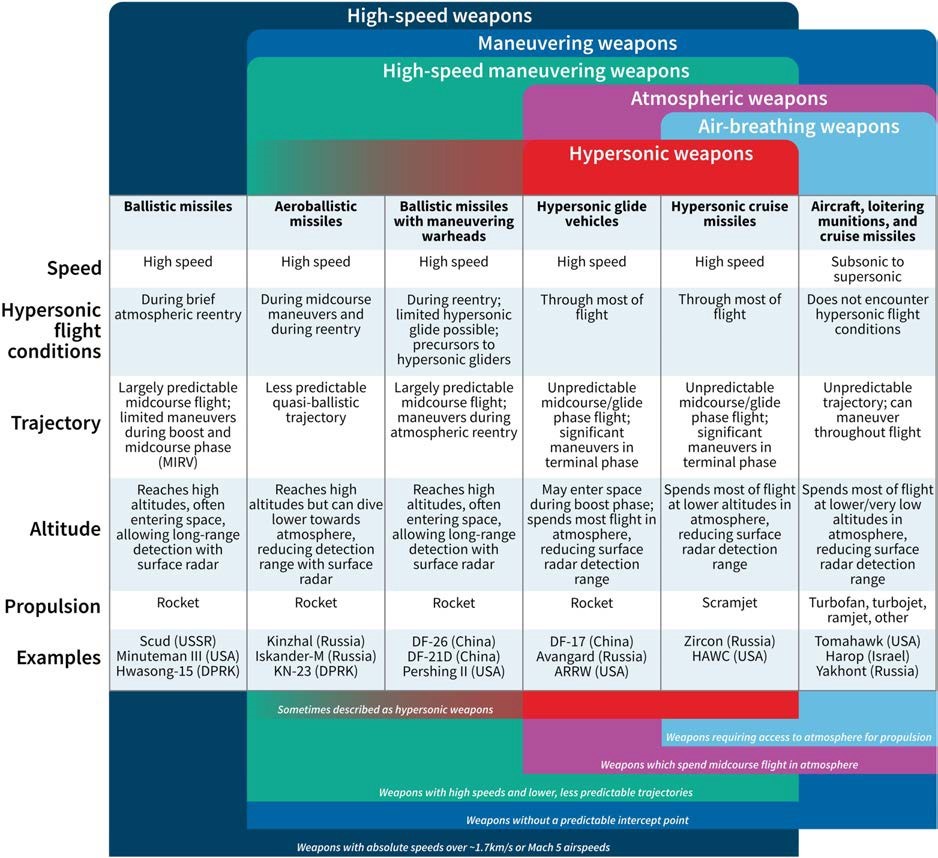
Hypersonic weapons, with their staggering speed over Mach 5, or five times the speed of sound, are a force to be reckoned with. They are not just fast; they are agile. While they are often categorised into two types—hypersonic glide vehicles and hypersonic cruise missiles—this classification fails to capture the true diversity of the hypersonic missile threat spectrum. It’s not just about speed. Long-range ballistic missiles can reach similar or greater speeds as they re-enter the atmosphere. What sets hypersonic weapons apart is their ability to sustain these speeds at altitudes below those of most ballistic missiles and, most importantly, their manoeuvrability. They operate at altitudes below 100 km, where space is often said to begin, and typically around 20 to 60 km, above the ceilings of most aircraft and cruise missiles. This unique combination of high speed, lower altitude, and manoeuvrability makes it incredibly difficult to predict the trajectories of hypersonic weapons, especially with terrestrial sensors, posing a significant challenge to the existing defence systems.


Source: CSIS Missile Defense Project.


At speeds around Mach 5, flying objects encounter thermal and aerodynamic phenomena distinct from those experienced in supersonic and exo-atmospheric flight. These phenomena involve extreme temperatures and aero-thermal interactions on the vehicle surface. Of particular importance are the remarkable amounts of flow friction and viscous dissipation encountered by the hypersonic vehicle, which leads to substantial temperature increases, the dissociation and ionisation of surrounding gases, and the formation of plasmas. Hypersonic weapons must survive this environment for a sustained period, which poses a unique and significant challenge.


Vulnerabilities


The phenomena of sustained hypersonic flight offer specific vulnerabilities. Some of the same characteristics that make advanced hypersonic missiles desirable present opportunities that could be exploited. Each feature that gives hypersonic weapons an advantage comes with a cost. Extended flight through the atmosphere may expose them to new failure modes.


    • Their ability to manoeuvre comes at the cost of expending energy and range.


    • Hypersonic weapons experience challenging aero-thermal conditions that strain the limits of current guidance, control, and materials technologies.


    • After Re-entering the atmosphere, the hypersonic glide vehicle experiences extreme pressures, vibrations, and temperatures. The vehicle’s surrounding atmosphere dissociates into a plasma in such an environment, reacting violently with the airframe’s surface.


    • Ensuring reliable performance in this environment often requires exotic materials and highly integrated designs, especially for higher speeds.


    • Minor alterations in the basic shape or weight distribution in a hypersonic vehicle’s airframe, for instance, can have downstream effects on thermal and propulsion system performance and accuracy.


    • Hypersonic systems are challenging to design and operate partly because their performance variables are closely coupled.


Defence Is Possible


Hypersonic missiles are not invincible. They are not the ultimate threat. Hypersonic missile defence is not only possible, but it’s also within reach. However, achieving it requires a fresh perspective on existing defence designs and a willingness to approach the problem differently. Hypersonic weapons have certain limitations that ballistic and cruise missiles do not. By targeting the specific characteristics of hypersonic flight, one can break the problem into manageable portions. Just as ballistic missile defence was oriented around the predictability of a ballistic trajectory, the hypersonic defence can also be tailored to the vulnerabilities of the hypersonic flight regime, offering a glimmer of hope in the face of this evolving threat.


The characteristic challenges of hypersonic flight raise intriguing possibilities for a defence system. By definition, hypersonic gliders expend energy while performing manoeuvres. A defence design that encourages manoeuvres early can often exploit those actions’ cost. Moreover, the severe conditions of hypersonic flight—the risk of boundary layer transition and the need for shock wave management—create vulnerabilities that different kill mechanisms can exploit. Minor impacts or perturbations may disrupt hypersonic weapons to their structure or surrounding airflow.


 Defence System Architecture


These systems must employ multiple defeat mechanisms, such as kinetic effectors, electronic warfare, and various classes and types of directed-energy systems.


Space-Based Sensors. A vital element for a hypersonic defence program is a resilient and persistent space sensor layer capable of observing, classifying, and tracking missile threats of all types, azimuths, and trajectories. Elevated sensors are necessary to resolve surface-based systems’ range and mobility challenges. Space-based sensors would enable a “launch to impact” tracking capability. Such a capability would be critical for disrupting or defeating hypersonic weapons early in flight, where interception is easier and follow-up shots are possible. The information from those sensors must be fused into a single picture to identify how many missiles have been launched, where they are, and where they are going, all necessary information for defeating them.

Interception. The second most crucial element is the glide-phase interception. Engaging hypersonic threats earlier in flight will be necessary for area defence rather than point defence. A comprehensive, integrated and layered approach would be beneficial. Direct hit interceptors would have to be supplemented and integrated with wide area measures, including high-powered microwave systems and other means to target vulnerabilities of the hypersonic flight regime. Loitering airborne platforms carrying interceptors, sensors, or alternative kill mechanisms could also increase a defensive system’s range. Kinetic interceptors benefit from being launched at higher altitudes, conserving the disproportionate amount of fuel needed to accelerate from the surface and through the thicker lower atmosphere. Multiple aircraft or unmanned platforms would be required to maintain continuous coverage.

Twenty-First Century Flak. Defence against highly manoeuvring hypersonic missiles may require wide-area defences. Here, “layered defence” differs from the legacy concept of a linear interception sequence. Other layers or kill mechanisms do not merely catch what a previous layer missed but cumulatively stack together to degrade a given threat. Instead of relying only on a fast, single-purpose interceptor with a highly agile kill vehicle, interceptors with alternative payloads may be able to present hypersonic weapons with multiple challenges together. One such possibility is a twenty-first-century version of “dust defence.” Missiles or airborne platforms could dispense particulate matter to disrupt or destroy hypersonic weapons. At hypersonic velocities, missile impact against atmospheric dust, rain, and other particles can encounter bullet-like kinetic energies, triggering unpredictable aerodynamic, thermal, and structural disruptions.


Directed Energy Weapons. Directed-energy systems offer another alternative to tackle hypersonic attacks. Unlike kinetic weapons, directed-energy weapons may offer large magazine capacities, significantly lower cost per shot, and more straightforward guidance requirements. Although limited mainly by their direct line of sight, directed-energy systems may be suited for augmenting terminal defences or basing close to adversary launch positions. The prospect of using lasers for hypersonic defence has been the subject of considerable debate. Recent technical advances promise significant beam power increases with smaller size, weight, and power demands.

High-powered Microwave (HPM). These weapons represent another directed-energy option for hypersonic defence. High-powered microwave weapons could exploit vulnerabilities in hypersonic weapons’ communications systems and radiation shielding to achieve mission kill. Depending on the extent of damage, a microwave weapon could achieve complete or partial mission kill, disrupting a vehicle’s ability to navigate, arm its warhead, or maintain level flight. Microwave radiation can enter a hypersonic weapon through antennae operating at the same frequency as other unshielded vehicle elements, damaging internal electronics. HPMs are less sensitive to weather conditions than lasers and do not require sophisticated aiming or optical compensation systems. Sensor data that is less precise than that needed for kinetic interceptor fire control could be enough to cue HPMs. Given their considerably shorter range, HPMs may benefit from different platforms and basing modes. For the hypersonic defence mission, HPMs might be deployed on loitering unmanned aircraft as a non-kinetic obstacle. Alternatively, an HPM payload could be delivered to the general vicinity of an incoming target by an interceptor booster or other platform.


Modular Payloads. A comprehensive approach to hypersonic defence might include an interceptor or other platform capable of accommodating multiple payload types, such as blast fragmentation, particle dispensing, direct hit weapon, directed energy, or electromagnetic systems. A standard booster system with various warhead types would create doubt about which modalities an attacker needs to overcome and from where.


Passive Defence and Deception. Active defence alone cannot contend with the expected volume of the hypersonic, cruise, and advanced ballistic missiles. The passive defence must also play an increased role in a comprehensive approach to countering advanced hypersonic threats. Forward-deployed forces must, above all, frustrate adversary targeting. In the near term, existing bases could use dispersal, decoys, camouflage, and other forms of deception to confound hypersonic weapons’ terminal guidance systems.


Evolutionary Approach


The experiences gained from legacy air and missile defences can be leveraged. These include terrestrial radar tracking, space-based sensing and communication, low-latency networking, and battle management modernisation. Hypersonic defences can and should emerge from an evolution of existing frameworks rather than as a new, standalone solution. Given its global reach and integrated development, today’s Ballistic Missile Defence System (BMDS) is the most promising major defence acquisition program to adapt to the hypersonic defence challenge.


However, converting the BMDS into the Hypersonic Missile Defence System (HMDS) will require considerable architectural and cultural change. The “scale and urgency of change required” should not be underestimated. By adopting a system-of-systems approach, fielding space sensors and improved interceptors, and employing other imaginative ways to target the unique characteristics of hypersonic flight, the problem of hypersonic defence will be recognisable as a complex but increasingly tractable form of air defence.


Conclusion


Hypersonic weapons are not silver bullets. A single silver-bullet solution will not meet the challenge of defending against the full spectrum of hypersonic missile threats. Countering hypersonic missiles will require a comprehensive approach, including offensive and defensive methods to deter them. An effective hypersonic defence must include space sensors and a glide-phase interceptor, but it should not stop there. Numerous efforts pursued in tandem across a comprehensive architecture will be necessary to meet the challenge. Alternative kill mechanisms and area weapons would be required. Cyber and electronic warfare may significantly defeat hypersonic threats of all types. Fielding hypersonic defences will require an integrated, layered system-of-systems approach, new sensing and interceptor capabilities, different operational concepts, and doctrinal and organisational changes. Existing doctrine and organisational structure may not be adequate to address the cross-domain threat posed by these high-speed manoeuvring weapons.


Suggestions and value additions are most welcome.


1879
Default rating

Please give a thumbs up if you  like The Post?


Link to the Article:-

COUNTERING HYPERSONIC WEAPON THREAT: A DIFFICULT BUT MANAGEABLE PROBLEM

For regular updates, please register here:-

Subscribe


References and credits

To all the online sites and channels.

References

  1. Tom Karako and Masao Dahlgren, “Complex Air Defense Countering the Hypersonic Missile Threat” A Report of the Center for Strategic and International Studies (CSIS) Missile Defence Project Feb 2022.
  1. Rylie White, “An Emerging Threat: The Impact of Hypersonic Weapons on National Security, Crisis Instability, and Deterrence Strategy”, Potomac Institute for Policy Studies.
  1. David Roza, “Why Hypersonic Missiles’ Greatest Strength Also Makes Them Vulnerable”, Air and Space Forces Magazine, Dec 2023.
  1. Col Mandeep Singh, “Countering Hypersonics”, Indian Defence Review, Jan 2024.


Disclaimer:

Information and data included in the blog are for educational & non-commercial purposes only and have been carefully adapted, excerpted, or edited from reliable and accurate sources. All copyrighted material belongs to respective owners and is provided only for wider dissemination.

English हिंदी