
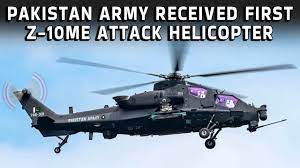
716: PAKISTAN ARMY INDUCTS CHINA’S Z-10ME ATTACK HELICOPTER


My Article was published on “The EurasianTimes” website

on 04 Aug 25.


On August 2, 2025, the Pakistan Army inducted the Chinese-manufactured Z-10ME attack helicopter into its aviation wing. The induction ceremony was held at Multan Garrison and presided over by Chief of Army Staff Field Marshal Asim Munir. During the induction ceremony, a firepower demonstration at the Muzaffargarh Field Firing Ranges showcased the Z-10ME’s operational prowess. The helicopter executed precision strikes, demonstrating its ability to engage targets with accuracy and lethality. This event not only marks the first known export of the Z-10ME but also highlights Pakistan’s growing military-industrial ties with China.

Designed for high-altitude operations, precision strike missions, and enhanced survivability in contested environments, the Z-10ME is poised to become the cornerstone of Pakistan’s attack helicopter fleet, supplanting the ageing American-supplied AH-1F Cobra helicopters. The induction of the Z-10ME signifies a significant realignment in Pakistan’s defence procurement strategy, especially in light of the stalled agreements with Western suppliers.


The Z-10ME

 The Z-10ME, an export-oriented variant of China’s Z-10 attack helicopter, is designed to deliver precision strikes in both day and night conditions, making it a versatile asset for modern battlefields. It is often referred to as China’s answer to the American AH-64 Apache and the Russian Mi-28 Havoc. Developed by the Changhe Aircraft Industries Corporation (CAIC), the Z-10ME is equipped with cutting-edge technology tailored to meet the demands of complex combat environments.

Pakistan’s variant comes equipped with twin uprated WZ-9G turboshaft engines, providing approximately 1,500 horsepower each, designed to deliver reliable performance in high-altitude, hot-and-dusty operational theaters, a crucial requirement given Pakistan’s mountainous terrain in areas like Khyber Pakhtunkhwa and Balochistan. The service ceiling exceeding 6,000 meters enables operations in regions where older platforms, such as the AH-1F, struggled with payload and manoeuvrability.

The Z-10ME is engineered with an emphasis on all-weather, day-night precision strike capabilities, integrating advanced sensor suites that include millimeter-wave (MMW) radar, electro-optical targeting systems (EOTS), and helmet-mounted displays (HMD) for pilots. Its six external hardpoints allow it to carry a versatile range of munitions, including AKD-10 anti-tank guided missiles (ATGMs), CM-502AG air-to-ground missiles, TY-90 air-to-air missiles, and precision-guided rockets. Additionally, the Z-10ME is compatible with CM-501XA loitering munitions and SW-6 launchable UAVs, offering Pakistan a multi-domain strike capability.

One of the helicopter’s standout survivability features is its infrared-suppressed exhaust system, designed to reduce heat signatures against MANPADS threats. Its sand-filtered engine intakes, composite armour plating, self-defence electronic warfare (EW) suite, and laser warning receivers further enhance its ability to survive in modern contested environments.


Analytical Perspective

Failed Acquisition Efforts: China to the Rescue. The induction of the Z-10ME coincides with Pakistan’s ongoing efforts to modernise its battlefield aviation assets, particularly following obstacles encountered in acquiring Western attack helicopters. Pakistan’s ageing fleet of Bell AH-1F Cobras, initially inducted in the 1980s, has become increasingly obsolete in the face of advanced air defence systems and technologically sophisticated enemy armour. An earlier attempt to procure the Turkish T-129 ATAK helicopters was unsuccessful after the United States withheld export licenses for the CTS800 engines, thereby effectively terminating the deal. Similarly, Pakistan’s persistent requests to acquire additional AH-1Z Viper helicopters from the United States have been impeded due to diplomatic tensions and export restrictions. In this context, China has emerged as a reliable defence partner, offering a capable and adaptable solution through the Z-10ME platform. For Pakistan, this development not only addresses a critical operational deficiency but also aligns with its broader strategic objectives of reducing dependence on Western suppliers, diversifying its defence arsenal, and strengthening defence-industrial collaboration with Beijing.

Pakistan-China Military Cooperation. The induction of the Z-10me signifies a milestone in Pakistan-China military collaboration, which has witnessed substantial growth in recent years. China has become Pakistan’s principal arms supplier, offering a diverse array of platforms, ranging from main battle tanks to naval vessels. The agreement concerning the Z-10ME fortifies this partnership, illustrating China’s confidence in Pakistan as a strategic ally and as a significant market for its defence exports. This collaboration transcends mere equipment procurement. The two nations have engaged in joint military exercises, technology transfers, and co-production agreements, thereby fostering interoperability and enhancing technical expertise. The China-Pakistan Economic Corridor (CPEC), a flagship initiative within China’s Belt and Road Initiative, has further solidified bilateral ties, with security cooperation playing an essential role in protecting CPEC infrastructure. The deployment of the Z-10me could augment Pakistan’s capacity to safeguard these economic assets, particularly in volatile regions such as Balochistan.

Fleet Size and Deployment Plans. While the exact number of helicopters in the initial batch remains undisclosed, defence analysts estimate that Pakistan has received an initial tranche of 4–8 units, with a long-term objective of inducting around 50–60 helicopters. These helicopters are expected to be deployed across strategically vital sectors, including the Eastern front facing India, counter-terrorism operations in the North-West, and rapid deployment roles in the South. Operational deployment is also expected to focus on integration with Pakistan’s Network-Centric Warfare (NCW) infrastructure, enabling seamless coordination with ground forces, surveillance drones, and air defence units.

Capability Enhancement. From a tactical standpoint, the Z-10ME significantly enhances Pakistan’s capability to conduct close air support (CAS), anti-armour missions, and precision strikes against high-value targets in complex terrains. The helicopter’s ability to integrate unmanned systems, loitering munitions, and advanced networked sensors offers the Pakistan Army a level of operational flexibility that its legacy platforms could not provide. With the Z-10ME in its arsenal, the Pakistan Army Aviation Corps can now:-

    • Deliver precise anti-armour strikes against adversary mechanised forces, particularly relevant in the context of India’s armoured strength along the eastern border.
    • Provide sustained air support and rapid troop deployment in insurgency-prone areas, enhancing the ability to counter hostile movements swiftly.
    • Conduct modern reconnaissance and battlefield management missions, thanks to digital communications, long-range optics, and robust sensor suites.
    • Project airpower into rugged mountainous terrains, where older helicopters struggled to operate at full effectiveness.


Challenges. While the Z-10ME signifies a significant advancement for Pakistan’s army aviation, its integration into the force encounters several challenges. Training pilots and maintenance personnel to operate and maintain this new platform will necessitate substantial investments of time and resources. The Pakistan Army must establish a comprehensive logistics and support infrastructure to guarantee the helicopter’s operational readiness. Furthermore, ensuring interoperability with existing systems and fostering coordination with other branches of the armed forces will be essential to maximising the Z-10ME’s operational effectiveness.

Future Prospects. Looking ahead, the induction of the Z-10me paves the way for enhanced collaboration with China, potentially involving technology transfers and joint development of future platforms. As Pakistan advances its military modernisation efforts, the Z-10ME is expected to play a pivotal role in shaping its army aviation strategy. Its success will depend on Pakistan’s capacity to capitalise on the helicopter’s capabilities while effectively addressing logistical and operational challenges.

Regional Implications. The deployment of the Z-10ME helicopter holds considerable significance for regional security dynamics, particularly within the context of Pakistan’s rivalry with India. The modernisation of the Indian military, exemplified by its procurement of Apache AH-64E attack helicopters from the United States, has incentivised Pakistan to pursue comparable capabilities. While the Z-10ME may not fully match the advanced systems of the Apache in every aspect, it offers a cost-effective alternative with comparable firepower and operational versatility. This acquisition underscores Pakistan’s intention to preserve a credible deterrent against potential adversaries. Furthermore, the deployment of the Z-10me could alter the power balance in South Asia, particularly in the realms of counterinsurgency and border operations. Its capacity to execute precision strikes against terrorist hideouts and to support ground forces in remote regions enhances Pakistan’s operational scope. Nevertheless, this development also raises concerns regarding an arms race in the region, as neighbouring states may respond by accelerating their military modernisation initiatives.


Conclusion

The induction of the Z-10ME attack helicopter into the Pakistan Army signifies a significant advancement in its military modernisation and strategic alliance with China. With its cutting-edge technology, precision strike capabilities, and reliable all-weather performance, the Z-10ME augments Pakistan’s capacity to confront a broad spectrum of security concerns, ranging from counterterrorism initiatives to conventional combat. As an emblem of Pakistan-China collaboration, the helicopter highlights the strengthening defence relations between the two nations. Although challenges persist, the integration of the Z-10me into the Pakistan Army Aviation Corps positions it as a vital asset in safeguarding the nation’s security and sovereignty amid an increasingly complex regional landscape.


Please Add Value to the write-up with your views on the subject.


1879
Default rating

Please give a thumbs up if you  like The Post?


For regular updates, please register your email here:-

Subscribe

Link to the article on the website:-

After J-10C Fighters, China, Pakistan Cement Military Ties With Z-10 ME Helos; How Do They Stack Up Against Indian Apaches?


References and credits

To all the online sites and channels.

Pics Courtesy: Internet

Disclaimer:

Information and data included in the blog are for educational & non-commercial purposes only and have been carefully adapted, excerpted, or edited from reliable and accurate sources. All copyrighted material belongs to respective owners and is provided only for wider dissemination.


References:-

  1. “Pakistan Army Inducts Chinese Z-10ME Attack Helicopter into Service.” The News International, August 3, 2025.
  1. “Z-10ME Helicopter: Pakistan’s New Aerial Asset.” Dawn, August 3, 2025.
  1. “China’s Z-10ME Makes Export Debut with Pakistan Army.” Global Times, August 2, 2025.
  1. “Pakistan Bolsters Army Aviation with Z-10ME Induction.” Express Tribune, August 3, 2025.
  1. “Technical Specifications and Capabilities of the Z-10ME Attack Helicopter.” Jane’s Defence Weekly, August 2025.
  1. “Pakistan-China Military Cooperation: A Growing Partnership.” Asia-Pacific Defence Reporter, July 2025.
  1. “Field Marshal Asim Munir Presides Over Z-10ME Induction Ceremony.” Pakistan Armed Forces News, August 2, 2025.
  1. Pakistan Today, “COAS stresses civil-military synergy as Army inducts Z-10ME attack helicopters”, Published: August 3, 2025.
  1. The Khyber Mail, “Pakistan Inducts China’s Z-10ME Gunship Helicopters”, Published: August 3, 2025.
  1. Army Recognition, “Pakistan replaces US-made attack helicopters with Chinese Z-10ME to strike faster and farther”, Published: August 3, 2025.
715: STRATEGIC SIGNIFICANCE OF THE RESISTANCE FRONT (TRF) BEING DESIGNATED AS A TERRORIST ORGANISATION


My Article was published on the IIRF website on 03 Aug 25.


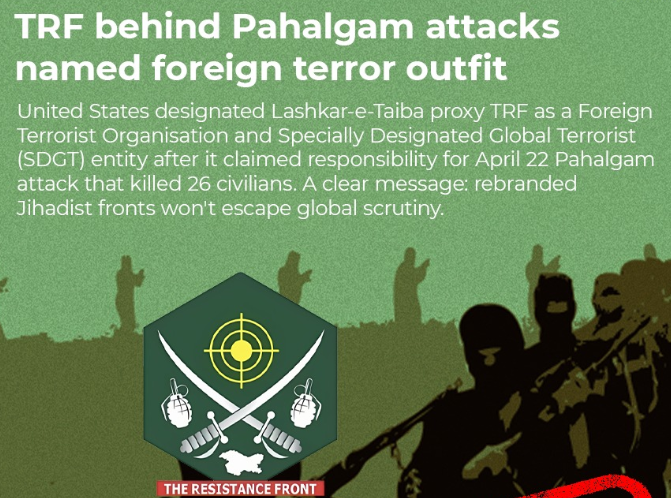
On July 18, 2025, the United States Department of State officially designated The Resistance Front (TRF) as both a Foreign Terrorist Organisation (FTO) and a Specially Designated Global Terrorist (SDGT). This move marks a significant step in the international fight against terrorism, particularly in South Asia, where cross-border terror networks have long plagued regional peace and stability.

TRF is widely recognised as a front organisation for Lashkar-e-Tayyiba (LeT), a Pakistan-based terror group responsible for numerous deadly attacks in India, including the infamous 2008 Mumbai attacks. The designation comes just months after TRF claimed responsibility for the 22 Apr 25, Pahalgam attack, which killed 26 civilians, India’s deadliest terrorist attack on civilians since 2008.

This designation is not just a symbolic gesture. The FTO and SDGT designations are potent tools in the U.S. counterterrorism arsenal. It carries serious legal, financial, and geopolitical consequences.


TRF and Its Links to Lashkar-e-Tayyiba

The Resistance Front (TRF) emerged in 2019, shortly after the revocation of Article 370 in Jammu and Kashmir. While it initially presented itself as a local resistance movement, Indian intelligence agencies and independent observers soon traced its roots to Lashkar-e-Tayyiba, an internationally designated terrorist group with known ties to the Pakistani military and intelligence establishment.

By using a new name and softer rhetoric, TRF was part of LeT’s strategy to circumvent international scrutiny, particularly as global pressure on Pakistan to curb terror financing increased. The group maintained LeT’s ideology and tactics but attempted to present a more “indigenous” front to gain legitimacy among local populations and global observers.

Over the past few years, TRF has claimed responsibility for several attacks on Indian security forces and civilians. However, the April 2025 massacre in Pahalgam, which killed 26 civilians, marked a significant escalation. It was not only the deadliest attack in over 15 years but also underscored the group’s growing capacity and intent to target soft, civilian areas to incite fear and instability.


Significance of the U.S. Designation

Disrupting TRF’s Operational Capabilities. The designation of the Terrorist Resistance Front (TRF) as a Foreign Terrorist Organisation (FTO) and a Specially Designated Global Terrorist (SDGT) imposes stringent restrictions. All TRF assets within the jurisdiction of the United States are to be frozen, and U.S. persons are thereby prohibited from engaging in any transactions with the group. Providing material support, including fundraising, recruitment, or logistical assistance, to TRF constitutes a federal offence. These actions impede access to global financial systems and foreign funding sources, thereby limiting TRF’s capacity to recruit operatives, acquire weapons, and coordinate attacks. With diminished resources, TRF would encounter difficulties in planning and executing high-impact operations. The designations serve to discourage global supporters from engaging with the group and encourage international financial institutions and governments to monitor and restrict TRF’s activities, promoting collaborative efforts to dismantle its networks. U.S. and allied law enforcement and intelligence agencies are granted increased authority to enhance surveillance and target TRF-associated operatives. By focusing on TRF’s financial and logistical infrastructure, these measures establish a constrained operational environment, thereby reducing the group’s ability to function effectively.

Exposing and countering Lashkar-e-Tayyiba’s proxy tactics. The Tactical Research Facility’s (TRF) designation as a front for Lashkar-e-Tayyiba (LeT) underscores the importance of addressing the broader ecosystem of terrorist organisations operating through proxies. By designating the TRF, the United States emphasises this strategy, conveying a clear message to LeT and similar groups that front organisations will not serve as shields against international scrutiny or consequences. This also provokes further inquiries into the role of Pakistan-based networks in supporting and sheltering such organisations. Although Pakistan denies harbouring terrorist entities, the association between TRF and Let adds to the body of evidence suggesting state complicity in harbouring extremists.

Legal and Diplomatic Precedent. The designation reinforces the legal framework within which individuals affiliated with TRF may be subject to arrest, prosecution, or extradition by United States authorities or allied nations. It additionally exerts pressure on technology companies, financial institutions, and non-governmental organisations to prevent any inadvertent support of terrorism under the pretence of social or political activism. From a diplomatic standpoint, this measure encourages other nations to reevaluate their lists of designated organisations, particularly in regions such as Europe, the Middle East, and Southeast Asia, where LeT and its affiliates have endeavoured to establish ideological or fundraising networks.

Implications for Pakistan. The TRF designation could potentially heighten scrutiny regarding Pakistan’s involvement in harbouring or tolerating terrorist infrastructure. This development may jeopardise its international diplomatic relations if Islamabad does not take decisive action against LeT and TRF-related entities. Conversely, it provides moderate factions within Pakistan with an opportunity to advocate for more substantive counterterrorism reforms. Persisting in shielding these groups may lead to increased isolation on the global stage along with further restrictions on aid, trade, and financial assistance.

Broader Message to Global Terrorist Networks. The designation of TRF conveys a comprehensive message that terrorist organisations cannot evade accountability through rebranding or the establishment of front groups. Whether in South Asia, the Middle East, or Africa, extremist networks frequently alter their names and narratives to exploit legal and political loopholes. By recognising TRF’s association with LeT, the United States affirms that the international effort against terrorism will evolve correspondingly.


Challenges and Limitations

Although the designations of FTO and SDGT are consequential, their effectiveness is contingent upon several factors. Firstly, international compliance is paramount. Nations hosting TRF operatives or financial networks are required to implement sanctions and collaborate with United States efforts to dismantle the group’s activities. This task may prove challenging in regions characterised by weak governance or where TRF operates covertly.

Secondly, the designations exert indirect pressure on Pakistan to undertake measures against LeT and its affiliates, including TRF. Considering LeT’s historical associations with entities within Pakistan, diplomatic initiatives will be essential to secure cooperation. Neglecting to address these networks at their origin could diminish the effectiveness of the designations, enabling TRF to adapt and persist in its activities under new appearances.

Ultimately, the designations must be supplemented by comprehensive counterterrorism initiatives at the operational level, encompassing intelligence activities, law enforcement operations, and initiatives aimed at countering radicalisation. While the FTO and SDGT classifications hinder TRF’s resources, they do not eradicate the ideological and operational motivations behind its violence, which necessitate ongoing regional and international efforts to effectively address.


Conclusion

The decision by the United States to designate The Resistance Front as a Foreign Terrorist Organisation and as a Specially Designated Global Terrorist entity represents a significant milestone in counterterrorism initiatives across South Asia. These designations advance the objectives of global counterterrorism efforts and promote regional stability by targeting the core of LeT’s proxy strategy. Beyond its immediate implications, this action also exemplifies the international community’s dedication to holding terrorist proxies accountable, even when they operate under different aliases or exploit regional grievances to further their agendas. In the long term, such measures contribute to a more transparent and unified global response to terrorism, emphasising civilian safety, regional stability, and adherence to the rule of law over geopolitical considerations and transient alliances. Nonetheless, the efficacy of these measures relies on international cooperation, persistent efforts to dismantle LeT’s networks, and comprehensive strategies aimed at addressing the root causes of terrorism.


Please Add Value to the write-up with your views on the subject.


1879
Default rating

Please give a thumbs up if you  like The Post?


For regular updates, please register your email here:-

Subscribe

Link to the article on the website:-

STRATEGIC SIGNIFICANCE OF THE RESISTANCE FRONT (TRF) BEING DESIGNATED AS A TERRORIST ORGANISATION by Air Mshl Anil Khosla (Retd)


References and credits

To all the online sites and channels.

Pics Courtesy: Internet

Disclaimer:

Information and data included in the blog are for educational & non-commercial purposes only and have been carefully adapted, excerpted, or edited from reliable and accurate sources. All copyrighted material belongs to respective owners and is provided only for wider dissemination.


References:-

  1. U.S. Department of State. (2025). “Designation of The Resistance Front as a Foreign Terrorist Organisation and Specially Designated Global Terrorist.” Press Release, July 18, 2025.
  1. U.S. Department of State. (2023). “Country Reports on Terrorism 2022.” Bureau of Counterterrorism.
  1. Byman, Daniel. (2019). Road Warriors: Foreign Fighters in the Armies of Jihad. Oxford University Press.
  1. Riedel, Bruce. (2011). Deadly Embrace: Pakistan, America, and the Future of the Global Jihad. Brookings Institution Press.
  1. Tankel, Stephen. (2013). Storming the World Stage: The Story of Lashkar-e-Taiba. Columbia University Press.
  1. The Times of India. (2025). “Pahalgam Attack: 26 Civilians Killed in Deadliest Assault Since 2008 Mumbai Attacks.” April 23, 2025.
  1. South Asia Terrorism Portal (SATP). (2025). “The Resistance Front (TRF): Group Profile.”
  1. Congressional Research Service. (2024). “Foreign Terrorist Organisations: Designation and Implications.” Updated January 15, 2024.
  1. Fair, C. Christine. (2018). In Their Own Words: Understanding Lashkar-e-Tayyiba. Hurst Publishers.
  1. BBC News. (2024). “TRF Claims Responsibility for Attacks on Indian Security Forces in Kashmir.” October 12, 2024.
  1. U.S. Treasury Department. (2023). “Sanctions Programs and Country Information: Counter Terrorism Sanctions.”
  1. Chaudhuri, Pramit Pal, and Rudra Chaudhuri. (2023). “India’s Counterterrorism Strategy: Challenges and Opportunities.” Carnegie India.
  1. Jamestown Foundation. (2025). “The Resistance Front: LeT’s New Proxy in Kashmir.” Terrorism Monitor, Volume 23, Issue 6.
  1. United Nations Security Council. (2022). “ISIL (Da’esh) and Al-Qaida Sanctions Committee: Narrative Summaries of Reasons for Listing – Lashkar-e-Tayyiba.”
  1. Indian Express. (2025). “U.S. Designates The Resistance Front as Terrorist Organisation After Pahalgam Attack.” July 19, 2025.

714: PAKISTAN’S SOARING DEFENCE BUDGET: BULLETS FROM BORROWED MONEY


My Article published on the IIRF website on 02 Aug 25.


On June 10, 2025, Pakistan’s Finance Minister Muhammad Aurangzeb announced the national budget for the fiscal year 2025-26, revealing a notable 20.4% increase in defence expenditure, the highest in ten years. The budget allocation for the nation’s armed forces increased to 2.55 trillion rupees (equivalent to $9 billion), up from 2.12 trillion rupees in the preceding fiscal year. This increment constitutes 1.97% of Pakistan’s gross domestic product (GDP), compared to 1.7% in the previous year. The rise in defence spending prompts inquiries regarding its funding sources, economic trade-offs, and broader implications for Pakistan’s fiscal stability and geopolitical strategy.


Funding the Defence Budget Hike

The defence allocation of 2.55 trillion rupees, supplemented by an additional 742 billion rupees (equivalent to $2.63 billion) designated for military pensions, results in a total military expenditure of 3.292 trillion rupees (approximately $11.67 billion). This escalation occurs amidst a context of a 6.9% contraction in the overall federal budget, which decreased from 18.9 trillion rupees to 17.57 trillion rupees (about $62 billion). To accommodate this increase in defence spending, Pakistan is employing a combination of tax revenue, non-tax revenue, borrowing, and reallocation of resources from other sectors, managing to stay somehow within the framework of fiscal constraints imposed under an International Monetary Fund (IMF) program.

Tax Revenue: The Ordinary Citizen Pays. The principal source of funding for the defence budget is an assertive tax collection target. The 2025-26 budget anticipates total gross revenue of 19.298 trillion rupees, with 14.131 trillion rupees expected from the Federal Board of Revenue (FBR). This signifies a 19% increase from the revised 12.33 trillion rupees collected in the preceding fiscal year. The government aims to achieve a tax-to-GDP ratio of 11.4%, up from 9.5%, by expanding the tax base and improving compliance. Essential measures encompass taxing agricultural incomes, augmenting levies on salaried individuals, and imposing higher taxes on retailers and exporters. Nevertheless, Pakistan’s sluggish economic growth, estimated at 3.5% for 2025-26, casts doubt on the achievability of this target.

Non-Tax Revenue: State–owned and Private Enterprises Contribute.  Non-tax revenue, projected at 5.167 trillion rupees, constitutes a significant component of fiscal income. This includes proceeds from privatisation (87 billion rupees), dividends from state-owned enterprises, and various other sources, such as regulatory fees. Although these funds do not directly target defence expenditures, they augment the overall revenue pool, thereby enhancing the government’s capacity to allocate additional resources to the military. Nonetheless, privatisation initiatives have historically yielded limited results, and dependence on non-tax revenue remains a precarious strategy amid Pakistan’s economic volatility.

Borrowing for Bullets. The budget projects a fiscal deficit of 6.5 trillion rupees (approximately $23 billion), representing 3.9% of Gross Domestic Product (GDP), a decrease from 5.9% in the preceding year. This deficit will be financed through both domestic and external borrowing, including commercial loans and multilateral assistance. Domestic borrowing, primarily via government bonds, is anticipated to cover a substantial portion. Concurrently, external loans from entities such as the International Monetary Fund (IMF) and friendly nations, including China and Saudi Arabia, will also contribute. The escalation in defence expenditure, coupled with a 24% increase in debt servicing costs amounting to 8.8 trillion rupees, highlights Pakistan’s significant dependence on borrowing. Such an approach poses risks of exacerbating the country’s debt burden, which, according to IMF estimates, already accounts for approximately 90% of the country’s GDP.

Reallocation from Social Sectors: At The Cost of Development. To accommodate the defence hike, the government has significantly reduced expenditures in critical social sectors. The federal budget allocated for health was decreased to 32 billion rupees, and education received a mere 113 billion rupees, reflecting a 7% overall reduction in development expenditure. These reductions have elicited widespread criticism, particularly in rural regions where healthcare and educational infrastructure are already under significant strain. By prioritising defence over development, Pakistan is redirecting resources away from long-term growth drivers, thereby potentially aggravating socio-economic inequalities.

IMF Program and Fiscal Discipline: Spending on Defence but Borrowing for Essentials. Pakistan’s economy operates under an IMF Extended Fund Facility, which imposes strict fiscal targets, including a primary surplus of 1.6% of GDP. While IMF funds are not directly allocated to defence, they stabilise the economy by supporting the balance of payments and stabilising the Pakistani rupee. This stability allows the government to redirect domestic resources to military spending. However, the IMF’s emphasis on fiscal consolidation limits Pakistan’s ability to expand social spending, forcing trade-offs that favour defence. The government’s commitment to meeting IMF conditions, such as reducing subsidies and increasing taxes, further constrains its fiscal flexibility.


Implications of the Defence Surge

The significant increase in defence spending has far-reaching implications for Pakistan’s economy, society, and regional standing.

Economic Trade-Offs: Vicious Cycle. The prioritisation of defence over social sectors risks undermining Pakistan’s long-term financial stability. Reduced investment in health and education could exacerbate poverty and illiteracy, which already affect 40% and 43% of the population, respectively, according to World Bank data. The reliance on borrowing to finance the fiscal deficit, including defence spending, increases Pakistan’s debt servicing burden, which now consumes nearly 50% of the budget. This could lead to a vicious cycle of borrowing and repayment, limiting fiscal space for future development. Moreover, the ambitious tax targets may strain businesses and households, potentially stifling economic growth. Higher taxes on salaried workers and retailers could exacerbate inflation, a persistent issue with annual rates of 9-12%. If tax collection falls short, the government may resort to further borrowing or austerity measures, both of which could destabilise the economy.

Geopolitical Context: Regional Arms Race. The increase in the defence budget is a direct response to heightened tensions with India. Pakistan’s military assesses the necessity of strengthening its capabilities to counter India’s superior defence expenditures, projected to reach $80 billion by 2025. Nonetheless, this escalation poses the risk of intensifying an arms race in South Asia, which may further strain Pakistan’s economy and divert resources from essential domestic priorities.

Social and Political Ramifications: Political Instability and Tension. The budget’s focus on defence at the expense of social services has sparked public discontent in Pakistan. Critics argue that neglecting health and education undermines human capital development, critical for Pakistan’s young and growing population. Political opposition parties, including the Pakistan Tehreek-e-Insaf, have capitalised on this, accusing the government of prioritising military interests over public welfare. This could exacerbate political instability, a concern already present in Pakistan’s history of civil-military tensions.

International Relations and IMF Oversight: External Debt Vulnerabilities. The defence hike may complicate Pakistan’s relations with the IMF and other international partners. While the IMF does not directly dictate defence spending, its focus on fiscal discipline could lead to scrutiny of Pakistan’s budgetary priorities. Friendly nations like China, which provide significant loans and investments, may support the defence increase due to their strategic interests in countering India. However, reliance on foreign loans risks deepening Pakistan’s external debt vulnerabilities.


Conclusion

Pakistan’s decision to augment defence expenditure by over 20% in the 2025-26 budget reflects its strategic imperatives amid tensions with India. Funded through increased taxes, non-tax revenue, borrowing, and reductions in social sectors, this increase underscores the government’s prioritisation of security over development. While the augmentation may enhance military capabilities, it entails considerable costs to economic stability and public welfare. The dependence on borrowing and ambitious fiscal targets, coupled with curtailed social spending, risks exacerbating poverty, inequality, and fiscal vulnerabilities. As Pakistan navigates these challenges, establishing a balance between defence requirements and economic and social priorities will be essential for ensuring long-term stability in a volatile region.


Please Add Value to the write-up with your views on the subject.


1879
Default rating

Please give a thumbs up if you  like The Post?


For regular updates, please register your email here:-

Subscribe

Link to the article on the website:-

PAKISTAN’S SOARING DEFENCE BUDGET: BULLETS FROM BORROWED MONEY by Air Mshl Anil Khosla (Retd)


References and credits

To all the online sites and channels.

Pics Courtesy: Internet

Disclaimer:

Information and data included in the blog are for educational & non-commercial purposes only and have been carefully adapted, excerpted, or edited from reliable and accurate sources. All copyrighted material belongs to respective owners and is provided only for wider dissemination.


References:-

 1. Aurangzeb, Muhammad. “Federal Budget Speech 2025-26.” Government of Pakistan, Ministry of Finance, June 10, 2025.

2.International Monetary Fund (IMF). “Pakistan: 2023 Article IV Consultation and Request for an Arrangement Under the Extended Fund Facility.” IMF Country Report No. 23/260, July 2023.

3. World Bank. “Pakistan Economic Update: Macroeconomic Challenges and Outlook.” World Bank, October 2024.

4. Government of Pakistan, Ministry of Finance. “Budget in Brief 2025-26.” June 2025.

5. Stockholm International Peace Research Institute (SIPRI). “Military Expenditure Database: India.” SIPRI, 2024.

6. The Express Tribune. “Pakistan’s Defence Budget Jumps 20.4% Amid Tensions with India.” June 11, 2025.

7. Dawn News. “Budget 2025-26: Fiscal Deficit and Borrowing Challenges.” June 12, 2025.

8. Pakistan Bureau of Statistics. “Economic Indicators: Inflation and Exchange Rates.” June 2025.

9. Geo News. “Opposition Slams Budget for Neglecting Social Sectors.” June 15, 2025.

English हिंदी