
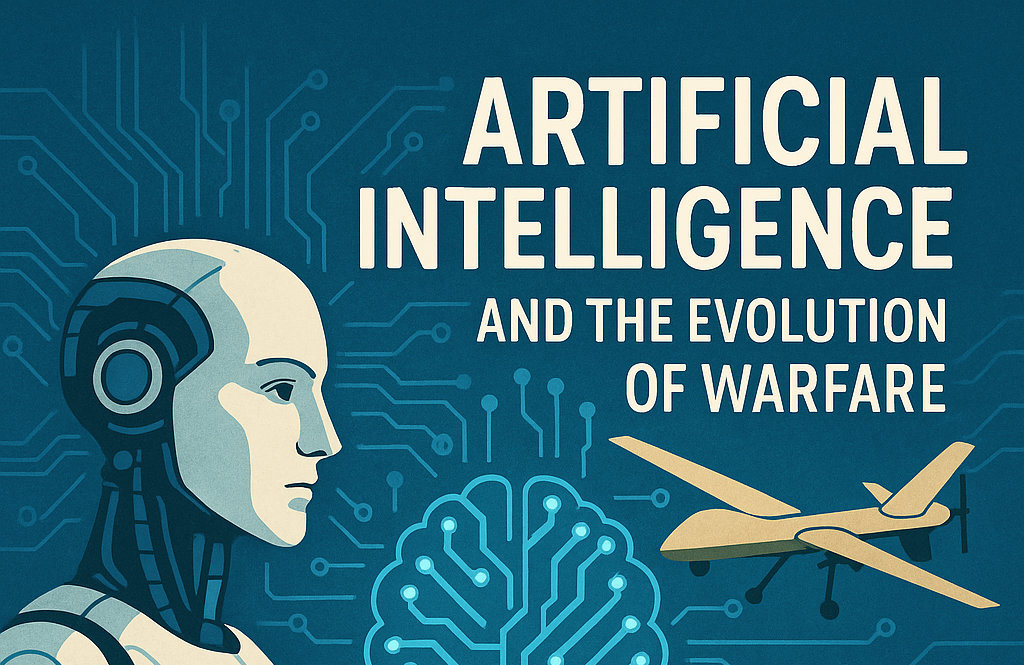
719: ARTIFICIAL INTELLIGENCE-ENABLED AIR FORCES: THE FUTURE OF AERIAL WARFARE


Article Published In the 2025 edition of the Karnataka branch of the Air Force Association Journal.


Integrating Artificial Intelligence (AI) in air forces is revolutionising modern aerial warfare, enhancing combat efficiency, decision-making capabilities, and operational effectiveness. AI-driven technologies are transforming everything from autonomous drones and pilot assistance systems to predictive maintenance and cyber defence. The ongoing advancements in AI are paving the way for next-generation warfare, where speed, precision, and automation play pivotal roles. There is a need to explore the benefits, challenges, and prospects of AI-enabled air forces, as well as examine how militaries worldwide are leveraging AI to gain a strategic advantage in the skies.


AI Applications in Air Warfare.

 Autonomous Combat Drones and Loyal Wingmen. One of the most significant developments in AI-enabled air forces is the use of autonomous combat drones and “loyal wingmen” programs. AI-powered Unmanned Aerial Vehicles (UAVs) can operate independently or in coordination with manned aircraft. The U.S. Air Force’s Skyborg program, Russia’s Okhotnik-B, and India’s CATS Warrior are leading examples of AI-powered aerial combat systems. Key capabilities of AI-enabled drones include autonomous targeting and engagement of enemy aircraft and ground targets, AI-driven reconnaissance for real-time battlefield awareness, and electronic warfare capabilities to disrupt enemy communications and radar. Loyal wingmen, such as Boeing’s MQ-28 Ghost Bat, work alongside fighter jets, assisting in combat while reducing the risk to human pilots.

AI-Assisted Air Combat. AI has also been tested in air-to-air combat scenarios. In 2020, DARPA’s AlphaDogfight Trials demonstrated that an AI-piloted F-16 simulator could outperform an experienced human pilot in dogfighting scenarios. AI-driven fighter jets can make rapid manoeuvring decisions, anticipate enemy tactics, and optimise firing solutions faster than human pilots.

AI Co-Pilot Systems. Modern fighter jets are incorporating AI as a co-pilot to assist human pilots in complex combat scenarios. AI co-pilots can provide real-time threat analysis and countermeasure recommendations, optimise flight paths for maximum efficiency and survivability, and assist in weapons management and target prioritisation. The U.S. Air Force’s Air Combat Evolution (ACE) program is working on integrating AI co-pilots into next-generation fighter aircraft.

AI in Predictive Maintenance and Logistics Optimisation. AI-powered maintenance systems can analyse vast amounts of sensor data to predict mechanical failures before they occur. The Condition-Based Maintenance (CBM+) system helps optimise aircraft maintenance schedules, reducing downtime and improving fleet readiness. AI’s Key benefits in maintenance include minimising unexpected failures, ensuring mission readiness, efficient resource allocation by prioritising high-risk components, and cost savings by reducing unnecessary maintenance.

AI in Air Defence Systems. AI enhances air defence by improving target detection and response times. AI-enabled radar and sensor fusion systems help military forces detect and track multiple airborne threats simultaneously, optimise interception strategies against hypersonic missiles and stealth aircraft, and identify and neutralise threats with minimal human intervention. Systems like Israel’s Iron Dome and Russia’s S-500 Prometheus integrate AI to enhance target prioritisation and engagement.

AI in Electronic Warfare (EW). AI-driven electronic warfare systems can autonomously jam enemy radar and communication networks, adapt to new threats by analysing enemy signals in real-time, and protect friendly assets from cyber and electromagnetic attacks. The U.S. Air Force is actively developing AI-enhanced Electronic Warfare Pods for next-generation combat aircraft.

AI in Mission Planning. AI assists in complex mission planning by analysing real-time battlefield data. Advanced AI systems can generate optimal attack and defence strategies based on situational awareness, adapt plans dynamically as new threats emerge, and reduce commanders’ decision-making time. Programs like Project Maven employ AI to analyse drone surveillance footage, identifying potential threats more efficiently than human analysts. AI-driven battlefield management systems integrate data from multiple sources, including satellites and reconnaissance aircraft, ground-based radars and air defence systems, as well as cyber intelligence reports. This allows commanders to make data-driven decisions in high-pressure combat scenarios.

Swarm Warfare: The Future of Aerial Combat. AI-controlled drone swarms are emerging as a game-changing technology in aerial combat. Swarm tactics involve deploying multiple autonomous drones to overwhelm enemy defences with coordinated attacks, conducting distributed intelligence, surveillance, and reconnaissance (ISR), and executing autonomous electronic jamming and decoy operations. Countries like the U.S., China, and India are actively researching AI-driven drone swarms as a force multiplier in future conflicts.


Advantages and Challenges of AI in Air Forces

 Advantages of AI-Enabled Air Forces. AI-enabled air forces offer numerous advantages, revolutionising modern aerial warfare and operational efficiency. One key benefit is enhanced decision-making, as AI rapidly processes vast amounts of battlefield data to provide real-time intelligence, improving situational awareness and response times. Additionally, AI reduces pilot workload by automating routine tasks, allowing human operators to focus on complex strategic decisions. Combat efficiency is also significantly increased through AI-driven targeting, threat assessment, and autonomous drones that execute missions with precision. Another significant advantage is the reduction of human casualties, as AI-powered unmanned aerial vehicles (UAVs) can conduct high-risk operations without putting pilots at risk. Furthermore, AI optimises maintenance and logistics by predicting equipment failures and streamlining supply chains, reducing downtime and operational costs. These advancements collectively enhance Air Force effectiveness, ensuring superior combat readiness while lowering overall risks and expenses. As AI technology continues to evolve, its role in modern air forces will become increasingly indispensable.

Challenges and Ethical Concerns.  Integrating AI into air forces presents significant challenges and ethical concerns despite its advantages. A major issue is balancing autonomy with human oversight, as fully autonomous AI systems raise questions about accountability and decision-making in combat. Ensuring that AI does not make lethal decisions without human intervention remains a critical concern for policymakers and military leaders. Cybersecurity threats pose risks, as adversaries could manipulate or hack AI-driven systems, leading to catastrophic failures. Additionally, AI bias and errors in target recognition or threat assessment could result in unintended casualties or collateral damage. Another challenge is the potential for AI to accelerate the global arms race

as nations compete to develop more advanced autonomous weapons, raising the risk of destabilisation. Addressing these concerns requires robust regulations, international cooperation, and strict ethical frameworks to ensure AI remains a tool for enhancing security rather than escalating conflicts.

The Future of AI in Air Forces. The future of AI in air forces promises unprecedented advancements, reshaping aerial warfare with enhanced autonomy, precision, and strategic capabilities. Unmanned Combat Aerial Vehicles (UCAVs) will see increased autonomy, enabling them to operate independently or in coordination with manned aircraft in high-risk missions, reducing reliance on human pilots. AI-powered hypersonic weapons guidance systems will enhance missile accuracy, making airstrikes faster and more precise. Additionally, integrating AI with quantum computing will revolutionise data processing, allowing air forces to conduct predictive analytics at unprecedented speeds and improving threat detection, mission planning, and electronic warfare strategies. As AI-driven systems become more sophisticated, militaries will develop advanced counter-AI warfare techniques to neutralise enemy AI assets, ensuring dominance in digital battle spaces. However, as AI’s role expands, ethical and strategic concerns will require careful regulation and oversight. Ultimately, AI will be a cornerstone of future air forces, enabling superior operational efficiency, strategic decision-making, and battlefield dominance while necessitating continued advancements in security, ethics, and control mechanisms.


Conclusion. Artificial Intelligence is fundamentally transforming the landscape of aerial warfare. AI-enabled air forces are becoming faster, more efficient, and increasingly autonomous. From autonomous combat drones and AI co-pilots to predictive maintenance and swarm warfare, AI enhances every aspect of military aviation. However, as nations race to integrate AI into their defence strategies, addressing challenges related to autonomy, cybersecurity, and ethical considerations is crucial. The future of warfare will be shaped by how effectively AI is integrated into the air forces of the world.


Please Add Value to the write-up with your views on the subject.


1879
Default rating

Please give a thumbs up if you  like The Post?


For regular updates, please register your email here:-

Subscribe


References and credits

To all the online sites and channels.

Pics Courtesy: Internet

Disclaimer:

Information and data included in the blog are for educational & non-commercial purposes only and have been carefully adapted, excerpted, or edited from reliable and accurate sources. All copyrighted material belongs to respective owners and is provided only for wider dissemination.


References:-

  1. Gady, Franz-Stefan. “AI, Autonomy, and Airpower: Future Directions in Military Aviation.” International Institute for Strategic Studies (IISS), 2022.
  1. Roff, Heather M. “The Strategic Implications of Lethal Autonomous Weapon Systems.” RAND Corporation, 2016.
  1. Lockheed Martin. AI and Autonomy in Next-Generation Fighter Jets. Lockheed Martin Corporation, 2022.
  1. DARPA (Defence Advanced Research Projects Agency). Algorithmic Warfare and AI-Powered Air Combat. U.S. Department of Defence, 2021.
  1. RAND Corporation. The Future of Unmanned Aerial Vehicles and AI Integration. RAND Research Report, 2022.
  1. B Prakash, AI and the Future of Air Combat in India, MP-IDSA, 2022.

Industry & Technology Reports

  1. Trevithick, Joseph. “The U.S. Air Force’s AI-Powered ‘Skyborg’ Drone: A Game Changer?” The War Zone, 2021.
  1. Ackerman, Evan. “AI Pilots Now Outperform Human Fighter Pilots in Simulated Dogfights.” IEEE Spectrum, 2022.
  1. Johnson, David. “China’s AI-Enabled Aerial Warfare: Capabilities and Implications.” Defence One, 2023.
  1. Cummings, Mary L. Human-Autonomy Teaming: Issues and Challenges for AI in Military Operations. CRC Press, 2021.
  1. Scharre, Paul. Army of None: Autonomous Weapons and the Future of War. W.W. Norton & Company, 2018.
718: INDIA’S HUMAN SPACEFLIGHT REVIVAL: A STRATEGIC LEAP IN THE GLOBAL SPACE RACE


Article Published in the Aug 25 edition of

the “News Analytics” Journal.


On June 25, 2025, India marked a historic milestone in its space exploration journey when Group Captain Shubhanshu Shukla, a distinguished Indian Air Force (IAF) test pilot, soared into orbit aboard the Axiom-4 (Ax-4) mission. As the second Indian astronaut to reach space and the first to visit the International Space Station (ISS), Shukla’s achievement, 41 years after Wing Commander Rakesh Sharma’s 1984 flight aboard a Soviet Soyuz, signifies India’s triumphant return to human spaceflight. The Ax-4 mission, a collaborative effort involving NASA, the Indian Space Research Organisation (ISRO), the European Space Agency (ESA), and Axiom Space, underscores India’s ambition to become a global space power. This milestone is a pivotal step for the Gaganyaan program, India’s first indigenous human spaceflight initiative, and reflects its broader strategic vision in a rapidly evolving space race.


Shubhanshu Shukla: A National Icon. Born on October 10, 1985, in Lucknow, Group Captain Shukla is a seasoned IAF test pilot with over 2,000 hours of flight experience on aircraft like the Su-30 MKI, MiG-21, and Jaguar. Commissioned in 2006 after graduating from the National Defence Academy with a Bachelor’s in computer science, he later earned a Master’s in aerospace engineering from the Indian Institute of Science. As the mission pilot for Ax-4, launched on a SpaceX Falcon 9, Shukla monitored flight systems, supported docking, and ensured crew safety during the 28-hour journey to the ISS.

Axiom-4: A Landmark in Collaboration. Launched from NASA’s Kennedy Space Centre, Ax-4, led by veteran astronaut Peggy Whitson, included mission specialists from Poland and Hungary, marking their return to human spaceflight after decades. The 14 – to 21-day mission involves over 60 experiments from 31 countries. India’s seven experiments focus on microgravity plant growth (fenugreek and green gram), microbial behaviour, muscle regeneration, and tardigrade resilience, advancing space agriculture, biotechnology, and health sciences for long-duration missions and Earth applications. The mission reflects a shift toward commercial spaceflight. A 2024 U.S.-India agreement allocated a NASA seat to ISRO, enabling NASA to prioritise deep-space missions while Axiom Space manages low Earth orbit operations. For India, Ax-4 provides operational experience, de-risking Gaganyaan and enhancing ISRO’s capabilities.


The New Space Race: A Multipolar Frontier

The 21st century has transformed space from a realm of scientific exploration into a strategic arena of geopolitical rivalry, commercial opportunity, and national interest. Once dominated by superpowers vying for prestige through moon landings, space is now a multipolar landscape where the United States, China, Russia, India, and private entities compete for influence, profit, and security. The stakes are high, encompassing military capabilities, resource extraction, and technological supremacy, as nations and companies race not just to explore but to shape the future.

Military Stakes: The Weaponisation. Space is increasingly militarised, with nations developing anti-satellite (ASAT) weapons, directed energy systems, and cyber tools to disrupt critical assets like GPS, reconnaissance, and communication satellites. The U.S., China, and Russia have tested ASAT capabilities, while India demonstrated its prowess with a 2019 ASAT test. The doctrine of “space deterrence” is now integral to defence strategies, with satellite resilience and redundancy becoming priorities. Orbital debris from such tests poses a threat to commercial satellites and international cooperation, yet the absence of binding global norms heightens the risk of escalation.

Long-Term Gains: Technology, Resources, and Influence. Space exploration drives innovation in AI, robotics, materials science, and propulsion, bolstering national competitiveness. Breakthroughs in hypersonics, nuclear propulsion, and in-situ resource utilisation (ISRU) could revolutionise defence and interplanetary travel, with civilian applications enhancing industrial leadership. Resources like lunar helium-3, a potential fusion fuel, and asteroid metals critical for electronics offer economic promise. Diplomatically, space power translates to geopolitical influence. Navigation systems like GPS, Galileo, and BeiDou confer strategic leverage.

Commercial Momentum: A New Gold Rush. The commercialisation of space is a transformative trend. Companies like SpaceX, Blue Origin, Virgin Galactic, and OneWeb are pioneering technologies that redefine access to orbit. Reusable rockets have slashed launch costs, satellite mega-constellations like Starlink provide resilient communication, and space tourism is becoming a reality. Lunar and asteroid mining, although still in its early stages, promises access to resources such as helium-3 and rare metals, potentially reshaping the global economy. The 2015 U.S. Commercial Space Launch Competitiveness Act, allowing private entities to claim celestial resources, has sparked debates over international space treaties, raising concerns about monopolisation and governance.


Global Players in the Space Race

United States: Sustained Dominance. The United States has maintained its space superiority since the Apollo era. However, its focus has shifted from symbolic missions to systemic control in recent years. NASA’s Artemis program, which aims to return astronauts to the Moon and eventually launch a mission to Mars, reflects scientific ambition and a strategic desire to secure permanent infrastructure beyond Earth. At the same time, the U.S. Space Force, established in 2019 as the sixth branch of the U.S. military, demonstrates an explicit acknowledgement that space is now a warfighting domain. Beyond governmental initiatives, U.S. strategy heavily relies on public-private collaboration. SpaceX, in particular, has revolutionised launch technology with reusable rockets, significantly reducing costs and increasing launch frequency. These capabilities not only benefit commercial goals but also provide logistical and tactical advantages in a military context. The deployment of Starlink,  A satellite internet constellation, offers dual-use utility, with the potential to provide secure communications during terrestrial conflicts, as seen in Ukraine.

China: The Strategic Challenger. China has emerged as the most formidable challenger to U.S. dominance in space. With the Chinese Communist Party’s state-backed, long-term strategic planning, space is central to China’s ambitions to become a global superpower. The China National Space Administration (CNSA) has launched missions to the Moon (Chang’e series), Mars (Tianwen-1), and built its space station, Tiangong, in low Earth orbit. China’s doctrine emphasises “civil-military fusion,” integrating civilian scientific missions with military readiness. The BeiDou satellite navigation system is a clear example, providing independence from U.S.-controlled GPS and enhancing the precision of China’s missile systems. China has also demonstrated anti-satellite (ASAT) capabilities, raising concerns about the weaponisation of space. In 2007, its successful ASAT test against one of its satellites marked a turning point in the strategic perception of space conflict.

Russia: Resilient Legacy. Russia’s space program, led by Roscosmos, builds on its Soviet-era legacy with reliable Soyuz rockets and extensive experience in crewed missions. The Luna-25 mission, though unsuccessful in 2023, reflects ongoing lunar ambitions, while partnerships with China on the International Lunar Research Station signal strategic alignment. Russia’s anti-satellite (ASAT) capabilities and GLONASS navigation system underscore its focus on maintaining military and technological influence in space.


India: The Cost-Effective Contender

India has become a rising space power through its cost-effective and technologically ambitious missions. The Indian Space Research Organisation (ISRO) has demonstrated its capacity with landmark missions such as Chandrayaan (Moon), Mangalyaan (Mars), and most recently, Chandrayaan-3, which made India the first country to land on the Moon’s South Pole. With its 2019 Mission Shakti ASAT test, India joined the exclusive club of nations capable of disabling satellites in orbit, underscoring its intention not only to explore space but also to defend its national interests there. As India plans its first crewed mission (Gaganyaan), its space ambitions are increasingly aligned with long-term geopolitical calculus.

Gaganyaan: India’s Indigenous Leap. Scheduled for 2027, Gaganyaan aims to send three astronauts to a 400-kilometer orbit for three days, showcasing India’s independent human spaceflight capability. Shukla, alongside Group Captains Prasanth Balakrishnan Nair, Ajit Krishnan, and Angad Prathap, trained in Russia and Bengaluru. ISRO’s development of a human-rated launch vehicle (HLVM3), life support systems, and precursor missions, such as the Space Docking Experiment (SpaDeX) and PS4-Orbital Experiment Module (POEM-4), ensures readiness. Shukla’s Ax-4 docking experience will refine Gaganyaan’s operations.

Strategic Vision and Global Impact. Gaganyaan is a cornerstone of India’s ambitions, including the establishment of the Bharatiya Antariksh Station (BAS) by 2035, with its first module launching in 2028, and a lunar mission by 2040. Engaging over 500 Micro, Small, and Medium Enterprises (MSMEs), ISRO aims to capture 8% of the global space market by 2033, building a $44 billion space economy and positioning India among elite spacefaring nations. Ax-4 reflects India’s strategy of balancing indigenous development with international collaboration. The mission’s hands-on experience prepares ISRO for BAS and lunar goals while elevating India’s global standing.


Conclusion

Space is no longer a remote frontier of science fiction; it is the ultimate high ground in a multipolar world. Whether through state actors racing to establish dominance, private companies transforming exploration into enterprise, or militaries securing orbital advantage, the dynamics of space are shaping the 21st-century balance of power. Group Captain Shubhanshu Shukla’s Ax-4 mission marks a new chapter in India’s space journey. By carrying the Indian flag to the ISS, he paves the way for Gaganyaan, BAS, and lunar ambitions. Rooted in global collaboration and strategic vision, the mission positions India as a rising space power. As Shukla declared, “This is the beginning of India’s human spaceflight,” a call to action for a nation poised to touch the stars with glory.


Please Add Value to the write-up with your views on the subject.


1879
Default rating

Please give a thumbs up if you  like The Post?


For regular updates, please register your email here:-

Subscribe


References and credits

To all the online sites and channels.

Pics Courtesy: Internet

Disclaimer:

Information and data included in the blog are for educational & non-commercial purposes only and have been carefully adapted, excerpted, or edited from reliable and accurate sources. All copyrighted material belongs to respective owners and is provided only for wider dissemination.


References:-


  1. Johnson, M. (2024, August 15). NASA and ISRO Announce Joint Collaboration on Axiom-4 Mission. NASA Press Release.


  1. Indian Space Research Organisation (ISRO). (2025). Gaganyaan Programme: Human Spaceflight Mission.


  1. Press Trust of India. (2025, June 26). Group Captain Shubhanshu Shukla Becomes Second Indian in Space Aboard Ax-4 Mission—The Times of India.


  1. European Space Agency (ESA). (2025). Ax-4 Mission: International Collaboration and Scientific Experiments.


  1. The Hindu. (2025, June 25). Shukla’s Space Journey: From Lucknow to the ISS.


  1. SpaceX. (2025). Falcon 9 and Dragon: Axe-4 Mission Profile and Falcon 9 and Dragon spacecraft: Technical specifications.


  1. Indian Institute of Science (IISc). (2025). Microgravity Experiments for Ax-4 Mission.


  1. Press Information Bureau, Government of India. “Cabinet Approves India’s First Human Space Flight Programme Gaganyaan.” Press Release, December 28, 2018.


  1. Prasad, N. (2025, June 27). Group Captain Shukla’s Ax-4 mission: A milestone for India’s Gaganyaan. The Hindu.


  1. Kumar, S. (2025, June 26). Shubhanshu Shukla’s historic flight: India’s return to human spaceflight. The Times of India.


  1. Economic Times. “ISRO Gearing Up for Gaganyaan, Conducts Successful Tests of Crew Module Systems.” ETTech, February 2024.


  1. NDTV Science. “Gaganyaan Mission to be Launched in 2025, Says ISRO Chief.” NDTV.com, January 2025.


  1. United Nations Office for Outer Space Affairs (UNOOSA). “International Cooperation in the Peaceful Uses of Outer Space: India’s Contributions.” UNOOSA Annual Report, 2023.


  1. Xinhua News Agency. (2024, December 10). China’s space ambitions: Tiangong and beyond.


  1. Aliberti, M., & Tugnoli, M. (2016). The Chinese space programme in the public and private spheres. European Space Policy Institute.


  1. Lele, A. (2020). India’s evolving space strategy: From technology demonstration to strategic autonomy. Journal of Asian Security and International Affairs, 7(2), 145–162.


  1. Bharadwaj, A. (2023). India’s rise as a space power: Strategy and symbolism. Observer Research Foundation.

717: EVOLUTION OF INDIA’S DEFENCE PREPAREDNESS AND THE PATH TO TRUE SELF-RELIANCE


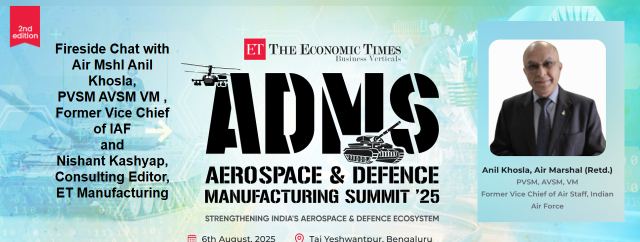
Presented my Paper at the Economic Times-sponsored “Aerospace and Defence Manufacturing Summit 2025”

on 06 Aug 25.


India’s defence preparedness has undergone a transformative journey, evolving from a reliance on imports to a robust push for indigenous development under the Aatmanirbhar Bharat initiative. This transformation, driven by strategic vision and policy reforms, has been exemplified by platforms like the Tejas Light Combat Aircraft (LCA). However, achieving genuine self-reliance requires not just assembling equipment but building deep capabilities in design, systems integration, and advanced materials. This article explores India’s defence evolution, the role of indigenous platforms, and the critical building blocks, industrial strategies, collaborative ecosystems, technological leadership, and talent development needed to ensure sustained preparedness and global competitiveness.


Evolution of India’s Defence Preparedness

Post-Independence to 1990s: Heavy Import Reliance. In the decades following independence, India’s defence capabilities were heavily dependent on foreign suppliers, primarily the Soviet Union/Russia. Aircraft like the MiG-21, tanks such as the T-72, and submarines sourced from these partners ensured operational readiness. However, this reliance exposed vulnerabilities, including inconsistent supply chains for spares, limited technological autonomy, and exposure to geopolitical pressures. The lack of indigenous capabilities meant that India was often at the mercy of external suppliers, which impacted its long-term strategic flexibility.

 1990s to Early 2010s: Shift to Indigenous Development. The 1990s marked a pivotal shift toward self-reliance, with investments in research and development through organisations like the Defence Research and Development Organisation (DRDO), Hindustan Aeronautics Limited (HAL), and Bharat Electronics Limited (BEL). Key programs, including the LCA Tejas, Arjun Main Battle Tank (MBT), Akash missile system, and INSAS rifle, were initiated to reduce import dependency. While these programs faced significant challenges—such as delays, cost overruns, and technological hurdles—they laid the foundation for indigenous defence manufacturing. The Tejas program, conceptualised in the 1980s, began to take shape as a symbol of India’s ambitions, despite early setbacks in development and production.

2015 Onwards: Strategic Autonomy and Aatmanirbhar Bharat. Since 2015, India’s defence strategy has aligned with the Aatmanirbhar Bharat initiative, emphasising indigenous design, development, and production. Programs like the Tejas Mk1A, Arjun Mk1A, Dhanush/ATAGS artillery, and Ballistic Missile Defence system reflect a maturing ecosystem. The government has actively promoted private sector and MSME participation, reducing import dependency from approximately 70% in the early 2000s to around 50% today. Policies such as Defence Corridors, the Strategic Partnership Model, and Positive Indigenisation Lists have incentivised local manufacturing. Additionally, the integration of emerging technologies—unmanned aerial vehicles (UAVs), artificial intelligence (AI), cyber defence, and space assets—has modernised India’s strategic doctrine to address both conventional and non-traditional threats.

Current Focus. India’s defence strategy now centers on creating an ecosystem for self-reliance, technological leadership, and rapid innovation. The focus is on building capabilities to counter evolving threats, including border tensions, cyber warfare, and space-based challenges. Indigenous platforms, such as the Tejas, coupled with policy reforms, are driving this transformation; however, gaps in production timelines, supply chain robustness, and the adoption of cutting-edge technology remain critical challenges.


Tejas and the Rise of Indigenous Platforms

The Tejas LCA, a 4.5-generation fighter, represents a cornerstone of India’s indigenous defence capabilities. Evolving from a 1980s concept to the advanced Tejas Mk1A, it incorporates cutting-edge avionics, the Uttam Active Electronically Scanned Array (AESA) radar, and modern weaponry. The Indian Air Force’s (IAF) commitment to procure 240 units underscores confidence in the platform. Tejas symbolises advancements in avionics, flight control systems, and composite materials, showcasing India’s growing expertise in aerospace engineering.

Beyond Tejas, other platforms highlight India’s progress:-

    • Arjun Tank. A domestically developed MBT with improved variants like the Arjun Mk1A.
    • Pinaka Rocket System. A multi-barrel rocket launcher enhances artillery capabilities.
    • Dhruv Helicopter. A versatile utility helicopter for diverse operational roles.
    • BrahMos and Akash Missiles. Precision strike and air defence systems with global recognition.
    • INS Vikrant. India’s first indigenous aircraft carrier is demonstrating naval engineering prowess.

The “Make in India” and Aatmanirbhar Bharat initiatives have bolstered these achievements by fostering local supply chains, private sector involvement, and export potential. However, challenges such as delayed production, supply chain vulnerabilities, and gaps in advanced systems integration persist, necessitating accelerated efforts to meet global standards.


Building Blocks for Deep Self-Reliance

Genuine self-reliance in defence requires more than assembling equipment; it demands mastery over design, systems integration, and advanced materials. The following building blocks are critical:-

    • R&D Investment. Increased funding for DRDO, the Council of Scientific and Industrial Research (CSIR), and private-sector R&D is essential for developing technologies like stealth, AI, and hypersonics. Public-private partnerships can bridge the gap between laboratory research and battlefield deployment.
    • Advanced Materials Expertise. India must develop domestic capabilities in composites, titanium alloys, rare earths, and electronics. Investments in material science research and industrial-scale production facilities are crucial for reducing import reliance.
    • Systems Integration. Expertise in integrating complex systems—such as sensors, weapons, and communication networks—is vital. Collaboration between Defence Public Sector Undertakings (DPSUs), private firms, and global Original Equipment Manufacturers (OEMs) can facilitate knowledge transfer.
    • IP and Design Ownership. Developing internationally recognised Indian technologies ensures design autonomy and reduces dependence on foreign intellectual property rights.
    • Robust Testing Infrastructure. Establishing state-of-the-art facilities for rapid validation of platforms will accelerate deployment and ensure reliability.
    • Innovation Ecosystem. Fostering startups and public-private partnerships in AI, avionics, and propulsion systems will drive innovation and competitiveness.
    • Skilled Workforce. Specialised training programs through academia-industry partnerships are essential to build a talent pool proficient in advanced defence technologies.
    • Policy and Vision. A long-term vision, consistent policy support, incentives, and export-oriented production are critical to sustaining self-reliance.


Scaling The Industry for Sustained Preparedness

Achieving scale in defence production involves more than numbers—it requires consistent supply chains, high-quality spares, and system-level readiness. Indian industry must take the following steps:

    • Robust Supply Chains. Develop tiered supplier networks with MSMEs to ensure component availability and redundancy. Localisation efforts can reduce import dependence.
    • Quality Assurance. Implement global-standard quality control systems, such as AS9100 certification, and establish robust audit mechanisms to ensure consistency and reliability.
    • Scalable Production. Invest in modular manufacturing facilities and automation to enable flexible scaling and production. Expanding production lines, such as HAL’s Tejas facility, is crucial to meeting volume demands.
    • Digital Integration. Adopt Industry 4.0 technologies, such as IoT, AI, and digital twins, for real-time supply chain management and predictive maintenance.
    • Public-Private Synergy. Encourage private players, such as Tata, L&T, and Mahindra, to co-invest with DPSUs in production infrastructure. Partnerships with the armed forces can align production with demand.
    • Strategic Partnerships. Form joint ventures with global leaders to facilitate technology transfer and process excellence, thereby enhancing production capabilities.
    • Government Support. Faster clearances, tax incentives, and long-term contracts are essential to sustain momentum. Clear targets for indigenous procurement under Make-in-India initiatives will drive accountability.


Collaborative Ecosystem for Innovation

Unlocking the innovation potential of India’s defence manufacturing sector requires a cohesive ecosystem involving DPSUs, private manufacturers, MSMEs, and startups. Key elements include:-

    • Collaborative Framework. Platforms like the Innovations for Defence Excellence (iDEX) should be scaled to enable co-development and co-ownership of intellectual property.
    • Clear Role Demarcation. DPSUs should focus on strategic systems, private players on innovation, and MSMEs on specialised components to optimise contributions.
    • Innovation Hubs. Defence innovation clusters near industrial and academic centers (e.g., Bengaluru, Hyderabad) can drive R&D, prototyping, and testing.
    • Technology Transfer. Joint ventures with global OEMs can facilitate knowledge transfer while ensuring Indian firms retain critical expertise.
    • Policy Support. Simplified procurement processes, timely payments to MSMEs, and tax incentives for R&D will encourage participation. Defence corridors can streamline production.
    • Knowledge and Data Sharing. Secure platforms for sharing design and production data will enhance integration and collaboration, ultimately improving the overall workflow. Regular workshops and technology meets can foster collaboration.
    • Shared Infrastructure. Access to shared testing, certification, and validation facilities will reduce duplication and expedite time-to-market.
    • Open Innovation. Funding and mentoring startups and academia through open innovation challenges will drive breakthroughs.
    • Trust and Transparency. Transparent procurement policies and predictable orders will encourage private sector investment and risk-taking.


Leading in Cutting-Edge Technologies

 To remain future-ready, India must transition from adopting technologies to leading their development. This is particularly critical in aerospace and defence, where disruptive technologies such as AI, unmanned systems, hypersonics, quantum computing, and directed-energy weapons are reshaping warfare. Key strategies include:-

    • Leadership in Disruptive Technologies. Prioritise R&D in next-generation technologies and integrate them into programs like the Advanced Medium Combat Aircraft (AMCA).
    • Indigenous Capability Development. Develop standards and patents in semiconductors, encrypted communications, and radar for technological sovereignty.
    • Global Partnerships. Collaborate with allies like the US, Israel, and France for co-development while retaining IP rights.
    • Agile Procurement and Doctrine. Reform procurement to rapidly adopt emerging technologies, drawing inspiration from global models like DARPA. Adaptable doctrines will align with technological advancements.
    • Future-Proof Infrastructure. Develop testing and simulation facilities for emerging domains, such as space and cyber warfare.
    • Support for Deep-Tech Startups. Promote dual-use and export-oriented technologies through funding and mentorship.
    • Talent Retention. Attract and retain talent with competitive incentives and global exposure.
    • Continuous Feedback Loop. Close collaboration between defence forces and industry will ensure technological responses align with operational needs.
    • Strategic Foresight. Proactive investment and policy agility will position India as a technology leader by 2035.


Building a Robust Talent Pipeline

 A strong defence system requires skilled professionals—from aerospace engineers to machinists and systems designers. Building a robust talent pipeline involves:-

    • Curriculum Alignment. Universities, such as IITs and NITs, should offer specialised programs in aerospace, materials science, and emerging technologies, aligned with industry needs through partnerships with DRDO, HAL, and private firms.
    • Practical Training. Industry-led internships, apprenticeships, and on-the-job training in MSMEs and startups will bridge the gap between theory and practice, providing a valuable connection between academic knowledge and real-world applications.
    • Centres of Excellence. Academia-industry-government collaboration can establish defence-focused research and skills development centres to drive innovation and talent development.
    • Dedicated Skilling Institutes. Training centers under ITIs and the National Skill Development Corporation (NSDC) should focus on advanced manufacturing, CNC machining, 3D printing, and avionics.
    • Faculty and Trainer Upskilling. Regular programs will ensure educators stay updated with industry advancements.
    • Industry-Led Initiatives. Private firms and DPSUs should fund university research chairs and provide hands-on training to foster practical expertise.
    • Government Support. Scholarships, STEM programs, and grants will incentivise collaboration. A national mission to train 100,000 defence professionals by 2030 can drive scale.
    • Global Exposure. Exchange programs with leading international defence institutes will upskill talent.
    • Reskilling Workforce. Programs in advanced manufacturing, AI, and cybersecurity will keep the existing workforce relevant and up-to-date.
    • Tripartite Collaboration. A coordinated framework of academia, industry, and government will ensure a steady supply of world-class talent.


Conclusion

India’s defence preparedness has evolved significantly, from dependence on imports to a robust push for self-reliance, exemplified by platforms like the Tejas. Achieving genuine self-reliance requires deep capabilities in design, systems integration, and advanced materials, supported by scalable production, collaborative ecosystems, and technological leadership. A robust talent pipeline, driven by synergy among academia, industry, and government, is critical to sustaining this momentum. By addressing challenges in production timelines, supply chain robustness, and technology adoption, India can not only meet its defence needs but also emerge as a global leader in defence innovation by 2035.


Please Add Value to the write-up with your views on the subject.

1879
Default rating

Please give a thumbs up if you  like The Post?


For regular updates, please register your email here:-

Subscribe


References and credits

To all the online sites and channels.

Pics Courtesy: Internet

Disclaimer:

Information and data included in the blog are for educational & non-commercial purposes only and have been carefully adapted, excerpted, or edited from reliable and accurate sources. All copyrighted material belongs to respective owners and is provided only for wider dissemination.


References:-


  1. Bitzinger, R. A. (2020). India’s Defence Industrial Base: Opportunities and Challenges. Rajaratnam School of International Studies.
  1. DRDO. (2023). Annual Report 2022-23. Defence Research and Development Organisation, Ministry of Defence, Government of India.
  1. Government of India. (2020). Aatmanirbhar Bharat: Self-Reliant India Mission. Ministry of Defence, Government of India.
  1. Hindustan Aeronautics Limited. (2024). Tejas Light Combat Aircraft: Technical Specifications and Development Timeline. HAL Official Website.
  1. Ministry of Defence. (2022). Defence Production and Export Promotion Policy (DPEPP) 2020. Government of India.
  1. Mishra, A. (2021). India’s Defence Manufacturing: The Road to Self-Reliance. Observer Research Foundation.
  1. Pant, H. V., & Bommakanti, K. (2022). India’s National Security: Emerging Challenges and Opportunities. Routledge India.
  1. Press Information Bureau. (2023). Aatmanirbhar Bharat in Defence: Achievements and Roadmap. Ministry of Defence, Government of India.
  1. Singh, A. (2019). India’s Defence Modernisation: Challenges and Prospects. Institute for Defence Studies and Analyses.
  1. Stockholm International Peace Research Institute (SIPRI). (2024). Trends in Global Arms Transfers, 2023. SIPRI Database.
English हिंदी