
My Article published on the IIRF website on 02 Aug 25.
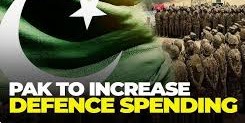
On June 10, 2025, Pakistan’s Finance Minister Muhammad Aurangzeb announced the national budget for the fiscal year 2025-26, revealing a notable 20.4% increase in defence expenditure, the highest in ten years. The budget allocation for the nation’s armed forces increased to 2.55 trillion rupees (equivalent to $9 billion), up from 2.12 trillion rupees in the preceding fiscal year. This increment constitutes 1.97% of Pakistan’s gross domestic product (GDP), compared to 1.7% in the previous year. The rise in defence spending prompts inquiries regarding its funding sources, economic trade-offs, and broader implications for Pakistan’s fiscal stability and geopolitical strategy.
Funding the Defence Budget Hike
The defence allocation of 2.55 trillion rupees, supplemented by an additional 742 billion rupees (equivalent to $2.63 billion) designated for military pensions, results in a total military expenditure of 3.292 trillion rupees (approximately $11.67 billion). This escalation occurs amidst a context of a 6.9% contraction in the overall federal budget, which decreased from 18.9 trillion rupees to 17.57 trillion rupees (about $62 billion). To accommodate this increase in defence spending, Pakistan is employing a combination of tax revenue, non-tax revenue, borrowing, and reallocation of resources from other sectors, managing to stay somehow within the framework of fiscal constraints imposed under an International Monetary Fund (IMF) program.
Tax Revenue: The Ordinary Citizen Pays. The principal source of funding for the defence budget is an assertive tax collection target. The 2025-26 budget anticipates total gross revenue of 19.298 trillion rupees, with 14.131 trillion rupees expected from the Federal Board of Revenue (FBR). This signifies a 19% increase from the revised 12.33 trillion rupees collected in the preceding fiscal year. The government aims to achieve a tax-to-GDP ratio of 11.4%, up from 9.5%, by expanding the tax base and improving compliance. Essential measures encompass taxing agricultural incomes, augmenting levies on salaried individuals, and imposing higher taxes on retailers and exporters. Nevertheless, Pakistan’s sluggish economic growth, estimated at 3.5% for 2025-26, casts doubt on the achievability of this target.
Non-Tax Revenue: State–owned and Private Enterprises Contribute. Non-tax revenue, projected at 5.167 trillion rupees, constitutes a significant component of fiscal income. This includes proceeds from privatisation (87 billion rupees), dividends from state-owned enterprises, and various other sources, such as regulatory fees. Although these funds do not directly target defence expenditures, they augment the overall revenue pool, thereby enhancing the government’s capacity to allocate additional resources to the military. Nonetheless, privatisation initiatives have historically yielded limited results, and dependence on non-tax revenue remains a precarious strategy amid Pakistan’s economic volatility.
Borrowing for Bullets. The budget projects a fiscal deficit of 6.5 trillion rupees (approximately $23 billion), representing 3.9% of Gross Domestic Product (GDP), a decrease from 5.9% in the preceding year. This deficit will be financed through both domestic and external borrowing, including commercial loans and multilateral assistance. Domestic borrowing, primarily via government bonds, is anticipated to cover a substantial portion. Concurrently, external loans from entities such as the International Monetary Fund (IMF) and friendly nations, including China and Saudi Arabia, will also contribute. The escalation in defence expenditure, coupled with a 24% increase in debt servicing costs amounting to 8.8 trillion rupees, highlights Pakistan’s significant dependence on borrowing. Such an approach poses risks of exacerbating the country’s debt burden, which, according to IMF estimates, already accounts for approximately 90% of the country’s GDP.
Reallocation from Social Sectors: At The Cost of Development. To accommodate the defence hike, the government has significantly reduced expenditures in critical social sectors. The federal budget allocated for health was decreased to 32 billion rupees, and education received a mere 113 billion rupees, reflecting a 7% overall reduction in development expenditure. These reductions have elicited widespread criticism, particularly in rural regions where healthcare and educational infrastructure are already under significant strain. By prioritising defence over development, Pakistan is redirecting resources away from long-term growth drivers, thereby potentially aggravating socio-economic inequalities.
IMF Program and Fiscal Discipline: Spending on Defence but Borrowing for Essentials. Pakistan’s economy operates under an IMF Extended Fund Facility, which imposes strict fiscal targets, including a primary surplus of 1.6% of GDP. While IMF funds are not directly allocated to defence, they stabilise the economy by supporting the balance of payments and stabilising the Pakistani rupee. This stability allows the government to redirect domestic resources to military spending. However, the IMF’s emphasis on fiscal consolidation limits Pakistan’s ability to expand social spending, forcing trade-offs that favour defence. The government’s commitment to meeting IMF conditions, such as reducing subsidies and increasing taxes, further constrains its fiscal flexibility.
Implications of the Defence Surge
The significant increase in defence spending has far-reaching implications for Pakistan’s economy, society, and regional standing.
Economic Trade-Offs: Vicious Cycle. The prioritisation of defence over social sectors risks undermining Pakistan’s long-term financial stability. Reduced investment in health and education could exacerbate poverty and illiteracy, which already affect 40% and 43% of the population, respectively, according to World Bank data. The reliance on borrowing to finance the fiscal deficit, including defence spending, increases Pakistan’s debt servicing burden, which now consumes nearly 50% of the budget. This could lead to a vicious cycle of borrowing and repayment, limiting fiscal space for future development. Moreover, the ambitious tax targets may strain businesses and households, potentially stifling economic growth. Higher taxes on salaried workers and retailers could exacerbate inflation, a persistent issue with annual rates of 9-12%. If tax collection falls short, the government may resort to further borrowing or austerity measures, both of which could destabilise the economy.
Geopolitical Context: Regional Arms Race. The increase in the defence budget is a direct response to heightened tensions with India. Pakistan’s military assesses the necessity of strengthening its capabilities to counter India’s superior defence expenditures, projected to reach $80 billion by 2025. Nonetheless, this escalation poses the risk of intensifying an arms race in South Asia, which may further strain Pakistan’s economy and divert resources from essential domestic priorities.
Social and Political Ramifications: Political Instability and Tension. The budget’s focus on defence at the expense of social services has sparked public discontent in Pakistan. Critics argue that neglecting health and education undermines human capital development, critical for Pakistan’s young and growing population. Political opposition parties, including the Pakistan Tehreek-e-Insaf, have capitalised on this, accusing the government of prioritising military interests over public welfare. This could exacerbate political instability, a concern already present in Pakistan’s history of civil-military tensions.
International Relations and IMF Oversight: External Debt Vulnerabilities. The defence hike may complicate Pakistan’s relations with the IMF and other international partners. While the IMF does not directly dictate defence spending, its focus on fiscal discipline could lead to scrutiny of Pakistan’s budgetary priorities. Friendly nations like China, which provide significant loans and investments, may support the defence increase due to their strategic interests in countering India. However, reliance on foreign loans risks deepening Pakistan’s external debt vulnerabilities.
Conclusion
Pakistan’s decision to augment defence expenditure by over 20% in the 2025-26 budget reflects its strategic imperatives amid tensions with India. Funded through increased taxes, non-tax revenue, borrowing, and reductions in social sectors, this increase underscores the government’s prioritisation of security over development. While the augmentation may enhance military capabilities, it entails considerable costs to economic stability and public welfare. The dependence on borrowing and ambitious fiscal targets, coupled with curtailed social spending, risks exacerbating poverty, inequality, and fiscal vulnerabilities. As Pakistan navigates these challenges, establishing a balance between defence requirements and economic and social priorities will be essential for ensuring long-term stability in a volatile region.
Please Add Value to the write-up with your views on the subject.
For regular updates, please register your email here:-
Link to the article on the website:-
PAKISTAN’S SOARING DEFENCE BUDGET: BULLETS FROM BORROWED MONEY by Air Mshl Anil Khosla (Retd)
References and credits
To all the online sites and channels.
Pics Courtesy: Internet
Disclaimer:
Information and data included in the blog are for educational & non-commercial purposes only and have been carefully adapted, excerpted, or edited from reliable and accurate sources. All copyrighted material belongs to respective owners and is provided only for wider dissemination.
References:-
1. Aurangzeb, Muhammad. “Federal Budget Speech 2025-26.” Government of Pakistan, Ministry of Finance, June 10, 2025.
2.International Monetary Fund (IMF). “Pakistan: 2023 Article IV Consultation and Request for an Arrangement Under the Extended Fund Facility.” IMF Country Report No. 23/260, July 2023.
3. World Bank. “Pakistan Economic Update: Macroeconomic Challenges and Outlook.” World Bank, October 2024.
4. Government of Pakistan, Ministry of Finance. “Budget in Brief 2025-26.” June 2025.
5. Stockholm International Peace Research Institute (SIPRI). “Military Expenditure Database: India.” SIPRI, 2024.
6. The Express Tribune. “Pakistan’s Defence Budget Jumps 20.4% Amid Tensions with India.” June 11, 2025.
7. Dawn News. “Budget 2025-26: Fiscal Deficit and Borrowing Challenges.” June 12, 2025.
8. Pakistan Bureau of Statistics. “Economic Indicators: Inflation and Exchange Rates.” June 2025.
9. Geo News. “Opposition Slams Budget for Neglecting Social Sectors.” June 15, 2025.