

713: THE BOHAI SEA MONSTER: CHINA’S LEAP IN WING-IN-GROUND-EFFECT TECHNOLOGY


My Article was  Published in the Aug 25 Edition of

“Life of Soldier” journal.


In July 2025, grainy images surfaced on social media, capturing a mysterious maritime behemoth skimming the Bohai Sea off China’s northern coast. The massive four-engine vehicle, dubbed the “Bohai Sea Monster” by intrigued observers, is a wing-in-ground-effect (WIG) craft, a hybrid of aircraft and boat that revives a Cold War-era Soviet concept. It is designed to fly just above the water’s surface, leveraging ground effect for enhanced efficiency, stealth, and speed, potentially outmanoeuvring warships and evading radar.

The Chinese craft features a flying boat hull, military camouflage, and a T-tail with twin vertical stabilisers, indicating a possible amphibious military role. Although China has not officially confirmed the existence of the craft, no official name, designation, or manufacturer has been revealed, leaving uncertainty about whether it is a technology demonstrator or intended for full-scale production. Its development appears to revive Soviet-era technology for modern military use, prompting questions about its role in China’s naval strategy. This advanced prototype showcases China’s growing commitment to leading in cutting-edge maritime technologies.


A Glimpse


The leaked images provide tantalising clues about the Bohai Sea Monster’s design. One photo shows the craft gliding just above the water’s surface, harnessing the ground-effect phenomenon that allows WIG vehicles to “float” on a cushion of compressed air trapped between their wings and the sea. The second image captures it stationary on a pier, revealing a boat-shaped fuselage, a T-tail configuration with two vertical stabilisers, and wingtip sponsons for stability during takeoff and landing. Four jet engines, mounted high above the wings, suggest powerful propulsion, with possible downward-angled nozzles to enhance lift in ground effect. The craft’s sleek, utilitarian design hints at a military focus, prioritising speed and payload over aesthetic considerations.

Estimated to be comparable in size to China’s AG600 amphibious aircraft (wingspan around 38 meters), the Bohai Sea Monster appears built for heavy-duty roles. Its jet propulsion likely enables speeds exceeding 250 knots (460 km/h), far surpassing those of traditional naval vessels. However, this speed comes at a cost as jet engines consume fuel rapidly, potentially limiting endurance compared to turboprop or hybrid-electric alternatives. The craft’s low-altitude flight, typically 3-10 meters above the water, makes it difficult to detect by radar, offering a stealthy profile that could evade conventional maritime defences, such as mines or submarines.


Strategic Implications

China’s development of the Bohai Sea Monster aligns with its broader military modernisation, emphasising asymmetric platforms to project power in contested regions such as the South China Sea and the Taiwan Strait. WIG craft offer unique advantages in littoral environments, where traditional naval ships face threats from anti-ship missiles and submarines. By skimming the surface, the Bohai Sea Monster could rapidly deploy troops, deliver supplies, or conduct maritime patrols, supporting China’s island garrisons in the Spratlys or Paracels.

The Bohai Sea Monster’s low-flying profile and high speed make it a challenging target for air defences, though it remains vulnerable in high-threat combat zones. Rough sea states, such as those in the Taiwan Strait (often exceeding Sea State 3), could also limit its operational window, a challenge faced by earlier Soviet WIG craft, like the Lun-class ekranoplan.

The Bohai Sea Monster could transform naval warfare by providing Beijing with a versatile platform for rapid troop deployment, cargo transport, and strategic surprise. Its potential roles could include:-

    • Amphibious Operations. Rapid troop transport to seize or reinforce disputed territories, complementing China’s Type 075 amphibious assault ships.
    • Logistics and Resupply. Delivering critical supplies like fuel, munitions, or medical equipment to remote outposts, reducing reliance on vulnerable sea lanes.
    • Anti-Submarine Warfare. Equipped with sonar or magnetic anomaly detectors, it could hunt submarines in shallow waters.
    • Search and Rescue. Adapting civilian applications of the AG600, the WIG craft could support disaster relief or maritime rescue missions.


Global Development of WIG Technology


The Bohai Sea Monster draws inspiration from Soviet ekranoplans, developed during the Cold War to exploit ground-effect flight for military advantage. The USSR’s Lun-class, armed with anti-ship missiles, and the massive Caspian Sea Monster demonstrated the potential of WIG technology. Still, high costs and operational limitations led to their abandonment. China, however, has leveraged its expertise in aerodynamics, hydrodynamics, and composite materials to revive this concept. The craft’s jet engines, possibly derived from military turbojets like the WS-10, indicate a focus on speed over fuel efficiency. Future iterations could explore hybrid-electric propulsion, aligning with global trends in sustainable aviation.

The Bohai Sea Monster is part of a global resurgence in WIG technology. Russia continues to explore ekranoplan designs for Arctic and Black Sea operations, while smaller nations, such as Singapore and South Korea, experiment with civilian WIG ferries. Commercial applications, such as high-speed cargo transport or tourism, could also emerge, leveraging the efficiency of ground-effect flight. However, military applications currently dominate efforts, driven by the need for rapid and stealthy platforms in contested maritime zones.


The United States, through DARPA’s Liberty Lifter program, aims to develop a heavy-lift WIG craft capable of transoceanic transport. With a first flight planned for 2028-2029, the Liberty Lifter targets a payload capacity exceeding 100 tons, dwarfing the Bohai Sea Monster’s estimated capabilities. Designed by companies such as General Atomics and Aurora Flight Sciences, it prioritises turboprop efficiency and rough-sea operability, addressing the limitations of earlier WIG designs.


China’s Project: Prospects and Challenges.

China’s secrecy surrounding the Bohai Sea Monster, lacking an official designation or acknowledgement, fuels speculation. Higher-resolution images or test footage may reveal more about its capabilities, such as payload, range, or armament. For now, it may be a technology demonstrator or an operational prototype. Still, its implications are clear: China is betting on WIG craft to gain a strategic advantage in the Indo-Pacific. The Bohai Sea Monster suggests Beijing is closer to fielding a functional WIG fleet, potentially deploying squadrons by the early 2030s.


Despite its promise, the Bohai Sea Monster faces hurdles. Environmental factors, such as high waves or crosswinds, can restrict operations, requiring advanced stabilisation systems. Maintenance of jet engines in salty maritime conditions presents logistical challenges, while crew training for low-altitude, high-speed flight requires specialised expertise. Integrating WIG craft into China’s naval strategy will also require doctrinal shifts, balancing their niche capabilities against traditional platforms, such as destroyers or aircraft carriers.


Conclusion

The Bohai Sea Monster is more than a curiosity; it’s a bold statement of China’s technological ambition. By reviving WIG technology, Beijing is carving a niche in naval warfare, blending speed, stealth, and versatility to challenge Western dominance. As the U.S. races to counter with its Liberty Lifter, the Indo-Pacific is poised to become a testing ground for these maritime giants. Whether the Bohai Sea Monster evolves into a game-changer or a costly experiment remains to be seen, but its emergence underscores a new era of innovation in military technology.


Please Add Value to the write-up with your views on the subject.


1878
Default rating

Please give a thumbs up if you  like The Post?


For regular updates, please register your email here:-

Subscribe


References and credits

To all the online sites and channels.

Pics Courtesy: Internet

Disclaimer:

Information and data included in the blog are for educational & non-commercial purposes only and have been carefully adapted, excerpted, or edited from reliable and accurate sources. All copyrighted material belongs to respective owners and is provided only for wider dissemination.


References:-


  1. Axe, David. “China’s ‘Bohai Sea Monster’ Wing-in-Ground-Effect Craft Spotted in Tests.” The National Interest, July 2025.


  1. South China Morning Post. “Mystery ‘Bohai Monster’ Wing-In-Ground Effect Craft Spotted in China’s Bohai Sea.” SCMP, July 2025.


  1. Sutton, H. I. “New Chinese WIG Craft Spotted – ‘Bohai Monster’ May Be a Military Ekranoplan.” Naval News, July 2025.


  1. Fisher, Richard D., Jr. “China’s Wing-in-Ground-Effect Craft: A New Dimension in Maritime Power Projection.” Jamestown Foundation China Brief, Vol. 25, No. 14, August 2025.


  1. Gady, Franz-Stefan. “The Return of the Ekranoplan? China’s WIG Craft and Regional Security.” The Diplomat, July 2025.


  1. Hall, David W., and E. Eugene Larrabee. Ground Effect Machines: Design and Applications. Reston, VA: American Institute of Aeronautics and Astronautics, 2000.


  1. Holmes, James R. “China’s Maritime Strategy and the Role of Amphibious Platforms.” Naval War College Review, Vol. 77, No. 3, Summer 2024.


  1. Office of Naval Intelligence. “China’s People’s Liberation Army Navy: 2025 Modernisation Outlook.” Washington, DC: U.S. Department of the Navy, 2025.


  1. Rozhdestvensky, Kirill V. “Wing-in-Ground Effect Vehicles: Modern Developments and Applications.” Progress in Aerospace Sciences, Vol. 42, No. 3, 2006, pp. 211–283.


  1. Sutton, H. I. “China’s Mystery WIG Craft: The Bohai Sea Monster Unveiled.” Covert Shores, July 2025.


  1. U.S. Defence Advanced Research Projects Agency (DARPA). “Liberty Lifter Program: Technical Overview and Progress Report.” DARPA.mil, March 2025.


  1. Xinhua News Agency. “AVIC AG600 Amphibious Aircraft Receives Civilian Certification.” April 15, 2025.
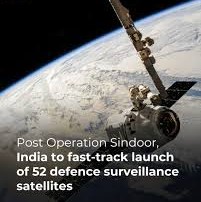
712: EYES IN THE SKY: OPERATION SINDOOR SPURS INDIA’S SPACE DEFENCE SURGE


My Article was published in the “Life of Soldier”  Journal, Aug 25.


In the wake of Operation Sindoor, conducted from May 7 to 10, 2025, India has launched an ambitious mission to enhance its space-based defence capabilities. The operation, a retaliatory strike against terror camps in Pakistan following the devastating Pahalgam attack on April 22, 2025, underscored the critical need for “deep” and “persistent” surveillance over adversarial territories. This necessity has prompted India to accelerate the deployment of 52 dedicated defence satellites under the Space-Based Surveillance (SBS) Phase-3 programme, which was approved in October 2024 with a budget of Rs 26,968 crore. Coupled with the finalisation of a comprehensive military space doctrine, India is poised to transform its strategic surveillance and defence framework, reducing reliance on foreign assets.


The Catalyst: Operation Sindoor

Operation Sindoor was a pivotal moment in India’s defence strategy, highlighting both the strengths and limitations of its current surveillance capabilities. The operation targeted terror infrastructure in Pakistan-occupied territories, relying on satellite imagery from foreign providers. While these assets provided critical intelligence, the operation exposed India’s dependence on external sources for real-time, high-resolution imagery. This dependency posed risks, including delayed access to data and potential vulnerabilities in data security, especially during high-stakes military engagements.

The Pahalgam attack, which killed 29 people, including civilians and security personnel, revealed gaps in India’s ability to monitor cross-border activities with the granularity and persistence required for pre-emptive or retaliatory actions. The subsequent success of Operation Sindoor, while a tactical victory, emphasised the need for an indigenous, robust, and self-reliant space-based surveillance system. The operation’s reliance on foreign satellites underscored the urgency to develop a dedicated constellation capable of providing continuous, high-resolution coverage of strategic areas, including Pakistan, China, and the Indian Ocean Region (IOR).


The Space-Based Surveillance (SBS) Phase-3 Programme

The Indian government had approved the SBS Phase-3 programme in October 2024, allocating Rs 26,968 crore to deploy 52 defence satellites. This ambitious initiative, led by the Indian Space Research Organisation (ISRO) in collaboration with private industry, aims to establish a comprehensive space-based intelligence, surveillance, and reconnaissance (ISR) network by 2029. The programme is structured to leverage both public and private sector expertise, with ISRO tasked with launching 21 satellites and three private companies deploying the remaining 31. Key Features of the Programme are as follows:-


Satellite Constellation. The 52 satellites will operate in a mix of low Earth orbit (LEO) and geostationary orbit (GEO). LEO satellites, positioned at altitudes between 500 and 900 km, will provide high-resolution imagery (up to 0.3 meters), ideal for detailed monitoring of military installations, troop movements, and infrastructure. GEO satellites, stationed at 36,000 km, will provide continuous wide-area coverage, which is critical for tracking maritime activities in the IOR and monitoring large-scale developments along India’s borders.


Technological Capabilities. The satellites will be equipped with advanced synthetic aperture radar (SAR) and electro-optical sensors, enabling all-weather, day-and-night imaging. SAR systems are exceptionally vital for penetrating cloud cover and monitoring during adverse weather conditions, a frequent challenge in regions like the Himalayas. The constellation will also incorporate secure communication links to ensure real-time data transmission to ground stations and military command centers.


Public-Private Partnership. The involvement of private companies marks a significant shift in India’s space strategy. Companies like Tata Advanced Systems, Larsen & Toubro, and startups such as Pixxel and Skyroot Aerospace are expected to contribute to satellite manufacturing and launch services. This collaboration aims to accelerate deployment, reduce costs, and foster innovation in India’s burgeoning private space sector.


Timeline and Deployment.  The first satellite launch is scheduled for April 2026, with the entire constellation expected to be operational by 2029. The phased rollout will prioritise coverage of high-threat areas, including the Line of Actual Control (LAC) with China and the Line of Control (LoC) with Pakistan, before expanding to broader regional surveillance.


Strategic Imperatives

The SBS Phase-3 programme is driven by India’s need to counter growing regional security challenges. China’s expansive space program, with over 1,000 satellites, including advanced ISR and anti-satellite (ASAT) capabilities, poses a significant threat. Beijing’s ability to disrupt or destroy satellites, demonstrated by its 2007 ASAT test, underscores the need for India to develop resilient and redundant space assets. The People’s Liberation Army (PLA) has integrated space-based ISR into its military doctrine, enabling precise targeting and real-time battlefield awareness, as seen in its activities along the LAC.

Pakistan, while less advanced in space technology, relies on Chinese support for its satellite capabilities, including the Pakistan Remote Sensing Satellite (PRSS-1). The growing China-Pakistan nexus necessitates enhanced surveillance to monitor joint military exercises, infrastructure development (e.g., the China-Pakistan Economic Corridor), and potential terror activities emanating from Pakistani territory.

The IOR, a critical maritime domain, is another focus area. With China’s increasing naval presence and the strategic importance of chokepoints like the Malacca Strait, India requires persistent surveillance to safeguard its maritime interests and counter piracy, smuggling, and hostile naval operations.


Complementary Initiatives: HAPS and Beyond

In addition to the satellite programme, the Indian Air Force (IAF) is pursuing three high-altitude platform systems (HAPS) aircraft to complement space-based ISR. These solar-powered, unmanned platforms, operating at altitudes of 18-20 km, can remain airborne for weeks, providing persistent surveillance over specific areas. HAPS aircraft are particularly suited for monitoring border regions and can serve as a cost-effective alternative to satellites for localised ISR missions.

The IAF is also exploring the integration of artificial intelligence (AI) and machine learning (ML) to process vast amounts of satellite data. AI-driven analytics can identify patterns, detect anomalies, and provide actionable intelligence in real time, enhancing India’s ability to respond to threats swiftly.


Challenges and Opportunities

While the SBS Phase-3 programme and the military space doctrine represent a significant leap forward, challenges remain. The ambitious timeline requires seamless coordination between ISRO, private companies, and the military, which could face delays due to technical complexities or funding constraints. The private sector’s relative inexperience in defence-grade satellite manufacturing may also pose risks to quality and reliability.

Moreover, the global space environment is increasingly contested, with space debris and ASAT threats complicating satellite operations. India must invest in space situational awareness (SSA) capabilities to monitor and mitigate these risks. International norms on space militarisation, which are still in their infancy, could also impact India’s plans, necessitating diplomatic efforts to safeguard its interests.

On the opportunity front, the programme positions India as a significant space power, fostering technological innovation and economic growth through the private space sector. The public-private partnership model could serve as a blueprint for future defence projects, reducing costs and enhancing efficiency. Additionally, the doctrine’s focus on international cooperation opens avenues for technology transfers and strategic alliances, strengthening India’s geopolitical standing.


Conclusion

Operation Sindoor served as a wake-up call for India, highlighting the indispensable role of space-based surveillance in modern warfare. The SBS Phase-3 programme, with its 52 dedicated defence satellites, and the forthcoming military space doctrine mark a transformative step toward self-reliance and strategic dominance in the space domain. By addressing regional threats, leveraging public-private partnerships, and integrating advanced technologies like HAPS and AI, India is poised to secure its borders, maritime interests, and national security.


Please Add Value to the write-up with your views on the subject.


1878
Default rating

Please give a thumbs up if you  like The Post?


For regular updates, please register your email here:-

Subscribe


References and credits

To all the online sites and channels.

Pics Courtesy: Internet

Disclaimer:

Information and data included in the blog are for educational & non-commercial purposes only and have been carefully adapted, excerpted, or edited from reliable and accurate sources. All copyrighted material belongs to respective owners and is provided only for wider dissemination.


References:-


  1. Times of India (ToI). (2025). “India to Fast-Track 52 Defence Satellites After Operation Sindoor.”
  2. Indian Space Research Organisation (ISRO). (2024). “Space-Based Surveillance Phase-3 Programme Overview
  3. Ministry of Defence, Government of India. (2024). “Approval of Rs 26,968 Crore for Defence Satellite Programme.” Press Release, October 2024.
  4. Defence Space Agency (DSA). (2019). “Mission Shakti and India’s Anti-Satellite Capabilities.” Government of India.
  5. Jane’s Defence Weekly. (2025). “India’s High-Altitude Platform System (HAPS) Acquisition for ISR Missions.”
  6. Stockholm International Peace Research Institute (SIPRI). (2024). “China’s Space Programme and Anti-Satellite Capabilities.” SIPRI Yearbook 2024.
  7. Observer Research Foundation (ORF). (2025). “India’s Military Space Doctrine: A Strategic Roadmap.”
  8. The Hindu. (2025). “Operation Sindoor: India’s Response to Pahalgam Attack.” May 12, 2025.
  9. SpaceNews. (2024). “India’s Private Space Sector: Emerging Players in Defence Satellite Manufacturing.”
  10. Center for Strategic and International Studies (CSIS). (2024). “Space Situational Awareness and the Contested Space Environment.”
English हिंदी