
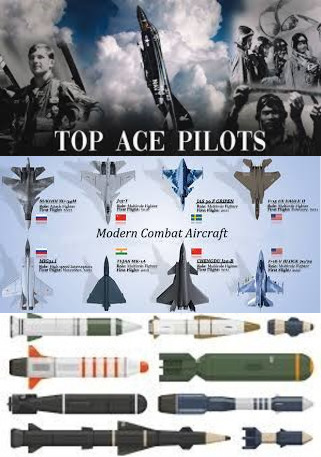
728: AERIAL WAR: THE SHIFT FROM PILOTS TO PLATFORMS TO WEAPONS


Article published on the IIRF Website on 23 Aug 25.


The history of aerial warfare is a reflection of the larger story of technology and war.


The history of aerial warfare tells a compelling story of innovation, change, and the relentless pursuit of control in the skies. Over just over a century, air combat has undergone significant changes. The focus has shifted from skilled pilots to modern technological systems, and it is now moving toward autonomy and weapon-centred warfare. This transformation is not merely machines replacing humans. It shows how technology improves on an ongoing basis, redefining the very principles of conflict and control in war. This process can be broken down into three broad periods: the Pilot Era, the Platform Era, and the soon-to-be Weapon Era. Each era signifies a profound step forward, both in terms of capability and in the way military forces conceive of power projection, air supremacy, and deterrence in an increasingly complicated and technologically oriented battlefield.


The Pilot-Centric Era: A Human-Centric Approach to Airpower

From the earliest days of aerial combat in World War I to the Cold War period, the human pilot was the central factor in air warfare. Initial aircraft were simple in design, and success was highly dependent on the skill, valour, and tactical acumen of the pilot. Aircraft were designed to complement the pilot’s eyes, experience, and manoeuvrability. The entry into the jet era further raised the reliance on human performance, valour, and high-stress decision-making.

The Dogfighter’s Domain. The early 20th century celebrated the’ ace’ pilot, with prominent figures such as Manfred von Richthofen (commonly known as the Red Baron), Eddie Rickenbacker, and subsequently Chuck Yeager becoming emblematic of aerial prowess. The individual pilot was regarded not merely as a combatant but also as an embodiment of national strength and heroism. Aeroplanes like the P-51 Mustang, Spitfire, and MiG-21 were the embodiments of the era’s technology—designed to be fast, agile, and combat manoeuvrable. In the Vietnam War, American pilots carried out operations in which dogfighting was still important, and air kills were seen as personal and national accomplishments.

Tactical excellence with regard to technology. During this period, technology development focused on extending the capabilities of pilots instead of replacing them. Navigation systems, radar, and early missiles lengthened the pilots’ field of operation while maintaining control over the kill chain in their hands. Situational awareness, spatial awareness, and swift decision-making were key drivers of mission success.


The Platform Era: From Aces to Systems

The end of the Cold War signalled the beginning of the Platform Era, where aircraft system complexity and integration became more focal than pilot skill. Aircraft then transitioned to become multirole platforms that can perform a range of missions with little pilot input except to manage the systems.

Jet Age and Missiles (1950s–1980s). The introduction of jet planes like the F-86 Sabre and the MiG-15, together with guided missile technology, represents a watershed moment in combat dynamics. Air-to-air missile systems like the AIM-9 Sidewinder and the radar-guided AIM-7 Sparrow extended beyond visual recognition engagement ranges, thus reducing the requirement for close dogfighting. The Korean War typified jet warfare, while the Vietnam War emphasised the importance of sophisticated avionics and missile technology.

System-of-Systems Concept. Planes like the F-117 Nighthawk and F-22 Raptor led the development of stealth technology, making platforms harder to detect. Sophisticated avionics, radar systems, and sensor fusion (e.g., in the F-35) have allowed platforms to analyse vast amounts of data, thus expanding situational awareness. The onset of network-centric warfare is illustrated by such platforms as the E-3 AWACS and F/A-22, which exchange information via links like Link 16 in order to enable networked operations. Fifth-generation fighter aircraft, such as the F-22 Raptor and F-35 Lightning II, are the pinnacle of this platform-oriented way of thinking. These aircraft operate not just as pilots’ tools but as sensor-shooter fusion nodes in a larger, networked kill web. Manned with stealth, sensor fusion, and electronic warfare systems, they can collect intelligence, jam the enemy system, and drop precision-guided munitions—while sharing data with other platforms. The pilot’s role has shifted from warfighter to system operator, responsible for managing inputs from sensors, data links, and mission systems. Multirole and survivability.

These are defining features in modern-day military platforms. Contemporary systems place a premium on stealth, range, and payload rather than manoeuvrability. The ability to stay undetected and attack at a distance became the top priority, overtaking the long-standing value placed on dogfighting acumen. The F-35, for instance, is designed to fulfil various roles, such as strike, intelligence, surveillance, and reconnaissance (ISR) and air-to-air combat, all combined within one platform. Current survivability strategies focus primarily on avoiding engagement rather than excelling in combat. Strategic Implications. This shift changed the manner in which air forces planned their operations. Rather than sending out formations of aircraft, a limited number of high-value platforms could conduct sophisticated missions, thus minimising exposure. Nevertheless, these platforms came at a high cost—financial, logistical, and strategic. The high cost and risk of losing a $100 million-plus aircraft led air commanders to seek alternative options.


The Weapons Era: Precision, Autonomy, and Platform Agnosticism

We are now coming into the Weapons Era, which is marked by a re-emphasis on the weapon system itself. Whether launched from a manned aircraft, an unmanned drone, a ship at sea, or even in space, it is the precision-guided, often autonomous weapon that carries strategic weight.

Rise of Unmanned Systems. The mass production of drones—like the MQ-1 Predator, MQ-9 Reaper, Bayraktar TB2, and more recent stealthier and higher-speed systems like the XQ-58 Valkyrie—has revolutionised the aerial warfare landscape. These platforms can stay on station for hours, target with accuracy, and attack without endangering a human pilot. Uncrewed platforms are less expensive, more expendable, and more interchangeable. Military forces are currently developing swarms of drones capable of overwhelming defences, filling up the skies, and acting as decoys, scouts, or kinetic attackers. Artificial Intelligence and Autonomous Kill Chains.

Artificial Intelligence. The use of artificial intelligence is revolutionising the operational capacities of contemporary weapons. AI systems have the ability to select and prioritise targets, fly autonomously in GPS-deprived areas, optimise flight patterns to reduce the risk of detection, and conduct strikes independently, under particular doctrines. As examples, loitering munitions, also known as “kamikaze drones,” like the Israeli Harop or Switchblade from the U.S., can loiter above target areas, perform target search, and conduct strikes with minimal human involvement. Beyond-Visual-Range (BVR) Missiles. BVRs, including the AIM-120 AMRAAM, and hypersonic missiles, such as the AGM-183, move the focus towards weapon system range and precision. Heavy platforms like the B-21 Raider, which are designed to be stealthy and heavy-laden, place magazine capacity above manoeuvrability, as BVR combat reduces the need for close manoeuvring. Directed Energy Weapons (DEWs) are future technologies that allow for near-instant strikes, thus diminishing the dependence on close manoeuvring.

Hypersonics and Stand-off Weapons. During the Weapon Era, combat usually takes place a significant distance behind the frontline. Hypersonic glide vehicles (such as Russia’s Avangard, China’s DF-ZF) and long-range cruise missiles have the ability to destroy targets thousands of miles away in a few minutes. Missiles like the AGM-158 JASSM, LRASM, and air-launched hypersonics render the need for platforms to enter enemy airspace pointless. The role of the platform is minimised to that of a delivery vehicle only—its function diminished to that of an enabler. Platform Agnosticism. Perhaps the defining feature of this era is that the delivery platform matters less than the effectiveness of the weapon. Precision munitions can be launched from a variety of platforms, including fighters, drones, submarines, ships, and satellites. This diversification increases strategic flexibility. A naval destroyer or ground-based launcher may be just as lethal as an aircraft, especially when combined with AI-enhanced targeting data.

The Future of Human-Machine Teaming. Autonomous air systems will be the main focus in future conflicts, with human intervention or control restricted to decisive moments. The aim is to enhance lethality, survivability, and rate of operations while reducing threats to human life. With the Weapon Era ongoing, the probable future most likely involves hybrid operations that integrate manned platforms, autonomous systems, and smart weapons into coordinated battle networks.

Loyal Wingman Projects. Projects like the US Collaborative Combat Aircraft (CCA) and Australia’s Ghost Bat project envision uncrewed drones flying with manned fighters. These “loyal wingmen” carry weapons, sensors, or electronic warfare payloads, thus extending manned platform operational reach and survivability.

Swarming Strategies and Edge AI. AI and edge computing allow autonomous drones to have local decision-making capacity and move within coordinated swarms, thus ensuring autonomous operation. The tactics are likely to disrupt traditional air defence systems and can potentially revolutionise battlefield dynamics.

Integration into Multi-Domain Operations. The future air warfare will be a core element of multi-domain operations (MDO), smoothly interweaving the space, cyber, land, sea, and air domains. The AI-powered weapons will not be standalone entities, but as part of an integrated battlefield responding in real-time.

Directed Energy Weapons (DEWs). Comprising lasers and microwaves, these technologies are expected to greatly cut engagement times, hence decreasing the need for traditional dogfighting manoeuvres. These systems have the ability to disrupt enemy electronics or to destroy targets in an instant, thus reorienting strategic focus toward air and space forces. In addition, large platforms intended for Payload deployment — e.g., bomber-sized aircraft like the B-21 Raider — will prioritise stealth, longer range of operations, and payload capacity over manoeuvrability, hosting a large payload of long-range missiles or drones.


Conclusion

The shift from human pilots to platforms and then to weapons is a move away from dependence on man to dependence on machine. Pilots used to be the deciding factor in air warfare; today, planes and UAVs are the focal points. In the present day, weapons, particularly autonomous drones and guided missiles, are becoming increasingly important. The change improves efficiency in operations and minimises risks to humans, but also raises strategic and ethical issues. With the development of artificial intelligence and directed energy weapons, there is a potential to blur the distinction between platforms and weapons, and autonomous platforms can effectively revolutionise the character of warfare. The art of air power is evolving. The next chapter won’t be listed in the annals of great pilots or quantified simply by the number of aircraft. Rather, it will be measured in terabytes of information, milliseconds of reaction time, and the smooth blending of human and artificial intelligence that functions in an ever-more technology-influenced world.

Please Add Value to the write-up with your views on the subject.


1879
Default rating

Please give a thumbs up if you  like The Post?


For regular updates, please register your email here:-

Subscribe


References and credits

To all the online sites and channels.

Pics Courtesy: Internet

Disclaimer:

Information and data included in the blog are for educational & non-commercial purposes only and have been carefully adapted, excerpted, or edited from reliable and accurate sources. All copyrighted material belongs to respective owners and is provided only for wider dissemination.


References:

  1. Air Force Historical Research Agency. (n.d.). World War I aerial combat tactics.
  1. Boyne, W. J. (2003). The influence of air power upon history. Pelican Publishing.
  2. Center for a New American Security (CNAS). (2021). The Role of AI in the Future of Air Warfare.
  3. Clark, B., Gunzinger, M., & Walton, T. (2020). Winning the High-End Fight: The Role of Unmanned Aircraft. Center for Strategic and Budgetary Assessments (CSBA).
  1. Clark, R. M. (2014). Uninhabited combat aerial vehicles: Airpower by the people, for the people, but not with the people. Air University Press.
  1. Corum, J. S., & Johnson, W. R. (2003). Airpower in small wars: Fighting insurgents and terrorists. University Press of Kansas.
  2. Deptula, D. A. (2021). From Fighter Pilot to Command and Control: The Changing Face of Air Warfare. Mitchell Institute for Aerospace Studies.
  3. Freedberg, S. J. (2019, June 18). Mosaic Warfare: DARPA’s Vision of the Future Fight. Breaking Defence.
  4. Freedman, L. (2019). The future of war: A history. PublicAffairs.
  1. Gunzinger, M., & Finerty, C. (2018). Directed-Energy Weapons Are Coming: And They’re Going to Change War. War on the Rocks.
  2. Hallion, R. P. (1997). Strike from the sky: The history of battlefield air attack, 1911–1945. Smithsonian Institution Press.
  1. Kainikara, S. (2015). The Evolution of Air Power. Air Power Development Centre.
  2. Krepinevich, A. F. (2009). 7 Deadly Scenarios: A Military Futurist Explores War in the 21st Century. Bantam Books.
  1. RAND Corporation. (2021). The future of air superiority: Assessing the role of fifth-generation fighters and unmanned systems.
  1. Sayler, K. M. (2021). Emerging Military Technologies: Background and Issues for Congress. Congressional Research Service.
  2. Scharre, P. (2018). Army of None: Autonomous Weapons and the Future of War. W. W. Norton & Company.
  1. Singer, P. W. (2009). Wired for War: The Robotics Revolution and Conflict in the 21st Century. Penguin Books.
  1. U.S. Department of Defence. (2022). Unmanned Aircraft Systems Roadmap: 2022–2040.
  1. Weinberger, S. (2016). The Pentagon’s Brave New World of AI-Powered Warfare. Nature, 538, 160–163.
  1. Work, R., & Brimley, S. (2014). 20YY: Preparing for War in the Robotic Age. Center for a New American Security (CNAS).

727: GEOPOLITICAL DYNAMICS AND DEFENCE MODERNISATION: LESSONS OF 2025 CONFLICTS


Presented my views at a round table conference at the Best Practices Meet 2025 organised by Data Security Council of India on 21 Aug 25.


The year 2025 has been a decisive moment for international security. It has confirmed trends that have been emerging over the last decade. Growing rivalries between several powers, the swift development of hybrid warfare, and defence transformation have been evident in fighting in Ukraine, and Gaza, elsewhere. These scenarios represent a combination of great power competition, scarcity of resources, and technological innovation that compelled countries to adapt rapidly to new realities. This article emphasises salient geopolitical dynamics, lessons of the 2025 wars, and emerging defence modernisation trends. It summarises how nations are reacting to a more precarious world.


Geopolitical Dynamics

Changing Power Blocs and Multipolar Rivalries. The world in 2025 is undeniably multipolar. Power is shared among contesting blocs. The US-China competition is most notable, shaping trade tensions, technological divisions, and alliances such as AUKUS (Australia, UK, US) and the Quad (US, India, Japan, Australia). AUKUS has broadened its scope from naval security to include technology cooperation. The Quad, on the other hand, has enhanced strategic collaboration in the Indo-Pacific. China’s aggressive moves, especially control of key supply chains, have increased tensions. This has compelled the US to deepen alliances with India, Japan, and South Korea. At the same time, Russia and Iran are testing Western strength. Russia’s moves in Ukraine and Iran’s proxy interventions in the Middle East are destabilising Europe and the wider world. Therefore, protectionism is on the rise, global markets are disintegrating, and supply chain breakdowns are common, particularly in semiconductors, rare earth elements, and strategic minerals. These strains have amplified geopolitical risk premiums, causing energy and commodity market volatilities and creating regional polarisations.

Resource Competition as Flashpoints. Scarcity of resources is a major source of geopolitical strain in 2025. China’s dominant hold on rare earth processing—more than 80% of the world supply—gives strategic vulnerabilities to Western countries that depend upon those commodities for electronics, green technology, and defence systems. The competition for energy has gained strength, particularly with Russia employing the use of gas supply as a bargaining chip and the volatile oil prices in the Middle East. Climate change is aggravating water scarcity, emerging as a palpable flashpoint, especially in Africa and the Middle East. Conflicts between Egypt, Ethiopia, and Sudan over the Grand Ethiopian Renaissance Dam and Middle Eastern water shortages fuel political tensions. These are putting pressure on migration channels and over-stretching international aid systems. These are influencing resource flashpoints to emphasise the need for diversified supply chains and robust infrastructure to reduce geopolitical risks.

Hybrid Warfare and Non-State Actors. The wars of 2025 illustrate that hybrid warfare, which involves conventional military operations along with cyberattacks, propaganda, and the utilisation of drones, has become the primary nature of conflict. In Ukraine, Gaza, as well as the India-Pakistan standoff in April 2025, the methods have created a fusion of state and non-state actors. Non-state actors, such as private military companies and terrorist groups, are acquiring sophisticated technologies, frequently with the intermediation of major-power proxies. In the Red Sea, Houthis, with Iranian backing, have interrupted global supply chains. In the Sahel, uprisings in Mali and Niger are taking advantage of shortages of resources related to climate change and foreign assistance to challenge state control. These hybrid threats need adaptable defence approaches that can integrate cyber capabilities, physical means, and information tactics.

Regionalisation of Conflicts and Proxy Involvement. Local conflicts are spilling over into larger conflicts with support from influential nations. The April 2025 India-Pakistan tensions in Kashmir entailed quick mobilisation, artillery engagements, drone strikes, and cyber activities, fueled by external intelligence and arms supply, raising the nuclear spectre. In the Sahel, both the insurgencies in Niger and Mali, which are driven by climate challenges and poor governance, have attracted Russian and Western intervention, making stabilisation a complex challenge. The conflict between Israel and Hamas in Gaza involving Iranian and Yemeni surrogates has precipitated humanitarian disasters and undermined important trade lanes such as the Red Sea and Bab el-Mandeb Strait, showing the global resonance of regional wars.

Erosion of Multilateralism. Multilateral bodies such as the United Nations are finding it hard to operate under the current geopolitical tensions. The Security Council dynamics have disallowed rapid reactions in the Gaza and Ukraine crises, demonstrating the shortcomings of consensus-driven governance. When older methods lose potency, smaller configurations like AUKUS, the Quad, and the India-France-UAE trilateral are starting to prove themselves as workable options. Yet, these selective alignments further disintegrate global governance, and it becomes difficult to address interconnected challenges like climate change, conflicts, and economic instability.

Economic Warfare and Sanctions. Economic instruments like sanctions, currency intervention, export controls, and supply chain dislocation have become a staple in geopolitical competition. The Russia-Ukraine conflict revealed Europe’s energy vulnerabilities, with gas supply cutbacks fueling inflation. Middle East conflicts, particularly in Gaza, have resulted in oil price spikes and increases in global inflation. The weaponisation of currency, including China’s and Russia’s departures from the dollar, further polarises the world economy. These trends highlight the importance of multiple economic partners and robust supply chains to mitigate the effects of economic warfare.


Learnings from 2025 Conflicts

Speed of Escalation and Hybrid Threats. Conflicts in 2025 build rapidly from grey-zone operations—like cyber attacks and disinformation—to physical military responses, in some cases within days. The conflict in Ukraine and the India-Pakistan crisis demonstrate how hybrid threats involving drones, cyber operations, and disinformation raise the stakes, particularly in regions with nuclear powers. Non-state actors add to the complexity of accountability and response, making integrated defence planning critical to manage multi-domain threats.

Civil-Military Tech Convergence. The swift transition of commercial technologies to military applications has altered the face of war. Ukraine’s exploitation of low-cost, commercially procured drones against Russian forces underscores the need for adaptability as opposed to quantities. Likewise, drone strikes between India and Pakistan in 2025 underscore the need for hypersonic technology, AI-enabled targeting, and premium cybersecurity in multi-domain warfare. Such developments necessitate defence architectures prioritising smooth collaboration between civilian and military realms and fast-paced innovation.

Information Domain as a Decisive Battlefield. Shaping narratives and combating disinformation is important for winning strategically. Ukraine’s success in moulding world opinion using social media and open-source intel is a blueprint for successful information operations. In Gaza, the application of sophisticated technologies has minimised casualties among civilians and preserved the support of allies, exemplifying the necessity of an interdisciplinary strategy of information and combat operations to shape legitimacy and diplomatic results.

Logistics Under Fire. Global conflicts have exposed vulnerabilities in supply chains, with specific attacks on fuel depots, rail infrastructures, and electronic inventory breaking operations. Ukraine’s distributed logistics model, depending on diverse supply routes, has served its military operations against sanctions and blockades. This indicates the necessity of resilient, distributed logistics systems for maintaining operational continuity under adverse conditions.

Electronic Warfare and Counter-Drone Operations. Electronic warfare and counter-drone technologies have become a must. In Ukraine, jamming and signal interference tactics have nullified Russian drone activities. Urban combat in Gaza highlights the need for dependable communication in urban centers. Nations must invest in convergent electronic warfare, counter-drone, and cybersecurity competencies to counter emerging threats in sophisticated electronic environments.

Humanitarian and Ethical Considerations. Minimising mistakes among non-combatants is essential. The Gaza and Ukrainian conflicts underscore the importance of precision technologies and moral principles. Allowing force size variations, modernisation, and preparedness demands adaptive forces that can reform toward humanitarian and operational demands quickly. Morality in war is more closely associated with success in strategy since killing civilians might erode legitimacy and result in global sanctions.

Preparing for Peer-to-Peer Conflicts. Analysis based on US-China wargaming and India-Pakistan interactions emphasises the need for enhanced air and missile defences against hypersonic and mass drone threats. US Government Accountability Office reports indicate optimal practices for overcoming these challenges, including AI-based detection and modular defence systems. India’s swift introduction of Akash-NG and S-400 systems indicates a priority for countering peer country threats.


Defence Modernisation Trends

Acceleration of AI-Driven Command & Control.  The inculcation of AI in command, control, communications, computers, intelligence, surveillance, and reconnaissance systems is advancing rapidly. Real-time targeting, predictive analytics, and cross-domain integration are enriching decision-making in high-intensity conflicts. India’s AI roadmap for 2025-27 prioritises surveillance, cyber defence, and autonomous systems, in line with AI-driven warfare global trends.

Unmanned Systems Proliferation. The expansion and diversity of unmanned systems—drones, unmanned underwater vehicles, and loitering munitions—are developing at a fast pace. Ukraine’s utilisation of cheap drones against more powerful forces proves the utility of swarm tactics and artificial intelligence technology. Countries are emphasising mass production, redundancy, and flexibility in distributed operations to engage numerically superior adversaries.

Resilient Communications and Quantum-Encrypted Networks. Secure jam-resistant communication networks are vital with increasing electronic warfare threats. Quantum encryption holds out a potential answer to counter cyber intrusions. India’s focus on indigenous cybersecurity development is in sync with international pushes towards robust command-and-control networks and maintaining operational continuity in the midst of war.

Integrated Air & Missile Defence Enhancements. Developments in defending against hypersonic missiles and swarms of drones are essential. AI-based radar platforms, modular interceptors, and networked sensors enable faster reaction times. India, combining Akash-NG with Russian S-400 systems, along with practices that the Government Accountability Office has proposed, demonstrates a layered defence against a range of airborne threats.

Distributed and Modular Force Structures. Greater, fixed sizes of units are being supplanted by smaller, networked ones, which can be rapidly redeployed. Modular force structures allow flexible organisation of tasks, and theatre commands facilitate joint operations. India’s initiative of local defence manufacturing and theatre-level integration is in tune with a worldwide trend towards technology-enabled, agile military forces.

Rapid Production & Fielding Through Modular Manufacturing. Accelerating research and development to deployment is imperative in the quest for staying competitive. Industry 5.0 converges AI, advanced robots, and human-machine interaction to enable modular manufacturing. India’s Production-Linked Incentive programs seek scalable manufacturing of drones and AI systems, tracking global initiatives toward quick, flexible manufacturing.


Conclusion

The 2025 geopolitical trends, fueled by rivalry between several powers, resource depletion, and hybrid warfare, have transformed global security. Ukraine, Gaza, and Kashmir conflicts display the velocity of escalation, the role of information control, and the requirement of robust logistics and communications. Defence modernisation is progressing at a fast pace, with systems that embrace AI, unmanned systems, and modular forces taking the forefront. States have to focus on agility, convergence of technologies, and morality to combat the complexity of contemporary threats. With the global system continuing to break apart, the 2025 lessons reinforce the importance of flexible, robust, and creative defence approaches towards guaranteed security in a world that is uncertain.


Please Add Value to the write-up with your views on the subject.


1879
Default rating

Please give a thumbs up if you  like The Post?


For regular updates, please register your email here:-

Subscribe


References and credits

To all the online sites and channels.

Pics Courtesy: Internet

Disclaimer:

Information and data included in the blog are for educational & non-commercial purposes only and have been carefully adapted, excerpted, or edited from reliable and accurate sources. All copyrighted material belongs to respective owners and is provided only for wider dissemination.


References:-

  1. Al-Jabari, M., & Khalidi, R. (2025). Proxy Warfare in the Middle East: Iran, Yemen, and the Red Sea Crisis. Middle East Policy Council.
  2. Apps, P. (2025, June 27). From India-Pakistan to Iran and Ukraine, a new era of escalation. Reuters. https://www.reuters.com
  3. Binnendijk, H., & Gompert, D. C. (2024). The Future of Warfare: Hybrid Threats and the New Geopolitical Reality. RAND Corporation.
  4. Center for Strategic and International Studies (CSIS). (2025). The Future of Hybrid Warfare.
  5. Center for Strategic and International Studies (CSIS). (2025). Unmanned Systems and Swarm Tactics: Lessons from Ukraine and Beyond.
  6. European Union Institute for Security Studies (EUISS). (2025). Resource Competition and Geopolitical Flashpoints: Energy, Water, and Rare Earths.
  7. EY Global. (2024, December). Top 10 Geopolitical Risks in 2025: Geostrategic Outlook.
  8. Indian Ministry of Defence. (2025). Defence Modernisation Roadmap 2025-27: AI, Drones, and Theatre Commands. Government of India.
  9. IJCRT. (2025). Comparing Hybrid Warfare Strategies Inside The Ukraine Conflict.
  10. Kapur, S. P., & Ganguly, S. (2025). India-Pakistan Tensions in 2025: Escalation and Nuclear Risks. Carnegie Endowment for International Peace.
  11. NATO Defence College. (2025). Hybrid Warfare and the Information Domain: Lessons from Ukraine. NDC Research Paper.
  12. Operation Sindoor demonstrates India’s indigenous defence technological strength. (2025). The Times of India.
  13. S&P Global. (2025, February). Top Geopolitical Risks of 2025. S&P Global Market Insights.
  14. Stockholm International Peace Research Institute (SIPRI). (2025). SIPRI Yearbook 2025: Armaments, Disarmament, and International Security. Oxford University Press.
  15. UNIDIR. (2025, July). Artificial Intelligence in the Military Domain and Its Implications.
  16. Wellington Management. (2025, February). Geopolitics in 2025: Risks, Opportunities, and Deepening Uncertainties.
  17. India’s new warfare: Drones, data, and the defence race that can’t wait. (2025, June). Economic Times.
  18. Narratives Under Fire: Information Warfare Lessons from… (2025, July 31). Small Wars Journal.

726: Stealth and Counter Stealth Technologies


Presented my views While Chairing a session on Counter Stealth Technologies during the “Best Practices Meet 2025” organised by the Data Security Council of India on 21 Aug 25.


STEALTH AND COUNTER-STEALTH TECHNOLOGIES


Stealth Technology Overview

Stealth technology enhances aircraft survivability by reducing detectability across radar, infrared (IR), acoustic, and visual spectrums, not rendering aircraft invisible but lowering signatures to complicate enemy detection and targeting. Key techniques include:

    • Radar Cross-Section (RCS) Reduction: Achieved through aerodynamic shaping and radar-absorbent materials (RAM).
    • Infrared (IR) Suppression: Minimises heat signatures from engines and airframes.
    • Acoustic and Visual Reduction: Reduces noise and visual detectability.
    • Electronic Countermeasures (ECM): Jamming and deception disrupt enemy sensors. Examples include the F-22, F-35, and B-2, which aim to delay or complicate enemy interception. Stealth evolves with advanced RAM, active stealth, and hypersonic/unmanned designs, sustaining an ongoing offence-defence race.


Challenges in Countering Stealth Aircraft

    • Detection vs. Targeting: Low-frequency radars (VHF/UHF/OTH) detect stealth aircraft but lack precision for targeting. High-frequency radars offer accuracy but struggle against stealth designs.
    • Electronic Warfare (EW): Stealth platforms deploy jamming, deception, and cyber-attacks to disrupt sensors and defence networks.
    • Operational Limitations: Terrain, weather, electromagnetic interference, and sensor fusion complexities hinder counter-stealth efforts.


Stealth Vulnerabilities

    • Broadband Detection: Stealth is optimised for specific radar bands (e.g., X-band), but broadband, low-frequency, and multi-static radars exploit larger RCS at longer wavelengths.
    • Operational Emissions: IR and electromagnetic emissions remain detectable by passive sensors and advanced EW, despite suppression efforts.
    • Environmental Factors: Rain, ice, dust, and temperature variations degrade stealth coatings, increasing detectability.
    • Data Fusion: AI-driven sensor fusion integrates radar, IR, and electromagnetic data, challenging stealth’s low-observable nature.


Key Counter-Stealth Technologies

  1. Low-Frequency Radars (VHF/UHF)
    • Mechanism: Operate in the 30 MHz–3 GHz range, exploiting larger RCS where RAM and shaping are less effective.
    • Examples: Russia’s Nebo-M, China’s JY-27A, India’s Rohini.
    • Effectiveness: Ideal for long-range early warning but limited in targeting precision, requiring integration with high-frequency radars or IRST.
    • Limitations: Susceptible to clutter, less accurate for weapon guidance, vulnerable to ECM.
  2. Passive Radar Systems
    • Mechanism: Detect reflections of ambient signals (e.g., FM radio, TV, cellular) or emissions like engine noise.
    • Examples: Czech VERA-NG, U.S. Silent Sentry.
    • Effectiveness: Resistant to jamming, ideal for covert detection in high-signal environments.
    • Limitations: Dependent on ambient signal availability, requires complex signal processing and dense sensor networks.
  3. Infrared Search and Track (IRST)
    • Mechanism: Detects heat signatures from engines or airframe friction, bypassing radar-based stealth.
    • Examples: Russian Su-35, Chinese J-20 (up to 50 km range).
    • Effectiveness: Immune to RAM, complements radar in multi-sensor networks.
    • Limitations: Weather-dependent (clouds, rain, humidity) and limited range compared to radar.
  4. Multi-Static Radar Networks
    • Mechanism: Use multiple transmitters/receivers to detect scattered signals from various angles, countering stealth’s angle-specific designs.
    • Examples: Russia’s Nebo-M, UK’s CELLDAR.
    • Effectiveness: Increases detection probability by exploiting reflections missed by monostatic radars.
    • Limitations: Requires sophisticated infrastructure and signal processing.
  5. AI-Powered Sensor Fusion
    • Mechanism: Integrates radar, IR, acoustic, and passive sensor data to create a comprehensive battlespace picture, using AI to identify patterns and reduce false positives.
    • Examples: U.S. and Chinese air defence networks.
    • Effectiveness: Enhances detection accuracy, predicts flight paths, and mitigates single-sensor weaknesses.
    • Limitations: Requires significant computational resources, vulnerable to cyber-attacks.
  6. Over-the-Horizon (OTH) Radars
    • Mechanism: Use low-frequency HF/VHF signals reflected off the ionosphere for long-range detection.
    • Examples: Russia’s Container, China’s Skywave, Australia’s Jindalee.
    • Effectiveness: Bypasses line-of-sight limitations for early warning.
    • Limitations: Low resolution, susceptible to ionospheric disturbances, and limited targeting precision.
  7. Quantum Radar (Emerging)
    • Mechanism: Uses quantum entanglement for high-sensitivity detection of subtle disturbances.
    • Examples: Under development in China and the U.S.
    • Effectiveness: Potentially revolutionary, capable of detecting low-observable targets through RAM.
    • Limitations: Experimental, requiring ultra-low temperatures and robust systems, with deployment years away.
  8. Directed Energy Weapons (DEWs)
    • Mechanism: High-energy lasers/microwaves disrupt stealth aircraft sensors, coatings, or electronics.
    • Examples: U.S. and NATO programs.
    • Effectiveness: Near-instantaneous, cost-effective engagement, degrades stealth capabilities.
    • Limitations: Limited by range, atmospheric conditions, and power requirements.
  9. Space-Based Sensors
    • Mechanism: Satellites with IR and synthetic aperture radar (SAR) detect heat signatures and track stealth aircraft globally.
    • Examples: U.S. Space-Based Infrared System (SBIRS).
    • Effectiveness: Persistent surveillance, immune to terrain limitations.
    • Limitations: High cost, vulnerable to anti-satellite weapons, and data processing challenges.
  10. Hypersonic Defence Systems
    • Mechanism: High-speed interceptors with multi-mode seekers (radar, IR, quantum) engage stealth aircraft.
    • Examples: Emerging U.S. and Russian systems.
    • Effectiveness: Reduces reaction time, counters stealth penetration.
    • Limitations: High cost and technological complexity.


Case Studies in Counter-Stealth Operations

  • 1999 Kosovo War: Serbian S-125 SAM downed an F-117 using low-frequency radar, electronic intelligence, and visual observation, exposing early stealth vulnerabilities.
  • U.S.: Integrates low-frequency radars (AN/TPS-77), AI, sensor fusion, and space-based systems (Aegis, SBIRS) for networked defence.
  • Russia: Uses OTH radars (Rezonans-NE), IRST, and multi-band systems (S-400/S-500) to track stealth aircraft in Syria.
  • China: Advances quantum radar, passive systems (DWL002), and VHF/UHF radars (JY-27A) to counter U.S. stealth in the Indo-Pacific.
  • India: Employs S-400, indigenous radars (Rohini, Arudhra), and networked defences, with interest in quantum radar and AI.


Effectiveness of Counter-Stealth Technologies

No single technology neutralises stealth aircraft, but integrated air defence systems (IADS) combining low-frequency radars, IRST, passive systems, and AI-driven sensor fusion significantly reduce stealth effectiveness. Examples include Russia’s S-400/S-500 and China’s Type 055 destroyer. The 1999 F-117 shootdown demonstrated vulnerabilities to coordinated low-frequency and passive detection tactics.


Operational Challenges:

    • Detection vs. Targeting: Low-frequency and OTH radars excel at detection but lack targeting precision, requiring integration with high-frequency radars or IRST.
    • Environmental Factors: Weather, terrain, and electromagnetic interference degrade IRST and passive system performance.
    • Stealth Adaptability: Advanced materials (e.g., China’s ultra-thin RAM) and ECM keep stealth ahead of detection.
    • Cost and Complexity: Quantum radar and space-based sensors are expensive and infrastructure-intensive, limiting adoption.


Future Trends

    • Space-Based Detection: Satellites with IR/SAR enhance global surveillance, challenging stealth aircraft.
    • Hypersonic Interceptors: High-speed missiles with multi-mode seekers counter stealth penetration.
    • Directed Energy Weapons: Lasers/microwaves disrupt stealth electronics and coatings, offering cost-effective engagement.
    • Quantum Radar: Could render current stealth designs obsolete if practical challenges are overcome.
    • AI and Distributed Networks: AI-driven sensor fusion and dispersed sensor grids create resilient detection systems.


Strategic Implications

    • Tactical Shift: Counter-stealth advancements may push reliance on stand-off weapons, unmanned systems, or EW. Stealth aircraft may operate with drones (e.g., NGAD’s “loyal wingman”) to misdirect detection.
    • Cost-Benefit Analysis: High costs of stealth platforms (e.g., F-35 at $100M+ per unit) may shift investments to hypersonic weapons, DEWs, or drones if counter-stealth systems achieve parity.
    • Geopolitical Dynamics: The U.S. pursues stealth supremacy (NGAD, F/A-XX), while China and Russia counter with advanced detection, driving an arms race with innovation and escalation risks.
    • Future Warfare: Cyber warfare, space-based detection, and AI-driven autonomy will redefine air combat, emphasising multi-domain integration.


Added Value: Insights and Perspectives

    • Cat-and-Mouse Game: The stealth-counter-stealth race mirrors historical armour vs. anti-tank dynamics. Advancements like metamaterials and adaptive camouflage prompt countermeasures like quantum radar and AI-driven detection, ensuring no permanent dominance.
    • Role of AI and Autonomy: AI enables real-time radar adaptation, predictive analytics, and autonomous sensor grids, shifting human roles to supervisory functions.
    • Economic and Strategic Trade-offs: Developing nations like India prioritise cost-effective solutions (e.g., low-frequency radars), while wealthier nations pursue high-risk technologies (e.g., quantum radar), potentially widening technological gaps.
    • Environmental Realities: IRST and OTH radar performance varies with conditions, requiring AI-driven adaptability for consistent effectiveness.
    • Emerging Disruptors: Quantum radar and DEWs could revolutionise air defence but face technical hurdles like power requirements and environmental sensitivity.
    • Geopolitical Implications: China’s counter-stealth radar in the South China Sea, Russia’s S-400/S-500, and India’s balancing act highlight regional tensions driven by stealth-counter-stealth competition.
    • Ethical Considerations: AI and autonomous systems raise risks of misidentification and escalation, while proliferation to non-state actors could destabilise global security.


Conclusion

The arms race between stealth and counter-stealth defines modern air warfare. Stealth technology, exemplified by platforms like the F-22 and F-35, provides a tactical edge through RCS reduction, IR suppression, and ECM. However, counter-stealth innovations—low-frequency radars, IRST, passive systems, AI-driven sensor fusion, and emerging quantum radar—are narrowing this advantage. Integrated air defence systems (e.g., S-400, Type 055) combine these technologies for robust detection. Sixth-generation fighters (e.g., NGAD, J-36) will integrate AI, drones, and adaptive materials to counter evolving defences. Future success depends on multi-domain integration of AI, space-based sensors, DEWs, and autonomous systems. Environmental, economic, and geopolitical constraints will shape adoption, while the interplay between stealth and counter-stealth will redefine air superiority and global military balances, demanding continuous innovation and strategic foresight.


Please Add Value to the write-up with your views on the subject.


1879
Default rating

Please give a thumbs up if you  like The Post?


For regular updates, please register your email here:-

Subscribe


References and credits

To all the online sites and channels.

Pics Courtesy: Internet

Disclaimer:

Information and data included in the blog are for educational & non-commercial purposes only and have been carefully adapted, excerpted, or edited from reliable and accurate sources. All copyrighted material belongs to respective owners and is provided only for wider dissemination.


References:-

  • Sweetman, B. Stealth Aircraft: Secrets of Future Airpower. St. Paul, MN: Zenith Press, 2012.

  • Pace, S. The B-2 Spirit Stealth Bomber. Minneapolis: Motorbooks International, 1999.

  • Knott, E. F., Shaeffer, J. F., & Tuley, M. T. Radar Cross Section. 2nd ed. Raleigh: SciTech Publishing, 2004.

  • Goure, D. “The Limits of Stealth: Challenges of Countering Low Observable Aircraft.” Journal of Military and Strategic Studies, vol. 18, no. 3, 2016, pp. 1–24.

  • Watts, B. D. “The Role of Stealth Technology in the Air Force’s Future.” Center for Strategic and Budgetary Assessments, 2015.

  • Jivraj, M. “Counter-Stealth Technologies and the Evolving Air Defence Landscape.” Defense & Security Analysis, vol. 32, no. 4, 2016, pp. 289–307.

  • Karber, P. A. “Lessons Learned from the F-117 Shootdown in Kosovo.” Military Review, vol. 80, no. 3, 2000, pp. 51–60.

  • Congressional Research Service. Advanced Military Technology: Emerging Trends and Implications. Washington, D.C.: CRS, 2021.

  • Office of Naval Research. Directed Energy Weapons Roadmap. Washington, D.C.: ONR, 2018.

  • Federation of American Scientists (FAS). “Stealth Technology and Counter-Stealth Radar Systems.” FAS Issue Brief, 2019.

  • RAND Corporation. The Future of Air Combat: Stealth, Counter-Stealth, and Electronic Warfare. Santa Monica, CA: RAND, 2017.

  • Australian Defence Science and Technology Group. Over-the-Horizon Radar and its Implications for Air Defence. Canberra: DSTG, 2018.

  • Chinese Academy of Sciences. Quantum Sensing for Defence Applications. Beijing: CAS, 2020.

English हिंदी