
Pic Courtesy: The drive
To have command of the air means to be able to cut an enemy’s army and navy off from their bases of operation and nullify their chances of winning the war
Russia – Ukraine war has entered the fourth month, with no end in sight. This war has affected every aspect of warfare and international engagement. The war has brought into focus the issues related to the new emerging world order, multilateralism, collective security, nuclear deterrence, economic sanctions, information warfare, and food & energy security.
Russia has not used the full potential of its military power against Ukraine. While the world is eagerly waiting for the end of this conflict, a lot of lessons are emerging from the prevailing situation.
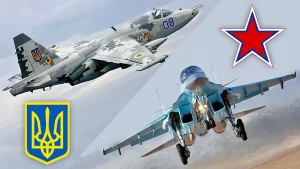
- Importance of Unrestricted use of Airpower. Effect based, offensive application of airpower yields faster results due to the shock and awe effect that it creates. Applying airpower with restrictions is like fighting with one hand tied behind the back. Unrestricted use of airpower accelerates the achievement of military objectives.
- Integrated Offensive and Defensive Air Campaigns. Airpower is inherently offensive in nature. Even the concept of air defence has become offensive with the philosophy of active defence. The offensive counter-air and defensive counter-air campaigns are enmeshed with each other. These cannot be planned and executed independently in isolation. The idea of a separate AD command is not viable.
- No Fly Zone Efficacy. The declaration of a no-fly zone is one of the tools for strategic coercion and signalling in air warfare. However, it is viable and effective only if it is backed up by the wherewithal to implement it, in terms of air defence radars, weapons, platforms, and networks. Willingness to use them and readiness for escalation are other two important factors for the effectiveness of the no-fly zone.
- Importance of Precision and Stand-off capability. These two capabilities are important in grey zone operations, punitive strikes, and operations in urban areas, to avoid threats to the launch platform and to avoid collateral damage. Both quality and quantity need to be ensured in the arsenal of surface to surface and air to surface weapons.
- Efficacy of Airborne operations. Airborne operations (using fixed-wing and/or helicopters) yield quick results, speeding up the achievement of military objectives. However, the issue of their vulnerability is important. With the proliferation of shoulder-fired anti-aircraft missiles, the vulnerability of these platforms has increased manifold. These weapons can cause a prohibitively high cost to airborne operations, especially in urban and hilly areas.
- Protection of Own Assets. Protection of own high-value assets from the enemy’s aerial attack with long-range vectors and standoff weapons is essential, especially during the opening phases of the war. Hardened aircraft shelters are essential and they should be able to withstand the destructive power of the enemy weapons. Future hypersonic weapons will have enhanced destructive power due to high kinetic energy. Dispersal of the assets, using the principle of not keeping all the eggs in one basket, would increase the enemy’s effort and cost.
Bottom Line
Restricted use of airpower, increases the cost (time, money and life) of achievement of military objectives.
Question
Does Balakot strike signal a paradigm shift in free use of airpower in our context?
Link to : 5 warfare Lessons from War in Ukraine
Link to : 7 Security Lessons from war in Ukraine
Suggestions and value additions are most welcome
For regular updates, please register here
Disclaimer:
Information and data included in the blog are for educational & non-commercial purposes only and have been carefully adapted, excerpted, or edited from sources deemed reliable and accurate. All copyrighted material belongs to respective owners and is provided only for purposes of wider dissemination.
References and credits
- https://www.wionews.com/photos/in-long-air-battle-can-ukraine-hold-out-against-russian-air-force-459873#ukraine-air-force-459857
- https://www.reuters.com/world/europe/what-happened-russias-air-force-us-officials-experts-stumped-2022-03-01/
- https://rusi.org/explore-our-research/publications/commentary/mysterious-case-missing-russian-air-force
- https://www.nytimes.com/2022/03/13/world/europe/russian-airstrike-poland-ukraine-nato.html
- https://warontherocks.com/understanding-the-russo-ukrainian-war-a-guide-from-war-on-the-rocks/
- https://warontherocks.com/2022/03/the-dangerous-allure-of-the-no-fly-zone/
- https://www.vifindia.org/article/2022/march/09/russo-ukraine-war-air-power-analysis
- https://warontherocks.com/episode/warcast/26495/russian-air-force-on-the-sidelines-for-now/
- https://www.militarytimes.com/flashpoints/ukraine/2022/03/03/ukraine-receives-more-armed-drones-amid-russian-invasion/
- https://www.npr.org/2022/05/11/1098150747/a-big-mystery-of-the-war-in-ukraine-is-russias-failure-to-gain-control-of-the-sk
- https://www.aerosociety.com/news/air-war-over-ukraine-the-first-days/
- https://chanakyaforum.com/air-power-in-ukraine-conflict/
- https://www.indiatoday.in/news-analysis/story/mapping-the-russian-assault-on-ukraine-s-airpower-1917856-2022-02-25
- https://www.aljazeera.com/news/2022/3/2/why-hasnt-russia-mobilised-its-vast-air-power-against-ukraine
- https://www.19fortyfive.com/2022/05/russia-air-force-problems-ukraine/
Excellent analysis.
Thank you