Article published in the May 26 edition (volume 1, Issue 9) of the Business Standard BLUEPRINT Magazine
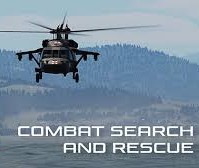
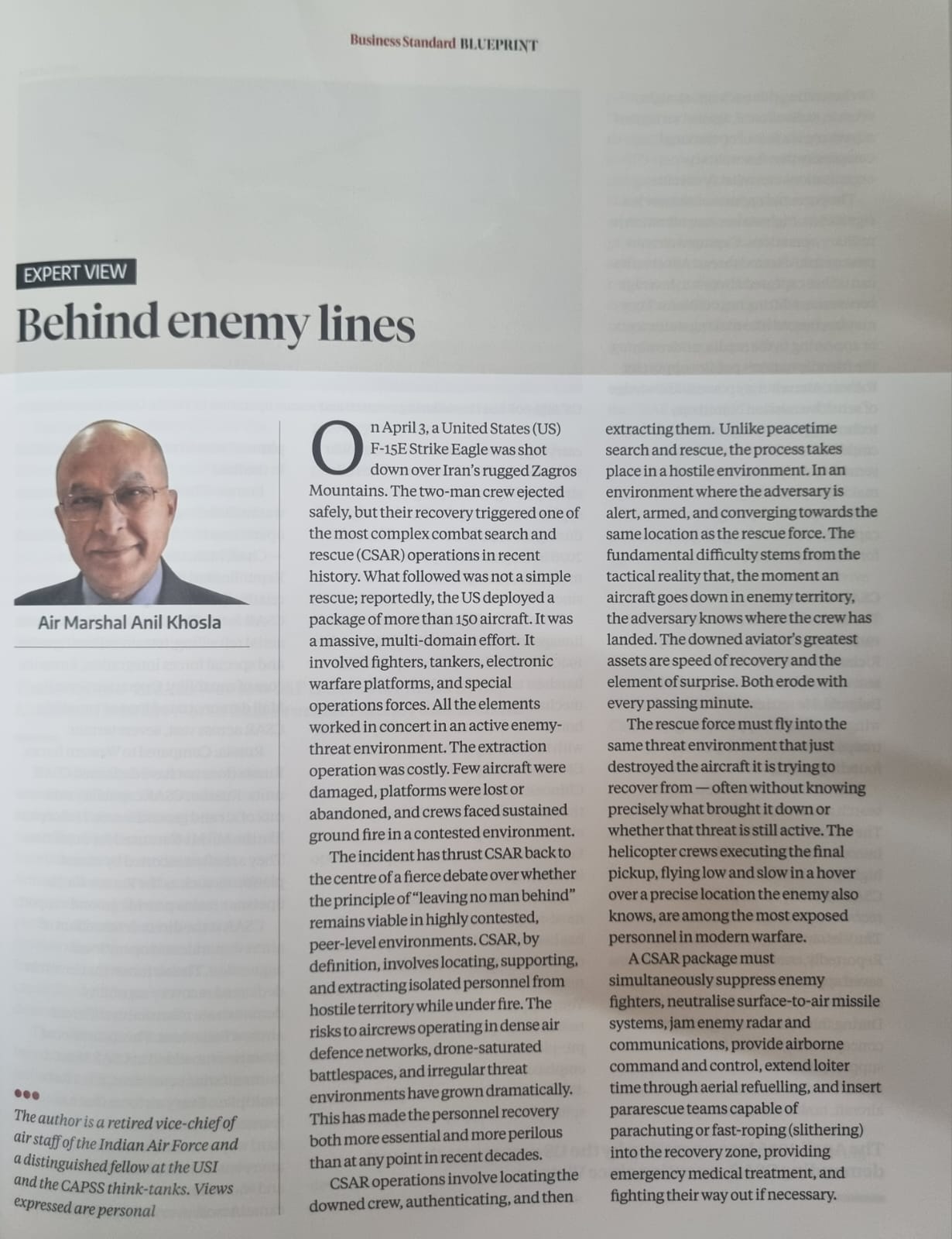
On April 3, a U.S. F-15E Strike Eagle was shot down over Iran’s rugged Zagros Mountains. The two-man crew ejected safely, but their recovery triggered one of the most complex CSAR operations in recent history. What followed was not a simple rescue; reportedly, the U.S. deployed a package of more than 150 aircraft. It was a massive, multi-domain effort. It involved fighters, tankers, electronic warfare platforms, and special operations forces. All the elements worked in concert in an active enemy-threat environment. The extraction operation was costly. Few aircraft were damaged, platforms were lost or abandoned, and crews faced sustained ground fire in a contested environment.
The incident has thrust Combat Search and Rescue (CSAR) back to the centre of a fierce debate over whether the principle of “leaving no man behind” remains viable in highly contested, peer-level environments. CSAR, by definition, involves locating, supporting, and extracting isolated personnel from hostile territory while under fire. The risks to aircrews operating in dense air defence networks, drone-saturated battlespaces, and irregular threat environments have grown dramatically. This has made the personnel recovery both more essential and more perilous than at any point in recent decades.
CSAR Complexity
CSAR operations involve locating the downed crew, authenticating, and then extracting them. Unlike peacetime search and rescue, the process takes place in a hostile environment. In an environment where the adversary is alert, armed, and converging towards the same location as the rescue force. The fundamental difficulty stems from the tactical reality that, the moment an aircraft goes down in enemy territory, the adversary knows where the crew has landed. The downed aviator’s greatest assets are speed of recovery and the element of surprise. Both erode with every passing minute.
The rescue force must fly into the same threat environment that just destroyed the aircraft it is trying to recover from — often without knowing precisely what brought it down or whether that threat is still active. The helicopter crews executing the final pickup, flying low and slow in a hover over a precise location the enemy also knows, are among the most exposed personnel in modern warfare.
A CSAR package must simultaneously suppress enemy fighters, neutralise SAM systems, jam enemy radar and communications, provide airborne command and control, extend loiter time through aerial refuelling, and insert pararescue teams capable of parachuting or fast-roping (slithering) into the recovery zone, providing emergency medical treatment, and fighting their way out if necessary. Orchestrating this package, at night, often in radio silence, against an alerted adversary, is a feat of operational complexity that few military organisations can reliably execute.
The potential capture of aircrew is a significant, high-stakes consideration in military operations. Captured aircrew pose a multi-faceted threat. Adversaries can utilise captured aircrew to leverage concessions during negotiations. They may be coerced into making statements or appearing in the media, undermining the friendly nation’s public support for the war. Aircrew may possess knowledge of sensitive mission objectives, technology, or intelligence, which they could be forced to reveal. These sensitivities drive military decision-making to prioritise personnel recovery and, at times, accept higher risk to avoid capture, such as risking additional assets for rescue operations.
Combat Search and Rescue: A Global Survey
The First Rescue. The first recorded rescue took place in 1915. A British RNAS Commander Richard Bell-Davies landed his single-seat aircraft behind enemy lines in Bulgaria. He retrieved his downed wingman despite approaching enemy troops. That act established the founding principle of combat rescue.
The United States. America didn’t invent combat search and rescue, but systematised it. The U.S. converted this wartime necessity into a formal doctrine. The Korean War highlighted the helicopter’s primacy in CSAR as nearly 1,000 personnel were recovered from behind the enemy lines. The Vietnam War was the crucible. Reportedly, over 3,800 recovery missions saved approximately 3,900 lives, at the cost of 71 rescue aircraft and 45 crewmen. During this war, the core package concept emerged. This includes suppression aircraft, electronic warfare aircraft, airborne command-and-control aircraft, tankers, and helicopters carrying pararescuemen. The Gulf War validated the CSAR doctrine. The full-strike package concept against sophisticated air defences was validated during the 1999 Kosovo War. The April 2026 Iran operation represents the most demanding CSAR execution since Vietnam.
Britain: The Falklands Lesson. The RAF CSAR lineage runs back to Channel rescues in 1940. The Falklands War imposed the harshest test on the British CSAR mechanism, operating 8,000 miles from home. The extraction capability was lost with the sinking of the ship SS Atlantic Conveyor, along with the onboard Chinook helicopters. The lesson that emerged was that CSAR depends entirely on pre-positioned assets. Loss of these assets mid-campaign is catastrophic.
Israel: Forged in Continuous Conflict. The Israel Air Force has the most combat-tested CSAR doctrine. It has been shaped by over five decades of continuous conflict. The fundamental restructuring took place during the 1973 Yom Kippur War. It included dedicated rescue helicopters with fighter escort, pre-planned extraction corridors, and an emphasis on SEAD as a prerequisite. The spirit of CSAR is aptly conveyed in their phrase “we will not abandon our soldiers in the field”.
France: Africa as the Laboratory. France’s CSAR doctrine was built through near-continuous operations in Africa since decolonisation — Chad, Mali, the Central African Republic, and the Sahel. It has a relatively small but genuinely capable CSAR force. The Caracal helicopter, with aerial refuelling, terrain-following radar, and special forces integration, forms the core of capability. Operation Serval in Mali demonstrated France’s credible CSAR across vast, severe terrain.
Russia. Compared to Western forces, Russia does not have dedicated CSAR units. Russian combat search and rescue (CSAR) capability utilises a mix of air and ground forces. Helicopters like the Mil Mi-8 are used for extraction. They are often escorted by armed platforms such as the Kamov Ka-52. Spetsnaz teams provide ground support.
The Universal Pattern/Lesson. CSAR is the direct determinant of aircrew morale and operational aggression. The air forces that invest in dedicated recovery capability demonstrate measurably different aircrew behaviour. The institutional promise embedded in CSAR is not a humanitarian sentiment. It is a force multiplier. Every air force that has learned this lesson has learned it the hard way — usually over the loss of aircrew who ejected into hostile territory and waited for a recovery that never came. Across every air force and every conflict, the same pattern recurs. CSAR capability is almost always inadequate. It improves through the painful experience of early failures.
India: CSAR Challenges
The Indian Air Force’s CSAR history spans seven decades of conflict in some of the world’s most demanding terrain — the defining characteristic being that India has repeatedly demonstrated the operational requirement for CSAR capability while repeatedly discovering the institutional gap between that requirement and available resources.
The 1947-48 Kashmir War saw the IAF’s earliest combat rescue operations. Dakota transport aircraft were used to evacuate wounded from forward airstrips, which were under Pakistani fire. The 1962 Sino-Indian War saw IAF helicopter units flying Alouette IIIs at altitudes above 14,000 feet in the North East Frontier Agency and Ladakh. They conducted casualty evacuations at the limits of their performance.
The IAF’s Garud Commando Force was raised in 2004. This was the most significant value addition to the CSAR capability. Garuds train for heliborne insertion in hostile environments. Armed helicopters with survivability systems serve as the extraction platform. The combat helicopters provide air cover as escorts. India’s two-front threat scenario makes CSAR capability development not merely desirable but operationally essential.
Way Ahead: Building a Credible CSAR Capability
The following recommendations are based on the specific threat environment India faces. High-altitude Himalayan terrain, a nuclear-armed peer adversary to the west, and a rising competitor to the north.
Dedicated CSAR Squadron. The CSAR demands a dedicated squadron with a specific mandate. No dedicated unit means no dedicated training, no dedicated equipment procurement cycle, and no institutional memory. A dedicated unit with a fixed order of battle is essential. CSAR specialism should be considered a career path rather than an additional duty. Without a dedicated unit, every other recommendation is aspirational.
Acquire a Purpose-Built CSAR Helicopter. Not all the helicopters are specifically equipped for the CSAR role. A CSAR helicopter needs specific systems such as terrain-following radar, an aerial refuelling probe, integrated defensive aids, and a hoist system. A specially equipped platform, in meaningful numbers, would offer a credible organic recovery capability.
Raise and Train a Pararescue Cadre. Aircraft are necessary, but so are the pararescuemen. The Garud Commando Force of the Indian Air Force already has CSAR listed among its roles. The logical step is to develop within Garud a dedicated personnel recovery element, trained specifically in high-altitude medicine, combat casualty care, evasion assistance, and the mechanics of survivor authentication.
Develop High-Altitude CSAR SOP. No air force in the world has more operational experience of high-altitude aerial combat than the Indian Air Force. The Kargil war highlighted the peculiarities of operations in the Himalayan terrain. The IAF should develop an area-specific CSAR doctrine for each prevailing terrain type.
Integrate SEAD Planning into Every CSAR Package. The clearest lesson from the past is that sending recovery assets into an unsuppressed threat environment compounds losses rather than preventing them. Every CSAR planning process must include a suppression-of-enemy-air-defences element as a prerequisite, not an afterthought. This requires coordination between the CSAR element, fighter escort squadrons, and electronic warfare assets.
Accelerate the Unmanned CSAR Programme. The ongoing Indian programme to develop an unmanned CSAR is a strategically sound idea. An autonomous platform capable of locating survivors via Emergency Locator Transmitters, navigating to 20,000 feet, and operating in GPS-denied environments addresses the specific CSAR requirements. However, unmanned systems cannot replicate the pararescueman’s ability to provide emergency medical care, authenticate survivors under ambiguous conditions, or fight through a compromised extraction. The unmanned programme should be developed as a complementary capability.
Invest in SERE Training. Survival, Evasion, Resistance, and Escape training is the other half of the CSAR equation. The downed aircrew’s own decisions in the hours after ejection determine whether a recovery is possible. The SERE training programme should be made compulsory for all aircrew. It should be periodically reviewed, upgraded, and stress-tested against the specific threat scenarios.
Concluding Thoughts
Each of the recommendations above costs money. Developing a dedicated squadron, purpose-built platforms, a trained pararescue cadre, and a genuine SEAD integration framework requires substantial expenditure and investment. However, it is still worth it as an effective Combat Search and Rescue (CSAR) capability is a powerful force multiplier for any air force. When pilots and aircrew are confident they will be rescued no matter what happens, they perform far more effectively and aggressively in combat.
In the Indian context, this assurance becomes even more critical. India is likely to face high-intensity, short-duration conflicts in highly contested, geographically challenging terrain such as the Himalayas and deserts. The suggested elements of the process exist in some form. They need to be reviewed, enhanced, integrated and formalised in a time-bound manner. CSAR is not merely an auxiliary or secondary function; it is an essential operational necessity. Investing in CSAR is therefore not about saving isolated personnel alone, but about preserving combat effectiveness and the will to fight.
Please Add Value to the write-up with your views on the subject.
For regular updates, please register your email here:-
Information and data included in the blog are for educational & non-commercial purposes only and have been carefully adapted, excerpted, or edited from reliable and accurate sources. All copyrighted material belongs to the respective owners and is provided only for wider dissemination.
References:
(April 6, 2026). Risky rescue of US crew downed in Iran relied on dozens of aircraft and subterfuge, Trump says. The Associated Press. https://apnews.com/article/7d8cfb6d0fd400abdc71f8c9d67408fe
Combat Search and Rescue (CSAR) Operations in Russia, (August 3, 2025). https://en.iz.ru/en/1930757/2025-08-03/ministry-defense-showed-footage-search-and-rescue-operations-mi-8psg-helicopter-crew
“The U.S. launched an air armada to rescue the F-15 crew in Iran”. (06 April 2026). https://www.axios.com/2026/04/06/iran-f15-rescue-caine-trump
Combat Search and Rescue (CSAR). GlobalSecurity.org. https://www.globalsecurity.org/military/systems/aircraft/csar.htm
Medicine, N. A. Combat Search and Rescue in Highly Contested Environments: Proceedings of a Workshop—in Brief. https://www.nationalacademies.org/read/25156/chapter/1
RAND Corporation, “Combat search & rescue in a contested environment: Implications for future operations”.
Galdorisi, G., & Phillips, T, “Leave no man behind: The saga of combat search and rescue”, Zenith Press, 2009.
“Personnel recovery operations (AFDP 3-50)”. Department of the Air Force, United States Air Force, 2019.
“Allied joint doctrine for personnel recovery (AJP-3.7)”. NATO Standardisation Office, North Atlantic Treaty Organisation, 2016.
Air Force would like to call a drone for crew rescue – sUAS News. https://www.suasnews.com/2019/05/air-force-would-like-to-call-a-drone-for-crew-rescue/
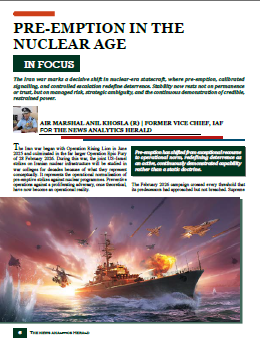
The Iran war began with Operation Rising Lion in June 2025 and culminated in the far larger Operation Epic Fury of 28 February 2026. During this war, the joint US-Israel strikes on Iranian nuclear infrastructure will be studied in war colleges for decades because of what they represent conceptually. It represents the operational normalisation of pre-emptive strikes against nuclear programmes. Preventive operations against a proliferating adversary, once theoretical, have now become an operational reality.
The February 2026 campaign crossed every threshold that its predecessors had approached but not breached. Supreme Leader Khamenei was killed in the opening wave. IRGC leadership was decapitated. The key Iranian nuclear installations at Natanz, Fordow, and Isfahan were struck again, along with command architecture, missile production, and air defence systems. Yet catastrophic escalation has not followed, and the international system has absorbed it so far. This absorption is the strategic fact that changes everything.
Erosion of the Nuclear Taboo (From Osirak to Epic Fury)
The Cold War theory of deterrence rested on the foundational proposition that nuclear weapons created a protective envelope. They deter direct use of military force. This proposition has gradually eroded. Israel’s 1981 strike on Iraq’s Osirak reactor established what became known as the Begin Doctrine, i.e. no hostile neighbour would be permitted to acquire nuclear weapons, regardless of international law or diplomatic cost. The 2007 strike on Syria’s Al-Kibar facility extended the precedent. The Stuxnet cyber operation against Natanz in 2010 took it into the covert domain. Yet these attacks remained exceptional and limited, with denial. These attacks were not against a near-nuclear power with a ballistic missile arsenal and a functioning deterrence architecture. The 2025–2026 campaign is different in kind and degree. Iran possesses missiles capable of reaching Israel and American bases across the region. Striking it was pre-empting a perceived near-nuclear power while deliberately managing the risk of escalation to general war.
New Nuclear Signalling Paradigm
The new nuclear signalling paradigm consists of three distinct features. The first one is that deterrence is communicated through action rather than doctrine. Second, escalation is managed by targeting discrimination rather than abstention; third, the nuclear threshold is maintained through real-time reinforcement rather than assumed stability.
Legitimisation of Pre-emption. A doctrine that cannot be justified is a doctrine that cannot be sustained. It was publicised that Iran’s programme had reached an irreversible breakout proximity. The strikes were legitimised as a necessary preventive measure. This is the first lesson of the new paradigm. Pre-emption in the nuclear age requires strategic communication as much as operational capability.
Management of Escalation. The February 2026 strikes targeted enrichment infrastructure, command architecture, and IRGC leadership of Iran. Civilian infrastructure was not attacked, signalling limited objectives. Iran’s retaliation consisted of missile barrages against Israeli cities and US Gulf bases, and the closure of the Strait of Hormuz. Both sides imposed costs on the other without crossing the threshold that would have made retreat impossible. This “controlled chaos” demonstrates that even in direct war between a nuclear power, a presumed nuclear power, and a threshold state, escalation can be managed if both sides retain the discipline and interest to do so.
Holding the Nuclear Threshold. Iran did not cross into nuclear use partly because weaponisation was incomplete, but also because the American strategic umbrella was made explicit in the weeks before the strikes — through repositioned assets, presidential statements, and back-channel communications that made the consequences of nuclear first use unambiguous. Extended deterrence did not merely exist; it was actively performed. The threshold was not held not because deterrence was passive but because it was continuously and visibly reinforced at the moment it was most needed.
Global Implications. The normalisation of pre-emptive strikes against nuclear infrastructure has far-reaching implications. The lesson for the near-nuclear-status states is that the period between “developing” and “possessing” can become an operational trigger point. A not-yet-complete enough-to-deter-nuclear programme is in great danger of adversary attack. For the non-proliferation regime, the damage is structural. The NPT relies on IAEA verification as the mechanism for distinguishing between civilian and military nuclear development. Military strikes that bypass this mechanism hollow out the regime’s legitimacy.
The Indian Calculus
India occupies a position of distinctive complexity in this new landscape. It is a nuclear-armed state with a declared No First Use doctrine, bordered by two nuclear-armed adversaries whose own postures diverge sharply from each other and from India’s own.
China’s nuclear doctrine, while historically minimalist, is in visible transition. It is rapidly expanding its ICBM silos, developing a more survivable sea-based deterrent, and progressively blurring the lines between conventional and nuclear delivery systems in its missile forces. These developments point toward a more assertive posture. China has not adopted preemption as declared policy. But its conventional military assertiveness means that the relevant Indian concern is not Chinese nuclear pre-emption but Chinese conventional operations that generate military pressure in the space below the nuclear threshold.
Pakistan presents a fundamentally more direct and disturbing challenge in this context. Pakistan’s nuclear posture is ambiguous, creating uncertainty about escalation thresholds. The Pakistani military’s institutional identification with its nuclear programme, the domestic political dynamics that any Pakistani government would face after absorbing a pre-emptive strike, and the genuine ambiguity about tactical thresholds all point toward escalation risk substantially higher than what obtained in the Iran case. India cannot assume that the Iran paradigm (i.e., strike, absorb limited retaliation, and manage to a ceasefire) would replicate in South Asia with the same level of containment.
Doctrinal Imperative for India
India’s No First Use doctrine has moral clarity, a stabilising function in crisis management, and diplomatic value in the international community. It remains strategically sound and needs to be retained. But the NFU must be backed by a more explicit, operationally developed conventional deterrence capability and posture. The conventional deterrence posture should credibly signal that India can impose unacceptable costs on an adversary without resorting to nuclear first use. The Iran war demonstrates that pre-emption works when the pre-emptor has overwhelming conventional capability, credible backing, and a carefully constructed legitimising narrative. India must develop all three elements to deter the conditions that would make preemption appear necessary.
Simultaneously, India must develop protective infrastructure for its strategic assets (Critical military infrastructure, command-and-control nodes, and Weapon delivery systems). The investment in survivability, dispersal, hardening, and redundancy for India’s strategic assets is a strategic necessity and priority.
Concluding Thoughts
The operating rules of the Nuclear age are being rewritten. The new paradigm will shape the deterrence calculations globally for decades. The line between war and peace is no longer fixed; it is actively managed, contested, and increasingly blurred. For a country with India’s strategic geography, adversary configuration, and developmental ambitions, adapting to these developments is essential.
The Iran war has normalised pre-emption. Escalation control below the nuclear threshold is now a practised art form. Deterrence is to be earned, not just declared in the doctrine. The question India must now answer is whether its doctrine, force structure, survivability investments, and strategic communication are credible enough to meet the new paradigm.
Please Add Value to the write-up with your views on the subject.
For regular updates, please register your email here:-
Information and data included in the blog are for educational & non-commercial purposes only and have been carefully adapted, excerpted, or edited from reliable and accurate sources. All copyrighted material belongs to the respective owners and is provided only for wider dissemination.
References: –
Brodie, B. (Ed.). (1946). The Absolute Weapon: Atomic Power and World Order. Harcourt, Brace.
Clary, C., & Narang, V. (2019). India’s Counterforce Temptations: Strategic Dilemmas, Doctrine, and Capabilities. MIT Press.
Narang, V. (2014). Nuclear Strategy in the Modern Era: Regional Powers and International Conflict. Princeton University Press.
Chari, P. R. (2003). Nuclear restraint, nuclear risk reduction, and the security-insecurity paradox in South Asia. Nonproliferation Review, 10(1), 73–85.
Clary, C. (2010). Thinking about Pakistan’s nuclear security in peacetime, crisis and war. IDSA Occasional Paper, 12, 1–47.
Fitzpatrick, M. (2016). Iran and nuclear ambitions. Adelphi Papers, 45(374), 1–176.
Sagan, S. D. (1994). The perils of proliferation: Organisation theory, deterrence theory, and the spread of nuclear weapons. International Security, 18(4), 66–107.
Arms Control Association. (2025). Iran’s nuclear program: A history of key agreements and violations. Arms Control Association.
Chaudhuri, R. (2023). India’s nuclear doctrine: Continuity and change. Carnegie Endowment for International Peace.
International Atomic Energy Agency. (2025). Iran: Implementation of the NPT safeguards agreement and relevant provisions of Security Council resolutions (Report GOV/2025/14). IAEA Board of Governors.
Panda, A. (2025). Pakistan’s nuclear posture after Nasr: Tactical weapons and strategic instability (Working Paper). Carnegie Endowment for International Peace
Tellis, A. J. (2025). Striking Iran: What the US-Israeli operations mean for the Asian nuclear order. Carnegie Endowment for International Peace.
Cooper, H., Schmitt, E., & Sanger, D. E. (2026, March 2). American bombers joined Israeli strikes on Iran in the February operation—The New York Times.
Warrick, J. (2025, July 4). Iran’s nuclear infrastructure: What was hit and what remains. The Washington Post.
How has the role of air power evolved in modern warfare, particularly in the context of rapid, high-precision operations?
When I was commissioned in 1979, air power was largely conceived as a force multiplier — something that supported ground operations, provided interdiction, and contested the skies above the battlefield. That mental model has been fundamentally overturned.
I often describe this evolution through three distinct eras. First came the Pilot Era, where individual skill was everything. Then the Platform Era, where multi-role systems defined capability. We are now entering what I call the Weapon Era — where the munition itself, and increasingly the autonomous system behind it, is the decisive element. In each transition, air power has moved further from the periphery and closer to the centre of strategic decision-making.
The IAF’s own doctrinal journey reflects this precisely. The 1995 doctrine focused on the basics of air power — offensive operations, C4I networks, and force multipliers. By 2012, the doctrine had expanded to connect air power with national security across the full spectrum, including counter-terrorism. The 2022 doctrine went further still — it unequivocally advocates the shift from air power to aerospace power, and identifies No War No Peace (NWNP) scenarios as a distinct operational category requiring both kinetic and non-kinetic responses. This evolution from tactical support to strategic aerospace power is not merely doctrinal — it reflects the operational reality that a strike today is simultaneously a cyber operation, a space-dependent operation, and an information operation.
The shift has been driven by two converging developments: precision and speed. The ability to place a munition within metres of its intended target — from standoff distances, in any weather, at any hour — has collapsed the old calculus of attrition warfare. You no longer need to destroy an entire column; you destroy its command node, its logistics, its will to function. And you can do it in hours rather than weeks. What this means strategically is that air power now operates at the intersection of the military and political realms — a strike is not just a tactical event; it is a signal, a message, sometimes a red line being drawn or crossed.
Do you believe air power is increasingly becoming the decisive arm in limited conflicts?
In limited conflicts — which is the dominant mode of contemporary warfare — yes, air power has become the decisive arm in most scenarios. The reasons are structural. Limited conflicts, by definition, operate under tight political constraints. There is usually an imperative to achieve effects quickly and visibly, without triggering uncontrolled escalation. Ground operations are slow, costly in lives, and difficult to control once initiated. Naval power projects presence but rarely delivers the kind of immediate, calibrated effect that a conflict demands.
As I have written, air power possesses significant offensive potential and is the most responsive arm of military action. It can be switched on and off. It can be precise. It can be deniable if necessary, and visible when you want it to be. These qualities make it the instrument of choice for governments that need to communicate resolve without opening an indefinite campaign.
That said, I would caution against treating this as an absolute. As John Warden’s body of work — which I have studied closely — rightly argues, jointness does not mean equal portions of action for all services. Sometimes air power should support land and sea forces; sometimes it should be supported by them; and sometimes, applied correctly against the right targets, it can be decisive independently. But this works only when air power is used within a coherent strategic framework. When employed without clarity of political purpose, it yields tactical results that fail to translate into strategic outcomes.
How should air forces adapt to a battlespace that now includes cyber, space, and electronic warfare domains?
The honest answer is that the adaptation is already overdue in most air forces, including our own. The battlespace has not merely expanded — it has become layered. What happens in the electromagnetic spectrum shapes what is possible in the air. What happens in space determines the quality of information available to every commander. What happens in the cyber domain can degrade or destroy systems before a single aircraft takes off.
The IAF’s 2022 doctrine explicitly recognises this by calling for a shift from air power to aerospace power — with space and cyber treated as integral domains rather than peripheral ones. The establishment of the Defence Space Agency and the Defence Cyber Agency reflects this institutional direction. But doctrine and structure are only the beginning. Air forces must stop thinking of these domains as managed by specialists in the rear. They need to be woven into operational planning from the outset.
One effect of advanced technology on air warfare is the increased pace and intensity of operations. In such a scenario, the decision-making process must keep up with the OODA cycle. The three most important contributing factors are high situational awareness, a robust and fast network for information sharing, and AI-based decision-support systems. Structurally, this requires investment in electronic warfare capabilities, hardened communications, and space-based ISR. But more than hardware, it requires a doctrinal shift — a willingness to plan and fight across domains simultaneously rather than sequentially. Air power is, at its core, indivisible: splitting it into domain silos destroys its greatest asset: flexibility.
Operational Experience & Lessons
You were closely associated with both Doklam and Balakot. What strategic lessons do these episodes offer for future conflict scenarios?
Both episodes were defining moments in how India thinks about the use of force, and they offer very different but complementary lessons.
Doklam was fundamentally about persuasive presence and persistence — and what I would call strategic patience. It underscored the importance of credible deterrence backing diplomacy. It also highlighted the importance of maintaining calm, holding your position steadfastly, demonstrating readiness, and refusing to be pressured. A combination of these factors forced a resolution. Air power played an important role in speedy deployment, sustenance of ground forces and signalling of resolve. Its availability as a credible option was part of what made the overall posture convincing.
Balakot was something categorically different. It was the first cross-border air strike by India since 1971 — conducted in a nuclear-armed environment, against a near-parity state. It demonstrated what I would describe as punitive deterrence — the ability to strike deep within adversary territory to deliver a political message while managing the escalation ladder with precision. The lesson was about the importance of the entire decision-action cycle: intelligence, planning, execution, and escalation control. Political resolve was intense; ISR fusion was critical; and messaging mattered as much as the physical effect.
Together, these episodes reinforce a single overarching lesson. In modern conflict, especially in our neighbourhood where China and Pakistan operate in close strategic collusion, you must be able to act quickly with precision and then manage the aftermath with equal skill. Future conflicts will be short and high-intensity, requiring 24/7 readiness.
What distinguishes a successful air operation in politically sensitive, escalation-prone environments?
Three things, above all.
First, clarity of objective — not in military terms alone, but in political terms. What message are you sending? What behaviour are you trying to change? Any ambiguity at the objective level results in confusion at the execution level. A successful operation requires complete synergy between military execution and political intent and resolve.
Second, proportionality and precision. In escalation-prone environments, the magnitude of the effect must match that of the political message. Over-strike and you hand over to the adversary a narrative. Under-strike and you signal weakness. The targeting process must be driven by strategic logic, not tactical preference — and collateral damage must be minimised to avoid losing the narrative war.
Third — and this is chronically underestimated — the ability to communicate. What happens after the strike matters as much as the strike itself. How you characterise it publicly, what back-channels convey, how de-escalation is signalled — all of this shapes whether the adversary escalates or stands down. Successful air operations in politically sensitive environments are as much information operations as kinetic ones.
How do air forces calibrate force projection without triggering uncontrolled escalation?
This is the central challenge of modern air power employment. The instinct of any military operator is to maximise effect. The instinct of strategic management is to control outcomes. These two instincts exist in constant tension.
Calibration begins with target selection. Striking military targets rather than civilian infrastructure, avoiding symbols of national sovereignty, choosing targets that punish without humiliating — these provide the adversary an off-ramp. Selecting munitions that limit collateral damage, managing timing and sequencing — all of these are tools of escalation management embedded in the targeting process.
One critical lesson from recent air campaigns is the growing importance of standoff precision weapons in a networked environment. Precision-guided standoff weapons and missiles have rendered traditional geographical barriers almost meaningless. The optimal basing posture for high-intensity operations is increasingly shifting toward depth, dispersion, and resilience — moving air assets, using expeditionary airfields, operating from unprepared landing grounds — rather than fixed forward basing, which presents lucrative targets. Calibration, therefore, is not only about what you strike, but how you position and present your force to the adversary.
The most effective force projection is often graduated — it begins at a level that hurts but does not humiliate, and it signals clearly that more is available if needed. The adversary must understand both the cost of continued provocation and the availability of a dignified way out.
What role does signalling play in air operations during crises?
Signalling is, in many ways, the primary function of air power in a crisis that has not yet crossed the threshold of open conflict. Air operations are, in the deepest sense, the language of the state. When you generate additional sorties, forward-deploy assets, or conduct exercises at conspicuous times, these are not just operational preparations. They are communications (Strategic/Coercive signalling) to the adversary, to allies, and to the international community simultaneously.
Signalling is inherently ambiguous. The adversary interprets your actions through their own lens. Your defensive posture may be perceived as offensive intent. Signalling must be carefully managed and accompanied by clear communication to remove the ambiguities.
The IAF’s own doctrine now explicitly addresses the No War No Peace environment — a recognition that the space between peace and war is itself a domain requiring active management. In this space, air power is uniquely effective. The appearance of fighters at a forward base, the conduct of a high-profile exercise, the demonstrable capability to generate surge sorties — these convey something that a diplomatic note simply cannot. Used wisely, that is enormous strategic leverage. Used carelessly, it can produce exactly the escalation you were trying to deter.
Jointness & Integrated Warfare
Having worked extensively with the Army and Navy, how would you assess India’s progress toward jointness?
We have made genuine progress, and I say that without qualification. There is far more institutional understanding among the services today than there was twenty years ago. Exercises are more integrated, communication is better, and there is at least a shared vocabulary around joint operations. The creation of the Chief of Defence Staff and the Department of Military Affairs represented a significant structural step forward. Recent exercises like Prachand Prahaar — conducted in the high-altitude terrain of Arunachal Pradesh in March 2025 — have validated integrated surveillance, command and control, and precision firepower across all three services in a genuinely multi-domain environment. That kind of exercise provides invaluable insights into how to improve inter-service coordination.
But I would be misleading you if I said the transformation is complete, or even that the hard part is behind us. India must move beyond what I would call de-conflicting — simply staying out of each other’s way — toward true integration, where services plan, train, and fight as a unified whole. That requires shared warfighting concepts, integrated planning staffs, and common C4I architectures. Above all, it requires a cultural shift — officers who think in joint terms from the beginning of their careers. That culture takes a generation to build, and we are still in the middle of that journey.
The formation of theatre commands is being vigorously advocated as a possible solution to integration. In my view, it is not a panacea for jointness, but rather one of the approaches, and, further, an idea whose time has not yet arrived in the Indian context. The timing and circumstances are unsuitable, and many other high-priority areas need urgent attention to meet future challenges.
What are the key challenges in integrating air power into joint operational doctrines?
The core challenge is operational: air power is inherently centralised, while the other services are inherently decentralised. A ground commander thinks about his sector, his axis of advance, and his immediate fire support requirements. An air commander thinks about the entire battlespace — air superiority, strategic interdiction, close support, logistics, and ISR — and must allocate finite, high-value assets across competing priorities simultaneously.
There is also a persistent tendency to treat air power as a support system for surface forces rather than as a coequal, central component of the joint force. Warden’s insight — that sometimes air power should support land and sea forces, sometimes it should be supported by them, and sometimes it can be decisive independently — has not yet fully penetrated joint doctrinal thinking in the Indian context. Employment of air power assets must be viewed holistically — as an overarching, comprehensive basis for planning that achieves synergy in warfighting rather than sub-optimised service allocation.
Does India need a fundamentally different approach to theatre commands to maximise air power effectiveness?
The theatre command concept is useful, especially in expeditionary operations. India needs a uniquely Indian model rather than a direct transplant of Western structures.
The concern I have — and I am not alone in this — is that any theatre command structure must preserve the ability to concentrate air power rapidly across theatres. Air power’s greatest advantage is its flexibility: the ability to mass effect at the decisive point regardless of geographic boundaries. If theatre commands create rigid geographic silos, we will have sacrificed the very quality that makes air power strategically valuable.
Air power must not be subordinated to a land-centric model that fragments its reach and reduces its mass below decisive levels. The model we need is one in which air assets are organically assigned to theatres for day-to-day operations and training, but with a clear, exercised mechanism for rapid reallocation when the situation demands it. The IAF’s doctrine advocates centralised command with decentralised execution — this principle must be preserved within whatever theatre structure India.
Technology, Capability & Future Warfare
How critical is technological superiority in maintaining credible air dominance?
Technological superiority is foundational. A technological edge (in sensors, stealth, networking, precision munitions, and BVR missiles) is now a prerequisite for credible air superiority. AI, Quantum, Robotics, Space technology, and Directed energy weapons are becoming essential parts of air war.
Technology creates the capability. Training, doctrine, and leadership determine how you utilise the capability to your advantage. Without a credible and indigenous technology base, you are outmatched in ways that training and tactics cannot fully compensate for. The Atmanirbhar Bharat imperative in defence is therefore not merely a nationalistic slogan but is an operational necessity.
What role will AI, autonomous systems, and unmanned platforms play in the future of air combat?
Transformative — we are already seeing the emergence of what I consider the defining concept of future air combat. The Loyal Wingman — unmanned platforms flying alongside manned aircraft, extending reach, absorbing risk, and multiplying mass with a reduction in human cost. Programmes like India’s CATS Warrior, the US Skyborg, and Boeing’s MQ-28 Ghost Bat indicate the future trajectory of air combat.
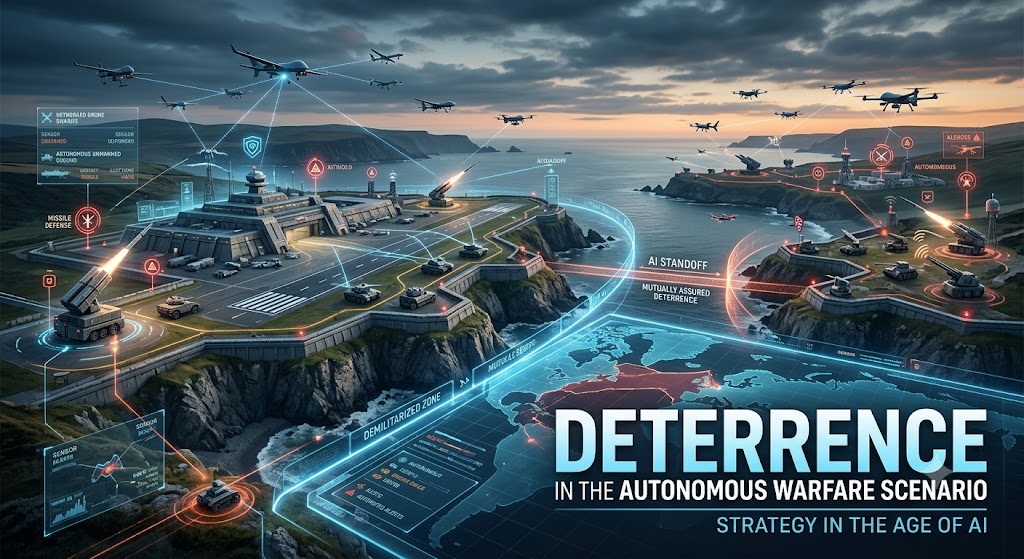
AI will fundamentally reshape the decision-making process. In 2020, DARPA’s AlphaDogfight Trials demonstrated that an AI-piloted simulator could outperform experienced human pilots in dogfighting scenarios. AI-controlled drone swarms are emerging as a game-changing technology — deploying multiple autonomous drones to overwhelm enemy defences with coordinated attacks, distributed ISR, and autonomous electronic jamming. Countries like the US, China, and India are actively researching this as a force multiplier.
The 2020 Nagorno-Karabakh war was a watershed. The title of John Antal’s seminal analysis — 7 Seconds to Die — refers to the average time Armenian soldiers had to react once a drone detected their position. That statistic encapsulates what AI-enabled unmanned systems mean in practice: the compression of the kill chain to a point that human reaction cannot match. The conflict demonstrated how drones systematically dismantled traditional air defences — Azerbaijani forces used Turkish and Israeli drones to destroy Armenian SAM sites, rendering the entire conventional air defence network ineffective.
For India, the imperative is to build indigenous capability in this space while also developing a counter-drone doctrine. We need to work diligently towards developing drone warfare capabilities. This gap must be addressed urgently, given the proliferation of armed UAVs in our immediate neighbourhood.
How should India approach capability building in an era of rapid technological disruption?
India must define a defence science and technology strategy with a vision to harness technology and convert it into a decisive capability. The focus areas I advocate are: AI-based situational awareness and decision-support systems; space-based ISR and assured communications; electronic warfare suites; advanced munitions, including standoff glide bombs and hypersonic systems; and autonomous platforms.
India must also embrace a hybrid model — leveraging foreign technology transfers and offsets while steadily building domestic R&D and production ecosystems. The goal is technology harvesting: extracting maximum learning from every foreign acquisition to accelerate the indigenous base. Civil-military fusion can accelerate this. And we must invest heavily in simulation and virtual training environments — areas where India’s software talent can rapidly and cost-effectively produce world-class capabilities.
Are legacy platforms becoming a liability, or do they still hold strategic relevance?
They remain relevant, maybe with reduced efficiency. A legacy platform upgraded with modern sensors, weapons, and datalinks — integrated into a broader system-of-systems architecture — can still perform effectively in many scenarios.
But the adversary’s capabilities are rapidly changing the calculus. China’s investment in advanced munitions, electronic warfare, and space-based systems gives it precision strike capability with increasing speed and depth. Pakistan’s collusive relationship with China means that technology flows across that border as well. In this environment, legacy aircraft face threats they were not designed to survive — particularly in the electromagnetic domain, where modern integrated air defence systems can engage and track platforms at ranges and in environments that older avionics cannot counter.
The answer is a phased, funded transition plan — maintaining sunset fleets for immediate operational needs while aggressively funding sunrise technologies. The transition must be managed carefully — you cannot create a capability gap — but it must be managed with urgency. Keeping platforms in service beyond their operational relevance for budgetary reasons is a false economy. The risk is not the maintenance cost. It is the operational liability in the conflict you may not have chosen, but cannot avoid.
Maritime & Multi-Domain Operations
With your experience in maritime air operations, how do you see the role of air power evolving in the Indian Ocean region?
The Indian Ocean has become the central arena of strategic competition in a way that would have been difficult to anticipate even two decades ago. China’s desire to dominate Asia — and eventually the world — has direct implications for India. China’s strategy in the IOR involves systematic investment in littoral states to achieve footholds and extend influence. The String of Pearls is not merely a geographic concept; it is an operational framework.
In this environment, air power is the long arm of maritime strategy. Long-range maritime patrol aircraft, carrier-based aviation, and land-based strike assets operating from our island territories enable India to monitor and contest approaches to the subcontinent over vast distances. The P-8I has been genuinely significant in the ISR dimension. Air power also provides the capability to secure sea lines of communication and to conduct anti-submarine warfare at ranges that surface assets alone cannot match. Most of the modern aircraft in the IAF inventory are now maritime-capable.
The priority now must be on persistent maritime domain awareness — knowing where adversary assets are before a crisis develops — and on developing the strike depth, including standoff and air-to-air refuelling capability, to match our surveillance reach.
How important is air-sea integration in countering emerging threats in the Indo-Pacific?
It is the central operational challenge of the Indo-Pacific security environment. Countering anti-access/area-denial systems and long-range missile-drone threats requires an integrated air-sea kill web. Maritime aviation needs to be tightly linked with naval surface and subsurface forces through shared networks, common targeting data, and joint doctrine.
An adversary submarine that evades a surface task group can still be located and prosecuted by maritime patrol aircraft. An adversary surface group that poses a threat beyond the range of naval strike assets can be engaged by land-based air assets. The integration of these capabilities into a coherent, exercised joint maritime operational concept is what turns individual service capabilities into genuine strategic leverage.
India’s engagement with partners — the United States, Japan, Australia, and other maritime powers — in exercises and interoperability initiatives is valuable precisely because it develops the habits, protocols, and mutual understanding that make real-time integration possible under stress. That work needs to continue and deepen, particularly as China’s naval presence in the IOR grows more persistent and capable.
Planning, Force Structure & Preparedness
You have been involved in war planning and force structuring. What are the biggest gaps India must address today?
I will identify three clearly.
First, the two-front scenario remains inadequately resourced. India faces a collusive threat from two nuclear-armed neighbours — and this is not a theoretical construct. Pakistan openly boasts of Chinese support in the event of a conflict with India. China’s philosophy of systems destruction warfare — disruption, paralysis, or destruction of enemy operational systems — is precisely tailored to the kind of fast, compressed conflict our neighbourhood could generate. Our current force structure, with the IAF’s sanctioned strength of 42 squadrons but an actual strength hovering around 30, is inadequate to handle simultaneous contingencies on both borders. Closing that gap — through the MRFA programme, accelerated AMCA development, and Tejas inductions — is the single most urgent capability priority—both quality and quantity matter. The fighter aircraft need to be complemented with combat enablers (strategic lift, aerial refuellers, AWACS and unmanned platforms).
Second, precision-guided munitions inventory and infrastructure resilience. Munitions stockpiles must cater for the frequent, short, intense exchanges amid prolonged hostility. Forward air bases, once the cornerstone of rapid reaction, are increasingly vulnerable to modern standoff weapons, cruise missiles, and armed drones. The optimal posture is shifting toward depth, dispersion, and resilience — the ability to operate from dispersed and expeditionary airfields, rotate assets, and avoid presenting fixed targets.
Third, technology absorption. China’s investment in space-based systems, quantum technology, and directed-energy weapons gives it surveillance and precision-strike capabilities at an increasing pace. Our institutional capacity in both offensive cyber and space-based ISR needs urgent strengthening. These are not niche capabilities anymore — they are foundational to everything else we do militarily. Project Kusha, India’s indigenous long-range air defence programme, represents exactly the kind of capability-based, self-reliant response needed across multiple domains.
How should air forces balance between immediate operational readiness and long-term capability development?
This is a genuine and permanent challenge, and no formula easily resolves it. What I would say is that operational readiness (Minimum deterrence value) cannot be sacrificed to long-term development. You must always be ready to fight with what you have today, while thinking long-term.
But development cannot be permanently deferred in favour of readiness, because the capability gap that accumulates will eventually become unbridgeable. A two-track approach is needed, i.e. maintain sufficient capacity now (enough modern platforms, trained crews, and robust logistics) while simultaneously pursuing long-term programmes (such as next-generation fighters, AI-enabled systems, and drone warfare doctrine).
What makes this possible is a clear, honest, multi-year capability roadmap that senior leadership has genuinely committed to — not a wish list, but a funded, sequenced plan with accountability attached and threat scenarios driving the prioritisation.
What lessons have recent global conflicts offered in terms of preparedness and force employment?
The conflict in Ukraine and the recent war in Iran are the most consequential recent laboratories for air power concepts. Air superiority — which most major powers assumed could be achieved rapidly — proved far more difficult and costly than anticipated against adversaries with a well-equipped air defence system and long-range standoff weapons.
The 2020 Nagorno-Karabakh conflict provided important lessons. Azerbaijan’s drones (Turkish and Israeli) systematically defeated the Armenian air defences. The loitering munitions destroyed SAM sites, creating conditions for conventional forces to advance with minimal opposition. It demonstrated how unmanned systems, when integrated with ISR and fires, can achieve effects that previously required far more expensive and risk-laden manned operations. The democratisation of warfare — the proliferation of military-grade capabilities to smaller nations and even non-state actors through cheap, commercially available drone technology — is perhaps the most consequential trend in modern conflict.
For India, the combined lesson is that we must be capable of employing drone swarms and loitering munitions at the required scale. At the same time, build an integrated air defence, EW, and counter-drone capabilities. And we must not take airbase survivability for granted — the ability to operate from dispersed, expeditionary locations is now a war-fighting imperative, not a contingency planning footnote.
Crisis Management & Decision-Making
How do military leaders make decisions under extreme time pressure and incomplete information?
The honest answer is that you make the best decision available given what you know at that moment, with the explicit understanding that you will refine it as information improves. The temptation to wait for certainty has to be resisted — certainty rarely arrives, and the cost of delay in a fast-moving situation is almost always higher than the cost of an imperfect decision made promptly.
I think of this in terms of the OODA loop — Observe, Orient, Decide, Act. One effect of advanced technology on air warfare is the dramatically increased pace and intensity of operations. In such a scenario, the decision-making process must keep up with the adversary’s OODA cycle — or preferably, get inside it. The three most important factors are high situational awareness, a robust, fast network for information sharing, and AI-based decision-support systems that compress the analytical phase without removing human judgment at critical points.
What training does is prepare one for decision-making, reducing the cognitive burden at the moment of crisis. In a crisis, you are not solving a novel problem from scratch, but applying a well-rehearsed framework to new variables. The leaders who perform well in genuine crises are invariably those who have navigated high-pressure, ambiguous situations throughout their careers and developed the resilience that comes from managing uncertainty before.
What distinguishes effective crisis leadership from reactive decision-making?
Intent — and anticipation. Effective crisis leadership is driven by a clear sense of what outcome you are trying to achieve — the political objective, the strategic end state — and every decision is evaluated against that intent. I would also describe it as anticipatory planning: having scenarios ready before the crisis hits, so that you are never purely reacting.
Reactive decision-making is driven by the immediate stimulus — what just happened, what the adversary just did — without the anchoring clarity of what you are ultimately trying to accomplish. The danger is that the adversary ends up setting your agenda. You respond to their moves rather than pursuing your own objectives. Over time, that cedes the initiative and almost always produces worse outcomes — including unnecessary escalation.
China’s systems destruction warfare philosophy is precisely designed to exploit reactive leadership — to disrupt, paralyse, and disorient the adversary’s operational systems before coherent responses can be organised. The counter to this is not just better systems; it is leadership that anticipates and maintains clarity of intent even as the operational environment degrades around it.
The other distinction is composure. Effective crisis leaders create calm around them — not by suppressing information, but by demonstrating, through their manner and decisions, that the situation, however serious, is being managed. That composure is contagious.
How important is inter-agency coordination during high-stakes operations?
Essential, and chronically underestimated in peacetime. Military operations of any significance today occur within a political, diplomatic, intelligence, and informational context that requires constant coordination across agencies. A strike that achieves its military objective but creates an intelligence problem, or triggers a diplomatic crisis the government was not prepared for, has not truly succeeded.
The investment in inter-agency relationships across the national security architecture pays dividends that are difficult to quantify but impossible to replace when the moment comes. Agencies that do not exercise together, that do not share information routinely, that do not develop personal relationships across institutional boundaries — they will not coordinate effectively in a crisis, regardless of how many coordination mechanisms exist on paper.
Safety, Training & Institutional Culture
As former DG (Inspection & Safety), how do you view the balance between operational urgency and safety protocols?
Safety is not the enemy of operational effectiveness — it is a prerequisite for it. An aircraft lost to an avoidable accident is one less aircraft available for war. A trained pilot lost to a preventable incident is an irreplaceable asset gone. I have always argued that safety is a subset of operational effectiveness, not a constraint imposed upon it.
The discipline of safety thinking (including rigorous procedures, honest incident reporting, systematic analysis of near-misses, a just culture where human errors are reported and learned from rather than punished) builds the institutional culture that produces operational excellence. Safety protocols conflict with operational efficiency if they become bureaucratic rather than substantive. It is necessary that safety thinking is intelligent, adaptive, and embedded in operational culture rather than imposed from the outside.
What role do training and simulation play in preparing pilots for modern conflict environments?
Training is everything. A modern combat aircraft is an extraordinarily capable system, but its combat effectiveness is almost entirely a function of the quality of the crew operating it.
We are in the Weapon Era, and simulation has become indispensable precisely because the scenarios we need to rehearse — dense electronic jamming environments, degraded navigation, multi-domain threats, AI-assisted engagement, drone swarm defence — cannot be safely or economically practised in live flying. High-fidelity simulators allow pilots to fly more complex tactical scenarios than could ever be safely replicated in actual flight training. The best training programmes integrate simulation and live flying, enabling pilots to achieve high levels of tactical proficiency in the simulator before they encounter those scenarios in the air.
Macro Strategic Perspective
Are we entering an era where short, high-intensity conflicts will replace prolonged wars — and what does that mean for air power?
The trend is clearly toward shorter, sharper conflicts with prolonged hostilities. It is also an era of grey zone confrontations and high-intensity shocks. This is driven by economic costs, nuclear thresholds, international scrutiny, and the speed at which modern military systems can generate and absorb effects. China’s systems destruction warfare philosophy, Pakistan’s strategy of proxy warfare backed by the nuclear card, and the proliferation of precision standoff weapons all point in the same direction: decisive effects in compressed timelines, or stalemate.
For air power, this trend is highly consequential — and highly favourable, if we are prepared for it. Air power’s speed, reach, lethality, and ability to apply force quickly make it the decisive instrument in the compressed windows of modern conflicts. The IAF’s own doctrine now explicitly addresses this through the No War No Peace framework — recognising that the threshold between peace and war is neither clean nor binary, and that air power must be postured and employed across the full spectrum from day one.
What this demands is a fundamentally different approach to readiness. There will be no extended mobilisation phase. The force you have at H-Hour is, in large measure, the force you will fight with. That places a premium on peacetime readiness levels, pre-positioned munitions, resilient basing, and plans that are already developed and exercised — not improvised under fire. The IAF must remain adaptive and agile to win wars on a network-centric battlefield, with conflicts spanning the full threat spectrum.
Optional Section: Iran & West Asia
How do you assess the evolving military balance in West Asia, particularly about Iran’s capabilities?
Iran has systematically invested in capabilities designed to offset conventional military disadvantages — mastering what I would call asymmetric air power. Its ballistic and cruise missile inventory is the largest in the region. Its drone programme has reached a level of sophistication that has surprised many countries. And its proxy network provides strategic depth that a conventional military cannot provide.
The democratisation of warfare is nowhere more visible than in the Iranian model. Dual-use commercial technologies are widely used in drones and missiles. Their off-the-shelf availability has given non-state actors access to capabilities once reserved for state militaries.
The direct attacks on Israel demonstrated both capability and intent. Presently, Israel and the Gulf states, with advanced air forces, integrated air defences, and strong intelligence networks, retain decisive advantages in conventional aerial confrontation. This balance, however, is dynamic rather than stable.
What role does air power play in deterrence and escalation management in the region?
Air power is the central instrument of both deterrence and escalation management in West Asia. Israel’s air dominance has been the cornerstone of its security architecture for decades. The ability to strike anywhere in the region with precision — and to gain air superiority within hours, as the IAF demonstrated in the 1967 Six-Day War with pre-emptive strikes that neutralised Arab air forces on the ground — remains the foundation of Israeli deterrence.
Iran cannot conventionally match Israeli or American air power. It has invested in missiles, drones, and proxies to offset this asymmetry. The region’s deterrence architecture is built on these mismatched capabilities. The thresholds and redlines that function in a symmetric competition do not translate cleanly to an asymmetric scenario. The mismatch is a persistent source of miscalculation risk and creates inherent instability.
How significant are missile and drone technologies in shaping modern conflict dynamics involving Iran?
They have been transformative — genuine game-changers. The proliferation of precision-guided rockets, cruise missiles, and armed drones — from Iran directly and through its proxies — has fundamentally changed the threat environment for every state in the region. The economics heavily favour the attacker: a relatively inexpensive drone absorbs an interceptor that costs many times as much. High-scale saturation attacks impose costs on even the most capable air defence architectures — in interceptors expended, in operational tempo, in economic disruption.
The Nagorno-Karabakh template — using loitering munitions to destroy air defence sites before conventional forces advance systematically — has clearly informed how Iran and its proxies think about the operational use of drones. Air defence has consequently evolved from point defence to what I would call offensive defence, with the spectrum now required to cater for threats ranging from sub-conventional drone swarms to long-range hypersonic weapons. Layered, AI-driven defence networks capable of simultaneously countering manned and unmanned threats are the only credible response.
What implications do tensions in the Gulf have for India’s strategic and energy security interests?
They are direct and significant. India’s energy security is substantially dependent on Gulf hydrocarbon supplies, and the sea lanes through which those supplies travel pass through some of the most contested waters in the world — the Strait of Hormuz, the Gulf of Aden, and the Red Sea approaches. Any conflict that disrupts these lanes, even temporarily, has immediate and severe economic consequences for India.
The Gulf has an Indian diaspora of some 8 million people. Their welfare and remittances are both economically and politically important. India, therefore, needs to maintain strong maritime and air surveillance capabilities in the IOR, secure logistics corridors, and engage in robust diplomatic engagement with all major players. The Indian Ocean Region is simultaneously India’s most vital economic artery and its most complex strategic environment.
India’s policy of deliberate strategic autonomy — maintaining strong relationships with all major players, avoiding alignment in regional disputes — is not indecisiveness. It is calibrated strategic prudence. But it must be backed by a credible military capability to protect Indian nationals and interests if diplomacy fails.
Do you see the risk of direct state-on-state conflict in the region increasing, or will proxy dynamics continue to dominate?
Proxy dynamics will continue to be the primary mode of competition — mutual deterrence and the high costs of direct war make sustained conventional conflict unattractive for all parties. But the direct state-on-state dimension has now been established as a real possibility in a way it simply was not before 2024. The threshold crossings over the past two years have created a new, more dangerous escalation ladder.
The democratisation of warfare — the proliferation of cheap drones, loitering munitions, and cyber capabilities to non-state actors — makes the management of escalation progressively harder. Proxy skirmishes, maritime incidents, drone-missile exchanges, and cyber operations are likely to remain the dominant mode. But any of these can escalate rapidly if the political and military guardrails are not firmly in place — and the guardrails in West Asia are under greater strain than at any point in recent memory.
For India, the implication is to maintain the deepest possible awareness of regional dynamics and to plan contingencies across a range of scenarios — not because India would be a party to such a conflict, but because the economic and security ripple effects would be unavoidable.
Please Add Value to the write-up with your views on the subject.
For regular updates, please register your email here:-
Information and data included in the blog are for educational & non-commercial purposes only and have been carefully adapted, excerpted, or edited from reliable and accurate sources. All copyrighted material belongs to the respective owners and is provided only for wider dissemination.