
695:INDIA’S TRYST WITH COMBAT DRONES


Article written for SP Aviation on February 25.


The concept of unmanned flight dates back to World War I, but drones became a viable military asset not until the late 20th century. The U.S. military’s use of the Predator drone during the 1990s and early 2000s marked a significant turning point. Armed variants of the Predator demonstrated the feasibility of unmanned precision strikes, ushering in a new era of aerial warfare. Since then, countries such as China, Russia, Turkey, and Iran have rapidly developed their combat drone capabilities. Technological advancements in artificial intelligence (AI), sensor miniaturisation, and autonomous navigation have expanded the capabilities of combat drones. Modern drones can operate autonomously, engage in complex swarm tactics, and integrate with network-centric warfare systems.


India’s journey with combat drones has evolved from reliance on imports to an ambitious push for indigenous development. Initially dependent on Israeli UAVs for surveillance and reconnaissance, India has steadily expanded its drone capabilities, integrating armed drones into its military strategy. The emergence of global drone warfare, exemplified by conflicts in Nagorno-Karabakh and Ukraine, has accelerated India’s efforts to develop and deploy its combat UAVs. With indigenous initiatives like the DRDO’s Archer and HAL’s CATS Warrior, alongside procurements of MQ-9B Sea/Sky Guardians, India is positioning itself as a significant player in unmanned warfare, reshaping its military doctrine for the future.


Drone Warfare


Key Advantages of Combat Drones. Combat drones, also known as unmanned aerial vehicles (UAVs), have rapidly transformed modern military operations. They offer a range of significant advantages that enhance strategic effectiveness and operational efficiency. These advantages are crucial for established military powers and smaller nations seeking to improve their defence capabilities.


    • Cost-Effectiveness. One of the most prominent advantages of combat drones is their cost-effectiveness. In contrast to manned aircraft, combat drones are more affordable to produce, operate, and maintain.
    • Reduced Risk to Human Life. The ability to operate drones remotely means that military personnel are not physically present in the combat environment, which significantly reduces the risk to human life.
    • Persistent Surveillance and Endurance. Combat drones can remain airborne for extended periods, often hours or even days. Unlike manned aircraft, this endurance enables drones to conduct continuous operations over extended periods without needing to return to base for fuel or rest.
    • Precision Strike Capabilities. Modern combat drones are equipped with advanced targeting systems, enabling them to conduct precise strikes with high accuracy.
    • Operational Flexibility. Another significant advantage of combat drones is their operational flexibility. Drones are highly versatile and can be deployed in a variety of roles. This adaptability makes drones valuable assets in numerous military operations, enhancing their utility in diverse combat scenarios.


Drone Usage in Recent Conflicts


Nagorno-Karabakh Conflict. The 2020 Nagorno-Karabakh conflict saw extensive use of drones by Azerbaijan, which utilised both tactical drones for surveillance and loitering munitions for precision strikes. The success of drones in this conflict highlighted their role in modern warfare, marking a shift in how airpower is utilised in regional conflicts.


Ukraine-Russia Conflict. In the ongoing Ukraine-Russia conflict, drones have become pivotal for both sides. Both sides have relied heavily on drones and loitering munitions for intelligence, surveillance, reconnaissance (ISR), and precision strikes.  The conflict has exemplified how UAVs transform modern militaries, enabling them to conduct warfare on the ground and in the air.


Israel-Hamas War. During the Israel-Hamas conflict, drones played a significant role in both offensive and defensive strategies. The conflict has highlighted the growing reliance on drones for modern warfare, as they offer cost-effective, high-precision capabilities in asymmetric conflicts.


U.S. Counterterrorism Operations. Combat drones have been central to U.S. counterterrorism operations, particularly in regions like the Middle East and North Africa. The U.S. military has employed drones for targeted strikes against high-value targets, including terrorist leaders and militants affiliated with groups like Al-Qaeda and ISIS.  These operations have raised ethical and legal concerns about civilian casualties, sovereignty violations, and the long-term strategic consequences of drone warfare.


Future Trends in Drone Warfare


AI-Driven Autonomy. AI-driven autonomy in drone warfare will revolutionise decision-making, enabling UAVs to analyse data and execute missions independently. This reduces human intervention, enhances speed, and improves operational efficiency, allowing drones to make real-time tactical decisions and adapt to changing battlefield dynamics without relying on constant human oversight.


Swarm Tactics. Swarm tactics involve deploying many drones that can communicate and collaborate autonomously to overwhelm targets. This approach maximises impact, confuses enemies, and complicates defence strategies. Swarms can be employed for both offensive operations, such as saturation attacks, and defensive roles, including countering incoming threats in coordinated formations.


Hybrid Manned-Unmanned Operations. Hybrid manned-unmanned operations combine human decision-making with autonomous drone capabilities, enhancing flexibility and situational awareness. Human pilots can control UAVs while receiving support from AI systems that automate data processing and mission planning. This synergy enables optimal control and strategic execution while reducing the cognitive burden on operators.


Miniaturisation and Stealth. Miniaturisation and stealth technologies are enhancing drones’ ability to operate undetected. Smaller, quieter UAVs with reduced radar signatures can infiltrate enemy defences, gather intelligence, or carry out strikes without being easily intercepted. These advances improve tactical flexibility and extend the operational range of drones in contested environments.


India’s Tryst with Drones: Evolution and Expansion


India’s journey with drones has evolved over the past few decades, driven by security imperatives and technological advancements. Initially dependent on imports, particularly from Israel, India procured drones such as the Heron and Searcher for surveillance and reconnaissance missions along the sensitive borders with Pakistan and China. The 1999 Kargil conflict was a pivotal moment that highlighted the critical role of drones in modern warfare, pushing India to invest in enhancing its UAV capabilities. Over the years, the Indian armed forces have increasingly relied on drones for intelligence, surveillance, and reconnaissance (ISR) operations, with a growing focus on indigenous development to reduce dependence on foreign suppliers.


The Defence Research and Development Organisation (DRDO) has spearheaded several indigenous drone programs, including the Rustom, Nishant, and Archer UAVs, to bolster India’s aerial capabilities. Concurrently, private sector participation has expanded, with startups and defence firms innovating in drone swarms, autonomous systems, and logistics applications. Under the “Atmanirbhar Bharat” (Self-Reliant India) initiative, the government has introduced policy reforms to encourage local production and innovation, positioning India as an emerging player in the global drone ecosystem.


Despite progress, India still faces technological challenges in developing advanced stealth drones and autonomous systems comparable to international standards. While India has made substantial strides in drone development, it faces several critical challenges that must be addressed to achieve self-sufficiency and operational superiority. One of the primary concerns is technological dependence on foreign suppliers for key components such as avionics, sensors, and propulsion systems. Efforts to bridge this gap through Indigenous programs, such as the Ghatak stealth UCAV and the Archer-armed UAV, are ongoing; however, delays and budgetary constraints have hindered progress. The growing threat posed by adversarial drones, mainly from Pakistan and China, has also necessitated the development of robust counter-drone technologies, including electronic warfare systems and directed energy weapons.


The 2020 Galwan Valley standoff with China underscored the urgent need for persistent aerial surveillance in high-altitude regions. This prompted the Indian military to explore AI-driven autonomy and swarm tactics for enhanced situational awareness. Looking ahead, India’s drone strategy focuses on expanding its indigenous manufacturing base, fostering public-private partnerships, and investing in next-generation technologies such as autonomous drone swarms and high-altitude long-endurance (HALE) UAVs. With sustained government support, increased defence budgets, and collaboration with international partners, India could become a significant player in the evolving drone warfare landscape.


MQ-9 Sea/Sky Guardian: Latest Weapon in Indian Arsenal


Predator Series of Drones. The Predator series of drones, developed by General Atomics, revolutionised modern warfare with their long-endurance, remotely piloted capabilities. Beginning with the RQ-1/MQ-1 Predator, primarily used for intelligence, surveillance, and reconnaissance (ISR), the series evolved into the more advanced MQ-9 Reaper, which features greater payload capacity and strike capabilities. Armed with Hellfire missiles and precision-guided bombs, these drones have played crucial roles in U.S. military operations, particularly in counterterrorism. Widely exported, Predator drones are now integral to modern air forces, enhancing strategic and tactical operations. Sea/Sky Guardians are variants of the MQ-9 drone.


MQ-9 Sea Guardian Usage By Indian Navy. In 2020, the Indian Navy began operating MQ-9B Sea Guardian drones under a lease agreement with the United States, marking a significant step toward modernising its maritime surveillance and reconnaissance capabilities. These drones are a variant of the MQ-9 Reaper, adapted for long-endurance maritime operations with enhanced sensors, radar, and payloads designed explicitly for naval use.


Maritime Capability Enhancement. The MQ-9B’s capabilities give the Indian Navy an edge in tracking enemy vessels operating near India’s borders and the broader Indian Ocean. With a range of over 5,000 km and the ability to stay airborne for up to 35 hours, these drones can cover vast areas, from sensitive chokepoints like the Strait of Malacca to critical regions of the Bay of Bengal and the Arabian Sea. Their versatility in real-time intelligence gathering and precision strike capabilities enables the Navy to act quickly and decisively in defending Indian interests, including counter-piracy operations and protecting vital sea lanes. The Sea Guardian drones provide the Indian Navy with persistent surveillance, allowing real-time monitoring of maritime traffic, enemy vessels, and submarine activity, significantly enhancing maritime domain awareness.


Indian MQ-9 Sea/Sky Guardian Drone Acquisition Program. In October 2024, India’s Ministry of Defence finalised a contract with the U.S. government to procure 31 MQ-9B drones from General Atomics, valued at approximately $4 billion. The deal comprises 15 Sea Guardian drones designated for the Indian Navy and 16 Sky Guardian drones allocated between the Indian Army and Air Force. The procurement was executed under the Foreign Military Sales (FMS) program, facilitating a government-to-government transaction. The contract includes a performance-based logistics agreement with General Atomics Global India Pvt. Ltd. for depot-level maintenance, repair, and overhaul within India, ensuring sustained operational readiness.


Capability Enhancement. India’s acquisition of the MQ-9 drones, made by General Atomics, marks a significant step in enhancing the country’s defence capabilities. These drones will provide India with advanced intelligence, surveillance, and reconnaissance (ISR) capabilities, significantly boosting its ability to monitor vast, remote, and high-altitude border regions. The drones are equipped with cutting-edge sensors, capable of carrying multiple munitions, making them highly versatile for both strategic and tactical operations. As a force multiplier, these drones mark a significant leap in India’s aerial warfare capabilities.


Conclusion


The rise of combat drones represents a paradigm shift in modern warfare, challenging the supremacy of traditional air power. While manned aircraft will continue to play a crucial role in future conflicts, the increasing integration of drones necessitates a revaluation of military doctrines, investment priorities, and force structures. The future of air warfare lies in a balanced approach that leverages the complementary strengths of both manned and unmanned systems. The induction of MQ-9B Sea/Sky Guardian will be a game-changer for India’s defence forces, significantly enhancing maritime domain awareness, surveillance, and precision strike capabilities. It will bolster India’s preparedness against emerging threats, provide a crucial edge in monitoring adversarial activities, and strengthen deterrence. As India modernises its military, the MQ-9B’s integration signals a shift towards greater reliance on cutting-edge drone warfare technology.


Please Do Comment.


1879
Default rating

Please give a thumbs up if you  like The Post?


For regular updates, please register your email here:-

Subscribe


References and credits

To all the online sites and channels.

References:-

  1. Gormley, D. M. (2017). Unmanned Combat Aerial Vehicles: Opportunities, Challenges, and Strategic Implications. RAND Corporation.
  1. Pant, H. V., & Bommakanti, K. (2023). India’s Military Modernisation: Strategy, Structures, and Emerging Technologies. Routledge.
  1. Observer Research Foundation (ORF) – India’s UAV Strategy: Lessons from Global Conflicts. Examines how India is integrating drones into its military doctrine
  1. Carnegie India – Arming the Skies: India’s Transition to Combat Drones. Evaluate India’s shift from reconnaissance to armed UAVs
  1. RAND Corporation – The Role of UAVs in Modern Warfare. Analyses MQ-9B’s role in ISR and combat missions
  1. Brookings Institution – Drones and Indo-Pacific Security: India’s Response. Covers regional drone warfare and India’s UAV strategy.
  1. Institute for Defence Studies and Analyses (IDSA) – Combat Drones and India’s Future War Doctrine. Discusses India’s tri-service approach to UAV deployment.
  1. The Hindu (2023). India’s Combat Drone Roadmap: Indigenous and Foreign Systems.
  1. The Indian Express (2023). Drones in Warfare: How India is Catching Up.
  1. LiveMint (2023). India’s Shift from Surveillance to Armed Drone Warfare. MQ-9B Sea/Sky Guardian in India
  1. Jane’s Defence Weekly (2023). India’s MQ-9B Acquisition: Enhancing ISR and Combat Capabilities.
  1. Defence News (2023). U.S.-India Drone Deal: Why MQ-9B Matters.
  1. Aviation Week & Space Technology (2023). General Atomics Delivers MQ-9B: India’s UAV Modernisation Plans.
  1. Reuters (2023). India’s Drone Power: U.S. Approves Sale of MQ-9B UAVs Amid Rising Tensions with China.
  1. Turkish TB2 vs MQ-9B: Lessons for India – Royal United Services Institute (RUSI) Report (2022)
  1. UAVs in the Armenia-Azerbaijan War (2020): Key Takeaways for India – RAND Corporation Study (2021)
  1. Ukraine War and the Role of UAVs: What India Can Learn – Carnegie Endowment Report (2023)

Disclaimer:

Information and data included in the blog are for educational & non-commercial purposes only and have been carefully adapted, excerpted, or edited from reliable and accurate sources. All copyrighted material belongs to the respective owners and is provided only for broader dissemination.

 

626: ARTIFICIAL INTELLIGENCE IN MODERN WARFARE: OPPORTUNITIES AND CHALLENGES


My Article was published on the Indus International Research Foundation Website on 20 Mar 25.


In the modern battlefield, timely and accurate information is paramount. Artificial Intelligence (AI) has emerged as a transformative force in various sectors, and its integration into the military is particularly notable. AI’s integration into strategic and tactical decision-making transforms military operations by enabling leaders to anticipate potential threats, optimise resource allocation, and make faster, data-driven decisions. AI rapidly becomes a core tool for enhancing military decision-making, revolutionising strategies, and operational efficiency. It reshapes how military leaders approach battlefield tactics, logistics, and strategic planning through rapid data processing, sophisticated simulations, and predictive analysis. As armed forces worldwide increasingly adopt AI technologies, the implications for strategy, tactics, and operational efficiency are profound. While AI offers unprecedented benefits, its integration in military contexts introduces ethical concerns and strategic challenges that are central to its future role.


The Evolution of AI in Military Applications. The military’s interest in AI is not recent; it dates back several decades. The initial exploration of AI technologies in military contexts began in the 1950s and 1960s, focusing on simulations and rudimentary decision support systems. Over the years, advancements in machine learning, data analytics, and computational power have dramatically enhanced the capabilities of AI systems. In the 1960s, AI research focused on symbolic reasoning and game theory, with early applications in strategic simulations. The Cold War era spurred investments in AI research as nations sought technological advantages. The Gulf War in the early 1990s highlighted the importance of information superiority. AI technologies began integrating command and control systems, enabling real-time data analysis and enhanced situational awareness. The development of drones and unmanned systems marked a significant shift, with AI increasingly applied to operational contexts. Today, AI applications in the military encompass various areas, including autonomous vehicles, predictive analytics, intelligence gathering, and combat simulations. Countries like the United States, China, and Russia are investing heavily in AI research to enhance their military capabilities.


Benefits of AI in Military. Integrating AI into the military offers significant benefits, including increased efficiency, accuracy, and situational awareness. AI technologies streamline processes and enhance operational efficiency. By automating routine tasks, military personnel can focus on strategic planning and execution. AI systems improve the accuracy of military operations by providing data-driven insights that reduce human error. Analysing data in real time enhances decision-making, particularly in high-stakes environments. AI technologies improve situational awareness by integrating data from various sources, providing commanders with a comprehensive understanding of the battlefield. These practical advantages underscore the importance of AI in military decision-making.


AI in Military Contexts.

AI in the military can be broadly classified as data analytics, autonomous systems, decision support, and cyber defence. Its ability to quickly process large volumes of data and identify patterns has made AI a powerful tool for intelligence analysis, operational planning, and logistics optimisation.


Data Analytics and ISR (Intelligence, Surveillance, and Reconnaissance). AI-driven data analytics enhance ISR capabilities by analysing satellite images, social media data, intercepted communications, and more to identify potential threats. AI systems analyse real-time ISR data, recognising patterns that may indicate enemy movements or hidden threats. Machine learning models trained on historical data help predict potential adversarial actions, giving military leaders a tactical advantage. For example, deep learning models analyse satellite and drone imagery, identifying military installations, troop movements, or equipment locations with minimal human input. By providing commanders with this intelligence in near real-time, AI reduces the time needed to make informed tactical decisions.


Simulation and War Gaming. AI-powered simulations are invaluable for testing different scenarios in war gaming exercises. These simulations incorporate diverse factors, including adversary capabilities, weather, and terrain, to provide a realistic projection of possible outcomes. Such tools allow leaders to plan and rehearse operations, identify weaknesses, and refine strategies. AI simulations support large-scale strategic planning and small-unit tactics, helping teams understand the consequences of their actions before taking them on the battlefield. War gaming simulations also train and prepare soldiers and officers for complex and high-stress situations through realistic, AI-generated scenarios.


Predictive Maintenance and Logistics Optimisation. AI enhances logistics by predicting when vehicles or other equipment may need maintenance, ensuring that military assets are operational when required. Predictive maintenance uses AI to analyse sensor data from equipment, forecasting failures before they happen and reducing operational downtime. For instance, AI predicts tank engine wear or helicopter rotor fatigue based on operational data, allowing maintenance teams to perform pre-emptive repairs, which can be critical in conflict scenarios. This application is more efficient and potentially life-saving, a testament to the significant role AI plays in military operations.


Autonomous and Semi-Autonomous Systems. Autonomous systems driven by AI are reshaping the modern battlefield. Drones, ground robots, and other unmanned systems operate with varying degrees of autonomy, performing ISR, transport, and combat tasks that traditionally require human soldiers. These systems extend operational capabilities, allowing military forces to engage in high-risk missions with minimal direct exposure to human personnel.


Unmanned Aerial and Ground Vehicles. AI enables drones and unmanned ground vehicles (UGVs) to operate autonomously in complex environments. Equipped with computer vision and machine learning algorithms, these systems navigate hostile terrain, conduct reconnaissance, and sometimes engage targets without direct human intervention. These AI-driven vehicles can also perform multi-mission roles, often shifting from reconnaissance to combat, depending on mission needs. This flexibility allows commanders to adapt real-time strategies, using the same resources for multiple purposes, improving efficiency, and extending operational reach.


Swarm Technology. Swarm technology, in which groups of autonomous systems work collaboratively, represents a new frontier in military robotics. AI allows swarms of drones to communicate, make collective decisions, and adapt to changing environments, enabling them to overwhelm defences, conduct coordinated surveillance, and jam enemy signals. In a combat situation, drone swarms could confuse adversary radar systems or execute diversionary tactics, creating openings for human-operated forces. This level of coordination and adaptability would be almost impossible without AI, which processes environmental data and adjusts the swarm’s behaviour in real-time.


Autonomous Combat Systems and the Kill Chain. One of the most controversial uses of AI in the military is automating the “kill chain”, the sequence of decisions from target identification to engagement. While current norms generally require human oversight, there is a growing interest in developing systems that can autonomously engage targets under specific circumstances. This application raises profound ethical and legal questions, as fully autonomous combat systems could operate beyond human control, making decisions with lethal consequences. Concerns over accountability, discrimination between combatants and civilians, and the potential for accidental escalation of conflicts are central to debates on the future of such technologies.


Cyber Defence and Information Warfare. Cyber warfare is a crucial area where AI aids in protecting military assets from digital threats. With its ability to rapidly detect anomalies, AI helps military cyber teams identify potential intrusions and respond to cyber attacks, significantly improving defence against increasingly sophisticated adversaries.


Threat Detection and Response. AI-powered systems monitor military networks, identifying unusual activities and rapidly flagging potential threats. These systems can differentiate between normal and malicious behaviour by analysing network patterns, user behaviour, and system performance. Machine learning models constantly adapt to new tactics and techniques cyber adversaries use, making them crucial in mitigating advanced persistent threats (APTs). AI also plays a role in “active defence,” where it identifies an intruder and takes countermeasures, potentially isolating affected systems or misleading the adversary. Such rapid response mechanisms enhance cyber security in ways that are challenging to achieve with human teams alone.


Information Warfare and Disinformation Detection. Information warfare has become a critical aspect of military operations, with adversaries frequently spreading misinformation to undermine morale and erode public trust. AI-driven tools can identify disinformation patterns by analysing social media and other communications platforms and flagging content designed to mislead or destabilise. AI’s ability to monitor, detect, and counteract information attacks helps protect soldiers and civilians from psychological manipulation while countering adversarial narratives that aim to weaken resolve or incite division.


Decision Support Systems (DSS). AI-based DSS provides commanders with actionable insights, predicting adversary behaviour and logistics needs and suggesting strategies to address dynamic battlefield conditions. AI’s benefits in military decision-making are substantial, enhancing speed, accuracy, and operational readiness. AI allows faster decision-making by processing information and identifying threats quicker than human operators. This speed is critical in time-sensitive combat situations where delayed responses can mean the difference between success and failure.


AI-enabled Systems.

Project Maven. Initiated by the U.S. Department of Defence in 2017, Project Maven aims to leverage AI to enhance the military’s ability to analyse drone footage and other visual data. By employing machine learning algorithms, Project Maven can automatically identify objects and activities in video feeds, significantly improving the speed and accuracy of intelligence analysis. According to the DoD, “Project Maven enables the Department of Defence to leverage AI and machine learning to make sense of vast amounts of data.” This project exemplifies the practical application of AI in military operations, transforming how intelligence is gathered and analysed.


Aegis Combat System. The Aegis Combat System is an advanced naval weapons system used by the U.S. Navy and allied forces. It employs AI to enhance threat detection, tracking, and engagement capabilities. Aegis integrates data from multiple sensors to provide real-time situational awareness, enabling rapid decision-making in combat scenarios.


Lethal Autonomous Weapons Systems (LAWS) are a controversial application of AI in military operations. These systems can select and engage targets without human intervention, raising ethical and legal concerns. Proponents argue that LAWS can reduce risks to human soldiers and increase operational efficiency. However, critics warn that lacking human oversight in lethal decision-making could lead to unintended consequences. The United Nations has called for discussions on regulating autonomous weapons, emphasising the need for human accountability in such systems.


Challenges and Concerns.

Implementing AI in the military involves several practical challenges, including ethical concerns, data quality, adversarial threats, and potential over-reliance on technology. While AI presents significant opportunities for military decision-making, several challenges and ethical considerations must be addressed.


Data Privacy and Security. Integrating AI into military operations raises concerns about data privacy and security. Collecting and analysing vast amounts of data, including personal information, can lead to potential misuse or unauthorised access. Ensuring data integrity and protecting sensitive information are critical challenges for military organisations. Cyber security measures must be robust to prevent adversaries from exploiting vulnerabilities in AI systems.


Data Quality and Integration. AI systems require high-quality, structured data to make accurate decisions. Military data sources are often fragmented, making integrating and ensuring data quality difficult. If AI systems operate on poor or incomplete data, they may produce incorrect or unreliable decisions, which could have dire consequences.


Reliability and Trust. AI systems are not infallible and can be prone to errors, particularly in complex and dynamic environments. Building trust in AI systems is crucial for military personnel to rely on them in high-stakes situations. Ensuring the reliability and accuracy of AI algorithms requires continuous testing and validation. Military organisations must establish protocols to assess the performance of AI systems before deployment.


Ethical Implications, Accountability and Responsibility. Despite its benefits, AI in military decision-making raises moral and legal concerns, particularly regarding autonomy, accountability, and adherence to international laws. The potential for machines to make life-and-death decisions without human intervention raises concerns about accountability and moral responsibility. Accountability can be ambiguous in AI-driven operations. If an autonomous weapon causes unintended harm, it is often unclear whether responsibility falls on the AI developer, the commanding officer, or the operator. Establishing clear accountability is essential to prevent the misuse of AI technologies and to ensure legal and ethical conduct in military operations. The moral implications of using AI in warfare have led to calls for regulatory frameworks to govern the development and deployment of autonomous systems. Experts argue that human oversight is essential to maintain ethical standards in military operations.


Compliance with International Law. Many AI applications in warfare, such as autonomous drones and weaponised robots, may challenge existing international treaties, including the Geneva Conventions, which govern the conduct of war and protect non-combatants. The potential for autonomous systems to make lethal decisions without human oversight raises questions about compliance with these international norms.


Adversarial AI and Deception.  The potential for adversaries to exploit AI technologies poses a significant threat to military operations. Hostile entities can exploit cyber security vulnerabilities in AI systems to disrupt operations or manipulate data. For example, an adversary might feed false data into an AI system or use techniques to mislead autonomous systems, potentially leading to harmful or counterproductive decisions. Military organisations must develop counter-AI strategies and robust cyber security measures to safeguard their systems from adversarial threats. Collaboration with industry and academia can enhance resilience against emerging threats.


Dependence on Technology and Operational Vulnerability. Over-reliance on AI could create vulnerabilities, particularly if these systems are compromised or disabled in combat. If soldiers and commanders become too dependent on AI-based decision support, they may lack the necessary skills or resilience to operate without these tools in high-stress situations.


Future of AI in Military Decision-Making

As AI technology evolves, its role in military decision-making will expand. Several key areas warrant attention for future developments. The trajectory of AI in military decision-making suggests further integration, with increased autonomy in combat systems, more sophisticated predictive capabilities, and enhanced collaboration between human and AI decision-makers. However, the future of AI in military contexts will depend on addressing current ethical concerns, refining regulatory frameworks, and developing global agreements on autonomous weaponry.


Ongoing Research and Development. Continued research and development in AI technologies will be critical for addressing military applications’ challenges and ethical implications. Collaboration between military organisations, academia, and industry can drive innovation. Governments and defence agencies should invest in research programs exploring AI’s ethical, operational, and technological aspects in military contexts. This approach will ensure that AI systems are developed responsibly and effectively.


Human-AI Teaming Models and Collaboration. The future of military decision-making will likely involve greater collaboration between humans and AI systems. AI can augment human decision-making by providing data-driven insights, while human operators can offer contextual understanding and ethical considerations. This human-AI teaming approach leverages AI’s data processing and pattern recognition strengths while preserving human oversight and moral judgment. Developing effective collaboration models will be crucial for maximising AI’s benefits in military operations.


Advanced Training and Adaptation. As AI tools evolve, military training will adapt to integrate AI-based decision-making into officer training and war gaming exercises. Future military professionals must understand AI’s capabilities and limitations to ensure they can use these tools effectively and ethically. Enhanced training programs are essential to prepare military personnel to integrate AI technologies. Training should focus on developing skills in data analysis, AI ethics, and human-machine collaboration.


Regulatory Frameworks. The rapid advancement of AI technologies necessitates the establishment of regulatory frameworks to govern their use in military operations. Such frameworks should address ethical considerations, accountability, and oversight in autonomous systems. International cooperation is essential for developing norms and standards regarding the use of AI in warfare. Establishing treaties or agreements can help mitigate the risks of autonomous weapons and promote responsible AI use.


International Collaboration and AI Arms Control. International collaboration and regulation will be essential to manage the risks associated with military AI. Nations may need to negotiate treaties similar to those that govern nuclear and chemical weapons, establishing protocols and limits for AI-driven autonomous weapons.


Conclusion

 Integrating AI into military decision-making reshapes how armed forces operate, strategise, and engage in combat. While AI offers significant benefits regarding efficiency, accuracy, and situational awareness, it also raises significant ethical and operational challenges. As military organisations continue to explore AI technologies, addressing these concerns will ensure responsible and effective use in the field. Balancing AI’s benefits with the principles of international law and ethical warfare will be essential to shaping a future where AI is a responsible and effective partner in military decision-making. The future of military decision-making will depend on finding the right balance between leveraging AI’s capabilities and maintaining human oversight and accountability. As AI technology advances, ongoing research, regulation, and collaboration will ensure that its deployment in military contexts aligns with humanity’s broader goals and values.

Please Do Comment.


1879
Default rating

Please give a thumbs up if you  like The Post?


For regular updates, please register your email here:-

Subscribe


References and credits

To all the online sites and channels.

Pics Courtesy: Internet

Disclaimer:

Information and data included in the blog are for educational & non-commercial purposes only and have been carefully adapted, excerpted, or edited from reliable and accurate sources. All copyrighted material belongs to respective owners and is provided only for wider dissemination.


References: –

  1. U.S. Department of Defence. (2017). Project Maven. Retrieved from DoD Website.
  1. Richardson, J. M. (2016). “The Future of Naval Warfare.” Proceedings of the U.S. Naval Institute, 142(5), 24-30.
  1. U.S. Army. (2019). Army Artificial Intelligence Strategy. Retrieved from Army.mil.
  1. Scharre, P. (2018). Army of None: Autonomous Weapons and the Future of War. New York: W.W. Norton & Company.
  1. United Nations. (2019). Report of the Secretary-General on Lethal Autonomous Weapons Systems. Retrieved from UN Website.
  1. Hodge, N. (2017). “The Impact of Artificial Intelligence on Military Strategy.” Journal of Military Ethics, 16(4), 303-319.
  1. Defence Advanced Research Projects Agency. (2021). AI Next Campaign. Retrieved from DARPA.mil.
  1. Lin, P. (2016). “Why Ethics Matters for Autonomous Cars.” Autonomously Driven Cars: Ethical Implications of the Technology. Washington, D.C.: The Brookings Institution.
  1. Altmann, J., & Sauer, F. (2017). “Regulating Artificial Intelligence in Warfare.” The International Journal of Human Rights, 21(2), 147-161.
  1. Cebrowski, A. K., & Gartska, J. J. (1998). “Network-Centric Warfare: Its Origin and Future.” U.S. Naval Institute Proceedings, 124(1), 28-35.

600: RISE OF COMBAT DRONES: IMPLICATIONS FOR TRADITIONAL AIRPOWER


The rapid advancement of unmanned aerial vehicles (UAVs), known as drones, has revolutionised modern warfare. Once primarily used for reconnaissance and surveillance, drones have evolved into sophisticated combat platforms capable of executing precision strikes, electronic warfare, and logistics support. The proliferation of combat drones challenges the dominance of traditional airpower by altering strategic doctrines, operational tactics, and force structures. This article explores the rise of combat drones and their profound implications for conventional airpower.


Armed variants of the Predator, such as the MQ-1 and MQ-9 Reaper, demonstrated the feasibility of unmanned precision strikes, ushering in a new era of aerial warfare. Since then, countries such as China, Russia, Turkey, and Iran have rapidly developed their combat drone capabilities. Technological advancements in artificial intelligence (AI), sensor miniaturisation, and autonomous navigation have expanded combat drones’ capabilities. Modern drones can operate autonomously, engage in complex swarm tactics (where multiple drones coordinate their actions in real-time), and integrate with network-centric warfare systems. A list of major combat drones is appended.


Key Advantages of Combat Drones


Combat drones, or unmanned aerial vehicles (UAVs), have rapidly transformed modern military operations. They offer a range of significant advantages that enhance strategic effectiveness and operational efficiency. These advantages are critical for established military powers and smaller nations looking to improve their defence capabilities.


Cost-Effectiveness. One of the most prominent advantages of combat drones is their cost-effectiveness. Traditional manned aircraft, such as fighter jets and bombers, involve substantial financial investments in production, maintenance, fuel, and the continuous training of pilots. These high operational and training costs make them financially burdensome, especially for nations with smaller defence budgets. Combat drones, in contrast, are much more affordable to produce, operate, and maintain. This makes drones an attractive option for military forces seeking advanced technology without the prohibitive expenses of traditional aviation.


Reduced Risk to Human Life. The ability to operate drones remotely means that military personnel are not physically present in the combat environment, which significantly reduces the risk to human life. Manned aircraft often place pilots in high-risk situations, such as hostile airspace, where the threat of anti-aircraft weapons, enemy fighters, or surface-to-air missiles is constant. This feature makes drones especially valuable for missions in high-risk zones, such as counterterrorism operations, surveillance of enemy positions, or strikes against heavily fortified targets. By minimising human casualties, drones ensure mission sustainability and allow forces to continue operations with fewer limitations.


Persistent Surveillance and Endurance. Unlike manned aircraft with limited flight durations due to fuel constraints, combat drones can remain airborne for extended periods, often hours or even days. This endurance allows drones to conduct continuous intelligence, surveillance, and reconnaissance (ISR) operations over extended periods without returning to the base for fuel or rest. Drones can loiter over targets for extended periods, tracking enemy movements, gathering intelligence, and relaying data to commanders. This constant flow of information improves situational awareness and allows military forces to remain proactive rather than reactive in their operations.


Precision Strike Capabilities. Modern combat drones are equipped with advanced targeting systems, enabling them to conduct precise strikes with high accuracy. This precision is made possible through advanced sensors, cameras, and laser-guided munitions, which enable drones to accurately identify and engage enemy targets such as vehicles, facilities, or personnel, even in complex environments. Precision is critical in counterinsurgency operations, where avoiding collateral damage is crucial for maintaining local support and reducing the risk of civilian backlash.


Operational Flexibility. Another significant advantage of combat drones is their operational flexibility. Drones are highly versatile and can be deployed in various roles, from surveillance and reconnaissance to electronic warfare and decoy operations. They can serve as support platforms for ground troops, relaying intelligence, providing airstrikes, or conducting search and rescue missions. Drones can also be used in electronic warfare, disrupting enemy communication systems or jamming radar signals. Additionally, drones can serve as decoys, drawing enemy fire or confusing adversaries about the location of critical assets. This adaptability makes drones valuable assets in numerous military operations, enhancing their utility in diverse combat scenarios.


Drone Usage in Recent Conflicts


Nagorno-Karabakh Conflict. This conflict saw extensive use of drones by Azerbaijan, which utilised both tactical drones for surveillance and loitering munitions for precision strikes. Azerbaijan’s use of Turkish-made Bayraktar TB2 drones (a medium-altitude, long-endurance tactical unmanned aerial vehicle), alongside Israeli-made drones, played a crucial role in undermining Armenian defensive positions and disrupting supply lines. Drones provided real-time intelligence and executed targeted airstrikes, significantly impacting the battlefield dynamics. The success of drones in this conflict highlighted their role in modern warfare, showcasing their effectiveness in both reconnaissance and offensive operations and marking a shift in how airpower is utilised in regional conflicts.


Ukraine-Russia Conflict. In the ongoing Ukraine-Russia conflict, drones have become pivotal for both sides. Ukraine has relied heavily on drones for intelligence, surveillance, reconnaissance (ISR), and precision strikes. The use of Turkish-made Bayraktar drones has garnered international attention due to their success in targeting Russian artillery and supply lines. Russia, in turn, has deployed both reconnaissance drones and loitering munitions such as the Lancet drone. Drones are crucial in this conflict, offering both tactical advantages in real-time battlefield awareness and as weapons of deterrence. The conflict exemplifies how UAVs transform modern armies conducting warfare on the ground and in the air.


Israel-Hamas War. During the Israel-Hamas conflict, drones played a significant role in both offensive and defensive strategies. Israel utilised advanced unmanned aerial vehicles (UAVs) like the Hermes 450 and the Heron TP for surveillance, reconnaissance, and precision strikes, targeting Hamas military infrastructure, leaders, and weapon caches. Drones enable real-time intelligence, improving the effectiveness of airstrikes while minimising collateral damage. Hamas also deployed drones, often for reconnaissance and surveillance, but with increasing sophistication in attacking Israeli targets. The conflict highlighted the growing reliance on drones for modern warfare, as they offer cost-effective, high-precision capabilities in asymmetric conflicts.


U.S. Counterterrorism Operations. Combat drones have been central to U.S. counterterrorism operations, particularly in regions like the Middle East and North Africa. The U.S. military has employed drones for targeted strikes against high-value targets, including terrorist leaders and militants affiliated with groups like Al-Qaeda and ISIS. Drones such as the MQ-9 Reaper and MQ-1 Predator have provided surveillance and precision strike capabilities without the risk of piloting manned aircraft in hostile environments. These operations, while effective in neutralising threats, have raised ethical and legal concerns about civilian casualties, sovereignty violations, and the long-term strategic consequences of drone warfare.


Future Trends in Drone Warfare


AI-Driven Autonomy. AI-driven autonomy in drone warfare will revolutionise decision-making, enabling UAVs to analyse data and execute missions independently. This reduces human intervention, enhances speed, and improves operational efficiency, allowing drones to make real-time tactical decisions and adapt to changing battlefield dynamics without relying on constant human oversight.


Swarm Tactics. Swarm tactics involve deploying many drones that can communicate and collaborate autonomously to overwhelm targets. This approach maximises impact, confuses enemies, and complicates defence strategies. Swarms can be used for offensive operations, like saturation attacks, and defensive roles, such as countering incoming threats in coordinated formations.


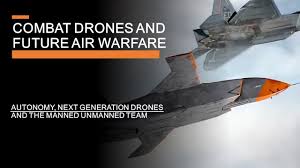
Hybrid Manned-Unmanned Operations. Hybrid manned-unmanned operations combine human decision-making with autonomous drone capabilities, enhancing flexibility and situational awareness. Human pilots can control UAVs while receiving support from AI systems that automate data processing and mission planning. This synergy allows for optimal control and strategic execution while reducing the cognitive burden on operators.


Miniaturisation and Stealth. Miniaturisation and stealth technologies are enhancing drones’ ability to operate undetected. Smaller, quieter UAVs with reduced radar signatures can infiltrate enemy defences, gather intelligence, or carry out strikes without being easily intercepted. These advances improve tactical flexibility and extend the operational range of drones in contested environments.


Implications of Combat Drones on Traditional Airpower


The rapid advancement and proliferation of combat drones, also known as unmanned combat aerial vehicles (UCAVs), have fundamentally reshaped the landscape of air warfare. The increasing integration of unmanned systems has now disrupted what was once a domain exclusively dominated by manned fighter jets, strategic bombers, and attack aircraft. While traditional airpower remains indispensable in major military operations, combat drones introduce new doctrines, alter strategic calculations, and challenge long-held assumptions about air superiority. From cost-effectiveness to survivability, from force projection to counter-air missions, the implications of drones on traditional airpower are profound and multifaceted.


Changes in Force Structuring. This cost-effectiveness has allowed major and minor powers to expand their air combat capabilities without requiring massive budgets. Countries that could not previously project significant airpower can now field substantial drone fleets, effectively democratising access to aerial warfare. Moreover, drone attrition is far more acceptable than the loss of a piloted aircraft, further changing the strategic calculus. Traditional airpower relies on highly trained pilots, whose combat loss affects military effectiveness and carries significant political and moral weight. The expendability of drones means that military commanders can take more significant risks, leading to more aggressive and flexible operational doctrines.


Changing the Nature of Air Superiority and Aerial Combat. The rise of combat drones challenges traditional definitions of air superiority. Historically, air superiority was determined by the ability of manned fighter aircraft to establish dominance over enemy airspace through superior manoeuvrability, advanced sensors, and beyond-visual-range (BVR) engagements. However, drones are now increasingly capable of carrying out air-to-air missions, raising questions about the future role of manned aircraft in achieving air superiority. For example, the Loyal Wingman concept, which pairs autonomous drones with manned fighter jets, represents a hybrid traditional and drone-based airpower model. In this setup, manned aircraft act as command-and-control nodes while drones perform high-risk tasks such as dogfighting, electronic warfare, and decoy operations. Similarly, China is developing drones like the FH-97, modelled after the U.S. XQ-58 Valkyrie, which can operate as autonomous wingmen to piloted aircraft.


Changes in Traditional Fighter Combat Tactics. Small, agile drones can operate in swarms, overwhelming enemy defences in ways that traditional aircraft cannot counter easily. Countries such as China and Russia are actively developing swarm drone technology that could neutralise enemy air defences and fighter squadrons by sheer numbers. In such a scenario, traditional air combat tactics based on individual or squadron engagements may become obsolete, replaced by algorithm-driven swarm warfare where AI-driven drones execute complex attack patterns beyond human reaction times.


Evolution of Air Defence Systems. The rise of combat drones has forced rapid changes in air defence systems. Traditional air defences, such as surface-to-air missile (SAM) systems, were designed to counter high-speed, high-altitude threats from fighter jets and bombers. However, drones present an entirely different challenge, as they are often smaller, slower, and fly at lower altitudes, making them difficult for conventional radar systems to detect and track. Countries have responded by integrating counter-drone capabilities into their air defence networks. Integrated air defence systems, such as Israel’s Iron Dome and Russia’s Pantsir-S1, have been adapted to target drones with high-precision missiles and rapid-fire auto-cannons. Additionally, electronic warfare (EW) has emerged as a crucial element in countering drone threats. Many modern air defence systems now incorporate jamming and spoofing capabilities to disrupt combat drones’ communications and GPS navigation, rendering them ineffective. Despite these adaptations, drones are still proving to be highly disruptive. The 2020 Nagorno-Karabakh conflict demonstrated how drones could systematically dismantle traditional air defences. Azerbaijani forces used Turkish and Israeli drones to destroy Armenian SAM sites, rendering their conventional air defence network ineffective. This shift suggests that air defence will increasingly rely on layered, AI-driven networks capable of simultaneously countering manned and unmanned threats in future conflicts.


Alteration in Roles and Tasks. Traditional airpower doctrine has been built around fighter jets for air superiority, strategic bombers for deep penetration strikes, and Battlefield air support (BAS) aircraft for ground engagements. However, combat drones are altering these roles in significant ways. In battlefield air support missions, drones have already proven their effectiveness. The MQ-9 Reaper, for example, has been widely used by the U.S. military for BAS missions in Afghanistan, Iraq, and Syria. Unlike traditional BAS aircraft requiring significant logistics and support, drones can loiter over a battlefield for extended periods, providing persistent surveillance and rapid strike capability. This persistence gives ground commanders real-time intelligence and strike options that traditional aircraft cannot match. In strategic bombing missions, drones are also beginning to make their mark. While heavy bombers like the B-52 or B-2 Spirit lack the payload capacity, swarming drone tactics could compensate by overwhelming enemy defences with multiple smaller precision strikes. China’s WZ-8 high-speed reconnaissance drone and the U.S. RQ-180 stealth drone suggest that drones may soon take over many roles traditionally assigned to strategic bombers.


Shift in Human Role. Additionally, the increasing use of AI in drone operations is shifting the human role in air warfare. While traditional airpower relies on human decision-making, AI-driven drones can process vast amounts of battlefield data in real time, react faster than human pilots, and execute missions with minimal human intervention. This shift raises ethical and operational questions about the future of autonomous air warfare, particularly in conflicts where rapid decision-making can mean the difference between victory and defeat.


The Future of Manned Aircraft in a Drone-Dominated Battlefield. While drones are rapidly transforming air warfare, it is unlikely that traditional manned aircraft will become obsolete in the near future. Instead, airpower will likely evolve into a hybrid model where manned and unmanned platforms work together. For example, the U.S. Air Force’s Next-Generation Air Dominance (NGAD) program envisions a future where advanced fighter jets operate alongside AI-driven drones in a coordinated battle network.


Evolutionary Process. Stealth fighter jets will still be critical for high-end air combat against technologically advanced adversaries. While drones offer many advantages, they still face limitations regarding autonomy, electronic warfare vulnerabilities, and adaptability in complex combat scenarios. Human pilots bring strategic thinking, adaptability, and situational awareness that AI-driven drones cannot fully replicate. That said, as AI and drone technology continue to improve, we may eventually see a shift where manned fighters become command platforms rather than frontline combatants. Future air battles may be fought with autonomous drone swarms controlled by human operators from standoff distances, reducing the need for pilots to engage in direct combat.


Conclusion

The rise of combat drones represents a paradigm shift in modern warfare, challenging the supremacy of traditional air power. While manned aircraft will likely remain relevant for the foreseeable future, their role is shifting toward command and control rather than direct engagement. As drone technology continues to advance, the future of air warfare will likely be defined not by individual dogfights but by networks of autonomous systems operating in concert with traditional manned platforms. In this evolving landscape, the key to maintaining air dominance will be successfully integrating drones into traditional airpower frameworks, leveraging human and artificial intelligence to maximise combat effectiveness. 


The increasing integration of drones necessitates a revaluation of military doctrines, investment priorities, and force structures. The future of air warfare lies in a balanced approach that leverages the complementary strengths of both manned and unmanned systems.


Please Do Comment.


1879
Default rating

Please give a thumbs up if you  like The Post?


For regular updates, please register your email here:-

Subscribe


References and credits

To all the online sites and channels.

References:-

  1. Boyle, M. J. (2015). “The Drone Age: How Drone Technology Will Change War and Peace.” International Affairs, 91(1), 67-84.
  1. Horowitz, M. C., & Fuhrmann, M. (2018). “Droning On: Explaining the Proliferation of Unmanned Aerial Vehicles.” International Security, 43(2), 7-47.
  1. Zenko, M. (2010). “The Proliferation of Drones.” Council on Foreign Relations Report.
  1. Byman, D. (2013). “Why Drones Work: The Case for Washington’s Weapon of Choice.” Foreign Affairs, 92(4), 32-43.
  1. Gartzke, E., & Lindsay, J. R. (2019). “The Influence of Drones on the Nature of Warfare.” Security Studies, 28(2), 245-281.
  1. Scharre, P. (2018). “Drones and the Future of Warfare.” Center for a New American Security (CNAS).
  2. Mehta, A. (2021). “How China’s Drone Strategy Is Shaping the Global Military Balance.” Defence News.
  1. Heginbotham, E. (2019). “The Role of Unmanned Combat Systems in the Indo-Pacific.” War on the Rocks.


  1. Johnson, E. (2020). The Integration of UAVs in Modern Air Combat: A Strategic Perspective. [Doctoral dissertation, King’s College London].
  1. Thompson, J. (2018). The Changing Face of Aerial Combat: Drones Versus Manned Aircraft. [Master’s thesis, U.S. Naval War College].
  1. Indian Ministry of Defence. (2022). Drone Policy and Integration in the Indian Armed Forces.
  1. RAND Corporation. (2018). Future Unmanned Aircraft Systems: A Comparative Assessment.
  1. Stockholm International Peace Research Institute (SIPRI). (2021). The Impact of Military UAVs on Contemporary Warfare.
  1. Center for Strategic and International Studies (CSIS). (2022). The Future of Air Dominance: Evaluating the Role of Combat Drones.


Disclaimer:

Information and data included in the blog are for educational & non-commercial purposes only and have been carefully adapted, excerpted, or edited from reliable and accurate sources. All copyrighted material belongs to respective owners and is provided only for wider dissemination.


English हिंदी