
761: AI AND MILITARY AIRCRAFT AUTOMATION: BALANCING SAFETY WITH CAPABILITY


Artificial intelligence (AI) and automation are revolutionising military aviation. These technologies enable maximum operational capability through autonomous flight, real-time decision-making, and enhanced resource management. They also raise significant safety concerns, including system reliability, ethical considerations, and the need for continuous human-AI interaction. Achieving an optimal balance between enhancing capability and ensuring operational safety is essential. This requires rigorous testing, adaptive standards, and human oversight to ensure mission success and promote safety.


Capabilities Enhanced by AI and Automation

Automation is transforming military aviation by adding new capabilities, enhancing combat effectiveness and efficiency.

Autonomous Operations and Swarm Tactics. AI enables autonomous take-off, navigation, and landing even in hostile or GPS-denied environments. Projects such as the U.S. Department of Defence’s Replicator vision of sending thousands of autonomous vehicles, including drones, on deployment by 2026. They intend to employ swarm intelligence to be utilised for reconnaissance, targeting, and swarming enemy defences. Boeing’s MQ-28 Ghost Bat is an example of a system that augments manned fighters by carrying out reconnaissance and engaging threats independently, de-loading pilot workload. India’s Combat Air Teaming Systems (CATS) and Rustom UAVs use sensor fusion technology, so that manned and unmanned platforms can work together in real time to attack and defend against threats.

Predictive Maintenance and Logistics. Predictive maintenance with AI analyses data from aircraft engines to predict failures, maintaining optimal scheduling and fleet availability. Digital twins, or virtual replicas that account for wear, damage, and flight history, allow faults to be preemptively identified before they occur. A 30% reduction in downtime and millions of dollars in savings can be achieved. The Air Forces and others have utilised these systems to improve logistics and strategic readiness, with aircraft still mission-effective.

Navigation and Decision Support. AI routes for safety and fuel optimisation. AI in emerging fighters such as DARPA’s Air Combat Evolution (ACE) program assists pilots with real-time battlefield analysis and threat identification. This aids faster and more accurate decisions. For instance, AI-controlled F-16s have executed high-speed manoeuvres exceeding 550 mph, responding to dynamic combat scenarios in increments of a fraction of a second.

Command and Control Improvements. The US Joint All-Domain Command and Control (JADC2) employs AI to enable unfettered sharing of information across air, land, sea, and cyber domains. This enables man-machine collaboration for rapid and precise decision-making. AI systems such as the XQ-58A Valkyrie demonstrate autonomous reconnaissance, jamming, and strike operations. They are force multipliers in network-centric warfare. These innovations disrupt the power balance, enabling a rapid response against emerging threats.


Safety Risks and Challenges

Just as AI enhances competence, it poses real threats that must be dealt with in order to promote safe functioning.

System Reliability and Failures. AI’s adapting behaviour can result in unpredictable effects, i.e., errors or bias, during exceptional incidents. Past software failures in military systems have led to accidents, and poor testing increases the potential for these effects. Premature deployment of unmanned systems can result in unforeseen lethal outcomes, i.e., in actual drone crashes during the Ukraine wars.

Ethical and Stability Implications. Autonomous systems can misinterpret circumstances, possibly worsening conflict or jeopardising global stability. Moral dilemmas arise with AI-generated lethal decisions, notably responsibility dilemmas under international humanitarian law. The swift proliferation of autonomous drones addresses actual threats in the world and not alleged dangers such as bioterrorism.

Certification and Regulatory Gaps. Current standards, such as DO-178C and MIL-HDBK-516C, do not fully account for AI’s adaptability. This creates challenges in validation and exposes hardware vulnerabilities. Unlike civil aviation, military applications often experience inconsistent safety compliance, complicating certification for AI-driven systems.

Human Factors. There can be an overdependence on AI, causing pilot proficiency to be lost, particularly in manual flying and quick decision-making. Control handover between human pilots and AI may be challenging in a crisis. There can be automation bias that causes pilots to ignore critical cues. New ideas, e.g., AI-checked conditions of ejection seats and well-being of the pilot, are thrilling but require scrupulous application so that it does not create unforeseen problems.

Cybersecurity Threats. Military aircraft powered by AI are vulnerable to hacking, spoofing, and adversarial attack. These can invalidate important systems and bring about disastrous failures. Cybersecurity plays an important role in maintaining operational integrity.


Balancing Capability with Safety: Strategies and Frameworks

Various measures are being taken by military forces across the globe to contain risks and maximise benefits from AI.

Strict Testing and Phased Introduction. Projects such as Replicator and DARPA’s ACE target strict testing in complete simulations to predict infrequent events and provide reliability prior to deployment. Phased integration within simulated areas provides additional robustness. Autonomy training conducted by the U.S. Air Force employs onboard sensors for enemy detection, while periodic manual flight and emergency procedure training maintain pilot proficiency.

Human-in-the-Loop Systems. Human control over major decisions, particularly the application of force, is important for secure integration of AI. AI is used as a co-pilot and never a replacement, with override rights still under human pilots. For example, autonomous jet test flights like those for the XQ-58A Valkyrie include standby pilots to ensure control.

Redundancy and Fail-Safes. Various safety features, such as manual reversion modes and fallback emergency provisions, enable pilots to regain control when AI systems fail. Tough validation procedures, as those in place for Helsing’s Centaur agent and its interaction with Saab’s Gripen E, enable AI to integrate with installed systems securely.

Certification Standard Development. The development of a systematic safety approach to AI-critical systems involves reviewing existing standards, such as MIL-HDBK-516C and the EASA AI Roadmap, conducting a gap analysis to identify where weaknesses lie, iteratively revising standards to incorporate AI-specific conditions, and examining them in depth to remove overlaps and new requirements. It adapts civil and military systems to deliver effective verification, validation, and continued airworthiness for AI systems.

Talent Development and Recruitment. Artificial intelligence technologies for weather forecasting, maintenance, and operational decision-making enhance readiness through optimising training. Hire AI specialists to monitor and refresh high-risk models under strict testing to provide long-term reliability and safety.


Conclusion

Military aviation is being transformed by artificial intelligence and automation. They provide capabilities that have never been seen before in terms of autonomy, decision-making, and logistics. They bring significant safety, ethical, and strategic problems, too. The future relies on man-machine collaboration, where AI augments human decision-making and not substitutes it. Through constant testing, adaptive certification standards, robust cybersecurity, and ethical governance, militaries are able to leverage AI potential while reducing risks. Ongoing global forums, such as 2025 panels, present cooperation and human control across the globe to ensure AI assists airpower responsibly, balancing capability and safety in driving sustainable advancement.


Please Add Value to the write-up with your views on the subject.


1878
Default rating

Please give a thumbs up if you  like The Post?


For regular updates, please register your email here:-

Subscribe


References and credits

To all the online sites and channels.

Pics Courtesy: Internet

Disclaimer:

Information and data included in the blog are for educational & non-commercial purposes only and have been carefully adapted, excerpted, or edited from reliable and accurate sources. All copyrighted material belongs to respective owners and is provided only for wider dissemination.


References:-

  1. Cummings, M. L. (2017). Artificial intelligence and the future of warfare. Chatham House.
  1. Eraslan, E., Yildiz, Y., & Annaswamy, A. M. (2019). Shared control between pilots and autopilots: Illustration of a cyber-physical human system. IEEE Transactions on Human-Machine Systems, 49(5), 436–447.
  1. Heydarian Pashakhanlou, A. (2019). AI, autonomy, and airpower: The end of pilots? European Security, 28(4), 523–538.
  1. Hobbs, K. L., & Li, B. (2023). Safety, trust, and ethics considerations for human-AI teaming in aerospace control. Journal of Aerospace Information Systems, 20(6), 280–293.
  1. Jurado, R. D. A. (2024). The current state of standardisation of AI for civil and military aviation. Safety Science, 169, 105178.
  1. Jurado, R. D. A. (2025). Enhancing safety in military aviation: A systematic approach to the development of AI certification standards. Aerospace, 12(1), 72.
  1. Kirwan, B. (2024). The impact of artificial intelligence on aviation safety culture. Aerospace, 11(10), 863.
  1. Lopes, N. M. (2025). Challenges and prospects of artificial intelligence in aviation: A bibliometric and systematic review. Journal of Air Transport Management, 128, 102054.
  1. Mayer, M. (2023). Artificial intelligence and human-autonomy teaming in military systems. Journal of Defence Studies, 7(3), 45–61.
  1. Molnar, T. G., Kousik, S., Singh, S., & Ames, A. D. (2024). Collision avoidance and geofencing for fixed-wing aircraft with control barrier functions. IEEE Transactions on Control Systems Technology, 32(5), 1954–1967.
  1. Rashid, A. B. (2023). Artificial intelligence in the military: An overview of capabilities and risks. Computational Intelligence and Neuroscience, 2023, 1–12.
  1. Sachdev, A. K. (2021). Artificial intelligence in military aviation. Air Power Journal, 16(2), 1–18.
  1. Tafur, C. L., Gómez, J. A. Y Martínez, P. (2025). Applications of artificial intelligence in air operations. Aerospace Science and Technology, 152, 109123.

719: ARTIFICIAL INTELLIGENCE-ENABLED AIR FORCES: THE FUTURE OF AERIAL WARFARE


Article Published In the 2025 edition of the Karnataka branch of the Air Force Association Journal.


Integrating Artificial Intelligence (AI) in air forces is revolutionising modern aerial warfare, enhancing combat efficiency, decision-making capabilities, and operational effectiveness. AI-driven technologies are transforming everything from autonomous drones and pilot assistance systems to predictive maintenance and cyber defence. The ongoing advancements in AI are paving the way for next-generation warfare, where speed, precision, and automation play pivotal roles. There is a need to explore the benefits, challenges, and prospects of AI-enabled air forces, as well as examine how militaries worldwide are leveraging AI to gain a strategic advantage in the skies.


AI Applications in Air Warfare.

 Autonomous Combat Drones and Loyal Wingmen. One of the most significant developments in AI-enabled air forces is the use of autonomous combat drones and “loyal wingmen” programs. AI-powered Unmanned Aerial Vehicles (UAVs) can operate independently or in coordination with manned aircraft. The U.S. Air Force’s Skyborg program, Russia’s Okhotnik-B, and India’s CATS Warrior are leading examples of AI-powered aerial combat systems. Key capabilities of AI-enabled drones include autonomous targeting and engagement of enemy aircraft and ground targets, AI-driven reconnaissance for real-time battlefield awareness, and electronic warfare capabilities to disrupt enemy communications and radar. Loyal wingmen, such as Boeing’s MQ-28 Ghost Bat, work alongside fighter jets, assisting in combat while reducing the risk to human pilots.

AI-Assisted Air Combat. AI has also been tested in air-to-air combat scenarios. In 2020, DARPA’s AlphaDogfight Trials demonstrated that an AI-piloted F-16 simulator could outperform an experienced human pilot in dogfighting scenarios. AI-driven fighter jets can make rapid manoeuvring decisions, anticipate enemy tactics, and optimise firing solutions faster than human pilots.

AI Co-Pilot Systems. Modern fighter jets are incorporating AI as a co-pilot to assist human pilots in complex combat scenarios. AI co-pilots can provide real-time threat analysis and countermeasure recommendations, optimise flight paths for maximum efficiency and survivability, and assist in weapons management and target prioritisation. The U.S. Air Force’s Air Combat Evolution (ACE) program is working on integrating AI co-pilots into next-generation fighter aircraft.

AI in Predictive Maintenance and Logistics Optimisation. AI-powered maintenance systems can analyse vast amounts of sensor data to predict mechanical failures before they occur. The Condition-Based Maintenance (CBM+) system helps optimise aircraft maintenance schedules, reducing downtime and improving fleet readiness. AI’s Key benefits in maintenance include minimising unexpected failures, ensuring mission readiness, efficient resource allocation by prioritising high-risk components, and cost savings by reducing unnecessary maintenance.

AI in Air Defence Systems. AI enhances air defence by improving target detection and response times. AI-enabled radar and sensor fusion systems help military forces detect and track multiple airborne threats simultaneously, optimise interception strategies against hypersonic missiles and stealth aircraft, and identify and neutralise threats with minimal human intervention. Systems like Israel’s Iron Dome and Russia’s S-500 Prometheus integrate AI to enhance target prioritisation and engagement.

AI in Electronic Warfare (EW). AI-driven electronic warfare systems can autonomously jam enemy radar and communication networks, adapt to new threats by analysing enemy signals in real-time, and protect friendly assets from cyber and electromagnetic attacks. The U.S. Air Force is actively developing AI-enhanced Electronic Warfare Pods for next-generation combat aircraft.

AI in Mission Planning. AI assists in complex mission planning by analysing real-time battlefield data. Advanced AI systems can generate optimal attack and defence strategies based on situational awareness, adapt plans dynamically as new threats emerge, and reduce commanders’ decision-making time. Programs like Project Maven employ AI to analyse drone surveillance footage, identifying potential threats more efficiently than human analysts. AI-driven battlefield management systems integrate data from multiple sources, including satellites and reconnaissance aircraft, ground-based radars and air defence systems, as well as cyber intelligence reports. This allows commanders to make data-driven decisions in high-pressure combat scenarios.

Swarm Warfare: The Future of Aerial Combat. AI-controlled drone swarms are emerging as a game-changing technology in aerial combat. Swarm tactics involve deploying multiple autonomous drones to overwhelm enemy defences with coordinated attacks, conducting distributed intelligence, surveillance, and reconnaissance (ISR), and executing autonomous electronic jamming and decoy operations. Countries like the U.S., China, and India are actively researching AI-driven drone swarms as a force multiplier in future conflicts.


Advantages and Challenges of AI in Air Forces

 Advantages of AI-Enabled Air Forces. AI-enabled air forces offer numerous advantages, revolutionising modern aerial warfare and operational efficiency. One key benefit is enhanced decision-making, as AI rapidly processes vast amounts of battlefield data to provide real-time intelligence, improving situational awareness and response times. Additionally, AI reduces pilot workload by automating routine tasks, allowing human operators to focus on complex strategic decisions. Combat efficiency is also significantly increased through AI-driven targeting, threat assessment, and autonomous drones that execute missions with precision. Another significant advantage is the reduction of human casualties, as AI-powered unmanned aerial vehicles (UAVs) can conduct high-risk operations without putting pilots at risk. Furthermore, AI optimises maintenance and logistics by predicting equipment failures and streamlining supply chains, reducing downtime and operational costs. These advancements collectively enhance Air Force effectiveness, ensuring superior combat readiness while lowering overall risks and expenses. As AI technology continues to evolve, its role in modern air forces will become increasingly indispensable.

Challenges and Ethical Concerns.  Integrating AI into air forces presents significant challenges and ethical concerns despite its advantages. A major issue is balancing autonomy with human oversight, as fully autonomous AI systems raise questions about accountability and decision-making in combat. Ensuring that AI does not make lethal decisions without human intervention remains a critical concern for policymakers and military leaders. Cybersecurity threats pose risks, as adversaries could manipulate or hack AI-driven systems, leading to catastrophic failures. Additionally, AI bias and errors in target recognition or threat assessment could result in unintended casualties or collateral damage. Another challenge is the potential for AI to accelerate the global arms race

as nations compete to develop more advanced autonomous weapons, raising the risk of destabilisation. Addressing these concerns requires robust regulations, international cooperation, and strict ethical frameworks to ensure AI remains a tool for enhancing security rather than escalating conflicts.

The Future of AI in Air Forces. The future of AI in air forces promises unprecedented advancements, reshaping aerial warfare with enhanced autonomy, precision, and strategic capabilities. Unmanned Combat Aerial Vehicles (UCAVs) will see increased autonomy, enabling them to operate independently or in coordination with manned aircraft in high-risk missions, reducing reliance on human pilots. AI-powered hypersonic weapons guidance systems will enhance missile accuracy, making airstrikes faster and more precise. Additionally, integrating AI with quantum computing will revolutionise data processing, allowing air forces to conduct predictive analytics at unprecedented speeds and improving threat detection, mission planning, and electronic warfare strategies. As AI-driven systems become more sophisticated, militaries will develop advanced counter-AI warfare techniques to neutralise enemy AI assets, ensuring dominance in digital battle spaces. However, as AI’s role expands, ethical and strategic concerns will require careful regulation and oversight. Ultimately, AI will be a cornerstone of future air forces, enabling superior operational efficiency, strategic decision-making, and battlefield dominance while necessitating continued advancements in security, ethics, and control mechanisms.


Conclusion. Artificial Intelligence is fundamentally transforming the landscape of aerial warfare. AI-enabled air forces are becoming faster, more efficient, and increasingly autonomous. From autonomous combat drones and AI co-pilots to predictive maintenance and swarm warfare, AI enhances every aspect of military aviation. However, as nations race to integrate AI into their defence strategies, addressing challenges related to autonomy, cybersecurity, and ethical considerations is crucial. The future of warfare will be shaped by how effectively AI is integrated into the air forces of the world.


Please Add Value to the write-up with your views on the subject.


1878
Default rating

Please give a thumbs up if you  like The Post?


For regular updates, please register your email here:-

Subscribe


References and credits

To all the online sites and channels.

Pics Courtesy: Internet

Disclaimer:

Information and data included in the blog are for educational & non-commercial purposes only and have been carefully adapted, excerpted, or edited from reliable and accurate sources. All copyrighted material belongs to respective owners and is provided only for wider dissemination.


References:-

  1. Gady, Franz-Stefan. “AI, Autonomy, and Airpower: Future Directions in Military Aviation.” International Institute for Strategic Studies (IISS), 2022.
  1. Roff, Heather M. “The Strategic Implications of Lethal Autonomous Weapon Systems.” RAND Corporation, 2016.
  1. Lockheed Martin. AI and Autonomy in Next-Generation Fighter Jets. Lockheed Martin Corporation, 2022.
  1. DARPA (Defence Advanced Research Projects Agency). Algorithmic Warfare and AI-Powered Air Combat. U.S. Department of Defence, 2021.
  1. RAND Corporation. The Future of Unmanned Aerial Vehicles and AI Integration. RAND Research Report, 2022.
  1. B Prakash, AI and the Future of Air Combat in India, MP-IDSA, 2022.

Industry & Technology Reports

  1. Trevithick, Joseph. “The U.S. Air Force’s AI-Powered ‘Skyborg’ Drone: A Game Changer?” The War Zone, 2021.
  1. Ackerman, Evan. “AI Pilots Now Outperform Human Fighter Pilots in Simulated Dogfights.” IEEE Spectrum, 2022.
  1. Johnson, David. “China’s AI-Enabled Aerial Warfare: Capabilities and Implications.” Defence One, 2023.
  1. Cummings, Mary L. Human-Autonomy Teaming: Issues and Challenges for AI in Military Operations. CRC Press, 2021.
  1. Scharre, Paul. Army of None: Autonomous Weapons and the Future of War. W.W. Norton & Company, 2018.

711: LOW-COST, HIGH-IMPACT LUCAS KAMIKAZE DRONE: AMERICA’S ANSWER TO MODERN AERIAL WARFARE


My Article published on “The EurasianTimes” website on 28 Jul 25


On July 16, 2025, the United States Department of Defence revealed the Low-Cost Uncrewed Combat Attack System (LUCAS) during an exhibition of autonomous systems at the Pentagon courtyard, attended by Secretary of Defence Pete Hegseth. Developed by Spectreworks, based in Arizona, LUCAS is designed to counter the escalating threat of loitering munitions. The system aims to facilitate distributed operations, particularly in the Indo-Pacific region, in light of rising concerns over Chinese drone activities near Japan. Considerable interest has been expressed regarding its development, design, capabilities, and strategic significance.


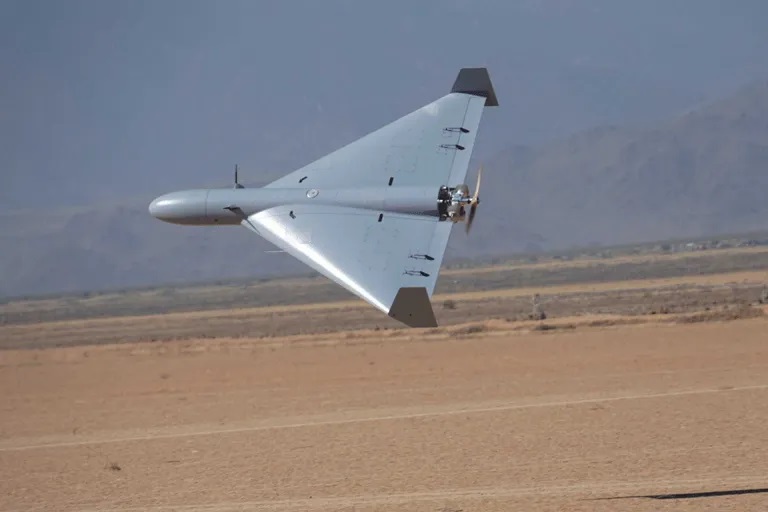
Genesis. The emergence of the LUCAS drone is not a coincidence. It is a direct response to the transformation of modern warfare driven by the global proliferation of low-cost kamikaze drones. Iran’s Shahed-136, a delta-wing kamikaze drone, has served as a notable example, utilised by Russia in Ukraine and by Iran-backed groups in the Middle East to precisely target objectives at a significantly reduced cost compared to traditional munitions. The low cost and extended range of the Shahed-136 exposed a gap in Western arsenals, which have historically depended on expensive, reusable platforms such as the MQ-9 Reaper. The United States’ response materialised as the LUCAS system, a three-category UAS (capable of carrying up to 600 kg and operating at altitudes reaching 5,500 meters).


Analytical Perspective

LUCAS’s design exhibits both visual and functional similarities to the Shahed-136, showcasing a triangular delta-wing configuration optimised for long-range loitering. Nonetheless, it differs significantly in terms of engineering and versatility. Powered by a two-cylinder DA-215 engine (215 cm³), LUCAS contrasts with the Shahed’s four-cylinder Limbach L550E clone, providing enhanced fuel efficiency and a reduced acoustic signature. Its modular and open architecture accommodates various payloads, including reconnaissance sensors, electronic warfare modules, and explosive warheads, thereby facilitating adaptability to a wide range of mission profiles.

The drone’s adaptability constitutes a fundamental advantage. LUCAS accommodates various launch methods, including Rocket-Assisted Take-Off (RATO) and truck-based deployment, thereby facilitating rapid utilisation by personnel with limited specialisation. In contrast to the single-use Shahed-136, LUCAS can be reused in specific configurations, such as reconnaissance missions, thereby improving its cost efficiency. It operates on 28V and 12V power supplies, supporting a wide range of payloads. Its Multi-domain Unmanned Systems Communications (MUSIC) mesh network enables autonomous swarm operations and network-centric strikes. Additionally, this network permits LUCAS to serve as a communication relay, a vital capability in contested environments where conventional communication channels may be disrupted.

The LUCAS system is estimated to cost approximately $100,000 per unit, which is markedly more economical than traditional United States drones, thus aligning with the Pentagon’s objectives regarding cost efficiency. Following successful testing, its readiness for production positions it for swift deployment alongside U.S. and allied forces, particularly in contexts that demand scalable, cost-effective strike capabilities. It embodies a harmonious combination of affordability, lethality, and adaptability. The swarm capabilities, facilitated through the MUSIC network, enable coordinated assaults capable of overwhelming adversary defences. Furthermore, its modular design extends its functional utility beyond kamikaze operations to include roles such as intelligence, surveillance, and reconnaissance (ISR).

The strategic significance of the drone is enhanced by its alignment with the United States’ defence priorities. In the Indo-Pacific region, where China’s expanding drone capabilities present a threat, LUCAS offers an economical countermeasure for distributed operations over extensive distances. Its capacity to operate autonomously or in swarms diminishes dependence on vulnerable centralised command structures, thus making it suitable for contested environments. Furthermore, its truck-mounted launch system enhances mobility, allowing for swift deployment from forward bases or allied territories.

Lucas’s introduction holds significance extending beyond the United States’ borders. Allies within NATO, the Indo-Pacific, and the Middle East, who are confronting comparable drone threats, are expected to demonstrate interest in procuring or jointly producing similar systems. Its cost-effectiveness and adaptability render it an appealing choice for nations that cannot afford advanced platforms such as the F-35 or MQ-9.


India’s Solutions for Low-Cost, High-Impact Drone Warfare

India, confronting analogous drone threats across its borders, has undertaken the development of its own economical yet impactful solutions for contemporary aerial warfare. A key component of India’s strategic response is the creation of indigenous loitering munitions, including the ALFA-S (Air-Launched Flexible Asset – Swarm), Nagastra-1, and the Tactical Advanced Platform for Aerial Surveillance (TAPAS-BH-201). Engineered with an emphasis on cost-effectiveness and scalability, these systems reflect the strategic principles underpinning America’s LUCAS.

Nagastra-1 is a domestically produced, man-portable loitering munition, often referred to as a “kamikaze drone.” Developed by Economic Explosives Limited, a subsidiary of Solar Industries, in collaboration with Z-Motion Autonomous Systems, it is engineered for reconnaissance missions and precision strikes, particularly in asymmetric operational environments.

ALFA-S, or Air-Launched Flexible Asset – Swarm, is an Indian project focused on developing a swarm of drones that can be launched from aircraft or ground launchers. It is part of the larger Combat Air Teaming System (CATS) initiative by Hindustan Aeronautics Limited (HAL) in collaboration with NewSpace Research and Technologies. These drones are designed to operate autonomously, potentially performing tasks like high-altitude surveillance and precision strikes. 

TAPAS-BH-201, also called Rustom-II, is an Indian MALE UAV created by DRDO’s Aeronautical Development Establishment. It is built for surveillance and reconnaissance tasks. 

India is also advancing its counter-drone capabilities through initiatives such as the DRDO’s D-4 Drone System. The D4 anti-drone system would constitute a comprehensive solution for detecting, tracking, and neutralising unauthorised drones, including micro and small unmanned aerial vehicles (UAVs). It would employ a combination of radar, radio frequency detection, and electro-optical/infrared sensors for threat identification, and utilise both ‘soft kill’ methods, such as RF and GNSS jamming, as well as ‘hard kill’ techniques, including laser-based directed energy weapons, for neutralisation. The system would be engineered for deployment in both stationary and vehicle-mounted configurations. 


Conclusion

The LUCAS kamikaze drone signifies a fundamental transformation in the United States’ defence strategy, responding to the worldwide proliferation of low-cost, high-impact aerial systems such as Iran’s Shahed-136. By integrating affordability, modular design, and sophisticated swarm functionalities through the MUSIC network, LUCAS offers a flexible solution for contemporary warfare, particularly in contested regions such as the Indo-Pacific. Its strategic congruence with cost-effective, attritable platforms strengthens the capacity of U.S. and allied forces to counter emerging drone threats. In a similar vein, India’s progress with systems such as Nagastra-1ALFA-S and TAPAS-BH-201 demonstrates a parallel dedication to innovative, scalable drone technologies. These initiatives highlight a global tendency toward economical, network-enabled systems that reinvent aerial combat. They not only address essential capability deficiencies but also herald a future where adaptable, distributed operational methods prevail, ensuring resilience against evolving threats.


Please Add Value to the write-up with your views on the subject.


1878
Default rating

Please give a thumbs up if you  like The Post?

For regular updates, please register your email here:-

Subscribe


Link to the article on the website:-

“Shocking Replica” Of Iranian UAV, Is U.S.’ Low-Cost, High-Impact LUCAS Derived From Shahed-136 Drone?


References and credits

To all the online sites and channels.

Pics Courtesy: Internet

Disclaimer:

Information and data included in the blog are for educational & non-commercial purposes only and have been carefully adapted, excerpted, or edited from reliable and accurate sources. All copyrighted material belongs to respective owners and is provided only for wider dissemination.

References:

  1. Army Recognition. “US Unveils LUCAS Kamikaze Drone to Counter Iran’s Shahed-136.” Army Recognition, July 17, 2025.
  1. Defence Blog. “SpektreWorks’ LUCAS Drone Enters Production to Bolster US Capabilities.” Defence Blog, July 18, 2025.
  1. Janes. “US Department of Defence Accelerates Attritable Drone Programs with LUCAS.” Jane’s Defence Weekly, July 19, 2025.
  1. The Drive. “LUCAS: America’s New Loitering Munition to Counter Drone Threats.” The War Zone, July 16, 2025.
  1. Breaking Defence. “Pentagon’s Hegseth Pushes for Expendable Drones with LUCAS as Model.” Breaking Defence, July 20, 2025.
  1. SpektreWorks. “LUCAS: Low-Cost Uncrewed Combat Attack System.” SpektreWorks Official Website, July 2025.
  1. Center for Strategic and International Studies (CSIS). “The Rise of Attritable Drones: Implications for US Defence Strategy.” CSIS Briefs, August 2024
  1. International Institute for Strategic Studies (IISS). “Shahed-136 and the Global Proliferation of Loitering Munitions.” IISS Military Balance Blog, March 2025
  1. U.S. Department of Defence. “DoD Directive on Unmanned Systems Acquisition and Classification.” July 2025.
  1. Business Insider. (2025, July 18). A new American drone that showed up at the Pentagon looks a lot like the Shaheds Russia uses to bomb Ukraine.
  1. The Economic Times. (2025, July 18). Did the US just clone Iran’s Shahed? All about LUCAS, America’s ‘cheap and deadly’ kamikaze drone.
  1. BEL India. (n.d.). Anti-Drone System. Bharat Electronics Limited.
  1. Economic Times. (2025, May 10). Bhargavastra: Watch India test low-cost drone killer that destroys swarms in seconds—The Economic Times.
  1. HAL India. (n.d.). CATS – Combat Air Teaming System. Hindustan Aeronautics Limited.
  1. Times of India. (2025, June 14). The Army orders 450 Nagastra-1R loitering munitions; SDAL touts reusable, precision-strike capabilities. The Times of India.
English हिंदी