Article Published in the book on
India’s Military Strategy
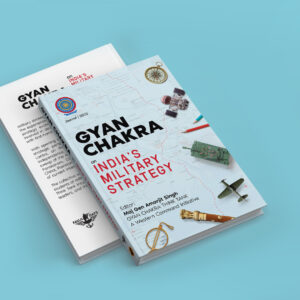
Book released by Gyan Chakra: Western Army Command Think Tank
IAF STRATEGIES: PAST PRESENT AND FUTURE
“The art of winning a war can be learnt by understanding some rules (Strategies) and then applying them in a practical manner.”
― Chanakya & the Art of War: excerpts
Introduction
Aerospace power is a decisive factor and a game-changer in the current context of geostrategic uncertainties. The application of aerospace power, although looks simple but is a complex process. Major roles of aerospace power during war include shaping the environment, offensive force application, and synergising the operations with surface forces, but aerospace power plays a pivotal role during peace and transition from peace to war.
Military strategy refers to the art and science of planning and directing military operations and campaigns. It involves the development of plans and tactics for the use of military force in achieving specific objectives, whether in a single battle or a larger campaign. Military strategy is based on the analysis of the strengths and weaknesses of both one’s own forces and those of the enemy, as well as the political and social context of the conflict. The military strategy typically involves a number of components, including, objectives, force structure, and deployment, logistics, tactics, intelligence, communications, risk assessment, etc. Effective military strategy requires careful planning and execution, as well as flexibility and adaptation based on changing circumstances. Successful military leaders must be able to think creatively, make quick decisions under pressure, and inspire and motivate their troops to achieve their objectives.
Air warfare strategy, a subset of military strategy, is the art of planning and directing overall air operations, and it depends on several factors. Effective air strategy requires careful consideration of these factors and needs to adapt to changing circumstances and situations.
The air strategy of the Indian Air Force (IAF) has evolved over a period of time, reflecting changes in strategic priorities, operational environment, doctrine and technology. While it is worthwhile to trace the evolutionary process of the past, it is also valuable to look at the ones to deal with existing challenges and suggest some future strategies.
Air Strategies & Influencing Factors
Continue reading “358: IAF STRATEGIES: PAST PRESENT AND FUTURE”