
806: SPACE – THE NEW ARENA OF WARFARE


(Inputs to Questions)


Q1. Compressing the Sensor-to-Shooter Timeline

In today’s evolving warfare landscape, the true strength and deterrence now come from long-range strike weapons, unmanned systems, loitering munitions, airborne tankers, space-based ISR networks, and the collaboration between manned and unmanned systems. This shift in military strategy calls for a broader structural change. Delays in taking action are no longer just tactical setbacks; they become a significant strategic vulnerability.

The sensor-to-shooter timeline compression is not only a technological problem but also a fundamental issue in decision architecture. Compressing that timeline requires work in several areas.

First, satellites must carry onboard AI capable of detecting, classifying, and cueing targets.  They should be able to transmit actionable intelligence over tactical data links. This eliminates the round-trip to a ground station for analysis.

Second, pre-authorised engagement envelopes, i.e. defined target criteria against which strike authority is delegated to the satellite before conflict begins. A satellite can trigger an execution sequence rather than a consultation.

Third, a direct machine-to-machine network between ISR assets and strike platforms, with AI cross-referencing satellite data with other sensors (UAVs, SIGINT, and ground radars) to automatically produce a confidence-rated target package.

The legal and ethical concerns surrounding a misattributed strike are understandable, highlighting the importance of having a careful approach in the kill chain. It’s essential to keep the human in the loop, ensuring the human authorises each kinetic attack. While smart machines can identify and designate targets, human oversight remains a crucial safeguard.


Q2. Fighting Through the Electronic Fog

Fighting through the Fog of war has existed since wars began. Electronic fog is a part of it. In the future, assessments of the threat environment should treat GPS jamming and ISR spoofing as baseline assumptions in conflict scenarios. The opening moves of any conflict involve cyber and electronic attacks before any kinetic exchange. Electronic attack is now a feature of even ostensibly non-combat environments (IAF aircraft flying into earthquake-hit Myanmar faced GPS spoofing).

The response must be across three levels. At the platform level, the need is for integrated systems with multiple guidance modes (inertial navigation, terrain-referenced navigation, NavIC integration, and optical terminal guidance). so that loss of GPS does not render the platform/weapon ineffective. Multi-constellation receivers (combining NavIC, GLONASS, and Galileo) would force an adversary to jam multiple frequencies simultaneously. In the future, quantum computing will enable precise navigation without reliance on GPS. At the same time, the implementation of quantum cryptography will secure communications.

At the space segment level, satellites should be capable of operating in a degraded communications environment. Resilience must be built into the architecture from the outset. They need anomaly-detection capability, frequency agility and hardened electronics. Optical communication between satellites is one way of reducing RF vulnerability.

At the operational level, the goal is not to eliminate the electronic fog but to remain functional inside it. Combat personnel must train regularly in GPS-denied and communications-degraded environments. Spectrum-agile systems, low-probability-of-intercept communications, and redundant networks are required to counter EW threats. Redundancy in sensors, communications, and commanders’ cognitive habits produces all-around resilience.


Q3. Distributed Constellations vs. Exquisite Satellites

The doctrine of “space deterrence” has become a key part of modern defence strategies. Protecting satellites through resilience and backups is now more important than ever. While a single valuable satellite can be a tempting target, having a group of smaller satellites spreads out the risk, making the overall system much sturdier. Each small satellite is less critical on its own, but together, they create a network that’s much harder to disrupt.

However, there are some trade-offs. Smaller satellites can carry smaller payloads. They have lower sensor resolution and have narrower per-node bandwidth. They may be suitable for tactical ISR functions, but insufficient for certain high-end ISR requirements. The practical answer is a tiered architecture. A mix of a small number of high-capability strategic satellites complemented by a larger constellation of capable, expendable ones.

Stratospheric airships present an exciting alternative! Operating comfortably at altitudes of 20–30 km, they blend the long-lasting qualities of satellites with the flexibility of terrestrial systems. Unlike geostationary satellites, airships can be moved, repaired, or upgraded with ease, allowing them to adapt to changing mission needs. The successful flight trial of DRDO’s stratospheric platform in May 2025 is a significant milestone. While these platforms won’t replace satellites, they offer a cost-effective addition to the overall surveillance setup.

India’s SBS-III programme, targeting 52 dedicated military satellites (equipped with SAR, electro-optical, and infrared payloads), is a step in the right direction. The involvement of private industry in a significant portion of those satellites signals an important shift toward faster production and greater cost efficiency.


Q4. Fusing Space Assets into a Common Operational Picture

The data fusion problem is a real challenge. Without integration, more sensors produce more confusion, rather than clarity. The challenge is to get the processed sensor data to the right person, in usable form, at the right time. It is more of an organisational and doctrinal issue than a technical one.

The information from space sensors must be fused into a single picture. The Common Operational Picture that a field commander can rely on must be continuously updated and remain current.  It needs AI-driven correlation engines that perform real-time multi-sensor fusion, with confidence scoring for each data element, so a commander knows not just what the picture shows but how much to trust it.  Building this requires common data standards across the IAF, the Army, the Navy, and the Defence Space Agency.  This is a foundational necessity.

The most critical single step is to establish a jointly manned Space and Intelligence Fusion Center. The center should have real-time data access, direct connectivity and the authority to produce an integrated assessment. In the current model, information from different agencies passes through separate chains before being reconciled at a higher level. It introduces a delay that defeats the purpose of persistent surveillance. AI-enabled networked solutions for data collection, analysis, planning, dissemination, and monitoring must sit at the heart of this center.


Q5. Responsive Space and Tactical Satellite Launch

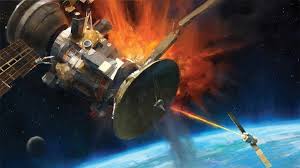
Space is becoming more militarised, with countries developing anti-satellite weapons, directed-energy systems, and cyber tools to disrupt vital assets such as GPS, reconnaissance, and communications satellites. Countries that can quickly rebuild their space infrastructure during challenges enjoy a lasting edge over those that can’t.

Tactical gaps can arise during hostilities due to satellite attrition or new threat activity not accounted for in pre-conflict planning. The ability to task a launch in response to these situations is necessary. The concept needs a shift in mindset of viewing the space as a static strategic asset to a fluid manoeuvre domain. In the longer term, the vision of a field commander requesting coverage over a sector and receiving a dedicated satellite within 24 to 72 hours is both feasible and strategically significant.

Current launch timelines are measured in weeks or months, not hours. Closing that gap requires investment in small launch vehicles with rapid turnaround capability. India’s SSLV technology transfer to industry is a step in the right direction. A stock of ready-to-launch, pre-integrated satellites with modular payloads needs to be built up.  Launch infrastructure capable of supporting surge operations, including mobile or dispersed pad options, would also be required.

The more immediately achievable priority is responsive tasking of satellites already in orbit. The existing assets should be dynamically reprogrammable to cover a priority area at short notice. That is primarily a software and ground architecture problem and should be the near-term focus while launch responsiveness matures.

Please Add Value to the write-up with your views on the subject.


1914
Default rating

Please give a thumbs up if you  like The Post?


For regular updates, please register your email here:-

Subscribe


References and credits

To all the online sites and channels.

Pics Courtesy: Internet

Disclaimer:

Information and data included in the blog are for educational & non-commercial purposes only and have been carefully adapted, excerpted, or edited from reliable and accurate sources. All copyrighted material belongs to the respective owners and is provided only for wider dissemination.
 

765: FROM SUPPORT TO DOMINANCE: EVOLUTION OF CHINA’S PLA AEROSPACE FORCE


In modern warfare, space has become the ultimate strategic high ground, where control over information and precision strikes can determine victory. The People’s Liberation Army (PLA) has transformed its aerospace capabilities from rudimentary support for ground operations in the mid-20th century to a sophisticated force poised for dominance. The establishment of the People’s Liberation Army Aerospace Force (PLAASF) on April 19, 2024, marks the culmination of this journey, shifting from fragmented, support-oriented systems to a centralised arm capable of offensive and defensive orbital operations. Under President Xi Jinping’s vision of a “world-class” military by 2049, the PLAASF integrates space-based command, control, communications, computers, intelligence, surveillance, and reconnaissance (C4ISR), launch infrastructure, and counterspace weapons. This evolution reflects China’s shift toward “informatised” warfare, where space assets enable joint operations across air, sea, land, and cyber domains. Drawing lessons from conflicts like the Russia-Ukraine war, where satellite disruptions proved decisive, Beijing aims for space superiority to safeguard its global interests, from the South China Sea to the Belt and Road Initiative (BRI). With control over 245+ military satellites and key launch sites, the PLAASF signals China’s ambition to reshape Indo-Pacific security and global power dynamics.


Origins and Rationale. China’s military space program began during the Cold War, initially as a symbol of national prestige. In 1956, the PLA’s missile program, spurred by Soviet assistance and Mao Zedong’s ambition to counter U.S. dominance, was housed under the Seventh Ministry of Machine Building. The 1960 launch of China’s first sounding rocket marked early progress, followed by Project 714 in 1967, a clandestine effort to send astronauts into orbit by 1973. The Cultural Revolution stalled these ambitions, but Deng Xiaoping’s 1980s reforms refocused the PLA on modernisation. The 1991 Gulf War, showcasing U.S. precision strikes via GPS-guided munitions, exposed PLA vulnerabilities and spurred the concept of “informatised local wars,” emphasising C4ISR to counter U.S. intervention, particularly over Taiwan.

The 1990s saw bureaucratic struggles, with space assets scattered across the PLA Air Force (PLAAF), Rocket Force (PLARF), General Armament Department, and General Staff Department. The 1999 Shenzhou program, though civilian in appearance, masked military intent, while the 2007 SC-19 anti-satellite (ASAT) test—a kinetic kill of a defunct satellite—demonstrated China’s counterspace resolve. Xi Jinping’s 2015 reforms created the Strategic Support Force (SSF) to consolidate space, cyber, and electronic warfare, but inefficiencies persisted due to overlaps in satellite control and missile warning systems. The SSF’s 2024 dissolution and the PLAASF’s creation under the Central Military Commission (CMC) addressed these issues, elevating space to a dedicated arm. Xi’s vision underscores space as vital for “multidomain operations,” enabling deterrence, power projection, and protection of overseas interests, marking a shift from prestige to warfighting.


Organisation and Structure.

The PLAASF, headquartered in Beijing’s Haidian District, reports directly to the CMC, bypassing theater commands for centralised control. Led by a corps deputy-grade commander (likely a lieutenant general) and a political commissar, it integrates the SSF’s Space Systems Department into specialised bureaus for launch, telemetry, tracking, and control (TT&C), and counterspace operations. With an estimated 100,000–150,000 personnel, it blends PLAAF veterans and SSF specialists across six corps-grade operational commands, including satellite control centres and launch facilities.

Key components include the Aerospace Engineering University, training engineers in satellite operations and ASAT tactics, and corps-grade Space Operations Bases for offensive and defensive missions, including ASAT coordination. The PLAASF interfaces with the Information Support Force for network-centric operations and resolves pre-2024 frictions, such as PLAAF-SSF radar overlaps, by centralising ballistic missile defence (BMD) cueing. Theater commands retain liaison officers for joint exercises, ensuring support for regional contingencies like Taiwan. The PLAASF’s CMC-centric design fosters rapid decision-making, mirroring U.S. Space Force models while prioritising Party oversight. Challenges remain, including integrating civilian dual-use assets like BeiDou and resolving PLAAF holdovers like space telescopes.

The Space Bases. The PLAASF’s infrastructure comprises four primary launch centers and a robust TT&C network, supporting 68 launches in 2024 (66 successful, deploying 260 payloads, 26% ISR-capable). Key facilities include:

    • Jiuquan Satellite Launch Center (Base 10). In Inner Mongolia’s Gobi Desert, operational since 1958, it handles Long March rockets for Yaogan reconnaissance satellites and Shenzhou crewed flights, supporting BMD tests.
    • Xichang Satellite Launch Center (Base 27). In Sichuan, it launches BeiDou navigation satellites into geosynchronous orbits, with upgrades for hypersonic tests.

Taiyuan Satellite Launch Center (Base 25). In Shaanxi, it focuses on polar orbits for meteorological and ELINT satellites, with new solid-fuel rocket pads for rapid ASAT deployments.

    • Wenchang Satellite Launch Center (Base 51). In Hainan, operational since 2016, it supports heavy-lift Long March 5 rockets for lunar missions and GEO assets like Queqiao relays.

Supporting these are TT&C bases,  Beijing Aerospace Control Center for mission oversight, Xi’an Satellite Control Center (Base 26) as backup, Luoyang’s Base 33 for metrology, and Lintong’s Base 37 (added 2023) for space domain awareness via phased-array radars. These hardened facilities ensure resilient constellations but face vulnerabilities like single-point tracking failures.


Capabilities and Arsenal

The PLAASF commands over 1,060 satellites, with 510+ ISR-capable, featuring optical, radar, and RF sensors for carrier detection and targeting. The BeiDou system, rivalling GPS, supports precision-guided munitions. The Yaogan series provides multispectral imaging, while Jianbing ELINT satellites map enemy emissions. Offensive capabilities include three co-orbital ASAT satellites for grappling or jamming and ground-based SC-19 missiles, coordinated with the PLARF. Jamming units, tested in 2023 South China Sea exercises, disrupt GPS and communication links. BMD systems integrate early-warning satellites with HQ-19 interceptors, cued by Base 37 radars. China’s global-leading launch cadence supports rapid constellation replenishment. Gaps include vulnerability to U.S. ASATs and limited deep-space operations, though 2024’s 260 payloads signal closing parity. Military-civil fusion accelerates innovation, with commercial entities enhancing launch and satellite capabilities.


Strategic Implications

The PLAASF strengthens China’s “active defence” doctrine, enabling “Taiwan by 2027” scenarios through space-enabled strikes and GPS denial, deterring U.S. intervention. It secures BRI assets, projecting power to regions like Djibouti. For adversaries, it escalates the space arms race, with ASAT debris risks prompting U.S. and allied investments in resilient constellations and space domain awareness. The PLAASF’s Party-centric structure risks rigidity in crises, but its centralised command enhances strike precision and information dominance. Globally, it challenges Western space norms, demanding diplomatic efforts to prevent conflict and ensure stability in a multipolar space order.


Conclusion

The PLAASF’s evolution from a support role to a strategic force underscores China’s ambition to dominate the orbital domain. By centralising command, professionalising space careers, and integrating launch, satellite, and counterspace capabilities, it positions China as a peer competitor to the U.S. in space. The PLAASF’s ability to conduct enabling and denial operations reshapes Indo-Pacific deterrence and global security. As it matures, its doctrine and signalling will determine whether it fosters stability or heightens escalation risks, necessitating cooperative norms to govern space behaviour.


Please Add Value to the write-up with your views on the subject.


1914
Default rating

Please give a thumbs up if you  like The Post?


For regular updates, please register your email here:-

Subscribe


References and credits

To all the online sites and channels.

Pics Courtesy: Internet

Disclaimer:

Information and data included in the blog are for educational & non-commercial purposes only and have been carefully adapted, excerpted, or edited from reliable and accurate sources. All copyrighted material belongs to respective owners and is provided only for wider dissemination.


References:-

  1. Garretson, Peter A., and Namrata Goswami. China’s Space Ambitions: The PLA Aerospace Force and Global Implications. Air University Press, 2025.
  1. Office of the Secretary of Defence. Annual Report to Congress: Military and Security Developments Involving the People’s Republic of China 2024. U.S. Department of Defence, 2024.
  1. McClintock, Brian, et al. China’s Space Strategy and Policy Evolution. Center for Strategic and International Studies (CSIS), August 2024.
  1. “China’s 2024 Space Launch Schedule and PLAASF Capabilities.” SpaceNews, December 2024.
  1. Pollpeter, Kevin L., et al. China’s Space Enterprise: A New Domain for Military Competition. National Bureau of Asian Research, 2023.
  1. Johnson-Freese, Joan. “China’s Space Program: From Mao to Xi.” The National Interest, June 15, 2023.
  1. Burke, Kristin, and Matthew Irvine. “China’s Counterspace Capabilities and the Implications for U.S. Space Policy.” Air & Space Power Journal, vol. 34, no. 3, Fall 2020, pp. 22–38.
  1. Kania, Elsa B. “China’s Strategic Support Force and the Future of Space Operations.” Jamestown Foundation China Brief, vol. 20, no. 11, June 2020.
  1. Heginbotham, Eric, et al. “China’s Evolving Military Strategy: The PLA’s Approach to Space and Cyber Operations.” The China Quarterly, vol. 238, June 2019, pp. 447–469.
  1. Pollpeter, Kevin L., et al. “China’s Space Program: A New Tool for PRC ‘Soft Power’ in International Relations.” Journal of Strategic Studies, vol. 38, no. 4, 2015, pp. 440–466.
  1. Stokes, Mark A., and Dean Cheng. China’s Evolving Space Capabilities: Implications for U.S. Interests. U.S.-China Economic and Security Review Commission, 2012.
  1. Saunders, Phillip C., and Joel Wuthnow, eds. China’s Military Reforms and Modernization: Implications for the United States. National Defense University Press, 2020.

718: INDIA’S HUMAN SPACEFLIGHT REVIVAL: A STRATEGIC LEAP IN THE GLOBAL SPACE RACE


Article Published in the Aug 25 edition of

the “News Analytics” Journal.


On June 25, 2025, India marked a historic milestone in its space exploration journey when Group Captain Shubhanshu Shukla, a distinguished Indian Air Force (IAF) test pilot, soared into orbit aboard the Axiom-4 (Ax-4) mission. As the second Indian astronaut to reach space and the first to visit the International Space Station (ISS), Shukla’s achievement, 41 years after Wing Commander Rakesh Sharma’s 1984 flight aboard a Soviet Soyuz, signifies India’s triumphant return to human spaceflight. The Ax-4 mission, a collaborative effort involving NASA, the Indian Space Research Organisation (ISRO), the European Space Agency (ESA), and Axiom Space, underscores India’s ambition to become a global space power. This milestone is a pivotal step for the Gaganyaan program, India’s first indigenous human spaceflight initiative, and reflects its broader strategic vision in a rapidly evolving space race.


Shubhanshu Shukla: A National Icon. Born on October 10, 1985, in Lucknow, Group Captain Shukla is a seasoned IAF test pilot with over 2,000 hours of flight experience on aircraft like the Su-30 MKI, MiG-21, and Jaguar. Commissioned in 2006 after graduating from the National Defence Academy with a Bachelor’s in computer science, he later earned a Master’s in aerospace engineering from the Indian Institute of Science. As the mission pilot for Ax-4, launched on a SpaceX Falcon 9, Shukla monitored flight systems, supported docking, and ensured crew safety during the 28-hour journey to the ISS.

Axiom-4: A Landmark in Collaboration. Launched from NASA’s Kennedy Space Centre, Ax-4, led by veteran astronaut Peggy Whitson, included mission specialists from Poland and Hungary, marking their return to human spaceflight after decades. The 14 – to 21-day mission involves over 60 experiments from 31 countries. India’s seven experiments focus on microgravity plant growth (fenugreek and green gram), microbial behaviour, muscle regeneration, and tardigrade resilience, advancing space agriculture, biotechnology, and health sciences for long-duration missions and Earth applications. The mission reflects a shift toward commercial spaceflight. A 2024 U.S.-India agreement allocated a NASA seat to ISRO, enabling NASA to prioritise deep-space missions while Axiom Space manages low Earth orbit operations. For India, Ax-4 provides operational experience, de-risking Gaganyaan and enhancing ISRO’s capabilities.


The New Space Race: A Multipolar Frontier

The 21st century has transformed space from a realm of scientific exploration into a strategic arena of geopolitical rivalry, commercial opportunity, and national interest. Once dominated by superpowers vying for prestige through moon landings, space is now a multipolar landscape where the United States, China, Russia, India, and private entities compete for influence, profit, and security. The stakes are high, encompassing military capabilities, resource extraction, and technological supremacy, as nations and companies race not just to explore but to shape the future.

Military Stakes: The Weaponisation. Space is increasingly militarised, with nations developing anti-satellite (ASAT) weapons, directed energy systems, and cyber tools to disrupt critical assets like GPS, reconnaissance, and communication satellites. The U.S., China, and Russia have tested ASAT capabilities, while India demonstrated its prowess with a 2019 ASAT test. The doctrine of “space deterrence” is now integral to defence strategies, with satellite resilience and redundancy becoming priorities. Orbital debris from such tests poses a threat to commercial satellites and international cooperation, yet the absence of binding global norms heightens the risk of escalation.

Long-Term Gains: Technology, Resources, and Influence. Space exploration drives innovation in AI, robotics, materials science, and propulsion, bolstering national competitiveness. Breakthroughs in hypersonics, nuclear propulsion, and in-situ resource utilisation (ISRU) could revolutionise defence and interplanetary travel, with civilian applications enhancing industrial leadership. Resources like lunar helium-3, a potential fusion fuel, and asteroid metals critical for electronics offer economic promise. Diplomatically, space power translates to geopolitical influence. Navigation systems like GPS, Galileo, and BeiDou confer strategic leverage.

Commercial Momentum: A New Gold Rush. The commercialisation of space is a transformative trend. Companies like SpaceX, Blue Origin, Virgin Galactic, and OneWeb are pioneering technologies that redefine access to orbit. Reusable rockets have slashed launch costs, satellite mega-constellations like Starlink provide resilient communication, and space tourism is becoming a reality. Lunar and asteroid mining, although still in its early stages, promises access to resources such as helium-3 and rare metals, potentially reshaping the global economy. The 2015 U.S. Commercial Space Launch Competitiveness Act, allowing private entities to claim celestial resources, has sparked debates over international space treaties, raising concerns about monopolisation and governance.


Global Players in the Space Race

United States: Sustained Dominance. The United States has maintained its space superiority since the Apollo era. However, its focus has shifted from symbolic missions to systemic control in recent years. NASA’s Artemis program, which aims to return astronauts to the Moon and eventually launch a mission to Mars, reflects scientific ambition and a strategic desire to secure permanent infrastructure beyond Earth. At the same time, the U.S. Space Force, established in 2019 as the sixth branch of the U.S. military, demonstrates an explicit acknowledgement that space is now a warfighting domain. Beyond governmental initiatives, U.S. strategy heavily relies on public-private collaboration. SpaceX, in particular, has revolutionised launch technology with reusable rockets, significantly reducing costs and increasing launch frequency. These capabilities not only benefit commercial goals but also provide logistical and tactical advantages in a military context. The deployment of Starlink,  A satellite internet constellation, offers dual-use utility, with the potential to provide secure communications during terrestrial conflicts, as seen in Ukraine.

China: The Strategic Challenger. China has emerged as the most formidable challenger to U.S. dominance in space. With the Chinese Communist Party’s state-backed, long-term strategic planning, space is central to China’s ambitions to become a global superpower. The China National Space Administration (CNSA) has launched missions to the Moon (Chang’e series), Mars (Tianwen-1), and built its space station, Tiangong, in low Earth orbit. China’s doctrine emphasises “civil-military fusion,” integrating civilian scientific missions with military readiness. The BeiDou satellite navigation system is a clear example, providing independence from U.S.-controlled GPS and enhancing the precision of China’s missile systems. China has also demonstrated anti-satellite (ASAT) capabilities, raising concerns about the weaponisation of space. In 2007, its successful ASAT test against one of its satellites marked a turning point in the strategic perception of space conflict.

Russia: Resilient Legacy. Russia’s space program, led by Roscosmos, builds on its Soviet-era legacy with reliable Soyuz rockets and extensive experience in crewed missions. The Luna-25 mission, though unsuccessful in 2023, reflects ongoing lunar ambitions, while partnerships with China on the International Lunar Research Station signal strategic alignment. Russia’s anti-satellite (ASAT) capabilities and GLONASS navigation system underscore its focus on maintaining military and technological influence in space.


India: The Cost-Effective Contender

India has become a rising space power through its cost-effective and technologically ambitious missions. The Indian Space Research Organisation (ISRO) has demonstrated its capacity with landmark missions such as Chandrayaan (Moon), Mangalyaan (Mars), and most recently, Chandrayaan-3, which made India the first country to land on the Moon’s South Pole. With its 2019 Mission Shakti ASAT test, India joined the exclusive club of nations capable of disabling satellites in orbit, underscoring its intention not only to explore space but also to defend its national interests there. As India plans its first crewed mission (Gaganyaan), its space ambitions are increasingly aligned with long-term geopolitical calculus.

Gaganyaan: India’s Indigenous Leap. Scheduled for 2027, Gaganyaan aims to send three astronauts to a 400-kilometer orbit for three days, showcasing India’s independent human spaceflight capability. Shukla, alongside Group Captains Prasanth Balakrishnan Nair, Ajit Krishnan, and Angad Prathap, trained in Russia and Bengaluru. ISRO’s development of a human-rated launch vehicle (HLVM3), life support systems, and precursor missions, such as the Space Docking Experiment (SpaDeX) and PS4-Orbital Experiment Module (POEM-4), ensures readiness. Shukla’s Ax-4 docking experience will refine Gaganyaan’s operations.

Strategic Vision and Global Impact. Gaganyaan is a cornerstone of India’s ambitions, including the establishment of the Bharatiya Antariksh Station (BAS) by 2035, with its first module launching in 2028, and a lunar mission by 2040. Engaging over 500 Micro, Small, and Medium Enterprises (MSMEs), ISRO aims to capture 8% of the global space market by 2033, building a $44 billion space economy and positioning India among elite spacefaring nations. Ax-4 reflects India’s strategy of balancing indigenous development with international collaboration. The mission’s hands-on experience prepares ISRO for BAS and lunar goals while elevating India’s global standing.


Conclusion

Space is no longer a remote frontier of science fiction; it is the ultimate high ground in a multipolar world. Whether through state actors racing to establish dominance, private companies transforming exploration into enterprise, or militaries securing orbital advantage, the dynamics of space are shaping the 21st-century balance of power. Group Captain Shubhanshu Shukla’s Ax-4 mission marks a new chapter in India’s space journey. By carrying the Indian flag to the ISS, he paves the way for Gaganyaan, BAS, and lunar ambitions. Rooted in global collaboration and strategic vision, the mission positions India as a rising space power. As Shukla declared, “This is the beginning of India’s human spaceflight,” a call to action for a nation poised to touch the stars with glory.


Please Add Value to the write-up with your views on the subject.


1914
Default rating

Please give a thumbs up if you  like The Post?


For regular updates, please register your email here:-

Subscribe


References and credits

To all the online sites and channels.

Pics Courtesy: Internet

Disclaimer:

Information and data included in the blog are for educational & non-commercial purposes only and have been carefully adapted, excerpted, or edited from reliable and accurate sources. All copyrighted material belongs to respective owners and is provided only for wider dissemination.


References:-


  1. Johnson, M. (2024, August 15). NASA and ISRO Announce Joint Collaboration on Axiom-4 Mission. NASA Press Release.


  1. Indian Space Research Organisation (ISRO). (2025). Gaganyaan Programme: Human Spaceflight Mission.


  1. Press Trust of India. (2025, June 26). Group Captain Shubhanshu Shukla Becomes Second Indian in Space Aboard Ax-4 Mission—The Times of India.


  1. European Space Agency (ESA). (2025). Ax-4 Mission: International Collaboration and Scientific Experiments.


  1. The Hindu. (2025, June 25). Shukla’s Space Journey: From Lucknow to the ISS.


  1. SpaceX. (2025). Falcon 9 and Dragon: Axe-4 Mission Profile and Falcon 9 and Dragon spacecraft: Technical specifications.


  1. Indian Institute of Science (IISc). (2025). Microgravity Experiments for Ax-4 Mission.


  1. Press Information Bureau, Government of India. “Cabinet Approves India’s First Human Space Flight Programme Gaganyaan.” Press Release, December 28, 2018.


  1. Prasad, N. (2025, June 27). Group Captain Shukla’s Ax-4 mission: A milestone for India’s Gaganyaan. The Hindu.


  1. Kumar, S. (2025, June 26). Shubhanshu Shukla’s historic flight: India’s return to human spaceflight. The Times of India.


  1. Economic Times. “ISRO Gearing Up for Gaganyaan, Conducts Successful Tests of Crew Module Systems.” ETTech, February 2024.


  1. NDTV Science. “Gaganyaan Mission to be Launched in 2025, Says ISRO Chief.” NDTV.com, January 2025.


  1. United Nations Office for Outer Space Affairs (UNOOSA). “International Cooperation in the Peaceful Uses of Outer Space: India’s Contributions.” UNOOSA Annual Report, 2023.


  1. Xinhua News Agency. (2024, December 10). China’s space ambitions: Tiangong and beyond.


  1. Aliberti, M., & Tugnoli, M. (2016). The Chinese space programme in the public and private spheres. European Space Policy Institute.


  1. Lele, A. (2020). India’s evolving space strategy: From technology demonstration to strategic autonomy. Journal of Asian Security and International Affairs, 7(2), 145–162.


  1. Bharadwaj, A. (2023). India’s rise as a space power: Strategy and symbolism. Observer Research Foundation.
English हिंदी