
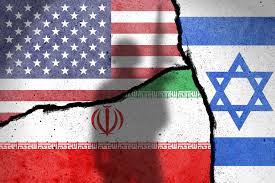
The answers are collated from open sources. Information warfare and propaganda are generally active, as in any other war. Bias in the answers cannot be ruled out.
MILITARY OPERATIONS
What were the major Iranian missile and drone attacks on Israel, and how effective were they?
Iran launched multiple large-scale barrages across 2024–2026. The June 2025 Twelve-Day War saw Iran fire over 550 ballistic missiles and more than 1,000 suicide drones. In the ongoing 2026 campaign, Iran has shifted to wider but smaller barrages targeting Israel, US bases, and infrastructure across Gulf states simultaneously. Israeli forces claim that their overall effectiveness has been low: the vast majority of strikes were intercepted, and physical damage and casualties were limited relative to the scale of launches. Saturation tactics strained interceptor inventories but failed to overwhelm allied defences due to Israeli pre-emptive strikes on launchers and continuous US augmentation.
- What was the nature and scale of Israel’s retaliatory strikes inside Iran?
Israel’s retaliatory campaign has been the largest operation in IAF history. On day one alone, approximately 1,200 strike sorties were flown. Israel has struck over 1,700 military industrial assets across Iran, with thousands more remaining on target lists. The campaign has systematically worked through Iran’s entire missile production chain — from large IRGC-linked assembly facilities to smaller component manufacturers — alongside nuclear sites, air defence infrastructure, naval assets, and leadership targets, including Khamenei himself. Israel claims to have destroyed or disabled approximately 60–90% of Iran’s ballistic missile launchers and has achieved air superiority over most of Iran’s airspace within 24 hours of operations beginning.
- What role did the US military play?
The US played a dual role — defensive and offensive. On the defensive side, US THAAD and Patriot batteries across Israel and Gulf states, alongside Aegis-equipped destroyers in the region, provided critical intercept capacity that prevented Israeli systems from being overwhelmed by volume. On the offensive side, the US struck three Iranian nuclear sites on 22 June 2025 and launched over 900 strikes in the opening phase of Operation Epic Fury on 28 February 2026. US tanker and intelligence support were essential enablers of Israel’s deep-strike campaign inside Iranian airspace.
- What damage did Israeli strikes inflict on Iran’s air defence and nuclear infrastructure?
Reportedly, in the 2026 campaign, over 100 air defence systems and 120 detection systems were taken out within the first 24 hours, giving Israel air superiority over much of Iranian territory. Nuclear facilities at Natanz, Fordow, Isfahan, and the covert Minzadehei site have all sustained significant damage, with key facilities rendered inoperable; survivable elements remain, but reconstitution capacity is being systematically targeted.
AIR DEFENCE: TECHNOLOGY & LESSONS
- What does the conflict reveal about large-scale ballistic missile attacks against layered air defence?
Several clear lessons have emerged. First, layered integration with ally support is highly effective but extraordinarily expensive — interceptor depletion is a genuine strategic vulnerability against an adversary willing to launch at scale. Second, offensive counter-strikes against launchers and command infrastructure are force multipliers that reduce the volume of incoming strikes more efficiently than additional interceptors alone. Third, early warning and space-based detection are operationally decisive — the side that detects first wins the intercept race. Fourth, directed energy weapons are now operationally necessary to address cheap drone swarms economically, as engaging low-cost drones with high-cost interceptors at scale is financially unsustainable.
- How did Israel’s multi-layered air defence system perform against Iranian strikes?
As claimed by Israel, the performance has been outstanding by any historical standard — the combined system achieved interception rates of approximately 80–95% across successive Iranian barrages. The Arrow system engaged ballistic missiles at high altitudes, David’s Sling handled medium-range threats, including MRBMs, at the edge of its design envelope, and the Iron Dome addressed shorter-range rockets and drones. Both David’s Sling and Arrow exceeded their design parameters in operational performance. Some ballistic missiles and drones penetrated — causing fatalities, including in Beit Shemesh — but damage and casualties were dramatically lower than the volume of attacks would suggest. The critical vulnerability exposed is not interception technology but the depth of the interceptor stockpile: Iran’s ambition to grow its ballistic missile inventory from approximately 2,000 to 10,000 poses a potential saturation threat that no allied interceptor stockpile can sustainably address without directed-energy alternatives.
- How did the Iron Dome, David’s Sling, and Arrow systems perform, and what role did US THAAD and Patriot play?
All three Israeli systems performed well against the threat categories they were designed for, collectively achieving approximately 95% interception rates under sustained multi-wave attack. David’s Sling and Arrow both operated at or beyond their design envelopes against Iranian MRBMs. US THAAD and Patriot systems provided essential additional intercept depth; THAAD alone is reported to have expended approximately 25% of its available stockpile in the 2025 phase, continuing heavy use in 2026. Without US augmentation, Israeli interceptor inventories would have been depleted far more rapidly.
(More to follow)
Please Add Value to the write-up with your views on the subject.
For regular updates, please register your email here:-
References and credits
To all the online sites and channels.
Pics Courtesy: Internet
Disclaimer:
Information and data included in the blog are for educational & non-commercial purposes only and have been carefully adapted, excerpted, or edited from reliable and accurate sources. All copyrighted material belongs to the respective owners and is provided only for wider dissemination.