

793: IRAN WAR: MANY QUESTIONS, DIVERSE PERCEPTIONS (PART 3)


The answers are collated from open sources. Information warfare and propaganda are generally active, as in any other war. Bias in the answers cannot be ruled out.


GEOPOLITICAL & STRATEGIC

  1. How did the conflict affect US relations with Gulf Arab states?

Iran’s decision to strike across nine countries — including previously neutral Gulf states such as Oman and Qatar — has had the paradoxical effect of pushing Gulf governments into closer alignment with the US-Israeli security architecture, even as they publicly demand restraint. Iran’s widening of attacks to encompass all GCC states has demonstrated that passive neutrality offers no protection, underscoring that regional threats are better countered collectively. Intelligence-sharing and covert security cooperation between Israel and Gulf neighbours would deepen.


  1. Did the conflict accelerate or derail Israel-Saudi normalisation?

The conflict has deepened covert alignment but left formal normalisation frozen. The Palestinian issue — dramatically amplified in the Arab public sphere by the Gaza war — remains a fundamental political obstacle that shared threat perception of Iran cannot simply override. Arab governments already obtain meaningful security benefits from covert cooperation with Israel without assuming the domestic political risk of formal recognition. US officials, including Senator Graham, have publicly framed the post-war period as a “historic opportunity” to revive normalisation once Iranian pressure recedes, but the structural obstacles remain formidable.


DIPLOMACY & CEASEFIRE

  1. What diplomatic efforts were made to prevent full-scale war, and why did they fail?

Oman led indirect nuclear negotiations in Geneva in February 2026, with Iran reportedly agreeing to forgo stockpiling enriched uranium and accept permanent, full IAEA verification — significant concessions that represented a near-breakthrough. Oman’s Foreign Minister publicly declared peace “within reach.” The US and Israel launched Operation Epic Fury regardless, with Oman’s mediator expressing he was “dismayed” that active negotiations had been overridden by military action. The deeper failure of diplomacy traces to accumulated mistrust, Iran’s reconstitution of its programme after the 2025 setback, the IAEA’s discovery of hidden HEU in February 2026, and an Israeli/US assessment that a narrow preemption window was closing.


  1. What were the terms of any ceasefire agreements, and what role did mediators play?

The June 2025 Twelve-Day War ended in a US-brokered ceasefire on 24 June 2025. No comparable agreement has been reached in the ongoing 2026 conflict. Khamenei’s assassination has shattered the established rules of engagement, leaving the conflict without clear diplomatic off-ramps and deepening into a war of attrition. Oman served as the primary channel for both the 2025 ceasefire and the aborted 2026 nuclear talks. Qatar hosted US military assets while simultaneously coming under Iranian attack — a contradictory position that constrained its mediating role. Egypt maintained a relative distance. China is positioning itself as the primary post-conflict stabiliser, dispatching diplomatic envoys while warning publicly against spreading “flames of war.”


CONSEQUENCES & LONG-TERM OUTLOOK

  1. How significantly has Iran’s military capability been degraded?

Severely. Israel claims approximately 60–90% of Iran’s estimated 500 ballistic missile launchers have been destroyed or disabled. Over 100 air defence systems and 120 detection systems were eliminated in the opening 24 hours. More than 1,700 military industrial assets have been struck, with the campaign working systematically through Iran’s missile production chain. Over 50 naval vessels have been destroyed, effectively decimating Iran’s navy. Nuclear infrastructure is severely damaged. IRGC command nodes and leadership have been targeted. Iran retains core enrichment knowledge, some dispersed material, and the institutional will to reconstitute — but its conventional military power has been fundamentally degraded.


  1. What is the long-term trajectory of Iran-Israel relations?

Persistent, entrenched hostility is the most probable outcome. Iran perceives the conflict as existential and has shown no interest in an off-ramp, calculating that a prolonged war of attrition may eventually favour it. The appointment of Mojtaba Khamenei — widely described as more hardline than his father and closely tied to the IRGC — signals continuity of confrontational posture rather than moderation. The most dangerous near-term risks are an Iranian nuclear dash to weaponise as the ultimate deterrent, or asymmetric revenge operations through reconstituted proxy networks or cyber means. A long-term “new normal” of uneasy, diminished-Iran deterrence is possible if the regime survives in weakened form; outright regime collapse would open a different and highly unpredictable set of outcomes.


  1. Has the conflict changed the doctrine of deterrence in the Middle East?

Profoundly. The killing of a sitting Supreme Leader has shattered red lines that were previously considered inviolable, signalling that no leader or asset is beyond reach for a sufficiently capable and determined adversary. The conflict has validated the superiority of offensive preemption combined with layered defence over passive deterrence-by-denial, and has demonstrated that proxy networks are unreliable against determined state-on-state military action. The perverse global signal, noted by RAND analysts, is that states without nuclear weapons remain existentially vulnerable to decapitation strikes, which may accelerate proliferation among states watching the outcome and drawing their own conclusions.


  1. What are the military lessons for nations like India from this conflict?

The conflict carries direct and urgent lessons for Mission Sudarshan Chakra and India’s broader defence doctrine. First, layered, integrated air defence, combining short-, medium-, and long-range systems with real-time intelligence, is essential against mixed salvos of ballistic missiles, cruise missiles, and drones — validating India’s multi-layered architecture. Second, interceptor stockpile depth is as critical as interception technology itself; saturation rapidly depletes inventories, making directed-energy weapons an operational necessity for economically defeating cheap drone swarms. Third, offensive counter-strikes on launcher and C2 infrastructure are force multipliers — pure defence is strategically and financially unsustainable against a determined adversary, validating the offensive-defensive integration at the heart of Mission Sudarshan Chakra. Fourth, space-based early warning and AI-driven command and control are now operational necessities, not aspirational future capabilities. Fifth, allied interoperability — the US-Israeli model — multiplies system effectiveness in ways that no single national architecture can replicate, underscoring the importance of India deepening defence technology partnerships with the US and Israel in particular.


(More to follow)


Please Add Value to the write-up with your views on the subject.


1878
Default rating

Please give a thumbs up if you  like The Post?


For regular updates, please register your email here:-

Subscribe


References and credits

To all the online sites and channels.

Pics Courtesy: Internet

Disclaimer:

Information and data included in the blog are for educational & non-commercial purposes only and have been carefully adapted, excerpted, or edited from reliable and accurate sources. All copyrighted material belongs to the respective owners and is provided only for wider dissemination.

 

792: IRAN WAR: MANY QUESTIONS, DIVERSE PERCEPTIONS (PART 2)


The answers are collated from open sources. Information warfare and propaganda are generally active, as in any other war. Bias in the answers cannot be ruled out.


MILITARY OPERATIONS

 What were the major Iranian missile and drone attacks on Israel, and how effective were they?

Iran launched multiple large-scale barrages across 2024–2026. The June 2025 Twelve-Day War saw Iran fire over 550 ballistic missiles and more than 1,000 suicide drones. In the ongoing 2026 campaign, Iran has shifted to wider but smaller barrages targeting Israel, US bases, and infrastructure across Gulf states simultaneously. Israeli forces claim that their overall effectiveness has been low: the vast majority of strikes were intercepted, and physical damage and casualties were limited relative to the scale of launches. Saturation tactics strained interceptor inventories but failed to overwhelm allied defences due to Israeli pre-emptive strikes on launchers and continuous US augmentation.


  1. What was the nature and scale of Israel’s retaliatory strikes inside Iran?

Israel’s retaliatory campaign has been the largest operation in IAF history. On day one alone, approximately 1,200 strike sorties were flown. Israel has struck over 1,700 military industrial assets across Iran, with thousands more remaining on target lists. The campaign has systematically worked through Iran’s entire missile production chain — from large IRGC-linked assembly facilities to smaller component manufacturers — alongside nuclear sites, air defence infrastructure, naval assets, and leadership targets, including Khamenei himself. Israel claims to have destroyed or disabled approximately 60–90% of Iran’s ballistic missile launchers and has achieved air superiority over most of Iran’s airspace within 24 hours of operations beginning.


  1. What role did the US military play?

The US played a dual role — defensive and offensive. On the defensive side, US THAAD and Patriot batteries across Israel and Gulf states, alongside Aegis-equipped destroyers in the region, provided critical intercept capacity that prevented Israeli systems from being overwhelmed by volume. On the offensive side, the US struck three Iranian nuclear sites on 22 June 2025 and launched over 900 strikes in the opening phase of Operation Epic Fury on 28 February 2026. US tanker and intelligence support were essential enablers of Israel’s deep-strike campaign inside Iranian airspace.


  1. What damage did Israeli strikes inflict on Iran’s air defence and nuclear infrastructure?

Reportedly, in the 2026 campaign, over 100 air defence systems and 120 detection systems were taken out within the first 24 hours, giving Israel air superiority over much of Iranian territory. Nuclear facilities at Natanz, Fordow, Isfahan, and the covert Minzadehei site have all sustained significant damage, with key facilities rendered inoperable; survivable elements remain, but reconstitution capacity is being systematically targeted.

AIR DEFENCE: TECHNOLOGY & LESSONS

  1. What does the conflict reveal about large-scale ballistic missile attacks against layered air defence?

Several clear lessons have emerged. First, layered integration with ally support is highly effective but extraordinarily expensive — interceptor depletion is a genuine strategic vulnerability against an adversary willing to launch at scale. Second, offensive counter-strikes against launchers and command infrastructure are force multipliers that reduce the volume of incoming strikes more efficiently than additional interceptors alone. Third, early warning and space-based detection are operationally decisive — the side that detects first wins the intercept race. Fourth, directed energy weapons are now operationally necessary to address cheap drone swarms economically, as engaging low-cost drones with high-cost interceptors at scale is financially unsustainable.


  1. How did Israel’s multi-layered air defence system perform against Iranian strikes?

As claimed by Israel, the performance has been outstanding by any historical standard — the combined system achieved interception rates of approximately 80–95% across successive Iranian barrages. The Arrow system engaged ballistic missiles at high altitudes, David’s Sling handled medium-range threats, including MRBMs, at the edge of its design envelope, and the Iron Dome addressed shorter-range rockets and drones. Both David’s Sling and Arrow exceeded their design parameters in operational performance. Some ballistic missiles and drones penetrated — causing fatalities, including in Beit Shemesh — but damage and casualties were dramatically lower than the volume of attacks would suggest. The critical vulnerability exposed is not interception technology but the depth of the interceptor stockpile: Iran’s ambition to grow its ballistic missile inventory from approximately 2,000 to 10,000 poses a potential saturation threat that no allied interceptor stockpile can sustainably address without directed-energy alternatives.


  1. How did the Iron Dome, David’s Sling, and Arrow systems perform, and what role did US THAAD and Patriot play?

All three Israeli systems performed well against the threat categories they were designed for, collectively achieving approximately 95% interception rates under sustained multi-wave attack. David’s Sling and Arrow both operated at or beyond their design envelopes against Iranian MRBMs. US THAAD and Patriot systems provided essential additional intercept depth; THAAD alone is reported to have expended approximately 25% of its available stockpile in the 2025 phase, continuing heavy use in 2026. Without US augmentation, Israeli interceptor inventories would have been depleted far more rapidly.


(More to follow)


Please Add Value to the write-up with your views on the subject.


1878
Default rating

Please give a thumbs up if you  like The Post?


For regular updates, please register your email here:-

Subscribe


References and credits

To all the online sites and channels.

Pics Courtesy: Internet

Disclaimer:

Information and data included in the blog are for educational & non-commercial purposes only and have been carefully adapted, excerpted, or edited from reliable and accurate sources. All copyrighted material belongs to the respective owners and is provided only for wider dissemination.


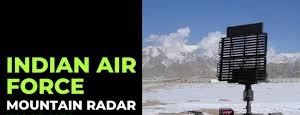
720: INDIA TO ENHANCE HIGH-ALTITUDE SURVEILLANCE WITH ADVANCED MOUNTAIN RADARS


On August 5, 2025, India’s Defence Acquisition Council (DAC), led by Defence Minister Rajnath Singh, approved several critical capital procurement proposals to enhance the Indian Armed Forces’ capabilities. A standout decision was the Acceptance of Necessity (AoN) for advanced mountain radars for the Indian Air Force (IAF). These radars are designed to enhance air surveillance in rugged, high-altitude border regions, addressing operational challenges posed by complex terrain, such as valleys and ridgelines. This move marks a significant step in modernising India’s air defence and surveillance infrastructure, particularly along contested mountainous borders.

With the AoN secured, the following steps include issuing a Request for Proposal (RFP) and finalising contracts. The Defence Acquisition Council’s 2025 approval for additional mountain radars reflects India’s strategic focus on bolstering layered surveillance. These new radars would enhance early warning systems and airspace monitoring, fortifying India’s defence capabilities in strategically sensitive areas.


Mountain Radars

Mountainous regions present unique challenges for military surveillance and air defence due to uneven terrain, extreme weather conditions, and logistical constraints. Mountain radars, specialised systems designed to overcome these hurdles, are critical for maintaining airspace security in high-altitude environments.

Mountain radars are sophisticated radar systems engineered for dependable operation in rugged, high-altitude terrains. Unlike conventional radar systems, which are generally optimised for flat or coastal regions, mountain radars are specifically tailored to operate effectively within such environments. These systems address challenges related to fragmented lines of sight, severe environmental conditions, and logistical obstacles. Their principal purpose is to detect aircraft, drones, helicopters, and even ground vehicles that may utilise terrain features to evade surveillance, thereby ensuring comprehensive airspace monitoring in difficult terrains.

Mountain radars function on principles analogous to those of traditional radars, emitting electromagnetic pulses and analysing their reflections. Nonetheless, they employ sophisticated algorithms to address terrain-specific challenges. Techniques such as Doppler Filtering are used to differentiate moving targets from static ground clutter. Multi-beam scanning enables the simultaneous tracking of multiple targets, and Clutter Suppression is utilised to eliminate false echoes from rugged landscapes. Operators are provided with real-time updates, including automated alerts for fast-moving or low-flying threats, such as drones or helicopters that may be concealed within valleys.

India’s Mountain Radar Program. The Indian program plays a crucial role in securing its Himalayan borders along the Line of Actual Control (LAC) and Line of Control (LOC). It addresses aerial threats in rugged terrain by deploying advanced radar technology. A key component of this initiative is the DRDO-developed Aslesha Mk I, a three-dimensional, low-level, lightweight radar designed for rapid deployment and ease of transportation. This radar system effectively tracks fighter aircraft, drones, and low-flying helicopters across a range of altitudes, even in complex mountainous environments. Its multi-target tracking capability enhances situational awareness, rendering it an essential asset for the Indian Air Force in continuous border surveillance.  By integrating indigenous systems such as the Aslesha with international technologies, India ensures redundancy and comprehensive coverage, thereby strengthening its defence posture. This program underscores India’s commitment to utilising advanced radar systems to maintain vigilance and respond effectively to emerging threats in the geopolitically sensitive Himalayan region, thereby safeguarding national security.

Core Technologies and Features. Modern mountain radars incorporate cutting-edge technologies to meet operational demands:-

    • 3D Surveillance. Unlike older 2D radars that track only range and direction, systems like the DRDO Aslesha Mk I provide 3D tracking—capturing azimuth, elevation, and range. This is vital for identifying threats at varying altitudes in mountainous regions.
    • Phased-Array Antennas. Using electronically steerable beams, these radars scan rapidly without mechanical movement, enabling quick detection of threats from unpredictable directions.
    • Portability and Modularity. Lightweight and transportable by road, helicopter, or all-terrain vehicles, systems like the Aslesha can be deployed to remote outposts or even airdropped for rapid setup.
    • All-Weather Performance. Robust enclosures and advanced signal processing ensure operation in extreme conditions, filtering out environmental noise like snow or rain.
    • Network Integration. These radars connect to broader air defence networks, combining data from multiple sites to eliminate blind spots caused by terrain and create a comprehensive surveillance picture.

Deployment Strategies.  Effective radar deployment is essential for optimal surveillance and defence. It involves selecting high, accessible sites, such as peaks, for maximum coverage and ease of maintenance. Mobility through portable systems allows quick repositioning against threats, giving an edge over stationary systems. Infrastructure, including generators, batteries, solar panels, and secure satellite or radio links, supports remote operation. Redundancy with overlapping units ensures continuous coverage, thereby reducing risks associated with malfunctions or enemy interference. Following these principles enhances situational awareness, flexibility, and reliability, crucial for modern defence in dynamic, contested environments.

Strategic Significance. Mountain radar systems are essential for defending disputed or poorly defined borders, especially in rugged terrains characterised by’ shadow zones” susceptible to exploitation by adversaries. These systems effectively bridge critical coverage gaps, ensuring that no aircraft or drone remains undetected, even within complex mountainous regions. By providing early warning capabilities, they facilitate prompt responses to aerial incursions, thereby enhancing situational awareness and operational preparedness. Furthermore, mountain radars act as a deterrent against advanced unmanned aerial vehicles (UAVs) and reconnaissance threats, thereby countering potential aggressions. Their incorporation into national air defence frameworks fosters a unified security network, transmitting real-time data to central command for coordinated action. This strategic importance is particularly accentuated in geopolitically sensitive zones, where sustained vigilance is imperative. Through the mitigation of blind spots and the enhancement of defence mechanisms, mountain radars play a crucial role in protecting national sovereignty and ensuring resilient border security within challenging environments.

Challenges. Mountain radars, despite their advanced capabilities, face significant difficulties in deployment and operational effectiveness. Terrain shadows persist as a substantial issue, as rugged landscapes create coverage gaps that low-flying threats, such as drones or stealth aircraft, can exploit. These blind spots require innovative solutions to achieve comprehensive surveillance. Electronic warfare presents another obstacle, with adversaries utilising sophisticated jamming techniques to impair radar functionality, thus demanding robust countermeasures such as frequency hopping and anti-jamming technologies. Furthermore, environmental degradation in harsh mountain climates — characterised by extreme temperatures, snow, and wind — accelerates equipment deterioration, necessitating frequent maintenance and resilient design solutions to sustain operational reliability. These challenges underscore the necessity for ongoing technological advancements and strategic planning to enhance radar effectiveness. Addressing terrain limitations, countering electronic threats, and ensuring durability under extreme conditions are essential for maintaining adequate border security and situational awareness in contested mountainous regions.

Future Trends. The future of mountain radar technology is poised for transformative advancements to enhance border security. Multi-static networks are emerging as a key innovation, utilising multiple transmitters and receivers to eliminate blind spots caused by rugged terrain, ensuring comprehensive coverage. Passive radars represent another leap, leveraging ambient commercial signals—such as TV or cellular broadcasts—for stealthy, energy-efficient detection that is harder for adversaries to jam or detect. UAS integration is also gaining traction, with radars mounted on unmanned aerial systems enabling mobile, adaptive surveillance that can be rapidly repositioned to respond to dynamic threats. These innovations promise greater resilience against electronic warfare, improved detection of low-flying or stealth threats, and enhanced operational flexibility. By integrating these cutting-edge technologies, future mountain radar systems will bolster situational awareness, close coverage gaps, and strengthen defence capabilities in challenging, contested environments, ensuring robust security along geopolitically sensitive borders.

Conclusion

Mountain radars are essential for safeguarding airspace under challenging terrains, integrating advanced electronics, portability, and network connectivity to address contemporary threats. Systems such as the DRDO Aslesha Mk I exemplify this capability, offering India improved surveillance along its mountainous borders. As geopolitical tensions and aerial threats escalate, mountain radars will continue to advance, ensuring robust defence in some of the world’s most challenging environments.


Please Add Value to the write-up with your views on the subject.


1878
Default rating

Please give a thumbs up if you  like The Post?


For regular updates, please register your email here:-

Subscribe


References and credits

To all the online sites and channels.

Pics Courtesy: Internet

Disclaimer:

Information and data included in the blog are for educational & non-commercial purposes only and have been carefully adapted, excerpted, or edited from reliable and accurate sources. All copyrighted material belongs to respective owners and is provided only for wider dissemination.


References: –


  1. Defence Research and Development Organisation (DRDO). Aslesha Mk I 3D Low Level Lightweight Radar Specifications. DRDO Electronics & Radar Development Establishment (LRDE).


  1. Indian Defence Acquisition Council (DAC). 2025 Procurement Approvals for Mountain Radars. Economic Times, India Today, March 2025.


  1. Mishra, S. K., et al. “Design and Development of Lightweight Phased-Array Radars for Mountainous Terrain.” Defence Science Journal, Vol. 68, No. 3, 2018.


  1. Rao, V. K. “Challenges of Radar Deployment in Mountainous Borders.” Journal of Military Technology, 2022.


  1. Thales Group. GO12 Man-Pack Radar Technical Brochure.


  1. Skolnik, M. I. Introduction to Radar Systems, 3rd Edition. McGraw-Hill, 2001.


  1. Mahafza, B. R. Radar Systems Analysis and Design Using MATLAB, 3rd Edition. CRC Press, 2013.


  1. News Reports. “India Boosts Mountain Radar Capabilities.” Economic Times, March 2025; “DRDO’s Aslesha Transforms Border Surveillance.” India Today, February 2025.


English हिंदी