
719: ARTIFICIAL INTELLIGENCE-ENABLED AIR FORCES: THE FUTURE OF AERIAL WARFARE


Article Published In the 2025 edition of the Karnataka branch of the Air Force Association Journal.


Integrating Artificial Intelligence (AI) in air forces is revolutionising modern aerial warfare, enhancing combat efficiency, decision-making capabilities, and operational effectiveness. AI-driven technologies are transforming everything from autonomous drones and pilot assistance systems to predictive maintenance and cyber defence. The ongoing advancements in AI are paving the way for next-generation warfare, where speed, precision, and automation play pivotal roles. There is a need to explore the benefits, challenges, and prospects of AI-enabled air forces, as well as examine how militaries worldwide are leveraging AI to gain a strategic advantage in the skies.


AI Applications in Air Warfare.

 Autonomous Combat Drones and Loyal Wingmen. One of the most significant developments in AI-enabled air forces is the use of autonomous combat drones and “loyal wingmen” programs. AI-powered Unmanned Aerial Vehicles (UAVs) can operate independently or in coordination with manned aircraft. The U.S. Air Force’s Skyborg program, Russia’s Okhotnik-B, and India’s CATS Warrior are leading examples of AI-powered aerial combat systems. Key capabilities of AI-enabled drones include autonomous targeting and engagement of enemy aircraft and ground targets, AI-driven reconnaissance for real-time battlefield awareness, and electronic warfare capabilities to disrupt enemy communications and radar. Loyal wingmen, such as Boeing’s MQ-28 Ghost Bat, work alongside fighter jets, assisting in combat while reducing the risk to human pilots.

AI-Assisted Air Combat. AI has also been tested in air-to-air combat scenarios. In 2020, DARPA’s AlphaDogfight Trials demonstrated that an AI-piloted F-16 simulator could outperform an experienced human pilot in dogfighting scenarios. AI-driven fighter jets can make rapid manoeuvring decisions, anticipate enemy tactics, and optimise firing solutions faster than human pilots.

AI Co-Pilot Systems. Modern fighter jets are incorporating AI as a co-pilot to assist human pilots in complex combat scenarios. AI co-pilots can provide real-time threat analysis and countermeasure recommendations, optimise flight paths for maximum efficiency and survivability, and assist in weapons management and target prioritisation. The U.S. Air Force’s Air Combat Evolution (ACE) program is working on integrating AI co-pilots into next-generation fighter aircraft.

AI in Predictive Maintenance and Logistics Optimisation. AI-powered maintenance systems can analyse vast amounts of sensor data to predict mechanical failures before they occur. The Condition-Based Maintenance (CBM+) system helps optimise aircraft maintenance schedules, reducing downtime and improving fleet readiness. AI’s Key benefits in maintenance include minimising unexpected failures, ensuring mission readiness, efficient resource allocation by prioritising high-risk components, and cost savings by reducing unnecessary maintenance.

AI in Air Defence Systems. AI enhances air defence by improving target detection and response times. AI-enabled radar and sensor fusion systems help military forces detect and track multiple airborne threats simultaneously, optimise interception strategies against hypersonic missiles and stealth aircraft, and identify and neutralise threats with minimal human intervention. Systems like Israel’s Iron Dome and Russia’s S-500 Prometheus integrate AI to enhance target prioritisation and engagement.

AI in Electronic Warfare (EW). AI-driven electronic warfare systems can autonomously jam enemy radar and communication networks, adapt to new threats by analysing enemy signals in real-time, and protect friendly assets from cyber and electromagnetic attacks. The U.S. Air Force is actively developing AI-enhanced Electronic Warfare Pods for next-generation combat aircraft.

AI in Mission Planning. AI assists in complex mission planning by analysing real-time battlefield data. Advanced AI systems can generate optimal attack and defence strategies based on situational awareness, adapt plans dynamically as new threats emerge, and reduce commanders’ decision-making time. Programs like Project Maven employ AI to analyse drone surveillance footage, identifying potential threats more efficiently than human analysts. AI-driven battlefield management systems integrate data from multiple sources, including satellites and reconnaissance aircraft, ground-based radars and air defence systems, as well as cyber intelligence reports. This allows commanders to make data-driven decisions in high-pressure combat scenarios.

Swarm Warfare: The Future of Aerial Combat. AI-controlled drone swarms are emerging as a game-changing technology in aerial combat. Swarm tactics involve deploying multiple autonomous drones to overwhelm enemy defences with coordinated attacks, conducting distributed intelligence, surveillance, and reconnaissance (ISR), and executing autonomous electronic jamming and decoy operations. Countries like the U.S., China, and India are actively researching AI-driven drone swarms as a force multiplier in future conflicts.


Advantages and Challenges of AI in Air Forces

 Advantages of AI-Enabled Air Forces. AI-enabled air forces offer numerous advantages, revolutionising modern aerial warfare and operational efficiency. One key benefit is enhanced decision-making, as AI rapidly processes vast amounts of battlefield data to provide real-time intelligence, improving situational awareness and response times. Additionally, AI reduces pilot workload by automating routine tasks, allowing human operators to focus on complex strategic decisions. Combat efficiency is also significantly increased through AI-driven targeting, threat assessment, and autonomous drones that execute missions with precision. Another significant advantage is the reduction of human casualties, as AI-powered unmanned aerial vehicles (UAVs) can conduct high-risk operations without putting pilots at risk. Furthermore, AI optimises maintenance and logistics by predicting equipment failures and streamlining supply chains, reducing downtime and operational costs. These advancements collectively enhance Air Force effectiveness, ensuring superior combat readiness while lowering overall risks and expenses. As AI technology continues to evolve, its role in modern air forces will become increasingly indispensable.

Challenges and Ethical Concerns.  Integrating AI into air forces presents significant challenges and ethical concerns despite its advantages. A major issue is balancing autonomy with human oversight, as fully autonomous AI systems raise questions about accountability and decision-making in combat. Ensuring that AI does not make lethal decisions without human intervention remains a critical concern for policymakers and military leaders. Cybersecurity threats pose risks, as adversaries could manipulate or hack AI-driven systems, leading to catastrophic failures. Additionally, AI bias and errors in target recognition or threat assessment could result in unintended casualties or collateral damage. Another challenge is the potential for AI to accelerate the global arms race

as nations compete to develop more advanced autonomous weapons, raising the risk of destabilisation. Addressing these concerns requires robust regulations, international cooperation, and strict ethical frameworks to ensure AI remains a tool for enhancing security rather than escalating conflicts.

The Future of AI in Air Forces. The future of AI in air forces promises unprecedented advancements, reshaping aerial warfare with enhanced autonomy, precision, and strategic capabilities. Unmanned Combat Aerial Vehicles (UCAVs) will see increased autonomy, enabling them to operate independently or in coordination with manned aircraft in high-risk missions, reducing reliance on human pilots. AI-powered hypersonic weapons guidance systems will enhance missile accuracy, making airstrikes faster and more precise. Additionally, integrating AI with quantum computing will revolutionise data processing, allowing air forces to conduct predictive analytics at unprecedented speeds and improving threat detection, mission planning, and electronic warfare strategies. As AI-driven systems become more sophisticated, militaries will develop advanced counter-AI warfare techniques to neutralise enemy AI assets, ensuring dominance in digital battle spaces. However, as AI’s role expands, ethical and strategic concerns will require careful regulation and oversight. Ultimately, AI will be a cornerstone of future air forces, enabling superior operational efficiency, strategic decision-making, and battlefield dominance while necessitating continued advancements in security, ethics, and control mechanisms.


Conclusion. Artificial Intelligence is fundamentally transforming the landscape of aerial warfare. AI-enabled air forces are becoming faster, more efficient, and increasingly autonomous. From autonomous combat drones and AI co-pilots to predictive maintenance and swarm warfare, AI enhances every aspect of military aviation. However, as nations race to integrate AI into their defence strategies, addressing challenges related to autonomy, cybersecurity, and ethical considerations is crucial. The future of warfare will be shaped by how effectively AI is integrated into the air forces of the world.


Please Add Value to the write-up with your views on the subject.


1878
Default rating

Please give a thumbs up if you  like The Post?


For regular updates, please register your email here:-

Subscribe


References and credits

To all the online sites and channels.

Pics Courtesy: Internet

Disclaimer:

Information and data included in the blog are for educational & non-commercial purposes only and have been carefully adapted, excerpted, or edited from reliable and accurate sources. All copyrighted material belongs to respective owners and is provided only for wider dissemination.


References:-

  1. Gady, Franz-Stefan. “AI, Autonomy, and Airpower: Future Directions in Military Aviation.” International Institute for Strategic Studies (IISS), 2022.
  1. Roff, Heather M. “The Strategic Implications of Lethal Autonomous Weapon Systems.” RAND Corporation, 2016.
  1. Lockheed Martin. AI and Autonomy in Next-Generation Fighter Jets. Lockheed Martin Corporation, 2022.
  1. DARPA (Defence Advanced Research Projects Agency). Algorithmic Warfare and AI-Powered Air Combat. U.S. Department of Defence, 2021.
  1. RAND Corporation. The Future of Unmanned Aerial Vehicles and AI Integration. RAND Research Report, 2022.
  1. B Prakash, AI and the Future of Air Combat in India, MP-IDSA, 2022.

Industry & Technology Reports

  1. Trevithick, Joseph. “The U.S. Air Force’s AI-Powered ‘Skyborg’ Drone: A Game Changer?” The War Zone, 2021.
  1. Ackerman, Evan. “AI Pilots Now Outperform Human Fighter Pilots in Simulated Dogfights.” IEEE Spectrum, 2022.
  1. Johnson, David. “China’s AI-Enabled Aerial Warfare: Capabilities and Implications.” Defence One, 2023.
  1. Cummings, Mary L. Human-Autonomy Teaming: Issues and Challenges for AI in Military Operations. CRC Press, 2021.
  1. Scharre, Paul. Army of None: Autonomous Weapons and the Future of War. W.W. Norton & Company, 2018.

678: PROJECT KUSHA: INDIA’S INDIGENOUS SKY SHIELD


My Article published on “The EurasianTimes” website on 10 Jun 25.


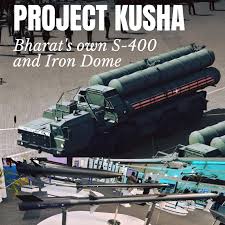
On June 8, 2025, the Defence Research and Development Organisation (DRDO) chief announced that Project Kusha is equivalent to Russia’s S-500 and surpasses the S-400 in capabilities. This positions it as a “game-changer” for India’s air defence. It is designed to counter stealth jets, drones, aircraft, and Mach 7 anti-ship ballistic missiles with an 80–90% interception success rate.

Project Kusha is an ambitious Indigenous long-range air defence system being developed by the DRDO. It is also known as the Extended Range Air Defence System (ERADS) or Precision-Guided Long-Range Surface-to-Air Missile (PGLRSAM). Project Kusha bridges the gap between the 80 km MR-SAM and 400 km S-400, integrating with systems like Akash and Barak-8.

It is a critical part of India’s self-reliance initiative, “Atmanirbhar Bharat”.  The home-grown solution aims to safeguard India’s airspace from aerial threats by strengthening defences against regional threats, particularly from Pakistan and China. The project has gained attention after the May 2025 India-Pakistan conflict, where air defence systems proved vital against drones and missiles, underscoring the need for indigenous capabilities like Kusha. With a projected deployment timeline of 2028–2029, this system is poised to enhance the operational readiness of the Indian Air Force (IAF) and Indian Navy.


System Specifications

Interceptor Missiles. Project Kusha’s core strength lies in its three-tiered interceptor missile system, designed to neutralise various aerial threats at varying ranges. The M1 Interceptor (150 km) missile would target threats like fighter jets, drones, and cruise missiles at shorter ranges. Its compact 250 mm diameter kill vehicle, equipped with a dual-pulse solid rocket motor and thrust vector control, ensures high manoeuvrability and precision, making it ideal for tactical engagements. The M2 Interceptor (250 km) missile with an extended range can engage advanced targets, including airborne early warning and control systems (AEW&CS) and anti-ship ballistic missiles (ASBMs). It shares the M1’s 250 mm kill vehicle, optimised for agility and accuracy against mid-range threats. The M3 Interceptor (350–400 km), the longest-range missile in the system, is designed to counter larger aircraft and potentially short- and medium-range ballistic missiles (SRBMs and IRBMs). It may feature a larger 450 mm diameter kill vehicle to achieve its extended range and enhanced lethality.

Capabilities. These interceptors boast an impressive single-shot kill probability of 85%, which rises to 98.5% when two missiles are launched in salvo mode, five seconds apart. The missiles likely employ hit-to-kill (HTK) technology, relying on kinetic energy rather than explosive warheads, similar to advanced systems like the US THAAD or SM-3. Dual-seeker technology, combining radar and infrared guidance, enhances their ability to track and destroy low-radar-signature targets, such as stealth aircraft and cruise missiles.

Advanced Radar Systems. The effectiveness of Project Kusha hinges on its state-of-the-art radar systems, particularly the Long Range Battle Management Radar (LRBMR), an S-band radar with a detection range exceeding 500 km. This radar can scan 500–600 km into enemy territory, providing early warning against stealth aircraft, drones, precision-guided munitions, and ballistic missiles. The system integrates seamlessly with India’s Integrated Air Command and Control System (IACCS), enabling real-time coordination with other air defence systems, including Akash, MRSAM, and the S-400. For naval applications, the Indian Navy is developing a 6×6-meter radar for its Next Generation Destroyer, four times larger than the radar on the Visakhapatnam-class destroyer, to detect sea-skimming missiles and ASBMs with ranges up to 1,000 km.

Multi-Layered Defence Architecture. Project Kusha is designed as a multi-layered air defence system. It provides strategic and tactical cover for critical infrastructure, military bases, and urban centers. The system’s versatility allows it to counter various threats, from low-flying cruise missiles to high-altitude aircraft and limited ballistic missile threats. By integrating with India’s Ballistic Missile Defence (BMD) program, including the AD-1 and AD-2 interceptors, Project Kusha forms a robust shield against both conventional and strategic threats.

Technological Innovations. Project Kusha incorporates cutting-edge technologies to ensure operational superiority:-

    • AI-Enabled Decision Support. The system may leverage artificial intelligence to coordinate intercepts, process real-time data from satellites, radars, AWACS, and UAVs, and optimise target engagement.
    • Dual-Seeker Technology. Combining radar and infrared seekers enhances the system’s ability to track and destroy stealthy or low-observable targets.
    • Compact Design. The M1 and M2 interceptors’ 250 mm diameter kill vehicles are notably smaller than comparable systems like the US SM-2 or SM-6, showcasing DRDO’s innovative approach to missile design.


Comparison with Global Systems


S-400 Triumf (Russia). The S-400 can engage 36 targets simultaneously at a range of 400 km. Project Kusha aims to match this range with its M3 interceptor and offers better integration with India’s defence architecture, reducing reliance on foreign maintenance and support.

Patriot (USA). While the Patriot is a proven system, Kusha’s lower cost and indigenous design provide a tailored alternative for India’s needs, with potential for greater scalability.

David’s Sling and Iron Dome (Israel). Although similar in some aspects, such as dual-seeker technology, Kusha’s M2 and M3 missiles offer longer ranges and limited BMD capabilities, unlike David’s Sling’s focus on shorter-range threats. The Iron Dome is optimised for short-range rocket interception, while Kusha targets long-range strategic threats, making it more comparable to the S-400 or Patriot.


Project Details & Development Journey

Approval and Funding. In May 2022, the Cabinet Committee on Security (CCS) approved the development of Project Kusha. In September 2023, the Ministry of Defence granted the Acceptance of Necessity (AoN) for procuring five IAF squadrons at an estimated cost of ₹21,700 crore (approximately US$2.6 billion). This investment reflects India’s commitment to building a self-reliant defence ecosystem that addresses modern threats.

Key Partners. The DRDO is leading the Project Kusha, with Bharat Electronics Limited (BEL) playing a pivotal role in developing critical subsystems like radars and battle management systems. The Defence Research and Development Laboratory (DRDL) is responsible for designing the interceptor missiles, while the Research Centre Imarat (RCI) focuses on advanced seeker technology. Collaboration with private industry partners is expected to accelerate development and production, aligning with India’s push for public-private partnerships in defence.

Timeline. As of May 2025, the DRDO has reportedly completed the design phase, with development of critical components underway. BEL aims to complete a prototype within 12–18 months (by November 2026–May 2027). The user trials are expected to last 12–36 months, paving the way for operational deployment by 2028–2029.


Strategic Significance

Self-Reliance and Cost-Effectiveness. Project Kusha is a cornerstone of India’s Atmanirbhar Bharat initiative, reducing dependence on foreign systems like the S-400, which faced delivery delays due to the Russia-Ukraine conflict. At ₹21,700 crore for five IAF squadrons, it is significantly more cost-effective than the $5.25 billion deal for five S-400 units, offering comparable capabilities tailored to India’s operational needs. This cost advantage enhances India’s ability to scale its air defence infrastructure without straining its defence budget.

Regional Deterrence.  With China and Pakistan modernising their air forces and missile arsenals, Project Kusha strengthens India’s deterrence posture. Its ability to counter stealth aircraft, cruise missiles, and ASBMs addresses emerging threats in the Indo-Pacific, particularly China’s growing naval and missile capabilities. The system’s integration with the IACCS ensures a cohesive defence network, enabling rapid response to multi-domain threats and enhancing India’s strategic autonomy.

Export Potential. Project Kusha’s advanced technology and competitive pricing position India as a potential global air defence market player. Countries seeking alternatives to Western and Russian systems may find Kusha attractive, boosting India’s defence exports and geopolitical influence. Success in this arena could elevate India’s status as a defence technology provider, complementing its exports like the BrahMos missile.


Challenges and Considerations

Technical Challenges. Achieving the claimed ranges with compact interceptors, particularly the 150 km M1, has raised scepticism due to its small size compared to US SM-2 or SM-6 systems. Ensuring reliability and accuracy against stealthy and hypersonic threats will require rigorous testing and validation.

Development Timeline. The 2028–2029 deployment target is ambitious, given the complexity of integrating advanced radars, AI systems, and interceptors. Delays in prototype development or user trials could push back operational readiness, as seen in past DRDO projects.

System Integration. Seamless integration with existing systems (Akash, MRSAM, S-400) and future systems (AD-1, AD-2) is essential for a cohesive air defence network. Any interoperability issues could undermine the system’s effectiveness and delay deployment.

International Competition. India will face stiff competition from established players like the US, Russia, and Israel in the global air defence market. Demonstrating technological superiority and reliability will be critical for export success and domestic adoption.


Future Phases

Naval Integration. The Indian Navy plans to deploy the M1 and M2 interceptors on next-generation surface combatants, such as destroyers, to counter ASBMs and other maritime threats. The enhanced naval radar system will provide 360-degree coverage, enabling early detection and interception of sea-skimming missiles. This integration underscores Project Kusha’s role in strengthening India’s maritime security, particularly in the Indo-Pacific region, where threats like China’s DF-21D “carrier-killer” missiles pose significant challenges.

Future Enhancement. Project Kusha is the first phase of a multi-phase program. Phase II aims to develop interceptors with ranges exceeding 400 km and anti-hypersonic capabilities, potentially rivalling Russia’s S-500 system. This long-term vision underscores India’s ambition to remain at the forefront of air defence technology, addressing future threats like hypersonic missiles and advanced stealth platforms.


Conclusion

Project Kusha represents a monumental leap in India’s quest for self-reliance in defence technology. It promises to deliver a versatile, multi-layered air defence shield capable of countering diverse threats by combining advanced interceptors, long-range radars, and AI-driven systems. A cost-effective price tag and a focus on indigenous innovation strengthen India’s strategic autonomy and position the country as a potential leader in the global defence market. However, overcoming technical challenges and meeting the ambitious 2028–2029 timeline will be critical to realising its full potential. As India advances toward operational deployment, Project Kusha is a testament to its growing technological prowess and commitment to safeguarding its skies.


Please Add Value to the write-up with your views on the subject.


1878
Default rating

Please give a thumbs up if you  like The Post?


Link to the article on the website:-

India’s Own S-500 & THAAD! DRDO Announces Project Kusha Sky Shield Program That Could Revolutionize Indian Defenses

For regular updates, please register your email here:-

Subscribe


References and credits

To all the online sites and channels.

Pics Courtesy: Internet

Disclaimer:

Information and data included in the blog are for educational & non-commercial purposes only and have been carefully adapted, excerpted, or edited from reliable and accurate sources. All copyrighted material belongs to respective owners and is provided only for wider dissemination.

References:-

  1. Press Information Bureau (PIB), Government of India, “DRDO Chief Briefs on Indigenous Long-Range Air Defence System ‘Project Kusha’.” PIB Release, June 8, 2025.
  2. Bedi, R. (2023, September 10). India approves indigenous long-range air defence system under Project Kusha—Jane’s Defence Weekly.
  3. Bharat Electronics Limited. (2025, May 15). Annual report 2024–2025: Progress on Project Kusha.
  4. Defence Research and Development Organisation. (2024). DRDO newsletter: Advances in air defence systems.
  5. Gupta, S. (2024, December 12). Project Kusha: India’s answer to the S-400. The Times of India.
  6. Indian Ministry of Defence. (2023, September 15). Acceptance of Necessity (AoN) for Project Kusha. Press Information Bureau.
  7. Sagar, P. (2024, November 20). Project Kusha and India’s multi-layered air defence strategy. The Diplomat.
  8. Singh, R. (2025, March 15). How Project Kusha could transform India’s defence exports. India Today.
  9. The Hindu, “Project Kusha Will Be India’s Answer to S-500, Says DRDO Chief.” The Hindu Defence Correspondent, June 8, 2025.
  10. Hindustan Times, “Explained: What Is Project Kusha and Why It Is a Game-Changer for India’s Air Defence?” Hindustan Times Defence Desk, June 9, 2025.
  11. Economic Times (ET Defence), “DRDO’s Project Kusha: India’s Indigenous Answer to S-400 and THAAD.” ET Defence, May 2025.
  12. Livefist Defence, Shukla, Shiv Aroor. “India’s Kusha Air Defence System: Details, Development and Deployment Plans.” Livefist, June 2025.
  13. Business Standard, “DRDO’s Project Kusha: DRDL, BEL, RCI Key Partners in Long-Range SAM System.” Business Standard Defence, September 2023.
  14. Jane’s Defence Weekly, “India Advances Work on Multi-Layered Air Defence with Project Kusha.” Janes.com, February 2025.
  15. ORF (Observer Research Foundation), Das, Abhijit Iyer-Mitra. “Strategic Implications of India’s Long-Range Air Defence Ambitions.” ORF Occasional Paper, March 2025.
  16. Vayu Aerospace and Defence Review, “Kusha, Akash-NG, and the Future of Indian Air Defence.” Vayu Defence Review, Issue Q2 2025.
  17. South Asia Monitor, “India’s Air Defence Evolution: From Akash to Kusha.” South Asia Monitor, April 2025.

581: GUERRILLA AIR DEFENCE: STRATEGY OF THE UNDERDOG

Pic Courtesy Net


My article published on the Peninsula Foundation Website on 14 Jan 25


In the modern era of warfare, air superiority has become a cornerstone of military strategy. Nations with advanced air forces often dominate battlefields, leveraging precision-guided munitions, reconnaissance drones, and stealth technology. However, guerrilla forces, lacking comparable resources, have developed innovative air defence strategies to counter such overwhelming air dominance. Guerrilla air defence embodies the ingenuity of the underdog, employing asymmetric tactics and exploiting weaknesses in advanced air forces.


Guerrilla Air Defence


Guerrilla air defence refers to the methods and tactics employed by ground forces, mainly non-state actors or irregular forces, to counter the overwhelming aerial superiority of state militaries. In modern conflicts, air dominance often plays a pivotal role in determining outcomes, and ground forces must innovate to level the battlefield. These tactics range from using man-portable air defence systems (MANPADS) to employing deception, leveraging urban terrain, and deploying counter-drone measures.


Historical Foundation. The concept of guerrilla air defence emerged during the Cold War, as smaller forces sought ways to combat technologically superior opponents. Early examples include the North Vietnamese forces, with Soviet and Chinese support, employing a mix of surface-to-air missiles (SAMs), anti-aircraft artillery (AAA), and man-portable air defence systems (MANPADS) to counter American air supremacy. The infamous downing of U.S. planes over Hanoi—dubbed “SAM City”—highlighted the effectiveness of such strategies. During the Afghan-Soviet War (1979-1989), Afghan mujahideen famously utilised U.S.-supplied Stinger missiles to neutralise Soviet helicopters and jets, turning the tide in specific regions and undermining Soviet morale. These historical precedents set the stage for modern guerrilla air defence tactics, which blend ingenuity, adaptability, and external support.


Principles of Guerrilla Air Defence.


Mobility and Concealment. Mobility and concealment are fundamental to guerrilla air defence. Unlike conventional militaries that deploy fixed air defence installations, guerrilla forces rely on portable systems and improvised techniques to remain undetected. Camouflage, underground networks, and rapid movement are essential to avoid detection by aerial surveillance. Guerrilla fighters exploit natural and urban terrain to conceal their positions, using forests, mountains, and cityscapes as cover.


Decentralisation. Unlike conventional forces, guerrillas rely on dispersed, mobile, small, independent cells. This limits the effectiveness of an enemy’s centralised air strikes and ensures survivability by reducing the risk of total system compromise if one group is detected.


Exploiting Vulnerabilities. Guerrilla air defence capitalises on the inherent vulnerabilities of modern air power. Helicopters and battlefield air support aircraft often operate at low altitudes and are prime targets for guerrilla forces. Air forces operating in conflict zones usually follow predictable flight paths or schedules. Guerrilla forces use intelligence and reconnaissance to identify and exploit these patterns.


Innovation, Improvisation and Resource Maximisation. Guerrillas rely on improvised systems, salvaged weaponry, and external aid to bolster their capabilities. Guerrilla air defence thrives on innovation, often repurposing civilian technologies or adapting outdated equipment. Guerrilla groups have been known to convert commercial drones into makeshift anti-aircraft platforms or deploy modified artillery to target aircraft. Using decoys and false signals to mislead enemy pilots and air defence systems is a common tactic.


Psychological and Strategic Impact. The psychological effects of guerrilla air defence extend beyond physical damage to aircraft. Even a limited success rate in downing aircraft can significantly reduce the adversary’s willingness to conduct low-risk operations. Each successful engagement serves as a propaganda tool, showcasing the resilience and effectiveness of the underdog.


Modern Techniques in Guerrilla Air Defence.


Modern technology, the fighting environment, and new systems and platforms influence the evolution of newer techniques of guerrilla warfare.


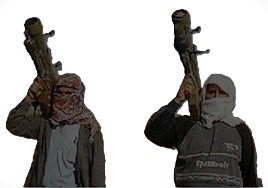
MANPADS. MANPADS have revolutionised guerrilla air defence due to their portability, ease of use, and effectiveness against low-flying aircraft. One of the most effective tools in guerrilla air defence is using MANPADS, such as the American-made FIM-92 Stinger or the Russian Igla systems. Small teams can carry these portable missile systems and target low-flying aircraft, including helicopters and drones. By utilising these weapons in ambushes or from concealed positions, ground forces can inflict significant damage on technologically superior adversaries, as demonstrated in Afghanistan during the 1980s and the recent Russia-Ukraine war.


Innovations. While less mobile than MANPADS, AAA remains a staple of guerrilla air defence. Improvised mounts, hidden emplacements, and integration with civilian infrastructure enhance its effectiveness. Groups frequently modify heavy machine guns and anti-aircraft guns like the ZSU-23-4 Shilka. These systems are often mounted on trucks for mobility and used to target low-altitude threats. While less precise than missiles, their volume of fire can pose a substantial threat to helicopters and low-flying planes.


Urban Environment. Urban environments provide an advantage for the ground forces due to the dense infrastructure that limits aircraft manoeuvrability.  Ground fighters use rooftops, narrow streets, and underground networks to evade detection and launch surprise attacks. In Syria and Iraq, insurgents have used such strategies to counter aerial operations by state and coalition forces.


Drones. Modern airpower—characterised by drones, advanced jets, and electronic warfare capabilities—poses unique challenges to ground forces. The proliferation of drones has forced forces to develop countermeasures, such as portable jammers, anti-drone rifles, and improvised kinetic solutions like nets or small arms fire.


Passive Measures. Camouflage and deception remain critical in evading aerial surveillance. Ground forces must rely on natural cover, decoy installations, and rapid mobility to avoid detection. In the Vietnam War, the Viet Cong famously used tunnels and dense jungle foliage to counter U.S. air superiority.


Implications of Guerrilla Air Defence on Modern Warfare


Guerrilla air defence has emerged as a critical factor in modern warfare, reshaping the dynamics of aerial supremacy and asymmetric conflict. While these strategies aim to counter technologically superior air forces, they carry profound implications for guerrilla groups and conventional militaries. By disrupting aerial operations and imposing costs on powerful adversaries, guerrilla air defence challenges traditional military doctrines and influences the broader landscape of modern conflict.


Prolonging Conflicts and Increasing Costs. Guerrilla air defence strategies can effectively neutralise or deter low-altitude operations. This capability forces adversaries to adapt, often at significant financial and operational costs. For instance, deploying advanced countermeasures, rerouting flight paths, or relying on high-altitude bombers requires additional resources. As a result, conflicts involving guerrilla air defence tend to become protracted, straining the logistics and finances of all involved parties. The prolonged nature of such conflicts can also erode public and political support for military interventions. For example, the psychological and economic toll of losing expensive aircraft or personnel to guerrilla defences can influence domestic perceptions of the conflict’s viability.


Evolving Air Warfare Tactics. Conventional militaries must adapt their air warfare strategies to counter guerrilla air defence. This evolution includes increased reliance on high-altitude operations, precision-guided munitions, and stealth technology. Modern air forces also invest heavily in countermeasures such as infrared jammers, flares, and electronic warfare systems to neutralise guerrilla threats. The rise of guerrilla air defence has also accelerated the development of unmanned aerial systems (UAS) for reconnaissance, surveillance, and strike missions. Being expendable and capable of operating in hostile environments, drones minimise the risks associated with manned operations. This shift represents a significant transformation in aerial warfare, emphasising technology over traditional pilot-led missions.


Impact on Urban and Asymmetric Warfare. Urban environments provide natural concealment and mobility advantages for guerrilla fighters, making them ideal battlegrounds for deploying guerrilla air defence systems. By leveraging civilian infrastructure and the complexity of urban terrain, guerrilla forces can create no-fly zones or deny access to key air corridors. This trend has made urban warfare increasingly challenging for conventional militaries, which must balance operational objectives with minimising civilian casualties and collateral damage.


Proliferation of Advanced Technology. The success of guerrilla air defence has spurred the proliferation of advanced yet accessible technologies. MANPADS, drones, and electronic warfare tools have become increasingly available on the black market or through state sponsorship. This diffusion of technology not only empowers guerrilla groups but also raises concerns about their use by terrorist organisations or non-state actors in unconventional warfare.


Redefining Air Superiority. In traditional warfare, air superiority was synonymous with dominance over adversaries. However, guerrilla air defence challenges this notion by proving that even technologically inferior forces can contest airspace. This shift underscores the importance of integrating multi-domain strategies considering ground-based threats alongside aerial operations. For example, in conflicts such as the Syrian Civil War or the Ukraine-Russia war, guerrilla air defence has demonstrated that controlling the skies no longer guarantees uncontested dominance on the ground. The interplay between air and ground forces requires a more nuanced approach, blending technology with adaptable tactics.


Strategic and Political Implications. Guerrilla air defence imposes strategic dilemmas on conventional forces, often compelling them to overextend resources or adopt more cautious operational postures. This dynamic can undermine the perceived effectiveness of powerful militaries, affecting their credibility and deterring future interventions. Politically, the effectiveness of guerrilla air defence can shift the balance of power in asymmetric conflicts. By contesting air supremacy, guerrilla forces gain leverage in negotiations or peace processes, demonstrating their resilience and capacity to endure prolonged engagements.


Challenges and Limitations of Guerrilla Air Defence


Guerrilla air defence, while innovative and impactful in certain situations, faces numerous challenges and limitations. These obstacles stem from technological gaps, resource constraints, and the inherent asymmetry between irregular forces and advanced air power.


Technological Disparity. One of the primary challenges guerrilla groups face is the vast technological gulf between them and conventional military forces. Modern air forces deploy fifth-generation stealth aircraft, precision-guided munitions, and advanced surveillance systems. In contrast, guerrilla forces often rely on outdated or improvised equipment. While tools like man-portable air defence systems (MANPADS) can neutralise low-flying aircraft, they are ineffective against high-altitude bombers or stealth fighters. Advanced countermeasures, such as infrared jammers and decoys, further diminish the impact of guerrilla tactics.


Logistics and Maintenance. Air defence systems, even portable ones, require robust logistical support. Maintaining and deploying these systems necessitates technical expertise, spare parts, and a steady supply of ammunition. Guerrilla groups, often operating in resource-scarce environments, struggle to sustain such logistical chains. Over time, wear and tear render many systems inoperable, and acquiring replacements or repairs can be risky and costly.


Detection and Targeting Vulnerabilities. The effectiveness of guerrilla air defence relies heavily on concealment and mobility. However, advancements in surveillance technology, such as drones, satellite imagery, and AI-powered analytics, make it increasingly challenging for guerrilla forces to remain hidden. Once detected, these forces become vulnerable to precision strikes or overwhelming aerial assaults, negating their defensive efforts.


Dependence on External Support. Guerrilla groups often depend on external states or entities to access advanced air defence systems. This reliance introduces vulnerabilities, as shifts in international politics or interruptions in supply chains can leave these groups without critical resources. For example, a sudden embargo or the withdrawal of support from a sponsor state can cripple guerrilla air defence capabilities.


Financial Constraints. Air defence is inherently resource-intensive. Procuring, transporting, and maintaining systems like MANPADS or drones requires significant financial investment. Guerrilla groups operating with limited funding must prioritise resources across multiple operational needs, often leaving air defence underfunded. Moreover, the cost-benefit ratio usually favours their adversaries; an advanced air force can deploy inexpensive countermeasures or overwhelm defences with superior numbers.


Psychological and Operational Strain. Constant exposure to aerial bombardments and the awareness of technological inferiority take a toll on guerrilla fighters’ morale. The strain of operating under the persistent threat of airstrikes can lead to operational inefficiencies and diminished cohesion. Furthermore, the psychological impact of losing critical assets, such as an air defence unit or a valuable weapon system, can significantly affect a group’s strategic planning.


Limited Strategic Impact. Guerrilla air defence is inherently reactive, designed to mitigate air superiority rather than achieve dominance. While it can disrupt operations and impose costs on adversaries, it rarely shifts the overall balance of power in a conflict. This limitation means that guerrilla air defence is more a delaying tactic than a decisive strategy.


Conclusion. Guerrilla air defence is a testament to human ingenuity in asymmetrical warfare. Irregular forces can challenge even the most sophisticated air powers by adapting low-cost solutions, decentralised tactics, innovative technologies, and asymmetrical strategies. Guerrilla air defence’s implications for modern warfare are far-reaching, influencing military strategy, technology development, and conflict outcomes. While it disrupts aerial operations and challenges conventional doctrines, guerrilla air defence also faces significant limitations, such as resource constraints and susceptibility to countermeasures. Nevertheless, its role in redefining the dynamics of air superiority and asymmetric warfare highlights its growing importance in the ever-evolving landscape of modern conflict.


Your valuable comments are most welcome.


1878
Default rating

Please give a thumbs up if you  like The Post?


Link to the article on the website:-

Guerrilla Air Defence: Strategy of the Underdog


For regular updates, please register your email here:-

Subscribe

References and credits

To all the online sites and channels.

References:-

  1. Boot, M. (2002). The Savage Wars of Peace: Small Wars and the Rise of American Power. Basic Books.
  1. Coll, S. (2004). Ghost Wars: The Secret History of the CIA, Afghanistan, and Bin Laden. Penguin Books.
  1. Jones, S. G. (2017). Waging Insurgent Warfare: Lessons from the Viet Cong to the Islamic State. Oxford University Press.
  1. Hura, M. et al. (2000). Interoperability: A Continuing Challenge in Coalition Air Operations. RAND Corporation.
  1. “Counter-Unmanned Aircraft Systems (C-UAS)” (2021). Center for Strategic and International Studies (CSIS).
  1. Biddle, Stephen, and Jeffrey A. Friedman. “The 2006 Lebanon Campaign and the Future of Warfare: Implications for Army and Defence Policy.” Strategic Studies Institute, 2008.
  1. McInnes, Colin. “The Impact of Air Power on Insurgency and Guerrilla Warfare.” RUSI Journal, Vol. 134, No. 2 (1989): 47–53.
  1. Schulte, Paul. “Proliferation and the Revolution in Military Affairs.” Survival, Vol. 39, No. 1 (1997): 21–42.

9 Small Arms Survey. MANPADS: Combating the Threat to Global Aviation from Portable Air Defence Systems. Geneva: Graduate Institute of International and Development Studies, 2011.

  1. RAND Corporation. The Air War in the Gulf: Assessing the Results. Santa Monica: RAND, 1993.
  1. Keegan, John. The Face of Battle. New York: Viking Press, 1976.
  1. Cordesman, Anthony H. The Changing Face of War: Lessons of Combat, from the Marne to Iraq. Washington, D.C.: CSIS Press, 2007.
  1. Grau, Lester W., and Michael A. Gress. The Soviet-Afghan War: How a Superpower Fought and Lost. Lawrence: University Press of Kansas, 2002.
  1. Beckett, Ian F.W. Modern Insurgencies and Counter-Insurgencies: Guerrillas and Their Opponents since 1750. London: Routledge, 2001.
  1. United Nations Office for Disarmament Affairs (UNODA). Study on the Proliferation of Small Arms and Light Weapons, Including MANPADS.
  1. U.S. Department of Defence. Counter-Insurgency Air Operations: Best Practices and Challenges.

Disclaimer:

Information and data included in the blog are for educational & non-commercial purposes only and have been carefully adapted, excerpted, or edited from reliable and accurate sources. All copyrighted material belongs to respective owners and is provided only for wider dissemination.

English हिंदी