My article was published in the SP Aviation’s Yearbook in February 2025.
The evolution of fighter aircraft, a testament to the unyielding quest for air superiority and technological dominance, is a journey that never ceases to amaze. It’s a captivating journey punctuated by lightning-fast technological strides, dynamic tactical doctrines, and the ever-shifting demands of aerial combat. The ability of these machines to adapt and evolve, constantly morphing to meet the needs of modern warfare, is truly awe-inspiring.
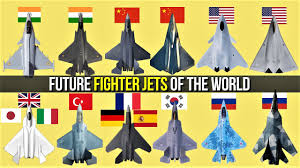
Historical Evolution. The first fighter aircraft made their debut during World War I. They were basic biplanes constructed from wood and fabric, primarily used for reconnaissance. As machine guns were installed, their role evolved to dogfighting. With significant technological advancements, aircraft transitioned to more robust metal frames during interwar. World War II propelled fighter aircraft development. Speed, agility, and firepower skyrocketed. The war’s end witnessed the advent of jet propulsion, signifying the shift from piston engines to jet engines. The Cold War era saw the birth of supersonic fighters and the introduction of guided missiles. Aircraft like the F-86 Sabre and MiG-15 gained fame during the Korean War, marking a significant shift in aerial combat. Later, more advanced fighters like the F-4 Phantom II and MiG-21 emerged, capable of air superiority and ground attack roles. The latest generation of fighters, such as the F-22 Raptor and F-35 Lightning II from the United States and the Su-57 from Russia, are designed with a strong emphasis on stealth, advanced avionics, and multirole capabilities. China also boasts that its indigenous Chengdu J-20 and Shenyang FC-31 are of equal calibre. These latest fighter aircraft are engineered to dominate in electronic warfare environments and execute various missions, demonstrating modern fighter aircraft’s diverse roles and capabilities.
Classification of Fighter Aircraft
The classification of fighter jets into different generations is a testimony to the pivotal role of technological innovation in shaping these aircraft’s evolution. Each generation represents a particular class of technology used in the aircraft, such as avionics, systems, design, features, engines, and weapons. A higher generation signifies a more technologically advanced aircraft. A generational shift occurs when a technological innovation cannot be incorporated into an existing aircraft through upgrades and retrospective fit-outs. The primary classification of fighter aircraft into five generations, with the development of a sixth generation underway, is widely accepted and recognised. Some accounts have further subdivided the 4th generation into 4 and 4.5, or 4+ and 4++.
-
- The first generation of subsonic jet fighters emerged during and after the final years of World War II, a period marked by significant technological and geopolitical changes. Similar to their piston-engine contemporaries, these aircraft were primarily made of wood and light alloy and had generally straight wings. Their main feature was a significant speed increase over their predecessors, which they achieved with the introduction of the swept wing. They were equipped with basic avionic systems, no radars or self-protection countermeasures, and were armed with machine guns or cannons and unguided bombs and rockets. These aircraft were primarily designed for the air-superiority interceptor role. Examples of this generation include Meteor, de Havilland Vampire, F-86 Sabre, McDonnell FH-1 Phantom, and Mig 15 and 17.
-
- The second generation of fighter jets, a product of significant technological breakthroughs and lessons learned from aerial warfare, notably the Korean War of 1950-1953, saw substantial advancements. These aircraft had higher speeds, including sustained transonic and supersonic dash capabilities, and featured rudimentary fire control radar and the use of guided air-to-air missiles. The second-generation fighters also incorporated advances in engine design, such as afterburners and aerodynamics, like swept wings, which allowed them to reach and sustain supersonic speeds in level flight. They introduced air-to-air radar, infrared and semi-active guided missiles, and radar warning receivers. While air-to-air combat was still within visual range, radar-guided missiles extended the engagement ranges and accuracy. The aircraft were divided into interceptors and fighter-bombers based on their roles. Examples of this generation include Lockheed F-104 Starfighter, MiG-19 and 21, Hawker Hunter, and Dassault Mirage III.
-
- The third generation of fighters, a significant milestone in the evolution of fighter aircraft, were designed to be multirole fighters capable of performing air defence and ground attack missions. They could carry a wide range of weapons, such as air-to-ground missiles and laser-guided bombs, while also engaging in air-to-air interception beyond visual range. These aircraft could sustain supersonic flight, carrying improved fire control radars, semi-active air-to-air missiles, and the first generation of tactical electronic warfare systems. The advent of more economical turbofan engines brought extended range and endurance, increased thrust, better performance and manoeuvrability. Some designers even resorted to variable geometry or vector thrust. This generation witnessed significant enhancements in the avionic suites and weapon systems. The supporting avionics included pulse-doppler radar, off-sight targeting and terrain-warning systems. Doppler radar supported a ‘lookdown/shoot-down’ capability with off-bore-sight targeting and semi-active guided radio frequency missiles. The significant change brought about by this generation of aircraft was that it was no longer necessary to visually acquire opponents to neutralise them and gain control of the air. Some examples include the McDonnell Douglas F4H Phantom, Mig-23 and Mig-25, Sukhoi series (15-22), British Aerospace Harrier, and Dassault Mirage F-1.
-
- Fourth-generation jet fighters debuted in the mid-1970s and are still used in most air forces. This generation is the longest-lasting of the five generations so far. This generation of fighter jets is mostly multi-role aircraft that can switch and swing roles between air-to-air and air-to-ground, unlike the previous role-dedicated aircraft. This, in turn, blurred the distinction between air defence and ground attack missions. Fly-by-wire control systems improved the manoeuvrability of these aircraft at the expense of aerodynamic instability. These aircraft introduced more efficient and powerful turbofan jet engines, allowing greater than one thrust-to-weight ratio. The use of composite materials in their construction revolutionised stealth technology. Electronics was the essential part of these aircraft, including ‘look-down’ Doppler fire-control radars, fly-by-wire flight control systems, integral and podded EO/IR targeting sensors, laser and GPS-guided precision weapons, active air-to-air missiles, heads-up displays, and improved electronic warfare systems. Grumman F-14 Tomcat, McDonnell Douglas F-15 Eagle and F-18 Hornet, General Dynamics F-16 Fighting Falcon, MiG-29 and MiG-31, Sukhoi Su-27, Dassault Mirage 2000, Saab Viggen, Chengdu J-10, and Hindustan LCA are some of the examples.
-
- Four-and-a-half generation jet fighters emerged in the late 1980s and ’90s. The 4.5 generation aircraft are fourth-generation fighters with essential characteristics of fourth-generation planes but enhanced capabilities provided by more advanced technologies seen in fifth-generation fighters. The concept of having a half-generation increment stemmed from a forced reduction in military spending at the end of the Cold War, resulting in a restriction on aircraft development. It became more cost-effective to add new, improved features to existing platforms. Later variants of 4th gen aircraft progressively enhanced their characteristic technologies and incorporated emerging fifth-generation technologies, leading them to be classified as an intermediate generation (4.5 4+ or 4++). These aircraft have advanced digital avionics based on microchip technology and highly integrated systems. They are adapted to operate in high-tech warfare where avionic and super manoeuvrability is the key to success. Their features include stealth, radar absorbent materials, thrust vector controlled engines, greater weapons carriage capacity and extended range and endurance. Adding an Active Electronically Scanned Array (AESA) radar is a significant enough game-changing combat capability. The AESA radar allows fighter aircraft to perform a limited Airborne Early Warning and Control function. Advances in computer technology and data links also allowed 4.5 generation fighters to be integrated into a network-centric battle space where fighter aircraft have much greater scope to conduct multi-role missions. Examples include Boeing F-18E/F Super Hornet, Sukhoi Su-30/33/35, Eurofighter Typhoon, Saab Gripen, and Dassault Rafale.
-
- A fifth-generation fighter is a jet fighter aircraft that includes major technologies developed during the first part of the 21st century. As of date, these are the most advanced fighters in operation. A quantum improvement in the fighter’s lethality and survivability has been a qualifying requirement to achieve generational change in aircraft design. The characteristics of a fifth-generation fighter are not universally agreed upon. The technologies that best epitomise fifth-generation fighters are advanced integrated avionics systems that provide the pilot with a complete picture of the battle space and the use of low observable “stealth” techniques. 5th Generation AC typically includes stealth, low-probability-of-intercept radar (LPIR), agile airframes with supercruise performance, advanced avionics features, and highly integrated computer systems capable of networking with other elements within the battle space for situation awareness and C3 (command, control and communications) capabilities. Improved situational awareness is achieved through multi-spectral sensors located across all aspects of the airframe, allowing the pilot to ‘look’ through the aircraft’s airframe without having to manoeuvre the fighter to obtain a 360-degree picture. These aircraft are also ‘born’ and networked, allowing them to receive, share, and store information to enhance the battle space picture. Fifth generation fighter capabilities are largely defined by their software, and the ongoing development of their software will ensure they maintain their edge against evolving threats. Fifth-generation aircraft allow the pilot to maintain decision superiority over an adversary. This provides greater chances of survivability, which, combined with effective lethality, assures battle space dominance. Lockheed Martin F-22 Raptor and F-35, Sukhoi T-50 PAK FA / Sukhoi Su-57, and J-20/J-31 are some of the examples.
Future Trends
For a long time, military aviation doctrines and requirements drove technology. Today, technologies offer enhanced capabilities that are driving operational employment and tactics. Technological advancements, automation, and design innovation are poised to define the future of fighter aircraft. Discussing fighter aircraft’s future trends involves strategic changes shaping the next generation of aerial combat. These trends highlight the direction in which future fighter aircraft are heading, focusing on enhanced capabilities to maintain air superiority in evolving combat environments.
-
- Stealth and Low Observable Technologies: Future fighters will continue to push the boundaries of stealth technology to evade radar detection. This includes advanced materials, shape designs, and coatings that reduce the aircraft’s visibility to enemy sensors. Reducing infrared and electronic signatures will also be crucial to avoid detection by modern and future sensors.
-
- Artificial Intelligence and Automation: Enhanced cockpit interfaces and augmented reality systems would improve the pilot’s situational awareness. AI will assist in decision-making, target detection/recognition, and autonomous flight operations, reducing pilot workload and enhancing mission efficiency. Swarm technology and autonomous drones will likely operate alongside manned fighters, providing reconnaissance, electronic warfare, and additional firepower.
-
- Network-Centric Warfare: Future fighters will be part of a highly integrated network, sharing data with other aircraft, ground forces, and naval units in real time. Enhanced secure communication systems will be crucial to prevent jamming and ensure reliable information exchange for coordinated operations. Real-time battlefield awareness would be provided through advanced communication networks and sensor integration.
-
- Hypersonic Capabilities: The development of aircraft capable of travelling at hypersonic speeds (Mach 5 and above) will reduce adversaries’ reaction time. Enhanced propulsion systems would help achieve and sustain these speeds.
-
- Advanced Weapon Systems: Directed energy weapons (lasers and microwave weapons) would be integrated for offensive and defensive purposes. Long-range, high-precision missiles and advanced electronic warfare systems would be integrated to provide precise, high-speed targeting capability. Future weaponry would utilise scramjets to produce faster missiles.
-
- Advanced Propulsion Systems: The focus would be on fuel-efficient engines and alternative propulsion methods like hybrid-electric systems. Adaptive engines could alter their performance characteristics on the fly to optimise speed, range, and fuel efficiency. Adaptive engine technology allows longer ranges and higher performance, where the bypass and compression airflow ratio can vary to improve efficiency. A variable-cycle engine could configure itself to act like a turbojet at supersonic speeds while performing like a high-bypass turbofan for efficient cruising at slower speeds. Exploration of alternative, sustainable, and efficient fuel would continue to enhance operational performance and reduce logistical dependencies.
-
- Modular and Flexible Design: Aircraft designs will be more modular, allowing for quick upgrades and customisation-based adaptability to various mission requirements. Design flexibility would allow the integration of newer technologies without complete aircraft redesigns.
-
- Omni-role Capabilities: The emphasis will be on Omni-role functionality, which enables a single aircraft to perform various roles (air-to-air, air-to-ground, reconnaissance, and electronic warfare missions) simultaneously.
-
- Enhanced Situational Awareness: Future fighters will feature enhanced sensor suites, including radar, electro-optical, infrared, and electronic warfare sensors. Improved helmet-mounted displays (HMD) will provide pilots with critical data directly in their line of sight.
-
- Improved Survivability and Resilience: The aircraft would have enhanced countermeasures against electronic warfare, cyber threats, and physical attacks. More resilient airframes and systems would be developed to withstand extreme combat conditions.
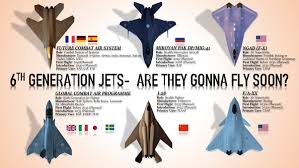
Sixth Generation Fighter Aircraft. With the fifth generation coming into service, attention is already turning to a replacement sixth generation. Sixth-generation aircraft are still in the development phase; however, based on current trends in air technology, they are likely to have several key features that will shape air strategy in the future. The fifth-generation abilities for battlefield survivability, air superiority and ground support will need to be enhanced and adapted to the future threat environment. Development time and cost will likely be significant factors in laying practical roadmaps for sixth-generation aircraft. These aircraft could feature hypersonic speed, dual-mode engines, and adaptive shapes. They are likely to have increased automation with advanced AI and machine learning algorithms that will enable autonomous decision-making and allow them to adapt to changing situations quickly. Integrated sensor systems in these aircraft will provide comprehensive situational awareness and the ability to engage targets with great precision. They would also have enhanced stealth capabilities. At this stage, it is unclear to what extent drones and other remote unmanned technologies can participate, either as satellite aircraft under a sixth-generation command fighter or even replacing the pilot in an autonomous or semi-autonomous command aircraft. Sixth-generation aircraft are expected to impact air strategy significantly, changing the landscape of aerial combat. Some of the ongoing, notable future fighter programs are:-
-
- NGAD (Next Generation Air Dominance): A U.S. Air Force program aiming to develop a family of systems, including a sixth-generation fighter, to succeed the F-22 Raptor. USAF is looking at not just an aircraft but a system of systems, including communications, space capabilities, stand-off, and stand-in options, including platforms with incredible speed, range, stealth and self-healing structures. F/A-XX: A U.S. Navy program for a next-generation fighter to replace the F/A-18E/F Super Hornet.
-
- FCAS FCAS (Future Combat Air System): A collaborative and ambitious effort by France, Germany, and Spain to develop a sixth-generation fighter and an associated system of systems. A two-year Joint Concept Study (JCS) had been awarded to Dassault Aviation and Airbus for the Future Combat Air System (FCAS) programme to look into the System of Systems approach with associated next-generation services. The Future Combat Air System (FCAS) is one of the century’s most ambitious European defence programmes to replace the Eurofighter, Tornado and Rafale.
-
- Tempest: Tempest is a UK-led program with Italy and Sweden to develop a sixth-generation fighter jet. It is being developed by a consortium of the UK Ministry of Defence, BAE Systems, Rolls-Royce, Leonardo and The first flight is expected in the 2030s, to enter service in 2035, replacing the Eurofighter Typhoon. The Tempest will be a sixth-generation fighter incorporating several new technologies, including AI deep learning and directed Energy Weapons, an adaptive cycle engine and a virtual cockpit. It could be optionally manned and have swarming technology to control drones.
-
- Sukhoi Su-57: In Russia, the FGFA Sukhoi Su-57 is just being inducted, and work is being done on its sixth-generation version with continuous upgrades and enhancements. The Mikoyan MiG-41 is reportedly a sixth-generation jet fighter-interceptor aircraft currently being developed for the Russian Air Force.
-
- Chengdu J-20 and Shenyang FC-31: China’s fifth-generation fighters with potential future developments toward sixth-generation capabilities. China is still evolving its J-20 and J-31, overcoming the limitations on radar, avionics and engine technologies. Chinese sixth-generation aircraft (J-XX) is called Huolong (Fire Dragon).
-
- Japan’s Mitsubishi F-3 sixth-generation fighter is being tested on the Mitsubishi X-2 Shinshin test bed. It would be based on the concept of informed and intelligent aircraft.
What Next after Sixth Generation: Predicting the specific features of future aerial platforms involves speculation, but several potential features could be considered for future aircraft and drones based on current trends and technological advancements. Actual features of future aerial platforms will depend on various factors, including technological breakthroughs, military and strategic priorities, and budget considerations. Continuous advancements in materials science, artificial intelligence, and aerospace engineering will likely play a crucial role in shaping the capabilities of future aerial platforms.
-
- They could be made of Nano-tech with adaptive and morphing structures, allowing for dynamic changes in shape and aerodynamics. Depending on the attempted manoeuvre, they could morph into many aerodynamic forms, improving overall efficiency and manoeuvrability. For increased durability and performance, they could be made using lightweight and robust materials, such as advanced composites and nano-materials.
-
- They could fly up to and in outer space (upper Stratosphere or lower Mesosphere). They would be highly responsive and have hypersonic speed capability. Alternative fuels, improved propulsion systems, or even the integration of renewable energy sources would make them highly energy efficient. They may use high energy-to-weight ratio fuels (e.g. liquid methane).
-
- They would have Advanced Sensor Technologies, such as improved imaging systems, sensors for environmental monitoring, and enhanced data fusion capabilities for better situational awareness. They could have a VR cockpit concept, presenting a 360-degree spherical view with no blind spots. They could have advanced voice-activated controls, be remotely piloted, AI-controlled, or highly autonomous with improved decision-making capabilities. They would be capable of operating individually or collaboratively as a swarm.
-
- They would be armed with Directed Energy Weapons. They would be fully stealthy, with low radar, visual, noise, and electromagnetic signatures. For self-protection, they could have energy shields or cloaking devices.
Indian Perspective
The IAF operates fourth-generation fighters (upgraded Mirage 2000, MiG-29, and Su 30 MKI) and four-and-a-half-generation Rafale aircraft. India’s collaborative attempt with Russia to develop a Fifth-Generation Fighter Aircraft (FGFA) ran into severe roadblocks and was abandoned. The development of indigenous fighter aircraft was initially slow but has picked up pace. LCA Tejas has been inducted, and the IAF is awaiting the induction of LCA MkII.
The Indian fifth-generation fighter aircraft project, Advanced Medium Combat Aircraft (AMCA), is in the development stage. AMCA will be a single-seat, twin-engine, stealth, super-manoeuvrable all-weather multirole fighter aircraft. It will be AI-enabled, with multi-sensor data fusion and an advanced cockpit providing high situational awareness. It is intended to be super-manoeuvrable with quadruple digital FBW, voice command, and the HOTAS concept, capable of autonomous mission execution. Its first flight is planned for 2024-25, with the induction of MKI in 2031 and MKII in 2035. These timelines seem optimistic, and the project needs impetus to overcome challenges related to developing indigenous engines, electronics and weapon systems.
India’s DPSU Hindustan Aeronautics Limited has also announced the development of a futuristic Combat Air Team (Loyal Wingman Concept). It is a composite amalgamation of a manned fighter aircraft acting as a “mother ship” supported by several swarming UAVs and UCAVs. The objective is to make artificially intelligent (AI) high-altitude surveillance drones, air launch platforms, and loitering munitions with full situational awareness to target enemy targets from longer distances without human intervention.
India faces a security challenge from two collusive, nuclear-powered, inimical neighbours. While self-reliance is the way forward, the minimum level of deterrence must always be maintained. The success of the leapfrog method of development and investment in future technology is the need of the hour.
Suggestions and value additions are most welcome.
For regular updates, please register here:-
References and credits
To all the online sites and channels.
References
- John Stillion, “Trends in air-to-air combat implications for future air superiority”, Center for Strategic and Budgetary Assessment, 2015
- “Top sixth-generation fighter jets”, Air Force Technology, Feature, 20 Nov 2020.
- Andrew McLaughlin, “Air Combat Operations 2025 and Beyond” Sir Richard Williams Foundation, Seminar Executive Summary, Apr 2014.
- Air Marshal Anil Chopra (Retd), “Next Generation Air Dominance”, Journal of the United Service Institution of India, Vol. CXLVIII, No. 614, October-December 2018.
- Aaron Mehta, Valerie Insinna and David B Larter, “What’s going on with America’s next fighter designs?” Defence News, Jul 16, 2018.
- Amrita Nayak Dutta, “All about India’s Indigenous fifth-gen fighter jet Advanced Medium Combat Aircraft (AMCA), and why it is important”, Indian Express, 10 Mar 2024.
- IMR Reporter, “HAL Working on Manned-Unmanned Combat Air Teaming system”, Indian Military Review, 25 Jul 2022.
- Air Marshal Anil Chopra (Retd), “Emerging Technologies for Sixth-Generation Combat Aircraft”, International Defence Review, Issue Vol. 34.3 Jul-Sep 2019, Dated 12 Dec 2020.
Disclaimer:
Information and data included in the blog are for educational & non-commercial purposes only and have been carefully adapted, excerpted, or edited from reliable and accurate sources. All copyrighted material belongs to respective owners and is provided only for wider dissemination.