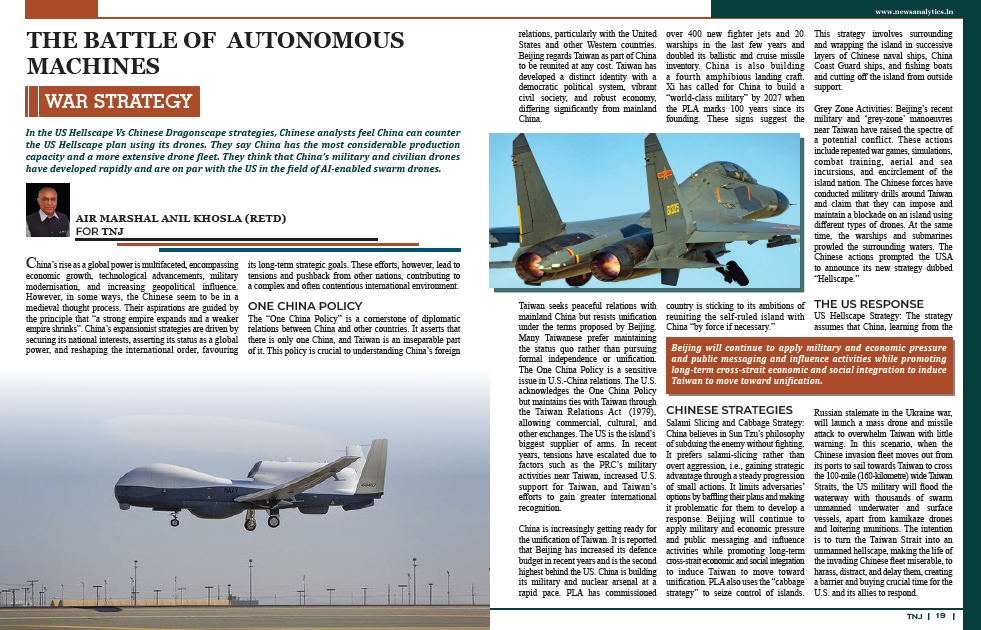
My Article published in the
News Analytics Journal (Oct 24)
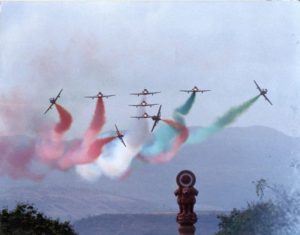
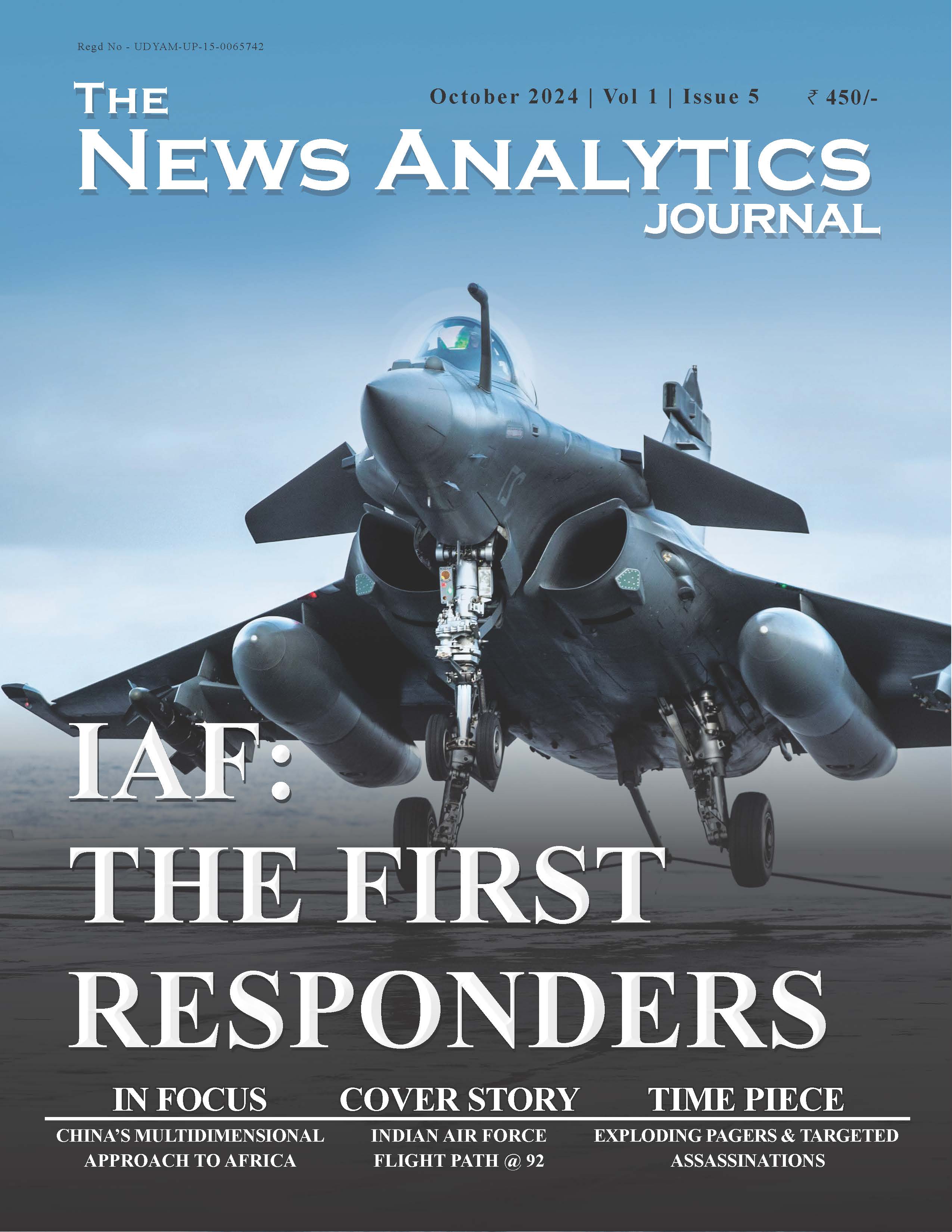
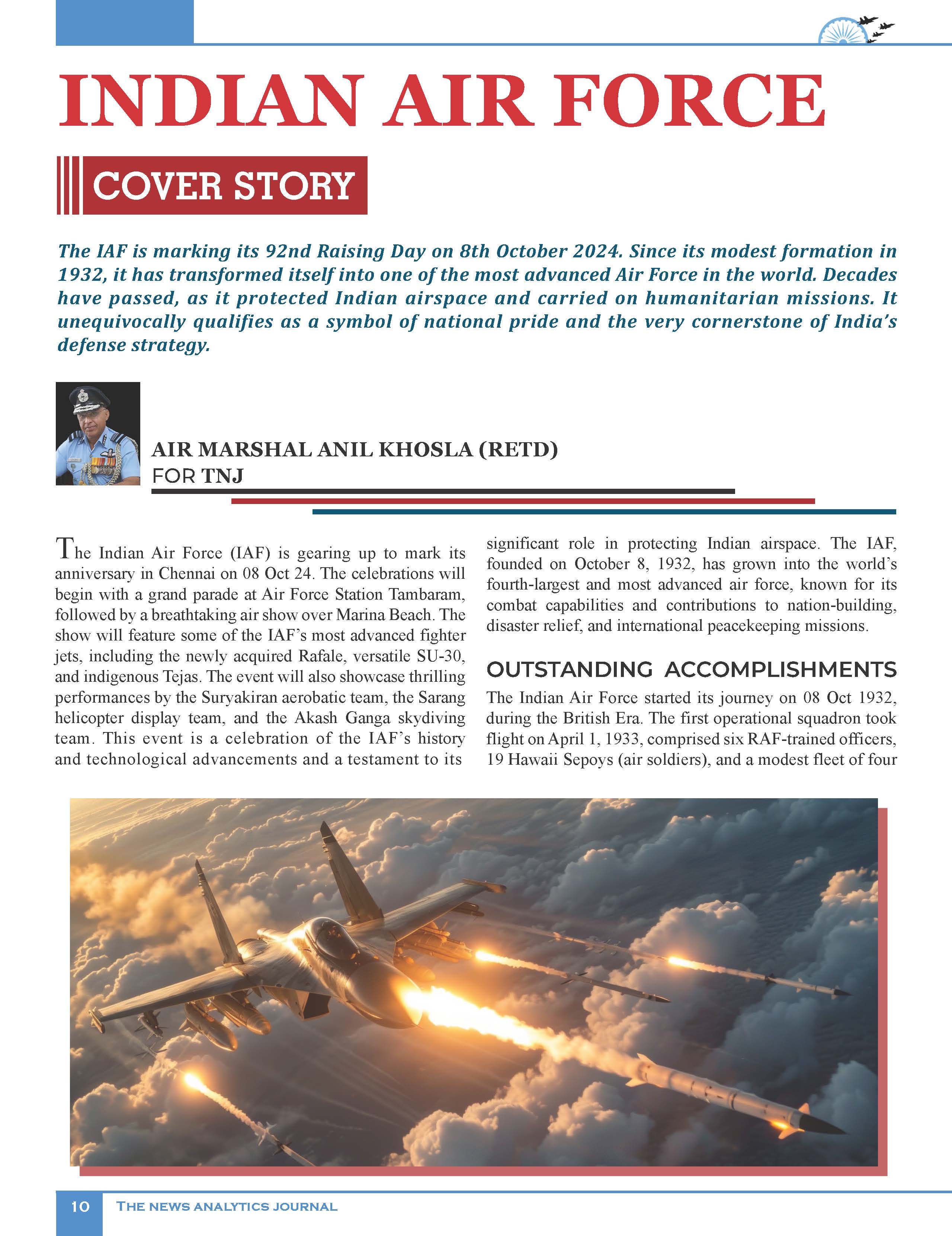
The Indian Air Force (IAF) will celebrate its anniversary in Chennai on 08 Oct 24. The festivities will include a parade at Air Force Station Tambaram, followed by a spectacular air show over Marina Beach featuring some of the IAF’s most advanced fighter jets, such as the newly acquired Rafale, versatile SU-30, and indigenous Tejas, along with thrilling performances by the Suryakiran aerobatic team, Sarang helicopter display team and Akash Ganga skydiving team. The event serves as a celebration of the IAF’s history, technological advancements, and significant role in protecting Indian airspace. The IAF was founded on October 8, 1932, and has since grown into the world’s fourth-largest and most advanced air force. It is known not only for its combat capabilities but also for its contributions to nation-building, disaster relief and international peacekeeping missions.
Past Trail
Genesis. The Indian Air Force started its journey on 08 Oct, 1932, during the British Era. The first operational squadron took flight on April 1, 1933, comprised six RAF-trained officers, 19 Hawaii Sepoys (air soldiers), and a modest fleet of four Westland Wapiti aircraft. Recognising its outstanding professionalism and accomplishments during World War II, the organisation was granted the “Royal” prefix in March 1945, thus adopting the name Royal Indian Air Force (RIAF). In January 1950, the “Royal” prefix was dropped, and the Indian Air Force proudly became the formidable force we know today.
Participation in Wars. To date, the Indian Air Force has engaged in four conflicts with Pakistan, including the 1947-1948, 1965, and 1971 Bangladesh War, and the 1999 Kargil War. In 1961, it played a crucial role in supporting the integration of Goa into the Indian Union. During the 1962 conflict, the IAF provided vital air support. In 1984, the IAF was pivotal in capturing the Siachen Glacier and evicting intruders from the Kargil area in 1999.
Strategic Transformation. The IAF was initially formed to meet the British Empire’s tactical air power application requirements, and it remained tactical for a considerable time after Independence. It was only in 1971 that the IAF carried out strategic effect-based operations with parallel air campaigns. In the first decade of this century, the IAF inducted airborne early warning and aerial refuelling capability, leading to increased strategic reach and conventional deterrence. The IAF started transforming from a tactical air power to a strategic one to become a multi-spectrum air force.
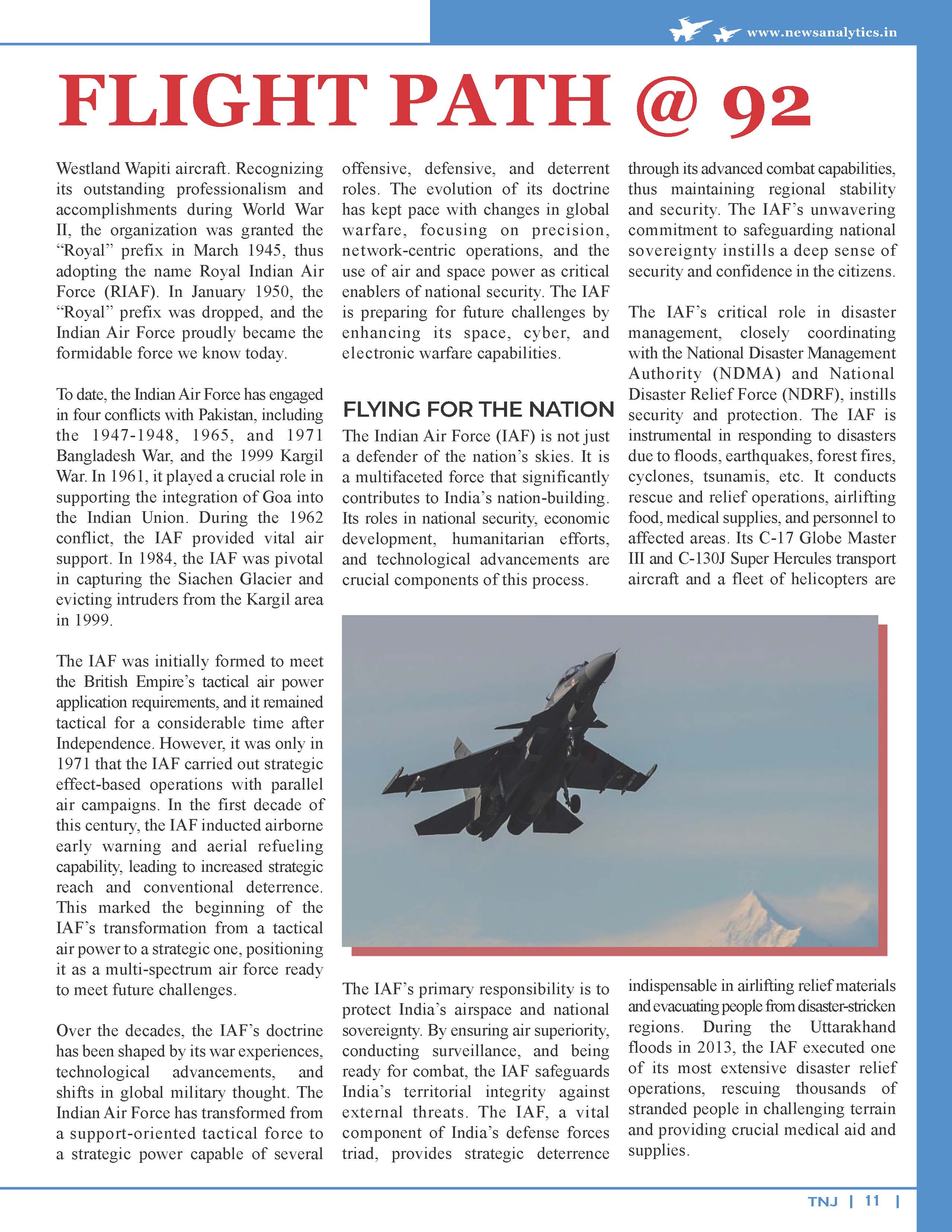
Doctrinal Evolution. Over the decades, the IAF’s doctrine has been shaped by its war experiences, technological advancements, and shifts in global military thought. The Indian Air Force has transformed from a support-oriented tactical force to a strategic power capable of several offensive, defensive, and deterrent roles. The evolution of its doctrine has kept pace with changes in global warfare, focusing on precision, network-centric operations, and the use of air and space power as critical enablers of national security. The IAF is preparing for future challenges by enhancing its space, cyber, and electronic warfare capabilities.
Flying For and With the Nation
A Key Player in Nation-Building. The Indian Air Force (IAF) is not just a defender of the nation’s skies but a multifaceted force that significantly contributes to India’s nation-building. Its roles in national security, economic development, humanitarian efforts, and technological advancements are crucial components of this process.
-
- Safeguarding National Sovereignty. The IAF’s primary responsibility is to protect India’s airspace and national sovereignty. By ensuring air superiority, conducting surveillance, and being ready for combat, the IAF safeguards India’s territorial integrity against external threats. The IAF, a vital component of India’s defence forces triad, provides strategic deterrence through its advanced combat capabilities, thus maintaining regional stability and security. The IAF also plays an essential role in internal security by conducting air support missions during counterterrorism operations. IAF’s unwavering commitment to safeguarding national sovereignty instils a sense of security and confidence in the citizens.
-
- Humanitarian Assistance and Disaster Relief (HADR). The IAF’s critical role in disaster management, closely coordinating with the National Disaster Management Authority (NDMA) and National Disaster Relief Force (NDRF), instils security and protection. The IAF is instrumental in responding to disasters due to floods, earthquakes, forest fires, cyclones, tsunamis, etc. It conducts rescue and relief operations, airlifting food, medical supplies, and personnel to affected areas. Its C-17 Globe Master III and C-130J Super Hercules transport aircraft and a fleet of helicopters are indispensable in airlifting relief materials and evacuating people from disaster-stricken regions. During the Uttarakhand floods in 2013, the IAF executed one of its most extensive disaster relief operations, rescuing thousands of stranded people in challenging terrain and providing crucial medical aid and supplies.
-
- Medical Evacuations: The IAF has been a beacon of hope in medical evacuation operations, especially during emergencies like the COVID-19 pandemic. It’s swift and efficient transportation of essential medical supplies, vaccines, and oxygen cylinders across the country and internationally reassures the public of their care and safety. The IAF also significantly evacuated Indian citizens from foreign countries during the pandemic, demonstrating its commitment to public service and national welfare.
-
- Military-Civil Cooperation. The IAF’s airports and infrastructure are shared with civil aviation, improving connectivity, especially in remote or strategically important areas like Leh and Port Blair, etc. The IAF also provides air connectivity to remote and rugged regions when needed.
-
- Capacity Building and Skill Development. The IAF employs thousands of personnel, including pilots, engineers, technicians, and support staff. Its training institutes are among the premier military institutions in India, producing highly skilled professionals. These valuable skills can be applied in both military and civilian sectors. Many IAF personnel contribute to various industries after their military service, transferring skills such as aviation expertise, leadership, and technical knowledge to civil aviation, engineering, and other industries.
-
- Fostering National Integration and Patriotism. The IAF’s professionalism, discipline, and achievements in both war and peace serve as a symbol of national pride and unity. Its displays and public air shows inspire patriotism and unity among citizens. The IAF recruits personnel from all regions and communities of India, promoting national integration. The force’s inclusive nature helps foster a sense of belonging and unity among diverse sections of Indian society.
-
- Strategic Military Diplomacy and Global Partnerships. The IAF participates in international military exercises, enhancing India’s defence ties and fostering strategic partnerships. These collaborations enhance the IAF’s operational readiness and contribute globally to India’s diplomatic relations. The IAF has extended its disaster relief operations to neighbouring and friendly nations, contributing to India’s image as a responsible global player. During the 2004 Indian Ocean tsunami, the IAF significantly provided relief to countries like Sri Lanka, Indonesia, and the Maldives. The IAF has supported United Nations peacekeeping missions, transporting troops, equipment, and supplies to conflict zones, contributing to international peace and stability.
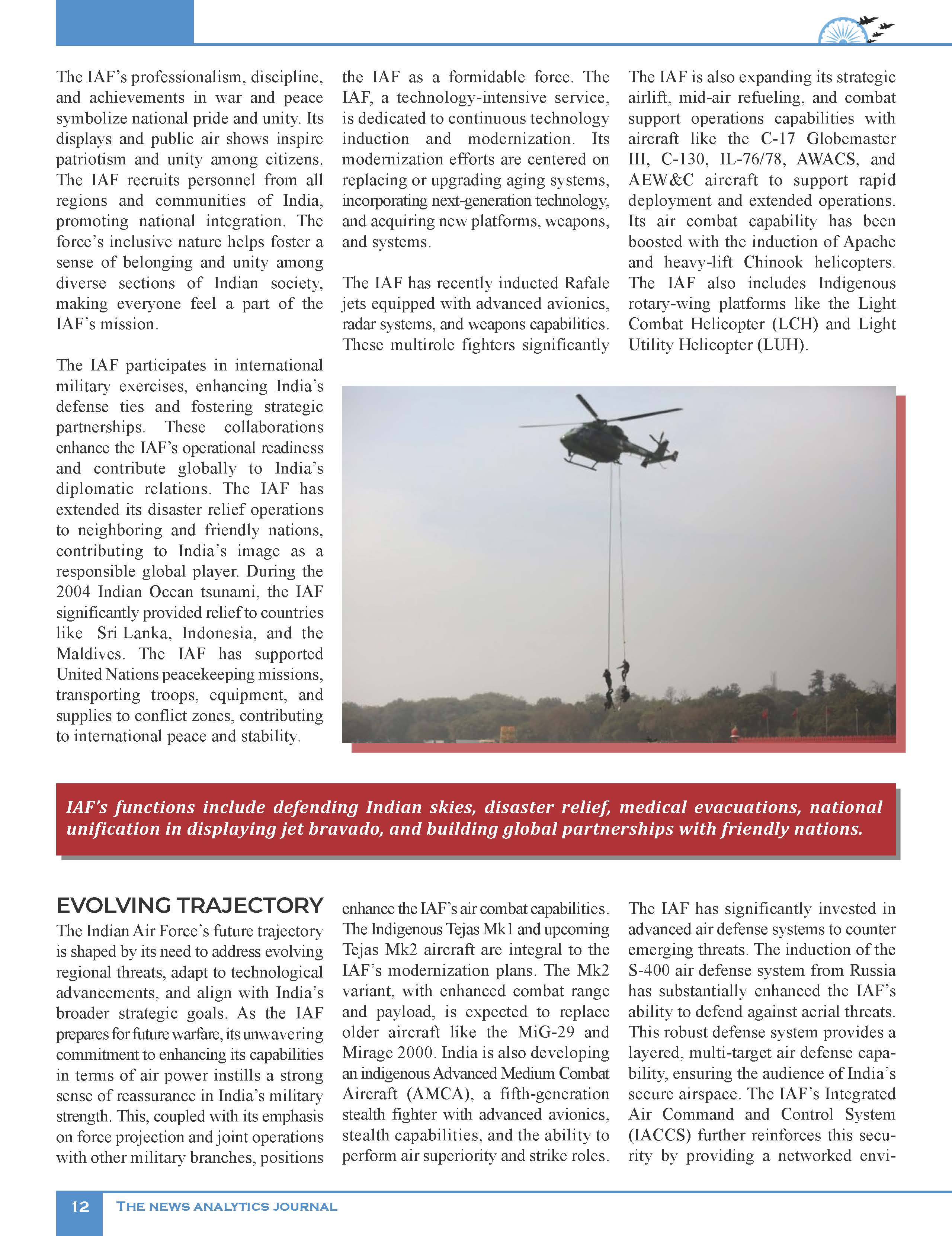
Indian Air Force Trajectory
The Indian Air Force’s future trajectory is shaped by its need to address evolving regional threats, adapt to technological advancements, and align with India’s broader strategic goals. As the IAF prepares for future warfare, its unwavering commitment to enhancing its capabilities in terms of air power instils a strong sense of reassurance in India’s military strength. This, coupled with its emphasis on force projection and joint operations with other military branches, positions the IAF as a formidable force. The IAF, a technology-intensive service, is dedicated to continuous technology induction and modernisation. Its modernisation efforts are centred on replacing or upgrading ageing systems, incorporating next-generation technology and acquiring new platforms, weapons and systems.
The IAF has recently inducted Rafale jets equipped with advanced avionics, radar systems, and weapons capabilities. These multirole fighters significantly enhance the IAF’s air combat capabilities. The Indigenous Tejas Mk1 and upcoming Tejas Mk2 aircraft are integral to the IAF’s modernisation plans. The Mk2 variant, with enhanced combat range and payload, is expected to replace older aircraft like the MiG-29 and Mirage 2000. India is also developing an indigenous Advanced Medium Combat Aircraft (AMCA), a fifth-generation stealth fighter with advanced avionics, stealth capabilities, and the ability to perform air superiority and strike roles. The IAF is also expanding its strategic airlift, mid-air refuelling, and combat support operations capabilities with aircraft like the C-17 Globemaster III, C-130, IL-76/78, AWACS and AEW&C aircraft to support rapid deployment and extended operations. Its air combat capability has been boosted with the induction of Apache and heavy-lift Chinook helicopters. The IAF also includes Indigenous rotary-wing platforms like the Light Combat Helicopter (LCH) and Light Utility Helicopter (LUH).
The Indian Air Force is preparing itself to meet the challenges of 21st-century warfare through comprehensive all-round capability development.
-
- Protecting the Air Space. The IAF has significantly invested in advanced air defence systems to counter emerging threats. The induction of the S-400 air defence system from Russia has substantially enhanced the IAF’s ability to defend against aerial threats. This robust defence system provides a layered, multi-target air defence capability, ensuring the audience of India’s secure airspace. The IAF’s Integrated Air Command and Control System (IACCS) further reinforces this security by providing a networked environment that integrates air defence sensors, weapons and command and control systems, enabling faster decision-making and real-time coordination.
-
- Space and Cyber Capabilities. The IAF’s doctrine has expanded from air power to aerospace power, incorporating space and cyber warfare as components of future warfare. The IAF is focused on enhancing its role in space, particularly in leveraging space-based intelligence, surveillance, and reconnaissance (ISR) capabilities. Recognising the importance of cyber warfare in modern conflicts, the IAF is strengthening its cyber defence capabilities. Establishing the Defence Space Agency (DSA) and Defence Cyber Agency (DCA) reflects this shift toward multi-domain operations, where cyber and electronic warfare will be crucial in achieving air dominance.
-
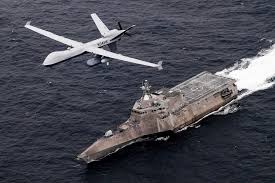
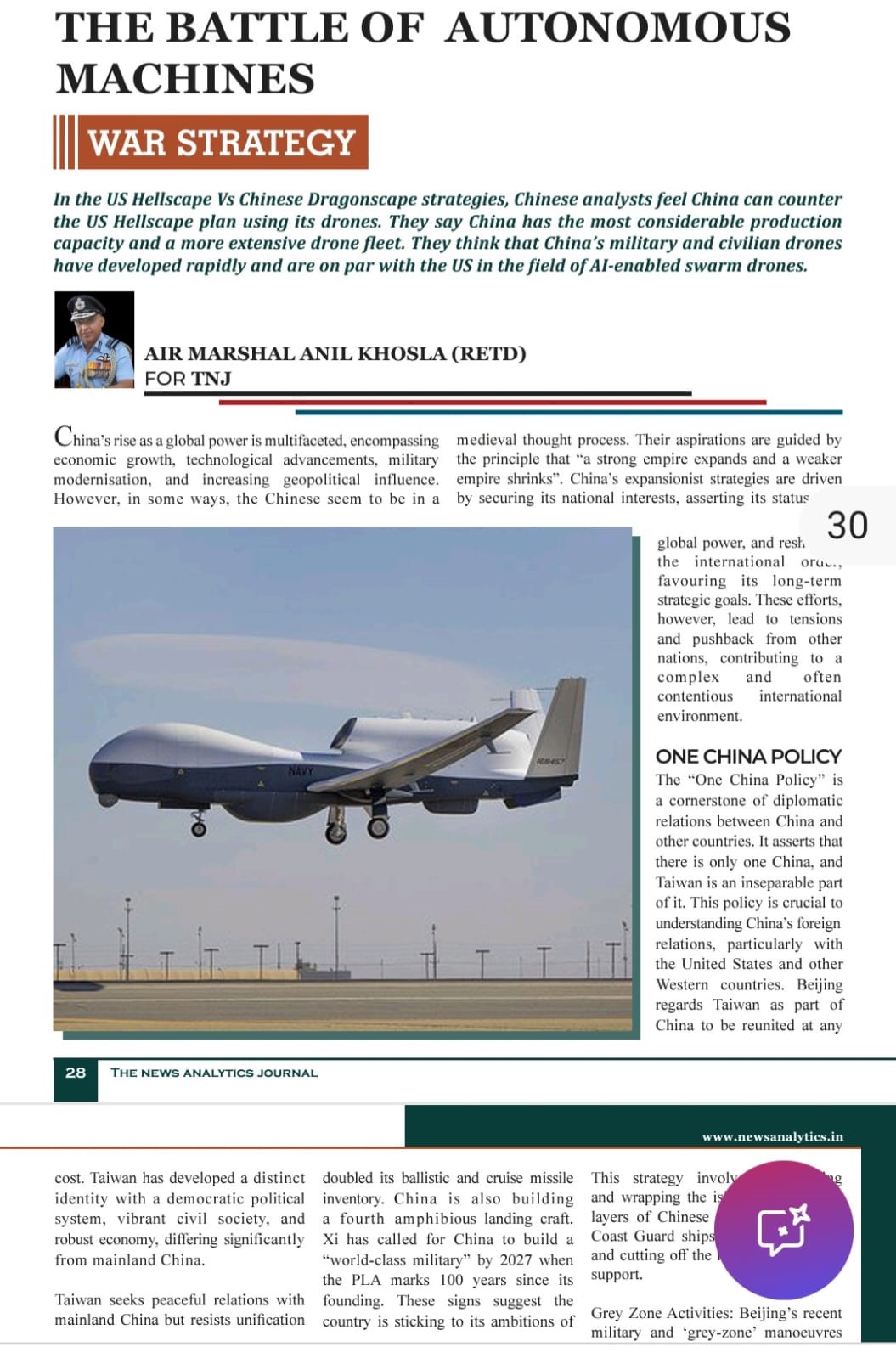
- Unmanned Aerial Systems (UAS), Drones and Autonomous Platforms. The IAF is expanding its Unmanned Aerial Systems (UAS) capabilities to include various roles. The IAF is acquiring armed drones, including the MQ-9B SeaGuardian from the U.S., and supporting the development of indigenous armed drones. These will be used for surveillance, strike missions, and networked operations. The IAF is investing in swarm drone technology for future warfare. These drones, which can operate in large numbers to overwhelm enemy defences, will be a critical asset in high-tech conflicts. The IAF is also exploring autonomous systems that can operate in contested environments, reducing the risk to human pilots and increasing operational flexibility.
-
- Network-Centric Warfare (NCW). The IAF focuses on network-centric capabilities, where multiple platforms (aircraft, UAVs, ground systems) are interconnected through secure communication networks. This allows the IAF to share real-time information and make quick, data-driven decisions during operations.
-
- Reach & Precision Capabilities. The IAF is expanding its long-range strike capabilities, including advanced long-range weapons and platforms that will allow it to engage targets deep inside enemy territory precisely.
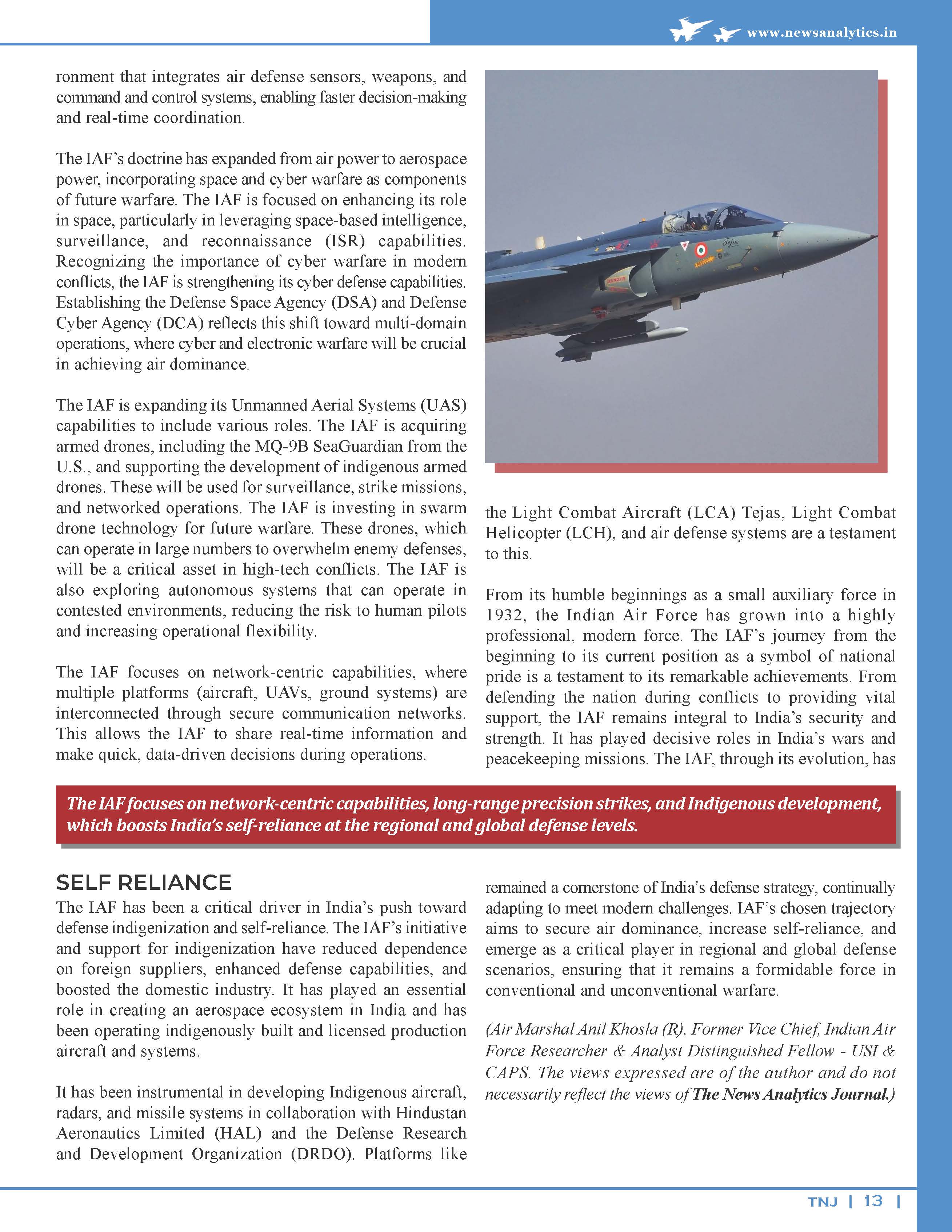
Indigenous Development and Self-Reliance. The IAF has been a critical driver in India’s push toward defence indigenisation and self-reliance. The IAF’s initiative and support for indigenisation has reduced dependence on foreign suppliers, enhanced defence capabilities, and boosted the domestic industry. It has played an essential role in creating an aerospace ecosystem in India and has been operating indigenously built and licenced production aircraft and systems. It has been instrumental in developing Indigenous aircraft, radars, and missile systems in collaboration with Hindustan Aeronautics Limited (HAL) and the Defence Research and Development Organisation (DRDO). Platforms like the Light Combat Aircraft (LCA) Tejas, Light Combat Helicopter (LCH), and air defence systems are a testament to this. The success of these projects has contributed immensely to the Make in India policy. The IAF’s support for research and development of critical aerospace technologies further promotes innovation and technological growth. India’s “Make in India” initiative significantly influences the IAF’s future trajectory.
From its humble beginnings as a small auxiliary force in 1932, the Indian Air Force has grown into a highly professional, modern force. The IAF’s journey from the beginning to its current position as a symbol of national pride is a testament to its remarkable achievements. From defending the nation during conflicts to providing vital support, the IAF remains integral to India’s security and strength. It has played decisive roles in India’s wars and peacekeeping missions. The IAF, through its evolution, has remained a cornerstone of India’s defence strategy, continually adapting to meet modern challenges. IAF’s chosen trajectory aims to secure air dominance, increase self-reliance, and emerge as a key player in regional and global defence scenarios, ensuring that it remains a formidable force in conventional and unconventional warfare.
Your valuable comments are most welcome.
For regular updates, please register your email here:-
References and credits
To all the online sites and channels.
Disclaimer:
Information and data included in the blog are for educational & non-commercial purposes only and have been carefully adapted, excerpted, or edited from reliable and accurate sources. All copyrighted material belongs to respective owners and is provided only for wider dissemination.