Paper published in the April 2026 edition of “The News Analytics” Journal
Hypersonic weapons are weapons capable of sustained flight at Mach 5 or higher. Existing missile defence systems do not cater for this new threat. Their speed and manoeuvrability demand a new approach to early warning and subsequent neutralisation. These weapons are emerging as highly valued systems for militaries worldwide. Their rapid development marks a turning point in military technology and strategic thought. These weapons are giving a new meaning to deterrence and stability.
Hypersonic Weapons. Intercontinental Ballistic Missiles (ICBMs) can also reach hypersonic speeds. However, they travel through space in a predictable parabolic arc. Their trajectory becomes predictable, and long-range radars can track them. On the other hand, the characteristics of hypersonic weapons include sustained high speed, increased manoeuvrability, and a high-altitude trajectory (in the upper atmosphere – higher than cruise missiles but lower than the apogee of ballistic missiles). These attributes of hypersonic weapons are blurring the line between ballistic and cruise missiles. Hypersonic weapons are classified into two categories: hypersonic glide vehicles (HGVs) and hypersonic cruise missiles (HCMs). HGVs are carried and launched from ballistic missiles. Post-separation, they glide through the upper atmosphere at extreme speeds following a controllable trajectory. HCMs sustain hypersonic flight within the atmosphere using advanced scramjet engines. Hypersonic weapons can alter their trajectory. This adds to the complexity of detecting, tracking, and intercepting them. High speed also compresses decision-making time. It shortens the window for assessing the threat and making a decision on counteraction.
Speed and Manoeuvrability: A Strategic Game-Changer. Hypersonic missiles are commonly depicted as a “game changer and the unprecedented capabilities of these weapons portend a revolution in missile warfare. It is considered that the speed, accuracy, and manoeuvrability of hypersonic boost-glide weapons will fundamentally change the character of warfare. Developments in hypersonic propulsion will revolutionise warfare by enabling faster strikes. With unmatched speed, these weapons will likely hit over-the-horizon targets in a fraction of the time. This claimed speed advantage is ostensibly accompanied by near-immunity to detection, rendering hypersonic weapons “nearly invisible” to existing early warning systems. Together, these capabilities will significantly compress decision and response times.
Missile Defence 2.0: Adapting to the Hypersonic Age
Missile Defence in the Pre-Hypersonic Era. Existing defences are primarily designed to counter ballistic missiles. They rely on layered architectures that include early-warning launch detection, long-range radar-based trajectory tracking, and interception. The destruction could occur during the boost, midcourse, or terminal phases. These systems operate on the logic of predictability. However, these systems are not optimised for low-flying targets that manoeuvre frequently and have little warning time.
Hypersonic Threat Mitigation. A comprehensive missile defence strategy is required to provide an integrated and practical capability to counter ballistic, cruise, and hypersonic missile threats. The speed of hypersonic weapons leaves little time to compute a fire-control solution, communicate with command authorities, and complete an engagement to intercept them actively. Anti-Hypersonic defence would require a combination of disruptive data links and sensors, space-based tracking sensors, and innovative interception methods. Some passive defensive measures against traditional missiles are also effective against hypersonic weapons; these include deception, dispersal, hardening, concealment, etc.
Missile Defence 2.0. To counter hypersonic threats, defence developers are exploring what might be called Missile Defence 2.0. This concept emphasises integration, speed, and adaptability. One key area is sensor networks. Future defences rely on constellations of space-based infrared and tracking satellites that can track hypersonic weapons throughout their flight. Methods of interception also need to evolve. Instead of relying solely on kinetic weapons, multiple new interceptors may be required to neutralise the threat. Artificial intelligence would be essential for data fusion from multiple sensors. Another element of Missile Defence 2.0 is layered resilience rather than perfect protection, recognising that no defence will be impenetrable.
Hypersonic Race
The United States, China, and Russia are competing to develop these weapons. They would be fielding a wide array of hypersonic systems in the coming decades. The development of short-, medium-, and long-range variants of these weapons by major powers is resulting in an arms race. These technologies are changing the nature of warfare, and they have the potential to destabilise the global security environment.
USA. The U.S. has pursued both hypersonic weapons technologies since the early 2000s. It has sought to develop longer-range systems capable of reaching deep into an adversary’s territory to attack defended, hardened, and time-urgent targets. The Department of Defence (DOD) is developing hypersonic weapons under the Navy’s Conventional Prompt Strike program and through several Air Force, Army, and DARPA programs.
Russia. Russia is reportedly the first nation to deploy a hypersonic missile. It characterises these weapons as a centrepiece of its security strategy and has extensively tested at least three distinct hypersonic systems. Russia’s HGV, known as Avangard, is equipped with a nuclear warhead and deployed on SS-19 long-range land-based ballistic missiles. Avangards reportedly feature onboard countermeasures and can manoeuvre in flight to evade ballistic missile defences. Russia has successfully fielded the Zircon and Kinzhal hypersonic weapons, and it has launched the air-launched Kinzhal hypersonic missiles (with a speed of Mach 10 and a payload of 480kg) against Ukraine.
China. China has made a significant effort to match Russian and U.S. capabilities. It has invested heavily in the hypersonic research, development, test, and evaluation programs in the past decade. China is also investing heavily in hypersonic development infrastructure and weapon systems, reportedly outpacing the United States in testing these technologies. China has developed an HGV known as the DF-ZF, previously referred to as the WU-14. China is also developing the DF-41 long-range intercontinental ballistic missile, which could carry a nuclear hypersonic glide vehicle.
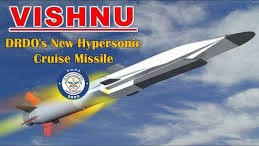
India. India has been investing in hypersonic weapon development. In Sep 2020, India successfully tested the Hypersonic Technology Demonstrator Vehicle (HSTDV). HSTDV is a hypersonic unmanned scramjet demonstration aircraft. In addition to the HSTDV program, India is continuing its research and development efforts across various aspects of hypersonic technology (propulsion systems, materials science, and guidance systems). In July 2025, India reportedly conducted a successful test of a hypersonic cruise missile capable of reaching Mach 8 under Project Vishnu. Reportedly, the project aims to develop the Extended Trajectory-Long Duration Hypersonic Cruise Missile (ET-LDHCM), a weapon system that will fundamentally enhance India’s strategic capabilities.
Great Power Competition and Technological Asymmetry. The development of hypersonic weapons has the potential to create a new form of asymmetry. In technologically advanced states, having these weapons gives them an edge in overcoming opponents’ defences. On the other hand, smaller or less tech-savvy states find it difficult to keep up. This creates a growing divide between the “haves” and the “have-nots.” This asymmetry is reshaping the strategic calculus. Major powers may become aggressive, while weaker states may double down on asymmetric strategies such as cyber operations or unconventional warfare.
Implications for Deterrence Stability. The most concerning aspect of hypersonics is their impact on deterrence stability. During the Cold War, stability was based on the philosophy of “Mutually Assured Destruction”. However, now with reduced reaction time, the risk of miscalculation has increased dramatically. The shift is taking place from ‘Launch on Warning’ to ‘Launch on Uncertainty’. States may get tempted to launch their own weapons at the first sign of a perceived threat. This “crisis instability” is compounded by Strategic Ambiguity: most hypersonic vehicles can carry either a conventional or nuclear payload, leaving an adversary to guess the stakes of an incoming strike.
Conclusion
Technology is a good gadget, but a destructive weapon. Hypersonic weapons signify a significant advancement in military technology. These weapons are even more powerful than traditional ballistic ones because of their incredible speed and agility. Many countries are actively working on developing and testing them. At the same time, Missile Defence 2.0 is evolving to counter this new threat. It includes advanced sensors, smarter interceptors, and a robust architecture to provide better protection. The proliferation of hypersonic weapons could have significant implications for the global security landscape. Their speed and manoeuvrability could reduce decision-making time in crises, increasing the risk of miscalculation. The development of hypersonic weapons is also starting a new arms race, as countries seek to maintain or gain military superiority in this field.
Please Add Value to the write-up with your views on the subject.
For regular updates, please register your email here:-
References and credits
To all the online sites and channels.
Pics Courtesy: Internet
Disclaimer:
Information and data included in the blog are for educational & non-commercial purposes only and have been carefully adapted, excerpted, or edited from reliable and accurate sources. All copyrighted material belongs to respective owners and is provided only for wider dissemination.
References:-
- “Hypersonic missiles: What are they and can they be stopped?”, Partyard Defence, May 10, 2019. https://partyardmilitary.com/hypersonic-missiles-what-are-they-and-can-they-be-stopped/
- “Hypersonic Technology”, Drishti IAS, 10 Oct 21. https://www.drishtiias.com/daily-updates/daily-news-analysis/hypersonic-technology-2
- “Russia, China, the U.S.: Who Will Win the Hypersonic Arms”, IEEE Spectrum, Dec 2020. https://spectrum.ieee.org/russia-china-the-us-who-will-win-the-hypersonic-arms-race
- Air Marshal Anil Khosla, “Hypersonic Long Range Weapons”, Air Marshals’ Perspective, 10 Nov 2021. https://55nda.com/blogs/anil-khosla/2021/11/10/hypersonic-long-range-weapons/
- Air Marshal Anil Khosla, “Countering Hypersonic Weapon Threat: A Difficult But Manageable Problem”, Air Marshals’ Perspective, 07 Jun 2024. https://55nda.com/blogs/anil-khosla/2024/06/07/countering-hypersonic-weapon-threat-a-difficult-but-manageable-problem/
- Tom Karako and Masao Dahlgren, “Complex Air Defence Countering the Hypersonic Missile Threat”, A Report of the Centre for Strategic and International Studies (CSIS) Missile Defence Project, February 2022.
- Rylie White, “An Emerging Threat: The Impact of Hypersonic Weapons on National Security, Crisis Instability, and Deterrence Strategy”, Potomac Institute for Policy Studies.
- David Roza, “Why Hypersonic Missiles’ Greatest Strength Also Makes Them Vulnerable”, Air and Space Forces Magazine, Dec 2023.
- Col Mandeep Singh, “Countering Hypersonics”, Indian Defence Review, Jan 2024.
- Economic Times. (2025, July 16). Why India’s new hypersonic missile may outrun Israel’s Iron Dome and Russia’s S-500 and shift the balance in Asia.
- Aroor, Shiv. “India’s Hypersonic Missile Ambitions: DRDO’s Project Vishnu and the Road Ahead.” India Today.