773: ASIA’S FLASHPOINTS: RISING TENSIONS FROM THE GULF TO THE SOUTH CHINA SEA


Article published in the December edition of the

News Analytics Journal.


Asia is the world’s biggest and most dynamic continent, but it is also the most unstable. Stretching from the oil-rich Persian Gulf to the stormy Pacific, it is home to several of the planet’s most dangerous flashpoints. On the continent, ancient rivalries clash with modern weapons, great powers vie for control, and every small skirmish carries the risk of global repercussions. The region’s hotspots include the Strait of Hormuz, the South China Sea, Taiwan Strait, Korean Peninsula, and the Himalayan region. Any miscalculation in one of these areas could spark a major conflict.


Flash Points

The Persian Gulf and the Indian Ocean: Asia’s Energy Lifeline. In this region, the narrow Strait of Hormuz (only about 40 kilometres wide) is one of the most crucial shipping lanes. Around one-fifth of all the oil traded globally passes through this chokepoint every day. The tankers moving through it feed factories, power plants, and cars all over the world. If the Strait were to close for some reason, the impact would be felt worldwide. The oil prices would skyrocket immediately. Iran sits at the centre of this area and often threatens to block the Strait. The Iran-backed Houthis in Yemen continue to target Saudi, UAE, and commercial shipping interests in the Red Sea. These attacks cause significant disruptions to global trade. Asian countries are diversifying their supply chain routes to prepare for future crises. The Gulf remains a reminder that Asia’s security problems exist on its energy routes.

The South China Sea: The Maritime Powder Keg. In the east are the world’s busiest and most dangerous seas. The South China Sea carries roughly one-third of all global maritime trade. Beneath its waters lie rich fisheries and untapped gas reserves. Six governments (China, the Philippines, Vietnam, Malaysia, Brunei, and Taiwan) claim overlapping parts of it. China claims almost the entire area of the South China Sea as its own. The international tribunal ruled in 2016 that the Chinese claim had no legal basis. However, Beijing has disagreed with the ruling.  China is further militarising the artificial islands created by it on the shoals and reefs. These islands have become permanent military outposts of China, extending its reach deep into Southeast Asia. Every day, ships and planes from different nations cross paths here. Chinese coast guard vessels and civilian fishing boats (controlled by its maritime militia) swarm the contested areas and try to assert control. Other countries are upgrading their navies and pushing back by carrying out exercises and patrols. The result is a “grey-zone” conflict (neither war nor peace) where any confrontation could spiral into crisis. The South China Sea is a testing ground for the future of maritime law and regional order. If rules fail here, they could fail anywhere.


The Taiwan Strait: The Most Dangerous Flashpoint. The 100-mile-wide Taiwan Strait separates China from the island of Taiwan. In Asia, it carries the greatest risk of major war. China considers Taiwan its “breakaway province.” China’s leaders have vowed to reunify Taiwan, peacefully or by force if required. Taiwan is a thriving democracy with its own government and military.  With its growing sense of national identity, Taiwan rejects Beijing’s claim. The U.S. helps Taiwan arm itself, but maintains a policy of “strategic ambiguity” regarding its direct intervention in the event of a Chinese invasion. Chinese military pressure has increased lately. Fighter jets and bombers cross into Taiwan’s air defence zone almost every day. Warships circle the island during drills simulating blockades and amphibious assaults. Beyond the military danger, the strait is an economic fault line. Over 60 per cent of the world’s semiconductors are made in Taiwan. This includes the most advanced chips that power smartphones, AI systems, and fighter jets. A war or blockade here would disrupt the global supply chains, devastating the industries worldwide. Every year, the rising tension here increases the likelihood of a misstep that could cause a global crisis.

The Korean Peninsula: Frozen Conflict, Nuclear Threats. The Korean Peninsula is one of the world’s most militarised and tense places. The Korean War never officially ended; it only paused with an armistice. Since then, North Korea has built a considerable nuclear arsenal. It continues to test missiles that can reach all of Asia and beyond. South Korea, maintains a strong defence posture with the assistance from the U.S. Japan is also strengthening its defences and increasing military cooperation with its allies. China and Russia support North Korea and protect it from international sanctions.  South Korea is concerned about its long-term security. A deliberate hostile act or a miscalculation can disrupt the fragile peace in the region.

The Himalayas: India–China-Pakistan Triangle. Another tense front runs along the world’s highest mountains. India and China share a 3,400-kilometer Line of Actual Control that is not clearly defined.  In 2020, troops from both sides engaged in a deadly hand-to-hand battle in the Galwan Valley. Since then, both have deployed troops and heavy weapons all along the LAC. The border is heavily militarised, increasing the chances of a confrontation. Hostility between India and Pakistan also keeps the region simmering. Pakistan-sponsored proxy attacks and frequent cross-border military exchanges occur at frequent intervals. Collusion between China and Pakistan further exacerbates the matter.

Iran-Israel proxy warfare.  The long-standing rivalry between Iran and Israel has escalated through a series of direct and proxy attacks. Iran’s support for non-state actors like Hamas and Hezbollah continues to destabilise the region. The recent Israel-Hamas war has ravaged the region for two years. These regional ripples heighten fears of a broader conflagration.


Analytical Perspective

Hybrid Warfare: Conflict without Battlefields. Modern conflict rarely begins with conventional weapons. Instead, it creeps in through cyberattacks, fake news, trade pressure, and legal manipulation. This is hybrid warfare—where military, economic, and informational tools blend together. China uses its maritime militia in the South China Sea. It is a type of hybrid warfare that utilises a civilian organisation for military objectives. Iran uses drones for kinetic attacks along with non-kinetic cyber attacks against its rivals across the Gulf. North Korea uses cryptocurrency to fund its weapons programs. Infrastructure projects (like China’s Belt and Road Initiative) are being used for both economic outreach and strategic leverage. Even data is being used as a weapon. Control over semiconductors, undersea cables, and 5G networks shapes who holds power in the digital age. The battle for influence now runs through screens, supply chains, and satellite networks as much as through militaries. This invisible fight makes managing conflict harder.

Shifting Alliances. Asia’s security map is like a chessboard. The United States remains a key power and player. It has a military presence all over the region. It supports alliances and partnerships in the area. These groupings are mainly to counter China’s expanding influence. China, the other major power, is investing heavily in military modernisation. It is deepening ties with Russia, Iran, Pakistan, and North Korea. Caught between these two rivals, many Asian countries struggle to remain neutral and navigate the regional geopolitics. The result is not a simple Cold War divide, but a tangled web of overlapping alliances.

Regional Skirmishes with Global Consequences. These tensions are not local problems, but have global repercussions. A missile attack in the Gulf can double fuel prices in Europe. A clash in the South China Sea can block the shipping routes that carry goods to Africa and America. A war over Taiwan could destroy the global semiconductor industry. A crisis in the Himalayas could pit two nuclear powers against each other, putting the entire world at risk. Asia is also home to more nuclear-armed states than any other region and has the fastest-growing defence budgets. As military and cyber capabilities proliferate, the risk of military miscalculation multiplies. Yet Asia’s deep economic interdependence also encourages restraint: no one wants to destroy the markets that make them rich.

Path toward Stability. Avoiding catastrophe will require both deterrence and dialogue. Countries need to maintain open lines of communication with each other. A well-defined code of conduct can prevent incidents from blowing into larger conflicts. Regional organisations should develop mutually acceptable frameworks for conflict prevention and resolution. Hybrid threats need to be countered by building resilience in the digital and information domains. Above all, International laws need to be followed in letter and spirit by all countries. Resolving disputes through rules rather than force would be beneficial for all parties involved.


Conclusion: Asia’s Century

Asia is standing at a crossroads. The region offers both the danger of destruction and the opportunity for growth. It holds immense promise, with a young population and booming economies. But it also carries deep risks of major conflicts. If managed wisely, competition and cooperation could coexist within workable frameworks for peace. If mismanaged, a spark in any one of these zones could ignite a fire that engulfs the globe. Asia is already shaping the 21st century. Whether it becomes a century of prosperity or peril depends on how its leaders handle these flashpoints.


Please Add Value to the write-up with your views on the subject.


2023
Default rating

Please give a thumbs up if you  like The Post?


For regular updates, please register your email here:-

Subscribe


References and credits

To all the online sites and channels.

Pics Courtesy: Internet

Disclaimer:

Information and data included in the blog are for educational & non-commercial purposes only and have been carefully adapted, excerpted, or edited from reliable and accurate sources. All copyrighted material belongs to respective owners and is provided only for wider dissemination.


References:-

  1. Cordesman, Anthony H. Iran, the Gulf, and Strategic Competition: The Challenges of Deterrence and Escalation. Washington, DC: Center for Strategic and International Studies, 2020.
  1. Katzman, Kenneth. “Iran’s Threats to the Strait of Hormuz: Background and U.S. Policy.” Congressional Research Service, 2023.
  1. Mallick, Samir. “Maritime Security and Energy Transit Vulnerabilities in the Western Indian Ocean.” Journal of Indian Ocean Studies 29, no. 1 (2023): 45–62.
  1. Hayton, Bill. The South China Sea: The Struggle for Power in Asia. Revised ed. New Haven: Yale University Press, 2022.
  1. Cole, J. Michael. Convergence or Conflict in the Taiwan Strait: The Illusion of Peace? London: Routledge, 2023.
  1. Panda, Ankit. Kim Jong Un and the Bomb: Survival and Deterrence in North Korea. London: Hurst & Company, 2020.
  1. Joshi, Manoj. Understanding the India–China Border: The Line of Actual Control and the Future of Sino-Indian Relations. New Delhi: Observer Research Foundation, 2023.
  1. Eisenstadt, Michael, and Charles Thepaut. “The Iran-Israel Shadow War.” Policy Focus 164, Washington Institute for Near East Policy, 2024.
  1. Lin, Bonny, & Gross, David C. Taiwan’s Semiconductor Dominance and Global Supply-Chain Risk. RAND, 2024.
  1. Small, Andrew. The China–Pakistan Axis: Asia’s New Geopolitics. Oxford UP, 2021 (updated 2024).
  1. Ostovar, Afshon. Iran, Israel, and the United States: The Shadow War. Georgetown UP, 2025.

767: JAISH-E-MOHAMMED LAUNCHES “TUFAT AL-MUMINAT”: DIGITAL JIHAD FOR WOMEN’S RADICALISATION


Pakistan-based, UN-designated terror group Jaish-e-Mohammed (JeM) has launched an online jihadist training programme titled Tufat al-Muminat. The initiative targeting women serves as the foundation course for JeM’s newly announced female militant wing (Jamat ul-Muminat). The course is reportedly led by Sadiya and Samaira Azhar, sisters of JeM founder Masood Azhar, and Afreera Farooq, wife of Umar Farooq, one of the terrorists behind the April 2025 Pahalgam attack in Jammu and Kashmir.


According to news reports, the online sessions are scheduled to begin on 08 Nov 2025. It will be conducted for 40 minutes daily through live video platforms.​ A nominal fee of PKR 500 is being charged to each participant.  The sessions will likely focus on preaching extremist interpretations of Islam, emphasising women’s roles in jihad.


In the past, women played a minimal role in JeM’s activities. However, the development of a dedicated female wing and online training programs shows an increasing effort to involve women more actively. This is a significant change in JeM’s approach.  It seems JeM is taking cues from other groups like ISIS, Boko Haram, and Hamas, which have a history of recruiting women for combat and even suicide missions.


Digital Jihad


In the digital age, warfare has moved beyond physical battlefields, infiltrating the virtual realm where ideas spread faster than bullets. Digital jihad is also called “electronic jihad” or “e-jihad.” It is an online version of jihadist ideology and activities in the cyber domain. The internet, with its enormous, anonymous, and interlinked nature, is being used to disseminate extremist ideologies, attract believers, and form worldwide connections. Digital jihad is practised in the darkness of social media, encrypted applications, and AI-generated content. The process of converting extremism into a digital form is now one of the key factors influencing global terrorism.


Evolution of Jihad in the Digital Era. The shift from traditional insurgencies to digital jihad began in the late 1990s when extremist groups recognised the internet’s potential as both an ideological and operational tool. Al-Qaeda led this change, using basic websites for fatwas and recruitment videos after 9/11. As social media grew, this evolved into complex digital systems in which recruitment, propaganda, indoctrination, and training became borderless, efficient, and viral. By the 2010s, ISIS took it further by creating a “virtual caliphate.” Social media gave jihadist organisations—including ISIS and al-Qaeda—the opportunity to connect with a worldwide audience with minimal expenses. ISIS revolutionised digital jihad through its propaganda films, magazines (Dabiq and Rumiyah), published in multiple languages. These publications served as tools for ideological indoctrination. Recent advances include “AI jihad,” where Hamas, al-Qaeda, and ISIS use generative AI for deepfakes and memes.


Mechanisms of Digital Jihad. Digital jihad works on several overlapping functions: propaganda, recruitment, training, funding, and coordinating activities. The most obvious one is propaganda, which is conveyed through multimedia messages, videos, GIFs, and memes that praise martyrdom and foster a sense of belonging to the world object. Emotional and ideological vulnerabilities of isolated, susceptible youth are being targeted online for recruitment. Encrypted networks have become the preferred option for jihadists to communicate and plan. They can coordinate across continents anonymously.


Ideological Narratives and Online Radicalisation. The ideological axis of digital jihad blends traditional Islamic discourse with modern grievance narratives—claiming to defend the ummah (global Muslim community) against alleged Western aggression. Online preachers and influencers exploit religious symbolism to justify violence morally. Digital content idealises jihad as an empowerment or a commandment of god that builds on the feelings of alienation of most migrants and diasporic young people. This narrative warfare was institutionalised in the media jihad by ISIS, which re-packaged jihad as not only a moral imperative but as an identity of lifestyle.


The Role of Technology and AI in Digital Jihad. Emerging artificial intelligence-based technologies have expanded the reach of digital jihad. Extremist content is now more visible than ever before. The extremist echo chambers are self-perpetuating, bombarding people with extremist content. The jihadist groups are utilising video editing software, bot networks, and data encryption to disguise operations within legitimate cyber traffic. The deep web and dark web serve as the extremist underworld—used for secure communications, recruitment screening, and financial transfers via cryptocurrencies. Virtual environments now replace physical training camps, providing tactical and ideological grooming.


Countermeasures and Digital Counter-Jihad. So far, the global response to digital jihad has been two-pronged—technological solutions and Counter-ideology campaigns. Technology is being used to develop automated tools to remove extremist content from various platforms. Artificial intelligence is progressively able to identify terrorist “clusters,” connecting pages, posts, and users to map networks and eliminate them. Yet, these roadblocks put up by the authorities and tech companies are not foolproof solutions in themselves. Initiatives for the counter-jihad movements also include online deradicalisation campaigns and educational outreach programs.


Ethical, Legal, and Strategic Challenges. Balancing security and freedom of expression remains one of the most controversial issues in countering digital jihad. Since online monitoring prevents threats, it also threatens privacy and civil liberties. In addition to that, the definition of terrorist propaganda is somewhat subjective and can be used as a means to stifle legitimate dissent. Discrepancies in jurisdictional law also threaten international cooperation, as the definition of online extremism varies from country to country. This conflict between private rights and collective security makes it more challenging to regulate the internet.


Future Trajectory. Digital jihad is transitioning to decentralised networks of self-governing cells that use encrypted communications rather than a hierarchical command-and-control structure. Cyberspace has taken on the characteristics of the new caliphate—unconfined, unformed, and resilient ideologically. The rapid development of artificial intelligence, deepfakes, and virtual reality will encourage the use of these technologies by digital jihad for recruitment and psychological operations. Consequently, governments need to consider the internet as an ever-changing battlefield that requires constant, flexible, and cooperative strategies among all state and non-state actors.


Conclusion

“Digital jihad” refers to the use of digital technologies and cyberspace by extremist groups to further their agenda. Dealing with digital jihad requires finding a delicate balance between using technology and applying legal measures, without infringing on human rights. The victory over digital jihad will be achieved through the application of more technologies and also through combating the causes of radicalisation worldwide that globalisation has brought about.


Please Add Value to the write-up with your views on the subject.


2023
Default rating

Please give a thumbs up if you  like The Post?


For regular updates, please register your email here:-

Subscribe


References and credits

To all the online sites and channels.

Pics Courtesy: Internet

Disclaimer:

Information and data included in the blog are for educational & non-commercial purposes only and have been carefully adapted, excerpted, or edited from reliable and accurate sources. All copyrighted material belongs to respective owners and is provided only for wider dissemination.


References: –

  1. India Today, “Pakistan terror hypocrisy exposed again: Jaish-e-Mohammed launches online jihad course for women in Islamabad”, 22 Sep 25. https://www.indiatoday.in/world/story/jaish-e-mohammed-online-course-launch-for-women-recruitment-pakistan-terror-masood-azhar-2806662-2025-10-22
  1. Tom O’Connor, “Generating jihad: How ISIS could use AI to plan its next attack”, Newsweek, 19m Sep 2025. https://www.newsweek.com/isis-ai-terrorism-al-qaeda-attack-2132143
  1. Soumya Awasthi, “Jihadi use of artificial intelligence: A growing threat in the digital age”, Observer Research Foundation, 18 Aug 2025. https://www.orfonline.org/expert-speak/jihadi-use-of-artificial-intelligence-a-growing-threat-in-the-digital-age
  1. Ben Makuch, “AI-Generated Extremism: How Terror Groups Exploit New Tech” The Guardian, 08 July 2024.
  1. Lakomy M, “In Mapping Digital Jihad: Understanding the Structure and Evolution of al-Qaeda’s Information Ecosystem on the Surface Web”, Perspectives on Terrorism, 18(2), 82–99, 2024.
  1. Siegel D, “AI jihad: Deciphering Hamas, Al-Qaeda and Islamic State’s generative AI digital arsenal”, Global Network on Extremism and Technology (GNET), 2024.
  1. Foreign Affairs, “The Cyber Caliphate Lives On”, Foreign Affairs, March 2024.
  1. Montasari R, “Analysing ethical, legal, technical and operational challenges of the application of machine learning in countering cyber terrorism”, (pp. 123–145), Springer, 2024.
  1. Siegel D & Chandra B, “The digital weaponry of radicalisation: AI and the recruitment nexus”, Global Network on Extremism and Technology (GNET), 2024.

762: AZM-E-ISTHEKAM: PAKISTAN AND AFGHANISTAN AT WAR


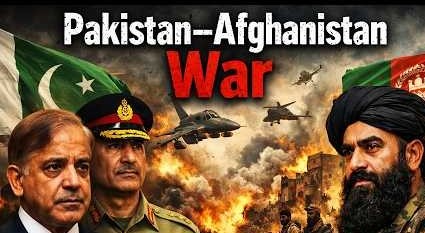
In October 2025, the volatile border between Pakistan and Taliban-ruled Afghanistan once again erupted into violence, marking the sharpest escalation seen since the fall of Kabul in 2021. Years of mutual suspicion, militant activity, and punitive cross-border actions have culminated in a conflict that threatens to redraw the region’s security landscape and deepen humanitarian tragedy. At the heart of the crisis lies Pakistan’s longstanding grievance over militant sanctuaries in Afghanistan, alongside the Afghan Taliban’s fury at perceived violations of sovereignty. What started with airstrikes and border raids has grown into a war of retaliation.


Genesis. Beyond the militant issue lies a deeper, century-old source of tension, the Durand Line, the 2,600-kilometer boundary drawn by British colonial authorities in 1893. Afghanistan has never formally recognised it as an international border, arguing that it unjustly divides ethnic Pashtun communities between the two countries. Pakistan, on the other hand, insists that the border is internationally recognised and non-negotiable. This disagreement frequently sparks clashes, especially when Pakistan attempts to fence or fortify sections of the frontier. In recent years, Islamabad has built extensive fencing and new security posts, moves that the Afghan Taliban view as unilateral and illegitimate. For local tribes who straddle the border, these disputes have disrupted trade, travel, and traditional social networks, fuelling resentment on both sides.


A Legacy of Mistrust. The irony of the current conflict is striking: for years, Pakistan was seen as one of the Taliban’s key supporters. Islamabad maintained close ties with the group during the U.S. war in Afghanistan, providing political and logistical backing while officially denying direct involvement. Many in Pakistan’s security establishment believed a Taliban-run Afghanistan would ensure a friendly, stable neighbour, one that would curb Indian influence and maintain strategic depth. Yet since 2021, the opposite has occurred. The Taliban’s rise to power has not translated into reliable cooperation. Instead, the Afghan government’s reluctance to act against the TTP has deepened Islamabad’s insecurity. Meanwhile, Taliban leaders have accused Pakistan of bowing to Western pressure and violating Afghan sovereignty with repeated cross-border strikes.


The Refugee and Humanitarian Dimension. Another flashpoint is the treatment of Afghan refugees in Pakistan. For over four decades, Pakistan has hosted millions of Afghans who fled war and instability. However, as domestic economic challenges mount and security incidents rise, Islamabad has hardened its stance. In 2023 and again in 2025, Pakistan announced mass deportations of undocumented Afghans, citing concerns that militants were using refugee camps for cover. Kabul condemned the policy as collective punishment, arguing that most refugees are innocent civilians. The crackdown has strained relations further, with human rights groups warning of humanitarian crises as thousands of Afghans are forced to return to an unstable homeland.


Aggressive Pakistan Strategy. Pakistan’s “Azm-e-Isthekam” campaign, launched in mid-2025, signalled a shift: no longer would Pakistan rely solely on defensive border policing. Instead, Islamabad adopted a new deterrence framework, crossing into Afghanistan with targeted military operations aimed at chronic safe havens. This bold approach antagonised the Taliban, who see themselves as sovereign rulers rather than proxies for Pakistani interests.


Escalation: From Airstrikes to Border War. The immediate trigger for this round of fighting was a series of Pakistani airstrikes on October 9, 2025, targeting Pakistani Taliban (Tehreek-e-Taliban Pakistan, or TTP) leaders, including Noor Wali Mehsud, in Kabul and several Afghan provinces. Islamabad cited security concerns, claiming TTP was using Afghan territory as a staging ground for attacks inside Pakistan. The Afghan Taliban called these actions unprovoked aggression, denouncing civilian deaths and promising retribution. Days later, Taliban fighters shelled Pakistani outposts along the Durand Line, with both sides exchanging heavy fire, drone strikes, and artillery barrages, resulting in dozens of military and civilian casualties on both sides.​


The Battles. Clashes have centered on traditional flashpoints: Spin Boldak and Chaman, major crossings on the Afghanistan-Pakistan border, and Kurram and Khyber districts further north. Taliban fighters shelled Pakistani posts, killing soldiers and reportedly seizing weaponry. Islamabad responded with precision airstrikes, claiming to destroy Taliban military compounds and inflict significant casualties. Afghan sources, however, report large-scale civilian deaths and widespread displacement, including in Kandahar and Paktika, triggering renewed calls for restraint by international agencies.​ The scale and intensity of the fighting surpassed previous border skirmishes. Both sides deployed drones, tanks, and heavy artillery in what some analysts described as “border war” conditions, closing major trade crossings and halting cross-border movement. Satellite images confirmed destroyed military infrastructure and burning market stalls; hospital reports cited dozens of injured women and children.​


Ceasefire Attempts. Amid mounting casualties and economic paralysis along the border, international actors intervened. Saudi Arabia and Qatar, both regional stakeholders, urged restraint and pushed for a diplomatic ceasefire. On October 15–16, a temporary 48-hour truce was announced, brokered with back-channel Pakistani and Afghan talks. Yet, even as fighting subsided briefly, mutual distrust simmered. Both parties continued to exchange accusations over border violations and destabilisation, threatening to reignite hostilities.​ Diplomatic channels remain open, with China, Qatar, and the Organisation of Islamic Cooperation (OIC) playing potential mediating roles.


Humanitarian and Economic Impacts. The militarisation of the border is causing a profound humanitarian crisis. Trade has collapsed at major crossings, disrupting food and fuel supplies throughout southern Afghanistan and Balochistan, Pakistan. Tens of thousands have been displaced; hospitals report surging casualties amidst shortages of medical supplies. Businesses suffer as markets fall under shellfire, and civilians fear raids and bombings. The economic cost, layered on political instability and poverty, further erodes any prospect for peace.​

Geopolitical Ripples. The escalation has regional consequences. India, long marginalised by the Taliban, is signalling renewed diplomatic interest in Afghanistan, such as the reopening of its Kabul embassy. The Taliban government’s recent diplomatic outreach to New Delhi, including trade talks and security meetings, has made Islamabad uneasy. China, a major investor in Pakistan through the China-Pakistan Economic Corridor (CPEC), is worried that instability could threaten its infrastructure projects and trade routes. Beijing has quietly urged both sides to restore calm. The evolving security equation, characterised by shrinking American influence and rising intra-regional rivalries, makes the crisis especially combustible.​


Future Outlook. For the Taliban, maintaining sovereignty and legitimacy means resisting external control, whether from Pakistan, the U.S., or others. For Pakistan, ensuring border security and suppressing militant threats are non-negotiable national interests. The clash between these priorities makes compromise difficult. If the violence continues, the consequences could be severe: destabilisation of border regions, humanitarian crises from refugee flows, and the potential for militant groups to exploit chaos on both sides. While the recent truce offers a temporary pause, most analysts believe it is unlikely to hold unless both sides address the root causes. Pakistan wants concrete action against the TTP and assurances that Afghan soil will not be used for attacks. Afghanistan demands an end to cross-border strikes and respect for its sovereignty.


Conclusion. As the fragile ceasefire holds, there is little optimism for a durable peace. The deep mistrust over terrorism, sovereignty, and historic grievances remains unresolved. Pakistan faces an emboldened TTP, increasingly sheltered by Kabul, while Afghanistan bristles at cross-border airstrikes and civilian deaths. Diplomats warn that only sustained dialogue, regional mediation, and genuine efforts to address militant sanctuaries can halt the drift toward wider war. Ultimately, the Pakistan-Afghanistan conflict is not just a border dispute or a fight against militancy; it is a test of whether two neighbouring Islamic republics, each grappling with its own legitimacy and governance crises, can find a path toward coexistence in one of the world’s most volatile regions. Developments indicate that old alliances and new doctrines are insufficient in the face of deep-rooted mistrust and shifting power. The need for comprehensive security solutions and humanitarian support grows ever more urgent, as the fate of the region hangs in the balance.


Please Add Value to the write-up with your views on the subject.

2023
Default rating

Please give a thumbs up if you  like The Post?


For regular updates, please register your email here:-

Subscribe


References and credits

To all the online sites and channels.

Pics Courtesy: Internet

Disclaimer:

Information and data included in the blog are for educational & non-commercial purposes only and have been carefully adapted, excerpted, or edited from reliable and accurate sources. All copyrighted material belongs to respective owners and is provided only for wider dissemination.


References:-

  1. Durani, Mohammad Usman, and Asad Khan. “Pakistan-Afghan Relations: Historic Mirror.” Journal of the Pakistan Historical Society, vol. 63, no. 4, 2023, pp. 1–35.
  2. Johnson, Thomas H., and M. Christine Fair. “The Durand Line: History and Problems of the Afghan-Pakistan Border.” Asian Affairs, vol. 40, no. 2, 2009, pp. 177–195. (A historical survey of border negotiations and ongoing disputes.)
  3. Usman, Muhammad, and Muhammad Khan. “Dynamics of Trust and Mistrust in the Afghanistan–Pakistan Relationship.” Asian Perspective, vol. 45, no. 2, 2021, pp. 295–317.
  4. Gul, Imtiaz. “Heavy Clashes Erupt Along Pakistan-Afghanistan Border.” The Guardian, 11 October 2025.
  5. “Border Clash Between Afghanistan and Pakistan Threatens a Wider Conflict.” The New York Times, 12 October 2025.
  6. Shah, Syed Akhtar Ali, et al. “Pakistan, Afghanistan Agree to Temporary Truce After Fresh Fighting, Airstrikes.” Reuters, 15 October 2025.
  7. “‘New Normal’: Is Pakistan Trying to Set New Red Lines with Afghan Taliban?” Al Jazeera, 15 October 2025.
  8. “Uncertainty Torments Afghan Refugees Facing Deportation From Pakistan.” The New York Times, 31 March 2025.
  9. “Pakistan Accelerates Deportation of Afghans: UN.” Al Jazeera, 15 April 2025.
  10. Rashid, Ahmed. Taliban: Militant Islam, Oil and Fundamentalism in Central Asia. 2nd ed., Yale University Press, 2010.
  11. Yousaf, Mohammad, and Mark Adkin. The Bear Trap: Afghanistan’s Untold Story. Leo Cooper, 1992.
  12. Khan, Shahnaz. Afghanistan and Pakistan: Conflict, Extremism, and Resistance to Modernity. Rowman & Littlefield, 2011.
English हिंदी