Information and data included in the blog are for educational & non-commercial purposes only and have been carefully adapted, excerpted, or edited from reliable and accurate sources. All copyrighted material belongs to respective owners and is provided only for wider dissemination.
My Article published on the Chanakya Forum Website.
The air transport fleet of any Air Force contributes to the air power attributes of speed, reach, flexibility, and responsiveness. Besides speedy induction and sustenance of forces, it is used for rescue missions. The air transport platforms are also utilised in force multiplier roles like air-to-air refuelling (AAR), Airborne Warning and Control Systems (AWACS), Intelligence, Surveillance and Reconnaissance (ISR), and Airborne Command Posts, Special Forces operations, etc. Most armed forces possess several transport aircraft for these crucial roles. Indian Air Force has numerous air transport platforms in its inventory. However, due to the ageing of the existing fleet and the increasing demands on air transport, there is an urgent need for new medium transport aircraft (MTA).
Medium transport aircraft are a category of military and civilian aircraft designed to transport cargo, troops, and equipment over medium ranges. These aircraft usually have a payload capacity of between 20 and 30 tonnes. They have large cargo holds to accommodate various cargo types, including oversized equipment, vehicles, and pallets. They also have configurable interiors to switch cargo, passenger, and medical evacuation roles. Modern navigation and communication systems ensure safe and efficient operations in diverse environments. They can take off and land on short runways (paved and unpaved) in harsh and remote locations with limited infrastructure. These aircraft are crucial in supporting military logistics, humanitarian aid, disaster response, and various commercial cargo operations due to their balance of range, payload, and versatility.
Post-independence, the IAF operated a mix of An-12, Packet Fairchild, Caribou, Dakota and Avro aircraft for Air Maintenance and Logistics support. In the early 1980s, the transport fleet was modernised with the induction of IL-76 aircraft (40 tonnes) and An-32 aircraft (4-6 tonnes). The Indian Air Force (IAF) now operates two types of fixed-wing transport aircraft: strategic heavy airlift aircraft and lesser-capacity tactical airlift aircraft. For strategic airlift purposes, the IAF operates 47-tonne capacity IL-76 and 77-tonne capacity C-17 III Globemaster aircraft. The IL-76 was procured from the Soviet Union in the 1980s, and the Globemaster was acquired from the United States in 2011. Medium lift and special operations platform includes 20-tonne capacity C-130J Hercules aircraft. For tactical airlift purposes, the IAF uses the vintage An-32 and Avro aircraft, which have been in service for over 50 years. IAF also operates IL-76-based A-50 AWACS aircraft and IL-78 aerial refueling tanker aircraft.
In the 1980s, the availability of An-12s started declining, and they were phased out in 1991-92. For over two decades, the IAF’s transport airlift capability mainly rested on heavy-lift IL-76 and light tactical airlift AN-32 aircraft. This airlift combination was inefficient, as there was no 20-ton airlift aircraft. Medium Transport Aircraft (MTA) requirement was felt as early as 2001. The Russians proposed a HAL-Ilyushin joint development project for a medium-lift aircraft, IL-214, in the 20-tonne payload category. Hindustan Aeronautics Limited (HAL) entered a joint venture with Russia’s United Aircraft Corporation-Transport Aircraft Division in 2012 to design and produce a turbofan-powered military transport aircraft in the 15-20 tonne category. The two countries even signed a pact for co-development. However, for various reasons related to the design, engine, cost and technology transfer, the project was cancelled in 2016.
At its peak, the IAF operated over 200 AN-32 and Avro combinations in the 4-7 tonne tactical airlift category. The British-origin Avro procured in the late 1960s is being replaced by 56 10-tonne capacity Airbus C-295 aircraft. The AN-32 aircraft was upgraded in 2009 and has been the workhorse of the IAF transport fleet. However, they have reached the end of their technical lifespan, and their numbers have now dwindled to a low figure. Sustaining them has become difficult due to the Russia-Ukraine war, which has disrupted the supply of spare parts and maintenance services, underscoring the urgent need for their replacement.
Due to a lack of Indigenous options, the IAF had to opt for acquisition from the international market. In December 2022, the IAF issued a Request for Information (RFI) to purchase medium transport aircraft (MTA) under the “Make in India” category. The RFI mentions the aircraft weight category of 18-30 tonnes, capable of multiple roles. It does not indicate specific numbers but seeks Rough Order of Magnitude (ROM) cost estimates for 40, 60 and 80 aircraft. Large-scale production could be followed up considering the utility in multiple roles, including civilian cargo applications and export prospects. The information sought by IAF from OEMs also includes the scope of technology transfer; possible methods to enhance indigenisation and to set up a dedicated manufacturing line, including design, integration and manufacturing processes in India; capability to undertake indigenous manufacture of systems, subsystems, components and spares; and making India a regional or global hub for manufacturing and maintenance, repair and overhaul (MRO) of the equipment. This project has significant strategic and economic implications and aligns with the government’s Make in India initiative to boost self-reliance in the defence manufacturing sector. It would reduce the dependency on original equipment manufacturers (OEMs) in the long term, especially for maintenance, repair, overhaul, and future upgrades.
The IAF would be interested in the aircraft’s capability to operate from Advanced Landing Grounds (ALGs), high-altitude airfields, and semi-prepared surfaces. It would also want the platform’s suitability for multiple roles such as air-to-air refuelling, airborne surveillance, para dropping, and special operations. Acquisition cost, technology transfer, and production in India for Indian and global markets will be major decision-influencing factors. Possible contenders could be:-
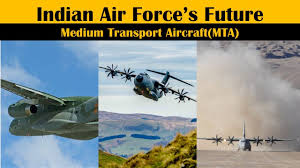
Lockheed Martin’s C-130 J-30 Super Hercules. US aerospace firm Lockheed Martin has responded by offering the latest variant, the C-130 J-30 aircraft. The aircraft claims to have exceptional short take-off and landing capabilities even in higher altitudes and unprepared runways. IAF already operates C-130 aircraft and a few aircraft components are already being produced in India by the TATA Lockheed Martin Aero structure PVT LTD. Thus, this facility could produce complete aircraft domestically under the “Make in India” It would be easier on the Air Force in terms of maintenance and avoidance of another type in the inventory. However, besides being expensive, the aircraft is a 60-year-old design at the end of its production life. Also, there is the issue of technology access and transfer.
Embraer’s KC-390 Millennium. Brazilian Embraer Defence and Security is pitching the C-390 as the market’s most modern military transport aircraft. It is a new design jet aircraft with significant operational advantages. It is a versatile aircraft with fly-by-wire controls and a glass cockpit; it can carry a 26-tonne payload and achieve speeds of up to 870 kilometres per hour. It is optimised for multiple roles with low operating costs. IAF operates Embraer AC variants for VIP travel and airborne early warning and control aircraft. Embraer has expressed keenness to produce in India. Producing a new-generation aircraft would be advantageous from a technology acquisition and Indigenous industry development perspective. However, it has many American-origin components (engines, avionics, and sensors).
Airbus’ A400M Atlas. Airbus Defence and Space is jointly executing a project with Tata Advanced Systems Limited (TASL) to equip the Air Force with 56 C-295. It is offering A400M Atlas aircraft. The aircraft payload carrying capacity is 37 tonnes, higher than the prescribed criteria in the RFI. Airbus asserts that the A400M offers superior payload, range and ability to transport heavy and outsized loads over extended distances, presenting a game-changing potential for the IAF.
Russian IL-276. The Russian company would be more than willing to accommodate India’s interests. This could be an option provided the concerns that forced India to walk out of Joint Venture development of the MTA program earlier are addressed.
Most OEMs collaborate with Indian vendors to manufacture their respective aircraft in India. TATA is already collaborating with Lockheed Martin and Airbus to manufacture the components of the C-130 and complete the assembly of the C-295 aircraft. This collaboration could be expanded further for the MTA. In February 2024, Embraer signed a memorandum of understanding with Indian defence manufacturer Mahindra Defence to manufacture C-390 Millennium aircraft locally in India. Airbus has not yet announced who it will partner with to compete for the project. However, TASL and state-run aircraft manufacturer Hindustan Aeronautics Limited (HAL) could be among the likely options. HAL has offered to design and build a 30-ton payload aircraft in collaboration with an international OEM. These joint ventures should focus on production efficiency, supply chain control, and lower costs.
The IAF has been a regular contributor to the statecraft because of the role played by its air transport fleet. The benefits of its mission capabilities have been utilised both domestically and abroad. However, a balanced inventory of air transport aircraft is essential. There is an urgent need for the induction of medium transport aircraft. Acquiring a modern and capable transport aircraft will enhance India’s airlift capabilities and bolster its defence capabilities. Besides capability enhancement, the MTA project is an excellent opportunity to create a private-public industrial ecosystem for transport aircraft manufacturing in the country. The project will have significant strategic and economic implications. Operational requirements, cost vis-à-vis budget constraints, technology acquisition, boost to make in India, and geopolitical strategic partnerships will be crucial factors in decision-making.
Air Marshal (Dr) Rajeev Sachdeva (Retd), “The Versatile Transport Fleet of the IAF”, SP Guide Publications, Issue: 09-2022.
IAF RFI for MTA issued on 03 Feb 2023. chrome-extension://efaidnbmnnnibpcajpcglclefindmkaj/https://indianairforce.nic.in/wp-content/uploads/2023/02/RFI-for-MEDIUM-TRANSPORT-AIRCRAFT-1.pdf
Atul Chandra, “In Need of Lift”, Force news magazine, Jul 2024.
Air Marshal M Matheswaran AVSM, VM, PhD (Retd), “The resurrection of Medium Transport Aircraft (MTA) Project”, Financial Express. 24 Feb 24.
Ananth Iyer, “Transport, Tanker, Reconnaissance Aircrafts of the IAF”, Team-BHP, 15 Mar 2023.
Rahul Manohar Yelwe, “Modernizing the Indian Air Force’s Transport Fleet”, The Diplomat, 10 May 2024.
Disclaimer:
Information and data included in the blog are for educational & non-commercial purposes only and have been carefully adapted, excerpted, or edited from reliable and accurate sources. All copyrighted material belongs to respective owners and is provided only for wider dissemination.
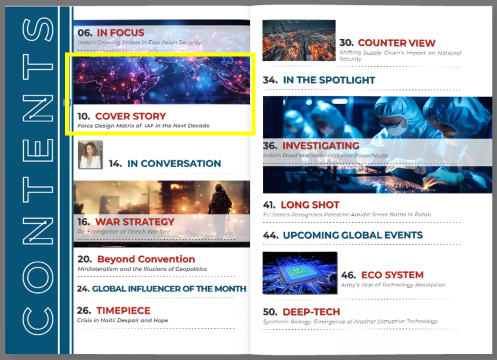
My Article published in the News Analytics Journal Jul 2024.
India faces two nuclear-powered inimical neighbours. China is emerging as a major regional power with the aspiration to be a global power, and her desire to dominate Asia and, finally, the world has implications for India. India’s relations with China have changed from cooperative to competitive to combative. China sees India as a competitor and would like to keep India off-balance. On the other hand, Pakistan remains a security threat and continues to use non-state actors to maintain a situation of unrest. Asymmetric warfare will remain an instrument of its state policy. These two countries have a close and longstanding strategic partnership that includes cooperation even in areas of defence and security. Pakistan openly boasts of collusive support from China in case of a war with India. Due to its unique geographical location and geopolitical environment, India faces a collusive threat with significant chances of military conflict. Therefore, her national interest dictates that the country be able to deter her inimical neighbours from any military misadventure, either singly or collusively.
China’s warfare strategy focuses on developing a modern and capable force to support its national security interests and regional/global ambitions. The Chinese forces are undergoing significant modernisation and expansion at a rapid pace, with particular emphasis on developing advanced technologies and capabilities. China’s investment and progress in space-based systems, quantum technology, unmanned platforms, hypersonic weapons, directed energy weapons, etc., will give it surveillance and precision strike capability with lightning speeds.
India’s military aspirations must align with its socioeconomic condition and likely threats. The path forward for India is clear: it must enhance its deterrence capability while investing in future war-fighting technologies. With its significant offensive potential and responsiveness, air power is the most crucial arm of military action. The Indian Air Force (IAF), like air power in the last century, has evolved to reflect changes in technology, doctrine, and strategic priorities. However, it must continuously adapt to the existing and changing environment to build focused capabilities. The IAF will have to create deterrence and be able to dominate the air. The IAF must remain adaptive and agile to win wars in a network-centric battlefield with conflicts varying across the complete threat spectrum. Identifying focus areas and developing assets, platforms, facilitators, and infrastructure is essential. While several issues are vital requirements, the main pillars are trained manpower, combat leadership, combat sustenance resources, and sound strategy. The IAF must focus on capability building and adopt a multidisciplinary and integrated war-fighting approach.
The IAF should expand its investments in advanced munitions, combat support aircraft, electronic warfare, and physical infrastructure. Boosting the IAF’s fighter force strength should be a top priority, maintaining a balance between quantity and quality. An adequate number of combat support platforms should follow. Air Defence has evolved from point defence to offensive defence, with the spectrum expanding to cater for sub-conventional threats to long-range hypersonic weapons. Appropriate weapons, systems, and networks need to be added. The weapon list should provide various options, including high-tech, long-range smart weapon systems with increased accuracy and assurance. Air combat support and protective infrastructure are essential. The IAF’s networking capability has evolved well and is applied to air defence, air ops planning, maintenance, and logistics functions. However, there is still room for further progress and integration of new inductions.
The Indian Air Force, as a technology-intensive service, must continuously incorporate modern, cutting-edge equipment and technology. Technology’s profound influence on air strategy is a significant driver of innovation and evolution. Investing in emerging technologies is necessary and exciting, opening up new possibilities. Future technologies impacting the air war, such as Quantum computing, Hypersonic weapon systems, Artificial Intelligence, Robotics, Nanotechnology, Unmanned platforms, Drones and swarm technology, and Network-centric environment / Internet of things/system of systems, are on the horizon. Impetus is also required for some of the existing aviation-related programs like fifth-generation fighters, Transport aircraft (for civil and military requirements), Development of gas turbines and engines, sensors and seekers, stealth, metallurgy and composites, unmanned platforms and swarms, AI-enabled autonomous systems and long-range vectors.
A strategic focus is required for a medium-term and long-term technology plan supported by adequate budget allocation. A suitable ecosystem needs to be developed to harness these dual-use technologies. IAF must define a defence science and technology strategy with a vision to harness technology and convert it into decisive capability. The following focus areas are advocated, with a particular emphasis on Indigenous defence production capability:-
Situational Awareness & Decision Making. One effect of advanced technology on air warfare is the increased pace and intensity of air operations. In such a scenario, the decision-making process must quickly keep up with the OODA cycle. The three most important contributing factors are high situational awareness, a robust and fast network system for information sharing, and AI-based decision-support systems.
Space-Based Capabilities. The term airpower has changed to aerospace power, with the aerial warfare envelope expanding to the space domain. Space-based systems and applications are embedded in every aspect of aerial warfare. The involvement of space-based equipment and systems is even more significant in Grey zone warfare. Space-based systems are becoming increasingly crucial in air warfare, providing capabilities such as navigation, targeting, communication, early warning of missile launches and space-based surveillance. The integration of these systems with air assets is expected to continue, providing new opportunities for crucial offensive and defensive operations.
Hypersonic Weapons. The development of hypersonic weapons is likely to impact air strategy significantly. Hypersonic weapons provide new opportunities for rapid response and long-range strike capabilities with precision. They also pose new challenges in terms of protection and air defence. The high speed and unpredictability of hypersonic weapons will require the development of new air defence strategies, as traditional air defence systems may be unable to detect or intercept these weapons. This could lead to the development of new technologies, such as directed energy weapons or advanced sensors, to counter the threat posed by hypersonic weapons. Also, protective infrastructure would be required to withstand these weapons’ destructive power.
Unmanned Platforms. The use of unmanned platforms and systems is growing in warfare. This shift is expected to continue as technology advances and the capabilities of unmanned systems improve further. Drones of various sizes and capabilities are taking over the tasks of conventional platforms. Their use is spread across the entire spectrum of threats, ranging from sub-conventional and conventional to long-range attacks. Investment in anti-drone systems is also a need of the hour.
Sixth Generation Aircraft. Sixth-generation aircraft are still in the development phase; however, based on current trends in air technology, sixth-generation aircraft will likely have several key features that will shape air strategy in the future. They are likely to have increased automation with advanced AI and machine learning algorithms that will enable autonomous decision-making and allow them to adapt to changing situations quickly. They would also have enhanced stealth capabilities, making them virtually invisible to radar and other detection systems. Integrated sensor systems in these aircraft will provide comprehensive situational awareness and the ability to engage targets with great precision. Sixth-generation aircraft are expected to significantly impact air strategy in the future, with their advanced capabilities enabling air forces to operate with greater autonomy and strike enemy targets with unprecedented precision and speed. However, as with any new technology, challenges may be associated with introducing sixth-generation aircraft, including developing new tactics, training programs, and support infrastructure to realise their full potential.
Loyal Wing Man Concept. Both piloted and unmanned platforms have their respective advantages and disadvantages. The thought process for the next generation of platforms is to harness the benefits of both and develop networked systems wherein both can work in an integrated manner. Research is being done in many countries on the “loyal wingman” concept.
Indian Air Force has always encouraged the development of indigenous defence production capability, and it is one of its key result areas. It has played an essential role in creating an aerospace ecosystem in India and has been operating indigenously built aircraft and aircraft built in India under licence production. This has given impetus to indigenous industry in the past and will continue to support it in future. The critical thing to remember is that while supporting self-reliance, the minimum level of deterrence capability must always be maintained.
Perceived threats and challenges to national security, calling for immediate and substantial measures to enhance IAF’s war-fighting capacity and capability. Capability building entails a long gestation period. The IAF should continue prioritising modernisation efforts, including acquiring advanced aircraft, weapons systems, and sensors. This will enable the IAF to maintain a technological edge over potential adversaries and respond effectively to emerging threats. The IAF should concentrate on new areas of capability development, such as unmanned aerial vehicles (UAVs), cyber warfare, and space-based systems. These capabilities will enhance its ability to conduct various operations, from intelligence gathering to precision strikes. Operational preparedness includes reviewing doctrines, strategy and tactics, organisational structures, human resource adaptation, training, and maintenance and logistics concepts.
IAF must think differently to tackle various asymmetric and non-traditional security threats. This would require more innovative, out-of-the-box solutions that leverage the prevalent technology. Overall, the IAF should strive to balance traditional air power capabilities and emerging areas of strategic importance. This will enable the IAF to defend India’s air space and national security interests while contributing to the broader role of nation-building, regional stability and humanitarian assistance.
Air Marshal Anil Chopra (Retd), “Air Power Transformational Challenges India”, Air Power Asia.
Basic Doctrines of the Indian Air Force 1995, 2012 and 2022.
Ashley J Tellis, “Troubles They Come In Battalion”, Carnegie Endowment for International Peace, 2016.
Air Mshl Anil Chopra (Retd), “IAF modernisation challenges ahead”, South Asia defence and strategic review.
Vivek Kapur, “IAF Equipment & Force Structure Requirements to Meet External Threats, 2032”, MPIDSA, 2014.
“Interview with CAS and articles in IAF”, IAF anniversary issue of Chanakya Aerospace, defence and maritime review, 2018.
Gp Capt AK Sachdeva(Retd), “Rebuilding the IAF fighter fleet”, SP’s Aviation issue 2, 2019.
Sanjay Badri-Maharaj, “Indian Air Force at 86: options and challenges”, Vayu V/2018.
Gp Capt J Noronha (Retd), “Strength lies in numbers: Rebuilding the combat fleet of IAF”, Indian Defence Review Oct-Dec 18.
Air Marshal Dhiraj Kukreja, “IAF 2020 and beyond”, Indian Defence Review, Jan – Mar 17.
Disclaimer:
Information and data included in the blog are for educational & non-commercial purposes only and have been carefully adapted, excerpted, or edited from reliable and accurate sources. All copyrighted material belongs to respective owners and is provided only for wider dissemination.