

730: BATTLEFIELD BEYOND BOUNDARIES: MILITARY CONFLICTS AND INDUSTRY


Presented my views at the Best Practices Meet 2025, organised by Data Security Council of India on 21 Aug 25.


The concept of “battlefield beyond boundaries” encapsulates the evolution of modern warfare, where conflicts transcend traditional geographic and physical limits, intertwining with industries that develop, supply, and profit from advanced technologies. This convergence blurs the lines between military and civilian spheres, raising critical questions about economics, security, ethics, and global governance. Modern battlefields extend across land, sea, air, cyberspace, and outer space, driven by technological advancements and the increasing integration of commercial industries into military operations.


  1. The Expanding Nature of Military Conflicts

Modern warfare has evolved beyond traditional battlefields, incorporating multiple domains and strategies that challenge conventional doctrines.

  • Multi-Domain Warfare: Conflicts are no longer confined to land, sea, and air. Cyberspace and outer space have become critical battlegrounds, with operations involving satellites, cyberattacks, and digital infrastructure. For instance, the Russia-Ukraine conflict highlights the use of commercial satellites like Starlink for real-time communication and coordination.
  • Hybrid Warfare: This approach combines conventional military forces with non-kinetic elements such as cyberattacks, disinformation campaigns, economic sanctions, and energy weaponisation. These tactics influence global public opinion and blur the lines between combatants and civilians.
  • Asymmetric Warfare: The rise of non-state actors and unconventional tactics, such as the use of commercial off-the-shelf (COTS) drones for reconnaissance and attacks, demonstrates the adaptability and affordability of modern tools in conflicts, as seen in Ukraine.
  • Globalisation of Conflict: Military engagements impact global supply chains, financial systems, and trade, with long-range weapons like hypersonic missiles and drones enabling strikes far from traditional frontlines, making civilian areas vulnerable.


  1. Impact of Emerging Technologies

Technological advancements are reshaping the battlefield, enhancing capabilities while introducing new challenges.

  • Artificial Intelligence (AI): AI revolutionises military operations by enabling faster decision-making, predictive analytics, and autonomous systems. It enhances surveillance, logistics, and battlefield awareness by analysing vast datasets from sensors, satellites, and civilian devices.
  • Robotics and Autonomous Systems (RAS): Unmanned vehicles (UAVs, UUVs, UGVs) and robotic systems reduce human risk in hazardous environments, improve logistics, and provide real-time intelligence. Military robotics is projected to reach a market size of $21.2 billion by 2032.
  • Cybersecurity: With increased reliance on networked systems, protecting critical defence infrastructure from cyberattacks is paramount. Technologies like blockchain and private 5G networks ensure secure, real-time coordination across sprawling battlefield networks.
  • Space-Based Technologies: Satellites provide critical intelligence, precision targeting, and communication capabilities. Companies like SpaceX play a pivotal role by supplying infrastructure like Starlink, which has proven vital in modern conflicts.
  • Hypersonic Weapons: These high-speed, manoeuvrable missiles challenge existing defence systems, potentially destabilising traditional deterrence mechanisms.
  • Additive Manufacturing (3D Printing): Enables rapid production of complex components, reducing reliance on traditional supply chains and addressing wartime shortages, such as artillery shells in the Russia-Ukraine conflict.
  • Directed Energy Weapons (DEWs): Lasers and high-power microwaves offer defence against high-speed threats but face challenges related to power requirements and atmospheric conditions.
  • Electrification and Sustainability: The defence industry is shifting toward electric and hydrogen-powered systems and eco-friendly materials to lower costs and meet regulatory demands, balancing military innovation with sustainability goals.


  1. Transformation of the Defence Industry

The global defence sector is undergoing significant changes, driven by technological advancements, economic factors, and geopolitical dynamics.

  • Military-Industrial Complex (MIC): The MIC, encompassing defence contractors like Lockheed Martin, BAE Systems, and Raytheon, drives innovation and production. This relationship influences economic policies, technological development, and societal structures.
  • Commercial Technology Integration: Companies traditionally associated with civilian sectors, such as SpaceX and Silicon Valley tech firms, are increasingly vital to military applications, providing solutions like satellites, AI, and cybersecurity.
  • Increased R&D Investment: Nations are investing heavily in research and development to maintain technological superiority, with the global defence equipment market projected to grow from $517.2 billion in 2023 to $762.1 billion by 2032.
  • Globalised Defence Markets and Supply Chains: International collaboration, foreign direct investment, and interconnected supply chains are increasing, though conflicts expose vulnerabilities, such as semiconductor shortages and reliance on critical resources like rare earth minerals.
  • Rapid Procurement and Indigenous Innovation: Active conflicts, like the 2025 India-Pakistan confrontation, accelerate defence spending and local production, as seen in policies like “Make in India,” which aim to boost self-reliance.
  • Dual-Use Technology: Military R&D, such as GPS and drones, benefits civilian sectors but also risks militarising civilian infrastructure, making it a target in conflicts.


  1. Industry as a Battlefield

Industries are not just enablers of warfare but have become battlegrounds themselves, targeted and leveraged in geopolitical conflicts.

  • Cyberwarfare: Tech companies are frontline defenders against nation-state hackers targeting critical infrastructure, such as data centres and telecom networks.
  • Supply Chain Warfare: Semiconductor shortages and sanctions highlight how industries are weaponised, with control over resources like rare earth minerals, oil, and gas becoming strategic priorities.
  • War Economies: Conflicts generate industries of private security, cyber defence, reconstruction, and resource extraction, but economies tied to war may find peace less profitable.


  1. Ethical and Policy Considerations

The integration of advanced technologies and industries into warfare raises significant ethical and legal challenges.

  • Lethal Autonomous Weapons (LAWs): The development of fully autonomous weapons raises concerns about accountability and the role of humans in targeting decisions, complicating compliance with international humanitarian law (IHL).
  • Civilian Infrastructure as Targets: The use of civilian technologies in military operations risks designating them as legitimate targets, raising humanitarian concerns and questions about the scope of cyber warfare.
  • Maintaining Strategic Stability: Emerging technologies like hypersonics and AI-driven weapons could destabilise deterrence mechanisms, increasing the risk of miscalculation and escalation.
  • Global Governance and Arms Control: The rapid pace of technological change necessitates international cooperation to address regulatory gaps in existing frameworks, like the Geneva Conventions, and promote responsible development of new military technologies.
  • Profit vs. Peace: The profitability of conflict-driven industries raises ethical questions about whether corporations should benefit from wars that cause humanitarian crises.
  • Privatisation of War: The rise of private military companies blurs accountability for violence, challenging traditional notions of state-controlled warfare.


  1. Global and Societal Impacts

The interplay of military conflicts and industry has far-reaching consequences for economies, societies, and global power dynamics.

  • Economic Ramifications: Conflicts disrupt global supply chains, food security, and economies, while industries adapt to meet wartime demands or mitigate losses. For nations like India, heightened conflict drives job creation but exposes vulnerabilities in supply chains and technology.
  • Technological Spillover: Wartime innovations, such as radar from WWII, often lead to civilian applications, driving broader industrial and societal advancements.
  • Geopolitical Shifts: The race for technological supremacy in AI, autonomous systems, and space militarisation influences global power dynamics, with nations like China and the U.S. competing for dominance.
  • Sustainability vs. Security: Defence industries face pressure to balance military innovation with climate goals, integrating eco-friendly technologies while maintaining operational effectiveness.


Conclusion

The “battlefield beyond boundaries” reflects a paradigm where military conflicts are no longer confined to physical spaces but extend into digital, economic, and societal domains, deeply intertwined with industrial advancements. The integration of commercial technologies, the rise of autonomous systems, and the globalisation of defence markets challenge traditional warfare doctrines, requiring new strategies, ethical frameworks, and international regulations. As battlefields expand to encompass industries, economies, and technologies, understanding this interdependence is essential to navigating the complex ethical, economic, and political challenges of modern warfare. The future of conflict will be defined not only by armies and strategies but by the global industries that design, supply, and sustain the mechanisms of war.


Please Add Value to the write-up with your views on the subject.


1879
Default rating

Please give a thumbs up if you  like The Post?


For regular updates, please register your email here:-

Subscribe


References and credits

To all the online sites and channels.

Pics Courtesy: Internet

Disclaimer:

Information and data included in the blog are for educational & non-commercial purposes only and have been carefully adapted, excerpted, or edited from reliable and accurate sources. All copyrighted material belongs to respective owners and is provided only for wider dissemination.


References:-


  1. Singer, P. W. (2009). *Wired for War: The Robotics Revolution and Conflict in the 21st Century*. Penguin Books.
  2. Kaldor, M. (2012). *New and Old Wars: Organised Violence in a Global Era* (3rd ed.). Stanford University Press.
  3. Grey, C. S. (2015). *The Future of Strategy*. Polity Press.
  4. Latiff, R. H. (2017). *Future War: Preparing for the New Global Battlefield*. Knopf.
  5. Bitzinger, R. A. (2021). “The Global Defence Industry in the 21st Century: Trends and Transformations.” *Journal of Strategic Studies*, 44(3), 321–345.
  6. Gilli, A., & Gilli, M. (2019). “The Diffusion of Drone Warfare? Industrial, Organisational, and Infrastructural Constraints.” *Security Studies*, 28(4), 661–696.
  7. Horowitz, M. C. (2018). “Artificial Intelligence, International Competition, and the Balance of Power.” *Texas National Security Review*, 1(3), 36–57.
  8. Lin, J., & Singer, P. W. (2022). “The Cyber Battlefield: How Nation-States and Non-State Actors Are Redefining Warfare.” *Foreign Affairs*, 101(2), 88–97.
  9. Raska, M. (2020). “The Sixth RMA Wave: Disruption in Military Affairs?” *Journal of Strategic Studies*, 43(6), 834–860.
  10. International Institute for Strategic Studies (IISS). (2023). *The Military Balance 2023*. IISS.
  11. RAND Corporation. (2021). *The Future of Warfare in 2030: Projecting Conflict in a Highly Networked World*. RAND Corporation.
  12. Stockholm International Peace Research Institute (SIPRI). (2024). *SIPRI Yearbook 2024: Armaments, Disarmament, and International Security*. Oxford University Press.
  13. NATO Science and Technology Organisation. (2022). *Emerging and Disruptive Technologies: Implications for NATO Defence Planning*. NATO.
  14. United Nations Institute for Disarmament Research (UNIDIR). (2023). *The Weaponisation of Emerging Technologies: Ethical and Legal Challenges*. UNIDIR.
 

650: INDIA ENTERS THE LASER AGE: MK-II(A) DEW USHERS IN A NEW ERA OF DEFENCE TECHNOLOGY


My article published on The EurasianTimes website on 16 Apr 25.


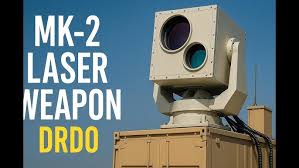
India successfully tested its first high-energy laser weapon, the Mk-II(A) Laser-Directed Energy Weapon (DEW), on April 13, 2025, at the National Open Air Range in Kurnool, Andhra Pradesh. Developed by the Defence Research and Development Organisation (DRDO), the 30-kilowatt laser system demonstrated the ability to neutralise fixed-wing, swarm, and surveillance sensors precisely at ranges up to 5 kilometers. The weapon can engage targets at the speed of light, using a laser beam to cause structural failure or destroy warheads, offering a cost-effective alternative to traditional ammunition with minimal collateral damage.

The test places India among a select group of nations, including the US, China, and Russia, with advanced laser weapon capabilities. DRDO plans to induct the land-based system within two years, with future upgrades for greater range and applications on ships, aircraft, and satellites. A more powerful 300-kilowatt “Surya” laser capable of targeting high-speed missiles and drones up to 20 kilometers away. Posts on social media highlight the weapon’s potential to counter aerial threats effectively.

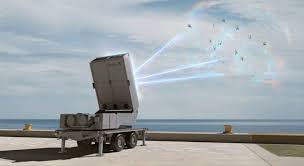
Directed Energy Weapons (DEWs) represent a transformative leap in military technology. They harness concentrated energy to neutralise threats with unprecedented precision and speed, a feat once only a part of science fiction. Unlike conventional munitions, which rely on physical projectiles or explosives, DEWs deliver energy through lasers, microwaves, or particle beams to disable or destroy targets.


Directed Energy Weapons

At their core, DEWs operate by focusing energy to create destructive effects. The most prominent type, laser-based DEWs, emit highly focused beams of light that travel at the speed of light (approximately 300,000 kilometers per second). When this beam strikes a target, it transfers intense heat, causing structural failure, melting critical components, or detonating warheads. For instance, India’s 30-kilowatt Mk-II(A) laser demonstrated its ability to neutralise drones and sensors up to 5 kilometers away by inducing catastrophic overheating in seconds.

Microwave-based DEWs, another category, emit electromagnetic pulses to disrupt or destroy electronic systems. These are particularly effective against swarms of drones or missile guidance systems, as they can disable multiple targets simultaneously within a wide area. Though less developed, particle beam weapons accelerate charged particles to damage targets at the molecular level, offering potential for future applications.

The advantages of DEWs are manifold. They require no physical ammunition, reducing logistical burdens and costs—engagements are estimated to cost mere dollars per shot compared to thousands for missiles. This cost-effectiveness is a significant advantage in modern warfare. Their speed-of-light delivery ensures near-instantaneous impact, critical for countering fast-moving threats like hypersonic missiles. Additionally, DEWs produce minimal collateral damage, making them ideal for precision strikes in populated areas.


Historical Context and Global Development

The concept of DEWs dates back to science fiction, with early inspirations from works like H.G. Wells’ War of the Worlds. However, serious development began during the Cold War, with the United States and Soviet Union exploring laser technologies for missile defence. This historical context provides a deeper understanding of the evolution of technology. The U.S. Strategic Defence Initiative in the 1980s, often dubbed “Star Wars,” aimed to deploy space-based lasers to intercept ballistic missiles, though technological limitations stalled progress.

In recent decades, advancements in power generation, beam control, and thermal management have brought DEWs closer to battlefield reality. The United States has led the charge, with systems like the Navy’s 150-kilowatt Laser Weapon System (LaWS) deployed on ships to counter drones and small boats. Israel’s Iron Beam, designed to complement the Iron Dome, uses lasers to intercept rockets and mortars cost-effectively. China and Russia have also invested heavily, with China’s Silent Hunter laser system reportedly capable of disabling vehicles and drones, and Russia’s Peresvet laser designed for air defence and satellite disruption. These developments can potentially reshape international relations as countries with advanced DEW capabilities gain new strategic advantages.


Applications in Modern Warfare

DEWs are poised to revolutionise defence across multiple domains. On land, they offer robust protection against drones, a growing threat in asymmetric warfare. The proliferation of low-cost drones, as seen in conflicts like Ukraine, has exposed vulnerabilities in traditional air defences. Laser systems provide a sustainable countermeasure with their low per-shot cost and unlimited “magazine” (limited only by power supply). For example, India’s Mk-II(A) successfully neutralised a swarm of drones, a capability critical for border security.

DEWs enhance naval defence against anti-ship missiles, small boats, and unmanned aerial vehicles at sea. The U.S. Navy’s High Energy Laser with Integrated Optical-Dazzler and Surveillance (HELIOS) system, integrated into destroyers, exemplifies this trend. For India, equipping warships with laser systems could strengthen maritime security in the Indian Ocean, a vital trade corridor.

In the air, DEWs are being developed for aircraft to counter incoming missiles. The U.S. Air Force’s Self-Protect High Energy Laser Demonstrator (SHiELD) aims to equip fighter jets with laser pods for missile defence. India’s vision to mount lasers on aircraft could enhance its air superiority, particularly against regional adversaries with growing missile arsenals.

Space-based DEWs, though controversial, represent the next frontier. Lasers could disable enemy satellites or defend against anti-satellite weapons, securing critical communication and reconnaissance assets. India’s planned satellite-mounted lasers underscore its intent to safeguard its space infrastructure.


Challenges and Limitations

Despite their promise, DEWs face significant hurdles. Atmospheric conditions like rain, fog, or dust can scatter or weaken laser beams, reducing their effectiveness. India’s DRDO addresses this through advanced beam control systems, but challenges persist in diverse terrains like the Himalayas. Power requirements also pose a barrier—high-energy lasers demand substantial electricity, necessitating compact, efficient generators. For mobile platforms, this remains a logistical challenge.

Cost and scalability are additional concerns. While DEWs are cheaper per shot, initial development and deployment costs are high. India’s Mk-II(A) required years of investment, and scaling to systems like the Surya laser will demand further resources. Finally, countermeasures like reflective coatings or electronic hardening could reduce DEW effectiveness, sparking an arms race in defensive technologies. It’s important to note that while DEWs offer significant advantages, they are not without vulnerabilities. Developing effective countermeasures will be a key area of focus in the future.


Future of Directed Energy Weapons

The global DEW market is expected to grow rapidly, fuelled by increasing threats from drones, missiles, and electronic warfare. India’s roadmap, which includes the induction of the Mk-II(A) by 2027 and the development of the Surya laser, positions the country as a key player. Collaborative efforts with allies could hasten progress, while indigenous innovation ensures strategic autonomy.

Beyond military applications, DEWs have the potential for civilian uses, such as removing space debris or disaster response (e.g., disabling hazardous objects). Their integration into multi-layered defence systems—combining lasers, missiles, and electronic warfare—will redefine warfare as technology matures.


Conclusion

Directed Energy Weapons mark a paradigm shift in defence, offering speed, precision, and economy unmatched by traditional systems. India’s successful test of the Mk-II(A) laser underscores its emergence as a technological power, capable of shaping the future of warfare. While challenges remain, the trajectory is clear: DEWs are not just the stuff of science fiction but a cornerstone of 21st-century security. As nations race to master this technology, the balance of power—and the ethics of its use—will shape the decades ahead.


Please Add Value to the write-up with your views on the subject.


1879
Default rating

Please give a thumbs up if you  like The Post?


For regular updates, please register your email here:-

Subscribe


Link to the article on the website:-

Peresvet, Iron Beam, LaWS & Now India’s Mk-II(A)! How Directed Energy Weapons Could Revolutionize 21st-Century Warfare


References and credits

To all the online sites and channels.

Pics Courtesy: Internet

Disclaimer:

Information and data included in the blog are for educational & non-commercial purposes only and have been carefully adapted, excerpted, or edited from reliable and accurate sources. All copyrighted material belongs to respective owners and is provided only for wider dissemination.


References: –

  1. DRDO Press Release. “Successful Test of Mk-II(A) Laser Directed Energy Weapon Conducted by DRDO.” April 13, 2025.
  1. Firstpost. (2025, April 13). India’s ‘Star Wars’ weapon! DRDO tests laser that melts aerial threats. https://www.firstpost.com/india/indias-star-wars-weapon-drdo-tests-laser-that-melts-aerial-threats-13834676.html
  1. India Today. (2025, April 13). DRDO tests laser-based weapon system. https://www.indiatoday.in/india/story/drdo-laser-weapon-system-destroys-drones-missiles-test-kurnool-andhra-pradesh-2527665-2025-04-13
  1. LiveMint. (2025, April 13). In a first, India shoots down drones with laser weapon. https://www.livemint.com/news/india/in-a-first-india-shoots-down-drones-with-laser-weapon-joins-elite-league-of-nations-watch-video-11742305443609.html
  1. NDTV. (2025, April 13). India’s first futuristic “Star Wars” laser weapon. https://www.ndtv.com/india-news/indias-first-futuristic-star-wars-laser-weapon-shoots-down-drone-swarm-5420597
  1. The Hindu. (2025, April 13). DRDO tests directed energy weapon system. https://www.thehindu.com/news/national/drdo-tests-directed-energy-weapon-system-that-can-disable-drones-missiles/article68989626.ece
  1. Gormley, Dennis M. Directed Energy Weapons: Technologies, Applications and Implications. RAND Corporation, 2000.
  1. Kopp, Carlo. “Directed-Energy Weapons: Physics of High-Energy Lasers (HELs).” Defence Today, vol. 6, no. 4, 2008.
  1. Freedberg, Sydney J. Jr. “Lasers, Railguns & Directed Energy: The Future of War?” Breaking Defence, 2017.
  1. Defence Update. “Directed Energy Weapons: Changing the Face of Modern Warfare.” 2024.
  1. and International Studies (CSIS). Directed Energy and the Future Battlefield. CSIS Report, 2023.

629: LEONIDAS BY EPIRUS: STAR TREK STYLE SHIELD OF DIRECTED ENERGY WEAPON


My Article published on the EurasianTimes Website on 28 Mar 25.


The most recent and significant news, announced in March 2025, is that Epirus Inc., a defence technology start-up based in Torrance, California, has unveiled the Leonidas system, a high-power microwave (HPM) weapon designed to neutralise unmanned aerial vehicle (UAV) swarms. This innovative system emits electromagnetic pulses to disable drones individually or across a broad area, offering a scalable solution to counter drone threats. The Leonidas system has been likened to a “Star Trek-style” shield due to its ability to disable or destroy drones within seconds. Beyond its counter-drone capabilities, the Leonidas system’s versatility allows it to disable electronics in ground vehicles and sea vessels, demonstrating its potential across various defences.

In the rapidly evolving landscape of modern warfare, unmanned aerial systems (UAS) have emerged as a significant and multifaceted threat. Due to their high operational costs and limited ammunition capacity, traditional defence mechanisms, such as missiles or anti-aircraft guns, struggle to keep pace with these agile, numerous, and often low-cost adversaries. The Leonidas system addresses these challenges through directed energy technology, allowing for rapid, reusable, and cost-effective simultaneous engagement of multiple threats.

Named after the legendary Spartan king who famously stood against overwhelming odds at Thermopylae, the Leonidas system embodies a bold and forward-thinking approach to defence. Leveraging cutting-edge HPM technology, it offers a non-kinetic alternative to conventional systems, addressing one of the most pressing challenges of the 21st century.


High-Power Microwave Technology. HPM systems generate electromagnetic waves ranging from 300 MHz to 300 GHz. Unlike the microwaves used in household ovens to heat food by exciting water molecules, HPM delivers intense bursts of energy capable of inducing currents in electronic circuits. When directed at a target, these microwaves can disrupt or permanently damage sensitive components, rendering devices like drones inoperable. HPM’s ability to affect a broader area rather than a single pinpoint sets it apart from other directed energy technologies, such as lasers. This makes it particularly effective against multiple targets or swarms, a critical advantage in scenarios where dozens or hundreds of drones might be deployed simultaneously. Historically, HPM systems relied on vacuum tube technology, which was bulky, fragile, and maintenance-intensive. However, recent advancements in solid-state electronics have revolutionised the field. Solid-state HPM systems, like the one powering Leonidas, use semiconductor devices to generate microwaves, offering greater durability, efficiency, and compactness, attributes that make the technology viable for real-world deployment.


The Leonidas System.

The Leonidas system is a pinnacle of Epirus’s expertise in solid-state HPM technology. While proprietary details remain closely guarded, the key aspects of its design and functionality can be based on the general principles of HPM and publicly available information.

 At its core, the system likely features an array of solid-state amplifiers that generate and amplify microwave signals. These signals are then emitted through a steerable antenna, allowing operators to direct the HPM beam toward specific targets or areas. The power output of the Leonidas system would be a critical factor in its effectiveness. Although exact specifications are not disclosed, HPM systems typically produce peak powers ranging from hundreds of kilowatts to several megawatts. This energy is sufficient to disable the electronics of drones within a specific range, which depends on factors such as power levels, frequency, and atmospheric conditions. Unlike lasers, which maintain a tight beam over long distances, HPM waves experience divergence and can be attenuated by moisture or particles in the air, potentially limiting their range. However, this constraint is less significant for counter-drone applications where threats are often within a few kilometers.

Advanced targeting and control systems are integral to the Leonidas platform. These likely include radar or optical sensors to detect and track drones, paired with sophisticated software that prioritises targets and adjusts the beam’s intensity and direction. The result is a highly responsive system capable of engaging fast-moving threats with near-instantaneous effect, as HPM travels at the speed of light. These systems also enable the Leonidas to distinguish between friendly and hostile drones, reducing the risk of friendly fire and enhancing its effectiveness in complex operational environments.

Epirus has developed fixed and mobile versions of the Leonidas system, enhancing its versatility. Stationary installations might protect critical infrastructure, while vehicle-mounted units could support troops in the field, offering a flexible defence against dynamic threats.


Applications

The primary mission of the Leonidas system is to counter drone threats, a capability that addresses a growing concern in military and civilian contexts. The Leonidas system excels in such scenarios, using its wide-area HPM effects to disable multiple drones with a single burst. This makes it an ideal solution for protecting military installations, convoys, or naval vessels from both individual and coordinated drone attacks.

Beyond counter-drone operations, the Leonidas system holds promise for electronic warfare. Targeting enemy communication systems, radars, or other electronic equipment could degrade an adversary’s situational awareness or operational capabilities without firing a shot. Additionally, the technology might be adapted to disable vehicles or machinery reliant on electronic controls, though this could require higher power levels or closer proximity to the target.

Epirus has also hinted at broader applications, such as non-lethal uses for perimeter security or crowd control. In these scenarios, HPM could deter intrusions or disable unauthorised devices without causing permanent harm, offering a versatile tool for law enforcement or homeland security.


Advantages. 

The Leonidas system offers several compelling advantages over conventional kinetic defence systems, making it a game-changer in the fight against emerging threats.

    • Cost-Effectiveness. Engaging a target with HPM requires only electrical energy, a fraction of the cost of expending missiles or ammunition. This is particularly advantageous against low-cost drones, where using expensive munitions is economically unsustainable.
    • Precision and Control. Operators can tune the system to affect specific areas or targets, minimising collateral damage. Adjusting power output in real time allows it to respond to varying threat levels with tailored precision.
    • Scalability. From small consumer drones to larger military UAS, the Leonidas system can adapt its energy output to neutralise a wide range of targets, offering flexibility across different operational contexts.
    • Unlimited Magazine. Unlike guns or missile launchers with finite ammunition, the Leonidas system can operate continuously as long as it has power, making it ideal for prolonged engagements or swarm attacks.


Challenges

Despite its promise, the Leonidas system faces several technical and operational challenges that must be addressed for widespread adoption:-

    • Power Requirements. Generating high-power microwaves demands significant electrical energy. For mobile deployments, this necessitates robust power sources, such as large batteries or generators that could limit the system’s portability or require frequent recharging.
    • Range and Environmental Limitations. HPM’s effectiveness decreases with distance due to beam divergence and atmospheric absorption. Adverse weather conditions, such as rain or fog, could further reduce performance, potentially requiring multiple units for comprehensive coverage.
    • Integration with Existing Systems. Incorporating a novel technology like HPM into established defence frameworks involves significant hurdles. This includes adapting hardware, training personnel, and developing tactics to maximise its utility alongside traditional systems.
    • Unintended Disruptions. HPM’s broad-area effects could inadvertently interfere with friendly electronics, communication networks, or civilian infrastructure if not carefully managed. Robust targeting and safety protocols are essential to mitigate this risk.
    • Strategic Considerations. While primarily defensive, the ability to disable electronics at a distance raises questions about potential offensive applications or escalation in conflicts. International laws and treaties governing directed energy weapons may need to evolve to address these concerns and ensure responsible use.


Impact and Future Prospects

Epirus has successfully tested the Leonidas system, showcasing its ability to neutralise drone swarms with precision and speed. These demonstrations have attracted global attention from military and defence organisations, underscoring the system’s potential to fill a critical gap in countermeasures. Partnerships with defence contractors or government agencies signal growing confidence in HPM technology and its readiness for operational deployment.

Looking to the future, Epirus may enhance the Leonidas system with more significant power outputs to tackle more prominent or more resilient targets. Integration with complementary technologies, such as lasers, could create a multi-layered defence system, combining HPM’s wide-area effects with a laser’s pinpoint accuracy. Advances in artificial intelligence and machine learning could also enable autonomous operation, allowing the system to detect, prioritise, and engage threats in complex environments with minimal human intervention.

The broader implications of the Leonidas system extend beyond immediate defence needs. As directed-energy weapons gain traction, they could influence global military strategies, potentially sparking an arms race or prompting new regulatory frameworks. For now, its focus on countering drones positions it as a vital tool in an increasingly drone-dominated world.


Global DEW Projects

Directed energy weapons (DEWs) are advanced technologies that use focused energy, such as lasers or microwaves, to disable or destroy targets without physical projectiles. Numerous countries are researching and developing these weapons, each with unique projects and strategic goals.

United States. The US is a leader in DEW development. Besides Leonidas, the Department of Defence (DOD) and agencies like DARPA, the Air Force Research Laboratory, and the Naval Research Laboratory are researching DEWs to counter ballistic missiles and hypersonic cruise missiles. Notable projects include the High-Energy Laser Scaling Initiative (HELSI) and systems like HELIOS, with demonstrations successfully shooting down drones.

China. China is making rapid strides in DEW development, with a focus on high-energy lasers and microwave systems. State media and manufacturers have released images of handheld and vehicle-mounted laser systems, including the LW-30, a 30kW road-mobile high-energy laser (HEL) designed for unmanned aerial systems (UAS) and precision-guided weapons. Their efforts extend to counter space applications, with ground-based DEWs potentially targeting satellites, as highlighted in analyses.

Russia. Russia has been developing DEWs for decades, with the Peresvet laser weapon system entering experimental combat duty in 2018 and claimed operational use during the 2022 invasion of Ukraine. A more advanced version, “Zadira,” can incinerate targets up to three miles away within five seconds. Russia is also working on EMP cannons and microwave guns for anti-drone applications.

United Kingdom. The UK’s Ministry of Defence (MOD) is investing heavily in DEWs, with projects like DragonFire, a laser-directed energy weapon (LDEW) that achieved its first high-power firing against aerial targets in January 2024 at the Hebrides Range.  DragonFire, with a range classified but capable of hitting a £1 coin from a kilometer away, is expected to be deployable by 2027. Additionally, the Radio Frequency Directed Energy Weapon (RFDEW) is nearing service by 2026, focusing on countering unmanned systems.

France and Germany. France and Germany are key players in European DEW development, often through multinational collaborations. France is involved in projects like the TALOS-TWO, involving 21 partners across eight EU nations. Germany is focusing on integrating DEWs into defence platforms. These efforts aim for operational deployment by 2030, emphasising cost-effective counter-drone and missile defence systems.

India. India’s Defence Research and Development Organisation (DRDO) is actively pursuing DEWs, with projects like the Directionally Unrestricted Ray-Gun Array (DURGA II), a 100-kilowatt lightweight DEW at the concept stage, set for integration with land, sea, and air platforms. Other initiatives include the KALI particle accelerator and a 1KW laser weapon for counter-IED operations, with plans for 25-kW and 100-kW systems.

Israel. Israel is advancing the Iron Beam laser-based DEW, designed to complement its Iron Dome system. A contract signed in October 2024 for operational service within a year reflects its cost-effectiveness. The US has allocated $1.2 billion for Iron Beam procurement.

Iran and Turkey. They claim DEWs in active service, adding controversy to global assessments. Iran has announced developments in laser air defence systems, while Turkey claims the ALKA DEW was used in combat in Libya in 2019. However, specifics and verification are scarce, with claims often met with scepticism due to limited transparency.

South Korea, Japan, and Australia. South Korea and Japan have advanced technological capabilities, with South Korea developing laser-based systems for counter-drone applications, though less prominently than significant powers. Japan focuses more on nuclear and space technologies, with limited public DEW projects. Australia is investing in DEW technology, particularly for countering drones, with a $13 million deal with QinetiQ for a prototype defensive laser.


Conclusion

The Leonidas system by Epirus marks a transformative advancement in modern defence. It harnesses high-power microwave technology to address the escalating threat of drones and electronic-based hazards. Its non-kinetic approach offers a cost-effective, precise, and scalable solution that outperforms traditional systems in key areas, from countering swarms to enabling electronic warfare. While challenges such as power demands, environmental constraints, and integration remain, the system’s successful demonstrations and growing adoption signal its readiness to make a lasting impact.

The future of Directed Energy Weapons (DEWs) is promising, with advancements in laser, microwave, and particle beam technologies enhancing their effectiveness. These weapons offer rapid engagement, precision targeting, and cost efficiency, making them invaluable for missile defence, drone neutralisation, and electronic warfare. However, hurdles such as energy storage, environmental limitations, and legal-ethical concerns must be overcome. As nations invest in DEW research, their role in modern warfare will expand, shaping the next generation of defence capabilities.


Please Do Comment.


1879
Default rating

Please give a thumbs up if you  like The Post?


For regular updates, please register your email here:-

Subscribe


References and credits

To all the online sites and channels.

Pics Courtesy: Internet

Disclaimer:

Information and data included in the blog are for educational & non-commercial purposes only and have been carefully adapted, excerpted, or edited from reliable and accurate sources. All copyrighted material belongs to respective owners and is provided only for wider dissemination.


Link to the article on the website:-

One Shot, 100 Kills! U.S. Unleashes “Revolutionary” HPM Weapon That Can ‘Fry’ Hostile UAVs Within Seconds


References:-

  1. Epirus Inc. “Leonidas High-Power Microwave: Directed Energy for Counter-Unmanned Aerial Systems (cUAS).” Epirus Official Website. ​
  1. DefenceScoop. “Marines to Get New Drone-Killing Microwave Weapon Designed for Expeditionary Operations.” DefenceScoop, September 23, 2024. ​
  1. Axios. “Drone-Frying Defence Firm Epirus Raises $250 Million.” Axios, March 5, 2025. ​
  1. Reuters. “Defence Tech Startup Epirus Secures $250 Million to Make Anti-Drone Weapons.” Reuters, March 5, 2025. ​
  1. Army Technology. “Leonidas High-Power Microwave System, US.” Army Technology, August 2024. ​
  1. Unmanned Airspace. “Epirus to Deliver Leonidas Expeditionary Air Defence System to US Navy.” Unmanned Airspace, September 2024. ​
  1. NightDragon. “Building the Future of Air Defense: Our Investment in Epirus.” NightDragon Insights, March 2025. ​
  1. “The Future of War: How Directed Energy Weapons Are Changing Military Strategy.” Defence One, October 2023.
  1. “Laser Weapons and High-Power Microwaves: The Pentagon’s Next-Generation Arsenal.” The National Interest, November 2023.
  1. “Directed Energy Weapons and the Challenge of Counter-Drone Warfare.” C4ISRNET, July 2024.
  1. “How Lasers and Microwaves Are Redefining the Battlefield.” Defense News, August 2024.
English हिंदी