Article published in the June 26 edition of the “Life of Soldier” Journal.
India stands at a strategic crossroads. The security environment around the country is becoming more volatile and technologically complex. China has transformed itself into a technologically advanced military power with integrated command structures, space capabilities, cyber warfare assets, and a rapidly expanding naval presence in the Indian Ocean. Pakistan continues to rely on asymmetric warfare while modernising selective military capabilities with external assistance. Beyond conventional threats, the future battlefield is increasingly shaped by artificial intelligence, autonomous systems, electronic warfare, drones, cyber-attacks, and information operations.
India’s approach to defence modernisation has been phased. Each of the previous wars (1962, 1965, 1971, and the Kargil war) has triggered reactive reforms and acquisitions. In future wars, India may not have time to correct deficiencies once the conflict begins. The prevailing environment necessitates military modernisation. Delay can result in strategic vulnerability. The real question is whether India can continue with incrementalism. The danger is the widening gap between the speed of emerging threats and the pace of Indian military adaptation.
Threats and Challenges
Warfare is shifting towards integrated domains. India will face a multidimensional threat landscape in future. China’s military is undergoing a most consequential transformation over the last few decades. It is not simply acquiring more equipment, but fundamentally restructuring its doctrine, organisation, and technological base to fight and win multi-domain, network-centric conflicts at speed. Over the past few decades, Beijing has invested systematically in long-term capability building. It has reorganised command structures, accelerated indigenous defence production, invested heavily in modern technology, and created military civil fusion mechanisms. The People’s Liberation Army is no longer merely a manpower heavy force. It is evolving into a networked military capable of coordinated operations across all domains. Besides the China challenge, India faces persistent tensions with Pakistan and growing maritime competition in the Indian Ocean Region.
For India, the challenge is further compounded by its geography and terrain. The country must prepare for high-altitude warfare in the Himalayas and maritime security in the Indian Ocean. It also has to deal with the urban counterterrorism within its borders. Future conflict scenarios may involve simultaneous pressure along land borders, cyberattacks on critical infrastructure, disinformation campaigns, and economic coercion.
Slow Procurement Cycles
Incremental Military Modernisation. Incremental modernisation generally focuses on replacing legacy systems rather than redesigning military capability for future warfare. Buying a few squadrons of aircraft or upgrading selected artillery units cannot substitute for integrated transformation. Incrementalism is not inherently wrong when resources are constrained, and industrial maturity is modest. However, it ceases to be prudent when it becomes a permanent default setting that systematically defers the harder choices. India must therefore recognise that procurement reform is not merely an administrative issue. It is a strategic imperative.
Indian Procurement System. One of the most persistent problems in India’s defence preparedness has been the prolonged procurement cycle. India’s procurement system has emerged from legitimate concerns over transparency, accountability, and financial scrutiny. Defence acquisition in India moves through the tedious process of approvals, technical evaluations, trials, negotiations, financial clearances, and bureaucratic reviews. It takes years or sometimes even decades. Fear of allegations, audit pressures, and political controversy has often discouraged timely decision-making. Bureaucratic caution has become embedded within the acquisition culture.
Strategic Consequences. Slow procurement cycles have strategic consequences: –
-
- Deterrence Weakening. Adversaries assess not only a nation’s current capabilities but also the speed at which it can adapt and replenish its military power. A country perceived as institutionally slow may invite coercive pressure.
-
- Cost Escalation. Deferred decisions result in increased costs due to Inflation and the need for technological upgrades. The evolving operational requirements further raise the acquisition costs over time. Resorting to emergency purchases is expensive.
-
- Doctrinal Gaps. As long as procurement and force‑structure decisions move slowly, doctrinal thinking tends to lag behind technology. New concepts such as multi‑domain operations, joint convergence, and effects‑based targeting remain aspirational rather than institutionalised.
-
- Loss of Confidence. Acquisition delays undermine confidence in indigenous systems. Services become reluctant to rely on them due to repeated delays. This creates a situation in which imports remain attractive and appear more capable and reliable.
Non-negotiable Imperatives.
Speedy Decision-Making as a Strategic Capability. Modern warfare rewards nations that can make decisions quickly under uncertainty. Strategic agility has become as important as military strength itself. Decision-making speed has a major impact on national security. It has a direct bearing on how quickly and efficiently threats are identified, forces mobilised, technologies integrated, and crises managed. India’s democratic process involves consultation, institutional checks, and political consensus-building. The challenge lies in ensuring that these processes do not become obstacles to strategic responsiveness. The issue is not merely about making faster purchases. It is about cultivating a strategic culture that is proactive, anticipates future challenges, and accepts calculated risk.
Indigenous Capability and Strategic Autonomy. The key to strategic autonomy is the building of indigenous capability. A country that depends on imports for critical defence systems is vulnerable in conflict. Relying on imports of parts, ammunition, sensors, or systems limits flexibility in a crisis. Recent global events have demonstrated that supply chains can be easily disrupted by geopolitical tensions, sanctions, or competing national priorities.
Self-reliance Challenge. The self-reliance challenge is very much both institutional and technological. Institutionally, indigenous capability requires continuity of investment, realistic timelines, collaborative development, and stable operational requirements. The armed forces prioritise capability enhancement as they cannot compromise on operational readiness. On the other hand, the industry requires sustained orders and predictable policy frameworks to build a long-term production plan. The challenge is to balance these imperatives.
Phased Capability Development. Abandoning indigenous development in favour of imports perpetuates dependence. At the same time, the minimum deterrence value cannot be compromised. The solution lies in phased capability development. Imports may be necessary in selected areas to fill in the urgent gaps. However, every foreign acquisition should strengthen domestic ecosystems through technology partnerships, local manufacturing, research collaboration, and supply chain development.
Recommendations.
Several priorities stand out: –
-
- Speed needs to be embedded into the DNA of decision‑making. The approach of “risk‑avoidance‑through‑inaction” should be replaced by the culture of “action‑with‑risk”. National security decision-making requires deeper integration of technological expertise, geopolitical analysis, and long-term planning.
-
- Procurement process must be re‑engineered for continuous capability enhancement flow rather than episodic projects. Instead of treating each acquisition as a discrete event, India should move toward a “production‑readiness” model, in which the industrial ecosystem is treated as a continuous provider of enhancements and variants.
-
- Procurement systems must become faster, more transparent, and technologically adaptive. Acquisition processes should support iterative upgrades and modular capability development.
-
- A more coherent indigenous‑capability strategy must be crafted. Accepting that not every system can be built domestically, prioritising critical technologies that underpin strategic autonomy, and investing heavily in test, evaluation, and certification infrastructure so that indigenous systems mature faster. It also means accepting that some indigenous platforms will initially under‑perform and planning for iterative upgrades rather than expecting a single “game‑changer” project to solve the problem.
-
- Defence industrial policy must prioritise the creation of an effective ecosystem. Private industry, start-ups, academic institutions, and public-sector organisations must operate within integrated innovation frameworks.
-
- Modernisation should be aligned with the actual threat environment. Military planning should focus on jointness and cross-domain integration.
-
- India must invest consistently in emerging technologies. The countries that innovate faster, adapt quicker, and integrate technology more effectively will dominate future warfare.
-
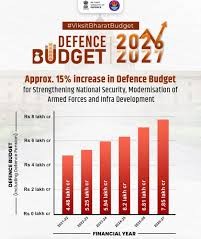
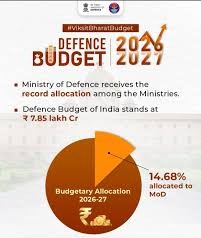
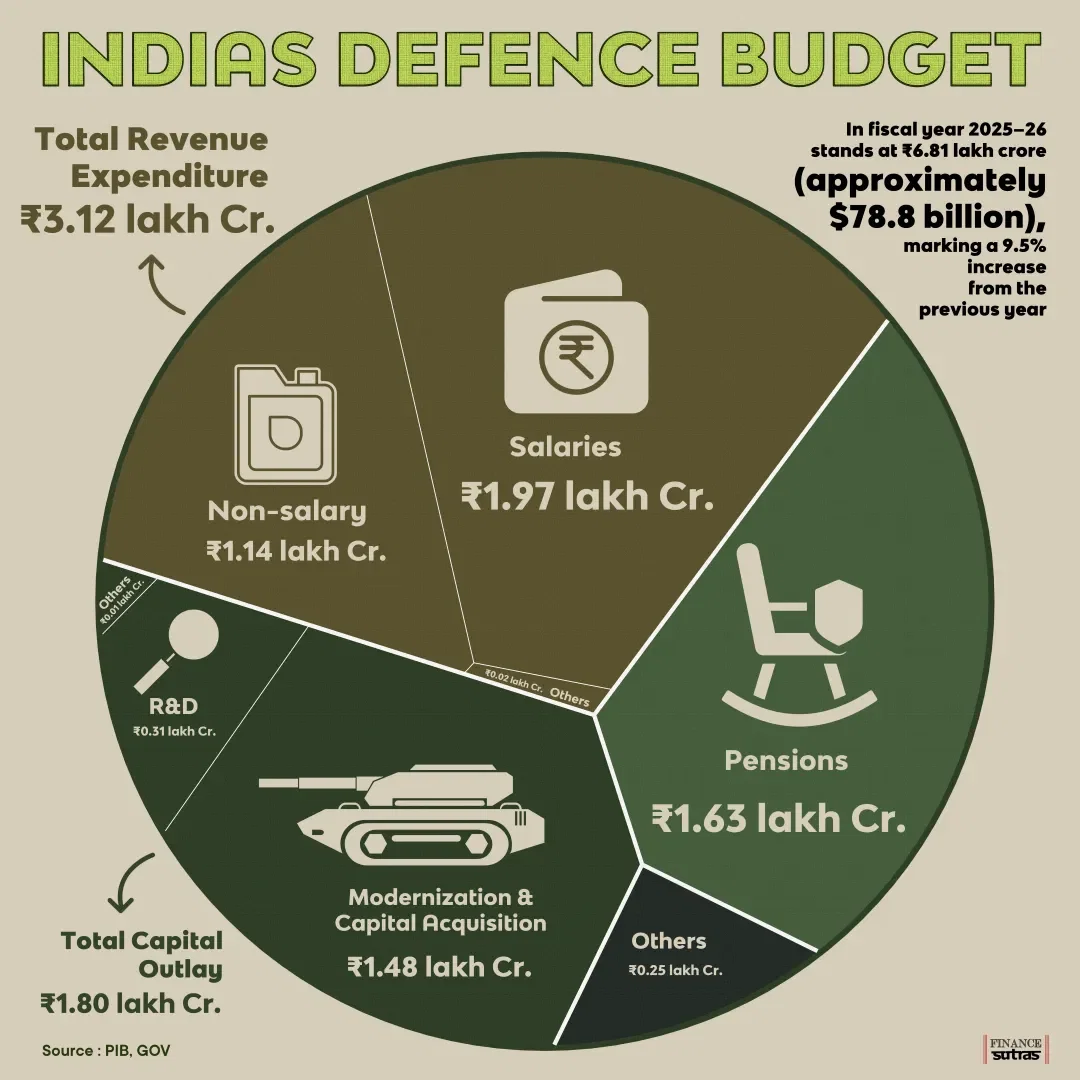
- Strategic ambitions require support from the budgetary allocations. Fiscal constraints will always exist. They need to be offset by smart spending, through prioritisation, indigenisation dividends, and public-private partnership models. Roll-over of multi-year funding commitments reduces uncertainty and enables production planning.
Concluding Thoughts
The cost of the military modernisation delay can’t be calculated solely from the percentage of ‘legacy’ equipment. It is characterised by a reduction in deterrence value, strategic options, operational readiness, and technological opportunities. Incremental modernisation may be viable in more sedate and favourable strategic conditions. It is unfeasible in the rapidly changing geopolitical environment and the speedy development of military technologies.
India cannot afford strategic complacency. The challenge before India is to modernise faster while building indigenous capabilities. India has the intellectual talent, industrial potential, and operational experience to achieve it. The question is not whether India can afford incremental modernisation, but whether it can afford the consequences of allowing strategic delays.
Please Add Value to the write-up with your views on the subject.
For regular updates, please register your email here:-
References and credits
To all the online sites and channels.
Pics Courtesy: Internet
Disclaimer:
Information and data included in the blog are for educational & non-commercial purposes only and have been carefully adapted, excerpted, or edited from reliable and accurate sources. All copyrighted material belongs to the respective owners and is provided only for wider dissemination.
References
Bajwa, P. S., “India’s defence procurement: Challenges and the way forward”. United Service Institution of India. 2023.
Bitzinger, R. A. (2021). “Modernising China’s military: Problems, progress, and prospects”. RAND Corporation.
Cohen, S. P., & Dasgupta, S. (2010). “Arming without aiming: India’s military modernisation”. Brookings Institution Press.
Dahiya, R., & Behuria, A. K. (Eds.). (2012). “India’s neighbourhood: Challenges in the next two decades”. Institute for Defence Studies and Analyses.
Government of India, Ministry of Defence. (2023). “Defence acquisition procedure 2020 (amended)”. Department of Military Affairs.
Gupta, A. (2019). “Building an arsenal: The evolution of regional power force structures”. Praeger.
Kapila, S. (2021). India’s defence modernisation: Structural constraints and strategic imperatives. Journal of Defence Studies.
Khosla, A. (2024, November). “India’s aerospace modernisation: Challenges and imperatives”. Air Marshal’s Perspective. https://55nda.com/blogs/anil-khosla
Ladwig, W. C. (2020). “Indian military modernisation and conventional deterrence in South Asia”. Journal of Strategic Studies.
Sawhney, P., & Wahab, G. (2014). “Dragon on our doorstep: Managing China through military power”. Aleph Book Company.
Tatsumi, Y., & Weston, J. (2019). “Conventional deterrence in the second nuclear age”. Stimson Center.