769: Trumpetrics on Nuclear Testing


  • Trump announced that the United States will “immediately” resume nuclear weapons testing, saying he’s instructed the Department of Defence (which he referred to as the “Department of War”) to “start testing our Nuclear Weapons on an equal basis” because other countries are allegedly doing so. 


  • He claimed that the U.S. “has more Nuclear Weapons than any other country”, and that Russia is second, China third — though he warned China could catch up in 5 years. 


  • When asked whether the testing would include underground/explosive nuclear tests, he did not rule out the possibility, saying: “You’ll find out very soon … we’re going to do some testing, yeah … if they’re going to do it, we’re going to do it.”


  • However, the Secretary,  Department of Energy  clarified the tests planned “will not involve nuclear explosions” (i.e., no full yield nuclear detonation) but rather “system tests … non-critical explosions” of parts/components. 


Discussion on the subject with Gaurav Sawant

on India Today TV.


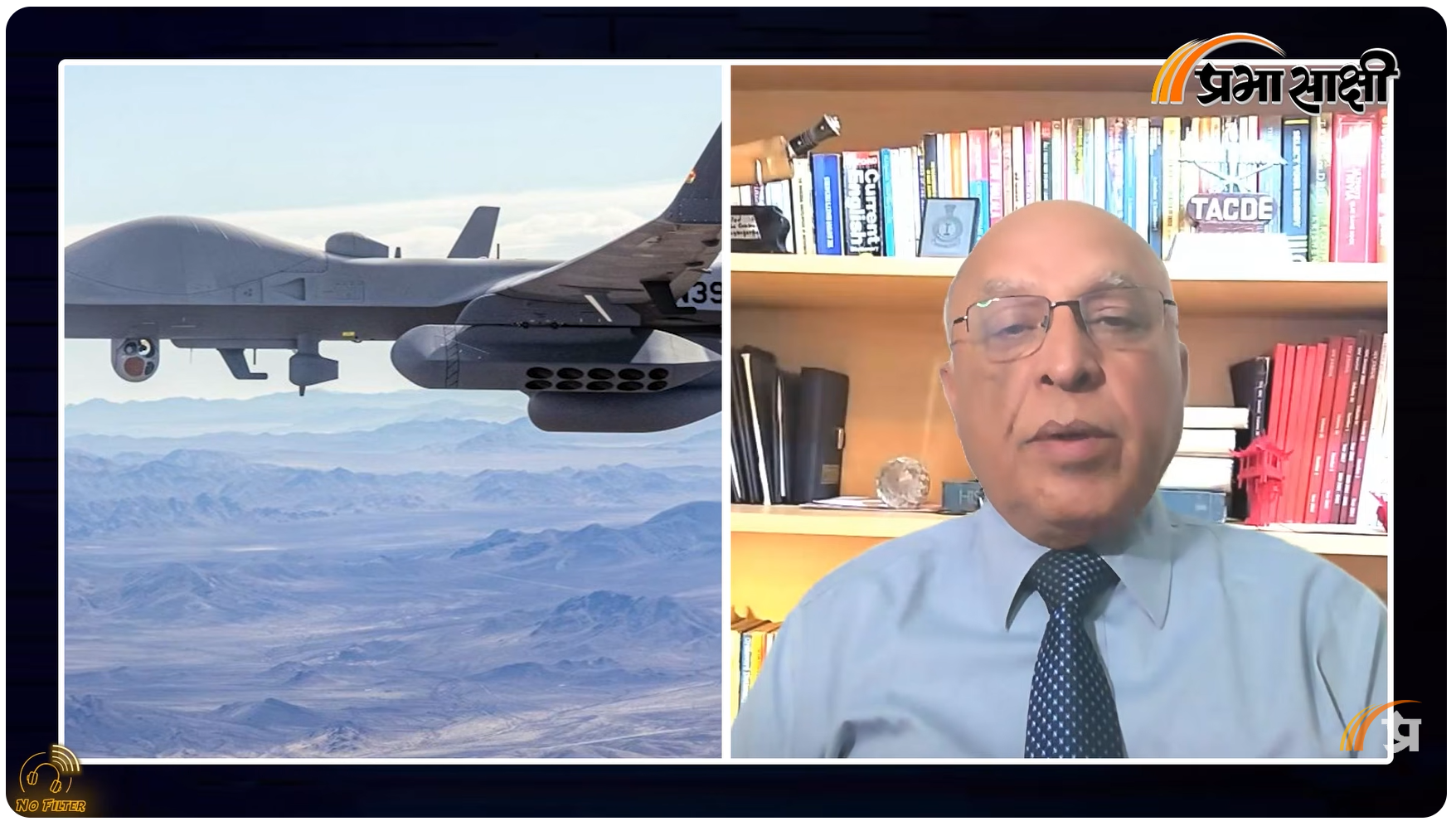
On this special report, the focus is on a potential new global nuclear arms race, with insights from former Vice Chief of Air Staff, Air Marshal Anil Khosla, and ORF’s Sushant Sarin. The discussion delves into Russia’s new Poseidon ‘doomsday’ torpedo, China’s rapidly growing arsenal, and pronouncements from the US on nuclear testing. Air Marshal Anil Khosla gives his personal view on India’s strategic options, stating, ‘we can always unsheat the Saber, you know, Polish it and may be put it back and that that will suffice to give some signals.’ The programme explores whether these global shifts necessitate a revision of India’s long-standing ‘No First Use’ nuclear policy, especially in the context of persistent threats from nuclear-armed neighbours, China and Pakistan. The panel also analyses whether statements from Washington are mere posturing or signal a significant change in the international dynamic.


Comments and Value Additions are welcome.


1879
Default rating

Please give a thumbs up if you  like The Post?


For regular updates, please register your email here:-

Subscribe


References and credits

To all the online sites and channels.

Pics Courtesy: Internet

Disclaimer:

Information and data included in the blog are for educational & non-commercial purposes only and have been carefully adapted, excerpted, or edited from reliable and accurate sources. All copyrighted material belongs to respective owners and is provided only for wider dissemination.


768: ELECTRONIC WARFARE: THE INVISIBLE BATTLEFIELD SHAPING THE MODERN CONFLICT


Article published in the Nov 25 issue of 

“The News Analytics Journal”


Electronic warfare (EW) encompasses all strategies and technologies used to exploit the electromagnetic spectrum, including radio waves, microwaves, infrared, visible light, ultraviolet light and X-rays. The spectrum is an integral part of various military operations and serves as the backbone for communication, navigation and targeting.

Contemporary combat isn’t just about deploying and using weapons; it is also about disrupting communications, radars, and navigation systems. EW works quietly in the background, manipulating the invisible waves that are essential to modern warfare. It represents the clash of invisible forces that can determine the outcome of conflicts.

EW tactics have evolved from niche techniques to core elements of military strategy. Their significance has increased alongside technological advancements and the growing availability of affordable tools, making engagement in spectrum warfare more feasible. EW has rapidly emerged as a crucial yet often underestimated element of contemporary warfare. This shift has led militaries to rethink their electronic strategies.


Electronic Warfare

Electronic warfare aims to deny the enemy the use of the Electronic spectrum, while ensuring that friendly forces can operate freely within it. EW includes proactive actions, such as jamming, deceiving, and electromagnetic attacks. It also includes protective measures, such as electronic shielding and countermeasures. EW can be carried out from the air, land, sea, or space, using both manned and unmanned systems. EW is built on three main pillars.

    • Electronic Attack (EA – Electronic Attack) or Electronic Counter Measures (ECM – Electronic Counter Measures). Electronic attack techniques seek to disrupt, deceive, or destroy the enemy’s electronic systems. For instance, high-power microwave systems can render electronics inoperable from a distance, effectively disabling drones or missiles. Electronic Jamming is done by emitting radio frequency signals to saturate enemy receivers and hinder or prevent their ability to receive or transmit information. Spoofing is sending false signals to the enemy to confuse or deceive their electronic systems.


    • Electronic Protection (EP – Electronic Protection) or Electronic Counter Measures (ECCM – Electronic Counter Measures). EP/ECCM is actions taken to protect personnel, facilities, equipment or weapon systems from any effect of own or enemy use of the electromagnetic spectrum. EP utilises techniques like encryption, frequency hopping, or anti-jamming technologies. Modern EP utilises adaptive algorithms that automatically adjust frequencies to minimise interference.
    • Electronic Support (ES) or Electronic Support Measures (ESM). ESM is Actions taken to search for, intercept, identify and locate sources of intentional or unintentional electromagnetic energy. This pillar often feeds into broader intelligence operations, enabling predictive strikes. The primary technique is Signals Intelligence (SIGINT), a form of information gathering that involves intercepting signals.

Terrestrial and airborne EW. EW capabilities are traditionally categorised into two distinct categories: terrestrial and airborne. Each has its respective advantages and disadvantages, making it imperative for militaries to use both. Ground EW capabilities were traditionally used to intercept and jam enemy radio and radar signals. Terrestrial EW sensors and jammers have their limitations. Variance in the terrain in which they operate hinders their effects. Airborne EW is primarily employed to intercept, decrypt, and disrupt communications, radars, and other command and control (C2) systems over huge areas. However, these capabilities are limited by aircraft endurance. Modern-day military operations also rely on satellite-based EW capabilities, including for broad area surveillance and early-warning, communications, and C2.

Effects. On a tactical level, EW can degrade the enemy’s situational awareness by disrupting their communications.   Deception techniques, such as inserting false data into sensors or communications systems, can mislead enemy forces. Attacks against airborne, ground-based, and space-based enemy sensors can blind air defences, delay decision cycles, creating windows for kinetic strikes.  The integration of AI has made these operations quicker and more accurate, affecting the decision-making cycle.


EW in Recent Conflicts

Strategic Doctrines of Major Powers. EW doctrines adopted by global powers vary due to their differing goals and priorities.  NATO focuses on integrated and interoperable EW systems due to its philosophy of collective security. Chinese doctrine advocates achieving information dominance by leveraging EW in a networked environment. Russia employs an EW strategy of strategic flexibility by integrating EW with hybrid warfare. These divergent methods used by the global powers highlight EW’s role as a force multiplier tailored to their respective geopolitical contexts.

Nagorno-Karabakh War. The Nagorno-Karabakh conflict highlighted the critical role of EW in modern warfare. Azerbaijan tried to overwhelm the Armenian defences with precision strikes using the Turkish Bayraktar TB2 drones. Armenia countered them with the Russian Polye-21 EW systems. These systems disrupted the Azerbaijani drone signals and command and control (C2) for several days. However, drone swarms ultimately were able to saturate the defences. The conflict exposed the EW’s vulnerability to massed aerial attacks and highlighted the need for integrated EW counter-drone systems.

Syrian Civil War. Syria has been pronounced as the “most aggressive EW environment on Earth.” Russian forces jammed the U.S. and NATO communications, disrupting their operations. In 2020, Turkey’s Koral EW system neutralised Syrian air defences, blinding their radars and enabling drone incursions. Pro-government “electronic armies” employed cyber-EW hybrids to target opposition networks. The conflict highlighted EW’s dual-use in hybrid warfare.

Russia-Ukraine War. The Russia-Ukraine War represents EW’s maturation in peer-level conflict. Russia positioned extensive EW systems, including jammers and aerial decoys, to disrupt Ukrainian and NATO surveillance radars. Ukraine captured a few of these assets for allied analysis and development of appropriate countermeasures.  Reportedly, Russian EW systems have caused significant Ukrainian drone losses, primarily through GPS scrambling and radio-control link jamming. Meanwhile, Ukraine’s targeting of Russian EW assets has been a priority to enable counteroffensives. Both sides have been adapting dynamically.

These wars demonstrate EW’s potential to break the asymmetry, where superior Electronic spectrum control increases the effectiveness of kinetic strikes. Future forces must prioritise resilient, AI-augmented EW systems to dominate this invisible battlefield.


Future Trajectory

Trends. Three trends have amplified EW’s importance. First, systems (military and civilian) are far more networked.  Precision-guided munitions, networked sensors, and satellite-enabled navigation make modern systems efficient but also vulnerable. Second, the commercial space and telecom sectors have proliferated capabilities, including small satellites and broadband networks, creating numerous new targets and vectors for disruption. Third, inexpensive technologies (software-defined radios, low-cost drones, and portable jammers) lower the cost of mounting effective EW attacks, allowing smaller actors to impose outsized effects.

    • AI and Automation. AI-driven EW systems can rapidly detect, analyse, and jam signals, reducing response times. Machine learning is also used to predict and counter enemy EW tactics. The AI integration is propelling the EW market growth amid geopolitical tensions.
    • Miniaturisation. Smaller, less expensive EW systems, such as those on drones, enable even non-state actors to disrupt advanced militaries.
    •  Cyber-EW Convergence. EW increasingly overlaps with cyber warfare, targeting networked systems. For example, hacking into radar systems can complement traditional jamming.
    •  Space as a Battleground. Satellites, critical for communication and navigation, are vulnerable to EW attacks like signal jamming or spoofing. China and Russia have demonstrated anti-satellite EW capabilities.
    • Resilience Needs. Militaries are investing in spectrum-agile systems, low-probability-of-intercept communications, and redundant networks to counter EW threats. Trends include dual-use technologies and cybersecurity enhancements.


Future Outlook. Military forces will face a myriad of challenges in the area of electronic warfare as the underlying technologies continue to advance quickly. Emerging challenges, such as spectrum congestion, the threat of cyber intrusions, and the development of countermeasures, will introduce new challenges. Advances in quantum, photonic, and space-based technologies will drive the growth of EW. Quantum computing will enable precise navigation without reliance on GPS, while implementations of post-quantum cryptography will secure communications against future threats. By 2030, we anticipate that quantum technology will disrupt EW with unbreakable encryption and more realistic battlefield simulations. We will see notable effects of AI, machine learning, offensive cyber capabilities, and directed energy weapons on the EW systems.


Conclusion

Emerging technologies are really shaping the development of EW strategies. The impact of electromagnetic denial or deception is expected to grow stronger as battlefield systems become increasingly automated and equipped with advanced sensors. Militaries need to enhance their resilience and adaptability in the realm of electronic warfare. Investing in AI, quantum technologies, and integrating across different domains—like combining EW with cyber and kinetic operations—will be key to success in the future. Training and doctrines will also need to evolve, making the invisible just as important as the visible. Moving forward, it will take technical solutions, creative operational ideas, and teamwork across military, industry, and civil sectors to stay effective and safe.

Recent conflicts have underscored the importance of investing in electronic warfare (EW) and spectrum management strategies, which are just as vital as traditional firepower in achieving battlefield success. As new technologies like quantum computing and AI become more common in warfare, embracing innovative EW techniques has become more important than ever, helping us stay ahead and be prepared.


Please Add Value to the write-up with your views on the subject.


1879
Default rating

Please give a thumbs up if you  like The Post?


For regular updates, please register your email here:-

Subscribe

References and credits

To all the online sites and channels.

Pics Courtesy: Internet

Disclaimer:

Information and data included in the blog are for educational & non-commercial purposes only and have been carefully adapted, excerpted, or edited from reliable and accurate sources. All copyrighted material belongs to respective owners and is provided only for wider dissemination.


References:-

John R. Hoehn, Defence Primer: Electronic Warfare, Congressional Research Service, 2022.

Sydney J. Freedberg Jr, When Facing Electronic Warfare in Ukraine, Small Drones Quantity Is a Quality, Breaking Defence, 2023.

Russia’s jamming of US-supplied rocket systems complicates the war effort in Ukraine, Alex Marquardt, Natasha Bertrand, and Zachary Cohen, Ukraine, CNN, May 6, 2023.

Bennett, A. The Role of Electronic Warfare in Modern Military Operations, Military Review, 2021.

Drew, K. Adapting to the Invisible Battlefield: The Evolution of Electronic Warfare, Journal of Military Strategy, 2020.

Friedman, N, The Chessboard of Electronic warfare: Strategies and Capabilities. U.S. Naval Institute Press, 2022.

Burgener, M, Electronic Warfare in the Age of Drones: Nagorno-Karabakh in Retrospect. The International Journal of Drone Policy, 2021.

Gottfried, G. The Electronic Battlefield of the Syrian Civil War: A new wave of War?  Middle East Journal of International Affairs, 2020.

Hollis, A., The Resurgence of Electronic Warfare in the Modern Conflict. Military Review, (2021).

Johnson, L, The Development of Electronic Warfare Strategy in modern conflicts. Armed Forces & Society, 2023.

Shari, S, Turning the Tide: The Role of Electronic Warfare in the Russia-Ukraine War. Eurasian Security Studies, 2023.

767: JAISH-E-MOHAMMED LAUNCHES “TUFAT AL-MUMINAT”: DIGITAL JIHAD FOR WOMEN’S RADICALISATION


Pakistan-based, UN-designated terror group Jaish-e-Mohammed (JeM) has launched an online jihadist training programme titled Tufat al-Muminat. The initiative targeting women serves as the foundation course for JeM’s newly announced female militant wing (Jamat ul-Muminat). The course is reportedly led by Sadiya and Samaira Azhar, sisters of JeM founder Masood Azhar, and Afreera Farooq, wife of Umar Farooq, one of the terrorists behind the April 2025 Pahalgam attack in Jammu and Kashmir.


According to news reports, the online sessions are scheduled to begin on 08 Nov 2025. It will be conducted for 40 minutes daily through live video platforms.​ A nominal fee of PKR 500 is being charged to each participant.  The sessions will likely focus on preaching extremist interpretations of Islam, emphasising women’s roles in jihad.


In the past, women played a minimal role in JeM’s activities. However, the development of a dedicated female wing and online training programs shows an increasing effort to involve women more actively. This is a significant change in JeM’s approach.  It seems JeM is taking cues from other groups like ISIS, Boko Haram, and Hamas, which have a history of recruiting women for combat and even suicide missions.


Digital Jihad


In the digital age, warfare has moved beyond physical battlefields, infiltrating the virtual realm where ideas spread faster than bullets. Digital jihad is also called “electronic jihad” or “e-jihad.” It is an online version of jihadist ideology and activities in the cyber domain. The internet, with its enormous, anonymous, and interlinked nature, is being used to disseminate extremist ideologies, attract believers, and form worldwide connections. Digital jihad is practised in the darkness of social media, encrypted applications, and AI-generated content. The process of converting extremism into a digital form is now one of the key factors influencing global terrorism.


Evolution of Jihad in the Digital Era. The shift from traditional insurgencies to digital jihad began in the late 1990s when extremist groups recognised the internet’s potential as both an ideological and operational tool. Al-Qaeda led this change, using basic websites for fatwas and recruitment videos after 9/11. As social media grew, this evolved into complex digital systems in which recruitment, propaganda, indoctrination, and training became borderless, efficient, and viral. By the 2010s, ISIS took it further by creating a “virtual caliphate.” Social media gave jihadist organisations—including ISIS and al-Qaeda—the opportunity to connect with a worldwide audience with minimal expenses. ISIS revolutionised digital jihad through its propaganda films, magazines (Dabiq and Rumiyah), published in multiple languages. These publications served as tools for ideological indoctrination. Recent advances include “AI jihad,” where Hamas, al-Qaeda, and ISIS use generative AI for deepfakes and memes.


Mechanisms of Digital Jihad. Digital jihad works on several overlapping functions: propaganda, recruitment, training, funding, and coordinating activities. The most obvious one is propaganda, which is conveyed through multimedia messages, videos, GIFs, and memes that praise martyrdom and foster a sense of belonging to the world object. Emotional and ideological vulnerabilities of isolated, susceptible youth are being targeted online for recruitment. Encrypted networks have become the preferred option for jihadists to communicate and plan. They can coordinate across continents anonymously.


Ideological Narratives and Online Radicalisation. The ideological axis of digital jihad blends traditional Islamic discourse with modern grievance narratives—claiming to defend the ummah (global Muslim community) against alleged Western aggression. Online preachers and influencers exploit religious symbolism to justify violence morally. Digital content idealises jihad as an empowerment or a commandment of god that builds on the feelings of alienation of most migrants and diasporic young people. This narrative warfare was institutionalised in the media jihad by ISIS, which re-packaged jihad as not only a moral imperative but as an identity of lifestyle.


The Role of Technology and AI in Digital Jihad. Emerging artificial intelligence-based technologies have expanded the reach of digital jihad. Extremist content is now more visible than ever before. The extremist echo chambers are self-perpetuating, bombarding people with extremist content. The jihadist groups are utilising video editing software, bot networks, and data encryption to disguise operations within legitimate cyber traffic. The deep web and dark web serve as the extremist underworld—used for secure communications, recruitment screening, and financial transfers via cryptocurrencies. Virtual environments now replace physical training camps, providing tactical and ideological grooming.


Countermeasures and Digital Counter-Jihad. So far, the global response to digital jihad has been two-pronged—technological solutions and Counter-ideology campaigns. Technology is being used to develop automated tools to remove extremist content from various platforms. Artificial intelligence is progressively able to identify terrorist “clusters,” connecting pages, posts, and users to map networks and eliminate them. Yet, these roadblocks put up by the authorities and tech companies are not foolproof solutions in themselves. Initiatives for the counter-jihad movements also include online deradicalisation campaigns and educational outreach programs.


Ethical, Legal, and Strategic Challenges. Balancing security and freedom of expression remains one of the most controversial issues in countering digital jihad. Since online monitoring prevents threats, it also threatens privacy and civil liberties. In addition to that, the definition of terrorist propaganda is somewhat subjective and can be used as a means to stifle legitimate dissent. Discrepancies in jurisdictional law also threaten international cooperation, as the definition of online extremism varies from country to country. This conflict between private rights and collective security makes it more challenging to regulate the internet.


Future Trajectory. Digital jihad is transitioning to decentralised networks of self-governing cells that use encrypted communications rather than a hierarchical command-and-control structure. Cyberspace has taken on the characteristics of the new caliphate—unconfined, unformed, and resilient ideologically. The rapid development of artificial intelligence, deepfakes, and virtual reality will encourage the use of these technologies by digital jihad for recruitment and psychological operations. Consequently, governments need to consider the internet as an ever-changing battlefield that requires constant, flexible, and cooperative strategies among all state and non-state actors.


Conclusion

“Digital jihad” refers to the use of digital technologies and cyberspace by extremist groups to further their agenda. Dealing with digital jihad requires finding a delicate balance between using technology and applying legal measures, without infringing on human rights. The victory over digital jihad will be achieved through the application of more technologies and also through combating the causes of radicalisation worldwide that globalisation has brought about.


Please Add Value to the write-up with your views on the subject.


1879
Default rating

Please give a thumbs up if you  like The Post?


For regular updates, please register your email here:-

Subscribe


References and credits

To all the online sites and channels.

Pics Courtesy: Internet

Disclaimer:

Information and data included in the blog are for educational & non-commercial purposes only and have been carefully adapted, excerpted, or edited from reliable and accurate sources. All copyrighted material belongs to respective owners and is provided only for wider dissemination.


References: –

  1. India Today, “Pakistan terror hypocrisy exposed again: Jaish-e-Mohammed launches online jihad course for women in Islamabad”, 22 Sep 25. https://www.indiatoday.in/world/story/jaish-e-mohammed-online-course-launch-for-women-recruitment-pakistan-terror-masood-azhar-2806662-2025-10-22
  1. Tom O’Connor, “Generating jihad: How ISIS could use AI to plan its next attack”, Newsweek, 19m Sep 2025. https://www.newsweek.com/isis-ai-terrorism-al-qaeda-attack-2132143
  1. Soumya Awasthi, “Jihadi use of artificial intelligence: A growing threat in the digital age”, Observer Research Foundation, 18 Aug 2025. https://www.orfonline.org/expert-speak/jihadi-use-of-artificial-intelligence-a-growing-threat-in-the-digital-age
  1. Ben Makuch, “AI-Generated Extremism: How Terror Groups Exploit New Tech” The Guardian, 08 July 2024.
  1. Lakomy M, “In Mapping Digital Jihad: Understanding the Structure and Evolution of al-Qaeda’s Information Ecosystem on the Surface Web”, Perspectives on Terrorism, 18(2), 82–99, 2024.
  1. Siegel D, “AI jihad: Deciphering Hamas, Al-Qaeda and Islamic State’s generative AI digital arsenal”, Global Network on Extremism and Technology (GNET), 2024.
  1. Foreign Affairs, “The Cyber Caliphate Lives On”, Foreign Affairs, March 2024.
  1. Montasari R, “Analysing ethical, legal, technical and operational challenges of the application of machine learning in countering cyber terrorism”, (pp. 123–145), Springer, 2024.
  1. Siegel D & Chandra B, “The digital weaponry of radicalisation: AI and the recruitment nexus”, Global Network on Extremism and Technology (GNET), 2024.

English हिंदी