677: NISAR: MAPPING THE FUTURE AND REVOLUTIONISING CLIMATE AND DISASTER INTELLIGENCE


My article was published in the Jun edition of the

News Analytics Journal


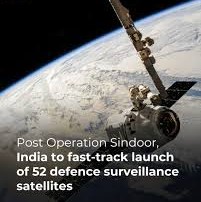
In an era where climate change, natural disasters, and ecological degradation are becoming more pressing global concerns, advanced space-based Earth observation has emerged as a vital tool. The NASA-ISRO Synthetic Aperture Radar (NISAR) mission is a landmark collaboration between the National Aeronautics and Space Administration (NASA) and the Indian Space Research Organisation (ISRO).

NISAR represents the most advanced dual-frequency radar satellite ever developed for civilian use. Once operational, NISAR will monitor Earth’s land and ice surfaces with high precision. It will capture surface movements down to fractions of an inch, aiding in studying tectonic shifts, glacier dynamics, forest health, and infrastructure stability.​ It can transform how we understand and respond to changes on Earth’s surface, ranging from glacial movements to forest biomass, from seismic activity to urban land subsidence.

The latest update on the NASA-ISRO Synthetic Aperture Radar (NISAR) mission indicates that the launch is scheduled for late May to June 2025, a shift from the anticipated March 2025 timeline. This delay, caused by thermal coating issues with the 12-meter radar antenna reflector, was resolved by October 2024. Despite the delay, the mission’s objectives and timeline remain intact. Final integration and testing are underway at ISRO’s facilities in Bengaluru. The satellite is expected to be transported to the Satish Dhawan Space Centre in the coming weeks to prepare for its launch aboard a GSLV Mark II rocket.​


NISAR Project: Collaborative Effort


Genesis. The NISAR mission concept emerged from NASA’s 2007 Decadal Survey, which called for advanced SAR data to address gaps in Earth science. Formalised in 2014 with a partnership agreement, the project has progressed through rigorous design, testing, and integration phases. NASA’s Jet Propulsion Laboratory (JPL) and ISRO’s Space Applications Centre have worked closely to refine the mission’s science plan and hardware.

Project Details. The NISAR mission is designed to provide unprecedented global radar imagery using L-band and S-band synthetic aperture radars. NASA has provided the L-band radar system, high-rate communication subsystem, GPS receivers, and payload data systems. ISRO is contributing the S-band radar, satellite bus, and launch services via the GSLV Mk II from the Satish Dhawan Space Centre. The satellite will be placed in a sun-synchronous polar orbit at about 747 kilometres and revisit the exact location on Earth every 12 days. The SAR payload will produce radar images with a resolution of 5–10 meters and a swath of 240 kilometres, enabling wide-area monitoring of Earth’s surface with high precision. The unique dual-band system of NISAR allows it to penetrate vegetation, ice, and soil more accurately than single-frequency satellites, making it a game-changer in Earth observation. The L-band is particularly effective for tracking subsurface movement and biomass, while the S-band is more sensitive to finer surface features.

Collaboration. The NISAR partnership exemplifies international cooperation in space exploration. NASA’s investment, estimated at $1.118 billion, covers the L-band radar and critical subsystems, while ISRO’s contribution, approximately ₹788 crore ($92 million), includes the S-band radar, spacecraft bus, and launch services. This division of responsibilities optimises costs and expertise, building on NASA’s legacy of SAR missions (e.g., SEASAT in 1978) and ISRO’s advancements in satellite technology (e.g., the Chandrayaan missions). The collaboration extends beyond hardware. Joint workshops, working groups, and the NISAR Utilisation Programme announced by ISRO in July 2023 engage the global scientific community, fostering data analysis and application development. The mission’s open data policy aligns with the principles of transparency and collaboration, setting a precedent for future NASA-ISRO endeavours, including potential Mars exploration missions.


Mission Objectives and Scientific Impact

NISAR’s primary goal is to make global measurements of land surface changes, detecting movements as small as a centimeter. By mapping the globe every 12 days, the satellite will generate spatially and temporally consistent data, offering insights into complex Earth processes. Its objectives span three key domains: deformation, ecosystem structure, and ice dynamics. NISAR will monitor seismic zones, volcanic activity, and landslide-prone areas for deformation, providing early warning signs for natural disasters. In ecosystem studies, it will track forest extent, vegetation biomass, and agricultural patterns, aiding sustainable resource management. NISAR will measure glacier flow rates and ice-sheet stability for ice dynamics, contributing to our understanding of climate change and sea level rise.

All NISAR data will be freely available within one to two days of observation or hours for emergencies like natural disasters. This accessibility and NISAR’s high-resolution imagery (5-10 meters) will empower scientists, policymakers, and disaster response teams worldwide. The data can enhance infrastructure monitoring, improve agricultural management, and inform rapid disaster response, potentially saving lives and property. The open data policy also encourages collaboration and innovation, allowing for the development of new applications and tools to further leverage NISAR’s capabilities.


Applications

Natural Disaster Monitoring and Response. NISAR will be critical in mapping the aftermath and precursors of earthquakes, floods, volcanic eruptions, and landslides. The radar’s ability to detect minute ground deformations will help forecast and emergency response, reducing the human and economic cost of such events.

Climate Change Observation. The satellite will track ice sheet movement in Antarctica and Greenland, glacial retreat in the Himalayas, and coastal subsidence, all critical indicators of global climate change. NISAR data will also assist in modelling sea level rise and understanding the behaviour of the permafrost regions, which store vast amounts of greenhouse gases.

Agriculture and Forestry. NISAR’s radar can estimate biomass and crop yield, making it invaluable for food security planning and carbon stock assessment. It will monitor deforestation, forest degradation, and land-use changes, helping countries meet international commitments such as those under the Paris Agreement and REDD+ initiatives.

Urban Infrastructure Monitoring. Urban planners and disaster mitigation agencies can use NISAR to monitor growing cities’ subsidence, groundwater depletion, and infrastructure stress. Its precise deformation measurements can help predict building collapses, dam failures, and roadbed weaknesses.

Scientific and Tectonic Research. Scientists will use NISAR to understand better plate tectonics, fault line dynamics, and volcano formation. The L-band radar, in particular, is ideal for detecting ground movements as small as a few millimetres, critical for early warnings in earthquake-prone regions.

Strategic Significance

The NISAR mission is a scientific milestone and a strategic symbol of the growing India-US partnership in space technology. It reflects significant technological trust and collaborative capacity-building, especially as China expands its space and Earth observation programs.

For India, the mission provides access to advanced radar imaging technology, enhances its global space diplomacy profile, and contributes to developing disaster management and environmental monitoring capacity. For the U.S., NISAR extends Earth observation to low-latitude and tropical regions, which are difficult to monitor from NASA’s polar-focused satellites.


Conclusion

NISAR stands at the intersection of science, diplomacy, and strategic policy. As the world’s most advanced Earth-observing radar satellite, it will provide a detailed, dynamic picture of the planet’s changing surface. Whether helping farmers optimise irrigation, supporting relief efforts after natural disasters, or aiding climate scientists in tracking global warming, NISAR will become an indispensable part of humanity’s Earth-monitoring infrastructure.

By combining ISRO’s cost-effective engineering and operational expertise with NASA’s deep technological experience, NISAR heralds a new era in Earth observation and exemplifies the international collaboration required to tackle global challenges.


Please Add Value to the write-up with your views on the subject.

1977
Default rating

Please give a thumbs up if you  like The Post?


For regular updates, please register your email here:-

Subscribe


References and credits

To all the online sites and channels.

Pics Courtesy: Internet

Disclaimer:

Information and data included in the blog are for educational & non-commercial purposes only and have been carefully adapted, excerpted, or edited from reliable and accurate sources. All copyrighted material belongs to respective owners and is provided only for wider dissemination.


References: –

  1. Indian Space Research Organisation. (2024). NASA-ISRO SAR (NISAR) Mission Overview. Retrieved from https://www.isro.gov.in
  1. NASA Earth Science Division. (2023). NISAR Mission Overview. https://nisar.jpl.nasa.gov
  1. NASA Jet Propulsion Laboratory. (2024). NISAR: NASA-ISRO Synthetic Aperture Radar. https://nisar.jpl.nasa.gov
  1. ESA Earth Observation Portal. (2023). Synthetic Aperture Radar Applications in Climate and Disaster Monitoring.
  1. United Nations Office for Disaster Risk Reduction (UNDRR). (2023). Role of Earth Observation in Risk Reduction.
  1. Sharma, A. & Kumar, R. (2022). “India-US Space Cooperation: Strategic Implications.” ORF Occasional Paper, Observer Research Foundation.
  1. Ray, P. (2023). “Climate Resilience through Satellite Monitoring in South Asia.” Nature Climate Policy, 15(3), 410-417.
  1. Rosen, P. A. (2021). The NASA-ISRO Synthetic Aperture Radar (NISAR) Mission – Technologies and Techniques for Earth Science. NASA Technical Reports Server. https://ntrs.nasa.gov
  1. Ramachandran, R. (2024). “Thermal coating issue fixed on NASA-ISRO NISAR mission.” The Hindu Science & Tech. https://www.thehindu.com
  1. Nayak, A., & Kumar, P. (2023). “SAR Technology for Earth Observation: Advances with the NISAR Mission.” Current Science, 125(9), 1463–1471.
  1. Prasad, S., & Mehta, K. (2022). “Earth Observation and Indian Disaster Management.” Journal of Geospatial Technologies, 14(2), 91–104.

676: COUNTER-STEALTH TECHNOLOGIES: EVOLVING DEFENCES AGAINST INVISIBLE THREATS


My article was published in the “Life of Soldier” Journal Jun 25 Issue.


Stealth technology, a marvel of engineering designed to render aircraft, ships, and other military assets nearly invisible to radar, infrared, and other detection systems, has been a cornerstone of modern warfare since the late 20th century. Stealth platforms have provided significant tactical advantages by reducing radar cross-sections (RCS), absorbing radar waves, and minimising heat signatures. However, as stealth technology has proliferated, so too have counter-stealth technologies aimed at detecting, tracking, and neutralising these elusive targets. The race to detect the undetectable has intensified as stealth platforms proliferate in modern arsenals. Counter-stealth technologies—once niche and experimental—are now at the forefront of 21st-century defence strategy.

Principles of Stealth Technology. To understand counter-stealth technologies, it’s essential to grasp how stealth works. Counter-stealth technologies aim to exploit weaknesses in these principles, leveraging advanced sensors, signal processing, and innovative detection methods to uncover hidden assets. Stealth platforms rely on several key principles:-

    • Radar Cross-Section Reduction. Stealth vehicles are designed with smooth, angular shapes to deflect radar waves from the source, minimising the energy returned to the radar receiver. Materials like radar-absorbent coatings further reduce reflectivity. 
    • Infrared Signature Suppression. Engines and exhaust systems are engineered to minimise heat emissions, making it harder for infrared sensors to detect the platform. 
    • Electronic Emission Control. Stealth systems limit or disguise electromagnetic emissions, such as radio or radar signals, to avoid detection by electronic support measures (ESM).
    • Acoustic and Visual Camouflage. Submarines and some aircraft reduce noise and visual signatures to evade sonar and optical detection.

Evolution of Counter-Stealth Technologies. The quest to counter stealth began shortly after the introduction of stealth aircraft like the F-117 Nighthawk in the 1980s. Early efforts focused on improving existing radar systems and exploring alternative detection methods. For example, during the 1999 Kosovo War, Serbian forces reportedly used outdated but modified low-frequency radars to detect and shoot down an F-117, highlighting vulnerabilities in stealth designs optimised against high-frequency X-band radars used in most modern systems. Low-frequency radars became an early counter-stealth tool operating in the VHF and UHF bands. Though less precise, these radars can detect stealth aircraft because their longer wavelengths are less affected by radar-absorbent materials and angular designs. However, their large size and limited resolution initially restricted their battlefield utility.


Modern Counter-Stealth Advancements.

Counter-stealth technologies have become more sophisticated in the 21st century, driven by advancements in computing, sensor fusion, and materials science.

Advanced Radar Systems.

    • Low-Frequency and Bistatic Radars. Modern low-frequency radars, such as Russia’s Nebo-M and China’s JY-26, combine improved signal processing with mobility, overcoming earlier limitations. Bistatic and multistatic radar systems, which separate the transmitter and receiver, further complicate stealth designs by detecting scattered radar waves that stealth platforms cannot entirely suppress.
    • Over-the-Horizon (OTH) Radars. OTH radars bounce signals off the ionosphere to detect targets thousands of kilometers away. Systems like Australia’s Jindalee Operational Radar Network can track stealth aircraft over vast distances, though their resolution remains coarse.
    • Passive Radar Systems. These systems detect stealth platforms by analysing ambient electromagnetic signals from FM radio, TV broadcasts, or cellular networks. Because stealth platforms cannot eliminate all reflections, passive radars can exploit these signals to identify anomalies. The Czech Republic’s Vera-NG is a notable example.

Infrared and Electro-Optical Systems. Infrared search and track (IRST) systems have become a powerful counter-stealth tool. By detecting heat signatures from engines, exhausts, or even aerodynamic friction, IRST systems bypass radar stealth entirely. Modern IRST systems, like those on the Russian Su-57 or the Eurofighter Typhoon, use advanced focal plane arrays and image processing to distinguish stealth platforms from background noise. Electro-optical systems, combining high-resolution cameras with machine learning, can also identify visual anomalies, such as aircraft silhouettes against the sky.


Acoustic and Seismic Detection. Acoustic and seismic sensors offer detection capabilities for ground-based or naval stealth assets. Despite their stealth, submarines produce low-frequency noise that hydrophones and sonar arrays can detect. Similarly, seismic sensors can detect vibrations from stealth vehicles or aircraft, particularly during takeoff or landing. Signal processing advances have improved these systems’ sensitivity, enabling detection over greater distances.

Quantum and Photonic Technologies. Emerging quantum radar systems promise to revolutionise counter-stealth detection. Using entangled photons, quantum radars can detect objects with unprecedented sensitivity, even through radar-absorbent materials. China has claimed progress in this area, though practical deployment remains years away. Photonic radars, which use laser-based systems, also show potential for high-resolution detection of stealth platforms.

Sensor Fusion and Artificial Intelligence. Perhaps the most significant advancement in counter-stealth technology is integrating multiple sensor types through sensor fusion. By combining radar, IRST, acoustic, and passive systems data, militaries can create a comprehensive picture of the battlefield. The role of AI in counter-stealth technologies is crucial, as it enhances the detection process and aids in developing more sophisticated and adaptive stealth designs. Artificial intelligence (AI) enhances this process by analysing vast datasets in real time, identifying patterns, and filtering out noise. For example, AI can distinguish a stealth aircraft’s faint radar return from environmental clutter, improving detection accuracy.


Challenges in Counter-Stealth Development

Despite these advancements, counter-stealth technologies face significant challenges:-


    • Signal-to-Noise Ratio. Stealth platforms are designed to produce minimal detectable signatures, making it difficult for sensors to distinguish them from background noise. 
    • Cost and Complexity. Advanced counter-stealth systems, such as quantum radars or multistatic arrays, are expensive and require significant infrastructure. Deploying and maintaining these systems can strain defence budgets. 
    • Adaptability of Stealth. As counter-stealth technologies evolve, so do stealth designs. Newer platforms, like the B-21 Raider, incorporate lessons from past vulnerabilities, making them harder to detect. 
    • Electronic Warfare. Stealth platforms often employ electronic countermeasures, such as jamming or decoys, to confuse or overwhelm counter-stealth systems.


Case Studies

Russia’s S-400 and S-500 Systems. Russia’s S-400 and S-500 air defence systems exemplify modern counter-stealth capabilities. These systems integrate low-frequency radars, IRST, and advanced signal processing to detect and track stealth aircraft. For instance, the S-400’s 91N6E radar operates across multiple frequency bands, making it effective against low-RCS targets. The S-500, with its reported ability to engage hypersonic and stealth targets, underscores Russia’s investment in counter-stealth technology.

China’s Anti-Stealth Efforts. China has prioritised counter-stealth development, deploying systems like the Type 055 destroyer’s integrated sensor suite and the Divine Eagle UAV, which uses low-frequency radar for long-range detection. China’s quantum radar and AI-driven sensor fusion advancements further position it as a leader in this field.

NATO’s Integrated Air Defence. NATO countries have focused on networked counter-stealth solutions. For example, the U.S.’s Aegis Combat System integrates radar, IRST, and passive sensors across ships and aircraft, creating a layered defence against stealth threats. Through projects like the Future Combat Air System (FCAS), European nations are developing AI-enhanced counter-stealth capabilities for next-generation warfare.


Future of Counter-Stealth Technologies

Looking ahead, counter-stealth technologies will likely focus on three key areas:-

Hyperspectral and Multispectral Sensing. Hyperspectral sensors can detect subtle signatures that stealth platforms cannot entirely suppress by analysing targets across a broader range of wavelengths. These systems, already used for satellite reconnaissance, could be adapted for real-time battlefield detection.

Distributed Sensor Networks. Future counter-stealth systems will rely on vast networks of small, low-cost sensors deployed across air, sea, and land. These networks, linked by AI, will create a resilient detection grid that stealth platforms find difficult to evade.

Directed Energy and Electronic Warfare. Counter-stealth technologies may integrate directed energy weapons, such as lasers or microwaves, to neutralise stealth platforms as detection improves. Advanced electronic warfare systems could also disrupt stealth platforms’ onboard systems, rendering them vulnerable.


Strategic Implications

The development of counter-stealth technologies raises profound questions about the future of warfare. On one hand, these technologies enhance defensive capabilities, potentially deterring aggression by neutralising the advantages of stealth. On the other hand, they risk escalating arms races, as nations invest in ever-more advanced stealth and counter-stealth systems.


Conclusion

Counter-stealth technologies represent a dynamic and rapidly evolving field, driven by the need to counter one of the most transformative innovations in modern warfare. From low-frequency radars to quantum sensors, these technologies leverage cutting-edge science to pierce the veil of invisibility. However, as the technological race between stealth and counter-stealth intensifies, militaries must balance innovation with strategic stability. The future of warfare will likely be defined not by the dominance of one technology but by the interplay of offence and defence in an increasingly complex battlespace.


Please Add Value to the write-up with your views on the subject.


1977
Default rating

Please give a thumbs up if you  like The Post?


For regular updates, please register your email here:-

Subscribe


References and credits

To all the online sites and channels.

Pics Courtesy: Internet

Disclaimer:

Information and data included in the blog are for educational & non-commercial purposes only and have been carefully adapted, excerpted, or edited from reliable and accurate sources. All copyrighted material belongs to respective owners and is provided only for wider dissemination.


References:-


  1. Sweetman, B. (2013). The Stealth Fighter: How the F-117 Changed Warfare. Zenith Press.


  1. Roblin, S. (2019). “How Russia’s S-400 and S-500 Missile Systems Plan to Take on Stealth Aircraft.” The National Interest.


  1. Majumdar, D. (2016). “China’s Quantum Radar: The Next Big Thing in Stealth Detection?” The Diplomat.


  1. Easton, I., & Hsiao, L. C. (2017). The Chinese People’s Liberation Army’s Anti-Stealth Strategy. Jamestown Foundation.


  1. Gilli, A., & Gilli, M. (2019). “The Diffusion of Stealth Technology and the Challenges for Air Defence.” Journal of Strategic Studies, 42(3-4), 451-479.


  1. Hammes, T. X. (2020). Technological Change and the Future of Warfare. Brookings Institution Press.


  1. Rogoway, T. (2021). “Passive Radar Systems Are Becoming a Bigger Threat to Stealth Aircraft.” The Drive.


  1. Kopp, C. (2010). “Counter-Stealth Radar Technologies: An Analysis of Low Frequency and Bistatic Systems.” Air Power Australia.


  1. Perrett, B. (2018). “Australia’s Jindalee Over-the-Horizon Radar: A Strategic Asset for Stealth Detection.” Aviation Week & Space Technology.


  1. Fulghum, D. A. (2014). “Infrared Search and Track Systems: The Next Generation of Counter-Stealth.” Aerospace America.


  1. Singer, P. W., & Cole, A. (2022). Ghost Fleet: A Novel of the Next World War. Houghton Mifflin Harcourt.


  1. Zikidis, K. C., Skondras, A., & Tokas, C. (2014). “Low Observable Principles, Stealth Aircraft and Anti-Stealth Technologies.” Journal of Computations & Modelling, 4(1), 129-165.


  1. U.S. Department of Defence. (2020). Electromagnetic Spectrum Superiority Strategy.


  1. Wang, B. (2023). “Quantum Sensing and Its Military Applications.” NextBigFuture.


  1. NATO Science and Technology Organisation. (2021). Future Air and Space Capabilities: Countering Low Observable Technologies.

675: AMCA PROGRAMME EXECUTION MODEL: A NEW ERA FOR INDIA’S DEFENCE PRODUCTION


My Article published on the EurasianTimes website on 01 Jun 25.


India’s quest for self-reliance in defence technology has reached a pivotal milestone with the approval of the Advanced Medium Combat Aircraft (AMCA) Programme Execution Model on May 26, 2025. This model, greenlit by Defence Minister Rajnath Singh, introduces a collaborative and competitive framework to accelerate the development of India’s first indigenous fifth-generation stealth fighter jet. Designed by the Aeronautical Development Agency (ADA) under the Ministry of Defence, the AMCA is a 25-tonne, twin-engine, multirole stealth aircraft intended to bolster the Indian airpower capabilities by 2035. The new execution model emphasises private sector involvement, international collaboration, and a competitive bidding process, significantly departing from traditional defence procurement practices.


Advanced Medium Combat Aircraft. AMCA is India’s fifth-generation stealth fighter jet program, developed by the Aeronautical Development Agency (ADA) under the Defence Research and Development Organisation (DRDO). Designed as a multirole, twin-engine aircraft, the AMCA aims to replace ageing fleets such as the SEPECAT Jaguar and Mirage 2000, while complementing the Rafale and future Tejas Mk2 in the Indian Air Force (IAF). The 25-tonne, twin-engine AMCA features stealth shaping, internal weapons bays, and advanced sensor fusion. It is intended to excel in air superiority, deep strike, and electronic warfare missions. It will have an advanced avionics suite, Indigenous AESA radar, and potentially AI-based mission systems. The aircraft is envisioned in two phases: Mark 1 with current-generation technologies and imported engines, and Mark 2 incorporating Indigenous sixth-generation features and an Indian powerplant. The AMCA is strategically significant as it will enhance India’s air combat capabilities and reduce reliance on foreign platforms.

Strategic Significance of AMCA. The AMCA is not just a defence project but a strategic lever and India’s entry ticket into the elite club of fifth-generation fighter operators. The AMCA program is critical to countering regional threats, particularly from China and Pakistan. China’s deployment of J-20 and J-35 stealth fighters, with plans to supply 40 J-35s to Pakistan, underscores the urgency of AMCA’s development. The IAF’s modernisation drive, aiming for 42 squadrons by 2035, relies on the AMCA to maintain a technological edge. The collaborative model’s success could position India among the elite nations with fifth-generation fighters, alongside the US, China, and Russia.


Historical Progress: Bottlenecks. The AMCA program was conceived in the early 2010s as a follow-on to the Light Combat Aircraft (LCA) Tejas. However, despite its strategic importance, progress was tepid due to multiple challenges. Initial timelines projected a first flight by 2020 and production by 2025, but these slipped to 2028 and 2038-39 due to funding constraints and bureaucratic delays. The program’s preliminary design phase began in 2015, with CCS approval only in 2024. The Tejas program’s prolonged development (from the 1980s to the late 2010s) is a cautionary tale, highlighting systemic issues in India’s defence ecosystem. The program lacked an empowered governance structure, slow decision-making, and HAL’s overburdened capacity. The absence of an indigenous high-thrust engine has been a persistent hurdle for the program; the Kaveri engine program’s inability to meet requirements forced reliance on foreign engines, delaying self-reliance. India lacked expertise in advanced technologies and high-thrust engines, necessitating foreign collaboration. The withdrawal from the Indo-Russian FGFA project in 2018 due to disagreements over technology transfer forced a fully indigenous approach, increasing technical risks. The new execution model addresses many of these issues by decentralising authority, attracting capital, and professionalising development.


Boosting the AMCA Program

Collaborative Execution Model. Announced on May 26, 2025, the AMCA Programme Execution Model introduces a public-private partnership (PPP) framework, moving away from the traditional reliance on Hindustan Aeronautics Limited (HAL) as the sole manufacturer. The new model proposes a Special Purpose Vehicle (SPV)-based framework, with a private sector partner who will work alongside the Aeronautical Development Agency (ADA), Hindustan Aeronautics Limited (HAL), and the Indian Air Force (IAF).  Under this model, the ADA will issue an Expression of Interest (EoI) to public and private entities, allowing them to bid independently or as consortia. The model offers flexibility to include global OEMs as technology partners or equity stakeholders in the SPV. This shift signifies a bold experiment breaking free from India’s traditionally state-dominated defence production ecosystem. It promises to enhance project accountability, bring commercial rigour to execution, and facilitate foreign direct investment and technology infusion. The competitive approach aims to streamline development, reduce costs, and integrate cutting-edge technologies. One of the most progressive steps is to move from a nomination-based to a competitive merit-based selection model. The collaborative model is expected to provide several key benefits to the AMCA program.

Encouraging Efficiency and Speed.  By involving private sector firms alongside HAL, the model diversifies the production base, reducing bottlenecks associated with a single manufacturer. Private companies would bring agility, innovation, and financial muscle, which can accelerate manufacturing and delivery timelines. The Ministry of Defence (MoD) has emphasised reducing timelines. Firms will be incentivised to optimise costs and timelines to win bids, reducing the bureaucratic delays that plagued earlier phases of the AMCA program. The Combined Quality Cum Cost Based System (CQCCBS) model will evaluate bids based on technical and financial merits, ensuring high-quality outcomes.

Technology Integration. Including private firms would enable access to advanced manufacturing techniques and expertise in composites, avionics, and AI. The collaboration is expected to enhance the AMCA’s technological edge, aligning it with global fifth-generation standards.

Economic and Industrial Growth. The model would foster a robust domestic aerospace ecosystem, generating employment and technological advancements. By distributing work packages among private firms, the program stimulates investment in infrastructure and skilled workforce development, aligning with India’s “Atmanirbhar Bharat” vision for self-reliance.

Risk Mitigation. The collaborative approach spreads financial and technical risks across multiple stakeholders, reducing the burden on HAL and the government. This is particularly crucial given the program’s history of delays and funding shortages.


Technological Challenges

However, challenges remain. Establishing fighter jet manufacturing facilities requires significant investment, and private firms may face hurdles in acquiring land, infrastructure, and skilled labour. Scepticism persists about their ability to match HAL’s experience, which could lead to initial teething issues. The AMCA’s development involves overcoming significant technological hurdles, particularly in stealth and engine capabilities.

Stealth Technology. Achieving a low radar cross-section (RCS) is critical for the AMCA’s fifth-generation credentials. The AMCA incorporates a twin-tail layout, platform edge alignment, and diverterless supersonic inlet (DSI) with serpentine ducts to conceal engine fan blades. However, refining radar deflection capabilities is essential. India is developing RAM to reduce RCS, with IIT Kanpur’s Anālakṣhya Meta-material Surface Cloaking System (MSCS) enhancing stealth against Synthetic Aperture Radar (SAR). Scaling this technology for industrial production remains a challenge. Stealth design compromises aerodynamics, reducing manoeuvrability. Balancing these aspects requires advanced computational modelling and wind-tunnel testing.

Engine Capabilities. The AMCA’s supercruise and thrust vectoring requirements demand a high-thrust engine, posing significant challenges. India’s lack of indigenous jet engine technology remains a bottleneck. Achieving sustained supersonic flight without afterburners and enabling thrust vectoring for enhanced manoeuvrability requires advanced engine designs. Integrating these systems into the AMCA’s airframe is technically demanding. The Kaveri engine project highlighted the gaps in materials science and manufacturing precision, necessitating foreign expertise.


International Collaboration

The AMCA program’s success hinges on robust private sector and international partners participation. Opening the doors to foreign OEMs and global collaboration is a key differentiator of the new model. Foreign OEMs from Russia, France, the UK, and the US are expected to play a crucial role, particularly in addressing technological gaps. Several roles are envisioned for global partners.

Collaborations ensure technology transfer, critical for building India’s aerospace capabilities. Technology transfer is expected, particularly for stealth shaping, radar-absorbing materials (RAM), advanced avionics, and sensors. Foreign partners can provide expertise in radar-absorbing materials, low-observable designs, and AESA radar systems. The US, with its F-35 program, and Russia, with the Su-57, offer valuable insights, though India’s withdrawal from the Indo-Russian FGFA project in 2018 underscores its focus on indigenous control.

India lacks an indigenous jet engine for the project. The AMCA Mk-1 will use GE Aerospace F414 engines (98 kN), while the Mk-2 requires a 110-120 kN engine. France’s Safran is in advanced talks for co-development, leveraging offset obligations from the Rafale deal. Rolls-Royce has offered to co-design and co-develop, allowing India to retain IP rights. Russia’s expertise in thrust vectoring and the US’s advanced engine technologies are also under consideration. Collaboration with GE (U.S.), Safran (France), or Rolls-Royce (UK) is vital.


Implications for HAL: From Monopoly to Competition

HAL, long seen as India’s defence aviation behemoth, now faces a significant paradigm shift. While HAL will remain a stakeholder in the AMCA program, it will no longer enjoy uncontested leadership. Its role is expected to evolve from sole integrator to collaborator, contributing expertise in production, system integration, and testing infrastructure. This transformation could prove beneficial if HAL adapts proactively.  However, the threat of being sidelined if it fails to remain competitive could motivate internal reforms, increase efficiency, and push HAL toward greater innovation and collaboration. Including foreign OEMs and private firms in the AMCA program will have profound implications for HAL.


Shift from Monopoly to Competition. HAL’s role as the default manufacturer is no longer guaranteed. It must now bid alongside private giants, which could challenge its dominance but also push it to improve efficiency and innovation.

Technology Transfer Opportunities. Collaboration with foreign OEMs like Safran (France) and Rolls-Royce (UK) for engine development offers HAL access to advanced technologies. However, HAL must navigate intellectual property (IP) agreements to ensure India retains significant control.

 Capacity Constraints. HAL’s current workload strains its resources, including 180 Tejas Mk-1A aircraft and four Tejas Mk-2 prototypes. The competitive model would allow HAL to focus on core competencies like final assembly while outsourcing subassemblies to private firms, potentially alleviating pressure.


Challenges Ahead

While the execution model marks a shift, several hurdles remain.

    • SPV Selection & Governance. Choosing the right private partner with financial depth, technical competence, and political neutrality is critical.
    • IP Ownership. Managing intellectual property rights, especially with foreign OEMs, will require legal finesse.
    • Funding Certainty. The AMCA requires an estimated ₹15,000–20,000 crore for development. Ensuring uninterrupted funding from all stakeholders will be vital.
    • Workforce & Skill Gaps. India’s aerospace talent pool must scale up to meet the design, integration, and production demands.
    • Export Potential. Safeguards and foreign collaboration agreements should not hinder India from exporting the platform to friendly nations.


Conclusion

The announcement of a collaborative execution model for AMCA on 26 May 2025 could be the inflexion point the program needed. The model addresses historical delays and technological gaps by fostering competition, involving private firms, and leveraging international expertise. While HAL’s role remains pivotal, shifting toward a diversified production base could redefine India’s defence manufacturing landscape. For a nation striving for strategic autonomy, technological self-reliance, and regional superiority, the success of the AMCA is non-negotiable. However, its execution depends on how well India can manage the complex dynamics of competition, collaboration, and capability development. If the SPV model succeeds, it could become the blueprint for all future high-tech defence platforms in India—from UAVs to next-gen submarines.


Please Add Value to the write-up with your views on the subject.


1977
Default rating

Please give a thumbs up if you  like The Post?


For regular updates, please register your email here:-

Subscribe


References and credits

To all the online sites and channels.

Pics Courtesy: Internet

Disclaimer:

Information and data included in the blog are for educational & non-commercial purposes only and have been carefully adapted, excerpted, or edited from reliable and accurate sources. All copyrighted material belongs to respective owners and is provided only for wider dissemination.


References:-

  1. Ministry of Defence, Government of India. Press Release: “Collaborative Execution Model for AMCA Programme Announced”, 26 May 2025.
  1. Aeronautical Development Agency (ADA). Overview of the Advanced Medium Combat Aircraft (AMCA) Programme.
  1. Pubby, Manu. “India’s AMCA fighter jet project to get private sector partner.” The Economic Times, May 2025.
  1. Unnithan, Sandeep. “How AMCA Will Shape India’s Future Air Power.” India Today Defence, April 2025.
  2. Raju, R. “Challenges in India’s Military Jet Engine Development.” ORF Occasional Paper No. 404, Observer Research Foundation, 2024.
  3. Joshi, Manoj. “India’s Quest for Strategic Autonomy through Defence Indigenisation.” Centre for Policy Research, 2023.
  4. DRDO Annual Report 2023–24. Chapter on Aeronautics R&D and Indigenous Fighter Programs.
  1. GlobalSecurity.org. “AMCA – Advanced Medium Combat Aircraft (India).”
  1. FlightGlobal. “India Eyes Foreign Partners for AMCA Jet Engine Collaboration.” March 2024.
  1. Vivek, Raghuvanshi. “India’s AMCA Jet to Fly with GE Engine Initially, Indigenous Powerplant Planned Later.” Defence News, July 2024.
  2. Roy, Shubhajit. “France’s Safran Proposes Joint Development of Jet Engine for India’s AMCA.” The Indian Express, January 2024.
  3. Singh, Abhijit Iyer-Mitra. “Fifth-Generation Fighter Development: Why India Needs to Rethink.” VIF Brief, Vivekananda International Foundation, 2023.
English हिंदी