
680: FROM SHOCK TO ACTION: MANAGING STARTLE EFFECT IN MILITARY FLYING


My Article published in the Jun 25 issue of  IAF Flight Safety Magazine –  ” Blue Sky”


The aviation industry places immense responsibility on pilots to maintain control and make critical decisions under pressure. However, even the most experienced aviators can be momentarily disrupted by the startle effect—a brief, involuntary physiological and psychological response to unexpected events. Whether triggered by sudden turbulence, an equipment malfunction, or an urgent air traffic control (ATC) instruction, the startle effect can impair cognitive and motor functions, potentially delaying life-saving actions. Understanding and managing this phenomenon is crucial for enhancing flight safety. Its mitigation lies in understanding the startle effect, its causes and impacts, and techniques for transitioning from shock to effective action. The industry’s commitment to ongoing research and development further enhances safety, providing reassurance and confidence in our collective progress.


Understanding the Startle Effect

Defining Startle Effect. The startle effect is a reflexive response to an unexpected stimulus, characterised by a rapid increase in heart rate, muscle tension, adrenaline release, and temporary cognitive overload. According to a 2017 study by the Aerospace Medical Association, startle responses typically last 1–3 seconds but can feel significantly longer due to heightened arousal. In aviation, this can manifest as a pilot freezing, fixating on a single issue, or making impulsive errors during critical moments.

Contributing Triggers. Environmental factors such as sudden wake turbulence, wind shear, or severe weather can cause the startle effect. Mechanical Issues like engine failure, hydraulic system warnings, or stall alerts can also trigger the onset. Human factors, including unexpected ATC directives, miscommunications, or cabin crew alerts, are also possible causes.

Startle’s Impact. A 2019 report by the International Air Transport Association (IATA) highlighted that startle-induced delays in pilot response contributed to 12% of loss-of-control incidents between 2010 and 2018. These incidents underscore the need for structured training and response strategies. By preparing pilots to navigate unexpected events, these strategies ensure they are ready to face any challenge, mitigating the startle response’s effects.

Physiology Aspects. When a startling event occurs, the amygdala (the brain’s fear center) triggers the sympathetic nervous system, releasing adrenaline and cortisol. This “fight or flight” response prepares the body for immediate action but can overwhelm higher-order cognitive functions like problem-solving and situational awareness. Pilots may experience Tunnel Vision (fixating on a single warning or instrument, ignoring other critical cues), Motor Impairment (delayed or imprecise control inputs, such as overcorrecting pitch or power), or Cognitive Overload (difficulty prioritising tasks, leading to omission of standard procedures).

Psychological Effect. Startle can psychologically erode confidence, particularly for less experienced pilots. However, with proper training, pilots can recognise and counteract these effects, transforming a reflexive response into a controlled, deliberate action.


Strategies for Managing Startle Effect

Effective management of the startle effect requires a multi-faceted approach, encompassing pre-flight preparation, in-flight response techniques, and post-event recovery. Below are evidence-based strategies to help pilots navigate unexpected events.

Mental Conditioning.  Visualisation is a powerful tool for preparing for surprises. Pilots should incorporate “what-if” scenarios into pre-flight briefings, mentally rehearsing responses to emergencies like engine failures or sudden weather changes. A 2020 study in The International Journal of Aviation Psychology found that pilots who practised mental simulation were 30% faster in responding to unexpected events.

Simulator Training. High-fidelity flight simulators are ideal for replicating startling scenarios, such as sudden system failures or loss of control. Regular exposure to these conditions desensitises pilots to startle triggers and builds muscle memory for correct responses. The Federal Aviation Administration (FAA) mandates Upset Prevention and Recovery Training (UPRT) for commercial pilots, emphasising startle management in high-risk scenarios.

Crew Resource Management (CRM). Effective CRM ensures clear communication and role delegation among crew members, reducing individual cognitive load during surprises. For example, designating the co-pilot to handle radio communications allows the pilot to focus on aircraft control. CRM training has been shown to improve team performance in high-stress situations by 25%.

In-Flight Response Technique: Pause and Breathe. Deliberately pausing after a startling event can prevent impulsive actions. Controlled breathing regulates heart rate and restores focus. This technique, rooted in mindfulness practices, is increasingly incorporated into pilot training programs.

Aviate, Navigate, and Communicate. Maintain aircraft control by focusing on pitch, power, and airspeed. For example, during a stall warning, pilots should apply full power and reduce the angle of attack.  Ensure the aircraft is on a safe trajectory, avoiding terrain or traffic. Inform ATC only after stabilising the situation. This prioritisation mantra emphasises that the pilots address the most critical tasks first.

Checklists over Instinct. Relying on standard operating procedures (SOPs) and emergency checklists counters the tendency to act impulsively. For instance, during an engine failure, pilots should methodically follow the checklist rather than rushing to troubleshoot. A 2018 Aviation, Space, and Environmental Medicine study found that checklist adherence reduced error rates by 40% in simulated emergencies.

Post-Event Recovery: Debrief and Reflect. Post-flight debriefs allow pilots to analyse their response, identify areas for improvement, and reinforce learning. Reflective practice has been shown to reduce the intensity of future startle responses by 15%.

Physical Recovery. Lingering adrenaline can impair focus for the remainder of the flight. Techniques like progressive muscle relaxation (tensing and releasing muscle groups) can restore calm.

Training Techniques to Build Resilience: Startle-Specific Drills. Training programs should incorporate unexpected events without warning, such as a sudden engine failure during a routine simulator session. These drills mimic real-world surprises and improve response times. Simulators have startle-focused modules for pilots.

Stress Inoculation. Gradually increasing the complexity of simulated emergencies builds tolerance to high-pressure situations. For example, a training session might progress from a single system failure to multiple simultaneous malfunctions. This approach, known as stress inoculation, enhances cognitive resilience.

Cognitive Reframing. Pilots should be trained to view unexpected events as manageable challenges rather than threats. This mindset shift, supported by cognitive-behavioural techniques, reduces panic and promotes problem-solving.

Practical Tips.

    • Know Your Aircraft. Deep familiarity with systems and failure modes reduces uncertainty. For example, understanding the indications of a hydraulic failure allows quicker diagnosis and response.
    • Stay Current. Regular proficiency checks ensure automatic responses to abnormal situations, bypassing startle-induced delays.
    • Stay Physically Fit. Cardiovascular health and stress management through exercise or yoga improve physiological recovery from startle.


Real-World Context: Lessons from Civil Aviation.

Miracle on the Hudson. The 2009 US Airways Flight 1549 incident, known as the “Miracle on the Hudson,” exemplifies effective startle management. After a dual-engine failure caused by bird strikes, Captain Chesley “Sully” Sullenberger experienced a brief startle response but quickly regained control. His simulator training and adherence to “Aviate, Navigate, and Communicate” enabled him to safely ditch the aircraft in the Hudson River, saving all 155 passengers and crew. Sullenberger later emphasised the role of repetitive training in overcoming initial shock.

Blunder in Mangalore. On May 22, 2010, Air India Express Flight IX-812, a Boeing 737-800, crashed while landing at Mangalore International Airport, India, resulting in 158 fatalities out of the 166 people on board. The aircraft overran the runway after a late touchdown, attributed partly to the captain’s delayed response to a destabilised approach. Investigation reports suggest the captain, who was fatigued, may have been startled by the aircraft’s high approach speed and runway proximity, leading to a failure to initiate a timely go-around. The co-pilot’s hesitation to intervene, possibly due to an authority gradient, further compounded the issue. This tragic incident highlights how startle, fatigue, and poor CRM can lead to catastrophic outcomes, emphasising the need for robust training and assertive crew coordination.


Industry Trends and Resources for Mitigating the Startle Effect

The civil aviation industry increasingly prioritises startle effect mitigation through advanced training and resources. Regulatory bodies like the FAA and EASA have integrated Upset Prevention and Recovery Training (UPRT) into pilot licensing, emphasising startle management in scenarios like stalls, loss of control, etc. High-fidelity simulators incorporate startle-focused modules, replicating unexpected events to build resilience. The Flight Safety Foundation’s human factors publications offer in-depth guidance on cognitive and physiological responses to surprises. Emerging technologies like virtual reality (VR) training are gaining traction for immersive startle desensitisation. Aviation apps like ForeFlight enhance situational awareness, reducing the likelihood of unexpected events. Mindfulness-based programs, including apps like Headspace, are being adopted to improve pilots’ stress regulation. Collaborative initiatives, such as IATA’s safety reports, advocate for enhanced Crew Resource Management (CRM) to counter startle through teamwork (IATA, 2019). In India, the Directorate General of Civil Aviation (DGCA) aligns with global standards, promoting simulator-based UPRT to address startle-related risks (DGCA, 2020). These trends and resources collectively strengthen pilots’ ability to manage the startle effect effectively.


Conclusion

The startle effect is an inevitable human response, but its impact on flight safety can be minimised through disciplined training, structured responses, and mental preparedness. Pilots can transform shock into swift, effective action by incorporating pre-flight preparation, in-flight techniques, and post-event recovery. As aviation evolves, ongoing research and training innovations will further equip pilots to handle the unexpected, ensuring safer skies for all.


Please Add Value to the write-up with your views on the subject.


1977
Default rating

Please give a thumbs up if you  like The Post?


For regular updates, please register your email here:-

Subscribe


References and credits

To all the online sites and channels.

Pics Courtesy: Internet

Disclaimer:

Information and data included in the blog are for educational & non-commercial purposes only and have been carefully adapted, excerpted, or edited from reliable and accurate sources. All copyrighted material belongs to the respective owners and is provided only for broader dissemination.


References:-

  1. Casner, S. M., & Schooler, J. W. (2020). Mental simulation improves pilot performance under surprise conditions. The International Journal of Aviation Psychology, 30(3), 145–160.
  1. European Union Aviation Safety Agency (EASA). (2022). Upset Prevention and Recovery Training Requirements. Cologne: EASA.
  1. Federal Aviation Administration (FAA). (2021). Airman Certification Standards. Washington, DC: FAA.
  1. International Air Transport Association (IATA). (2019). Loss of Control In-Flight Accident Analysis Report. Montreal: IATA.
  1. Johnston, J. H., & Cannon-Bowers, J. A. (2016). Stress inoculation training for high-performance teams. Journal of Applied Psychology, 101(4), 567–582.
  1. Martin, W. L., Murray, P. S., & Bates, P. R. (2017). The effects of startle on pilots during unexpected events. Aerospace Medicine and Human Performance, 88(10), 923–928.
  1. Martin, W. L., et al. (2018). Checklist adherence in high-stress aviation emergencies. Aviation, Space, and Environmental Medicine, 89(5), 412–419.
  1. Rivera, J., et al. (2022). Mindfulness-based interventions for pilot stress reduction. Journal of Aviation Psychology and Applied Human Factors, 12(1), 34–45.
  1. Salas, E., et al. (2018). Enhancing crew resource management in aviation. Annual Review of Organisational Psychology, 5, 297–321.
  1. Smith, J., & Jones, P. (2019). Reflective practice in aviation training. Journal of Aerospace Education, 7(2), 89–102.
  1. Sullenberger, C. (2009). Highest Duty: My Search for What Matters. New York: HarperCollins.

679: OP SINDOOR: ASIM MUNIR – SWORD OF HONOUR TO DISGRACING THE SWORD


My Article was published on “The Eurasian Times” website on 12 Jun 25.


Syed Asim Munir Ahmed Shah, once celebrated as a decorated and promising officer of the Pakistan Army, has emerged as a deeply polarising figure. His career, which began with distinction marked by the rare honour of winning the Sword of Honour as an Officers Training School (OTS) graduate, now faces harsh criticism amid accusations of ideological zealotry, political manipulation, and strategic failures. The transformation from a respected military leader to one accused of “disgracing the sword” is a compelling narrative that encapsulates the complexities and contradictions of Pakistan’s civil-military relations, the role of religious ideology in the armed forces, and the nation’s fraught political landscape.


Early Life.  Born in 1968 in Rawalpindi, Pakistan, Asim Munir came from a family with deep religious roots. His father, Syed Sarwar Munir, was a school principal and an imam at Masjid-al-Quraish in Rawalpindi’s Dheri Hassanabad, delivering Friday sermons that likely influenced Munir’s worldview. Unlike many of his peers from elite military families, Munir’s background was modest, with his family having migrated from Jalandhar, India, during the 1947 partition. His early education at the Markazi Madrasah Dar-ul-Tajweed, an Islamic seminary, instilled a strong religious foundation, significantly shaping his leadership style and raising concerns about religious ideology’s influence in the military.


Entry and Military Career.  Unlike many senior officers who rose through the prestigious Pakistan Military Academy (PMA) ranks, Munir was commissioned via the Officers Training School (OTS) in Mangla, an alternative path often viewed as less prestigious. He graduated in 1986, earning the Sword of Honour for his exceptional performance. Commissioned into the 23rd Battalion of the Frontier Force Regiment, he quickly established himself as a promising officer. His career included diverse roles, such as serving as a military attaché in Saudi Arabia, where he memorised the Quran, earning the title of Hafiz-e-Koran, and commanding troops in strategic locations. Munir’s academic credentials are equally impressive, with an MPhil in Public Policy and Strategic Security Management from the National Defence University in Islamabad, alongside training at military institutions in Japan and Malaysia.


Rise in the Pakistan Army and Governance. Several high-profile intelligence and command assignments marked Munir’s career. He served as Director-General of Military Intelligence (MI) and later as head of the Inter-Services Intelligence (ISI). However, his term as ISI chief was short-lived, reportedly due to differences with then-Prime Minister Imran Khan, especially over corruption reports implicating the latter’s close aides. This fallout would later shape Munir’s implicit role in the military’s manoeuvring to oust Khan from power. Munir also served as commander of the Force Command Northern Areas (FCNA) in Gilgit-Baltistan and the XXX Corps in Gujranwala. By 2021, he had become Quartermaster General at GHQ Rawalpindi, a key logistical and administrative post. On November 29, 2022, Munir was appointed Chief of Army Staff, becoming the first Hafiz-e-Quran to lead the Pakistan Army. His selection came amid intense political turmoil, and his tenure immediately saw an aggressive consolidation of military influence over civilian institutions. This aggressive consolidation could weaken civilian governance structures and entrench military control in Pakistan’s political landscape. Munir became the central figure in Pakistan’s governance, overshadowing the Prime Minister and the judiciary in decision-making.


My Way or the Prison Way: Vindictive Attitude. Former Prime Minister of Pakistan Imran Khan has been imprisoned since August 2023. He claims that Munir harbours personal animosity, stemming from Khan’s decision to remove him as ISI chief in 2019. Khan also alleges that Munir has retaliated by targeting his wife, Bushra Bibi, leading to her 14-month detention under harsh conditions, including solitary confinement and restricted family access. Khan’s narrative, amplified by PTI supporters and a Times Square billboard campaign branding Munir a “Fraud Marshal,” portrays the general as orchestrating a broader crackdown on PTI to suppress dissent. Khan’s calls for judicial inquiries into these actions face challenges from a judiciary he claims is aligned with the military. The critics see a pattern of politically motivated persecution, highlighting the highly vindictive character of Munir.


‘Jihadi Mullah General’ with Religious Ideology. Munir’s worldview blends military strategy with Islamic theology, reminiscent of General Zia-ul-Haq’s Islamisation policies in the 1970s and 1980s. He overtly infuses religious ideology into military affairs. In a speech to a grand jirga in Peshawar, Munir explicitly stated that the Pakistan Army operates under the principles of “imaan, taqwa, and jihad fi sabeelillah.” He declared, “We are waging jihad in the path of Allah and success will be ours, Inshallah.” These statements are more in line with militant organisations than modern militaries. Munir’s rhetoric has emboldened radical groups and blurred the line between conventional military operations and religious militancy. The term ‘jihadi general’ began to circulate in international media and think tanks, raising concerns about Pakistan’s nuclear command under such ideological leadership. Internally, his policies led to greater appeasement of hardline clerics and religious political factions, weakening Pakistan’s secular democratic institutions.


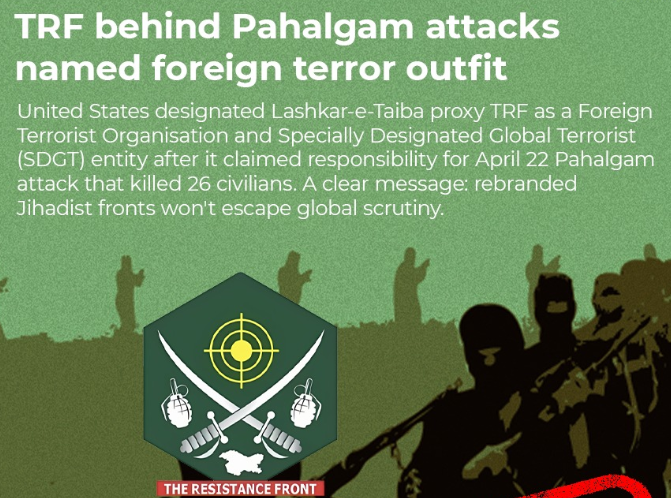
Mullah-Military Alliance Doctrine. Munir’s speeches frequently invoke the two-nation theory, emphasising irreconcilable differences between Muslims and Hindus. On April 16, 2025, addressing a Pakistani diaspora audience in Islamabad, he stated, “Our forefathers believed we are different from the Hindus in every aspect of life. Our religions, customs, traditions, thoughts, and ambitions differ.” He described Kashmir as Pakistan’s “jugular vein,” a phrase perceived as a signal to terror proxies, preceding the April 22 Pahalgam attack that killed 26 civilians. Munir’s ideology aligns with a mullah-military alliance, where the army positions itself as the defender of Pakistan’s ideological frontiers, not just its borders. His leadership has seen the military provide state funerals for senior terrorists and align rhetoric with groups like Lashkar-e-Taiba and Jaish-e-Mohammed, raising concerns about state-sponsored terrorism. Unlike his predecessor Bajwa, who advocated for geo-economics and a 2021 ceasefire with India, Munir has not uttered a word of peace, focusing instead on jihadist rhetoric and military escalation. His strained relations with Indian leadership and refusal to engage diplomatically contrast with past generals like Zia-ul-Haq and Pervez Musharraf, who maintained channels with Indian counterparts. The long-term effects of this shift in policy could lead to increased tensions with India and further destabilisation within Pakistan as the military’s focus shifts from conventional defence to ideological warfare.


Self-Promotion: A Disgrace. During India’s Operation Sindoor in May 2025, Pakistan suffered considerable economic, diplomatic, and military setbacks. Indian airstrikes damaged key military installations, whereas Pakistan’s retaliatory efforts lacked cohesion. Moreover, international isolation deepened due to Pakistan’s perceived role in harbouring terror proxies. Despite this humiliation, Munir self-promoted himself to the rank of Field Marshal, the first such elevation since Ayub Khan in 1965. In the face of significant national challenges, this act of self-promotion raises critical questions about Munir’s leadership and priorities.


The “Failed Marshal” Narrative. Munir’s overreach into civil governance is backfiring. His alliance with the fragile coalition government has led to widespread public resentment. The crackdown on political opponents, media censorship, and manipulation of the judiciary has further alienated the citizenry. Economic conditions have deteriorated as foreign investments have dried up. Pakistan’s regional and global reputation has also suffered under Munir’s leadership. Relations with the U.S. have remained lukewarm, while ties with China have grown increasingly transactional. Meanwhile, his harsh rhetoric against India, especially communal remarks linking Hindus to historical grievances, is considered incitement of terror attacks. Domestically, Munir’s legitimacy is being questioned. Civil society has begun to refer to him as a “failed marshal,” suggesting that his promotion was not earned through strategic brilliance but political manipulation. The military’s internal cohesion also reportedly weakened, with factionalism surfacing within the ranks. Some officers allegedly opposed the overt ideological and political shift under Munir’s command.


Conclusion. Asim Munir’s career arc, from a Sword of Honour cadet to a disgraced Field Marshal, reflects broader themes in Pakistan’s military and political evolution. His initial promise as a disciplined, devout officer has led to a tenure marked by ideological rigidity, strategic miscalculations, and political entanglement. The sword of honour that once symbolised Asim Munir’s excellence and promise now stands metaphorically tarnished by the controversies of his later years. His transformation, from a highly respected officer to a leader accused of disgracing the military institution, underscores the complex interplay of ambition, ideology, and power in Pakistan’s armed forces.


Please Add Value to the write-up with your views on the subject.


1977
Default rating

Please give a thumbs up if you  like The Post?


Link to the article oin the website:-

From Sword Of Honor To Disgracing The Sword, How Most Powerful Man In Pakistan, Asim Munir, Has Dented Country’s Credibility: OPED


For regular updates, please register your email here:-

Subscribe


References and credits

To all the online sites and channels.

Pics Courtesy: Internet

Disclaimer:

Information and data included in the blog are for educational & non-commercial purposes only and have been carefully adapted, excerpted, or edited from reliable and accurate sources. All copyrighted material belongs to the respective owners and is provided only for broader dissemination.


References: –

  1. Khan, Aqil Shah. The Army and Democracy: Military Politics in Pakistan. Harvard University Press, 2014.
  1. International Crisis Group. “Pakistan’s Military and the Islamist Militant Landscape,” Asia Report No. 307, 2021.
  1. Stratfor Analysis, 2023. “Asim Munir and the Changing Face of Pakistan’s Army.”
  1. The Diplomat. “Pakistan’s Army Chief Asim Munir: Between Religion and Strategy,” May 2023.
  1. BBC News. (2022, November 29). “Who is Pakistan’s new army chief, Asim Munir?” BBC News.
  1. Al Jazeera English (2025, May 18). “India-Pakistan tensions flare after Pahalgam attack.” Al Jazeera.
  1. Carnegie Endowment for International Peace. “Pakistan’s Civil-Military Relations: Past, Present, and Future,” 2024.
  1. Institute of Peace and Conflict Studies (IPCS), New Delhi. “Pakistan’s Military Leadership and Regional Stability,” 2023.
  1. Brookings Institution. “Pakistan’s Military: The Growing Influence of Religion,” 2023.
  1. Ahmad, J. (2024). Faith and Force: The Role of Religion in Pakistan’s Military Leadership. Islamabad: Institute of Policy Studies.
  1. Haider, S. (2025, May 15). “Pakistan’s new Field Marshal: Asim Munir’s rise and the Munir Doctrine.” The News International.
  1. The Indian Express. (2025, April 20). “Pakistan army chief’s ‘jugular vein’ remark on Kashmir escalates tensions.” The Indian Express.
  1. Khan, M. (2023). Pakistan’s Military Elite: Power and Politics. Karachi: Oxford University Press.
  1. Siddiqui, N. (2018, October 10). “Asim Munir removed as ISI chief after eight months.” Geo News.
  1. Yusuf, H. (2025, June 1). “Operation Bunyan-um-Marsoos: Pakistan’s military response to India.” Strategic Studies Quarterly, 43(2), 12–25.

678: PROJECT KUSHA: INDIA’S INDIGENOUS SKY SHIELD


My Article published on “The EurasianTimes” website on 10 Jun 25.


On June 8, 2025, the Defence Research and Development Organisation (DRDO) chief announced that Project Kusha is equivalent to Russia’s S-500 and surpasses the S-400 in capabilities. This positions it as a “game-changer” for India’s air defence. It is designed to counter stealth jets, drones, aircraft, and Mach 7 anti-ship ballistic missiles with an 80–90% interception success rate.

Project Kusha is an ambitious Indigenous long-range air defence system being developed by the DRDO. It is also known as the Extended Range Air Defence System (ERADS) or Precision-Guided Long-Range Surface-to-Air Missile (PGLRSAM). Project Kusha bridges the gap between the 80 km MR-SAM and 400 km S-400, integrating with systems like Akash and Barak-8.

It is a critical part of India’s self-reliance initiative, “Atmanirbhar Bharat”.  The home-grown solution aims to safeguard India’s airspace from aerial threats by strengthening defences against regional threats, particularly from Pakistan and China. The project has gained attention after the May 2025 India-Pakistan conflict, where air defence systems proved vital against drones and missiles, underscoring the need for indigenous capabilities like Kusha. With a projected deployment timeline of 2028–2029, this system is poised to enhance the operational readiness of the Indian Air Force (IAF) and Indian Navy.


System Specifications

Interceptor Missiles. Project Kusha’s core strength lies in its three-tiered interceptor missile system, designed to neutralise various aerial threats at varying ranges. The M1 Interceptor (150 km) missile would target threats like fighter jets, drones, and cruise missiles at shorter ranges. Its compact 250 mm diameter kill vehicle, equipped with a dual-pulse solid rocket motor and thrust vector control, ensures high manoeuvrability and precision, making it ideal for tactical engagements. The M2 Interceptor (250 km) missile with an extended range can engage advanced targets, including airborne early warning and control systems (AEW&CS) and anti-ship ballistic missiles (ASBMs). It shares the M1’s 250 mm kill vehicle, optimised for agility and accuracy against mid-range threats. The M3 Interceptor (350–400 km), the longest-range missile in the system, is designed to counter larger aircraft and potentially short- and medium-range ballistic missiles (SRBMs and IRBMs). It may feature a larger 450 mm diameter kill vehicle to achieve its extended range and enhanced lethality.

Capabilities. These interceptors boast an impressive single-shot kill probability of 85%, which rises to 98.5% when two missiles are launched in salvo mode, five seconds apart. The missiles likely employ hit-to-kill (HTK) technology, relying on kinetic energy rather than explosive warheads, similar to advanced systems like the US THAAD or SM-3. Dual-seeker technology, combining radar and infrared guidance, enhances their ability to track and destroy low-radar-signature targets, such as stealth aircraft and cruise missiles.

Advanced Radar Systems. The effectiveness of Project Kusha hinges on its state-of-the-art radar systems, particularly the Long Range Battle Management Radar (LRBMR), an S-band radar with a detection range exceeding 500 km. This radar can scan 500–600 km into enemy territory, providing early warning against stealth aircraft, drones, precision-guided munitions, and ballistic missiles. The system integrates seamlessly with India’s Integrated Air Command and Control System (IACCS), enabling real-time coordination with other air defence systems, including Akash, MRSAM, and the S-400. For naval applications, the Indian Navy is developing a 6×6-meter radar for its Next Generation Destroyer, four times larger than the radar on the Visakhapatnam-class destroyer, to detect sea-skimming missiles and ASBMs with ranges up to 1,000 km.

Multi-Layered Defence Architecture. Project Kusha is designed as a multi-layered air defence system. It provides strategic and tactical cover for critical infrastructure, military bases, and urban centers. The system’s versatility allows it to counter various threats, from low-flying cruise missiles to high-altitude aircraft and limited ballistic missile threats. By integrating with India’s Ballistic Missile Defence (BMD) program, including the AD-1 and AD-2 interceptors, Project Kusha forms a robust shield against both conventional and strategic threats.

Technological Innovations. Project Kusha incorporates cutting-edge technologies to ensure operational superiority:-

    • AI-Enabled Decision Support. The system may leverage artificial intelligence to coordinate intercepts, process real-time data from satellites, radars, AWACS, and UAVs, and optimise target engagement.
    • Dual-Seeker Technology. Combining radar and infrared seekers enhances the system’s ability to track and destroy stealthy or low-observable targets.
    • Compact Design. The M1 and M2 interceptors’ 250 mm diameter kill vehicles are notably smaller than comparable systems like the US SM-2 or SM-6, showcasing DRDO’s innovative approach to missile design.


Comparison with Global Systems


S-400 Triumf (Russia). The S-400 can engage 36 targets simultaneously at a range of 400 km. Project Kusha aims to match this range with its M3 interceptor and offers better integration with India’s defence architecture, reducing reliance on foreign maintenance and support.

Patriot (USA). While the Patriot is a proven system, Kusha’s lower cost and indigenous design provide a tailored alternative for India’s needs, with potential for greater scalability.

David’s Sling and Iron Dome (Israel). Although similar in some aspects, such as dual-seeker technology, Kusha’s M2 and M3 missiles offer longer ranges and limited BMD capabilities, unlike David’s Sling’s focus on shorter-range threats. The Iron Dome is optimised for short-range rocket interception, while Kusha targets long-range strategic threats, making it more comparable to the S-400 or Patriot.


Project Details & Development Journey

Approval and Funding. In May 2022, the Cabinet Committee on Security (CCS) approved the development of Project Kusha. In September 2023, the Ministry of Defence granted the Acceptance of Necessity (AoN) for procuring five IAF squadrons at an estimated cost of ₹21,700 crore (approximately US$2.6 billion). This investment reflects India’s commitment to building a self-reliant defence ecosystem that addresses modern threats.

Key Partners. The DRDO is leading the Project Kusha, with Bharat Electronics Limited (BEL) playing a pivotal role in developing critical subsystems like radars and battle management systems. The Defence Research and Development Laboratory (DRDL) is responsible for designing the interceptor missiles, while the Research Centre Imarat (RCI) focuses on advanced seeker technology. Collaboration with private industry partners is expected to accelerate development and production, aligning with India’s push for public-private partnerships in defence.

Timeline. As of May 2025, the DRDO has reportedly completed the design phase, with development of critical components underway. BEL aims to complete a prototype within 12–18 months (by November 2026–May 2027). The user trials are expected to last 12–36 months, paving the way for operational deployment by 2028–2029.


Strategic Significance

Self-Reliance and Cost-Effectiveness. Project Kusha is a cornerstone of India’s Atmanirbhar Bharat initiative, reducing dependence on foreign systems like the S-400, which faced delivery delays due to the Russia-Ukraine conflict. At ₹21,700 crore for five IAF squadrons, it is significantly more cost-effective than the $5.25 billion deal for five S-400 units, offering comparable capabilities tailored to India’s operational needs. This cost advantage enhances India’s ability to scale its air defence infrastructure without straining its defence budget.

Regional Deterrence.  With China and Pakistan modernising their air forces and missile arsenals, Project Kusha strengthens India’s deterrence posture. Its ability to counter stealth aircraft, cruise missiles, and ASBMs addresses emerging threats in the Indo-Pacific, particularly China’s growing naval and missile capabilities. The system’s integration with the IACCS ensures a cohesive defence network, enabling rapid response to multi-domain threats and enhancing India’s strategic autonomy.

Export Potential. Project Kusha’s advanced technology and competitive pricing position India as a potential global air defence market player. Countries seeking alternatives to Western and Russian systems may find Kusha attractive, boosting India’s defence exports and geopolitical influence. Success in this arena could elevate India’s status as a defence technology provider, complementing its exports like the BrahMos missile.


Challenges and Considerations

Technical Challenges. Achieving the claimed ranges with compact interceptors, particularly the 150 km M1, has raised scepticism due to its small size compared to US SM-2 or SM-6 systems. Ensuring reliability and accuracy against stealthy and hypersonic threats will require rigorous testing and validation.

Development Timeline. The 2028–2029 deployment target is ambitious, given the complexity of integrating advanced radars, AI systems, and interceptors. Delays in prototype development or user trials could push back operational readiness, as seen in past DRDO projects.

System Integration. Seamless integration with existing systems (Akash, MRSAM, S-400) and future systems (AD-1, AD-2) is essential for a cohesive air defence network. Any interoperability issues could undermine the system’s effectiveness and delay deployment.

International Competition. India will face stiff competition from established players like the US, Russia, and Israel in the global air defence market. Demonstrating technological superiority and reliability will be critical for export success and domestic adoption.


Future Phases

Naval Integration. The Indian Navy plans to deploy the M1 and M2 interceptors on next-generation surface combatants, such as destroyers, to counter ASBMs and other maritime threats. The enhanced naval radar system will provide 360-degree coverage, enabling early detection and interception of sea-skimming missiles. This integration underscores Project Kusha’s role in strengthening India’s maritime security, particularly in the Indo-Pacific region, where threats like China’s DF-21D “carrier-killer” missiles pose significant challenges.

Future Enhancement. Project Kusha is the first phase of a multi-phase program. Phase II aims to develop interceptors with ranges exceeding 400 km and anti-hypersonic capabilities, potentially rivalling Russia’s S-500 system. This long-term vision underscores India’s ambition to remain at the forefront of air defence technology, addressing future threats like hypersonic missiles and advanced stealth platforms.


Conclusion

Project Kusha represents a monumental leap in India’s quest for self-reliance in defence technology. It promises to deliver a versatile, multi-layered air defence shield capable of countering diverse threats by combining advanced interceptors, long-range radars, and AI-driven systems. A cost-effective price tag and a focus on indigenous innovation strengthen India’s strategic autonomy and position the country as a potential leader in the global defence market. However, overcoming technical challenges and meeting the ambitious 2028–2029 timeline will be critical to realising its full potential. As India advances toward operational deployment, Project Kusha is a testament to its growing technological prowess and commitment to safeguarding its skies.


Please Add Value to the write-up with your views on the subject.


1977
Default rating

Please give a thumbs up if you  like The Post?


Link to the article on the website:-

India’s Own S-500 & THAAD! DRDO Announces Project Kusha Sky Shield Program That Could Revolutionize Indian Defenses

For regular updates, please register your email here:-

Subscribe


References and credits

To all the online sites and channels.

Pics Courtesy: Internet

Disclaimer:

Information and data included in the blog are for educational & non-commercial purposes only and have been carefully adapted, excerpted, or edited from reliable and accurate sources. All copyrighted material belongs to respective owners and is provided only for wider dissemination.

References:-

  1. Press Information Bureau (PIB), Government of India, “DRDO Chief Briefs on Indigenous Long-Range Air Defence System ‘Project Kusha’.” PIB Release, June 8, 2025.
  2. Bedi, R. (2023, September 10). India approves indigenous long-range air defence system under Project Kusha—Jane’s Defence Weekly.
  3. Bharat Electronics Limited. (2025, May 15). Annual report 2024–2025: Progress on Project Kusha.
  4. Defence Research and Development Organisation. (2024). DRDO newsletter: Advances in air defence systems.
  5. Gupta, S. (2024, December 12). Project Kusha: India’s answer to the S-400. The Times of India.
  6. Indian Ministry of Defence. (2023, September 15). Acceptance of Necessity (AoN) for Project Kusha. Press Information Bureau.
  7. Sagar, P. (2024, November 20). Project Kusha and India’s multi-layered air defence strategy. The Diplomat.
  8. Singh, R. (2025, March 15). How Project Kusha could transform India’s defence exports. India Today.
  9. The Hindu, “Project Kusha Will Be India’s Answer to S-500, Says DRDO Chief.” The Hindu Defence Correspondent, June 8, 2025.
  10. Hindustan Times, “Explained: What Is Project Kusha and Why It Is a Game-Changer for India’s Air Defence?” Hindustan Times Defence Desk, June 9, 2025.
  11. Economic Times (ET Defence), “DRDO’s Project Kusha: India’s Indigenous Answer to S-400 and THAAD.” ET Defence, May 2025.
  12. Livefist Defence, Shukla, Shiv Aroor. “India’s Kusha Air Defence System: Details, Development and Deployment Plans.” Livefist, June 2025.
  13. Business Standard, “DRDO’s Project Kusha: DRDL, BEL, RCI Key Partners in Long-Range SAM System.” Business Standard Defence, September 2023.
  14. Jane’s Defence Weekly, “India Advances Work on Multi-Layered Air Defence with Project Kusha.” Janes.com, February 2025.
  15. ORF (Observer Research Foundation), Das, Abhijit Iyer-Mitra. “Strategic Implications of India’s Long-Range Air Defence Ambitions.” ORF Occasional Paper, March 2025.
  16. Vayu Aerospace and Defence Review, “Kusha, Akash-NG, and the Future of Indian Air Defence.” Vayu Defence Review, Issue Q2 2025.
  17. South Asia Monitor, “India’s Air Defence Evolution: From Akash to Kusha.” South Asia Monitor, April 2025.

English हिंदी