
Inputs to the journalists on the subject
Q1. Has dependence on foreign engines been a major constraint in building more fighter jets?
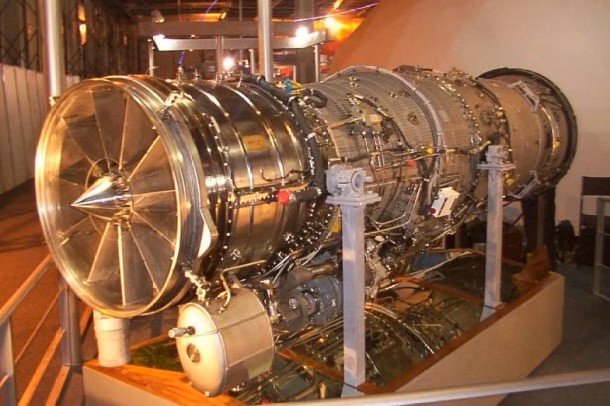
Yes, the trend is becoming more pronounced. The Tejas program exemplifies this clearly. India has undertaken the design and manufacturing of the aircraft; however, its domestically developed Kaveri engine failed to meet the necessary performance standards, resulting in dependence on GE’s F404 engine. More recently, delays in F404 deliveries have delayed the handover of completed Tejas Mk1A aircraft.
The problem is therefore not just cost or foreign exchange. It creates a bottleneck in the production chain. The dependence also extends into future programmes. Tejas Mk2 is planned around the GE F414, while the initial AMCA configuration is also expected to rely on a foreign engine.
India has displayed the capability to design and build airframes, integrate avionics and weapons, and increase its manufacturing capacity. However, the most important component (the engine) continues to be a bottleneck. The reliance on foreign engines has become a major constraint and a strategic weakness.
Q2. Is it critical for India to end this dependence?
It is strategically important for long-term military autonomy, operational readiness, and industrial self-reliance. Foreign dependence brings about several risks, such as vulnerability to interruptions or delays in supply (as was the case with the F404 engines), the possibility of the supplier country exercising leverage, greater lifecycle costs for spares and upgrades and for maintenance, repairs and overhaul (MRO), export restrictions (since engine OEM approvals are usually required), and a restricted capacity to fully optimise or upgrade the aircraft on one’s own.
However, India cannot realistically wait for a completely indigenous engine before expanding its fighter fleet. The IAF needs aircraft now, so foreign engines remain necessary for programmes such as Tejas Mk1A and Mk2.
The more important objective is to ensure that future Indian fighters cannot be held hostage by the availability, pricing or export-control decisions of another country. This matters particularly because India expects a very large requirement for fighter engines. GTRE estimated a need for roughly 1,100 engines through 2035. For AMCA and subsequent programmes, India therefore needs access to the underlying technology, not merely an Indian factory assembling a foreign-designed engine.
Q3. What are the advantages of securing access to engine technology possessed by only a handful of countries?
The list of nations that can genuinely design a modern high-thrust military jet engine remains limited to the United States, the United Kingdom, France, and Russia, with China having made still-contested progress. India has been exploring major partnerships with companies such as Safran and Rolls-Royce for high-thrust fighter propulsion. In August 2026, Reliance Industries and Rolls-Royce also announced a partnership to explore co-developing and manufacturing an engine for the AMCA programme.
Modern fighter engines involve high-temperature materials, turbine blades, coatings, cooling systems, compressors, combustion processes, digital controls, and precision manufacturing. Only a small number of countries have the full range of technological knowledge needed for such engines, and accessing these technologies through a co-development programme would be advantageous.
Strategic Autonomy. India would have much greater control over the availability, modification and upgrading of its fighters. It reduces the risk of export restrictions, supply interruptions, political pressure, unexpected price increases, and dependence on foreign approval for upgrades. It would give India the freedom to design future fighters. The engine constrains an aircraft designer. If you control the propulsion system, you can optimise the aircraft around your own requirements rather than designing around what a foreign engine supplier offers.
Faster Technological Learning. This may actually be more valuable than the first indigenous engine itself. India needs to learn how to design and manufacture the core technologies of an advanced turbofan. Once that knowledge exists domestically, subsequent engines can evolve rather than start from scratch. The Kaveri programme generated valuable expertise but did not achieve the required fighter performance. A genuine technology partnership could help India bridge precisely those gaps.
Aerospace Ecosystem. A successful engine programme would build capabilities in Superalloys, single-crystal blades, coatings, precision manufacturing, sensors, FADEC, testing, metallurgy, and additive manufacturing. Those technologies have applications beyond fighter engines, including UAVs, missiles, helicopters and civil aerospace.
Export Potential. If India eventually owns sufficient intellectual property and manufacturing capability, it could export engines or aircraft without needing permission from a foreign engine designer for every major modification. That would transform India from primarily an aircraft buyer/manufacturer into an aerospace technology power.
Bottom Line
India’s dependence on foreign suppliers is perhaps the single biggest technological vulnerability in its aerospace ecosystem, and developing an indigenous engine is a non-negotiable priority. As India considers these offers, the question is whether these companies will share the deepest layers of their process knowledge.
Link to the quoted article on the subject
Please Add Value to the write-up with your views on the subject.
For regular updates, please register your email here:-
References and credits
To all the online sites and channels.
Pics Courtesy: Internet
Disclaimer:
Information and data included in the blog are for educational & non-commercial purposes only and have been carefully adapted, excerpted, or edited from reliable and accurate sources. All copyrighted material belongs to the respective owners and is provided only for wider dissemination.
Yes. Dependence on foreign engine vendors is a big strategic vulnerability. Private collabration may hopefully bring some good news in due course.
Fingers crossed and hoping for the best.