
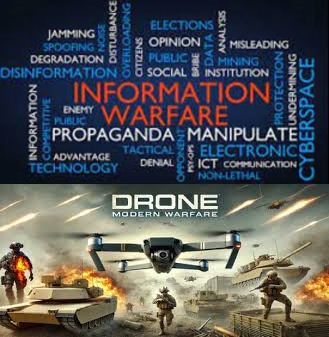
Expressed my views on Drone and Information Warfare in a Podcast during the “Best Practices Meet 2025” organised by the Data Security Council of India on 21 Aug 25.
- Evolution and Transformation of Drone and Information Warfare
Drone Warfare Evolution
- Transition from Surveillance to Multi-Role Platforms: Drones have evolved from limited reconnaissance tools in the 2000s to versatile platforms capable of precision strikes, logistics delivery, and swarm tactics. This shift has expanded their role in modern conflicts, enabling remote and technology-driven engagements.
- Miniaturisation and Accessibility: Advances in miniaturisation and cost reduction have made drones accessible to both state and non-state actors, democratising their use in warfare. Commercial off-the-shelf drones are now modified for combat, surveillance, and psychological operations.
- AI-Driven Autonomy: Integration of artificial intelligence (AI) has enhanced drone autonomy, enabling real-time navigation, target recognition, and reduced operator workload, resulting in faster and more precise engagements.
Information Warfare Evolution
- Shift to Digital Campaigns: Information warfare has transitioned from traditional propaganda to sophisticated, real-time digital campaigns leveraging social media, bots, and AI-generated content for rapid narrative dissemination and control.
- Deepfakes and Synthetic Media: The use of deepfakes, AI-generated content, and coordinated bot networks has enabled actors to manipulate public perception, sow discord, and shape narratives with unprecedented speed and scale.
- Real-Time Global Reach: Platforms like X facilitate instant global information sharing, amplifying narratives beyond traditional media and integrating with kinetic operations to influence perceptions before, during, and after conflicts.
Transformation of Contemporary Conflicts
- Reduced Need for Ground Forces: Drones enable precise, low-risk operations, reducing reliance on large troop deployments and allowing sustained operations with lower logistical footprints compared to traditional warfare.
- Psychological and Technological Advantage: Information warfare shapes public opinion and morale, often overshadowing physical battles. Combined with drones, it creates hybrid warfare models where psychological and technological advantages can outweigh conventional military strength.
- Blurring Civilian-Military Boundaries: The integration of drones and information warfare blurs civilian-military lines, as digital spaces become battlefields and low-cost drone operations enable continuous, decentralised engagements.
- Impact of Drones on Military Strategy, Duration, and Intensity
Military Strategy
- Persistent Surveillance: Drones provide continuous, real-time intelligence, reducing reliance on manned reconnaissance and improving situational awareness for commanders.
- Precision Strikes: Advanced targeting capabilities minimise collateral damage, enabling operations against high-value targets with reduced risk to personnel.
- Cost-Effective Attrition: Drones’ affordability allows sustained operations, shifting strategies toward attritional warfare that degrades enemy assets over time.
Duration and Intensity
- Prolonged Conflicts: Drones lower the threshold for initiating strikes, enabling continuous low-intensity engagements that can extend conflict duration without requiring decisive battles.
- Intensified Engagements: The rapid operational tempo of drone strikes increases conflict intensity, overwhelming adversaries’ response capabilities and enabling deep strikes into enemy territory.
- Non-State Actor Proliferation: The availability of drones to insurgents and smaller actors sustains low-level conflicts, as they conduct operations with minimal resources.
- Drones in Asymmetric Warfare and Non-State Actors
Asymmetric Warfare
- Levelling the Playing Field: Drones enable smaller nations and non-state groups to conduct surveillance, harassment attacks, and precision strikes without requiring advanced air forces, challenging the dominance of larger militaries.
- Guerrilla Tactics: Low-cost drones facilitate guerrilla-style operations, targeting critical infrastructure or personnel of stronger adversaries, as seen with groups like Hamas using modified commercial drones.
Leveraging by Smaller Actors
- Non-State Actor Capabilities: Groups like ISIS have exploited off-the-shelf drones for reconnaissance and improvised explosive attacks, enhancing their lethality without traditional military assets.
- State Actor Examples: Smaller nations, such as Ukraine, leverage drones for real-time battlefield intelligence, improving both defensive and offensive operations against larger adversaries.
- Psychological Impact: Non-state actors use drones for propaganda, recording operations to amplify their psychological impact and project strength.
Impact of Drone Availability
- Force Multiplication: Widespread access to commercial drones empowers insurgents with low-cost, high-impact capabilities, enabling rapid force multiplication.
- Challenges to Traditional Dominance: Decentralised, agile drone operations by non-state actors complicate defence strategies for state militaries, requiring new countermeasures.
- Countermeasures and Risks of Drone Proliferation
Countermeasures
- Electronic Warfare: Radio frequency jammers, GPS spoofing, and electronic countermeasures disrupt hostile drone operations by interfering with their navigation and communication systems.
- Directed-Energy Weapons: Lasers and microwaves neutralise drones by disabling their electronics or physically destroying them.
- Physical Interceptors: Nets, counter-drone drones, and advanced radar systems detect and intercept small, low-flying drones, enhancing air defence capabilities.
Risks of Drone Proliferation
- Terrorist Threats: Increased accessibility heightens the risk of terrorist attacks on civilian infrastructure or public events, as drones are repurposed for malicious use.
- Regulatory Challenges: Unregulated black-market drone trade complicates arms control, enabling adversaries to acquire advanced capabilities.
- Escalation Risks: Misinterpretation of drone activities, such as surveillance or accidental incursions, can escalate tensions and trigger larger conflicts.
Management Strategies
- Regulatory Frameworks: Governments enforce strict drone manufacturing, sales, and usage regulations, including mandatory registration and licensing regimes.
- International Cooperation: Global treaties and norms aim to limit weaponised drone proliferation and establish accountability for misuse.
- Counter-Drone Technologies: Investments in integrated air defence systems and public awareness campaigns mitigate the risks of drone misuse.
- AI Integration and Future Drone Technology
AI Integration
- Autonomous Operations: AI enables drones to perform autonomous navigation, target recognition, and swarm coordination, reducing human oversight and increasing operational efficiency.
- Resilience and Adaptation: Machine learning improves drone resilience against countermeasures like jamming and enhances predictive maintenance for mission optimisation.
- Data-Driven Intelligence: AI-driven analysis of drone feeds provides actionable intelligence, reducing operator workload and accelerating decision-making.
Implications for Future Conflicts
- Escalation Risks: Autonomous drones with reduced human oversight raise ethical concerns over unintended strikes and could escalate conflicts through rapid, uncoordinated actions.
- Swarm Tactics: AI-powered drone swarms enable coordinated attacks, overwhelming defences and shifting warfare toward decentralised, networked operations.
- Cyber Vulnerabilities: AI integration increases drones’ susceptibility to cyberattacks, as adversaries target control systems to disrupt operations.
Future Evolution
- Hyper-Autonomous Drones: Over the next decade, drones may achieve full autonomy, executing missions independently with advanced AI decision-making.
- Stealth and Miniaturisation: Improved stealth designs and miniaturised drones will enhance evasion capabilities, particularly for indoor and urban warfare.
- Space-Based Integration: Integration with space-based assets for targeting and communications will extend drone operations beyond terrestrial limits, redefining strategic paradigms.
- Information as a Tool/Weapon in Modern Conflicts
Common Methods
- Disinformation Campaigns: State and non-state actors spread false narratives via social media, bots, and state-sponsored media to undermine adversaries and shape public perception.
- Cyberattacks: Targeting communication infrastructure disrupts military coordination and civilian services, as seen in cyberattacks during the Ukraine conflict.
- Psychological Operations: Tailored propaganda demoralises enemies, rallies domestic support, or manipulates public sentiment to influence conflict outcomes.
Impact of Misinformation/Disinformation
- Operational Delays: False intelligence, such as fabricated troop movements, confuses decision-makers and delays military responses.
- Civilian Impact: Misinformation erodes trust in institutions, fuels polarisation, and amplifies fear, complicating conflict resolution and public support.
- Escalation of Violence: Misinformation-induced panic or retaliatory sentiment can escalate conflicts, as seen in social media-driven unrest.
- Role of Social Media and Emerging Technologies
Social Media and Digital Platforms
- Rapid Narrative Shaping: Platforms like X enable real-time narrative dissemination, with viral posts influencing global perceptions faster than traditional media.
- Targeted Influence: Governments and groups use targeted ads, influencers, and live-streamed content to amplify narratives, as seen in Israel-Hamas propaganda battles.
- Grassroots Mobilisation: Digital platforms facilitate international solidarity and rapid information sharing, but also enable manipulation and fake news proliferation.
Emerging Technologies
- Deepfakes and Synthetic Media: AI-generated content creates convincing false narratives, complicating verification and increasing the impact of disinformation.
- Blockchain for Verification: Blockchain-based platforms may authenticate information, countering manipulation and restoring trust in digital content.
- Quantum Computing: Future advancements in quantum computing could enhance encryption and data analysis, strengthening information warfare capabilities.
- Challenges and Measures for Information Verification
Challenges
- Information Overload: The high volume and velocity of digital content overwhelm traditional verification methods, delaying accurate assessments.
- Sophisticated Falsification: Deepfakes and AI-generated misinformation require advanced detection tools, often unavailable in real-time conflict scenarios.
- Attribution Difficulties: State-sponsored campaigns obscure sources, making it challenging to identify disinformation origins during fast-moving conflicts.
Countermeasures
- AI-Driven Fact-Checking: Deploying tools to analyse content authenticity and detect manipulated media in real time enhances verification efforts.
- Media Literacy Programs: Public education initiatives improve critical thinking and the ability to identify credible sources, reducing the impact of misinformation.
- International Frameworks: Collaborative information-sharing agreements counter disinformation campaigns and establish norms for digital accountability.
Protecting Information Integrity
- Secure Communication Channels: Governments invest in encrypted systems to protect military and civilian data from cyberattacks and manipulation.
- Public-Private Partnerships: Collaboration with tech companies enables real-time monitoring and removal of harmful content on platforms like X.
- Transparent Reporting: Encouraging credible media to provide transparent, verified reporting rebuilds trust and counters false narratives in conflict zones.
Please Add Value to the write-up with your views on the subject.
For regular updates, please register your email here:-
References and credits
To all the online sites and channels.
Pics Courtesy: Internet
Disclaimer:
Information and data included in the blog are for educational & non-commercial purposes only and have been carefully adapted, excerpted, or edited from reliable and accurate sources. All copyrighted material belongs to respective owners and is provided only for wider dissemination.
References:-
- Arquilla, J., & Ronfeldt, D. (2001). Networks and netwars: The future of terror, crime, and militancy. RAND Corporation.
- Betz, D. J., & Stevens, T. (2019). Cyberspace and the state: Towards a strategy for cyber-power. Routledge.
- Boyle, M. J. (2015). The race for drones. Orbis, 59(1), 76-94. https://doi.org/10.1016/j.orbis.2014.11.007
- Bunker, R. J. (2020). Non-state threats and future wars. Routledge.
- Chamayou, G. (2015). A theory of the drone. The New Press.
- Cordesman, A. H. (2020). The evolving role of drones in modern warfare. Centre for Strategic and International Studies.
- Cronin, A. K. (2019). Power to the people: How open technological innovation is arming tomorrow’s terrorists. Oxford University Press.
- Freedberg, S. J. (2021, October 15). Drone swarms and AI: The future of warfare. Breaking Defence.
- Hoffman, F. G. (2018). The convergence of information and kinetic warfare. Joint Force Quarterly, 89, 18-24.
- Kallenborn, Z. (2020). Swarming destruction: Drone swarms and the future of warfare. Modern War Institute.
Telley, C. (2022). The drone revolution: How unmanned aerial systems 11. are shaping conflicts. U.S. Army War College.
- Ard, A. (2023, March 10). How Ukraine’s drone war is changing the battlefield. Vox. https://www.vox.com/world/2023/3/10/23632906/ukraine-drone-war-russia-military-strategy