
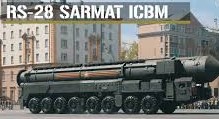
814: RUSSIA’S RS-28 SARMAT ADDS A NEW CHAPTER IN STRATEGIC NUCLEAR MODERNISATION


News. Russia successfully test-launched the RS-28 Sarmat intercontinental ballistic missile from the Plesetsk Cosmodrome (Arkhangelsk region) on 12 May 26. The missile followed its planned profile and struck its designated target (at Kura test range on the Kamchatka Peninsula) approximately thirty minutes after launch. Strategic Missile Forces commander Sergei Karakayev reported that all specified technical characteristics had been validated. Putin described the test as a “major event and unconditional success” and congratulated the defence ministry, scientists, engineers, and the thousands of workers whose collaborative effort brought the programme to this milestone.


Missile. The Makeyev Rocket Design Bureau produces the RS-28 Sarmat. It is a silo-launched, three-stage, liquid-fuelled super-heavy ICBM (35.3 metres in length and approximately 208 tonnes in launch weight). It is claimed to be the largest ballistic missile ever constructed. Its payload capacity is ten tonnes, and it can carry a variety of warheads (including multiple independently targetable re-entry vehicles (MIRVs) and, reportedly, the Avangard hypersonic glide vehicle. Its operational flexibility significantly exceeds that of its predecessor.
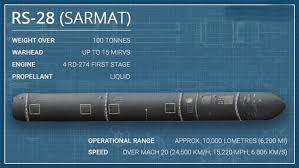


Capability. Among the Sarmat’s most strategically significant attributes is its capacity to approach targets via non-standard flight trajectories. Unlike conventional ICBMs that follow northern polar arcs, the Sarmat is capable of fractional orbital bombardment, i.e. flying a depressed, sub-orbital trajectory over the South Pole to reach targets in North America. This gives it the ability to approach from directions that existing American missile defence interceptor networks, positioned primarily in Alaska and California and oriented toward northern approach corridors, are not designed to engage. Putin has noted that the missile can travel on both ballistic and suborbital trajectories, with a maximum range reportedly exceeding 35,000 kilometres.


Feature Enhancement. The missile has a shorter boost phase than its predecessor. This reduces the window for tracking by the space-based infrared sensors. It is a meaningful enhancement for the missile’s survivability. The Sarmat is also claimed to be more accurate than the Voyevoda. Putin has stated that the Sarmat’s destructive potential substantially exceeds that of any comparable Western system.


Strategic Implication. The successful launch carries significant strategic implications. The R-36M2 Voyevoda, a Soviet-era heavy ICBM, had been the backbone of Russia’s silo-based deterrent for decades.  The Sarmat is intended to replace it, and it represents the most consequential upgrade to Russia’s nuclear triad in the post-Cold War period. Putin announced that Russia would deploy the first Sarmat-equipped regiment for combat duty before the end of 2026. It is claimed to be designed to penetrate both existing and prospective ballistic missile defences. This capability is important for Russia to maintain credible second-strike deterrence.


Race. The Sarmat is one of six next-generation strategic weapons that Putin unveiled in March 2018, presenting them as Russia’s response to the United States’ withdrawal from the Anti-Ballistic Missile Treaty in 2001 and the subsequent development of American missile defence infrastructure. From Moscow’s perspective, a credible and penetrating nuclear second-strike capability is the foundation of strategic stability. The assurance that no adversary can neutralise Russia’s deterrent through a disarming first strike and expect to intercept the surviving response. The Sarmat is engineered specifically to preserve that assurance against all foreseeable developments in missile defence technology.


Timing. The test comes at a time of considerable significance in the current global landscape. The New START treaty (the last remaining bilateral nuclear arms limitation agreement between Russia and the United States) expired in February 2026. Russia suspended its participation in New START in February 2023, citing what it described as the fundamentally changed strategic environment resulting from Western military support for Ukraine. The absence of any active treaty framework means that both sides are now free to expand and modernise their arsenals without the notification and inspection.  The Sarmat’s development and operational deployment will proceed in this unconstrained environment.


Domestic Significance. Domestically, the test carries political weight as well as military significance. It arrives days after Russia’s Victory Day commemorations. It demonstrates the continued vitality of Russia’s defence industrial and scientific base under sustained international sanctions and economic pressure. It affirms the country’s standing as a nuclear superpower capable of fielding world-leading weapons systems.


Global Interest. Internationally, the Sarmat’s deployment will be watched closely in capitals around the world (from Washington to Beijing and from New Delhi to Brussels). For NATO’s strategic planners, it represents a genuine generational upgrade to Russia’s land-based deterrent. It will force them to recalibrate their threat assessments and defence postures. For countries in the Global South, it is a reminder that the nuclear dimension of great-power competition remains very much alive and is, if anything, intensifying.


Concluding Thought. Russia’s strategic modernisation programme has always been driven by the conviction that a strong nuclear deterrent is the ultimate guarantor of national sovereignty and strategic autonomy. The Sarmat’s successful test and approaching operational debut confirm that this conviction remains the organising principle of Russian defence policy. It also proves that Russia retains both the industrial capacity and the scientific expertise to give it material form.


Please Add Value to the write-up with your views on the subject.


1942
Default rating

Please give a thumbs up if you  like The Post?


For regular updates, please register your email here:-

Subscribe


References and credits

To all the online sites and channels.

Pics Courtesy: Internet

Disclaimer:

Information and data included in the blog are for educational & non-commercial purposes only and have been carefully adapted, excerpted, or edited from reliable and accurate sources. All copyrighted material belongs to the respective owners and is provided only for wider dissemination.

598: FROM ALLY TO ADVERSARY: US SANCTIONS HIGHLIGHT PAKISTAN MISSILE THREAT


On December 19, 2024, U.S. Deputy National Security Adviser Jon Finer described Pakistan’s missile developments as an “emerging threat,” noting the increasing sophistication of its missile technology and the potential to reach targets beyond South Asia, including the United States. In response, the U.S. has imposed new sanctions on Pakistan’s ballistic missile development, including on the state-run defence agency overseeing the program.  This recent imposition of sanctions by the United States on Pakistan’s missile program has raised significant concerns about the trajectory of their bilateral relationship. Once regarded as a strategic ally in the Cold War and the War on Terror, Pakistan now finds itself under renewed scrutiny as Washington seeks to address emerging security threats. These developments not only highlight the growing apprehension in the U.S. about Pakistan’s missile capabilities but also reflect broader geopolitical shifts and challenges in maintaining regional stability.


The Rise and Fall of a Partnership. The U.S.-Pakistan relationship has seen dramatic shifts over the decades. During the Cold War, Pakistan emerged as a critical ally for the United States in its containment strategy against the Soviet Union. The alliance shaped regional geopolitics, from military aid to intelligence sharing. One key event was Pakistan’s facilitating the U.S.-China rapprochement in the 1970s. Islamabad’s diplomatic efforts, particularly under leaders like Zulfikar Ali Bhutto, earned it significant goodwill from Washington. Following the events of September 11, 2001, Pakistan became a “frontline state” in the U.S.-led War on Terror. Billions of dollars in military and economic aid flowed to Islamabad as it supported American operations in Afghanistan. However, the relationship began to sour due to allegations of double-dealing. U.S. officials accused Pakistan of harbouring militant groups like the Haqqani network, which targeted American forces in Afghanistan.


Missile Development in Pakistan: A Strategic Imperative. Pakistan’s missile program’s evolution reflects Pakistan’s desire to maintain strategic parity with India while deterring external threats. The program began in earnest during the 1980s, driven by its strategic rivalry with India. The need for a credible deterrent grew more acute following India’s advancements in ballistic missile technology and its nuclear tests in 1974. Early development relied heavily on foreign assistance, with China and North Korea playing significant roles. The Hatf missile series, for example, showcased the fusion of indigenous efforts and imported technology. Over the decades, Pakistan’s missile arsenal expanded to include short-range, medium-range, and cruise missiles capable of delivering both conventional and nuclear payloads. Key missile developments include:-


    • Ghauri Missile. A medium-range ballistic missile developed with North Korean assistance.
    • Shaheen Series. A family of solid-fueled missiles with improved accuracy and range.
    • Babur Cruise Missile. A subsonic cruise missile with advanced targeting capabilities.


Recent Advancements in Pakistan’s Missile Program. Pakistan has made significant strides in its missile program, enhancing its strategic capabilities by developing Multiple Independently Targetable Re-entry Vehicles (MIRVs) and exploring hypersonic technologies.


    • MIRV. A notable advancement is the development of the Ababeel missile, designed to carry MIRVs. The Ababeel is a medium-range ballistic missile with a reported range of approximately 2,200 kilometers, capable of delivering multiple warheads to different targets independently. This capability enhances Pakistan’s deterrence by enabling it to penetrate advanced missile defence systems. The first publicly announced test of the Ababeel was conducted on January 24, 2017, with subsequent tests, including one on October 18, 2023, confirming its MIRV capabilities.


    • Hypersonic Technologies. While Pakistan does not currently have an indigenous hypersonic weapons program, there have been developments suggesting interest in this area. The Pakistan Air Force has indicated the development of a hypersonic-capable missile as part of a broader modernisation effort to counter evolving threats. A video released by the Pakistan Air Force featured the CM-400AKG anti-ship missile, a Chinese-manufactured missile that allegedly travels at hypersonic speeds.


Strategic Implications and Proliferation Risks. These recent advancements have raised concerns internationally.  U.S. officials fear these capabilities could destabilise the region and enable Pakistan to project power beyond South Asia. The U.S. has long been wary of Pakistan’s role in global proliferation networks. The infamous A.Q. Khan network, which supplied nuclear technology to countries like Iran, Libya, and North Korea, underscored the risks of unchecked development. One of Washington’s primary concerns is the intensifying arms race between India and Pakistan. Both countries have developed increasingly sophisticated missile systems, raising the risk of miscalculation and escalation.


Involvement of Pakistani Firms. The United States imposed sanctions on four Pakistani firms for their involvement in aiding Pakistan’s ballistic missile program, which is closely linked to its nuclear program. The sanctioned entities were found to be involved in the transfer of critical technologies and materials used in the development of ballistic missile systems. These technologies included components necessary for guidance systems, propulsion, and control mechanisms, which are vital for both missile and nuclear weapons development. The transfer of these technologies represents a significant concern for the U.S., as they could potentially enhance Pakistan’s ability to develop more advanced nuclear delivery systems. Some of these Pakistani firms were collaborating with foreign entities and institutions that are under U.S. and international sanctions. This collaboration allowed the transfer of sensitive technologies and expertise, which accelerated the development of Pakistan’s missile capabilities. These firms were directly involved in the design, development, and testing of ballistic missile systems. The U.S. identified these entities as providing essential support, including material assistance and technical expertise, which allowed Pakistan to improve its missile technology. This development raised concerns about the potential for these missile systems to be used in a nuclear context, thereby complicating global security dynamics.


Sanctions. These sanctions are aimed at curbing the spread of missile technology and preventing the enhancement of Pakistan’s military capabilities that could pose risks to regional stability and U.S. security interests. The latest sanctions specifically target entities involved in Pakistan’s missile development. These include National Development Complex (NDC), a state-owned organisation central to missile research and production, and Karachi-based Companies (Akhtar and Sons Private Limited, Affiliates International, and Rockside Enterprise), accused of supplying critical components and technology. The sanctions include freezing U.S.-based assets of the targeted entities, prohibiting American businesses and individuals from conducting transactions with them, and restricting access to international financial systems. These sanctions aim to disrupt Pakistan’s ability to acquire advanced technology and materials critical for its missile program.


Pakistan’s Response. Islamabad has strongly condemned the sanctions, describing them as “discriminatory” and counterproductive. The Pakistani Foreign Ministry issued a statement arguing that the sanctions undermine regional peace and stability. Pakistan claims that its missile program is purely defensive and aimed at maintaining strategic balance, and the U.S. is applying double standards, as similar concerns are not being raised about India’s missile developments. Within Pakistan, the sanctions have sparked a wave of nationalist rhetoric. Political leaders and media outlets have framed the U.S. actions as an affront to Pakistan’s sovereignty, bolstering anti-American sentiment.


Broader Implications and Realignments. The U.S. troop withdrawal from Afghanistan in 2021 marked a turning point in U.S.-Pakistan relations. Washington’s diminished reliance on Islamabad for logistical support in the region has led to a reassessment of the partnership. As U.S.-Pakistan relations cool, Islamabad has sought closer ties with China and Russia. The China-Pakistan Economic Corridor (CPEC) and growing military cooperation with Beijing underline this shift. At the same time, Pakistan’s increasing engagement with Moscow signals a diversification of its strategic alliances. The sanctions could exacerbate tensions in South Asia. With Pakistan feeling cornered, there is a risk of accelerated arms development or even closer alignment with adversaries of the U.S., such as China.


The U.S. sanctions on Pakistan’s missile program mark a significant moment in their bilateral relationship. While Washington’s concerns about proliferation and regional stability are valid, the move risks further alienating Islamabad at a time when global alliances are shifting. For Pakistan, the sanctions underscore the possibility of diversification of partnerships. For the U.S., they reflect the delicate balancing act of addressing security threats while maintaining influence in a critical region. As the two nations navigate these challenges, the question remains: Can they find common ground, or will their paths continue to diverge?


Please Do Comment.


1942
Default rating

Please give a thumbs up if you  like The Post?


For regular updates, please register your email here:-

Subscribe


References and credits

To all the online sites and channels.

References:-

  1. Landay, Jonathan S. “U.S. Imposes Sanctions on Pakistani Firms over Missile Proliferation.” Reuters, December 14, 2024.
  1. Haider, Kamran. “Pakistan Criticizes U.S. Sanctions, Calls Them Unjustified.” Dawn, December 15, 2024.
  1. Burns, John F. “Pakistan’s New Missiles Worry U.S. and India.” The New York Times, October 20, 2024.
  1. Tellis, Ashley J. “The Evolution of US-Pakistan Relations: Prospects for the Future.” The Washington Quarterly 34, no. 4 (2011): 109–123.
  1. U.S. Department of Defense. Military and Security Developments Involving the Islamic Republic of Pakistan 2023. Washington, DC: Office of the Secretary of Defense, 2023.
  1. Federation of American Scientists (FAS). Pakistan Missile Program Overview. Washington, DC: FAS, 2022.
  1. Arms Control Association. “Pakistan’s Missile Capabilities.” December 2024. https://www.armscontrol.org
  1. Nuclear Threat Initiative (NTI). “Pakistan’s Nuclear and Missile Programs: A Profile.” Updated October 2024. https://www.nti.org
  1. Kampani, Gaurav. “Pakistan’s Evolving Missile Strategy: Implications for Deterrence and Security.” South Asian Strategic Review 18, no. 2 (2023): 22–34.
  1. Tariq, Mohammad. “US-Pakistan Relations: From Strategic Alliance to Mutual Distrust.” Pakistan Horizon 71, no. 3 (2024): 15–37.


Disclaimer:

Information and data included in the blog are for educational & non-commercial purposes only and have been carefully adapted, excerpted, or edited from reliable and accurate sources. All copyrighted material belongs to respective owners and is provided only for wider dissemination.

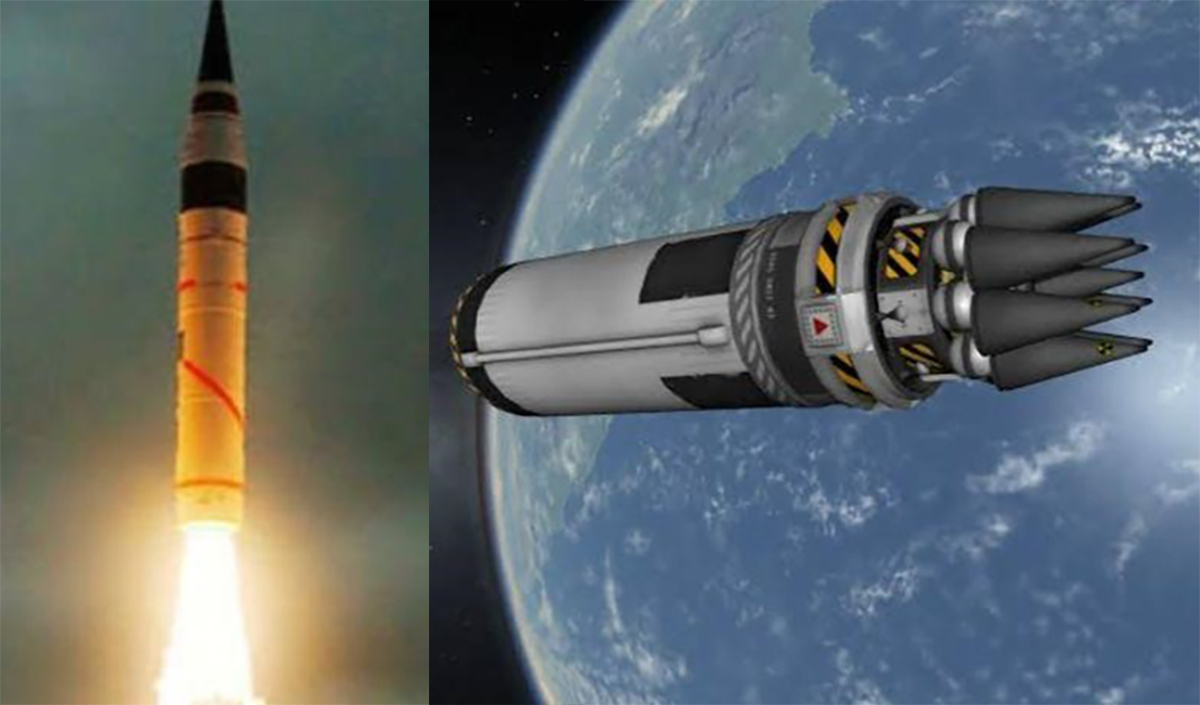
448Mission DIVYASTRA: MIRV Technology on Agni 5


Pic Courtesy: Internet

India  on 11 Mar 24 successfully test-fired Agni-V missile with Multiple Independently Targetable Re-entry Vehicle (MIRV) technology.


It is a big boost to India’s Deterrence capability.


Defence correspondents and analysts are seeking analytical inputs and writing about various aspects of this development.


To read the quoted article,  click on the link below:-

https://www.republicworld.com/defence/global-defence-news/india-s-agni-5-vs-pakistan-s-ababeel-in-mirv-tech-one-succeeds-other-flops/


Link to another article on the subject by Ritu Sharma:-

Top US Scientist ‘Slams’ India’s Agni-V Missile Test; Says New Delhi Could ‘Disarm’ Pakistan With MIRV Tech


Suggestions and value additions are most welcome


For regular updates, please register here:-

Subscribe


References and credits

To all the online sites and channels.


Disclaimer:

Information and data included in the blog are for educational & non-commercial purposes only and have been carefully adapted, excerpted, or edited from sources deemed reliable and accurate. All copyrighted material belongs to respective owners and is provided only for purposes of wider dissemination.


English हिंदी