
591: TRANSFORMING INDIA’S SKIES: THE MRFA ACQUISITION FOR A FUTURE-READY IAF

Pic Courtesy Net


My Article Published in the Life of Soldier e-Magazine Feb 25.


The geopolitical landscape in South Asia and the Indo-Pacific region is undergoing a significant transformation in the emerging world order. In this context, India’s need for a technologically advanced and combat-ready air force is more crucial than ever. The impending Multi-Role Fighter Aircraft (MRFA) acquisition program, a strategic necessity, marks a critical juncture in India’s quest to modernise its air power. This program, which aims to procure 114 state-of-the-art fighter jets under the ‘Buy Global, Make in India’ initiative, is a pivotal step in addressing the IAF’s operational challenges, including an ageing fleet, numerical shortfalls, and the growing assertiveness of adversarial air forces. By integrating next-generation platforms equipped with cutting-edge avionics, superior weapons systems, and enhanced survivability features, the IAF is poised to significantly bolster its strategic deterrence capabilities and maintain air superiority in the region.


The MRFA acquisition is not a mere procurement exercise; it is a comprehensive effort to revamp India’s aerospace ecosystem. This initiative, which fosters technological self-reliance and bolsters the defence industrial base, is a testament to India’s commitment to its defence capabilities. With contenders such as the Dassault Rafale, Boeing F-15EX, Lockheed Martin F-21, Eurofighter Typhoon, and the Russian Sukhoi Su-35, the competition promises to be intense, offering India a wide array of options that blend operational effectiveness with long-term economic and strategic benefits. The program’s emphasis on indigenous production through partnerships with Indian defence firms is expected to stimulate job creation, enhance research and development capabilities, and position India as a global hub for aerospace manufacturing.


However, the MRFA acquisition is not without its challenges. Budgetary constraints, bureaucratic delays, and the intricate process of technology transfer and industrial collaboration pose significant hurdles. Moreover, the rapidly evolving nature of aerial warfare, characterised by the increasing role of unmanned systems, artificial intelligence, and cyber warfare, necessitates a forward-looking approach to ensure that the selected platform remains relevant over the next several decades. The decision-making process must also consider the IAF’s evolving doctrinal requirements, interoperability with existing assets such as the indigenous Tejas fighter and the recently acquired Rafale jets, and the long-term sustainability of the fleet.


As India navigates the complexities of the MRFA program, it is a testament to the nation’s commitment to safeguarding its airspace. The successful execution of this program will not only enhance India’s operational preparedness but also strengthen its position as a credible regional power capable of countering emerging threats and contributing to collective security frameworks. With strategic foresight and meticulous planning, the MRFA acquisition has the potential to not just bolster but redefine India’s aerial combat capabilities, ensuring that the IAF remains a formidable force in the 21st century.


Historical Perspective. The history of India’s MRFA acquisition effort is marked by ambitious plans and evolving defence strategies to modernise the IAF’s fighter fleet. The origins of the MRFA initiative can be traced back to the Medium Multi-Role Combat Aircraft (MMRCA) tender issued in 2007, which sought to acquire 126 fighter jets to replace the ageing MiG-21 fleet. The competition saw participation from major global defence manufacturers, including Dassault, Boeing, Lockheed Martin, Saab, and Eurofighter. After extensive evaluations and trials, the Dassault Rafale emerged as the preferred choice in 2012; however, contractual disagreements and cost escalations led to the eventual scrapping of the deal in 2015. In its place, the Indian government opted for a government-to-government deal to procure 36 Rafale jets in 2016 to meet urgent operational needs. The failure of the MMRCA tender to materialise in its original form highlighted the complexities involved in large-scale defence procurements, including cost considerations, technology transfer requirements, and offset agreements. In response to these challenges, the IAF redefined its requirements and reinitiated the procurement process under the MRFA program in 2019. The renewed effort sought to leverage lessons learned from the previous tender while emphasising indigenisation and the development of India’s defence manufacturing capabilities under the ‘Make in India’ initiative. Unlike its predecessor, the MRFA acquisition focuses more on domestic production, requiring foreign vendors to collaborate with Indian defence firms to establish local assembly lines and facilitate technology transfers.


Overview of the MRFA Acquisition Program. The MRFA acquisition program is a critical initiative by the Indian Air Force to acquire 114 advanced multi-role fighter jets to enhance its operational capabilities and replace its ageing fleet of legacy aircraft. The program seeks to address the dwindling squadron strength of the IAF, which has declined from the sanctioned 42 squadrons to around 31, posing a strategic challenge in the face of potential two-front threats from China and Pakistan. Under MRFA, the IAF aims to procure state-of-the-art fighters that can undertake various combat roles, including air superiority, ground attack, reconnaissance, and electronic warfare, ensuring dominance in modern warfare scenarios. The MRFA acquisition process is structured under the ‘Make in India’ initiative, emphasising indigenous production and technology transfer to boost the domestic defence industry. The IAF issued a global Request for Information (RFI) in 2019, inviting proposals from major aircraft manufacturers worldwide. The procurement is expected to be executed under the Strategic Partnership (SP) model, which involves collaboration between foreign Original Equipment Manufacturers (OEMs) and Indian defence firms. This collaboration will not only establish production lines within the country but also transfer critical technologies, thereby reducing dependency on imports and promoting self-reliance in the defence sector.  One of the critical requirements outlined by the IAF in the MRFA tender is the transfer of technology (ToT), which will allow Indian defence companies to gain technical expertise in aircraft manufacturing, maintenance, and future upgrades. The aircraft must be capable of conducting missions in diverse operational environments, from high-altitude regions like the Himalayas to maritime operations over the Indian Ocean. The MRFA jets must possess advanced radar systems (AESA), electronic warfare capabilities, precision-guided munitions, and compatibility with Indian and Western weapons. Additionally, the IAF would be keen on ensuring interoperability with existing platforms such as the indigenous Tejas Light Combat Aircraft (LCA) and the recently inducted Rafale fighters.


Advantages and Necessity. The integration of Multi-Role Fighter Aircraft (MRFA) into the Indian Air Force (IAF) is expected to bridge several operational gaps while complementing the existing fighter fleet, which includes the Su-30MKI, Rafale, and Tejas.


    • The IAF’s sanctioned strength is 42 fighter squadrons, but the current strength hovers around 31 squadrons. The MRFA will fill this shortfall, ensuring better preparedness against a two-front threat scenario involving China and Pakistan.
    • MRFA will bring advanced multirole capabilities, allowing the fleet to handle air superiority, ground attack, and maritime roles seamlessly. This versatility fills gaps in specific mission profiles, especially when assets are stretched thin.
    • The Multi-Role Fighter Aircraft (MRFA) will be a critical asset for the Indian Air Force (IAF) in multi-domain operations (MDO), enhancing network-centric warfare capabilities. Its advanced systems, flexible mission profiles, and integration capabilities will enable the IAF to operate effectively across air, land, sea, space, and cyber domains.
    • The MRFA will provide the IAF with cutting-edge technologies and weaponry to dominate contested environments. By combining advanced sensors, stealth, weapon systems, and network-centric capabilities, the MRFA ensures a decisive edge over adversaries.
    • The MRFA program is more than a defence procurement initiative. It is a catalyst for India’s self-reliance in aerospace and defence. By emphasising technology transfer, local production, and industrial collaboration, the program will strengthen the IAF and lay the foundation for a robust and competitive domestic aerospace sector, aligning seamlessly with India’s vision of Atmanirbhar Bharat (Self-Reliant India).


Timelines.  The acquisition process encompasses several critical phases. In April 2019, the IAF issued an RFI to global aerospace manufacturers, marking the formal commencement of the MRFA program. This step invited potential vendors to submit details about their aircraft offerings suitable for India’s defence requirements. The next step in the process is the Acceptance of Necessity (AoN) and Request for Proposal (RFP). Following AoN, the IAF hopes to issue the RFP by mid-2025, detailing specific requirements and inviting formal bids from shortlisted manufacturers. Upon receiving responses to the RFP, the IAF will conduct comprehensive evaluations, including technical assessments and field trials, to ascertain the suitability of each aircraft. This meticulous process is expected to span approximately two years. Post-evaluation, the IAF will negotiate with the selected vendor to finalise terms encompassing pricing, technology transfer, and local production under the ‘Make in India’ initiative. Given the complexity of such defence procurements, this phase is anticipated to take around two years. Following contract finalisation, the establishment of production facilities and commencement of manufacturing are projected. The induction could start as early as 2030, based on fast-tracking. This timeline underscores the intricate and prolonged nature of large-scale defence acquisitions.


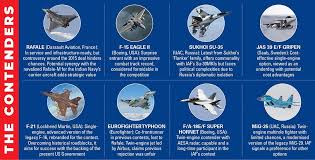
Interested Contenders. The MRFA program has attracted interest from multiple global aerospace manufacturers, with contenders including Boeing F/A-18E/F Super Hornet, Boeing F-15EX Eagle II, Dassault  Rafale, Eurofighter Typhoon, Lockheed Martin F-21 (a variant of the F-16V tailored for Indian requirements), Mikoyan MiG-35, Sukhoi Su-35 (Russia), and Saab JAS-39 Gripen E/F. Each aircraft offers advanced features such as cutting-edge avionics, stealth capabilities, and superior weapon systems, which are crucial for India’s evolving defence needs.


Challenges. The Multi-Role Fighter Aircraft (MRFA) acquisition program of the Indian Air Force (IAF) faces several significant challenges that could impact its timely execution and successful implementation. One of the foremost challenges is the complexity of the procurement process, which involves multiple stages such as issuing the Request for Proposal (RFP), conducting extensive evaluations and trials, negotiating contracts, and ensuring technology transfer under the ‘Make in India’ initiative. These steps are time-consuming and often subject to bureaucratic delays, which could push the timeline further. Another critical challenge is budgetary constraints, as the estimated cost of the MRFA program exceeds $20 billion. Allocating such a substantial budget amidst competing defence priorities, such as developing Indigenous fighter programs like the Tejas Mk2 and the Advanced Medium Combat Aircraft (AMCA), poses financial challenges. Additionally, fluctuations in the global economy and currency exchange rates could further complicate financial planning. Technology transfer and local production requirements also present challenges, as ensuring meaningful knowledge sharing and developing a robust domestic defence ecosystem will require significant investments in infrastructure and skilled workforce development. Partnering foreign Original Equipment Manufacturers (OEMs) may be reluctant to share critical proprietary technologies, potentially limiting India’s self-reliance goals. Furthermore, geopolitical factors play a crucial role in the procurement. India’s defence acquisitions must often align with its strategic partnerships and foreign policy objectives. Selecting an aircraft from Western or Russian manufacturers could have diplomatic ramifications, affecting relations with other key defence partners. Lastly, operational challenges such as integrating new fighter platforms with existing IAF assets, logistics support, and pilot training add further complexity. Ensuring compatibility with existing weapon systems and communication networks is crucial for maintaining operational efficiency. Overcoming these challenges will be vital to the success of the MRFA program.


Urgency and Review. Despite the government’s support, the MRFA program has encountered delays, partly due to the complexities of the procurement process and the imperative to align with indigenous production goals. In the meantime, the adversaries have inducted fifth-generation aircraft in large numbers and have already flown sixth-generation prototypes. Given emerging threats, investing in 4.5-generation technology may not suffice, advocating for a shift towards fifth-generation fighter capabilities. The indigenous Advanced Medium Combat Aircraft (AMCA) project is underway but faces delays, with production not expected until the mid-2030s. In the interim, options such as accelerating the AMCA’s development or exploring international collaborations for next-generation fighter technology must be pursued with vigour.


Conclusion. The MRFA is a critical investment for the IAF to overcome existing operational gaps and maximise the potential of its current fighter platforms. Enabling seamless integration and interoperability would ensure a balanced, versatile, and future-ready air force capable of effectively addressing current and future threats. The MRFA program’s success lies in balancing operational needs with financial prudence. The MRFA fleet can remain sustainable and aligned with the IAF’s operational tempo by emphasising lifecycle cost management, indigenous production, and efficient logistics. This would ensure a modern, capable, and resilient air force capable of effectively addressing present and future challenges.


Please do Comment.


1924
Default rating

Please give a thumbs up if you  like The Post?


For regular updates, please register your email here:-

Subscribe


References and credits

To all the online sites and channels.

References:-

  1. Rajagopalan, Rajeswari P. “India’s Fighter Jet Procurement Challenges.” Strategic Analysis Journal, vol. 44, no. 2, 2021, pp. 156-170.
  1. Bedi, Rahul. “The MRFA Program: Delays and Strategic Necessity.” Jane’s Defence Weekly, 2023.
  1. Kumar, Anil. “Self-Reliance in Defence Manufacturing: Evaluating the MRFA Approach.” IDSA Journal of Defence Studies, vol. 17, no. 4, 2022, pp. 47-62.
  1. Sharma, Vivek. “Combat Readiness of the IAF: The Role of MRFA.” Air Power Journal, vol. 18, no. 3, 2021, pp. 23-40.
  1. Joshi, Manoj. India’s Military Modernisation: Challenges and Prospects. Observer Research Foundation (ORF), 2020.
  1. Indian Air Force. Vision 2030: Modernisation Strategy and Roadmap. IAF Publications, 2021.
  1. Singh, Harsh V. Air Power in India: Strategic Imperatives and Force Modernisation. Pentagon Press, 2019.
  1. Institute for Defence Studies and Analyses (IDSA). Modernising India’s Air Power: The Next Two Decades. Routledge, 2018.
  1. Pandit, Rajat. “IAF to Seek RFP for 114 Fighter Jets Under MRFA Project.” The Times of India, 2023.
  1. Peri, Dinakar. “MRFA: The IAF’s Long-Pending Fighter Jet Acquisition.” The Hindu, 2023.
  1. “MRFA Program: India’s Search for a Multi-Role Fighter.” Economic Times Defence, 2024.
  1. “114 Fighter Jet Deal: Status Update and Challenges.” India Defence Review, 2023.
  1. “Make-in-India Push: MRFA Fighter Jet Procurement Plans Explained.” Business Standard, 2023. (https://business-standard.com)
  1. Centre for Air Power Studies (CAPS). Next-Gen Combat Aircraft for the IAF: MRFA and Beyond. CAPS, 2021.

Disclaimer:

Information and data included in the blog are for educational & non-commercial purposes only and have been carefully adapted, excerpted, or edited from reliable and accurate sources. All copyrighted material belongs to respective owners and is provided only for wider dissemination.
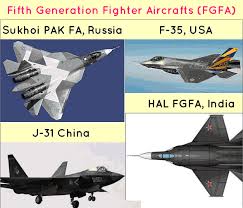
590: Fifth Generation Fighter Aircraft War over Indian Skies.


Pic Courtesy Net


Fifth Generation War over Indian Skies.


Comprehensive coverage of the subject on India Today’s Battle Cry.


Click on the link below:-


Please do Comment.


1924
Default rating

Please give a thumbs up if you  like The Post?


For regular updates, please register your email here:-

Subscribe


References and credits

To all the online sites and channels.


Disclaimer:

Information and data included in the blog are for educational & non-commercial purposes only and have been carefully adapted, excerpted, or edited from reliable and accurate sources. All copyrighted material belongs to respective owners and is provided only for wider dissemination.


567: CHINA FLIES ITS SIXTH-GENERATION FIGHTER AIRCRAFT: A LEAP INTO THE FUTURE OF AIR COMBAT

Pics courtesy Net

My article published on the Chanakya Forum website on 27 Dec 24.


On December 26, 2024, China achieved a significant milestone in military aviation with the successful first flight of its next-generation, sixth-generation fighter jet. This news, shared through videos on social media, underscores China’s advancing aerospace capabilities and ambition to compete with global superpowers in the future of air combat. In November 2024, at the Zhuhai Airshow, China had unveiled a full-scale model of its sixth-generation fighter, named the “White Emperor” or “Baidi.” This aircraft is part of Project Nantianmen’s research initiative exploring future aviation technologies.

China has made significant strides in developing cutting-edge military technologies in the ongoing arms race among world powers. A prime example of this ambition is the country’s pursuit of a sixth-generation fighter jet. Unlike its predecessors, which were revolutionary in their own right, China’s sixth-generation fighter promises to redefine air warfare in the coming decades.


Sixth-Generation Fighter

Before delving into China’s specific design, it is essential to understand what distinguishes a sixth-generation fighter aircraft from its predecessors. The first generation of fighters began with piston-engine aircraft during World War I, evolving through successive generations of increasingly advanced jet-powered machines. By the time the fifth generation came into focus in the late 20th century, fighters like the U.S. F-22 Raptor and the Russian Su-57 showcased advanced stealth features, integrated avionics, and supercruise capabilities.


Sixth-generation aircraft are set to exceed the capabilities of the fifth-generation in multiple areas. China’s sixth-generation fighter is expected to embody many, if not all, of these attributes, setting the stage for a paradigm shift in air combat. Some of the most anticipated features of a sixth-generation fighter include the following.


    • Stealth. The focus will be reducing radar cross-sections and evading detection from multiple sensors, including infrared, radio frequency, and satellite-based tracking.


    • AI and Autonomous Capabilities. Artificial intelligence will play a pivotal role in operations, potentially offering more autonomous flight options, battlefield decision-making, and real-time data analysis.


    • Enhanced Supersonic Speeds. Supersonic or hypersonic speeds will allow faster response times and increased evasion capabilities.


    • Directed Energy Weapons. Laser weapons and high-powered microwave systems are expected to be integrated into future designs to counter incoming missiles and drones.


    • Increased Network Integration. These fighters will likely be part of a larger, interconnected combat system where communication and data-sharing between aircraft, ground stations, and satellite networks are seamless.


    • Space-warfare Capabilities. A highly ambitious feature, these aircraft might be capable of launching attacks from near or low Earth orbit, giving them an unprecedented range and scope of operations.


The White Emperor: China’s Flagship Sixth-Generation Fighter


The most publicised and speculated model of China’s sixth-generation fighter is the “White Emperor” (Baidi), revealed in November 2024 during the Zhuhai Airshow. While exact specifications and performance capabilities remain primarily classified, several key characteristics of the White Emperor may include the following features.


Design and Stealth Features. The aircraft’s design will likely incorporate advanced stealth technologies beyond those seen in fifth-generation fighters, such as the U.S. F-35 and China’s own J-20. The White Emperor features a sleek, angular frame with a small radar cross-section, indicating composite materials and radar-absorbing coatings. Its design may also include a more refined control surface to optimise aerodynamics while maintaining low detectability across various sensor types. A significant departure from earlier generations might be using adaptive camouflage and technologies capable of deceiving advanced detection systems. These stealth features would reduce the aircraft’s visibility to radar and lower its thermal signature, which is crucial in avoiding infrared tracking from enemy aircraft and satellites.


Hypersonic Capabilities. One of the most talked-about features of the White Emperor is its potential hypersonic capabilities. The aircraft is reportedly designed to operate at altitudes of up to 25,000 meters, well beyond the reach of traditional fighter jets, and possibly capable of achieving speeds greater than Mach 5 (the speed of sound at five times the speed of sound). This would give it a significant edge in terms of both offence and defence, enabling it to outmanoeuvre current air defences and launch attacks with minimal warning. Hypersonic flight would also enhance the jet’s ability to intercept ballistic missiles and conduct long-range strikes, positioning China as a leading power in the hypersonic arms race. Hypersonic weapons also have the advantage of unpredictable trajectories, making it harder for enemies to defend against them.


AI and Autonomy. One of the most innovative aspects of the White Emperor is the role of artificial intelligence and autonomous systems. Unlike previous generations, which relied heavily on human pilots for tactical decision-making, sixth-generation fighters like the White Emperor could be equipped with AI systems capable of analysing vast amounts of data in real-time, making tactical decisions, and even controlling the aircraft’s operations during combat scenarios. The AI could assist the pilot by suggesting optimal manoeuvres, countering incoming threats, or engaging targets without direct human intervention. Furthermore, the aircraft may have options for fully autonomous missions, where the aircraft operates without the need for a pilot at all. This capability could dramatically increase the speed and efficiency of missions, particularly in high-stakes, high-speed engagements.


Directed Energy Weapons. The integration of directed energy weapons (DEWs), such as lasers or high-powered microwave systems, is another area where the White Emperor may surpass previous generations. Depending on the aircraft’s configuration, these systems can be used for air-to-air combat, air-to-ground, and air-to-space operations. Laser weapons can disable enemy drones, incoming missiles, and even aircraft at a distance without firing traditional munitions. This opens up new possibilities for offensive and defensive strategies, especially in contested areas where traditional missile defence systems may be overwhelmed.


Strategic Importance of China’s Sixth-Generation Fighter


China’s development of a sixth-generation fighter jet is a technological achievement and a strategic move that could alter the global balance of power, particularly in the Asia-Pacific region. The country’s growing military capabilities, including advancements in naval power and missile technology, have been viewed with increasing concern by other world powers, especially the United States and its allies.


Deterrence and Power Projection. The deployment of a sixth-generation fighter would give China a significant deterrent against potential adversaries. With advanced stealth, AI capabilities, and hypersonic speeds, the aircraft would be capable of conducting strikes against enemies at a moment’s notice, potentially disrupting enemy forces’ operational capabilities. The aircraft’s space-warfare capability also positions it as a tool for projecting power in regions far beyond China’s borders. For China, The White Emperor represents more than just an air superiority platform—it symbolises the country’s growing influence in military and technological domains. The ability to deploy advanced air combat technologies would bolster China’s strategic posture, particularly in contested areas like the South China Sea and the Taiwan Strait, where tensions with the U.S. and other regional powers have been rising.


Space and Cyber Warfare Integration. China’s sixth-generation fighter may also play a crucial role in the country’s broader efforts to dominate space and cyber warfare. The potential ability to strike from space—an area traditionally outside the reach of conventional fighters—would provide China with unprecedented operational flexibility. Moreover, integrating cyber warfare capabilities into such an aircraft could allow it to disrupt or degrade enemy communication, navigation, and surveillance systems, giving China an advantage in kinetic and non-kinetic warfare.


Geopolitical Implications. China’s development of sixth-generation fighters indicates a broader global military power shift. With its military modernisation efforts, China is positioning itself to rival the United States and Russia, which are also investing in next-generation air combat technologies. Moreover, China’s advancements could spark an arms race in air combat technology, with other countries seeking to develop their sixth-generation aircraft or advanced air defence systems to counter China’s growing military strength.


Implications for the U.S. and Allies. The United States and its allies have long dominated the skies with fifth-generation fighters such as the F-22 and F-35. China’s leap into sixth-generation technology challenges this dominance and could prompt a significant shift in military strategies. In response, the U.S. may accelerate its development of sixth-generation aircraft, such as the Next Generation Air Dominance (NGAD) program, to maintain technological parity.


Regional Stability. In the Asia-Pacific region, the emergence of China’s sixth-generation fighter could alter the strategic calculations of neighbouring countries, especially in the context of territorial disputes in the South China Sea and the ongoing tensions surrounding Taiwan. As China’s air combat capabilities grow, regional powers such as Japan, South Korea, and India may invest in their advanced fighter aircraft to maintain a credible deterrent against Chinese aggression.


Implications for India. The Baidi B-Type, alongside other advanced Chinese military assets, would enhance the People’s Liberation Army Air Force’s (PLAAF) capabilities, posing a challenge to India in the region. With potential deployment along contentious areas like the Line of Actual Control (LAC), these advanced jets may provide China with enhanced reconnaissance and strike capabilities, pressuring India’s defensive postures. India must accelerate its development or acquisition of sixth-generation technologies to maintain a competitive edge. This highlights the urgency for India to further its Indigenous defence programs, such as the Advanced Medium Combat Aircraft (AMCA).


Conclusion. China’s sixth-generation fighter aircraft represents a quantum leap in military aviation. With hypersonic speeds, AI-driven combat systems, and potential space-warfare capabilities, the White Emperor promises to be a game-changer in the evolving landscape of air combat. Its development underscores China’s growing military capabilities and desire to establish itself as a global superpower in conventional and unconventional warfare domains. As the world watches China’s next moves, its sixth-generation fighter’s implications will likely reverberate across global power dynamics for years to come.


Your valuable comments are most welcome.

Link to the article on the website:-

CHINA FLIES ITS SIXTH-GENERATION FIGHTER AIRCRAFT: A LEAP INTO THE FUTURE OF AIR COMBAT

1924
Default rating

Please give a thumbs up if you  like The Post?

For regular updates, please register your email here:-

Subscribe

References and credits

To all the online sites and channels.

References:-

  1. Jennings, Gareth. “China Flies Prototype of Sixth-Generation Fighter: Key Features Revealed.” Jane’s Defence Weekly, 15 November 2024.
  1. Rogoway, Tyler. “What China’s Sixth-Gen Fighter Means for the U.S. Air Force.” The War Zone, 10 October 2024.
  1. Defense News. “China’s Sixth-Gen Fighter: First Look at the Prototype.” 18 November 2024, www.defensenews.com.
  1. Insinna, Valerie. “Understanding the Sixth-Generation Fighter Race.” Breaking Defense, 25 August 2024.
  1. Miller, Stephen. “Hypersonics, Stealth, and AI: The Components of Sixth-Gen Fighters.” Air Force Technology Blog, 5 October 2024.
  1. Singh, Ankit. “AI-Driven Combat Systems in Sixth-Generation Fighters.” IEEE Aerospace and Electronic Systems Magazine, vol. 39, no. 5, 2024, pp. 34-40.
  1. Johnson, Mark. “The Evolution of Air Superiority: Analyzing the Shift to Sixth-Generation Fighter Technology.” Journal of Military Aviation Research, vol. 14, no. 3, 2023, pp. 45-61.
  1. Chen, Ming-Yu. “China’s Military Modernization: Sixth-Generation Fighter Programs in Context.” Asia-Pacific Defense Review, vol. 12, no. 2, 2022, pp. 23-34.
  1. Smith, Alexander. “Artificial Intelligence in Air Combat: Implications for the Sixth-Generation Fighter Race.” Aerospace Technology Quarterly, vol. 21, no. 1, 2023, pp. 12-20.
  1. Center for Strategic and International Studies (CSIS). The Future of Airpower: A Comparative Analysis of Sixth-Gen Fighter Programs. Washington, D.C., 2024.
  1. Bronk, Justin. The Future of Airpower: Trends, Technologies, and Strategies. London: Routledge, 2021.

Disclaimer:

Information and data included in the blog are for educational & non-commercial purposes only and have been carefully adapted, excerpted, or edited from reliable and accurate sources. All copyrighted material belongs to respective owners and is provided only for wider dissemination.

English हिंदी