|
Leadership, Management, Motivation, and Growth Mindset
|
| Decision making |
| Mental toughness |
| Earning respect |
| Good leadership qualities and values |
| Science of Karma |
| Good working culture and environment |
| Listening Skills |
| Be good, feel good |
| Healthy working environment |
| importance of Tolerance |
| Lessons from Buddha |
| The difference between strength and courage |
| Lessons from the rich and famous |
| Leadership lessons from Hollywood movies. |
| Shark in the tank theory of management |
| Car wheel theory of management |
| Aya Ram Gaya Ram syndrome – yes, men. |
| Calculated Risks |
| Practical Leadership and Management |
| Communication skills and body language |
| Lessons from Nanak |
| Being Responsible and Tolerant |
| Growth Mindset |
| Transferable Skills |
| Advice to the young generation |
| Motivational Talks |
| Importance of self-discipline |
| Learn from Ganesha |
| Listen to Krishna |
| Words of Wisdom |
| Life in IAF |
| Convocation Address – lessons from life in the IAF |
| Courage is an essential trait of leadership. |
| Leadership: A Privilege |
| Embrace your Journey of Life |
| Trust and Integrity: The Cornerstones of Authentic Leadership |
| Growth Mindset: Individuals, Leaders and Organisations. |
| Five by Five rule: Assured happiness. |
| Ancient Stoic Wisdom for a Modern World |
| Leadership/Strategic Management: Lessons from the military |
| Battlefield to Boardroom: Applying Military Challenges to Corporate Challenges |
| Two Sectors, One Ethos: Shared Principles in Defence and Hospitality Sector |
| Growth Mindset: Mind your Mind – It Is your Biggest Asset |
| Hold the Dorr Open: The Lasting Power of being Nice over Being Important |
|
China
|
| China’s Brain is differently wired. |
| China’s strategic thought |
| China’s military modernisation |
| China’s Defence Industry |
| China – Pakistan Collusion |
| China – Art of deception |
| China: Kill Pigs List |
| China: Social Score System |
| China: Active Defence Policy |
| China’s Joint Strategic Support Force (JSSF) |
| China – Joint Strategic Support Force. |
| Dealing with the Dragon |
| China’s grey zone operations |
| China: Flavours of military Reform |
| China: Pillars of Military Reform |
| China’s New Diplomacy – Drawing Red Lines in the Sand. |
| China – demographic analysis. |
| China through the US Prism |
| China in the South China Sea |
| China’s Military – Civil Fusion |
| PLAAF Analysis: Strengths and weaknesses |
| Book review on China Airpower |
| Dealing with Dragon |
| Knowing China Better: Lie Flat and Let It Rot. |
| Knowing China, Better social life and customs |
| Something is not right in Dragon Land. |
| Q&A India-China stand-off |
| China in IOR |
| What is cooking in the Chinese military cauldron |
| Dragon at Shigatse |
| China’s aircraft carrier development |
| China’s military reorganisation: a story of evolution and reversion. |
| China’s Challenges in Developing Next-Generation Fighter Engines. |
| China’s LYNX Robot: A broader shift towards unmanned warfare. |
| China Unveils White Emperor: Sixth Generation Fighter Aircraft |
| Chinese J10C for Bangladesh: A Strategic Step or Misstep |
| Decoding China’s sixth-generation fighter aircraft |
| CPC’s Weapon of Influence: United Front Work Department |
| Dragon Tightens Its Grip: China’s Military Presence Grows In Larung Gar |
| China Through a US Prism 2024 |
| China Flies Its Sixth-Generation Fighter Aircraft: A Leap Into The Future Of Air Combat |
| The Digital Silk Road Implication of China’s Techno-Political Strategy |
| Chinese Fighter Aircraft For Bangladesh: Comparative Analysis. |
| China’s Water Wars and Dams |
| An Ageing Giant: The Demographic Challenge Facing China |
| Kashmir Through a Chinese Lens |
| Chinese Airfields in Tibet |
| Xi Jinping’s Magical Purges: Making People Disappear |
| China’s Mosquito Drone: A Tiny Threat with Global Implications |
| A New Challenge: China’s Non-Nuclear Hydrogen Bomb |
| Dragon’s Dance on the Top of the World’s Roof. |
| The Bohai Sea Monster: China’s Leap in Wing-in-Ground Effect Technology. |
|
Pakistan
|
| Pakistan through the US Prism |
| Lesser-known facts: 1971 war |
| Pakistan’s National Security Policy |
| 1965 Indo-Pak war (leadership, morale, training & tactics matter) |
| 1965: a western sunrise: India’s war with Pakistan |
| Balakot Strike |
| The new airfield in Pakistan |
| Chinese gyrfalcon in Pakistan skies |
| Pakistan – the Balochistan conundrum |
| From ally to adversary: US sanctions highlight Pakistan’s missile threat. |
| Paktika on Fire: Pakistani Air Strike in Afghanistan |
| Pakistan Train Hijack: Start of a Larger Crisis |
| Op Sindoor – India’s Water Canon against Pakistan Sponsored Terrorism: Indus Water Treaty |
| Op Sindoor -Desperate Men do Desperate Things: Pakistan Army Chief Playing with Fire |
| Op Sindoor – Diplomatic Earthquake: Shimla Agreement Teeters on the Edge |
| Op Sindoor – Pakistan’s Backwards March: Led by Generals, Paid by the People |
| Op Sindoor: India’s Punitive Deterrence Doctrine. |
| Op Sindoor: Punitive Deterrence – Attack on Terror Infrastructure |
| Op Sindoor: Asim Munis – Sword of Honour to Disgracing the Sword |
| Trump Munir Meeting: Transactional Diplomacy or a Geopolitical Quid Pro Quo |
| Shaheen 3 Failure: Wake Up Call for Pakistan |
| Pakistan Army Inducts China’s Z-10ME Attack Helicopter. |
| Pakistan’s Soaring Budget: Buying Bullets from Borrowed Money. |
|
Bangladesh
|
| Saint Martin’s Island: A strategic Gem in the Bay of Bengal |
| Bangladesh: Shifting alliances, Strategic Projects and India’s concerns |
| Bangladesh’s Anti-India Stance and Rhetoric |
| Bangladesh Playing with Fire |
| India’s Water Canon against Pakistan-Sponsored Terrorism |
| From Estrangement to Engagement: Pakistan and Bangladesh Recalibrating Ties |
|
Geopolitics
|
| China |
| Pakistan – National Security Policy, Turmoil |
| Afghanistan |
| India’s foreign policy |
| India’s neighbourhood |
| Quad |
| Indo-Russian relations |
| State of Airpower Assets in Afghanistan |
| Indo-US relations |
| Afghanistan: Taliban run over |
| World in Transition |
| US-China Shadowboxing over Taiwan |
| China is spoiling Bhutan’s GNH. |
| Thucydides Trap – Dragon challenging Eagle |
| South China Sea |
| Gini Index and Implications. |
| Multilateralism: Flexible Security Cooperation. |
| India-Pakistan border issue – tunnels and drones |
| India-China border talks |
| China Pak Collusivity |
| SCO Shanghai Cooperation Organisation: Relevance and future trajectory |
| Sri Lanka Economic Crisis: lessons and opportunities |
| Ukraine Conflict |
| Bangladeshi tango with China |
| Economic Sanctions |
| Djibouti: Tug of war between the USA and China |
| The Future of Conflict in the Asian Context |
| Israel-Palestine standoff |
| India, Pakistan, China, Asian triangle |
| Indo-US Collaboration in Defence |
| World in Transit |
| Indo-Russia relations |
| Indo-Vietnam Cooperation |
| Many suitors for strategically located Djibouti |
| Renewed Impetus to Indo-Russia Relations |
| Peace and Security in South Asia: Bangladesh and Myanmar |
| Cold War Redux: Traits and Drivers of Cold War 2.0 |
| Reverse Globalisation: Contemporary Strategic Economic Policies. |
| Canada-India Tension: Spotlight on the Five Eyes Alliance |
| India Middle East Europe Economic Corridor |
| Five Eye Alliance |
| China+1 Policy: Dragon’s Loss is Others’ Gain. |
| Syrian Crisis: Geopolitical uncertainties |
| Operation Bashan Arrow: Israel’s Strategic Necessity or Opportunism. |
| Imperial Overtstress: Rise and Fall of Empires. |
| Cold War Redux: Military aspects of Cold War 2.0 and Impact on Indian Security |
| South Korean Crisis: Ripple Effect on India |
| Chinese J-10c For Bangladesh: Next Big Step Or Strategic Misstep |
| From Ally To Adversary: US Sanctions Highlight Pakistan Missile Threat |
| Operation Paperclip: A Moral Paradox |
| Greenland’s rising importance: A strategic asset in global security. |
| Indo-Taiwan Cooperation: AI and Semiconductors |
| Indo-US Defence and Security Cooperation: Interest-Based to Long-Term Strategic Partnership |
| The Petro-Renminbi Challenge to the Petro-Dollar |
| Global Citizenship in the 21st Century |
| Global Citizenship in Education and Peace-Building |
| Global Citizenship in Conflict Resolution and Peace Building |
| Trump-Zelensky Meeting: A Case Study in Diplomatic Disaster. |
| Indo-US Defence Cooperation: F-35 Offer |
| NATO’s Relevance In Today’s World Order |
| Changing Character Of Conflicts: Challenges To Peace Operations And International Humanitarian Law |
| Trump’s aggressive Stance on Houthis: Deepening of Conflict. |
| Fear of Honey Traps: The US Bans Diplomats from Having Relationships with Chinese Nationals. |
| Kashmir Through a Chinese Lens |
| Unfinished Russian Objective: Regime change in Ukraine |
| Indo-US Defence Coop: Interest-based to Long-term Partnership. |
| Turkey’s Tango with India’s Neighbours: A Strategic Dance with Regional Implications |
| Middle East Tensions impacting Eurasia |
| China, Pakistan, Bangladesh Alliance: Complicating Regional Dynamics |
| Strategic Significance of The Resistance Front (TRF) being Designated as a Terrorist Organisation. |
| Geopolitical Dynamics and Defence Modernisation: Lessons of 2025 Cnflicts |
| Impact of US Tariffs on India-US Relations and Military Cooperation |
|
Air Power
|
| Airpower in Grey Zone Operations |
| Airpower in a war, no peace situation |
| Air Power & Non-Kinetic Warfare |
| Air Power in Multi-Domain Warfare |
| Airpower in HADR ops and aid to civil authorities |
| Drone Threat: The Big Picture |
| Fighter aircraft classifications by generations |
| Emerging Technologies and Air Defence |
| Air Power in Modern-Day Warfare |
| S-400 SAM AD System |
| Combat Aviation is most desired – least understood. |
| Changing nature of warfare |
| Air Defence operations |
| Air power strategies: multiple threats and limited resources |
| Airpower in the maritime domain |
| Air Power and effect-based operations |
| Air power concepts: Command/control of the air, air supremacy, Air superiority, and a favourable air situation. |
| Contemporary airpower thought |
| How does an aeroplane fly |
| Air power basics revisited. |
| Air power and war endurance |
| Global Wars and lessons for Indian airpower |
| Classification of fighter jets into generations |
| Centralised planning, decentralised execution |
| Global Airpower Ranking 2024 |
| Giulio Douhet: Relevance Today |
| All About Airpower |
| Airpower in the Indian Context |
| Airpower Theorists and Their Core Thoughts and Beliefs |
| Likely 6th Gen features on SU 57 aircraft and its Exportability Challenges |
| Relevance of John Warden’s thoughts on Air Power Application and Air Campaign Planning. |
| Future trends of fighter aircraft. |
| Air Campaign Planning |
| Genesis of airpower theories and their relevance today |
| Adapting Airpower Lessons from Israel |
| Loyal Wingman Concept: Advantages & Enablers |
| Loyal Wingman Concept: International Programs |
| Loyal Wingman Concept: Challenges and Prospects |
| Loyal Wingman Concept: Redefining Air Combat |
| Relevance of Bombers in Contemporary Warfare |
| Decoding China’s sixth-generation fighter aircraft |
| Rise of Combat Drones: Implications for Traditional Air Power. |
| Combat Drones: Global Overview |
| F-35 Stealth Vs. Beast Mode |
| Aerial War: Shift from Pilots to Platforms to Weapons |
| Role of America’s F-47 Sixth-Generation Fighter Jet in a Shifting Defence Landscape |
| Rafale M for the Indian Navy |
| Integrated Air Defence Systems: Comprehensive Airspace Protection |
| Adapting Airpower: Lessons from Israel |
| AI-Enabled Air Forces: The Future of Aerial Warfare |
| Air Superiority and SEAD/DEAD Operations: Evolution, Technologies and Strategic Importance |
|
Technology and Warfare
|
| Hypersonic and hypersonic weapons |
| Technology and airpower |
| Future Trajectory of AI |
| Artificial intelligence |
| Future of conflict in new domains (Space, Cyber and deep sea) |
| Unmanned Platforms and Swarms, Loyal Wingman Concept |
| AI and Fake News |
| AI: Digital twins and Surrogate models |
| Military application of quantum technology. |
| What’s next after 6th-gen aircraft |
| Technology in the defence forces. |
| Mission Divyastra MIRV Technology |
| Technology and the future of aircraft maintenance |
| Speed Race: Hypersonic weapons |
| Countering Hypersonic Threat: Difficult but Manageable Problem |
| Analkshya Cloaking Technology |
| MUM-T vis-à-vis Loyal Wingman concept |
| Military AI Applications Enhancing Decision-Making |
| Durga and Kaali: India’s DEW Program |
| Difference between Loitering munitions and Kamikaze drones |
| Blockchain Technology: A Comprehensive Overview |
| Counter-Stealth Technologies and Their Effectiveness. |
| AI: Shifting of Balance of Power |
| Ukraine Unveils Tryzub: A Game-Changing DEW |
| Stealth Vs. Counter-Stealth: The Evolving Battle In Sixth-Generation Air Warfare |
| 5g Race Between the Dragon And The Eagle: Potential to Enhance Aerial Warfare |
| India’s First FPV Drone With Kamikaze Anti-Tank Munition. |
| Leonidas By Epirus: Star Trek Style Shield Of Directed Energy Weapon |
| Artificial Intelligence In Modern Warfare: Opportunities And Challenges |
| Counter-Stealth Technologies And Their Effectiveness |
| India Enters the LASER Age: MK-II(A) Ushers in a New Era of Defence Technology. |
| Integration of Directed Energy Weapons into Military Platforms. |
| Project Vishnu: India’s Leap into Hypersonic Missile Warfare |
| Project Kusha: India’s Indigenous Sky Shield |
| Innovative Use of Smart Tech: The Democratisation of Warfare |
| Integrated Air Defence Systems. |
|
Security
|
| Collective Security |
| National Security / Military Strategy |
| Urgent need for National Security Policy |
| Collective dealing with non-traditional challenges |
| Aerospace security challenges. |
| Synergising India’s military and diplomatic goals |
| Cold War 2.0: Military aspects and India |
| Fear Of Honey Traps: U.S. Bans Its Diplomats From Getting In Any ‘Relationships’ With Chinese Nationals |
|
Cyber Safety and Security
|
| Cyber warfare |
| Digital addiction |
| Economic Cyber Frauds |
| Future of conflict in new domains (Space, Cyber and deep sea) |
| Cyber Posturing and Cyber Strategic Coercion. |
|
Nuclear
|
| Nuclear trends, threats and challenges 27 Jun 24 |
| Nuclear aspects revisited |
|
Space
|
| Space operations |
| Space warfare and organisation in India |
| Space-based ISR |
| Space warfare in the Korean Peninsula |
| Launch of 50 surveillance satellites by ISRO in 5 years. |
| Future of conflict in new domains (Space, Cyber and deep sea) |
| Anatariksha Abhyas 2024: A New Era for India’s Space Security. |
| Formation Flying in Space |
| Space power: Shaping the future conflicts |
| China Strengthens Space Station Operations with Tianzhou Resupply Mission |
| Colonising Space: Opportunities and Challenges |
| Indian Space Program’s Giant Leap: Shubhanshu Shukla Heads To Space Station |
| NISAR: Mapping the Future and Revolutionising Climate and Disaster Intelligence |
| India’s Persistent Eyes in the Sky: Stratospheric Airship Platforms |
| India’s Human Spaceflight Revival: A Strategic Leap in the Global Space Race |
| Eyes in the Sky: OP Sindoor Spurs India’s Space Defence Surge |
|
Indian Air Force
|
| Capability development |
| Tejas and AMCA project |
| IAF’s role in HADR and aid to civil and other agencies |
| Network-centric operations |
| PLAAF and IAF comparative analysis |
| IAF Modernisation |
| Balakot Operations |
| Maritime air operations in future |
| Rafale induction and capability enhancement |
| S-400 Induction |
| Fire Power Demo: Ex Vayu Shakti |
| IAF fighter strength drawdown and mitigation plan |
| IAF Strategies: past, present and future. |
| Life in the IAF |
| IAF multi-national exercises |
| Exercise Bright Star 2023 |
| C-295 ac induction, IAF capability enhancement and benefits |
| Strategic evolution of IAF |
| Astra AAR BVR Missile |
| Journey through IAF |
| Prachand the Himalayan griffin. |
| Women air warriors in the IAF |
| IAF challenges and future trajectory. |
| Discussion on the book by Jasjit Sinh: Defence from the Skies. |
| Race and hunt for medium transport aircraft |
| Multinational Exercise Tarang Shakti hosted by the IAF |
| All you want to know about ASTE and SDI of IAF |
| IAF Flight Path@92 |
| IAF Guardians of the sky. |
| Russia’s White Swan Bomber: Game-changer or White Elephant for IAF? |
| Russia’s Su-57 Offer To India: Balancing Needs And Strategic Interests |
| Jaguar aircraft in the IAF and the relevance of the Bombers |
| India and Russia are likely to collaborate on the Voronezh Radar System. |
| Transforming Indian Skies: The MRFA acquisition for a future-ready IAF |
| Fifth Generation Fighter Aircraft War Over Indian Skies. |
| Indian Quandary About Fifth-Generation Fighter Aircraft |
| IAF and Contemporary Air Power Application |
| F-35 Dilemma Revisited: Balancing, Affordability, Capability and Trade-Offs. |
| Exercise Iniochos-25: IAF On Board Charioteer |
| IAF Operation Brahma: HADR to Myanmar |
| IAF aircraft encounter GPS spoofing over Myanmar. |
| Precision from Afar: India’s Glide Bomb and the Changing Nature of Warfare |
| GPS Interference of IAF Aircraft over Myanmar |
| ISTAR: To redefine Strategic surveillance for the IAF |
| India Eyes Air-Launched LORA Missile: to Enhance Long Range Precision Capability |
| Goodbye Mig-21 Aircraft |
| IAF: Past, Present and Future |
| India to Enhance High-Altitude Surveillance with Advanced Mountain Radars. |
|
War and Warfare |
| Types of war |
| Decoys and Deception |
| Afghanistan Air Assets |
| Future Wars |
| Warfare |
| Grey Zone Warfare |
| Classification of warfare into generations (Russian Thoughts) |
| Domains of warfare |
| C4ISR |
| Military Balance in the Region |
| Ukraine War: Air Power Aspects, a Case of Dog and Bone, Air Superiority Aspects, Decoding the Ukraine War. Lessons. |
| Operational Logistics |
| Lesser-known facts about 1971the War |
| Review of the book on the 1962 war |
| Review of the book on the 1965 war |
| India’s two-front challenge |
| Douhet theories |
| Duration of Conflict |
| Jasjit Singh on Airpower |
| Galwan standoff |
| Asymmetric Threat |
| Accelerating the Paradigm Shift |
| Multilateralism: Relevance and changes |
| Aspect – Long-drawn wars |
| National Security Strategy |
| HAMAS attack on Israel |
| Cognitive warfare |
| India’s readiness for drone warfare |
| Integrated deterrence |
| Orchestrating Air Campaigns: Thumb Rules |
| Russia-Ukraine War: Phase of Engagement with Long-Range Vectors |
| Kargil War |
| Hellscape strategy: countering mass with smarter mass. |
| Kusk incursion: Turning the Tables (Operation Krepost) |
| Israeli air force intelligence-driven precision strikes on the heart of Lebanon. |
| Info Warfare: Press Freedom Vis-à-vis Responsibility |
| Learning from the Israel Defence Forces. |
| Intelligence drives the precision strikes of Israel. |
| Russian Use of the ORESHNIK Missile and Its Strategic Implications. |
| The Boomerang Effect: When Militant Groups Turn On Their Sponsors |
| Winds of Change in Global Defence |
| Contemporary wars through the lens of Galtung’s theory |
| Guerrilla air defence: strategy of the underdog. |
| Artificial Intelligence in Modern Warfare: Opportunities and Challenges |
| Epochs of Warfare from Ancient to Contemporary Wars. |
| Psychological Warfare in Ukraine: Success Or Failure |
| Understanding UAS Threats & Vulnerabilities |
| Psychological Warfare in Ukraine: Success or Failure |
| Integrated Air Defence Systems |
| Artificial Intelligence-Enabled Air Force: The Future of Aerial Warfare |
| Human Factors in Technologically Advanced Warfare |
| Challenges to Peacekeeping Operations and International Humanitarian Laws. |
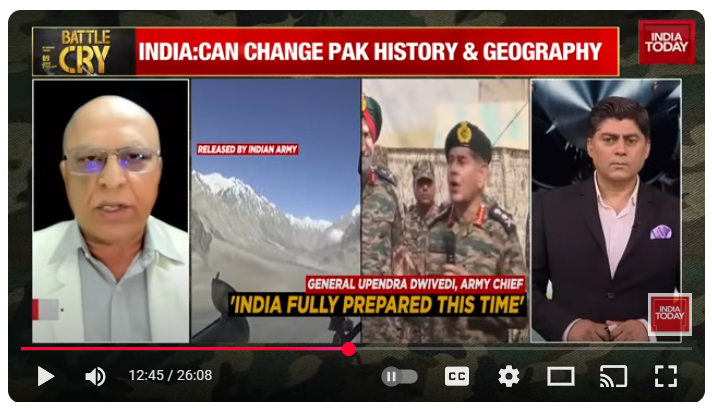
| 25+ seminars/TV Interviews on Op Sindoor |
| From Osirak to Natanz: Operation Rising Lion – Israel’s Begin Doctrine of Denial |
| Operation Sider’s Web – Audacious Drone Attack: Lessons for India |
| Innovation: the new age weapon in modern warfare |
| Operation Spider’s Web: Ukraine’s Audacious Drone Strike |
| Bunker Busters: Hitting far and deep. |
| Unfinished Russian Objectives: Regime Change in Ukraine |
| Innovative use of smart tech: Democratisation of Modern Warfare |
| Innovation: The New Age Weapon in Modern Wars |
| LUCAS KamiKaze Drone |
| The Changing Concept of the Notion of Victory in Wars |
| Distributed Maritime Operations: Applicability in the Indian Context |
| Hybrid War in the Baltics: Critical Infra at Risk |
|
Military
|
| Military diplomacy |
| Military spending: trends and analysis. |
| Collusive Threat and Deterrence: Air and Space Aspects |
| Integrated Capability Development. |
| Joint war game training systems |
| Fighter Pilot: Traits |
| Agni veer and Agnipath / Tour of duty / making the best of the scheme |
| Andaman and Nicobar Command and Islands |
| Defining Military Diplomacy |
| Women in the Indian Defence Services |
| Joint Operations and Jointmanship |
| Trends in International Arms Transfer |
| Global Military Spending – Trends and Analysis (2023) |
| Women in defence forces: prospects and challenges. |
| Intricacies of multinational military exercises. |
| Apache helicopter delivery delay: The broader issue of trust quotient. |
| Learning From Israeli Defence Forces |
| Projecting power from aircraft carriers: enhancing maritime capability |
| Wings of the Army: Role of the Air Arm in Ground Operations. |
| Honouring the Veterans: India Remembers Its Braves |
| Wings of the Army: The role of the air arm in ground operations |
| India’s tryst with Combat drones |
| Exercise Prachand Prahaar: India’s Integrated Multi-Domain High-Altitude Tri-Service War Drill |
| Balancing Cost And Combat Capability In Fighter Jet Procurement |
| India’s Tryst with Combat Drones |
| Strategic Leadership and Innovative Adaptability in the Armed Forces: Building a Future Ready Military. |
|
Higher Defence Organisation
|
| Department of military affairs |
| Theaterisation |
| Air Defence Command |
| Civil-military fusion |
| Theatre Command in the Indian Context |
| Reorganisation of HDO in India |
|
Flight Safety
|
| Golden rules of safety |
| Importance of SOPs |
| A proactive approach to safety |
| Damage due to Bird Hits and Foreign Objects |
| Safety and aviation |
| Good safety Culture |
| Tool management for safe maintenance |
| Aircraft Drift – Causes and Concerns |
| Safety aspects of short landings. |
| Inculcating a safety culture |
| Air Ambulance: Potential, challenges and prospects |
| Harnessing Technology for Innovative Flight Safety in Military Aviation. |
| Unintended Targets: Accidental Aircraft Shootdowns |
| Deadly Fortnight – Nine Air Crashes – Several Lessons |
| From Shock To Action: Managing Startle Effect In Military Flying |
| Crash, Click, Conclude Syndrome: Post–Tragedy Chaos |
|
Defence Industry
|
| Indigenous defence industry |
| HAL and DPSUs |
| Role of the private sector in defence production |
| Arms Transfer to Afghanistan |
| Defence Budget Issues |
| Atmanirbharta |
| Exportability of LCA and Brahmos combined package |
| IAF and indigenisation |
| Indian Initiatives to promote self-reliance |
| Tejas export options |
| Russia–India Defence Contracts: Past, Present, and Future. |
| EU’s defence spending |
| Aero India 2021 & 2023 |
| Arms Trade: Trends and Concerns |
| Arms trade: flow vis-à-vis hot spots |
| Expanding the footprint of Boeing in India |
| Decoding the US presence at Aero India 2023 |
| Global Military Spending: Trends and Catalysts |
| Tejas: A delayed dream can become a nightmare |
| Conflicts, Military Spending, and Arms Transfers 2024. |
| Apache Helicopters’ delivery is delayed. |
| Aviation MRO Trends and Challenges |
| The Evolving Aviation MRO Industry And India’s Opportunity |
| Previewing Aero India 2025 |
| India’s Journey in Fighter Aircraft Design and Manufacture: Challenges and Successes |
| Aero India 2025: Showcasing the Future of Aerospace Defence |
| Aero India 2025 And Key Solutions For IAF’s Challenges |
| Aero India 2025: catalysing Atmanirbharta through Global Collaboration. |
| Involvement Of The Private Sector In Indian Fighter Jet Production |
| The Geo-politics of Fighter Exports and Joint Ventures |
| IAF’s Wings of Indigenisation: The IAF-HAL Saga |
| Navigating the Industrial Revolution: The Role of India’s Industrial Policy |
| Technology Harvesting by Indian Aerospace Industry: A Strategic Imperative. |
| AMCA Programme execution Model: A New Era for India’s Defence Production |
| Balancing Cost and Combat Capability in Fighter Jet Procurement |
| SIPRI Yearbook 2025: Summary and Highlights |
| Battlefield Beyond Boundaries: Military Conflicts and Industry |
| Evolution of India’s Defence Preparedness and the Path to True Self-Reliance. |
|
India
|
| Understanding Manipur Dynamics |
| Indian foreign policy and defence diplomacy |
| Meghalaya Dynamics |
| Transparency, Accountability and Threats to Independent Institutions of Democracy |
| Caste-based reservations. |
| Examining the examination system in India. |
| Independence Day special – Applicability of the ancient Indian philosophy of ‘Vasudhaiva Kutumbakam’ (the world is one family) in modern diplomacy and global engagements. |
| India at the Crossroads of Trump 2.0 |
| Synergising India’s Military and Diplomatic Goals. |
| Important battles of the Indian subcontinent: Significance and lessons |
| Honouring the Veterans: India Remembers Its Bravest. |
| Youth Power and National Vision 2047 |
| Rare Earth as Rare Weapon: India’s Opportunity and Challenge |
|
Book/Peer Reviews and Endorsements
|
| 1946: Last War of Independence: Royal Indian Navy Mutiny by Pramod Kapur |
| 1962 Border War: Territorial Dispute and Beyond by Ismail Vergasseri |
| The Politics of South China Sea Disputes By Nehginpao Kipgen |
| 1965 A Western Sunrise: India’s War With Pakistan By Shiv Kunal Verma |
| The Game Behind Saffron Terror by Kanwar Khatana |
| Peer Review – “The Rising Aerospace Power: Implications for India” |
| Peer Review – “MRO as a strategic asset” |
| Peer Review: Indigenisation of Indian AD |
| Book Endorsement – “Greatest Air Aces of All Time” by Air Marshal Anil Chopra |
| Book Endorsement – The 1971 Indo-Pak Air War: Reflections and Projections |
| Peer review of a paper on the Global challenges of soft power. |
| Peer review: Making a Case for India’s Air Defence Indigenisation: Challenges & Prospects |
| Peer Review: Mitigating the Irregular and Hybrid Warfare Threats to India |
| Book Review: The Balochistan Conundrum by Tilak Devasher |
| Book Review: The Four Ages of American Foreign Policy By Michael Mandelbaum |
| Peer Review: Need for a Strategic Bomber in India’s Security Dynamics |
| Book Review: The Personal is Political by Aruna Roy |
| Book Review: Walking Barefoot the Tilonia Way |
| Book Review: 7 seconds to die by John C Antal |
| Peer Review of paper on “AI and Future of Aircraft Maintenance.” |
| Peer Review of paper on “Winning Future Battles With Firepower” |
| Peer Review of paper on “Dollarisation of the international Financial system.” |
| Book Review: Tales of the Elite by Vivek Anathakrishnan. |
| Peer Review of paper on “The India-Middle East-EU Economic Corridor (IMEC): Pipe Dream or a Pathway to Shared Progress”. |
| Peer Review of Paper on “AI-Driven Multimedia Forensics: A Global Imperative for Journalism and Justice in India and the United States” |
| Peer Review of paper on “Reimagining Tech-Powered, Military Transformation in the Intelligence Age” |
| Peer Review of Paper on DEW |
| Peer Review of Paper on Border Wars due to Cartographic Errors. |
|
Stories
|
| My Tryst with HT-2 aircraft: The day god flew with me |
| The day I flew my dad’s car. |
| Malse Lake: Tale of two coursemates |
| Flying Tales |
| Tribute to Air Mshl PK Dey “Remembering Dadu: Self-Made Legend |
| SHIQURDU: 50 + posts of simplified Deep-meaning thoughts in Hurdu (a mix of Hindi and Urdu) |
| Remembering Dadu: Self-Made Legend |
|
Podcasts
|
| Multi-national Exercise Tarang Shakti with DPR, MOD on “Raksha Sutra” |
| Independence Day Special with Pankaj Sharma on “Let’s Talk”. |
| Podcast with Santosh Kumar on “Between US” |
| Life in IAF and broader issues with Gaurav on “Speak with Gaurav.” |
| Podcast with Vels University students. |
| Podcast with Gana on “Blue Skies Podcast” |
| Podcast with Ashtosh Garg on “The Brand Called You – TBCY” |
| Podcast with VIF-Vivekanand International Foundation on “Technology and Air Warfare.” |
| Podcast with VIF-Vivekanand International Foundation on “Use of Airpower in NWNP scenario” |
| Life of a Fighter Pilot on Empowerment talks |
| Podcast with Gaurav Arya of Chanakya forum on IAF capability building (2,45,000+ Views). |
| Podcast with Let’s Talk It on Good Working Culture |
| Podcast with Let’s Talk It on Growth Mindset |
| Webinar on Air power by The Indian Netizens |
| Podcast at PP Savan University |
| Podcast on Op Sindoor – Post CAS talk |
| Podcast at Best Practices Meet 2025 organised by DSCI: Drone and Info Warfare |
| Podcast with Dinesh K Vohra of News Times on IAF Challenges and Preparedness |
| Podcast with Mehnaz Nadiadwala on Defence, Security and leadership aspects |