692: UNFINISHED RUSSIAN OBJECTIVE: REGIME CHANGE IN UKRAINE


My article was published on the Indus International Research Foundation website on June 30, 2025.


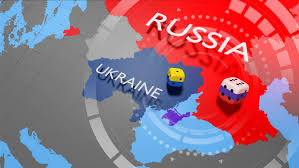
Since Russia launched its special military operation on February 24, 2022, its primary strategic objective was widely understood to be the overthrow of Ukraine’s government and the installation of a pro-Russian regime. This goal has proven elusive, rooted in Moscow’s desire to reassert influence over its neighbour and prevent Ukraine’s integration with the West. Over three years into the conflict, Russia has not been able to achieve regime change. There are possibly multifaceted reasons behind it, encompassing military, political, economic, societal, and informational dimensions.


Analytical Perspective

Strategic Miscalculations: Flawed Assumptions. At the heart of Russia’s failure lies a cascade of flawed assumptions.  Before launching the invasion on 24 February 2022, Moscow wrongly believed that the Ukrainian society was deeply fractured along ethnic and linguistic lines. Secondly, the Zelensky government lacked legitimacy and would collapse under pressure. Lastly, NATO and the West would not intervene decisively. These assumptions led Russia to pursue an audacious plan aimed at rapidly occupying Kyiv, decapitating Ukraine’s leadership, and presenting the world with a fait accompli. However, Russian intelligence had gravely underestimated both the unity and the resilience of Ukrainian society. When the war began, the anticipated internal collapse did not materialise; instead, Ukraine mobilised as a unified nation.

Ukrainian Resilience and National Unity. One of the most critical factors thwarting Russia’s ambitions has been the extraordinary resilience of the Ukrainian people and their government. From the outset, Ukraine’s people displayed unwavering resolve. Ukrainian society mobilised rapidly, with civilians joining territorial defence units, volunteering in humanitarian efforts, and supporting the military. The war has forged a stronger national identity, with polls consistently showing overwhelming support for Zelenskyy’s government and rejection of Russian influence. This societal cohesion has made installing a pro-Russia regime more difficult, as any pro-Russian government would face relentless resistance and lack legitimacy.

Russian Military Miscalculation: Collapse of the Hostomel-Kyiv Blitz. Russia’s regime-change ambitions were staked on the success of a swift airborne operation. Russian forces did seize Hostomel Airport, located just outside Kyiv, to establish an air bridge for further troops. However, Ukrainians were able to repel the assault, destroying incoming aircraft and delaying Russian reinforcements. With the Hostomel plan thwarted, Russian ground forces were left advancing slowly on narrow roads with overstretched supply lines and inadequate logistics. Russians had to change their strategy and the plan at an early stage.

Western Support. The unprecedented scale of Western support for Ukraine has been a pivotal factor. NATO countries, led by the United States, the United Kingdom, and the European Union, have provided Ukraine with billions of dollars in military, financial, and humanitarian aid. Advanced weaponry, including HIMARS rocket systems, ATACMS missiles, Patriot air defences, and Leopard tanks, has enabled Ukraine to counter Russian offensives and launch successful counterattacks. Beyond material support, Western intelligence-sharing and training programs have enhanced Ukraine’s operational effectiveness. On the other hand, sanctions on Russia, targeting its energy exports, financial systems, and military-industrial complex, have dented Moscow’s ability to sustain the tempo of the war.

Geopolitical and Terrain Challenges. Ukraine’s geography has posed significant challenges for Russia’s regime change ambitions. Over 600,000 square kilometers of Ukraine is Europe’s second-largest country, with diverse terrain ranging from open steppes to dense urban centers. Controlling such a vast area requires substantial manpower and resources. Urban warfare, particularly in cities, favours Ukrainian defenders, who benefit from local knowledge and fortified positions. Russia’s territorial gains have been concentrated in eastern and southern regions, such as parts of Donbas, and Crimea, but these areas represent only a fraction of Ukraine. Stretching its forces across multiple fronts has diluted Russia’s ability to consolidate control or advance toward Kyiv, the political heart of Ukraine.

Russian Internal Constraints. Russia’s domestic challenges have further undermined its war effort. The invasion has strained Russia’s economy, with sanctions disrupting trade, freezing foreign reserves, and limiting access to critical technologies. While high energy prices initially cushioned the blow, long-term economic decline and inflation have eroded public support for the war to an large extent. Political dissent, though suppressed, persists among some of Russia’s factions. These internal pressures have constrained Russia’s ability to escalate the war or sustain a long-term occupation of Ukraine.

Alienating the Ukrainian Population. Russia’s offensive and punitive tactics have obliterated any chance of winning Ukrainian support for a pro-Russian regime. Deliberate attacks on infrastructure have fuelled hatred toward Russia and unified Ukrainians against Moscow’s agenda. The Kremlin’s narrative about “denazifaction” of Ukraine has not resonated well with Ukrainians.  The absence of a viable pro-Russian political base in Ukraine has left Russia with no credible allies to prop up a pro-Russian government.

Dominance in the Information War. Ukraine has done well in the information domain, maintaining global sympathy and domestic morale. Russia, by contrast, has maintained a low-key approach to control the narrative. Its state-controlled media dominates domestically but has little sway abroad. This information asymmetry has reinforced Ukraine’s legitimacy while undermining Russia’s ability to justify regime change.

The Evolution of the Conflict. As the war has evolved into a protracted struggle, Russia’s initial goal of regime change has become increasingly unattainable, and Moscow has pivoted to territorial objectives. The limited military operation has evolved into a long-drawn-out slug match, with Ukraine periodically launching counter-offensives and Russia resorting to punitive action with long-range weapons. The prospect of a frozen conflict or negotiated settlement looms, but both sides are sticking to their terms.


Conclusion

Russia’s inability to achieve regime change in Ukraine results from a confluence of factors: Ukrainian unity and resolve, Russian strategic miscalculations, continued Western support, geographical challenges, and Moscow’s internal constraints. These elements have transformed the conflict into a grinding stalemate, with Ukraine’s government not only surviving but emerging as a symbol of resistance. As the war continues, Russia’s prospects for overturning Ukraine’s leadership remain dim.


Please Add Value to the write-up with your views on the subject.


1879
Default rating

Please give a thumbs up if you  like The Post?


For regular updates, please register your email here:-

Subscribe


References and credits

To all the online sites and channels.

Pics Courtesy: Internet

Disclaimer:

Information and data included in the blog are for educational & non-commercial purposes only and have been carefully adapted, excerpted, or edited from reliable and accurate sources. All copyrighted material belongs to respective owners and is provided only for wider dissemination.


Link to the article on the website:-

Unfinished Russian Objective: Regime Change In Ukraine

References:-

  1. Charap, S., & Colton, T. (2022). Everyone loses: The Ukraine crisis and the ruinous contest for post-Soviet Eurasia. Routledge.
  2. D’Anieri, P. (2023). Ukraine and Russia: From civilised divorce to uncivil war (2nd ed.). Cambridge University Press.
  3. Galeotti, M. (2023). Russia’s war in Ukraine: The end of the beginning? Foreign Affairs, 102(4), 48–59.
  4. Kofman, M., & Lee, R. (2022). Not built for purpose: The Russian military’s ill-fated force design. War on the Rocks.
  5. Kuzio, T. (2024). Russia’s war against Ukraine: The whole story. Routledge.
  6. Plokhy, S. (2023). The Russo-Ukrainian war: The return of history. W. W. Norton & Company.
  7. Sasse, G., & Lackner, A. (2023). War and identity: The case of Ukraine. Journal of Slavic Military Studies, 36(1), 1–19.
  8. The Economist. (2024, December 12). How sanctions are reshaping Russia’s economy.
  9. SIPRI Yearbook 2025. Armaments, Disarmament and International Security. Stockholm International Peace Research Institute, June 2025.
  10. Institute for the Study of War (ISW). Russian Offensive Campaign Assessments, 2022–2025.
  11. RAND Corporation. “The Russian Way of War: Doctrine, Logistics, and Constraints.” RAND Reports, 2023–2024.
  12. BBC News. “Ukraine War: The Battle for Hostomel Airport.” BBC Special Report, March 2022.
  13. European Union External Action Service (EEAS). EU Support to Ukraine: Ukraine Facility and Sanctions Against Russia, 2024–2025.
  14. The Economist. “Why Russia’s Regime Change Strategy in Ukraine Has Failed,” April 2025.
  15. Royal United Services Institute (RUSI). Lessons from the Ukraine War: Air Superiority and ISR, 2023.
  16. New York Times. “Inside Ukraine’s Counteroffensives,” October 2022–June 2025 Special Reports.
  17. Jane’s Defence Weekly. Russia-Ukraine Conflict Technical Assessments, 2022–2025.
670: COLD WAR 2.0: MILITARY ASPECTS AND IMPACT ON INDIAN SECURITY


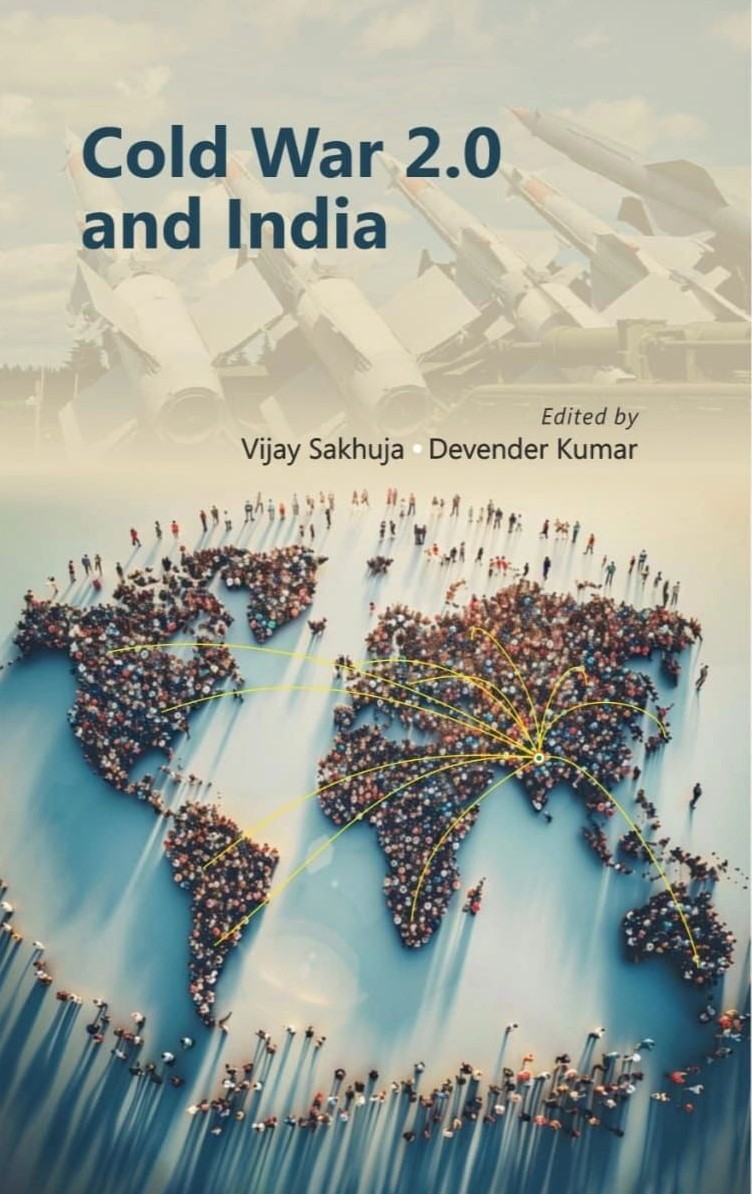
My contribution to the book 

“Cold War 2.0 and India”


The world is witnessing the emergence of a new Cold War, often referred to as Cold War 2.0, primarily driven by intensifying geopolitical, economic, and technological rivalries between the United States and China, with Russia playing a significant role. Unlike the ideological battle of the original Cold War, this modern conflict is fuelled by strategic competition for global influence, military dominance, and economic control. Key drivers of Cold War 2.0 include China’s rise as a military and technological superpower, the US-led effort to counterbalance Beijing’s influence, and Russia’s challenge to Western dominance. Arms build-ups, strategic alliances, hybrid warfare, and advancements in emerging technologies like artificial intelligence, space warfare, and hypersonic missiles mainly characterise Cold War 2.0. For India, this renewed great-power rivalry presents both opportunities and challenges. Understanding the military dimensions of Cold War 2.0 is crucial and necessary for analysing its impact on global stability, the evolving nature of warfare, and the strategic recalibrations required for nations like India to safeguard their security interests.


Drivers of Cold War 2.0

The re-emergence of great power competition in the 21st century has led to a period characterised by heightened strategic rivalry between the United States and China, with Russia playing a significant but secondary role. Unlike the original Cold War, which was primarily an ideological struggle between capitalism and communism, this new iteration is driven by geopolitical, economic, technological, and military factors.  These factors have reshaped the global order and fuelled an environment of sustained strategic hostility, making Cold War 2.0 a defining feature of contemporary international relations.

One of the most significant drivers of Cold War 2.0 is the rise of China as a global superpower, challenging the longstanding dominance of the United States. Over the past four decades, China has undergone an economic and military transformation that has propelled it to the forefront of global politics. The Belt and Road Initiative (BRI), China’s massive infrastructure and investment project spanning Asia, Africa, and Europe, has been a key instrument in expanding Beijing’s influence. While China claims that the BRI is purely an economic initiative, Western policymakers see it as a geopolitical tool to increase China’s leverage over developing nations. Furthermore, China’s military expansion, most notably in the South China Sea, has alarmed the United States and its regional allies. The Chinese Communist Party (CCP) has also aggressively pursued technological dominance, particularly in fields such as artificial intelligence, 5G, and quantum computing. The rapid ascendance of China as a comprehensive power has disrupted the global balance, triggering countermeasures from the United States, including trade restrictions, sanctions on Chinese technology firms, and strengthened military alliances in the Indo-Pacific. This great power rivalry, rooted in China’s challenge to U.S. hegemony, is a fundamental driver of Cold War 2.0.

The second major driver of this new Cold War is the resurgence of Russia as a revisionist state seeking to undermine Western influence and reassert its geopolitical ambitions. Although Russia lacks comparative economic power, it remains a formidable military force with vast energy resources and a willingness to engage in aggressive foreign policies.  The war in Ukraine has strengthened the perception of a new Cold War, with Russia aligning itself more closely with China, Iran, and North Korea to counterbalance Western power. Russia’s actions have not only escalated tensions with the United States and Europe but have also contributed to a broader global realignment, with countries being forced to take sides in this emerging bipolar struggle.

The erosion of American unipolarity and the fragmentation of the liberal international order have also played a crucial role in driving Cold War 2.0. Following the collapse of the Soviet Union in 1991, the United States emerged as the world’s sole superpower, ushering in a period of unchallenged American dominance. However, U.S. global influence has waned in recent years due to domestic political polarisation, costly military interventions, and economic challenges. The wars in Iraq and Afghanistan drained American resources. They damaged its credibility, while the rise of populist movements and political divisions have weakened Washington’s ability to project unified global leadership. The decline of unipolarity has created a more competitive and unstable international system, where power is increasingly distributed among multiple actors, setting the stage for heightened strategic rivalry.

Economic decoupling and technological competition between the United States and China constitute another major driver of Cold War 2.0. The global economy, once characterised by deep interdependence, is now experiencing a shift toward fragmentation as Washington and Beijing seek to reduce their reliance on each other. The U.S. has imposed sweeping restrictions on Chinese technology firms, particularly in semiconductor manufacturing, artificial intelligence, and telecommunications, citing national security concerns. In response, China has accelerated its efforts to achieve self-sufficiency in critical industries, investing heavily in indigenous innovation and supply chain resilience. This technological decoupling is not just an economic issue—it has profound military and strategic implications, as control over emerging technologies will determine the balance of power in future conflicts. The race for supremacy in AI, quantum computing, cyber warfare, and space exploration is now a central battlefield in Cold War 2.0, with both sides striving to outmanoeuvre each other in the next frontier of global dominance.

Finally, the ideological and political divide between democratic and authoritarian systems has reinforced the divisions of Cold War 2.0. The United States and its allies promote liberal democracy, human rights, and a rules-based international order. Meanwhile, China and Russia advocate for state sovereignty, authoritarian stability, and non-interference in domestic affairs. The contrast between these governance models has led to intensified ideological competition, with both sides seeking to expand their influence globally. The U.S. has framed its rivalry with China and Russia as a struggle between democracy and autocracy, rallying allies to counter Beijing’s and Moscow’s influence in international institutions. Meanwhile, China’s “Global Security Initiative” aim to portray the West as a declining power, promoting an alternative world order.


Military Aspects of Cold War 2.0

The evolving geopolitical landscape of the 21st century has increasingly drawn comparisons to the original Cold War. The military dimension of Cold War 2.0 is particularly critical, as it shapes global security dynamics through arms races, power projection, strategic alliances, and hybrid warfare. The military aspect of this renewed competition manifests in several key areas.

One of the most visible military aspects of Cold War 2.0 is the modernisation and expansion of nuclear arsenals. While the U.S. and Russia still maintain the largest stockpiles of nuclear weapons, China’s rapid nuclear build-up has become a central concern for Western policymakers. Unlike during the first Cold War, when the U.S. and Soviet Union were the primary nuclear superpowers, the emergence of China as a third major nuclear player significantly altered the strategic calculus. Beijing has also been expanding its missile silos, developing hypersonic delivery systems, and pursuing advanced nuclear-powered submarines, signalling its intent to establish a more robust second-strike capability. At the same time, Russia’s suspension of the New START treaty, coupled with its threats of tactical nuclear weapon use in Ukraine, has reignited fears of a new nuclear arms race. The U.S., in response, is modernising its nuclear triad, investing heavily in next-generation intercontinental ballistic missiles (ICBMs), stealth bombers, and submarine-launched ballistic missiles. These developments indicate that nuclear deterrence strategies are again at the forefront of great power competition.

Beyond nuclear weapons, conventional military capabilities have also been undergoing significant transformation. The trend is towards increased investment in stealth aircraft, long-range precision strike systems, autonomous combat platforms, and integrated air and missile defence networks. For its part, China has undertaken one of the most extensive military modernisation programs in history. The People’s Liberation Army (PLA) has rapidly expanded its naval and air forces. Despite economic constraints, Russia has focused on asymmetric warfare strategies, leveraging advanced air defence systems, hypersonic missiles, and electronic warfare capabilities.

A defining feature of Cold War 2.0 is the race for military superiority in emerging technologies such as artificial intelligence (AI), quantum computing, and autonomous warfare. Unlike the first Cold War, where military advancements were primarily centred on nuclear and conventional weaponry, digital and cyber capabilities are expected to shape modern conflicts. AI-driven autonomous drones, robotic combat units, and cyber warfare tools have become central to military planning. Quantum computing, if fully realised, could render current encryption methods obsolete, drastically altering cyber defence strategies. The cyber domain has emerged as a battlefield, with state-sponsored cyber attacks targeting critical infrastructure, defence networks, and economic systems.  As nations develop offensive and defensive cyber capabilities, the risk of cyber escalation and strategic instability increases significantly.

Hybrid warfare, a strategy that blends conventional military tactics with cyber, economic, and information warfare, has also become a defining characteristic of Cold War 2.0. China employs hybrid tactics involving disinformation campaigns, cyber-attacks, and proxy militias, leveraging economic coercion, political influence operations, and grey-zone warfare. The U.S. and its allies have responded with countermeasures, including economic sanctions, cyber counteroffensives, and the strengthening of information warfare capabilities. Unlike the Cold War of the 20th century, where direct military confrontations were largely avoided, the modern iteration features a greater degree of low intensity. These asymmetric conflicts blur the line between war and peace.


Impact of Cold War 2.0 on Indian Security

The emergence of a second Cold War has profound implications for India’s security. One of the most immediate effects of Cold War 2.0 on India is the increased militarisation of the Indo-Pacific region. As the United States seeks to contain China’s growing military and economic influence, it has strengthened its ties with allies and partners. This has enhanced defence cooperation, intelligence sharing, and joint military exercises. It has drawn India into the broader US-China confrontation, making it a target for Chinese actions, such as aggressive border moves, cyber warfare, and economic coercion. The 2020 Galwan Valley clash between Indian and Chinese forces was a stark reminder of how geopolitical tensions manifest as direct security threats for India.

Another major concern is the growing China-Pakistan nexus, which has intensified in response to Cold War 2.0. China has significantly increased its defence, economic, and nuclear cooperation with Pakistan, which directly impacts India’s security. The China-Pakistan Economic Corridor (CPEC), a flagship project of Beijing’s Belt and Road Initiative (BRI), runs through Pakistan-occupied Kashmir (PoK), challenging India’s territorial claims. China’s supply of advanced military hardware, including fighter jets, submarines, and missile systems, has strengthened Pakistan’s military capabilities, altering South Asia’s conventional and nuclear balance. There are also concerns that China could use Pakistan as a proxy to destabilise India.

India’s maritime security has also been affected as Cold War 2.0 extends into the Indian Ocean Region (IOR). China has expanded its naval footprint through bases in Djibouti and potential dual-use facilities in Sri Lanka, Pakistan (Gwadar), and Myanmar. The People’s Liberation Army Navy (PLAN) has increased its submarine patrols and surveillance activities near India’s maritime boundaries, challenging India’s dominance in its strategic backyard.

Technological competition in Cold War 2.0 also affects India’s security, particularly in artificial intelligence (AI), cyber security, and space warfare. The US and China are engaged in a technological arms race, and India must navigate this landscape carefully. Increased focus on Indigenous defence production under “Atmanirbhar Bharat” (self-reliant India) is a direct consequence of this competition.

Diplomatically, Cold War 2.0 presents India with both challenges and opportunities. While the US-India partnership has grown stronger, India remains cautious about being seen as a mere US ally. India has historically valued its strategic autonomy, as seen in its continued engagement with Russia despite Western pressure. India relies on Russian military hardware, including S-400 missile systems, and has resisted aligning too closely with US-led security pacts. However, this balancing act is becoming increasingly difficult as Cold War 2.0 escalates, forcing India to make difficult choices.

Economically, Cold War 2.0 presents risks for India’s trade and supply chain security. The US-China decoupling has disrupted global trade, affecting India’s access to key technologies, raw materials, and markets. The push for friend-shoring and near-shoring has led companies to diversify supply chains, offering India an opportunity to attract investments as an alternative manufacturing hub. However, China remains one of India’s largest trading partners, and an outright economic confrontation would be costly. India must, therefore, navigate a complex economic environment, securing its interests without alienating key partners.


Conclusion

Cold War 2.0 has fundamentally reshaped the global security landscape, with military competition emerging as a key aspect of great-power rivalry. Driven by China’s rise, Russia’s resurgence, and the United States’ efforts to maintain its strategic dominance, this new geopolitical contest is marked by military build-ups, shifting alliances, and technological arms races. The military developments have made the world more unstable, with regional conflicts and proxy wars serving as potential flashpoints for broader confrontations. For India, Cold War 2.0 presents both security threats and strategic opportunities. The growing China-Pakistan nexus and Beijing’s assertiveness along the Line of Actual Control (LAC) pose direct military challenges to India. The militarisation of the Indian Ocean, the threat of cyber warfare, and disruptions to global supply chains further complicate India’s security environment. To navigate this evolving conflict, India must bolster its military capabilities, strengthen regional partnerships, and maintain its strategic autonomy to avoid outright confrontation. As Cold War 2.0 continues to unfold, the global military balance will be shaped by how nations adapt to this new era of great-power competition, making it essential for India to proactively safeguard its national security while leveraging opportunities to enhance its geopolitical standing.


Please Add Value to the write-up with your views on the subject.


1879
Default rating

Please give a thumbs up if you  like The Post?


For regular updates, please register your email here:-

Subscribe


References and credits

To all the online sites and channels.

Pics Courtesy: Internet

Disclaimer:

Information and data included in the blog are for educational & non-commercial purposes only and have been carefully adapted, excerpted, or edited from reliable and accurate sources. All copyrighted material belongs to respective owners and is provided only for wider dissemination.


References:-

Khosla Anil, “Cold War Redux: Military Aspects of Cold War 2.0”, 16 Dec 24, https://55nda.com/blogs/anil-khosla/2024/12/16/558-cold-war-redux-military-aspects-of-cold-war-2-0/

Allison, Graham. Destined for War: Can America and China Escape Thucydides’s Trap? Houghton Mifflin Harcourt, 2017.

Kaplan, Robert D. The Return of Marco Polo’s World: War, Strategy, and American Interests in the Twenty-First Century. Random House, 2018.

Mearsheimer, John J. The Tragedy of Great Power Politics. Updated ed., W.W. Norton & Co., 2014.

Gady, Franz-Stefan. “The Future of High-End Warfare: What the Next US-China Conflict Could Look Like.” The Diplomat, 2023.

Doshi, Rush. The Long Game: China’s Grand Strategy to Displace American Order. Oxford University Press, 2021.

Mazarr, Michael J., et al. Understanding the Emerging Era of International Competition: Theoretical and Historical Perspectives. RAND Corporation, 2018.

Nye, J. S. (2012). The future of power in the 21st century. Foreign Affairs, 91(2), 90–104.

Menon, Shivshankar. India and Asian Geopolitics: The Past, Present. Brookings Institution Press, 2021.

Pant, Harsh V. The US Pivot and Indian Foreign Policy: Asia’s Evolving Balance of Power. Palgrave Macmillan, 2015.

Shankar, Arvind. “India’s Role in a Fragmented Global Order.” The Print, 2023.

Mohan, C. Raja. Samudra Manthan: Sino-Indian Rivalry in the Indo-Pacific. Carnegie Endowment for International Peace, 2012.

Singh, Abhijit Iyer-Mitra. “The Impact of US-China Rivalry on India’s Defence Strategy.” Observer Research Foundation, 2023.

Rajagopalan, Rajeswari Pillai. Space and Nuclear Deterrence in Indo-Pacific: A New Strategic Triangle. Observer Research Foundation, 2022.

668: OP SINDOOR – DIPLOMATIC EARTHQUAKE: SHIMLA AGREEMENT TEETERS ON THE EDGE


My article was published on The EurasianTimes website on 04 May 25.


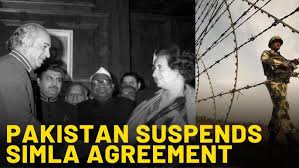
The Shimla Agreement, signed on July 2, 1972, between India and Pakistan, is a cornerstone of South Asian diplomacy. Forged in the aftermath of the 1971 Indo-Pakistani War, which led to the creation of Bangladesh, the agreement aimed to establish a framework for peaceful bilateral relations and normalise ties between the neighbours. Signed by Indian Prime Minister Indira Gandhi and Pakistani President Zulfikar Ali Bhutto in Shimla, Himachal Pradesh, the treaty sought to end hostilities, resolve disputes peacefully, and lay the groundwork for cooperation.

On April 24, 2025, Pakistan’s National Security Committee (NSC), its top civil-military decision-making body, announced the suspension of the 1972 Shimla Agreement, alongside other bilateral agreements with India, in retaliation for India’s suspension of the Indus Waters Treaty (IWT) on April 23, 2025. This escalation was triggered by the Pahalgam terror attack in Jammu and Kashmir on April 22, 2025, which killed 26 civilians, including two international tourists. The suspension of the Shimla Agreement has thrust it back into the spotlight.

The suspension reignited debates about the Shimla Agreement’s historical significance. In 1972, Indira Gandhi faced criticism from opposition parties, notably the Jan Sangh (predecessor to the BJP), for not converting the ceasefire line into an international border. Atal Bihari Vajpayee, then a prominent opposition leader, protested in Shimla against the agreement, arguing it conceded too much to Pakistan.


The Treaty

The Shimla Agreement emerged from the geopolitical upheaval of the 1971 Indo-Pakistani War. The war was triggered by Pakistan’s brutal suppression of the Bangladesh Liberation Movement in East Pakistan, leading to a humanitarian crisis and the displacement of millions of refugees into India. India’s military intervention, supporting the Mukti Bahini (freedom fighters), resulted in a decisive victory, with the surrender of over 93,000 Pakistani soldiers and the creation of Bangladesh.

The war left Pakistan diplomatically and militarily weakened, necessitating negotiations to address post-war issues such as prisoner repatriation, territorial disputes, and the future of bilateral relations. After intense negotiations, the agreement was signed at Barnes Court (now Raj Bhavan) in Shimla. A key sticking point was the status of Kashmir, with India insisting on bilateralism and Pakistan seeking flexibility to internationalise the issue. Personal diplomacy between Gandhi and Bhutto, including late-night discussions, facilitated a compromise that emphasised peaceful coexistence while sidestepping a definitive resolution on Kashmir.


Provisions of the Shimla Agreement

The concise Shimla Agreement contains six key provisions to foster peace and cooperation. These provisions are rooted in sovereignty, bilateralism, and non-interference.

    • Bilateral Resolution of Disputes. Both nations committed to resolving all disputes, including the Kashmir issue, through peaceful bilateral negotiations, explicitly rejecting third-party mediation, such as from the United Nations. This clause has been a cornerstone of India’s foreign policy, emphasising that Kashmir is a bilateral matter.
    • Establishment of the Line of Control (LoC). The December 17, 1971, ceasefire line was formalised as the Line of Control in Jammu and Kashmir. Both sides agreed to respect the LoC without unilateral alterations, irrespective of their differing legal interpretations. This provision aimed to stabilise the volatile Kashmir region by establishing a de facto boundary.
    • Respect for Sovereignty and Territorial Integrity. India and Pakistan pledged to respect each other’s sovereignty, territorial integrity, and political independence and refrain from interference in internal affairs. This clause sought to prevent destabilising actions, such as supporting insurgencies or hostile propaganda.
    • Non-Use of Force. Both countries agreed to refrain from the threat or use of force against each other’s territorial integrity, aligning with the principles of the United Nations Charter. This provision aimed to de-escalate military tensions and promote peaceful coexistence.
    • Normalisation of Relations. The agreement outlined steps to normalise relations, including resuming communications, trade, cultural exchanges, and people-to-people contacts. It also facilitated the repatriation of prisoners of war and civilians detained during the conflict, marking a humanitarian gesture.
    • Recognition of Bangladesh. While not explicitly stated, the agreement paved the way for Pakistan’s eventual diplomatic recognition of Bangladesh as a sovereign nation, resolving a major point of contention post-1971.

Additionally, the agreement included provisions for future meetings between the heads of government to further peace efforts and address unresolved issues. India returned over 13,000 km² of captured Pakistani territory, demonstrating goodwill.


Relevance of the Shimla Agreement

The Shimla Agreement remains a pivotal reference point in India-Pakistan relations, shaping diplomatic and strategic interactions for over five decades. Its relevance can be assessed across several dimensions:-

Bilateralism as a Diplomatic Framework. India’s foreign policy bedrock has been the emphasis on bilateral dispute resolution. India has consistently cited the agreement to counter Pakistan’s attempts to internationalise the Kashmir issue at forums like the United Nations. The agreement’s rejection of third-party mediation aligns with India’s stance that external involvement, particularly from Cold War superpowers or the UN, complicates rather than resolves bilateral issues.

Stabilisation of the Line of Control. The formalisation of the LoC provided a pragmatic mechanism to manage the Kashmir dispute. Despite frequent ceasefire violations, the LoC remains the de facto boundary, guiding peace talks and ceasefire agreements. Its recognition through decades of practice has given it international legitimacy, even after the agreement’s suspension.

Humanitarian and Diplomatic Aspect.  The agreement facilitated the repatriation of prisoners of war and civilians, addressing immediate post-war humanitarian concerns. It also set the stage for Pakistan’s recognition of Bangladesh, reducing a major source of regional hostility. These outcomes underscored the agreement’s role in de-escalating tensions and fostering dialogue, highlighting its humanitarian and diplomatic achievements.

Challenges to Implementation. Despite its noble intentions, the agreement’s vision of normalised relations has been elusive. Persistent mistrust, cross-border terrorism, and differing interpretations of the Kashmir issue have hindered progress. Pakistan’s attempts to internationalise Kashmir and incidents like the 1999 Kargil War and the 1984 Siachen conflict violated the agreement’s spirit, underscoring its fragility.

 Contemporary Context. The agreement’s relevance has been tested by evolving geopolitical dynamics, including the nuclearisation of both nations’ post-1998 and India’s abrogation of Article 370 in 2019, which revoked Jammu and Kashmir’s special status. Pakistan’s suspension of the agreement in 2025 further questions its efficacy, yet India upholds bilateralism as a guiding principle.


Repercussions of the Suspension

On April 24, 2025, Pakistan announced the suspension of the Shimla Agreement. This move, coupled with the closure of the Wagah border, trade suspension, and airspace restrictions, marks a significant escalation in bilateral tensions. The suspension’s repercussions are multifaceted.

Symbolic and Diplomatic Impact. Pakistan’s suspension is mainly symbolic, as the agreement’s practical relevance has diminished due to repeated violations. The bilateral dialogue mechanism envisioned under the deal has been dormant, with high-level talks suspended after major incidents like the 2019 Pulwama attack. The suspension formalises Pakistan’s shift toward internationalising the Kashmir issue, potentially seeking involvement from the UN, China, or the Organisation of Islamic Cooperation (OIC).

Strategic Implications for the LoC. The suspension raises concerns about the LoC’s status. Pakistan’s non-recognition of the LoC as a de facto border could lead to increased ceasefire violations or attempts to alter the status quo, as seen in past conflicts like Kargil. However, the LoC’s international recognition and India’s military preparedness mitigate immediate tactical consequences.

Regional Stability. The suspension undermines regional stability, particularly in the context of nuclear-armed neighbours. It could escalate diplomatic and military brinkmanship, derailing prospects for dialogue. The closure of cross-border routes and trade further isolates Pakistan economically. At the same time, India’s global diplomatic offensive could weaken Pakistan’s international standing.

Legal and International Perspectives. In international law, the suspension’s impact is limited. The Vienna Convention on the Law of Treaties (VCLT) sets a high bar for treaty termination due to “fundamental changes in circumstances,” and the Shimla Agreement’s “best endeavour clauses” are not strictly binding. The LoC’s status as a de facto border is unlikely to be challenged internationally, and India’s position on bilateralism remains robust. Pakistan’s move may invite criticism for violating international commitments, strengthening India’s narrative of Pakistan’s unreliability.

India’s Strategic Advantage. The suspension paradoxically benefits India by removing diplomatic constraints. India can pursue a harder line against cross-border terrorism, revisit claims over Pakistan-Occupied Kashmir (PoK), and intensify diplomatic efforts to isolate Pakistan. The absence of the agreement may also prompt India to reassess other bilateral treaties, such as visa regimes and trade agreements, aligning them with national security interests.

Challenges and Future Prospects. The Shimla Agreement’s suspension highlights its unfulfilled potential. Deep-seated mistrust, domestic political pressures, and external influences, such as Pakistan’s alignment with China, have consistently undermined its objectives. The lack of a dispute resolution mechanism within the agreement limited its enforceability, and differing interpretations of Kashmir’s status fuelled tensions. Reviving bilateral dialogue will require confidence-building measures, such as ceasefire adherence and counter-terrorism cooperation, though the current diplomatic freeze makes this unlikely.


Conclusion

The Shimla Agreement of 1972 was a bold attempt to reset India-Pakistan relations after a devastating war. Its provisions for bilateralism, the LoC, and peaceful coexistence provided a framework for stability, but its implementation was hampered by mistrust and violations. While the agreement remained a diplomatic touchstone for decades, its suspension in 2025 reflects its diminished practical relevance. The repercussions, while symbolic, open the door to heightened tensions and strategic recalibrations, particularly for India. The suspension, Pakistan’s “strategic mistake”, handed India a diplomatic advantage. India can now justify retaliatory measures, such as surgical strikes or economic sanctions, without being bound by the agreement’s constraints. As South Asia navigates this crisis, the Shimla Agreement serves as both a reminder of peace’s fragility and a lesson in reconciling historical grievances.


Please Add Value to the write-up with your views on the subject.


1879
Default rating

Please give a thumbs up if you  like The Post?


Link to the article on the website:-

Diplomatic Fiasco For Pakistan: Why Suspension Of 1972 Simla Agreement Is An Open Invitation To India To Seize Pak-Occupied Kashmir: OPED

For regular updates, please register your email here:-

Subscribe


References and credits

To all the online sites and channels.

Pics Courtesy: Internet

Disclaimer:

Information and data included in the blog are for educational & non-commercial purposes only and have been carefully adapted, excerpted, or edited from reliable and accurate sources. All copyrighted material belongs to respective owners and is provided only for wider dissemination.


References:-

  1. Simla Agreement, July 2, 1972. Ministry of External Affairs, Government of India.
  1. Bhutto, Zulfikar Ali. “Simla Agreement.” Bhutto.org.
  1. “The Shimla Agreement: Background, Provisions, and Contemporary Relevance.” Sanskriti IAS, April 25, 2025.
  1. “Pakistan Suspends 1972 Simla Agreement: What Is It and What Will Be the Impact on LoC.” The Times of India, April 26, 2025.
  1. “Simla Agreement (1972) | Significance, Provisions, Impact, & Challenges.” Britannica, April 27, 2025.
  1. “Pakistan’s Suspension of Shimla Agreement: A Symbolic Move with Limited Impact.” India Sentinels, April 28, 2025.
  1. “Indus Waters Treaty, Simla Agreement ‘in Abeyance’: What This Means.” The Indian Express, April 26, 2025.
  1. “Shimla Agreement 1972 to 2025: From Peace Treaty to Breakdown.” StudyIQ, April 25, 2025.

Bibliography:-

  1. Ganguly, Sumit. Conflict Unending: India-Pakistan Tensions since 1947. Columbia University Press, 2002.
  1. Schofield, Victoria. Kashmir in Conflict: India, Pakistan and the Unending War. I.B. Tauris, 2010.
  1. Snedden, Christopher. Understanding Kashmir and Kashmiris. Hurst & Company, 2015.
  1. Wirsing, Robert G. India, Pakistan, and the Kashmir Dispute: On Regional Conflict and Its Resolution. St. Martin’s Press, 1994.
  1. “Simla Agreement 1972 for UPSC Exam: Know Main Points of Simla Agreement between India and Pakistan.” Jagran Josh, April 24, 2025.
  1. “What Is the Simla Agreement? Check Key Changes After Suspension.” Jagran Josh, April 25, 2025.
  1. “Explained: What Is India-Pak Simla Agreement and Why It Still Matters.” Business Standard, April 24, 2025.
  1. “Simla Agreement 1972: Why It Was Signed and What Pakistan’s Suspension Means for India.” Business Today, April 24, 2025.

English हिंदी