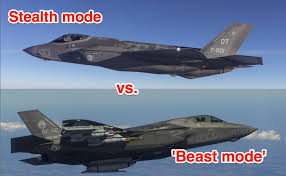
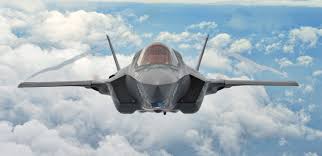
Israel’s recent revelation about deploying the F-35 in beast mode, carrying weapons externally during aerial strikes, prompts a deeper exploration. This strategic decision, while compromising the aircraft’s stealth, is a calculated move. The understanding of going beast mode over Gaza, with its negligible air defence, is clear. However, the prospect of employing this mode in Lebanon or Iran, with their formidable air defences, presents a complex operational challenge. This raises the question: what are the operational intricacies of using the beast mode in such scenarios?
The F-35, in its ‘stealth mode,’ carries weapons internally, effectively reducing its radar signature. However, when it transitions to ‘beast mode,’ carrying weapons externally, it sacrifices this stealth advantage for increased firepower. This Trade-off is a crucial consideration in military operations.
In “beast mode,” it carries additional munitions on external pylons. This configuration increases the aircraft’s radar cross-section (RCS), making it more detectable by enemy radar.
Beast mode increases the F-35’s firepower by allowing it to carry more ordnance, maximising strike efficiency against numerous ground targets.
However, Israel’s use of the F-35 in beast mode likely depends on the specific operational environment and objectives.
The Beast Mode can be used in the following operational scenarios:-
The enemy has no air defence capability or weapons.
SEAD (Suppression of Enemy Air Defences) missions have degraded the enemy’s radar and SAM capabilities.
One way to mitigate the risks of flying in beast mode is by staying out of the enemy’s air defence weapons range. This can be achieved through intelligence-supported operational planning and/or stand-off attacks. The role of intelligence and meticulous planning in these operations cannot be overstated.
Using escort and suppression support from electronic warfare platforms to mitigate the risks of flying in beast mode.
Low Threat Environment (Gaza Strikes). Against Hamas and other militant groups in Gaza, stealth is unnecessary since they lack sophisticated radar-guided air defences. Beast mode can be used in a risk environment to maximise firepower.
Lebanon (Hezbollah) Strikes. Hezbollah has comparatively more advanced air defence capabilities than Hamas, including Iranian-made radars and some older Russian SAMs. Beast mode can be used in a medium-risk environment by avoiding enemy air defences.
Iran Strikes—A Different Challenge. Iran operates a more sophisticated air defence network. Using beast mode over Iran would be risky because the F-35 would be much more visible on Iranian radar, and Iran’s long-range SAMs could engage the aircraft before it reaches the target. Beast mode can be used in a high-risk environment after neutralising enemy air defences.
Information and data included in the blog are for educational & non-commercial purposes only and have been carefully adapted, excerpted, or edited from reliable and accurate sources. All copyrighted material belongs to respective owners and is provided only for wider dissemination.
My Article was Published in the Chanakya Diaries, Issue 2, Spring 2025.
The world of military aviation has witnessed a significant leap in technological advancements, particularly in developing fifth-generation fighter aircraft (5GFA). These next-generation fighter jets are equipped with stealth technology, advanced avionics, and superior weaponry, allowing them to operate in highly contested airspaces. As global military technologies advance, so does the need for air forces to adopt cutting-edge systems capable of responding to emerging threats. Acquisition of such advanced technologies is crucial for maintaining air superiority and securing national interests. However, India’s path to acquiring fifth-generation fighters has been filled with challenges, forcing the country into a quandary about securing these crucial assets for its Air Force. This article delves into India’s dilemma regarding 5th-gen fighter jets, exploring the complexities of the decision-making process, the challenges posed by current defence procurements, and the country’s broader defence and geopolitical considerations.
Fifth-Generation Fighter Aircraft
Fifth-generation fighter aircraft represent the pinnacle of modern military aviation, incorporating cutting-edge stealth, advanced avionics, superior manoeuvrability, and network-centric warfare capabilities. These aircraft are designed to achieve air superiority while minimising detection through radar-evading features such as internal weapons bays, composite materials, and aerodynamic shaping. Notable examples include the U.S. F-22 Raptor and F-35 Lightning II, China’s J-20, and Russia’s Su-57. Unlike previous generations, fifth-generation fighters rely on sensor fusion, artificial intelligence-assisted decision-making, and high-capacity data links to dominate the battle-space. Their integrated avionics provide pilots with unparalleled situational awareness, allowing seamless coordination with other forces and unmanned systems. High-thrust engines with supercruise capability enable sustained supersonic speeds without afterburners, enhancing operational range and fuel efficiency. Furthermore, their electronic warfare and cyber capabilities allow them to disrupt enemy communications and radar systems. While these aircraft offer unmatched lethality and survivability, their complexity and cost present production, maintenance, and procurement challenges. Nations investing in fifth-generation fighters seek battlefield dominance and strategic deterrence, as control of the skies remains a decisive factor in modern warfare. As military technology advances, these fighters continue to evolve, shaping the future of aerial combat.
IAF Challenges and Necessities
Prevailing Challenges. India is a major regional player, and due to its unique geographical location and geo-political environment, it faces a collusive threat (from its two nuclear-powered unfriendly neighbours) with significant chances of military conflict. This unique position dictates that the country be able to deter her hostile neighbours from any military misadventure singly or collusively. Besides land borders being the main reason for the dispute, the security of the IOR region would also be a major security necessity. IAF would be required to offer options to meet India’s domestic and regional security requirements.
Air Threat. For a considerable time, the IAF enjoyed an edge in modern combat aircraft over its rivals – the Chinese People’s Liberation Army Air Force (PLAAF) and the Pakistan Air Force (PAF). This situation is changing with the PLAAF transformation, China’s investment in aerospace research and development, and aircraft manufacturing. China has inducted its two home-grown stealth fighters (J-20 and J-31) in large numbers and has already flown sixth-generation prototypes. Pakistan continues to be in collusion with China. PAF has inducted Chinese J-10 and JF-17 aircraft and has desired to induct Chinese fifth-generation aircraft.
Urgent Necessity. The Indian Air Force’s current strength is significantly below its sanctioned level. Its indigenous development of fourth—and fifth-generation aircraft faces technological hurdles and time delays. In the face of prevailing challenges, India cannot afford to lag in its military capability. The impending air threat from China and Pakistan has made the acquisition of fifth-generation fighters an urgent and necessary priority to enhance the IAF’s deterrence value.
Acquisition Efforts
Collaborative Effort. India’s journey toward acquiring fifth-generation fighter aircraft began with an ambitious collaboration with Russia. In 2007, India partnered with Russia to co-develop the Su-57, also known as the T-50 or PAK-FA. This project was expected to yield a fifth-generation fighter with advanced stealth capabilities and cutting-edge avionics, making it a crucial addition to India’s fleet. While India’s collaboration with Russia began with great optimism, several issues soon emerged related to cost overruns, development delays, and technological shortcomings, leading to re-evaluating the program. 2018, after years of joint research and development, India decided to pull out of the Su-57 program, marking a pivotal moment in its fifth-generation fighter aspirations. The decision left India searching for alternative solutions.
MRFA Acquisition. The history of India’s Multi-Role Fighter Aircraft (MRFA) acquisition effort is marked by ambitious plans and evolving defence strategies to modernise the IAF’s fighter fleet. The origins of the MRFA initiative can be traced back to the Medium Multi-Role Combat Aircraft (MMRCA) tender issued in 2007, which sought to acquire 126 fighter jets to replace the ageing MiG-21 fleet. After extensive evaluations and trials, the Dassault Rafale emerged as the preferred choice in 2012; however, contractual disagreements and cost escalations led to the eventual scrapping of the deal in 2015. In its place, the Indian government opted for a government-to-government deal to procure 36 Rafale jets in 2016 to meet urgent operational needs. The failure of the MMRCA tender to materialise in its original form highlighted the complexities involved in large-scale defence procurements, including cost considerations, technology transfer requirements, and offset agreements. In response to these challenges, the IAF redefined its requirements and reinitiated the procurement process under the MRFA program in 2019. The renewed effort sought to leverage lessons learned from the previous tender while emphasising indigenisation and the development of India’s defence manufacturing capabilities under the ‘Make in India’ initiative. Unlike its predecessor, the MRFA acquisition focuses more on domestic production, requiring foreign vendors to collaborate with Indian defence firms to establish local assembly lines and facilitate technology transfers.
Overview of the MRFA Acquisition Program. The MRFA acquisition program is a critical initiative by the Indian Air Force to acquire 114 advanced multi-role fighter jets to enhance its operational capabilities and replace its ageing fleet of legacy aircraft. Under MRFA, the IAF aims to procure state-of-the-art fighters that can undertake various combat roles, including air superiority, ground attack, reconnaissance, and electronic warfare, ensuring dominance in modern warfare scenarios. The MRFA acquisition process is structured under the ‘Make in India’ initiative, emphasising indigenous production and technology transfer to boost the domestic defence industry. The IAF issued a global Request for Information (RFI) in 2019, inviting proposals from major aircraft manufacturers worldwide. The procurement is expected under the Strategic Partnership (SP) model, which involves collaboration between foreign Original Equipment Manufacturers (OEMs) and Indian defence firms. This collaboration required establishing production lines within the country and transferring critical technologies, reducing import dependency and promoting self-reliance in the defence sector. One of the essential requirements outlined by the IAF in the MRFA tender is the transfer of technology (ToT), which will allow Indian defence companies to gain technical expertise in aircraft manufacturing, maintenance, and future upgrades. The current situation stresses the inclusion of fifth-generation aircraft in the acquisition plans.
Domestic Solution: AMCA. India has pursued an indigenous solution to its 5th-gen fighter needs through the Advanced Medium Combat Aircraft (AMCA). The AMCA is being developed by the Aeronautical Development Agency (ADA) under the Indian Ministry of Defence. It is intended to be a 5th-gen fighter with advanced stealth technology, super-cruise capabilities, and cutting-edge avionics. While the AMCA represents a step toward self-reliance and is seen as a critical component of India’s long-term military strategy, several challenges are associated with its development. The development of the AMCA has faced numerous delays. Initially slated for entry into service by the mid-2020s, it is now expected to enter service closer to the late 2030s. The project also faces significant technological challenges in developing a fighter of this sophistication. While progress is being made, achieving the same level of performance and stealth as the F-35 or Su-57 remains a formidable task.
Choices and Possibilities. Both the U.S. and Russia are aggressively pitching their fifth-generation aircraft. Besides outright purchase, India may explore collaboration and joint development programs or technology transfers (Stealth, Aero-engines and advanced avionics) that accelerate AMCA’s timeline. Limited acquisitions of F-35s or Su-57s focusing on training and operational familiarity while ensuring that AMCA remains the primary focus are also possible options.
The Foreign Procurement Dilemma
Given the delays and challenges of Indigenous development, India has to explore foreign procurement options for fifth-generation fighter jets. The United States, with its F-35 Lightning II and the Russian SU-57, has emerged as a potential source of these advanced aircraft. However, several geopolitical, diplomatic, and technical barriers complicate purchasing these aircraft.
U.S. Signals: F-35 Lightning II. The U.S. has been subtly signalling a potential offer of the F-35 to India. The aircraft first appeared in the Indian skies in the previous aero India 2023. Although Washington has not officially proposed a deal, diplomatic engagements and increasing defence cooperation between the two nations suggest that such a move could be on the horizon. Some analysts believe the U.S. could propose the F-35 as a deterrent against China, leveraging India’s growing security concerns to break its traditional reluctance toward American fighter jets. The F-35, developed by Lockheed Martin, represents the epitome of 5th-gen fighter capabilities. It is a highly advanced stealth fighter, but its suitability for the Indian Air Force (IAF) is debatable due to operational, geopolitical, and logistical factors. While the F-35 offers cutting-edge stealth, sensor fusion, and electronic warfare capabilities, making it a formidable asset against threats, its integration into India’s diverse fleet (Su-30MKI, Rafale, Tejas) would be complex and costly. The aircraft’s high maintenance burden, reliance on U.S. software and spare parts support, and logistical challenges in high-altitude operations raise concerns. Additionally, India’s deep defence ties with Russia and its commitment to strategic autonomy could complicate an F-35 deal. The U.S. has been selective about F-35 exports, prioritising NATO allies and key Pacific partners, making approval for India uncertain. With unit costs exceeding $80 million and long-term sustainment expenses, the F-35 may not be the most cost-effective option compared to expanding Rafale squadrons or accelerating the indigenous AMCA program.
Russia’s Pitch: The Su-57 Felon. Russia is presenting the Su-57 Felon as a possible solution for India’s air power needs. The offer is sugar quoted with an offer to reduce price, Integration of hypersonic weapons, ToT and easy payment options. The Su-57, initially designated the PAK FA (Prospective Airborne Complex of Frontline Aviation), began development in the early 2000s under the Russian Ministry of Defence. The aircraft was conceived as a multirole stealth fighter capable of air superiority and ground attack missions. Given India’s deep-rooted defence ties with Russia and its existing fleet of Su-30MKI fighters, Moscow sees this as a natural extension of its strategic partnership. However, India has been cautious about procuring the Su-57 due to previous setbacks in the Indo-Russian Fifth Generation Fighter Aircraft (FGFA) project. While the Su-57 has promising features, the program has faced several challenges that have slowed its development and deployment. The aircraft has faced delays related to engine development and avionics integration. Moreover, there have been questions about the production rate and the number of aircraft that will be built in the coming years. The Russian Air Force has been slow to field the aircraft, and it remains unclear how many Su-57s will ultimately be deployed, particularly as Russia faces significant budgetary constraints and competing priorities.
Comparative Analysis. The Su-57’s development and operational capabilities are often compared to the U.S. F-22 Raptor and F-35 Lightning II, representing American stealth technology’s pinnacle. While the Su-57 has similar features, such as stealth and advanced avionics, it lags in some performance areas. For example, the F-22 is generally considered superior regarding stealth and overall aerodynamics, while the F-35 is unrivalled in sensor fusion and multirole capabilities. However, the Su-57 holds unique advantages that could make it a formidable platform in specific scenarios. Its super manoeuvrability and advanced sensor capabilities make it highly suited for air-to-air combat and could give it an edge over Western fighters in certain situations. Moreover, its weapons capacity and the potential future integration of hypersonic weapons give it a longer-range and more potent offensive capability than current Western fighters.
Indigenous Effort.
Push for Indigenous Development: The AMCA Program. India’s exit from the Su-57 program signalled a renewed focus on indigenous development. Under pressure to modernise and enhance its capabilities, India pushed to develop its fifth-generation fighter. The Advanced Medium Combat Aircraft (AMCA) program was born out of this necessity. The AMCA was conceived as India’s first fully indigenous fifth-generation fighter. The project envisions incorporating stealth, advanced avionics, supercruise and multi-role capabilities. While the AMCA represents a significant leap forward for India’s indigenous defence capabilities, its development has not been without challenges. The program has faced technological hurdles, financial constraints, and inordinate delays. The prototype of the AMCA is expected to take flight in the late 2020s, with full-scale production not anticipated until the early 2040s. The AMCA is crucial to India’s long-term defence strategy. Its delayed timeline and high costs mean the country must consider alternatives soon to fill the capability gap.
Effect on the AMCA Development. India’s procurement of foreign fifth-generation fighter aircraft could positively or negatively affect the development of its Advanced Medium Combat Aircraft (AMCA) program. On the one hand, it could gain valuable insights into the design and technology of a fifth-generation fighter aircraft, including stealth capabilities, advanced avionics, and engine performance. This could accelerate the learning curve for Indian engineers and help improve AMCA’s design. On the other hand, foreign procurement could divert attention and resources from the AMCA project, as both programs require significant investment and focus. This could delay AMCA’s development as funding and manpower may be reallocated. While foreign procurement might provide a short-term solution, procuring it would reinforce India’s dependency on foreign technology, which contradicts the AMCA’s goal of achieving greater self-reliance in defence technology. It might also delay the domestic innovation necessary to produce the AMCA independently.
Procurement Considerations: A Tight Rope Walk.
India’s pursuit of fifth-generation fighter aircraft (FGFA) is a complex balancing act, requiring careful evaluation of strategic, operational, and geopolitical factors. Despite the aggressive pitches from Russia and the U.S., India remains steadfast in its commitment to self-reliance. The country has several valid concerns about acquiring stealth fighters from external sources. The procurement decision must balance national security imperatives with long-term self-reliance goals.
Financial Constraints. While the need for advanced fighter aircraft is pressing, India’s defence budget remains constrained. The costs of acquiring 5th-gen fighters—whether through foreign procurement or domestic development—are substantial.
Strategic Autonomy. India has historically maintained strategic autonomy in defence procurement. Outright procurement of fifth-generation fighters would increase dependency on foreign suppliers for maintenance, spares, and software updates. However, developing an indigenous FGFA is time-intensive and costly, necessitating interim solutions such as collaborations or selective acquisitions. Balancing these factors ensures India can act independently in future conflicts without external constraints.
Operational Sovereignty. Fifth-generation fighters rely heavily on integrated software, sensor fusion, and artificial intelligence, requiring continuous updates and security oversight. Procuring an FGFA from the U.S. or Russia may come with software black boxes, limiting India’s ability to modify or customise the aircraft to suit its operational needs. In contrast, an indigenous program like the AMCA would ensure complete control over mission configurations, electronic warfare systems, and weapons integration. India risks operational constraints without complete control in scenarios where its strategic interests diverge from supplier nations.
Transfer of Technology (ToT). India has consistently demanded significant technology transfer as part of its defence procurements. One of the most crucial considerations in FGFA procurement is access to critical technologies such as stealth coatings, advanced radar systems, and aero engines. Nations that export fifth-generation fighters typically impose strict restrictions on technology transfers to protect proprietary designs and maintain their competitive edge. India must negotiate deals that ensure meaningful technology absorption, aiding AMCA’s long-term development.
Interoperability Issues. India operates a diverse fleet comprising Russian, French, Israeli, and indigenous aircraft, leading to interoperability challenges. Integrating an FGFA with existing platforms is critical, especially for network-centric warfare. American platforms, such as the F-35, rely on proprietary Link 16 data-sharing protocols, which may not be compatible with India’s indigenous combat management systems. On the other hand, Russian fighters align with existing IAF infrastructure but lack the networking capabilities of Western aircraft. Any FGFA procurement must ensure seamless integration with India’s Integrated Air Command and Control System (IACCS) while avoiding security vulnerabilities tied to foreign command structures.
Reliance and Reliability Concerns. Fifth-generation fighters require a robust supply chain for spare parts, software updates, and maintenance. India’s experience with Russian platforms, such as the Su-30MKI, has shown that supply bottlenecks can impact fleet availability. Similarly, reliance on the U.S. for F-35 components could expose India to geopolitical leverage, where supply disruptions may occur due to policy shifts. An indigenous FGFA would mitigate these risks. However, India must bridge the gap in manufacturing critical components, such as high-thrust jet engines and low-observable coatings, to ensure long-term sustainability.
Geopolitical Pressures. India’s FGFA decision is deeply entangled in global power dynamics. Acquiring an American fighter would enhance ties with QUAD allies (U.S., Japan, Australia) but could strain India’s strategic partnership with Russia. Conversely, a Russian FGFA might provoke U.S. sanctions under CAATSA (Countering America’s Adversaries Through Sanctions Act), complicating India’s defence cooperation with Western nations. Thus, any procurement choice must navigate these external influences without compromising national security.
Way Ahead
India’s quest for fifth-generation fighter aircraft is emblematic of the broader challenges emerging powers face in the 21st century. While the country has made significant strides in developing Indigenous defence capabilities, the path to acquiring fifth-generation fighters remains fraught with challenges. The choices India makes in the coming years will shape its defence posture and air superiority in the decades ahead. While the AMCA holds promise for India’s long-term goals, the immediate need for advanced fighter aircraft means that foreign options, including the F-35 or SU-57, will likely remain in play despite the geopolitical and financial challenges they present.
India’s success in this endeavour will depend on its ability to integrate technology, manage its defence budget, and forge strategic partnerships that advance its security interests in a rapidly evolving global landscape. Given the complexity of fifth-generation fighter procurement, India must focus on accelerating the AMCA program while exploring selective technology partnerships. A dedicated task force with a top-down approach could ensure timely execution. Increased funding, private sector involvement, and strategic technology acquisitions could further bolster the program.
India must balance Indigenous development with the need for foreign procurement while navigating a complex geopolitical landscape. While India will likely continue seeking a combination of foreign procurements and domestic development, the path forward will require careful navigation of technological and strategic challenges. Ultimately, India’s ability to field a fleet of 5th-gen fighters will depend on its ability to balance these competing demands while securing the necessary resources and partnerships to maintain its regional and global standing.
Conclusion
The stealth fighter war is not just about aircraft but about India’s position in the global defence landscape. The choices made in the coming years will define India’s air power for decades. While Aero India 2025 will serve as a grand stage for the U.S. and Russia to showcase their best fighters, India must navigate this battle carefully. Whether it chooses a limited acquisition, a joint development initiative, or a complete rejection of external options, one thing is clear: India’s future in stealth aviation will be determined by its ability to balance strategic autonomy with practical air power needs.
Please Do Comment.
For regular updates, please register your email here:-
Information and data included in the blog are for educational & non-commercial purposes only and have been carefully adapted, excerpted, or edited from reliable and accurate sources. All copyrighted material belongs to respective owners and is provided only for wider dissemination.
References:-
Dyer, G. (2017). India’s Role in Global Security: An Assessment of Its Military and Strategic Options. Oxford University Press. Covers India’s military strategies and defence procurement policies, giving context to its fifth-generation fighter aircraft decisions.
Tiwari, R. (2020). India’s Aviation Power: The Development of India’s Military Aviation. Routledge. This book focuses on India’s aviation capabilities, history, and future trajectory, including the fifth-generation fighter aircraft.
Sarma, B. (2021). Fifth-Generation Aircraft and the Changing Nature of Air Combat: A Global Perspective. Springer. This book analyses the technologies and capabilities defining fifth-generation aircraft and how different countries adopt them.
Pant, H. V. (2018). India’s Strategic Culture and Military Modernisation: A Cross-Disciplinary Approach. Routledge. Offers insight into India’s military modernisation strategies and how they affect decisions about future aircraft acquisitions.
Bansal, S. (2022). “Fifth-Generation Fighter Aircraft: The India Dilemma”, Strategic Affairs Journal, 14(3), pp. 245-268. This article addresses India’s balancing act between domestic capabilities, foreign partnerships, and defence priorities regarding fifth-generation fighters.
Chaudhury, S. (2020). “India’s Ambitious Fighter Program and the Quest for the AMCA”, The Military Review, 102(4), pp. 60-75. A detailed analysis of India’s AMCA project and the prospects of its success in the context of competing international options.
Indian Ministry of Defence (2021). India’s Future Aircraft Procurement Strategy: A Vision for the Next Decade. Government of India. Government-published paper detailing India’s strategic requirements and procurement strategy, including pursuing fifth-generation fighters.
RAND Corporation (2021). “Fifth-Generation Fighter Aircraft: A Global Overview”. RAND Corporation. A comprehensive analysis of the global fifth-generation fighter market, including India’s potential partners and competitors.
IHS Jane’s Defence Weekly (2019). “The Future of Combat Aircraft: A Comparative Study”, 56(8), pp. 32-45. This report compares the capabilities of fifth-generation fighters, focusing on the Su-57, F-35, and AMCA, with a section on India’s defence procurement options.
Shukla, A. (2021). “India’s Fighter Jet Dilemma: Will AMCA Be the Answer?” Livefist Defence. https://www.livefistdefence.com. A detailed exploration of the AMCA program and India’s obstacles in developing its fifth-generation aircraft.
MY Article was published on the EurasianTimes Website
on 12 Feb 25.
On January 28, 2025, an F-35A Lightning II fighter jet crashed at Eielson Air Force Base in Alaska during a training exercise. The pilot experienced an in-flight malfunction but ejected safely. The accident has caught the world’s attention. As a possible follow-up, the US has called off the F-35 air display during the forthcoming Aero India 2025.
The F-35 Lightning II, manufactured by Lockheed Martin, is the world’s most advanced multirole stealth fighter, used by several nations for various air combat missions. With its sophisticated technology, the F-35 was designed to be a revolutionary leap in aerial warfare, offering advanced stealth, sensor fusion, and unprecedented combat versatility. However, despite its promise, the aircraft has had its share of incidents that raise questions about its safety and operational readiness. Are these incidents simply part of the evolutionary process of integrating a complex new weapon system, or do they point to deeper, systemic issues that could undermine the fighter’s effectiveness in the long term?
A Brief Overview of the F-35 Program. The F-35 program began in the late 1990s as part of the Joint Strike Fighter (JSF) initiative, which aimed to develop a next-generation aircraft that could serve the needs of multiple branches of the U.S. military and those of allied nations. The F-35 comes in three variants: the F-35A (conventional take-off and landing), the F-35B (short take-off and vertical landing), and the F-35C (carrier-based). The aircraft boasts advanced stealth features, an unparalleled sensor suite, and the ability to operate in highly contested environments. The F35 development program faced delays, cost overruns, and technical challenges in the earlier phases of its deployment. Nevertheless, the aircraft has entered service with multiple air forces and naval fleets, including the U.S., the U.K., Israel, Japan, and others.
Notable Accidents and Incidents. Over the years, some accidents and incidents involving the F-35 have raised concerns about its safety. Some of these accidents have been relatively minor, while others have resulted in significant damage to the aircraft or loss of life. Notably, the F-35 has experienced problems with its engine, landing gear, and software systems. Overview of F-35 accidents and incidents, according to open media sources, is as follows:-
19 May 20. A U.S. Air Force F-35A from the 58th Fighter Squadron crashed during landing at Eglin Air Force Base, Florida. The pilot ejected and was rescued in stable condition. The accident was reportedly attributed to a combination of pilot error induced by fatigue, a design issue with the oxygen system, the aircraft’s complex and distracting nature, a malfunctioning head-mounted display, and an unresponsive flight control system.
29 Sep 20. A U.S. Marine Corps F-35B collided with a KC-130 during air-to-air refuelling over Imperial County, California. The F-35B pilot was injured during ejection, and the KC-130 crash-landed in a field without deploying its landing gear.
12 Mar 21. During a night flight near Marine Corps Air Station Yuma, Arizona, a round fired from the belly-mounted 25mm gun pod on an F-35B detonated shortly after leaving the barrel. The pilot was uninjured, but the aircraft was grounded for maintenance for more than three months.
17 Nov 21. A Royal Air Force F-35B crashed during routine operations in the Mediterranean. The pilot was safely recovered to HMS Queen Elizabeth. The crash was determined to have been caused by an engine-blanking plug left in the intake.
4 Jan 22. A South Korean Air Force F-35A made a belly landing after all systems failed except the flight controls and the engine. The pilot landed the plane without deploying the landing gear and walked away uninjured.
24 Jan 22. A U.S. Navy F-35C suffered a ramp strike while landing on the USS Carl Vinson and was lost overboard in the South China Sea. Seven crew members were injured, while the pilot ejected safely and was recovered from the water. The aircraft was recovered from a depth of about 12,400 feet with the aid of a remotely operated vehicle.
19 Oct 22. An F-35A crashed at the north end of the runway at Hill Air Force Base in Utah. The pilot safely ejected and was unharmed. The crash was caused by errors in the air data system from the wake turbulence of a preceding aircraft.
15 Dec 22. An F-35B crashed during a failed vertical landing at Naval Air Station Joint Reserve Base Fort Worth in Texas. The government test pilot ejected on the ground and was not seriously injured.
17 Sep 23. An F-35B crashed after the pilot ejected over North Charleston, South Carolina, following a mishap during a training flight. The pilot was unharmed, and the wreckage was found the following day.
28 May 24. A developmental test F-35B crashed shortly after take-off from Kirtland Air Force Base in New Mexico. The pilot ejected and was reportedly injured.
28 Jan 25: An F-35A crashed at Eielson Air Force Base in Alaska. The pilot was reported uninjured.
Focus Areas. The F-35 program has provided several valuable lessons learned from its accidents and incidents. These lessons span design improvements, pilot training, maintenance practices, and operational considerations. Some of the key takeaways are as follows:-
Improved Pilot Training and Situational Awareness. The complexity of the F-35’s systems requires advanced training to ensure pilots can effectively handle the aircraft in emergencies.
Enhanced Mechanical and System Design Improvements. The F-35’s advanced technology provides unprecedented capabilities but has led to integration and system reliability challenges. Hardware and software fixes are periodically needed to address these.
Aircraft Maintenance and Logistical Support. Aircraft maintenance plays a critical role in ensuring aircraft safety and reliability. Maintenance-related issues have been a contributing factor in a few cases.
Design Flexibility and Rapid Response to Failures. The ability to quickly address design flaws and technical failures is critical for maintaining the aircraft’s operational capability.
The Evolutionary Process: Accidents as Part of Development. From the perspective of aviation development, accidents are not uncommon. History is replete with examples of military aircraft programs that experienced growing pains. Technical issues and mishaps are expected early in any new aircraft’s operational use, particularly with as many advanced features as the F-35. The F-35 is a highly complex system, and as with any cutting-edge technology, teething problems are inevitable. The F-35’s early struggles might be necessary to perfect a revolutionary design. In this sense, the F-35’s accidents can be considered part of the normal process of advancing a new weapon system toward full operational capability.
Cause for Alarm: Systemic Issues and Risks. However, the continued incidents involving the F-35 cannot be entirely dismissed as part of the evolutionary process. As the aircraft enters full-scale service across multiple countries, the sheer number of accidents and technical problems may suggest deeper systemic issues. Moreover, the safety concerns surrounding the F-35 could have strategic consequences. If accidents continue to occur significantly, it could undermine the aircraft’s ability to perform in combat scenarios, potentially putting both pilots and missions at risk. The loss of an aircraft, particularly in a combat zone, could have severe consequences for the military.
Balancing Optimism with Realism. The F-35’s complexity is its greatest strength and weakness. While providing cutting-edge capabilities, the aircraft’s advanced systems also create a dependency on maintenance crews, spare parts, and software systems. If any of these elements fail, it could lead to operational delays or mishaps. A continued lack of readiness or failure to address recurring technical problems could strain military resources and decrease confidence in the aircraft’s long-term viability. While the accidents involving the F-35 can be seen as part of the normal evolution of a complex and cutting-edge aircraft, the continued problems cannot be ignored. The F-35’s development mirrors the typical challenges of revolutionary military technology, but the program must move quickly to address the emerging issues.
The question remains: will the F-35 overcome its growing pains to emerge as the next generation of air dominance, or will it be remembered as a cautionary tale of technological overreach and mismanagement? The answer lies in how effectively the program addresses its ongoing challenges and whether it can evolve from a series of accidents into a proven, reliable asset for the world’s military forces.
U.S. Government Accountability Office (GAO). F-35 Joint Strike Fighter: DOD Needs to Address Affordability Challenges. GAO-20-505, 2020. https://www.gao.gov/products/GAO-20-505.
Congressional Research Service (CRS). F-35 Joint Strike Fighter: Background and Issues for Congress. R44124, 2022. https://crsreports.congress.gov/product/details?prodcode=R44124.
Axe, David. “The F-35: A Story of Delays, Cost Overruns, and Controversy.” The National Interest, 2020. https://nationalinterest.org.
Air Force Times. (2020, October 5). Investigators find that the Eglin F-35 crash resulted from a tired, distracted pilot and an unresponsive tail glitch. Retrieved from airforcetimes.com
29 September 2020: F-35B Collision with KC-130 in California. USNI News. (2020, September 29). Marine F-35B Crashes After Collision with KC-130 Over California; All Aircrew Recovered Safely. Retrieved from usni.org
12 March 2021: F-35B Gun Pod Detonation near Yuma, Arizona. Military.com. (2021, March 24). Marine Corps F-35B Damaged After Round Fired from Jet Cannon Detonates. Retrieved from military.com
17 November 2021: RAF F-35B Crash in Mediterranean. Avweb. (2021, November 22). Forgotten Intake Plug Downed RAF F-35B. Retrieved from avweb.com
4 January 2022: South Korean F-35A Belly Landing. Defense News. (2022, January 6). South Korea Grounds F-35A Fleet After Belly Landing. Retrieved from defensenews.com
24 January 2022: F-35C Ramp Strike and Loss Overboard from USS Carl Vinson. Navy AirPac. (2022, January 29). Investigation into 2022 F-35C Crash Aboard Carl Vinson Complete. Retrieved from airpac.navy.mil
19 October 2022: F-35A Crash at Hill Air Force Base, Utah. Air Force Judge Advocate General (AFJAG). (2022, October 19). F-35A Crash Investigation Report. Retrieved from afjag.af.mil
15 December 2022: F-35B Crash at Naval Air Station Joint Reserve Base Fort Worth. Military.com. (2022, December 16). F-35 Crashes on Runway in North Texas After Failed Vertical Landing. Retrieved from military.com
17 September 2023: F-35B Crash Near North Charleston, South Carolina. 2nd Marine Aircraft Wing (2nd MAW). (2023, September 18). 2nd Marine Aircraft Wing Releases Investigation into F-35B Crash. Retrieved from 2ndmaw.marines.mil
28 May 2024: Developmental F-35B Crash at Kirtland Air Force Base Kirtland Air Force Base. (2024, May 28). F-35B Fighter Jet Crashes Near Albuquerque International Sunport. Retrieved from kirtland.af.mil
28 January 2025: F-35A Crash at Eielson Air Force Base, Alaska. Associated Press (AP). (2025, January 29). F-35A Crash at Eielson Air Force Base; Pilot Reported Uninjured. Retrieved from apnews.com
Disclaimer:
Information and data included in the blog are for educational & non-commercial purposes only and have been carefully adapted, excerpted, or edited from reliable and accurate sources. All copyrighted material belongs to respective owners and is provided only for wider dissemination.