589: WINDS OF CHANGE IN GLOBAL DEFENCE


Pic Courtesy Net


My Article published on the Life of Soldier website on 29 Jan 25


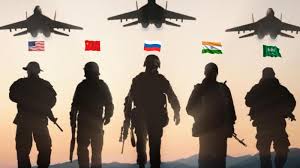
The global defence landscape is transforming significantly, driven by technological advancements, shifting geopolitical dynamics, and evolving security threats. Nations increasingly prioritise developing cutting-edge technologies such as hypersonic missiles, artificial intelligence, and quantum radar to enhance military capabilities. The rise of non-traditional threats, including cyber-attacks and space-based warfare, also reshapes defence strategies. As countries adjust to these changes, the winds of change in global defence are prompting nations to rethink military priorities, strategies, and international relations. The winds of change in global defence are characterised by rising defence spending and a shift toward advanced military technologies. Countries are increasing their military budgets in response to escalating geopolitical tensions and emerging threats. This surge in defence spending reflects a global shift toward preparedness, emphasising modernisation, strategic alliances, and a more proactive approach to defence.


New Weapons and Dimensions of Warfare


AI-Powered Autonomous Weapons. The first fully autonomous AI-controlled weapon systems have been deployed in active combat zones. The deployment of AI-powered autonomous weapons in active combat zones marks a significant leap in military technology, raising concerns over their implications for global security. These systems, capable of making real-time decisions without human intervention, are being tested in conflicts such as those in the Middle East and Eastern Europe. While proponents argue they enhance precision and reduce human casualties, critics fear they could lead to uncontrolled escalation, with machines making life-and-death decisions. Ethical dilemmas arise over accountability for actions taken by autonomous systems, and there are growing calls for international regulations to govern the development and use of such advanced weapons.


Intensification of the Hypersonic Missile Arms Race. The hypersonic missile arms race has intensified as countries like the United States, China, and Russia race to develop advanced, high-speed weaponry capable of travelling at speeds greater than five times the speed of sound. These missiles can manoeuvre unpredictably, making them difficult to intercept with existing defence systems. This technological leap raises concerns about the potential for destabilising global security as nations vie for strategic advantage in an increasingly competitive and unpredictable arms race. The growing development and testing of hypersonic missiles signal a new era in military warfare, potentially altering the balance of power and escalation risks worldwide.


Cyber Attacks on Critical Infrastructure. Cyber attacks on critical infrastructure have become a growing threat to national security and economic stability. These attacks target essential sectors such as energy, transportation, finance, and healthcare, aiming to disrupt operations, steal sensitive data, or cause widespread damage. Notable incidents, including the 2021 Colonial Pipeline attack in the U.S. and various ransomware campaigns, highlight vulnerabilities in critical systems. As cyber warfare becomes an increasingly prominent tactic, governments and organisations are prioritising cyber security measures and investing in advanced technologies to prevent, detect, and mitigate such threats. These attacks’ rising frequency and sophistication emphasise the urgent need for robust cyber defence strategies globally.


Militarisation of Space. Space-based weapons systems are emerging as a new frontier in global defence. Several countries (the U.S., China, India, and France) have unveiled plans for orbital weapons platforms, signalling the militarisation of space and threatening existing space treaties to prevent such developments. These systems, which include anti-satellite missiles, directed energy weapons, and satellite-based lasers, are designed to target and neutralise adversary satellites or other space assets. The growing militarisation of space raises concerns over the potential for conflict beyond Earth’s atmosphere as nations seek to secure space-based resources and gain strategic advantage. The development of space-based weapons could disrupt communications, navigation, and surveillance capabilities, escalating tensions and prompting calls for international regulation of space militarisation.


Quantum Radar Military Breakthrough. Quantum radar represents a ground-breaking military technology with the potential to revolutionise defence systems. Unlike conventional radar, which relies on radio waves, quantum radar uses quantum entanglement to detect objects with unprecedented accuracy. This technology can potentially detect stealth aircraft and missiles, which are designed to evade traditional radar. By exploiting the quantum properties of light, quantum radar can function in environments where traditional systems struggle, such as in electronic warfare scenarios. As nations like China and the United States race to develop quantum radar, it could significantly alter the balance of military power, enhancing defence capabilities and complicating interception strategies. China has announced the development of quantum radar technology, which has the potential to render stealth aircraft obsolete and revolutionise detection capabilities in military operations.


Research on Genetic Bioweapons. Leaked documents have revealed ongoing research into genetic-based bioweapons, heightening fears of engineered pandemics and the ethical implications of such advancements. Research on genetic bioweapons has raised significant concerns over the moral, legal, and security implications of manipulating biological agents for warfare. Advances in genetic engineering, particularly CRISPR technology (Clustered Regularly Interspaced Short Palindromic Repeats enable precise editing of genes), have made it possible to modify pathogens, potentially creating more lethal or targeted biological weapons. The idea of designing diseases that could specifically target specific populations based on genetic markers adds a disturbing dimension to bioweapons research. Although international treaties like the Biological Weapons Convention aim to prevent such developments, the growing accessibility of genetic technologies makes the risk of bioengineered weapons a pressing global concern, necessitating stronger regulations and monitoring.


Successful Test of EMP Weapons. Successful electromagnetic pulse (EMP) weapons tests have raised alarms about the potential impact on global security. EMP weapons generate intense bursts of electromagnetic radiation capable of disabling electronic systems, including power grids, communication networks, and military technologies. In recent tests, countries like the United States, China, and Russia have demonstrated the destructive potential of EMPs, which could paralyse critical infrastructure on a large scale. While EMP weapons are seen as strategic tools for disrupting adversaries, their use also carries significant risks of unintended global consequences, including widespread civilian suffering and the collapse of essential services.


Devastating Swarm Drones.  Swarm drones, groups of autonomous or semi-autonomous drones operating in coordination, are emerging as a devastating new tool in modern air warfare. These drones can be deployed in large numbers, overwhelming enemy defences with precision strikes and creating significant disruption. Equipped with advanced sensors and artificial intelligence, swarm drones can navigate complex environments, target multiple objectives simultaneously, and adapt to changing conditions. Their use in military conflicts has raised concerns about their potential for widespread destruction, especially when used for surveillance, sabotage, or large-scale attacks. As drone technology evolves, swarm drones are expected to become a significant threat to global security.


Neural Interface Weapons. Neural interface weapons represent a new frontier in military technology, leveraging direct connections between the human brain and machines to control or disrupt enemy forces. These weapons could potentially manipulate neural functions, influencing behaviour and decision-making, or even incapacitating individuals through targeted brain stimulation. Research into brain-machine interfaces (BMIs) is advancing rapidly, opening possibilities for offensive and defensive warfare applications. While these technologies could enhance soldier performance or create new forms of non-lethal warfare, they raise significant ethical, privacy, and security concerns. Developing neural interface weapons could redefine the nature of conflict, blurring the lines between technology and human cognition.


Military Expenditure & Arms Race Trends


Record-Breaking Global Military Expenditure. Global military expenditure has reached unprecedented levels, with countries worldwide allocating record-breaking budgets for defence in recent years. In 2023, global military spending surpassed $2.44 trillion, marking a 3.7% increase from the previous year. This surge is driven by escalating geopolitical tensions, the ongoing war in Ukraine, and growing security concerns, particularly in regions like the Indo-Pacific. Nations like the United States, China, and Russia are leading the charge with significant investments in advanced technologies, including cyber capabilities and artificial intelligence. This increase in military spending raises concerns about global stability and resource allocation.


China’s Military Growth. China’s military growth has been a defining feature of its rise as a global power. The country has significantly expanded its defence budget in recent years, investing heavily in advanced technologies such as artificial intelligence, cyber capabilities, and next-generation weaponry. China’s (official) defence budget has grown over the past decade, totalling $296 billion in 2023. However, defence spending could be at least triple that value, closing in on the U.S. figures of about $1 trillion. Modernising its armed forces includes developing sophisticated missile systems, stealth aircraft, and a growing naval fleet, positioning China as a formidable military presence, especially in the Indo-Pacific region. This rapid military expansion is fuelled by Beijing’s strategic goals of asserting territorial claims, enhancing regional influence, and strengthening its global geopolitical stance amidst rising tensions with the West.


China’s Growing Influence in the Global Defence Industry. China’s growing influence in the global defence industry has become increasingly evident as the country emerges as a leading producer and exporter of military technology. Five Chinese firms now rank among the world’s top 12 defence companies, with the Aviation Industry Corporation of China (AVIC) securing the second position globally. China’s military exports are expanding across Africa, Asia, and the Middle East, offering competitive alternatives to Western suppliers. The country’s focus on innovation and its strategic partnerships and initiatives like the Belt and Road position China as a key player in reshaping the global defence landscape and challenging traditional arms-exporting powers.


Escalation in East Asia’s Defence Budgets. Defence budgets in East Asia are escalating rapidly as regional security concerns intensify, driven by the growing influence of China and its military advancements, as well as North Korea’s continued missile tests. Countries like Japan, South Korea, and Taiwan are significantly increasing their military spending to counter these threats and bolster national defence capabilities. Japan is modernising its forces with advanced missile defence systems and fighter jets, while South Korea is focusing on strengthening its air and missile defence systems. This regional arms build-up reflects heightened tensions, with countries investing in cutting-edge technologies such as hypersonic missiles, cyber security, and naval assets to safeguard their security.


Surge in Japan and South Korea Defence Sales. Japan and South Korea have seen a significant rise in defence sales, driven by increasing regional security concerns and growing defence budgets. In 2023, both nations ramped up military spending, fuelled by North Korea’s missile threats and heightened tensions with China. Traditionally focused on self-defence, Japan is expanding its defence capabilities, including advanced missile defence systems and fighter jets. South Korea is boosting its arms production, particularly in defence technology such as drones and military vehicles. This surge in defence sales highlights both countries’ shifts towards more proactive defence strategies amidst evolving security dynamics in the Indo-Pacific region.


Rise in EU Defence Spending. European Union defence spending has sharply increased recently, reflecting growing concerns over regional security and the need for stronger military deterrence. In 2023, EU member states collectively raised their defence budgets by over 10%, with countries like Germany, France, and Poland leading the charge. The Russian invasion of Ukraine drives the surge, prompting EU nations to reassess their defence strategies and military preparedness. Increased investments are being directed toward modernising the armed forces, enhancing cyber defence, and strengthening NATO collaborations. This rise in defence spending signals a shift towards greater military autonomy and readiness within Europe.


Boost in Russian Defence Budget. Russia has significantly increased its defence budget recently, primarily driven by ongoing military operations in Ukraine and growing security concerns over NATO expansion. Russia’s defence spending is set to reach unprecedented levels in the coming years. The Kremlin plans to allocate 13.5 trillion roubles ($145 billion) to military expenditures in 2025, a 25% increase from the 2024 budget of 10.4 trillion roubles. This boost reflects Russia’s strategy to enhance its military readiness and maintain a robust defence posture amidst international sanctions and geopolitical isolation. The surge in defence spending also aims to reinforce Russia’s strategic interests, both domestically and globally.


Middle East Arms Race. The Middle East is witnessing an escalating arms race as regional powers invest heavily in military technology to assert influence and ensure security. Nations like Saudi Arabia, Iran, and the United Arab Emirates are significantly expanding their defence budgets, purchasing advanced weaponry, including missile defence systems, fighter jets, and drones. Tensions surrounding Iran’s nuclear ambitions, the conflict in Yemen, and rivalries between Sunni and Shia factions fuel the competition. This arms race intensifies the region’s instability, as military buildups may provoke further conflict and exacerbate existing geopolitical rivalries. The influx of modern arms also poses challenges for regional and global security. Iran has announced plans to triple its military budget for the upcoming fiscal year. Government spokeswoman Fatemeh Mohajerani has revealed the proposed 200% increase in defence funding. Iran’s current military spending is estimated at $10.3 billion.


North African Arms Race. The North African arms race is intensifying as countries in the region ramp up military spending in response to regional instability, terrorism, and geopolitical rivalries. Nations like Algeria, Egypt, and Morocco are significantly increasing their defence budgets, investing in advanced weaponry, including fighter jets, tanks, and missile systems. The competition is fuelled by territorial disputes, especially over Western Sahara, and concerns over militant groups operating in the Sahel region. In addition to conventional arms, there is growing interest in acquiring cutting-edge technologies, such as drones and cyber warfare capabilities. This arms race threatens to exacerbate tensions and destabilise an already volatile region. Morocco and Algeria are driving a regional military spending surge, accounting for 82% of North African and 45.5% of total African defence expenditure, intensifying the arms race on the continent.


Technology for Conflict Prevention


Advancements in technology are playing a crucial role in conflict prevention by enhancing early warning systems, improving diplomacy, and facilitating timely interventions. AI-driven data analysis can predict potential hotspots by monitoring social, political, and economic trends and identifying signs of instability before they escalate into violence. Satellite surveillance and geospatial technologies help track military movements, border disputes, and natural resource conflicts. Additionally, communication platforms allow for quicker international coordination, enabling global response mechanisms. Technologies like blockchain can foster transparency in peace agreements. At the same time, social media monitoring tools provide real-time insights into public sentiment, empowering governments and organisations to take preventive action effectively.


Please do Comment.


Link to the article on the website:-

Winds of Change in Global Defence


1879
Default rating

Please give a thumbs up if you  like The Post?


For regular updates, please register your email here:-

Subscribe


References and credits

To all the online sites and channels.

References:-

  1. “The Future of Defense: AI, Cybersecurity, and Emerging Technologies”, Journal of Strategic Studies (2022).
  1. “Hybrid Warfare: The New Face of Conflict”, The RUSI Journal (2023).
  1. “2024 Global Defense Outlook”, Jane’s Defence.
  1. “The Future of Military Technologies”, RAND Corporation (2023).
  1. “Global Trends 2040: A More Contested World”, National Intelligence Council (NIC) (2021).
  2. “Defense Expenditure Trends in Asia-Pacific”, Stockholm International Peace Research Institute (SIPRI) (2022).
  1. “Global Security in the Twenty-First Century” by Sean Kay.

Disclaimer:

Information and data included in the blog are for educational & non-commercial purposes only and have been carefully adapted, excerpted, or edited from reliable and accurate sources. All copyrighted material belongs to respective owners and is provided only for wider dissemination.


559: CYBER POSTURING AND CYBER STRATEGIC COERCION


My article published on the Indus International Research Foundation Website on 16 Dec 24


In the 21st century, the digital realm has become an essential arena for national power and international influence. Among the most potent strategies in cyberspace are cyber posturing and cyber strategic coercion. These techniques, though related, serve distinct purposes in the broader context of geopolitical competition. Cyber posturing is the demonstration of cyber capabilities to deter or influence adversaries. In contrast, cyber strategic coercion uses cyber tools to compel an adversary to change behaviour, often causing economic, social, or political disruption.


Cyber Posturing: Signalling Strength and Intent


Cyber posturing refers to the strategic actions and signals a country, organisation, or actor sends regarding its capabilities, intentions, and readiness in cyber security. It can involve various activities, from public statements and demonstrations of cyber capabilities to developing and deploying advanced cyber tools. Cyber posturing typically aims to achieve multiple objectives, such as deterrence, signalling intent, or shaping perceptions among adversaries and allies.


Defining Cyber Posturing. Cyber posturing refers to a state or actor’s strategic actions to protect its cyber capabilities, either in preparation for conflict or as a demonstration of power. Just as a nation might showcase its military hardware or nuclear arsenal during tension, cyber posturing involves actions or public signals designed to communicate resolve, strength, or deterrence in the digital domain. Cyber posturing includes various activities, from showcasing offensive cyber tools in public forums to conducting limited cyber operations to signal resolve. It can be overt—such as publicly revealing cyber capabilities—and covert, involving more subtle actions meant to project power without confrontation. According to Cyber security expert Herbert Lin, cyber posturing is a form of “strategic ambiguity,” where a state’s true capabilities and intentions are not fully clear, keeping adversaries on edge and uncertain of the consequences of escalation. This uncertainty can help maintain a balance of power, as adversaries may be deterred from acting out of fear of unknown retaliation.


Purposes of Cyber Posturing.  Cyber posturing is often difficult to measure directly because it involves ambiguity and strategic ambiguity; the true intent behind cyber actions can be hard to decipher, creating uncertainty among adversaries and possibly preventing miscalculations.


      • Deterrence. The primary goal of cyber posturing is to deter adversaries by demonstrating a credible cyber retaliation capability. For example, the United States National Cyber Strategy emphasises the importance of using cyber capabilities to defend its national interests and to deter hostile cyber actors. U.S. actions, such as publicly attributing cyber attacks to foreign adversaries, are part of a broader cyber posturing strategy to make clear that cyber aggression will provoke a significant response. A nation or group may seek to deter potential adversaries from attacking or engaging in malicious cyber activities by demonstrating advanced cyber capabilities. The idea is to make the cost of an attack seem higher than any potential benefit, much like nuclear deterrence during the Cold War.


      • Signalling Capability. By demonstrating advanced cyber capabilities, countries signal their technical prowess and ability to shape international norms. Nations may engage in cyber posturing to align themselves with global cyber security standards, shaping the perception of their role in international cyber governance. Countries might use cyber posturing to signal their strength or preparedness in the cyber domain. This can include publicising or testing offensive cyber tools or defending against high-profile attacks to showcase resilience.


      • Coercion or Influence. A nation may use cyber means to coerce or influence another country through direct attacks or create an impression of vulnerability that pressures the other side to act in a certain way. This could involve denial-of-service attacks, data breaches, or other disruptive cyber actions.


      • Demonstration of Intent. By engaging in cyber posturing, actors might communicate specific geopolitical intentions. For example, if a country wants to demonstrate support for an ally, it may engage in cyber defence collaboration or publicly disclose its cyber capabilities.


      • Cyber Warfare Preparation. Nations may posture in cyberspace to prepare for future cyber warfare, either to gain an advantage or to ensure readiness in a cyber conflict.


Examples of Cyber Posturing. Russia has frequently engaged in cyber posturing to reinforce its global influence and project power over adversaries. The 2007 cyber attack on Estonia disrupted government and banking operations and is one of the earliest instances of cyber posturing. Though Russia denied involvement, the attack sent a clear message about the power of cyber operations. David S. Alberts, a U.S. defence strategist, noted that the attack illustrated how cyber operations could be used to “exhibit the coercive power of digital tools” without resorting to kinetic military force. China has also engaged in cyber posturing, particularly in the South China Sea, to project its military capabilities and deter other nations from challenging territorial claims. Chinese cyber activities, such as the alleged theft of intellectual property from foreign companies, demonstrate cyber prowess meant to deter international interference.


Cyber Strategic Coercion: The Power to Influence Behaviour


While cyber posturing is about signalling strength, cyber strategic coercion involves using cyber tools to directly influence an adversary’s behaviour, often through the threat or execution of disruptive cyber actions. In this context, coercion is aimed at forcing an adversary to change its political, military, or economic behaviour, usually in the face of an ongoing crisis or negotiation. This form of coercion can be employed in various ways, from targeted cyberattacks that disrupt infrastructure or cause economic damage to more subtle tactics such as cyber espionage or manipulating public perception through disinformation campaigns.


Defining Cyber Strategic Coercion. Cyber strategic coercion operates on the principle of using threats, punishment, or the disruption of an adversary’s infrastructure to force a change in its behaviour. This is often done through cyber attacks that disrupt critical systems, steal sensitive information, or manipulate public perception. Thomas Rid, a leading scholar on cyber security, argues that cyber coercion is effective when it exploits the adversary’s vulnerabilities, pushing them into a position where they either concede to demands or risk escalating the conflict.


Methods of Cyber Strategic Coercion. Cyber attacks that cripple a nation’s economy or infrastructure are a potent form of coercion. Denial of Service (DoS) and ransomware attacks often damage the adversary economically, forcing them to the negotiating table. One of the most notable examples is the WannaCry ransomware attack in 2017, attributed to North Korea, which crippled hospitals, businesses, and government agencies globally. Cyber strategic coercion can also disrupt political processes. The most well-known instance of this was Russia’s interference in the 2016 U.S. presidential election, which involved cyber attacks, disinformation campaigns, and the hacking of political parties. The attack on the U.S. political system aimed to destabilise public confidence in the electoral process and influence the election outcome, signalling a new form of cyber-enabled strategic coercion.


Examples of Cyber Strategic Coercion. Russia has employed cyber strategic coercion in its ongoing conflict with Ukraine. This includes cyberattacks aimed at destabilising the Ukrainian government, such as the 2015 and 2016 attacks on Ukraine’s power grid. These attacks were designed not only to cause direct harm but also to demonstrate Russia’s ability to disrupt critical infrastructure, coercing Ukraine to comply with Russian geopolitical goals. Iran has used cyberattacks as a form of strategic coercion, particularly against the West. In 2012, Iran’s Cyber Army launched a massive distributed denial of service (DDoS) campaign against Saudi Aramco, the state-owned oil company of Saudi Arabia, causing significant disruption. This attack, part of a broader cyber deterrence strategy, was seen as a retaliatory move following the imposition of international sanctions on Iran.  North Korea has increasingly used cyberattacks to finance its regime, with operations such as the Bangladesh Bank cyber heist in 2016, which netted North Korean hackers over $81 million. This type of cyber strategic coercion is not just about inflicting damage on adversaries but also about coercing economic change by undermining the financial infrastructure of global institutions.


Key Elements of Cyber Strategic Coercion


      • Threats and Demonstrations of Capability. States or actors may use cyber operations to demonstrate their ability to inflict significant damage without using traditional military force. This can include publicising capabilities or engaging in limited cyber-attacks meant to signal intent and influence adversaries’ decision-making. For example, a country might conduct a cyberattack against a minor target to send a message about its capabilities, thus deterring an adversary from escalating a conflict or behaving in a manner the attacker disapproves of.


      • Disruption and Denial. Cyber strategic coercion can disrupt critical infrastructure or services, creating economic or social pressure on a target. For instance, a nation might use a cyberattack to disrupt transportation, energy grids, or financial institutions, forcing an adversary to negotiate or comply with demands. A notable example of this tactic is the 2007 cyberattacks on Estonia, which disrupted government and banking services, ostensibly responding to a political dispute.


      • Economic and Political Leverage. Cyber operations can also be used to influence the political or economic landscape of a nation. Cyber actors can weaken the target’s internal stability or manipulate public opinion by compromising data, spreading disinformation, or interfering in political processes. For example, the use of disinformation campaigns, such as those seen during the 2016 U.S. presidential election, can be considered a form of cyber coercion, aiming to sway public opinion or disrupt the political process in a way that benefits the actor behind the campaign.


      • Coercive Diplomacy. Cyber operations can be used to exert pressure in diplomatic negotiations. By threatening or carrying out cyberattacks, an actor can force a country to the table or push for concessions. This form of coercion often leverages the uncertainty surrounding the attribution of cyberattacks to pressure adversaries into compliance without needing to escalate to kinetic warfare.


      • Limited Engagement and Escalation Control. Unlike traditional military force, cyberattacks are often more ambiguous in attribution, allowing states to engage in coercion while maintaining a level of plausible deniability. This provides the attacker with the ability to escalate or de-escalate as needed. This ambiguity can be advantageous for coercion, as it leaves the targeted state uncertain about the full scale of potential retaliation, which might lead them to make concessions to avoid further escalation.


      • Challenges and Considerations. One of the critical challenges in cyber strategic coercion is the difficulty of attributing attacks to specific actors. This ambiguity can complicate retaliatory measures, but it also means that the target may need help to assess the nature or scale of the threat entirely. While cyber coercion is often seen as a way to avoid full-scale military conflict, it still carries the risk of escalating tensions. A cyberattack might provoke a traditional military response or lead to unforeseen consequences, making it a double-edged sword. Cyber coercion can also test the limits of international law and norms. Many international agreements and conventions were written before the rise of cyber capabilities and the line.


Analysis: The Role of Cyber Warfare in Modern Geopolitics. Both cyber posturing and cyber strategic coercion have reshaped the nature of conflict and statecraft in the digital age. While the physical world constrains traditional warfare, cyber operations have no such boundaries, making it easier for states to influence global power dynamics. Cyberattacks are faster, cheaper, and often more ambiguous than traditional military operations, providing states with new tools for shaping international relations. The strategic ambiguity inherent in cyber operations—where attribution is usually unclear—gives states an advantage in using cyber posturing and coercion. The lack of clear attribution makes it difficult for adversaries to respond proportionally, potentially leading to heightened tensions and escalation risks. However, this very ambiguity also complicates the enforcement of international norms and laws governing cyber warfare. George Washington University’s Bruce Schneier states, “Cyber weapons exist in a grey zone where international law and traditional military rules do not apply with clarity.” This uncertainty will likely persist as cyber operations evolve, posing challenges to the global order.


Conclusion. Cyber posturing and cyber strategic coercion represent a new frontier in geopolitical power projection. By using the digital realm to signal strength or coerce adversaries, states can achieve their objectives without resorting to traditional forms of warfare. As demonstrated by the actions of nations like Russia, Iran, and North Korea, cyber operations have become integral tools in the arsenal of modern statecraft. Cyber posturing and strategic coercion are powerful tools for statecraft, enabling actors to achieve their geopolitical objectives through non-kinetic means. However, it requires careful calculation, as it can lead to unintended escalation or miscalculation due to the ambiguity and complexity of the cyber domain. The growing reliance on cyber tools for coercion highlights the need for robust international agreements on cyber conduct. As the world becomes increasingly interconnected, it is clear that the next stage in warfare will not only be fought on land, air, or sea but also in the cyber domain.


Your valuable comments are most welcome.


1879
Default rating

Please give a thumbs up if you  like The Post?


Link to the paper on the website:

Cyber Posturing And Cyber Strategic Coercion (Air Marshal Anil Khosla)


For regular updates, please register your email here:-

Subscribe


References and credits

To all the online sites and channels.

References:-

  1. Lin, H, “Cybersecurity and Cyberwar: What Everyone Needs to Know”, Oxford University Press, 2020.
  1. Rid, T, “Cyber War Will Not Take Place”, Oxford University Press, 2013.
  1. Schneier, B, “Data and Goliath: The Hidden Battles to Collect Your Data and Control Your World”, W. W. Norton & Company, 2015.
  1. Alberts, D. S, “The Influence of Information on Military Operations”, Journal of Strategic Studies, 2008.
  1. Chon, G, “North Korea’s Cyber Heists and the Global Financial System.” The Financial Times, 2016.
  1. Gartenstein-Ross, D, “Iran’s Cyber Strategy: A Framework for Analysis.” International Security Program, The Atlantic Council, 2014.
  1. Mueller, R, “Report on Russian Interference in the 2016 Presidential Election”. United States Department of Justice, 2019.
  1. FBI. “WannaCry Ransomware.” Federal Bureau of Investigation, 2017.

Disclaimer:

Information and data included in the blog are for educational & non-commercial purposes only and have been carefully adapted, excerpted, or edited from reliable and accurate sources. All copyrighted material belongs to respective owners and is provided only for wider dissemination.

497: CHINA’S MILITARY REORGANISATION: A STORY OF EVOLUTION AND REVERSION  


My Article published in the Newsanalytics journal


China’s military modernisation has been a critical focus for the Chinese government over the past few decades. This process involves significant investments in technology, equipment, training, and organisational reforms to transform the People’s Liberation Army (PLA) into a world-class military force. China has a set target of 2027, the year of its centenary, to achieve its modernisation goals, paving the way for it to become a “world-class” military power by 2049.


China’s military reorganisation is crucial to its broader modernisation efforts to transform the People’s Liberation Army (PLA) into a more efficient, capable, and flexible force. The process involved several vital reforms and structural changes, including the establishment of the Joint Staff Department, the creation of the Central Military Commission (CMC), the formation of Theatre Commands, and the reorganisation of Military Services and Branches. The reforms have implications for regional security dynamics and are closely watched by other countries.


Reorganisation. Significant military and state security apparatus reforms have been implemented under the leadership of Xi Jinping, who assumed China’s presidency on 14 March 2013. Xi’s military restructuring has been guided by the long-term strategic purpose of national rejuvenation and the need to respond to the conflicts of the 21st century. The reorganisation began in 2015 and included renaming the Second Artillery the Rocket Force, creating a Joint Logistics Force, and establishing the Strategic Support Force (SSF). All of these measures were intended towards the approach that “The CMC governs, services train and equip, and the theatres fight.”


Strategic Support Force. The China Joint Strategic Support Force (SSF) was established on December 31, 2015, as part of the broader military reforms to modernise and integrate various aspects of the People’s Liberation Army (PLA). Creating the Strategic Support Force (SSF) was a unique and innovative move that showcased China’s strategic thinking. It was designed as a cross-discipline, multi-domain warfare force, a concept that had no equivalent in any other military. The SSF was intended to consolidate space, cyber, electronic, and psychological warfare capabilities under one umbrella, making it a crucial and formidable component of China’s military strategy.


Reversion. On 19 April 2024, the People’s Liberation Army’s (PLA) Central Military Commission (CMC) announced the end of the PLA’s Strategic Support Force (SSF), the creation of a new Information Support Force (ISF), and the re-designation of The SSF’s Aerospace Systems and Network Systems departments as the Aerospace Force (ASF) and Cyberspace Force (CSF) respectively. These forces can be considered PLA equivalents to US functional combatant commands, non-geographically defined joint-force structures intended to support services and military theatres by providing critical capabilities and operations in strategic domains of warfare. These three organisations will manage offensive and defensive PLA information capabilities, including communications networks, global and space-based ISR capabilities, and offensive and defensive cyber and electronic warfare. They will operate alongside the Joint Logistics Support Force, established in 2016, and report directly to the PLA’s CMC, making the new “4+4″ military structure directly subordinate to the Central Military Commission. The CMC, headed by Xi, is the top party organ in charge of China’s military and paramilitary forces.


Possible Reasons. While the exact reasons behind this significant reshuffle remain a mystery, it’s clear that a complex interplay of factors related to military capability and political control influenced this decision. The potential reasons for this change are numerous and open to speculative interpretation, underscoring the significant impact of this event and its potential to reshape the military landscape.


    • CMC’s dissatisfaction with the SSF’s performance is a possible reason. The SSF had become a bloated organisation due to the integration of various departments. Even after eight years, the SSF’s elements could not be integrated and operated as separate entities.


    • Political considerations may also have led to the organisational change. As the information and space domains (and related capability development) intersect with areas of political sensitivity and China’s foreign affairs, a desire to gain greater control may have been the reason for the restructure. By removing the layers of bureaucracy between the CMC and the ASF, CSF and ISF, Xi gains greater oversight of the strategic force.


    • Speculation on motive includes the possibility of corruption at the highest levels. Xi Jinping’s anti-corruption campaign has regularly targeted commanders and generals. The disappearance from public view of the former SSF commander, General Ju Qiansheng, and the former SSF Deputy Commander, Lieutenant General Shang Hong (responsible for the former SSF Aerospace Systems Department), has led to speculation of corruption in the SSF akin to the Rocket Force.


    • Recent ongoing wars between Russia and Ukraine and between Israel and Hamas have demonstrated the importance of shaping the public perception of a conflict and flexibility in the release and use of resources in cyber, space, information and electronic domains. Strategic Support Force was an unnecessary layer in the command and control chain.


Information Support Force (ISF). The People’s Liberation Army’s Information Support Force (ISF) replaced the former Strategic Support Force (SSF). This restructuring is part of a broader effort to enhance the PLA’s capabilities in information warfare and streamline its command structure. The ISF has been assigned the functions of the former Information Communication Base (ICB) and elevated from a corps-grade organisation to a deputy theatre-grade organisation. The ISF and the other three arms are now one grade lower than the PLA’s five theatre commands and each of the four services. The ISF would be crucial in integrating and coordinating various information systems across the PLA, ensuring it operates efficiently in modern, informatised warfare.


Implications. The creation of the ISF underscores the importance the Chinese leadership places on information operations and cyber warfare. PLA no longer sees information warfare as a tactical or operational resource but as a strategic outcome. The restructuring reflects an ongoing adaptation to modern military needs, particularly in the cyber, space, and information security domains, which are increasingly critical in contemporary multi-domain conflicts. Xi Jinping, the CMC, and the PLA are unwavering in their pursuit of dominance in information warfare. This strategic goal will remain a key focus, regardless of the challenges and changes that may arise, even if it entails slippage in the 2027 deadline for PLA to be fully modernised.


Improved Efficiency. The ISF, along with the newly formed Cyberspace Force and Aerospace Force, will be under the direct control of the Central Military Commission (CMC). The CMC has restructured the PLA’s overall hierarchy, directly overseeing four services, five joint-force military theatres, and four joint support forces. This reorganisation, aimed at streamlining command and reducing management layers, will ensure more direct oversight and quicker decision-making, enhancing China’s military efficiency.


Indian Perspective. China’s military modernisation and evolving reorganisation present a complex array of strategic challenges and implications for India. In the future, India, like other countries, will face confronting situations and be compelled to respond. China’s focus on these warfare domains signals a shift towards newer forms of warfare, where information, cyber, and space operations could become essential elements of military strategy. The rapid growth of the PLA’s military capabilities and the belligerent attitude of China necessitates enhancing India’s military capabilities on priority. India needs to reorient and reorganise to develop a warfare capability in the strategic domains of space, cyber, electromagnetic, and information.


It is too soon to predict the effect of recent developments on the PLA’s ability to fight and win wars. Notwithstanding, the PLA’s restructuring is a significant development that will have far-reaching implications for China’s military capabilities and strategic posture. It reflects China’s growing emphasis on modernising its military and developing advanced cyber and space warfare capabilities. It reflects a clear shift in China’s military strategy and doctrine. The PLA’s new structure will enable it to operate more effectively in a rapidly changing global security environment and enhance China’s ability to project its power and influence beyond its borders. The evolutionary process may provide additional time for the affected countries to take appropriate measures to face future challenges.


Suggestions and value additions are most welcome.


1879
Default rating

Please give a thumbs up if you  like The Post?


For regular updates, please register here:-

Subscribe

References and credits

To all the online sites and channels.

References:-

  1. Matt Bruzzese and Peter W. Singer “Farewell to China’s Strategic Support Force”, Defenseone, 28 Apr 2024.
  1. Dean Cheng, “Why Xi created a new Information Support Force, and why now”, Breaking Defense Indo-Pacific, 29 Apr 2024.
  1. Kartik Bommakanti, “China removes the PLASSF and establishes ISF: Implications for India”, Observer Research Foundation, 15 May 2024.
  1. Joe McReynolds and John Costello, “Planned Obsolescence: The Strategic Support Force In Memoriam (2015-2024)”, The Jamestown Foundation, 26 Apr 2024.
  1. Tenzin Younten, “China’s Latest Military Reorganization Terminates the PLA SSF & launches Three New Arm Forces based on it: Strategic implications of the PLA’s latest Reforms and Structural Changes”, 26 Apr 2024.
  1. Joe Keary, “Four services and four arms lifts CCP control over information warfare”, Australian Strategic Policy Institute, 24 May 2024.
  1. Kalpit A Mankar and Satyam Singh, “Tracking China’s moves on information warfare”, Observer Research Foundation, 22 May 2024.
  1. Amber Wang, “New force for China’s PLA eyes modern warfare information support”, South China Morning Post, 23 Apr 2024.
  1. Lindsay Maizland, “China’s Modernizing Military”, Council on Foreign Relations, 05 Feb 2020.

Disclaimer:

Information and data included in the blog are for educational & non-commercial purposes only and have been carefully adapted, excerpted, or edited from reliable and accurate sources. All copyrighted material belongs to respective owners and is provided only for wider dissemination.

English हिंदी