730: BATTLEFIELD BEYOND BOUNDARIES: MILITARY CONFLICTS AND INDUSTRY


Presented my views at the Best Practices Meet 2025, organised by Data Security Council of India on 21 Aug 25.


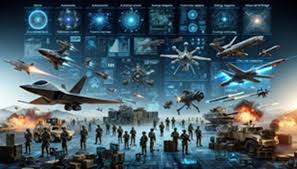
The concept of “battlefield beyond boundaries” encapsulates the evolution of modern warfare, where conflicts transcend traditional geographic and physical limits, intertwining with industries that develop, supply, and profit from advanced technologies. This convergence blurs the lines between military and civilian spheres, raising critical questions about economics, security, ethics, and global governance. Modern battlefields extend across land, sea, air, cyberspace, and outer space, driven by technological advancements and the increasing integration of commercial industries into military operations.


  1. The Expanding Nature of Military Conflicts

Modern warfare has evolved beyond traditional battlefields, incorporating multiple domains and strategies that challenge conventional doctrines.

  • Multi-Domain Warfare: Conflicts are no longer confined to land, sea, and air. Cyberspace and outer space have become critical battlegrounds, with operations involving satellites, cyberattacks, and digital infrastructure. For instance, the Russia-Ukraine conflict highlights the use of commercial satellites like Starlink for real-time communication and coordination.
  • Hybrid Warfare: This approach combines conventional military forces with non-kinetic elements such as cyberattacks, disinformation campaigns, economic sanctions, and energy weaponisation. These tactics influence global public opinion and blur the lines between combatants and civilians.
  • Asymmetric Warfare: The rise of non-state actors and unconventional tactics, such as the use of commercial off-the-shelf (COTS) drones for reconnaissance and attacks, demonstrates the adaptability and affordability of modern tools in conflicts, as seen in Ukraine.
  • Globalisation of Conflict: Military engagements impact global supply chains, financial systems, and trade, with long-range weapons like hypersonic missiles and drones enabling strikes far from traditional frontlines, making civilian areas vulnerable.


  1. Impact of Emerging Technologies

Technological advancements are reshaping the battlefield, enhancing capabilities while introducing new challenges.

  • Artificial Intelligence (AI): AI revolutionises military operations by enabling faster decision-making, predictive analytics, and autonomous systems. It enhances surveillance, logistics, and battlefield awareness by analysing vast datasets from sensors, satellites, and civilian devices.
  • Robotics and Autonomous Systems (RAS): Unmanned vehicles (UAVs, UUVs, UGVs) and robotic systems reduce human risk in hazardous environments, improve logistics, and provide real-time intelligence. Military robotics is projected to reach a market size of $21.2 billion by 2032.
  • Cybersecurity: With increased reliance on networked systems, protecting critical defence infrastructure from cyberattacks is paramount. Technologies like blockchain and private 5G networks ensure secure, real-time coordination across sprawling battlefield networks.
  • Space-Based Technologies: Satellites provide critical intelligence, precision targeting, and communication capabilities. Companies like SpaceX play a pivotal role by supplying infrastructure like Starlink, which has proven vital in modern conflicts.
  • Hypersonic Weapons: These high-speed, manoeuvrable missiles challenge existing defence systems, potentially destabilising traditional deterrence mechanisms.
  • Additive Manufacturing (3D Printing): Enables rapid production of complex components, reducing reliance on traditional supply chains and addressing wartime shortages, such as artillery shells in the Russia-Ukraine conflict.
  • Directed Energy Weapons (DEWs): Lasers and high-power microwaves offer defence against high-speed threats but face challenges related to power requirements and atmospheric conditions.
  • Electrification and Sustainability: The defence industry is shifting toward electric and hydrogen-powered systems and eco-friendly materials to lower costs and meet regulatory demands, balancing military innovation with sustainability goals.


  1. Transformation of the Defence Industry

The global defence sector is undergoing significant changes, driven by technological advancements, economic factors, and geopolitical dynamics.

  • Military-Industrial Complex (MIC): The MIC, encompassing defence contractors like Lockheed Martin, BAE Systems, and Raytheon, drives innovation and production. This relationship influences economic policies, technological development, and societal structures.
  • Commercial Technology Integration: Companies traditionally associated with civilian sectors, such as SpaceX and Silicon Valley tech firms, are increasingly vital to military applications, providing solutions like satellites, AI, and cybersecurity.
  • Increased R&D Investment: Nations are investing heavily in research and development to maintain technological superiority, with the global defence equipment market projected to grow from $517.2 billion in 2023 to $762.1 billion by 2032.
  • Globalised Defence Markets and Supply Chains: International collaboration, foreign direct investment, and interconnected supply chains are increasing, though conflicts expose vulnerabilities, such as semiconductor shortages and reliance on critical resources like rare earth minerals.
  • Rapid Procurement and Indigenous Innovation: Active conflicts, like the 2025 India-Pakistan confrontation, accelerate defence spending and local production, as seen in policies like “Make in India,” which aim to boost self-reliance.
  • Dual-Use Technology: Military R&D, such as GPS and drones, benefits civilian sectors but also risks militarising civilian infrastructure, making it a target in conflicts.


  1. Industry as a Battlefield

Industries are not just enablers of warfare but have become battlegrounds themselves, targeted and leveraged in geopolitical conflicts.

  • Cyberwarfare: Tech companies are frontline defenders against nation-state hackers targeting critical infrastructure, such as data centres and telecom networks.
  • Supply Chain Warfare: Semiconductor shortages and sanctions highlight how industries are weaponised, with control over resources like rare earth minerals, oil, and gas becoming strategic priorities.
  • War Economies: Conflicts generate industries of private security, cyber defence, reconstruction, and resource extraction, but economies tied to war may find peace less profitable.


  1. Ethical and Policy Considerations

The integration of advanced technologies and industries into warfare raises significant ethical and legal challenges.

  • Lethal Autonomous Weapons (LAWs): The development of fully autonomous weapons raises concerns about accountability and the role of humans in targeting decisions, complicating compliance with international humanitarian law (IHL).
  • Civilian Infrastructure as Targets: The use of civilian technologies in military operations risks designating them as legitimate targets, raising humanitarian concerns and questions about the scope of cyber warfare.
  • Maintaining Strategic Stability: Emerging technologies like hypersonics and AI-driven weapons could destabilise deterrence mechanisms, increasing the risk of miscalculation and escalation.
  • Global Governance and Arms Control: The rapid pace of technological change necessitates international cooperation to address regulatory gaps in existing frameworks, like the Geneva Conventions, and promote responsible development of new military technologies.
  • Profit vs. Peace: The profitability of conflict-driven industries raises ethical questions about whether corporations should benefit from wars that cause humanitarian crises.
  • Privatisation of War: The rise of private military companies blurs accountability for violence, challenging traditional notions of state-controlled warfare.


  1. Global and Societal Impacts

The interplay of military conflicts and industry has far-reaching consequences for economies, societies, and global power dynamics.

  • Economic Ramifications: Conflicts disrupt global supply chains, food security, and economies, while industries adapt to meet wartime demands or mitigate losses. For nations like India, heightened conflict drives job creation but exposes vulnerabilities in supply chains and technology.
  • Technological Spillover: Wartime innovations, such as radar from WWII, often lead to civilian applications, driving broader industrial and societal advancements.
  • Geopolitical Shifts: The race for technological supremacy in AI, autonomous systems, and space militarisation influences global power dynamics, with nations like China and the U.S. competing for dominance.
  • Sustainability vs. Security: Defence industries face pressure to balance military innovation with climate goals, integrating eco-friendly technologies while maintaining operational effectiveness.


Conclusion

The “battlefield beyond boundaries” reflects a paradigm where military conflicts are no longer confined to physical spaces but extend into digital, economic, and societal domains, deeply intertwined with industrial advancements. The integration of commercial technologies, the rise of autonomous systems, and the globalisation of defence markets challenge traditional warfare doctrines, requiring new strategies, ethical frameworks, and international regulations. As battlefields expand to encompass industries, economies, and technologies, understanding this interdependence is essential to navigating the complex ethical, economic, and political challenges of modern warfare. The future of conflict will be defined not only by armies and strategies but by the global industries that design, supply, and sustain the mechanisms of war.


Please Add Value to the write-up with your views on the subject.


1879
Default rating

Please give a thumbs up if you  like The Post?


For regular updates, please register your email here:-

Subscribe


References and credits

To all the online sites and channels.

Pics Courtesy: Internet

Disclaimer:

Information and data included in the blog are for educational & non-commercial purposes only and have been carefully adapted, excerpted, or edited from reliable and accurate sources. All copyrighted material belongs to respective owners and is provided only for wider dissemination.


References:-


  1. Singer, P. W. (2009). *Wired for War: The Robotics Revolution and Conflict in the 21st Century*. Penguin Books.
  2. Kaldor, M. (2012). *New and Old Wars: Organised Violence in a Global Era* (3rd ed.). Stanford University Press.
  3. Grey, C. S. (2015). *The Future of Strategy*. Polity Press.
  4. Latiff, R. H. (2017). *Future War: Preparing for the New Global Battlefield*. Knopf.
  5. Bitzinger, R. A. (2021). “The Global Defence Industry in the 21st Century: Trends and Transformations.” *Journal of Strategic Studies*, 44(3), 321–345.
  6. Gilli, A., & Gilli, M. (2019). “The Diffusion of Drone Warfare? Industrial, Organisational, and Infrastructural Constraints.” *Security Studies*, 28(4), 661–696.
  7. Horowitz, M. C. (2018). “Artificial Intelligence, International Competition, and the Balance of Power.” *Texas National Security Review*, 1(3), 36–57.
  8. Lin, J., & Singer, P. W. (2022). “The Cyber Battlefield: How Nation-States and Non-State Actors Are Redefining Warfare.” *Foreign Affairs*, 101(2), 88–97.
  9. Raska, M. (2020). “The Sixth RMA Wave: Disruption in Military Affairs?” *Journal of Strategic Studies*, 43(6), 834–860.
  10. International Institute for Strategic Studies (IISS). (2023). *The Military Balance 2023*. IISS.
  11. RAND Corporation. (2021). *The Future of Warfare in 2030: Projecting Conflict in a Highly Networked World*. RAND Corporation.
  12. Stockholm International Peace Research Institute (SIPRI). (2024). *SIPRI Yearbook 2024: Armaments, Disarmament, and International Security*. Oxford University Press.
  13. NATO Science and Technology Organisation. (2022). *Emerging and Disruptive Technologies: Implications for NATO Defence Planning*. NATO.
  14. United Nations Institute for Disarmament Research (UNIDIR). (2023). *The Weaponisation of Emerging Technologies: Ethical and Legal Challenges*. UNIDIR.


636: PSYCHOLOGICAL WARFARE IN UKRAINE: SUCCESS OR FAILURE


My Article was published in the News Analytics Journal of Mar 25.


Psychological warfare (psywar) aims to influence perceptions, morale, and decision-making, often targeting adversaries and domestic populations. In the context of the Russia- Ukraine conflict, Russia’s psywar likely seeks to demoralise Ukrainians, fracture their resistance, sow distrust in their leadership, and bolster domestic support within Russia for the war effort. An evaluation of Russia’s psychological warfare (psywar) in Ukraine would need an assessment of its objectives, tactics, and measurable impacts based on available evidence and recent developments.  This paper argues that while Russia’s psychological warfare has succeeded in shaping domestic narratives and straining Western unity, it has failed to break Ukrainian resistance or achieve a decisive strategic victory.


Historical Perspective of Russian Psychological Warfare

Russian psychological warfare (psywar) has a rich and intricate history, deeply ingrained in the nation’s strategic culture. From the Tsarist era to modern hybrid warfare, Russia has consistently employed psychological operations to manipulate perception, control narratives, and weaken adversaries. The roots of Russian psywar can be traced back to the early 20th century when the Bolsheviks effectively used propaganda to consolidate power during and after the Russian Revolution. Lenin and Trotsky understood that controlling information was just as crucial as military victories, leading to the institutionalisation of propaganda through organisations like Agitprop, which shaped Soviet political messaging.

During the early Soviet period, psywar techniques were used not only to suppress internal dissent but also to influence communist movements worldwide. The concept of “reflexive control,” developed in Soviet military thought, became a key element of Russian psywar, aiming to manipulate opponents into making decisions that ultimately benefit Russian interests. By the time of World War II, Soviet psychological operations had evolved into large-scale deception campaigns, including the use of maskirovka (military deception) to mislead Nazi Germany. Throughout the Cold War, the Soviet Union refined these methods, launching extensive “Active Measures” under the KGB to manage information and exploit societal divisions in Western nations.

Following the collapse of the Soviet Union, Russia, under Vladimir Putin, revived and modernised its psychological warfare strategies, adapting them to the digital age. The contemporary Russian approach to psywar, often called “information confrontation”, integrates cyber operations, media manipulation, and social engineering to achieve strategic objectives.


Russian Psywar during the Ukraine War

Russian psychological warfare in the context of the Ukraine war has been a multifaceted effort aimed at shaping perceptions both domestically and internationally. The multi-layered strategy integrates military, political, and information operations to shape perceptions, demoralise opponents, and influence global narratives.  Psychological warfare has played a central role in Russia’s strategy throughout the Ukraine war, aiming to weaken Ukrainian resistance, shape international perceptions, and manipulate domestic narratives. Russia has employed a mix of cyber operations, information management campaigns, battlefield deception, and psychological intimidation to erode Ukrainian morale and divide Western support.

One of the key elements of Russia’s psychological warfare has been its use of information management. Russian state media and social media bots have employed online platforms with narratives that neo-Nazis run Ukraine to accusations that NATO is using Ukraine as a puppet to attack Russia. These narratives justify the war to the Russian population, confuse Ukrainian citizens, and create divisions within Western democracies by amplifying anti-war and isolationist sentiments. Russian narratives have also sought to exploit war fatigue in Western nations, emphasising that financial and military support for Ukraine is futile, expensive, or escalatory.

One prominent example of Russia’s psychological warfare tactics is the ‘Doppelganger’ campaign initiated in 2022 by the Russian IT firm Social Design Agency (SDA). This operation aimed to undermine support for Ukraine by manipulating public opinion in countries like Germany, France, Italy, and the United Kingdom. The campaign involved creating news articles that presented a pro-Russian perspective on the conflict and deploying AI-powered bot networks to disseminate these narratives on social media platforms. These bots were programmed to engage with users, spreading Russian narratives and pro-Russian sentiments. The ‘Doppelganger’ campaign demonstrates how Russia uses digital platforms and AI to shape international perceptions and influence public opinion in its favour.

Cyber warfare has also been a critical psychological tool. Russian cyber groups have often launched cyber attacks on Ukrainian government institutions, banks, and critical infrastructure. Beyond disabling systems, these attacks serve a psychological function, creating uncertainty, fear, and the impression that Ukraine’s leadership cannot protect its citizens.  Russian cyber efforts extend beyond Ukraine, targeting Western institutions with cyber sabotage to weaken overall support for Kyiv.


All-Out or Restricted Psywar.

While Russia is undeniably engaged in psywar, it may not be pushing it to its fullest potential. A maximalist Russian psywar would have included massive global disinformation by flooding international media and social platforms with tailored narratives to isolate Ukraine diplomatically and erode Western support. It would have shut down Ukraine’s communication networks entirely (e.g., via cyber and electronic warfare) to prevent resistance messaging and sow chaos. Russia would have infiltrated Ukrainian society with agents or digital campaigns to fracture trust in leadership and incite internal dissent. Russia employed these tactics, but not at an all-out scale or intensity.

Russia isn’t indulging in a full-fledged war not because it’s unwilling but because strategy, resources, and context constrain it. The war’s hybrid nature means that psywar is a key component, but it’s subordinated to military and economic priorities rather than unleashed as a standalone juggernaut. Russia seems content with a steady, if not maximal, psychological pressure adequate to grind Ukraine down but not bold enough to gamble on total dominance.

Strategic Restraint or Compulsion.  A no-holds-barred psywar could provoke stronger NATO responses, like direct intervention or crippling sanctions beyond the current scope. Putin appears to calibrate efforts to avoid provoking direct NATO intervention strategically (e.g., nuclear rhetoric is loud but not yet acted upon). Escalating psywar abroad might require diverting resources from domestic propaganda, which keeps Putin’s regime intact. A complete external focus could weaken the internal control. A full-fledged psywar demands significant investment in cyberinfrastructure, media saturation, and personnel. Putin may believe conventional military gains suffice to force Ukraine into submission, reducing the need for an all-out psychological blitz.


Success or Failure

Despite relentless Russian strikes, Ukrainian resolve appears mixed. Reports from Kyiv indicate fatigue among civilians and soldiers, with some expressing doubts about a negotiated peace due to distrust in Russia. However, Ukraine’s counteroffensives and continued drone strikes on Russian territory demonstrate resilience and a refusal to capitulate. This suggests Russia has not fully broken Ukrainian will, though exhaustion is a growing factor after three years of war. It has partially succeeded in weakening civilian morale and straining resources but hasn’t achieved a decisive psychological collapse.

Russian psywar has aimed to undermine trust in President Volodymyr Zelenskyy’s government. While Ukraine faces internal challenges, such as ammunition shortages and delayed Western aid, there’s no clear evidence of widespread distrust or collapse in governance.  The psychological toll on Ukrainians is undeniable. Studies from 2023-2024 highlight high rates of PTSD, anxiety, and depression exacerbated by displacement and infrastructure attacks. Yet, it hasn’t translated into mass surrender or acceptance of Russian dominance.


Impact on Putin’s Image

While the Western narrative often portrays Putin as weakened by the war in Ukraine, Russia’s psychological warfare has succeeded mainly in projecting him as an even stronger leader, both domestically and among some international audiences.

Russia has effectively presented the Ukraine war as a fight for national survival against the West, rallying both elites and the public behind Putin. The Russian narrative frames the war not as an invasion of Ukraine but as a defensive struggle against NATO and Western aggression. This narrative positions Putin as the leader defending Russian sovereignty and traditions against Western imperialism, liberalism, and decadence. State media constantly refers to the war as the “Great Patriotic War 2.0,” drawing parallels with WWII to reinforce the idea of national struggle. The Kremlin has portrayed Putin as the last stronghold against Western cultural and moral decay. Messaging around traditional values, national pride, and resistance to globalisation strengthens his appeal among conservative Russians and foreign audiences in the Global South.  The War has allowed Putin to eliminate political threats, tighten control over society, and silence opposition, reinforcing his image as an unchallenged ruler.

Western leaders expected economic collapse from sanctions, but Russia’s economic resilience has strengthened Putin’s image as a leader who can outmanoeuvre Western pressure. Despite unprecedented Western sanctions, Russia avoided a total economic collapse. Trade was rerouted through China, India, Turkey, and the Middle East, showing Putin’s ability to adapt and counter Western strategies. State propaganda framed sanctions as proof of Russia’s global importance. Putin positioned himself as the leader who could make Russia self-sufficient, reducing its reliance on the West.


Influence on Europe.

Russia’s psychological warfare has significantly influenced Europe’s collective response to the war in Ukraine, exploiting political, economic, and social vulnerabilities to create divisions and slow decision-making. While the European Union (EU) has managed to maintain a generally pro-Ukraine stance, Russian psy ops have repeatedly tested and weakened European cohesion on military aid, sanctions, and strategic policy.

 Exploiting Political Divisions in Europe. Russia has effectively deepened political polarisation within and among European nations by amplifying opposing narratives across the political spectrum. Right-wing nationalist movements have been targeted with anti-Ukraine rhetoric, portraying the war as an unnecessary financial burden. Simultaneously, left-wing anti-interventionist factions have been influenced to frame NATO and Western military aid as imperialist warmongering. Additionally, Russian information campaigns have sown doubts about Ukraine’s governance, corruption, and war prospects, eroding the moral justification for sustained European support. For example, pro-Russian political factions in Hungary, Slovakia, and parts of Germany have advocated for diplomatic negotiations with Russia over continued military aid to Ukraine. This has complicated EU-wide decision-making, as unanimous support is often required for major foreign policy measures. Far-right and populist parties in Hungary, Slovakia, and Italy have leveraged Russian-aligned narratives to challenge the EU consensus. Hungary’s Orbán, for instance, has stalled EU sanction packages (e.g., the 13th package in late 2024) by citing “peace” over confrontation, aligning with Kremlin talking points and fracturing policy cohesion.

 Weakening European Resolve on Military Aid. Russia has employed psychological pressure to deter European military assistance to Ukraine. Moscow frequently warns that Western arms supplies could escalate the conflict into a direct NATO-Russia war. President Vladimir Putin’s nuclear threats have had a chilling effect, particularly in Germany, where concerns over escalation delayed the provision of Leopard 2 tanks and later raised hesitations about supplying long-range Taurus missiles. Public opinion has also been a battleground for Russian influence. Moscow-backed media and social media campaigns have exaggerated the economic hardships caused by military aid, fuelling war fatigue. In Germany and France, protests calling for peace talks have been driven by narratives echoing Russian disinformation. In countries like France, polls from early 2025 show that 66% support EU aid to Ukraine, but 78% oppose troop deployment unless it is part of a peace deal. In Germany, scepticism about prolonged support grows amid economic pressures, with some voters echoing Russian claims of “war fatigue” amplified online. These divisions weaken the political will for a unified, robust response.

Economic Warfare and the Energy Weapon. Russia’s historical leverage over Europe’s energy supply has been a key psychological tool. The 2022 energy crisis, exacerbated by Russia’s gas cutoffs, heightened European economic fears. Russian psywar further exaggerated the risks of economic collapse, intensifying divisions within the EU. Under Prime Minister Viktor Orbán, Hungary has been a prominent example of how Russian energy influence can weaken EU unity. Orbán has repeatedly blocked or diluted Russian oil and gas sanctions, citing economic concerns. Additionally, Russia has cultivated business relationships in Germany, Italy, and Hungary to lobby against stronger sanctions, delaying EU consensus on measures such as price caps on Russian energy exports.

Encouraging Fractures in NATO and the EU. Russia has sought to drive a wedge between Europe and the United States by portraying Washington as manipulating the war for its strategic benefit. This narrative has traction among European leaders who advocate for greater strategic autonomy. French President Emmanuel Macron, for example, has suggested that Europe develop a more independent security framework rather than relying solely on NATO. Russian psyops have also exacerbated differences between Eastern and Western Europe. Poland and the Baltic states have been staunch supporters of Ukraine, pushing for aggressive military aid and sanctions. In contrast, France, Germany, and Italy have sometimes been more hesitant, leading to internal EU friction. Russia amplifies these divisions to slow collective decision-making, delaying much-needed aid to Ukraine.


Conclusion

Russia’s psychological warfare in Ukraine has proven to be a sophisticated and adaptive strategy that not only targets Ukraine’s internal stability but also seeks to fracture the unity of its Western allies. By deploying a combination of information management, cyber-attacks, and strategic political manoeuvres, Russia has managed to unsettle a coherent European response by amplifying divisions, fostering hesitation, and exploiting vulnerabilities. It hasn’t derailed EU support for Ukraine but has slowed and fragmented it.

Russia’s psywar has reinforced Putin’s strongman image by shaping domestic narratives, exploiting Western vulnerabilities, and asserting global influence. While it hasn’t overturned the Western perspective entirely, it has created a parallel reality where Putin’s strength is maintained and enhanced, particularly among Russian and non-Western audiences. Whether this perception holds as the war evolves remains uncertain, but for now, Russia’s psywar has undeniably kept Putin’s strongman myth alive and potent.


Please Do Comment.


1879
Default rating

Please give a thumbs up if you  like The Post?


For regular updates, please register your email here:-

Subscribe


References and credits

To all the online sites and channels.

Pics Courtesy: Internet

Disclaimer:

Information and data included in the blog are for educational & non-commercial purposes only and have been carefully adapted, excerpted, or edited from reliable and accurate sources. All copyrighted material belongs to respective owners and is provided only for wider dissemination.


References:-

  1. Thomas, Timothy. 2021. “Russian Military Thought: Concepts of Psychological Operations.” Journal of Slavic Military Studies 34 (1): 1-24.
  1. NATO Strategic Communications Centre of Excellence. 2022. “Russia’s Grand Strategy in the Information Space.” Riga: NATO StratCom COE.
  1. RAND Corporation. 2021. “Russian Information Warfare: The Role of Narrative and Propaganda.” Santa Monica, CA: RAND Corporation.
  1. European Council on Foreign Relations. 2022. “The Kremlin’s Playbook: Russia’s Information Operations in Europe.”
  1. Carnegie Europe. 2022. “Why Europe is Struggling to Counter Russian Information Warfare.” Brussels: Carnegie Europe.
  1. European Union External Action Service (EEAS). 2023. “Russia’s Disinformation Ecosystem and its Impact on Europe.”
  1. Chatham House. 2023. “Putin’s Strongman Image and the Role of Propaganda.” London: Chatham House.
  1. The Atlantic Council. 2023. “The Resilience of Putin’s Popularity Amid Western Sanctions.” Washington, D.C.: The Atlantic Council.
  1. The Wilson Center. 2022. “How Putin Weaponises Weakness Perception.” Washington, D.C.: The Wilson Center.
  1. Harding, Luke. 2023. Invasion: Russia’s Bloody War and Ukraine’s Fight for Survival. London: Guardian Faber.
  1. Kofman, Michael, and Rob Lee. 2024. “Assessing Ukraine’s Strategy Amidst Western Uncertainty.” War on the Rocks, February 10, 2024.
  1. The Guardian. 2024. “EU Divided Over Continued Support for Ukraine.” March 2024.
  1. NATO Strategic Communications Centre of Excellence. Reports on Russian Information Warfare. Accessed March 2024.
  1. Brookings Institution. 2023. “The West’s Cognitive Dissonance on Russia: A Strategic Weakness.” Washington, D.C.: Brookings Institution.

605: THE DIGITAL SILK ROAD: IMPLICATION OF CHINA’S TECHNO-POLITICAL STRATEGY


My article was published on the Life of Soldier website on 20 Feb 25 and in the Mar 25 issue of the e-magazine.


The Digital Silk Road (DSR) is a crucial component of China’s Belt and Road Initiative (BRI), focusing on expanding digital connectivity, infrastructure, and technological cooperation across the globe. Launched in 2015, the DSR aims to establish China as a global leader in digital innovation, telecommunications, artificial intelligence (AI), cloud computing, and e-commerce. China is reshaping global digital landscapes by investing in undersea cables, data centers, 5G networks, and satellite systems, particularly in developing nations.


While the DSR offers economic opportunities, it raises significant concerns about cyber security, digital sovereignty, geopolitical leverage, and the global balance of power. This article explores the implications of China’s techno-political strategy through the Digital Silk Road, highlighting its impact on international relations, digital governance, and technological standards.


Objectives and Scope of China’s Digital Silk Road


China’s Digital Silk Road (DSR) is an extension of the Belt and Road Initiative (BRI) to build a global digital infrastructure and strengthen China’s role as a technological and cyber power. The DSR focuses on expanding global digital infrastructure, enhancing technological dominance, promoting a state-centric internet governance model, fostering economic and financial integration, and leveraging cyber security for geopolitical influence. These objectives position China as a leader in the digital economy while shaping the global technology landscape.


Expanding Global Digital Infrastructure. One of the primary objectives of the DSR is to build and broaden digital infrastructure across Asia, Africa, Latin America, and parts of Europe. China invests heavily in 5G networks, fibre-optic cables, satellite communication, cloud computing, and data centers in partner countries. Companies like Huawei, ZTE, and China Mobile are key in setting up next-generation telecommunications networks. By providing affordable digital solutions, China enhances digital connectivity in developing economies while ensuring long-term dependence on its technology.


Enhancing Technological Dominance. China’s DSR is a strategic initiative to establish global leadership in emerging technologies such as artificial intelligence (AI), quantum computing, blockchain, and smart cities. Through investments in research and development, China aims to surpass Western competitors in critical technological domains. The DSR facilitates technology transfer to BRI nations, strengthening China’s influence in digital economies worldwide. By setting standards for 5G, digital currencies, and AI governance, China aspires to shape the future technological order in its favour.


Promoting a State-Centric Internet Governance Model. A significant aspect of the DSR is to promote China’s vision of cyber sovereignty, where individual nations exert greater control over their internet spaces. Unlike the Western model of an open and decentralised internet, China’s approach advocates for government-regulated digital spaces. By exporting its Great Firewall-inspired surveillance technology, China helps partner countries implement censorship, content control, and cyber monitoring. This model appeals to authoritarian and semi-authoritarian regimes seeking to maintain strict control over digital platforms.


Economic and Financial Integration. The DSR aligns with China’s broader goal of deepening economic integration with partner countries. This initiative’s key components are digital payment systems, e-commerce platforms, and fintech solutions. Platforms like WeChat Pay and Alipay are expanding their global reach, offering alternative financial ecosystems independent of Western-controlled networks like Visa and Mastercard. Additionally, China is promoting the digital yuan (e-CNY) as a potential global currency, challenging the dominance of the US dollar in international trade and finance.


Cyber security and Geopolitical Leverage. China’s control over global digital infrastructure provides it with significant cyber security and geopolitical leverage. Deploying 5G networks and undersea cables raises concerns about potential espionage and data security risks. Many Western nations have raised alarms about the influence China could exert through its digital infrastructure, particularly in strategic sectors. By establishing cyber security partnerships with DSR nations, China strengthens its digital defence capabilities while expanding its cyber footprint globally.


Geopolitical Dimensions.


Strengthening China’s Global Influence. The DSR allows China to position itself as a leader in digital infrastructure and emerging technologies. China cultivates long-term dependencies among participating nations by providing affordable, high-quality digital solutions.


Challenging Western Technological Hegemony. Western nations, led by the U.S. and the European Union, dominate global technology standards and infrastructure. The DSR challenges this dominance by offering alternative systems for 5G networks, cloud computing, and AI governance. Chinese companies like Huawei, ZTE, and Alibaba Cloud are expanding their presence, often undercutting Western competition in price and accessibility.


Digital Authoritarianism and Cyber Sovereignty. China’s model of digital governance favours state control over the Internet. Through DSR partnerships, China exports its Great Firewall approach, influencing governments to adopt stricter cyber regulations, internet censorship, and surveillance technologies. Countries with integrated Chinese digital infrastructure are more likely to follow Beijing’s lead in cyber regulations, shifting global norms toward a state-centric internet rather than a decentralised, open model.


Strategic Control over Critical Digital Infrastructure. Control over global digital infrastructure grants China significant geopolitical leverage. Fibre-optic cables, satellite navigation systems (BeiDou), and cloud computing networks enable China to influence data flows, monitor foreign governments, and potentially disrupt communication channels in conflict.


Economic and Technological Implications


Digital Yuan and Financial Influence. China’s introduction of the Digital Yuan (e-CNY) under the DSR strategy represents a direct challenge to the U.S. dollar’s dominance in international trade. By promoting digital currency adoption in Belt and Road Initiative nations, China reduces reliance on SWIFT transactions, mitigating the impact of Western financial sanctions.


E-Commerce and Digital Payments Expansion. Alibaba, Tencent, and other Chinese tech giants are expanding e-commerce and fintech ecosystems across Africa, Southeast Asia, and Latin America. This expansion integrates developing economies into China’s digital sphere, creating economic dependencies favouring Beijing’s trade policies.


AI, Big Data, and Surveillance Technologies. China’s leadership in artificial intelligence and big data analytics has implications for both governance and security. Many countries that embrace Chinese-built smart cities, AI-driven surveillance, and facial recognition systems risk becoming more aligned with China’s authoritarian digital model.


5G and Telecommunications Control. Huawei and ZTE dominate global 5G infrastructure projects, particularly in developing nations. The reliance on Chinese telecom networks raises concerns over data privacy, potential backdoor access, and espionage risks. This leads to Western pushback and bans on Huawei equipment in the U.S., UK, and Australia.


Cyber Security Threats and Espionage Concerns


China’s involvement in building and managing digital infrastructure raises fears of hidden backdoors, allowing for cyber espionage and data exfiltration. Many Chinese technology firms, such as Huawei and ZTE, have been accused of having close ties with the Chinese government, which could potentially use these networks for intelligence gathering. Nations relying on Chinese-built digital infrastructure risk compromising their communications, governmental data, and critical security operations.


Espionage and Data Harvesting. One of the DSR’s primary concerns is the large-scale data collection from participating countries. Chinese firms involved in cloud computing, smart city technologies, and undersea cables could gain access to vast amounts of sensitive information, including personal data, financial transactions, and military communications. This data could be exploited for economic advantage, intelligence gathering, or coercion, enhancing China’s strategic leverage over nations.


Cyber Attacks and Infrastructure Disruption. Nations’ dependence on Chinese-built digital infrastructure increases their vulnerability to cyber-attacks. There is a risk that in times of geopolitical tensions, Beijing could leverage access to these systems to disrupt critical services such as power grids, financial networks, and telecommunications. Concerns persist regarding Chinese-manufactured hardware containing software vulnerabilities that could be exploited for state-sponsored cyber operations.


AI and Disinformation Campaigns. China’s advancements in AI and big data analytics enable sophisticated disinformation campaigns. By influencing narratives through social media manipulation, AI-generated content, and state-backed media, China could shape public opinion and political outcomes in target countries. Such interference could destabilise democratic institutions, promote pro-China sentiment, and undermine opposition to Beijing’s global ambitions.


Digital Sovereignty and Dependency Risks. Many developing nations, enticed by China’s affordable technology and financial assistance, risk becoming overly reliant on Beijing for digital infrastructure. This dependency undermines their digital sovereignty, limiting their ability to control data, cyber security policies, and technological standards. Once deeply integrated into China’s digital ecosystem, countries may struggle to transition to alternative suppliers without significant economic and operational disruptions.


Global Responses and Countermeasures


In response to the security risks posed by China’s Digital Silk Route (DSR), many nations and alliances have implemented countermeasures to safeguard their digital infrastructure and reduce reliance on Chinese technology. The United States, European Union, and key Indo-Pacific allies have tightened regulations on Chinese firms like Huawei and ZTE, citing concerns over espionage and cyber security threats. The U.S. has led initiatives such as the Clean Network Program, restricting the use of Chinese telecommunications equipment in critical infrastructure. Similarly, the EU’s 5G Toolbox provides guidelines to mitigate high-risk vendors’ influence on European digital networks. Additionally, alternative global initiatives such as the Blue Dot Network and the Partnership for Global Infrastructure and Investment (PGII), spearheaded by the G7, aim to provide transparent and secure alternatives to Chinese digital infrastructure projects. Nations also invest in cyber security frameworks, supply chain diversification, and AI-driven disinformation countermeasures to reduce Beijing’s digital influence. While China’s DSR continues to expand, international efforts are increasingly focused on promoting secure, resilient, and independent digital ecosystems to counter the strategic risks associated with Chinese technological dominance.


India’s Strategic Response. India has adopted a multi-faceted approach to counter China’s Digital Silk Route (DSR) by enhancing cyber security, restricting Chinese tech investments, and promoting domestic digital initiatives. New Delhi has banned numerous Chinese apps over data security concerns and imposed stricter scrutiny on Chinese telecom firms like Huawei and ZTE in its 5G rollout. India is also expanding its digital partnerships with the U.S., Japan, and the EU to develop secure alternatives. Initiatives like Digital India and Made in India aim to boost indigenous tech capabilities, reducing dependence on Chinese infrastructure while strengthening national cybersecurity and data sovereignty.


Emerging Digital Alliances


In response to China’s Digital Silk Route (DSR), global powers are forming strategic digital alliances to promote secure and transparent alternatives. The Quad (U.S., India, Japan, Australia) is enhancing collaboration on 5G, AI, and cyber security. The EU-U.S. Trade and Technology Council (TTC) focuses on setting global tech standards. The Blue Dot Network and Partnership for Global Infrastructure and Investment (PGII), led by G7 nations, offer financing for secure digital infrastructure in developing countries. These alliances aim to counter China’s technological dominance by fostering worldwide resilient, open, and trustworthy digital ecosystems.


Conclusion


The Digital Silk Road is more than just an economic initiative. It is a strategic instrument of techno-political influence that enhances China’s global standing. While it offers significant opportunities for digital development, it raises concerns about cyber security, digital authoritarianism, and geopolitical dependence. As nations seek to balance economic engagement with China against strategic vulnerabilities, the future of the DSR will shape the global digital order, cyber security norms, and geopolitical alignments in the coming decades. The world is at a crossroads where the battle for digital supremacy will define 21st-century geopolitics.


Please Do Comment.


Link to the article on the website:-

The Digital Silk Road: Implication Of China’s Techno-Political Strategy


1879
Default rating

Please give a thumbs up if you  like The Post?


For regular updates, please register your email here:-

Subscribe


References and credits

To all the online sites and channels.

Pic Courtesy Internet.

References:-

  1. Eurasia Group. “The Geopolitical Consequences of the Digital Silk Road: China’s Emerging Technology Influence.” Strategic Studies Quarterly, vol. 15, no. 3, 2021, pp. 12–34.
  1. Feldstein, Steven. “The Rise of Digital Authoritarianism: China, AI, and Repressive Governance.” Foreign Affairs, vol. 99, no. 3, 2020, pp. 56–72.
  1. Chen, Dingding, and Wang, Xiaojun. “AI, Big Data, and China’s Quest for Global Digital Supremacy.” Asian Security, vol. 16, no. 4, 2022, pp. 431–452.
  1. Segal, Adam. “China’s Vision for Cyber Sovereignty and Implications for Global Internet Governance.” International Security, vol. 45, no. 2, 2021, pp. 65–91.
  1. Creemers, Rogier. “China’s Cyber Governance Model: Between Control and Connectivity.” Journal of Cyber Policy, vol. 3, no. 1, 2018, pp. 40–57.
  1. Brookings Institution. Beijing’s Digital Strategy: The Global Expansion of the Digital Silk Road. Brookings, 2022.
  1. Mozur, Paul. “How China is Exporting Digital Authoritarianism.” The New York Times, October 15, 2022.
  1. McLaughlin, Timothy. “The Digital Silk Road and the New Internet Order.” The Atlantic, March 22, 2023.
  1. Strumpf, Dan. “Beijing’s Big Tech Play: The Digital Silk Road and the Fight for Global Networks.” The Wall Street Journal, May 3, 2023.
  1. Denyer, Simon. “China’s Surveillance Tech Goes Global.” The Washington Post, August 27, 2022.
  1. The Economist. “China’s Digital Silk Road: Exporting the Future or a Dystopian Vision?” The Economist, September 12, 2023.
  1. U.S.-China Economic and Security Review Commission. China’s Digital Silk Road and Its Implications for U.S. Interests. Washington, D.C., 2023.
  1. Center for a New American Security (CNAS). China’s Tech Expansion and the Global Competition for Digital Supremacy. CNAS Report, 2023.
  1. European Parliament. The EU Response to China’s Digital Silk Road: Strategic Risks and Opportunities. Brussels, 2022.
  1. Council on Foreign Relations (CFR). “How China’s Digital Silk Road is Reshaping Global Technology Governance.” www.cfr.org
  1. Center for Strategic and International Studies (CSIS). “The Digital Silk Road: Expanding Chinese Influence in Global Tech.” www.csis.org
  1. Mercator Institute for China Studies (MERICS). “China’s Tech Diplomacy and the Digital Silk Road.” www.merics.org
  1. RAND Corporation. “The Digital Silk Road: Security and Economic Implications for the West.” www.rand.org

Disclaimer:

Information and data included in the blog are for educational & non-commercial purposes only and have been carefully adapted, excerpted, or edited from reliable and accurate sources. All copyrighted material belongs to respective owners and is provided only for wider dissemination.


English हिंदी