653:INDIAN SPACE PROGRAM’S HISTORIC LEAP: GROUP CAPTAIN SHUBHANSHU SHUKLA SET TO EMBARK ON A LANDMARK JOURNEY TO THE SPACE STATION


My Article published on The EuraisianTimes website on 19 Apr 25.


Indian Air Force Group Captain Shubhanshu Shukla will become the first Indian astronaut to visit the International Space Station (ISS) as part of Axiom Space’s Ax-4 mission, launching no earlier than May 29, 2025, from NASA’s Kennedy Space Centre in Florida aboard a SpaceX Crew Dragon spacecraft. Group Captain Prasanth Balakrishnan Nair is his backup. Shukla, a test pilot and Gaganyaan mission astronaut-designate, will serve as the mission pilot for the 14–21-day mission, commanded by former NASA astronaut Peggy Whitson, with mission specialists Sławosz Uznański-Wiśniewski (Poland) and Tibor Kapu (Hungary).

Shukla will conduct seven scientific experiments, including studies on muscle loss, microgravity screen time effects, and bio-farming, supporting ISRO’s Gaganyaan research. He will also promote Indian culture by carrying artefacts and practising yoga on the ISS. The Ax-4 mission, a collaboration between NASA, Axiom Space, and ISRO, includes 60 experiments from 31 countries. This historic mission, India’s first astronaut trip to the ISS and the second Indian in space since Rakesh Sharma’s 1984 Soyuz mission, highlights India’s rising prominence in global space exploration.

Established in 1969, the Indian Space Research Organisation (ISRO) has transformed India into a global space powerhouse. From humble beginnings with sounding rockets to executing complex interplanetary missions, ISRO’s journey reflects a blend of scientific excellence, frugal engineering, and ambitious vision.

The Indian Space Program: A Journey of Innovation and Ambition

Origins and Early Development. India’s space program began under the visionary leadership of Dr. Vikram Sarabhai, who recognised space technology’s potential to address national challenges like communication, education, and resource management. The Indian National Committee for Space Research (INCOSPAR), formed in 1962, laid the groundwork for ISRO. The first significant milestone was the launch of the Nike-Apache sounding rocket from Thumba in 1963, marking India’s entry into space research. ISRO’s early focus was on developing indigenous satellite and launch vehicle technologies. The launch of Aryabhata, India’s first satellite, in 1975 aboard a Soviet rocket, was a pivotal moment. By 1980, ISRO achieved a breakthrough with successfully launching the Rohini satellite using the Satellite Launch Vehicle (SLV-3), making India the sixth nation capable of independently launching satellites.

Building Capabilities. In the 1980s, ISRO developed the Polar Satellite Launch Vehicle (PSLV), a versatile rocket that became the backbone of India’s space program. The PSLV’s first successful launch in 1994 enabled India to place satellites in polar and geosynchronous orbits, supporting applications like remote sensing and communication. The INSAT series, starting with INSAT-1A in 1982, revolutionised telecommunications, television broadcasting, and weather forecasting, bridging India’s rural-urban divide.  In the 1990s, ISRO expanded its Earth observation capabilities with the Indian Remote Sensing (IRS) satellite series. These satellites provided critical agriculture, disaster management, and urban planning data. The program’s emphasis on self-reliance led to developing the Geosynchronous Satellite Launch Vehicle (GSLV), designed to carry heavier payloads into geostationary orbits. Despite initial setbacks, the GSLV’s success in the 2000s bolstered India’s space ambitions.

Breakthroughs in the 21st Century. The 21st century marked a turning point for ISRO, with missions that showcased its technological prowess and global competitiveness. The Chandrayaan-1 mission, launched in 2008, was India’s first lunar probe. It made headlines with the discovery of water molecules on the Moon’s surface, a finding confirmed by its Moon Impact Probe. This mission, costing just $80 million, exemplified ISRO’s cost-effective approach, earning global acclaim. In 2013, ISRO achieved another milestone with the Mars Orbiter Mission (Mangalyaan), making India the first Asian nation to reach Martian orbit and the first globally to succeed on its maiden attempt. Mangalyaan, developed at a modest $74 million, demonstrated ISRO’s ability to deliver high-impact science on a lean budget. The mission’s longevity, with the orbiter still operational in 2025, underscores ISRO’s engineering excellence. ISRO’s Chandrayaan-2 mission 2019 aimed to soft-land a rover on the Moon’s South Pole. Although the Vikram lander crashed, the orbiter continues to provide valuable lunar data. The mission showcased India’s growing ambition to tackle complex challenges. In 2023, Chandrayaan-3 achieved a historic soft landing near the lunar South Pole, making India the fourth nation to land on the Moon and the first to explore this region. The Pragyan rover’s findings on lunar soil composition have added to global lunar science.


Societal Impact and Applications

ISRO’s space program extends beyond scientific exploration, delivering tangible benefits to Indian society. The INSAT and GSAT series have enabled tele-education and telemedicine, reaching remote areas with limited infrastructure. The Navic navigation system, operational since 2018, provides precise positioning services, enhancing transportation, agriculture, and defence sectors.

ISRO’s remote sensing satellites support disaster management by monitoring cyclones, floods, and droughts. The Cartosat and Resourcesat series aid in urban planning, water resource management, and crop forecasting, contributing to food security. ISRO’s data-sharing initiatives with global agencies also strengthen international cooperation in climate monitoring and disaster response.

The space program has spurred economic growth by fostering a domestic space industry. Companies like Antrix Corporation, ISRO’s commercial arm, and private startups like Skyroot Aerospace and Agnikul Cosmos are expanding India’s space ecosystem. ISRO’s technology transfers have enabled healthcare and renewable energy innovations, amplifying its socioeconomic impact.


Challenges

Despite its Successes, ISRO faces challenges. Limited funding, with a 2024-25 budget of approximately $1.6 billion, constrains its ability to scale ambitious projects compared to NASA ($25 billion) or China’s space program. Human spaceflight, a key frontier, has progressed slowly. The Gaganyaan mission, aiming to send Indian astronauts to low Earth orbit, faced delays due to technical complexities and the COVID-19 pandemic but is now targeted for 2026.

ISRO’s reliance on government funding limits its agility in a rapidly commercialising global space sector. While private sector participation grows, regulatory hurdles and bureaucratic processes hinder faster integration. Critics also point to occasional mission failures, like the GSLV’s early setbacks or Chandrayaan-2’s partial success, as areas needing improvement. However, ISRO’s ability to learn from failures and deliver subsequent successes reflects its resilience.


Future Prospects

ISRO’s roadmap is ambitious, with plans to solidify India’s position in global space exploration. The Gaganyaan mission will mark India’s entry into human spaceflight, with four astronauts training in collaboration with international partners. The Aditya-L1 solar observatory, launched in 2023, is studying the Sun’s corona, contributing to space weather forecasting. Chandrayaan-4, planned for 2028, aims to retrieve lunar samples, while a Venus orbiter mission is under development.

ISRO is also advancing its launch capabilities. The Small Satellite Launch Vehicle (SSLV) targets the growing demand for small satellite launches, while the Next-Generation Launch Vehicle (NGLV) will support heavier payloads, including space station modules. ISRO’s proposed Bharatiya Antariksh Station (Indian Space Station) by 2035 aligns with global trends in space infrastructure.

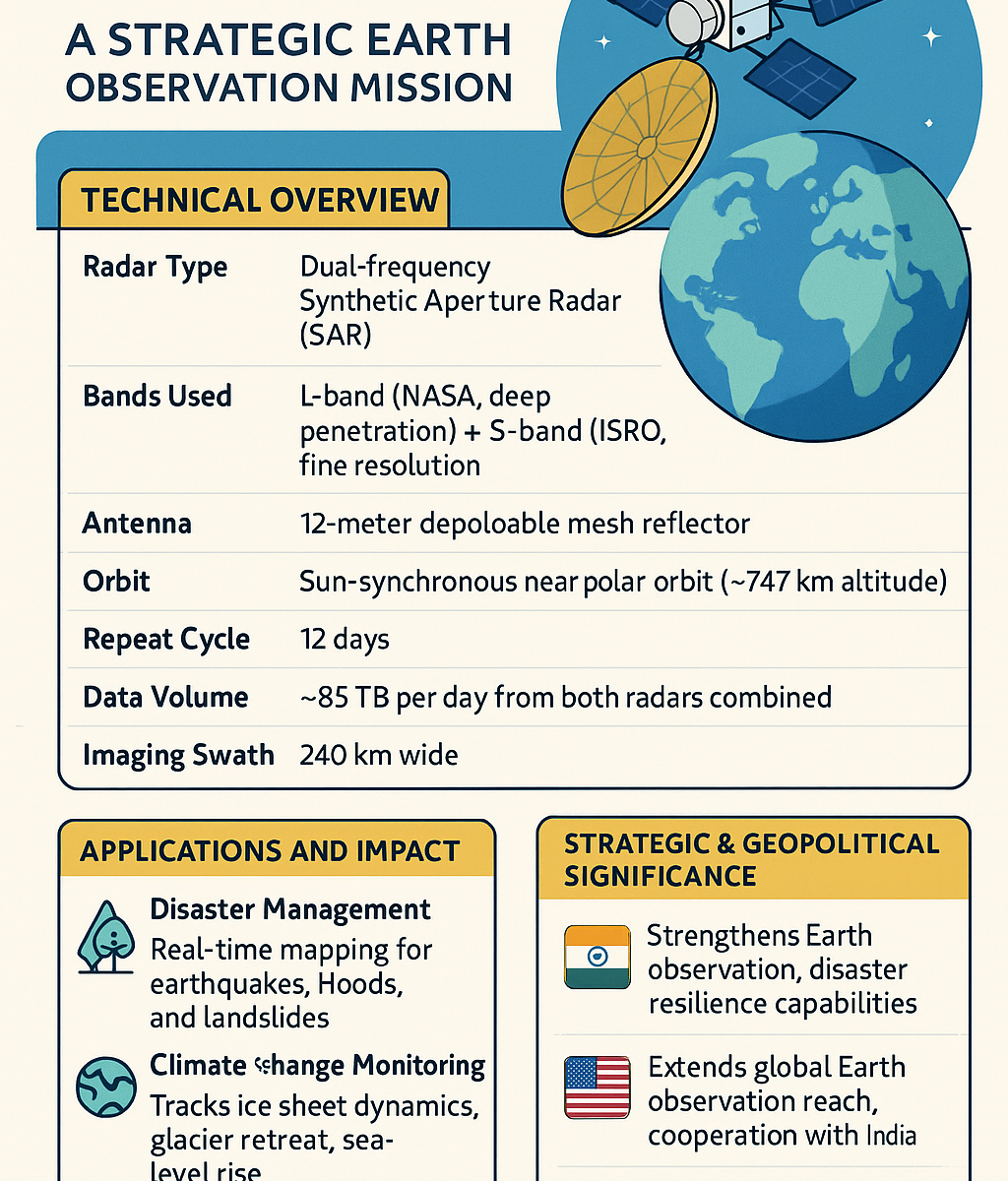
International collaboration is a priority, with ISRO partnering with NASA, ESA, and JAXA on missions like NISAR, a joint Earth-observation satellite. ISRO’s cost-effective model positions it as a preferred partner for emerging space nations and commercial entities. To stay competitive, the organisation also explores reusable launch vehicles and space robotics.


Conclusion

The Indian space program, driven by ISRO’s ingenuity and vision, has evolved from a nascent initiative to a global partner in space exploration. Its achievements, from lunar landings to interplanetary missions, reflect a commitment to scientific discovery and societal progress. While challenges like funding and commercialisation persist, ISRO’s track record of overcoming obstacles bodes well for its future.

As India aims for human spaceflight, a space station, and deeper planetary exploration, ISRO’s frugal yet impactful approach will continue to inspire. The program advances India’s technological capabilities and positions it as a key player in shaping the future of global space exploration, proving that ambition and innovation can transcend resource constraints.


Please Add Value to the write-up with your views on the subject.


1995
Default rating

Please give a thumbs up if you  like The Post?


For regular updates, please register your email here:-

Subscribe

Link to the article on the website:-

From Nike-Apache To Space Station – Indian Astronaut’s Landmark ISS Visit In May-End Another Big Feat For ISRO


References and credits

To all the online sites and channels.

Pics Courtesy: Internet

Disclaimer:

Information and data included in the blog are for educational & non-commercial purposes only and have been carefully adapted, excerpted, or edited from reliable and accurate sources. All copyrighted material belongs to respective owners and is provided only for wider dissemination.


References:-

  1. Times Now. (2025, April 18). Who Is Shubhanshu Shukla? Indian Astronaut-designate Group Captain to Fly to International Space Station In May.
  1. ET Now. (2025, April 18). This is a major step for India’s space journey! Astronaut Shubhanshu Shukla will travel to space next month, the Modi government confirmed.
  1. NDTV. (2025, April 18). Indian Astronaut-Designate Shubhanshu Shukla To Fly To Space Station in May.
  1. The Times of India. (2025, April 18). An international space mission carrying Indian astronaut Shubhanshu Shukla is set to fly in May.
  1. India Today. (2025, April 11). India’s Shubhanshu Shukla will study how screen time affects the human brain in space.
  1. Republic World. (2025, April 2). IAF’s Shubhanshu Shukla to Become First Indian Astronaut Aboard SpaceX Dragon.
  1. Chandrayaan Mission Pages: Detailed mission objectives, payloads, and outcomes for Chandrayaan-1, -2, and -3. Accessible via ISRO’s mission-specific portals: Chandrayaan-2, Chandrayaan-3.
  1. Mishra, S. K. (2020): Indian Space Program: Evolution, Achievements, and Challenges. Journal of Space Exploration, 9(2), 45-56. A peer-reviewed article analysing ISRO’s growth and cost-effective strategies.
  1. Narayanan, N. (2017): The Making of ISRO: Vikram Sarabhai’s Vision. HarperCollins India. A comprehensive book on the origins of ISRO and Sarabhai’s contributions.
  1. The Hindu (August 24, 2023): “India Becomes First Nation to Land Near Lunar South Pole with Chandrayaan-3.” News article covering the historic Chandrayaan-3 landing.
  1. Lele, A. (2014): Mission Mars: India’s Quest for the Red Planet. Springer. A detailed account of the Mars Orbiter Mission’s development and significance.
  1. SpaceNews (March 15, 2025): “India Approves Chandrayaan-5 and LUPEX Mission with JAXA.” Reports on recent mission approvals and international collaborations.
  1. ISRO Annual Report 2024-25: Outlines budget, ongoing projects, and commercial activities of Antrix Corporation. Available at: ISRO Annual Reports.
  1. Bagla, P., & Menon, V. (2019): Reach for the Stars: The Evolution of India’s Space Programme. Bloomsbury India. A book detailing ISRO’s societal impacts and technological milestones.
  1. NASA-ISRO Synthetic Aperture Radar (NISAR) Mission: Information on ISRO’s collaboration with NASA. Available at: nisar.jpl.nasa.gov.

652: INDIAN ASTRONAUT-DESIGNATE SHUBHANSHU SHUKLA TO FLY TO SPACE STATION IN MAY


Indian Air Force Group Captain Shubhanshu Shukla is set to make history as the first Indian astronaut to visit the International Space Station (ISS). He will embark on this journey as part of Axiom Space’s Axe-4 mission, scheduled to launch no earlier than May 29, 2025, from NASA’s Kennedy Space Centre in Florida aboard a Spacex Crew Dragon spacecraft.​ Group Captain Prasanth Balakrishnan Nair is designated as Shukla’s backup.


This marks India’s second astronaut in space, following Rakesh Sharma’s 1984 mission aboard a Soviet Soyuz spacecraft. Shukla, a decorated test pilot and astronaut-designate for India’s Gaganyaan mission, will be the mission pilot aboard a Spacex Dragon spacecraft, launching from NASA’s Kennedy Space Centre in Florida. The 14-day mission, commanded by former NASA astronaut Peggy Whitson, includes mission specialists Slawosz Uznanski-Wisniewski from Poland and Tibor Kapu from Hungary.


Mission Overview

Mission Name: Axiom Mission 4 (Ax-4)

Launch Date: No earlier than May 29, 2025

Launch Vehicle: SpaceX Falcon 9 Block 5

Spacecraft: Crew Dragon

Duration: Approximately 14–21 days

Destination: International Space Station (ISS)


Crew Members:

Peggy Whitson (Commander, USA)

Shubhanshu Shukla (Pilot, India)

Sławosz Uznański-Wiśniewski (Mission Specialist, Poland)

Tibor Kapu (Mission Specialist, Hungary)​


Scientific Endeavours. Shukla will conduct around seven scientific experiments, including studies on muscle loss, screen time effects in microgravity (Voyager Displays), and bio-farming, contributing to ISRO’s research for future crewed missions like Gaganyaan.

Cultural Representation. In addition to scientific work, Shukla plans to promote Indian culture by carrying artefacts and practising yoga aboard the ISS, symbolising India’s rich heritage in space exploration.​


Significance for India. ​The mission, a partnership between NASA, Axiom Space, and ISRO, underscores India’s growing role in global space exploration. Ax-4 features 60 scientific studies from 31 countries. This mission marks a significant milestone for India, as it will be the first time an Indian astronaut visits the ISS and the first Indian in space since Rakesh Sharma’s 1984 mission. Group Captain Shukla’s participation is a precursor to ISRO’s upcoming Gaganyaan mission.


Please Add Value to the write-up with your views on the subject.


1995
Default rating

Please give a thumbs up if you  like The Post?


For regular updates, please register your email here:-

Subscribe


References and credits

To all the online sites and channels.

Pics Courtesy: Internet

Disclaimer:

Information and data included in the blog are for educational & non-commercial purposes only and have been carefully adapted, excerpted, or edited from reliable and accurate sources. All copyrighted material belongs to respective owners and is provided only for wider dissemination.


References:-

  1. Times Now. (2025, April 18). Who Is Shubhanshu Shukla? Indian Astronaut-designate Group Captain to Fly to International Space Station In May.
  1. ET Now. (2025, April 18). This is a major step for India’s space journey! Astronaut Shubhanshu Shukla will travel to space next month, the Modi government confirmed.
  1. NDTV. (2025, April 18). Indian Astronaut-Designate Shubhanshu Shukla To Fly To Space Station in May.
  1. The Times of India. (2025, April 18). An international space mission carrying Indian astronaut Shubhanshu Shukla is set to fly in May.
  1. News on Air. (2025, April 18). IAF’s Group Captain Shubhanshu Shukla to Fly to ISS Next Month on Axiom’s Ax-4 Mission.
  1. India Today. (2025, April 11). India’s Shubhanshu Shukla will study how screen time affects the human brain in space.
  1. Gadgets360. (2025, April 7). ISRO’s Shubhanshu Shukla Set to Make History with Space Station Mission in May.
  1. ETV Bharat. (2025, April 7). Axiom Mission 4 Set To Launch In May 2025 With India’s Gaganyaan Astronaut Shubhanshu Shukla.
  1. Republic World. (2025, April 2). IAF’s Shubhanshu Shukla to Become First Indian Astronaut Aboard SpaceX Dragon.

631: COLONISING SPACE: OPPORTUNITIES AND CHALLENGES


The sixth Air Marshal PK Dey Memorial Lecture was held on 30 March 25.


Organised by the Dey Family & School for Democracy

at Bangalore International Center


Topic

Colonising Space: Threats and Opportunities.


The lecture was delivered by Wg Cdr RK Sharma (Retd)


My article on the subject: –


SPACE COLONISATION: OPPORTUNITIES AND CHALLENGES.


The idea of colonising space has long captured human imagination, from the early musings of science fiction writers to the serious scientific discussions of today. With rapid technological advancements, space colonisation is shifting from fantasy to a potential reality. Space agencies such as NASA and ESA and private enterprises like SpaceX and Blue Origin actively develop plans for human settlement beyond Earth. However, while space colonisation offers numerous opportunities, it also presents significant threats. Space colonisation offers potential benefits but also has its associated challenges.


Opportunities

Resource Extraction and Economic Growth. One of the primary motivations for space colonisation is the immense untapped wealth available in space. Asteroids contain vast amounts of precious metals like platinum, gold, and rare earth elements, which are critical for modern technology. The Moon and Mars are also resource rich. Commercialising these resources could reduce dependence on Earth’s limited resources.

Expansion of Human Civilisation. Colonising space would allow humanity to expand beyond Earth, reducing the risks associated with overpopulation, resource depletion, and environmental degradation. Establishing permanent human settlements on the Moon, Mars, or space habitats would ensure that civilisation continues to thrive even if Earth faces catastrophic events such as nuclear war, pandemics, or climate change.

Technological and Scientific Advancements. Space colonisation requires ground breaking innovations in various fields, including artificial intelligence, robotics, life-support systems, and sustainable energy production. The technological advancements necessary for sustaining life in space could lead to solutions that improve life on Earth, such as more efficient renewable energy systems, improved medical technologies, and enhanced AI-driven automation.

Inspiration and Cultural Evolution. The prospect of colonising space has the potential to inspire new generations to pursue careers in science, engineering, and space exploration. The cultural impact of becoming a multi-planetary species could also lead to new art forms, philosophy, and human identity as societies adapt to living in extra-terrestrial environments.

Survival of the Human Species. One of the most compelling arguments for space colonisation is ensuring humanity’s survival. Earth is vulnerable to existential threats such as asteroid impacts, super volcanic eruptions, and global pandemics. Establishing colonies in space would safeguard against such catastrophes, ensuring that human civilisation endures despite planetary-scale disasters.


Challenges

Harsh and Hostile Environments. Space is an inherently hostile environment. Extreme temperatures, high radiation levels, and the absence of breathable air make it challenging for humans to survive. The psychological and physiological impacts of prolonged space travel and living in confined habitats could pose serious risks to human health and well-being.

Technological and Logistical Challenges. Building and maintaining colonies in space will require significant advancements in technology and logistics. Current propulsion technologies make space travel slow and expensive. Additionally, establishing self-sustaining colonies that can produce food, oxygen, and water without constant resupply from Earth is a major challenge that needs to be addressed before large-scale colonisation can occur.

Economic and Ethical Concerns. Space colonisation will likely be dominated by wealthy nations and private corporations, raising concerns about economic inequality and ethical issues. If access to space remains restricted to a select few, it could lead to exploiting extra-terrestrial resources by powerful entities, exacerbating global inequalities. There are also ethical questions regarding the potential displacement or destruction of extra-terrestrial microbial life, should it be discovered.

Geopolitical and Military Conflicts. The competition for space resources and strategic locations could lead to conflicts among nations. Just as territorial disputes exist on Earth, similar conflicts could emerge over the ownership of the Moon, Mars, and valuable asteroids. The militarisation of space poses another serious threat, as countries and corporations could use space-based weapons for strategic dominance, leading to a new form of the space race with potentially dangerous consequences.

Environmental Risks and Contamination. Human activities in space could have unforeseen ecological consequences. Space debris is already a growing problem, with thousands of defunct satellites and debris fragments posing collision risks. Additionally, the potential for planetary contamination—both forward (Earth microbes contaminating other planets) and backward (extra-terrestrial microbes posing risks to Earth)—raises concerns about irreversible ecological damage.


The Options and Possibilities

There are several options for human expansion beyond Earth, each with unique possibilities and challenges.

Colonising the Moon. The Moon, Earth’s closest celestial body, is the most immediate and realistic option for colonisation. NASA, China, and private companies like SpaceX and Blue Origin have expressed plans to establish permanent lunar bases. The Moon offers several advantages, such as lower gravity (1/6th of Earth’s), which makes launching spacecraft cheaper, and water ice in polar craters, which can be used for drinking water and fuel production. Challenges include extreme temperature variations, lack of a breathable atmosphere, and solar and cosmic radiation exposure. However, underground bases or structures made from lunar regolith could mitigate some risks. The Moon could serve as a stepping stone for deeper space missions, providing a platform for spacecraft refuelling and construction.

Mars: The Next Earth. Mars is the most frequently discussed candidate for colonisation due to its similarities to Earth, including a 24.6-hour day, an atmosphere (though thin and mainly carbon dioxide), and water ice. Elon Musk’s SpaceX is working toward making Mars colonisation a reality with its Starship rocket. Mars presents opportunities for self-sustaining agriculture, resource extraction, and potential terraforming. However, colonising Mars has significant challenges like long travel times (6-9 months), harsh radiation, low temperatures, and low atmospheric pressure. Some scientists propose living in underground lava tubes or using domed habitats until a more permanent solution is developed.

Orbital Space Stations and Artificial Habitats. Instead of colonising planets, some scientists advocate for massive space stations or O’Neill cylinders—gigantic rotating habitats capable of simulating Earth-like gravity. These structures could be built in Earth’s orbit, the Moon’s orbit, or at Lagrange points, where gravitational forces create stable positions. The advantage of space stations is that they can be designed to optimise conditions for human life, including controlled gravity, radiation shielding, and resource recycling. However, building such mega structures would require vast amounts of materials and energy, likely sourced from the Moon or asteroids.

Colonising the Asteroid Belt. Asteroids contain abundant raw materials, including metals like iron and nickel and rare elements critical for industry. Some suggest hollowing out large asteroids and converting them into space habitats could provide self-sustaining colonies. The biggest challenges would be providing artificial gravity, possibly through rotation, and securing a long-term food and water supply.

Interstellar Colonisation: The Long-Term Dream. Beyond our solar system, humanity could look toward exo-planets as future homes. Concepts like generation ships, suspended animation, and warp drives have been proposed for interstellar travel, but current technology is far from making such missions viable. However, discoveries of exo-planets in distant stars’ habitable zones suggest that future propulsion and life-support systems breakthroughs could one day enable interstellar colonisation.


Potential Strategies for Safe and Sustainable Space Colonisation

Developing Advanced Propulsion Technologies. Faster and more efficient propulsion systems, such as nuclear propulsion or ion drives, could make space travel more practical and cost-effective. Reducing travel time to Mars or beyond would mitigate many health risks associated with prolonged exposure to space radiation.

Creating Self-Sustaining Habitats. Developing closed-loop life-support systems that recycle air, water, and waste will be crucial for long-term space habitation. Hydroponic farming, 3D printing, and advanced robotics can help create self-sufficient colonies that minimise reliance on Earth for supplies.

International Collaboration and Regulation. International cooperation is necessary to prevent conflicts over space resources and ensure ethical practices. Treaties and agreements similar to the Outer Space Treaty of 1967 should be expanded to address new challenges, ensuring that space remains a peaceful and accessible domain for all humanity.

Ethical Exploration and Environmental Protection. Space exploration should be conducted with moral considerations, ensuring that planetary environments are preserved and any potential extra-terrestrial life is studied responsibly. Establishing guidelines for planetary protection can help prevent harmful contamination and ensure sustainable practices in space exploration.

Public Engagement and Education. Encouraging public interest and investment in space colonisation is essential for long-term success. Governments, educational institutions, and private companies should work together to promote space science and exploration through outreach programs, media engagement, and educational initiatives.


Conclusion

Space colonisation is no longer a fantasy but a future goal within humanity’s reach. It presents a unique combination of opportunities and threats. While it holds the promise of economic expansion, technological progress, and the survival of humanity, it also brings challenges related to environmental risks, ethical dilemmas, and geopolitical tensions. A balanced approach that prioritises sustainable development, international cooperation, and ethical considerations will be necessary to ensure that humanity’s venture into space is a success. If done responsibly, colonising space could begin a new era for human civilisation—one where our destiny is no longer confined to Earth but extends into the vastness of the cosmos. While technological, ethical, and financial hurdles remain, ongoing efforts in lunar and Martian exploration and orbital habitat development suggest that this century’s first human colonies beyond Earth may be established. As science and technology progress, the dream of becoming an interplanetary species moves closer to reality, opening up new frontiers for exploration, survival, and human ingenuity.


Please Do Comment.


1995
Default rating

Please give a thumbs up if you  like The Post?


For regular updates, please register your email here:-

Subscribe


References and credits

To all the online sites and channels.

Pics Courtesy: Internet

Disclaimer:

Information and data included in the blog are for educational & non-commercial purposes only and have been carefully adapted, excerpted, or edited from reliable and accurate sources. All copyrighted material belongs to respective owners and is provided only for wider dissemination.


References:-

  1. Crawford, Ian A. “Space Colonization and Energy Supply: A Scenario for the 21st Century.” Space Policy, vol. 27, no. 4, 2011, pp. 217–222.
  1. Metzger, Philip T. “Space Resources Fundamentals: Implications for Human Settlement.” Acta Astronautica, vol. 173, 2020, pp. 37–52.
  1. Cockell, Charles S. “The Ethical Challenges of Space Colonisation.” New Space, vol. 2, no. 3, 2014, pp. 113-118.
  1. Szocik, Konrad et al. “Political and Legal Challenges of Space Colonization: Space Settlers and Earth Independence.” Space Policy, vol. 51, 2020, p. 101337.
  1. Grinspoon, David. “Colonizing Other Planets: Prospects for the Future of Humanity.” Philosophical Transactions of the Royal Society A: Mathematical, Physical and Engineering Sciences, vol. 376, no. 2134, 2018, pp. 1-15.
  1. Blue Origin. “The Road to Space Colonization.” Blue Origin, 2023.
  1. Impey, Chris. Beyond: Our Future in Space. W. W. Norton & Company, 2015.
  1. O’Neill, Gerard K. The High Frontier: Human Colonies in Space. William Morrow, 1976.
  1. Sagan, Carl. Pale Blue Dot: A Vision of the Human Future in Space. Random House, 1994.
  2. Zubrin, Robert. The Case for Mars: The Plan to Settle the Red Planet and Why We Must. Free Press, 2011.

English हिंदी