Information and data included in the blog are for educational & non-commercial purposes only and have been carefully adapted, excerpted, or edited from reliable and accurate sources. All copyrighted material belongs to respective owners and is provided only for wider dissemination.
On August 5, 2025, India’s Defence Acquisition Council (DAC), led by Defence Minister Rajnath Singh, approved several critical capital procurement proposals to enhance the Indian Armed Forces’ capabilities. A standout decision was the Acceptance of Necessity (AoN) for advanced mountain radars for the Indian Air Force (IAF). These radars are designed to enhance air surveillance in rugged, high-altitude border regions, addressing operational challenges posed by complex terrain, such as valleys and ridgelines. This move marks a significant step in modernising India’s air defence and surveillance infrastructure, particularly along contested mountainous borders.
With the AoN secured, the following steps include issuing a Request for Proposal (RFP) and finalising contracts. The Defence Acquisition Council’s 2025 approval for additional mountain radars reflects India’s strategic focus on bolstering layered surveillance. These new radars would enhance early warning systems and airspace monitoring, fortifying India’s defence capabilities in strategically sensitive areas.
Mountain Radars
Mountainous regions present unique challenges for military surveillance and air defence due to uneven terrain, extreme weather conditions, and logistical constraints. Mountain radars, specialised systems designed to overcome these hurdles, are critical for maintaining airspace security in high-altitude environments.
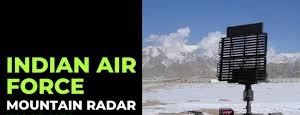
Mountain radars are sophisticated radar systems engineered for dependable operation in rugged, high-altitude terrains. Unlike conventional radar systems, which are generally optimised for flat or coastal regions, mountain radars are specifically tailored to operate effectively within such environments. These systems address challenges related to fragmented lines of sight, severe environmental conditions, and logistical obstacles. Their principal purpose is to detect aircraft, drones, helicopters, and even ground vehicles that may utilise terrain features to evade surveillance, thereby ensuring comprehensive airspace monitoring in difficult terrains.
Mountain radars function on principles analogous to those of traditional radars, emitting electromagnetic pulses and analysing their reflections. Nonetheless, they employ sophisticated algorithms to address terrain-specific challenges. Techniques such as Doppler Filtering are used to differentiate moving targets from static ground clutter. Multi-beam scanning enables the simultaneous tracking of multiple targets, and Clutter Suppression is utilised to eliminate false echoes from rugged landscapes. Operators are provided with real-time updates, including automated alerts for fast-moving or low-flying threats, such as drones or helicopters that may be concealed within valleys.
India’s Mountain Radar Program. The Indian program plays a crucial role in securing its Himalayan borders along the Line of Actual Control (LAC) and Line of Control (LOC). It addresses aerial threats in rugged terrain by deploying advanced radar technology. A key component of this initiative is the DRDO-developed Aslesha Mk I, a three-dimensional, low-level, lightweight radar designed for rapid deployment and ease of transportation. This radar system effectively tracks fighter aircraft, drones, and low-flying helicopters across a range of altitudes, even in complex mountainous environments. Its multi-target tracking capability enhances situational awareness, rendering it an essential asset for the Indian Air Force in continuous border surveillance. By integrating indigenous systems such as the Aslesha with international technologies, India ensures redundancy and comprehensive coverage, thereby strengthening its defence posture. This program underscores India’s commitment to utilising advanced radar systems to maintain vigilance and respond effectively to emerging threats in the geopolitically sensitive Himalayan region, thereby safeguarding national security.
Core Technologies and Features. Modern mountain radars incorporate cutting-edge technologies to meet operational demands:-
3D Surveillance. Unlike older 2D radars that track only range and direction, systems like the DRDO Aslesha Mk I provide 3D tracking—capturing azimuth, elevation, and range. This is vital for identifying threats at varying altitudes in mountainous regions.
Phased-Array Antennas. Using electronically steerable beams, these radars scan rapidly without mechanical movement, enabling quick detection of threats from unpredictable directions.
Portability and Modularity. Lightweight and transportable by road, helicopter, or all-terrain vehicles, systems like the Aslesha can be deployed to remote outposts or even airdropped for rapid setup.
All-Weather Performance. Robust enclosures and advanced signal processing ensure operation in extreme conditions, filtering out environmental noise like snow or rain.
Network Integration. These radars connect to broader air defence networks, combining data from multiple sites to eliminate blind spots caused by terrain and create a comprehensive surveillance picture.
Deployment Strategies. Effective radar deployment is essential for optimal surveillance and defence. It involves selecting high, accessible sites, such as peaks, for maximum coverage and ease of maintenance. Mobility through portable systems allows quick repositioning against threats, giving an edge over stationary systems. Infrastructure, including generators, batteries, solar panels, and secure satellite or radio links, supports remote operation. Redundancy with overlapping units ensures continuous coverage, thereby reducing risks associated with malfunctions or enemy interference. Following these principles enhances situational awareness, flexibility, and reliability, crucial for modern defence in dynamic, contested environments.
Strategic Significance. Mountain radar systems are essential for defending disputed or poorly defined borders, especially in rugged terrains characterised by’ shadow zones” susceptible to exploitation by adversaries. These systems effectively bridge critical coverage gaps, ensuring that no aircraft or drone remains undetected, even within complex mountainous regions. By providing early warning capabilities, they facilitate prompt responses to aerial incursions, thereby enhancing situational awareness and operational preparedness. Furthermore, mountain radars act as a deterrent against advanced unmanned aerial vehicles (UAVs) and reconnaissance threats, thereby countering potential aggressions. Their incorporation into national air defence frameworks fosters a unified security network, transmitting real-time data to central command for coordinated action. This strategic importance is particularly accentuated in geopolitically sensitive zones, where sustained vigilance is imperative. Through the mitigation of blind spots and the enhancement of defence mechanisms, mountain radars play a crucial role in protecting national sovereignty and ensuring resilient border security within challenging environments.
Challenges. Mountain radars, despite their advanced capabilities, face significant difficulties in deployment and operational effectiveness. Terrain shadows persist as a substantial issue, as rugged landscapes create coverage gaps that low-flying threats, such as drones or stealth aircraft, can exploit. These blind spots require innovative solutions to achieve comprehensive surveillance. Electronic warfare presents another obstacle, with adversaries utilising sophisticated jamming techniques to impair radar functionality, thus demanding robust countermeasures such as frequency hopping and anti-jamming technologies. Furthermore, environmental degradation in harsh mountain climates — characterised by extreme temperatures, snow, and wind — accelerates equipment deterioration, necessitating frequent maintenance and resilient design solutions to sustain operational reliability. These challenges underscore the necessity for ongoing technological advancements and strategic planning to enhance radar effectiveness. Addressing terrain limitations, countering electronic threats, and ensuring durability under extreme conditions are essential for maintaining adequate border security and situational awareness in contested mountainous regions.
Future Trends. The future of mountain radar technology is poised for transformative advancements to enhance border security. Multi-static networks are emerging as a key innovation, utilising multiple transmitters and receivers to eliminate blind spots caused by rugged terrain, ensuring comprehensive coverage. Passive radars represent another leap, leveraging ambient commercial signals—such as TV or cellular broadcasts—for stealthy, energy-efficient detection that is harder for adversaries to jam or detect. UAS integration is also gaining traction, with radars mounted on unmanned aerial systems enabling mobile, adaptive surveillance that can be rapidly repositioned to respond to dynamic threats. These innovations promise greater resilience against electronic warfare, improved detection of low-flying or stealth threats, and enhanced operational flexibility. By integrating these cutting-edge technologies, future mountain radar systems will bolster situational awareness, close coverage gaps, and strengthen defence capabilities in challenging, contested environments, ensuring robust security along geopolitically sensitive borders.
Conclusion
Mountain radars are essential for safeguarding airspace under challenging terrains, integrating advanced electronics, portability, and network connectivity to address contemporary threats. Systems such as the DRDO Aslesha Mk I exemplify this capability, offering India improved surveillance along its mountainous borders. As geopolitical tensions and aerial threats escalate, mountain radars will continue to advance, ensuring robust defence in some of the world’s most challenging environments.
Please Add Value to the write-up with your views on the subject.
For regular updates, please register your email here:-
Information and data included in the blog are for educational & non-commercial purposes only and have been carefully adapted, excerpted, or edited from reliable and accurate sources. All copyrighted material belongs to respective owners and is provided only for wider dissemination.
References: –
Defence Research and Development Organisation (DRDO). Aslesha Mk I 3D Low Level Lightweight Radar Specifications. DRDO Electronics & Radar Development Establishment (LRDE).
Indian Defence Acquisition Council (DAC). 2025 Procurement Approvals for Mountain Radars. Economic Times, India Today, March 2025.
Mishra, S. K., et al. “Design and Development of Lightweight Phased-Array Radars for Mountainous Terrain.” Defence Science Journal, Vol. 68, No. 3, 2018.
Rao, V. K. “Challenges of Radar Deployment in Mountainous Borders.” Journal of Military Technology, 2022.
Article Published In the 2025 edition of the Karnataka branch of the Air Force Association Journal.
Integrating Artificial Intelligence (AI) in air forces is revolutionising modern aerial warfare, enhancing combat efficiency, decision-making capabilities, and operational effectiveness. AI-driven technologies are transforming everything from autonomous drones and pilot assistance systems to predictive maintenance and cyber defence. The ongoing advancements in AI are paving the way for next-generation warfare, where speed, precision, and automation play pivotal roles. There is a need to explore the benefits, challenges, and prospects of AI-enabled air forces, as well as examine how militaries worldwide are leveraging AI to gain a strategic advantage in the skies.
AI Applications in Air Warfare.
Autonomous Combat Drones and Loyal Wingmen. One of the most significant developments in AI-enabled air forces is the use of autonomous combat drones and “loyal wingmen” programs. AI-powered Unmanned Aerial Vehicles (UAVs) can operate independently or in coordination with manned aircraft. The U.S. Air Force’s Skyborg program, Russia’s Okhotnik-B, and India’s CATS Warrior are leading examples of AI-powered aerial combat systems. Key capabilities of AI-enabled drones include autonomous targeting and engagement of enemy aircraft and ground targets, AI-driven reconnaissance for real-time battlefield awareness, and electronic warfare capabilities to disrupt enemy communications and radar. Loyal wingmen, such as Boeing’s MQ-28 Ghost Bat, work alongside fighter jets, assisting in combat while reducing the risk to human pilots.
AI-Assisted Air Combat. AI has also been tested in air-to-air combat scenarios. In 2020, DARPA’s AlphaDogfight Trials demonstrated that an AI-piloted F-16 simulator could outperform an experienced human pilot in dogfighting scenarios. AI-driven fighter jets can make rapid manoeuvring decisions, anticipate enemy tactics, and optimise firing solutions faster than human pilots.
AI Co-Pilot Systems. Modern fighter jets are incorporating AI as a co-pilot to assist human pilots in complex combat scenarios. AI co-pilots can provide real-time threat analysis and countermeasure recommendations, optimise flight paths for maximum efficiency and survivability, and assist in weapons management and target prioritisation. The U.S. Air Force’s Air Combat Evolution (ACE) program is working on integrating AI co-pilots into next-generation fighter aircraft.
AI in Predictive Maintenance and Logistics Optimisation. AI-powered maintenance systems can analyse vast amounts of sensor data to predict mechanical failures before they occur. The Condition-Based Maintenance (CBM+) system helps optimise aircraft maintenance schedules, reducing downtime and improving fleet readiness. AI’s Key benefits in maintenance include minimising unexpected failures, ensuring mission readiness, efficient resource allocation by prioritising high-risk components, and cost savings by reducing unnecessary maintenance.
AI in Air Defence Systems. AI enhances air defence by improving target detection and response times. AI-enabled radar and sensor fusion systems help military forces detect and track multiple airborne threats simultaneously, optimise interception strategies against hypersonic missiles and stealth aircraft, and identify and neutralise threats with minimal human intervention. Systems like Israel’s Iron Dome and Russia’s S-500 Prometheus integrate AI to enhance target prioritisation and engagement.
AI in Electronic Warfare (EW). AI-driven electronic warfare systems can autonomously jam enemy radar and communication networks, adapt to new threats by analysing enemy signals in real-time, and protect friendly assets from cyber and electromagnetic attacks. The U.S. Air Force is actively developing AI-enhanced Electronic Warfare Pods for next-generation combat aircraft.
AI in Mission Planning. AI assists in complex mission planning by analysing real-time battlefield data. Advanced AI systems can generate optimal attack and defence strategies based on situational awareness, adapt plans dynamically as new threats emerge, and reduce commanders’ decision-making time. Programs like Project Maven employ AI to analyse drone surveillance footage, identifying potential threats more efficiently than human analysts. AI-driven battlefield management systems integrate data from multiple sources, including satellites and reconnaissance aircraft, ground-based radars and air defence systems, as well as cyber intelligence reports. This allows commanders to make data-driven decisions in high-pressure combat scenarios.
Swarm Warfare: The Future of Aerial Combat. AI-controlled drone swarms are emerging as a game-changing technology in aerial combat. Swarm tactics involve deploying multiple autonomous drones to overwhelm enemy defences with coordinated attacks, conducting distributed intelligence, surveillance, and reconnaissance (ISR), and executing autonomous electronic jamming and decoy operations. Countries like the U.S., China, and India are actively researching AI-driven drone swarms as a force multiplier in future conflicts.
Advantages and Challenges of AI in Air Forces
Advantages of AI-Enabled Air Forces. AI-enabled air forces offer numerous advantages, revolutionising modern aerial warfare and operational efficiency. One key benefit is enhanced decision-making, as AI rapidly processes vast amounts of battlefield data to provide real-time intelligence, improving situational awareness and response times. Additionally, AI reduces pilot workload by automating routine tasks, allowing human operators to focus on complex strategic decisions. Combat efficiency is also significantly increased through AI-driven targeting, threat assessment, and autonomous drones that execute missions with precision. Another significant advantage is the reduction of human casualties, as AI-powered unmanned aerial vehicles (UAVs) can conduct high-risk operations without putting pilots at risk. Furthermore, AI optimises maintenance and logistics by predicting equipment failures and streamlining supply chains, reducing downtime and operational costs. These advancements collectively enhance Air Force effectiveness, ensuring superior combat readiness while lowering overall risks and expenses. As AI technology continues to evolve, its role in modern air forces will become increasingly indispensable.
Challenges and Ethical Concerns. Integrating AI into air forces presents significant challenges and ethical concerns despite its advantages. A major issue is balancing autonomy with human oversight, as fully autonomous AI systems raise questions about accountability and decision-making in combat. Ensuring that AI does not make lethal decisions without human intervention remains a critical concern for policymakers and military leaders. Cybersecurity threats pose risks, as adversaries could manipulate or hack AI-driven systems, leading to catastrophic failures. Additionally, AI bias and errors in target recognition or threat assessment could result in unintended casualties or collateral damage. Another challenge is the potential for AI to accelerate the global arms race
as nations compete to develop more advanced autonomous weapons, raising the risk of destabilisation. Addressing these concerns requires robust regulations, international cooperation, and strict ethical frameworks to ensure AI remains a tool for enhancing security rather than escalating conflicts.
The Future of AI in Air Forces. The future of AI in air forces promises unprecedented advancements, reshaping aerial warfare with enhanced autonomy, precision, and strategic capabilities. Unmanned Combat Aerial Vehicles (UCAVs) will see increased autonomy, enabling them to operate independently or in coordination with manned aircraft in high-risk missions, reducing reliance on human pilots. AI-powered hypersonic weapons guidance systems will enhance missile accuracy, making airstrikes faster and more precise. Additionally, integrating AI with quantum computing will revolutionise data processing, allowing air forces to conduct predictive analytics at unprecedented speeds and improving threat detection, mission planning, and electronic warfare strategies. As AI-driven systems become more sophisticated, militaries will develop advanced counter-AI warfare techniques to neutralise enemy AI assets, ensuring dominance in digital battle spaces. However, as AI’s role expands, ethical and strategic concerns will require careful regulation and oversight. Ultimately, AI will be a cornerstone of future air forces, enabling superior operational efficiency, strategic decision-making, and battlefield dominance while necessitating continued advancements in security, ethics, and control mechanisms.
Conclusion. Artificial Intelligence is fundamentally transforming the landscape of aerial warfare. AI-enabled air forces are becoming faster, more efficient, and increasingly autonomous. From autonomous combat drones and AI co-pilots to predictive maintenance and swarm warfare, AI enhances every aspect of military aviation. However, as nations race to integrate AI into their defence strategies, addressing challenges related to autonomy, cybersecurity, and ethical considerations is crucial. The future of warfare will be shaped by how effectively AI is integrated into the air forces of the world.
Please Add Value to the write-up with your views on the subject.
For regular updates, please register your email here:-
Information and data included in the blog are for educational & non-commercial purposes only and have been carefully adapted, excerpted, or edited from reliable and accurate sources. All copyrighted material belongs to respective owners and is provided only for wider dissemination.
References:-
Gady, Franz-Stefan. “AI, Autonomy, and Airpower: Future Directions in Military Aviation.” International Institute for Strategic Studies (IISS), 2022.
Roff, Heather M. “The Strategic Implications of Lethal Autonomous Weapon Systems.” RAND Corporation, 2016.
Lockheed Martin. AI and Autonomy in Next-Generation Fighter Jets. Lockheed Martin Corporation, 2022.
DARPA (Defence Advanced Research Projects Agency). Algorithmic Warfare and AI-Powered Air Combat. U.S. Department of Defence, 2021.
RAND Corporation. The Future of Unmanned Aerial Vehicles and AI Integration. RAND Research Report, 2022.
B Prakash, AI and the Future of Air Combat in India, MP-IDSA, 2022.
Industry & Technology Reports
Trevithick, Joseph. “The U.S. Air Force’s AI-Powered ‘Skyborg’ Drone: A Game Changer?” The War Zone, 2021.
Ackerman, Evan. “AI Pilots Now Outperform Human Fighter Pilots in Simulated Dogfights.” IEEE Spectrum, 2022.