250: COMMUNICATION SKILLS AND BODY LANGUAGE


Pic courtesy Net


Communication is an art/skill.


As a speaker, you are a salesman trying to sell your idea.


DOs


Provide a Reason for the Audience to Listen. Tell the audience why they should listen carefully to you. Tell them what is in it for them.


Give Perspective. Generally, the chosen topics are very broad-based. Providing a perspective narrows down the scope and also provides the framework for the talk.


Establish Credibility. Give the audience a reason to believe your claim. Point out why your thoughts and your words are relevant and they matter.


Save the Best for Last. Once you have the audience’s attention, speak about what you need them to hear. To keep the interest alive keep providing glimpses of what is coming up.


Correlate Issues with the Audience. Establish the repercussions of the issues being discussed. Focus your communication on the issues that the audience correlates with.


Provide Obvious Seeming Solutions. Good communication provides solutions. Do not make them sound too complex, instead make them seem obvious. This gives the audience a sense of ownership and increases their interest.


Crystal Gaze. Always resort to some amount of crystal gazing and forecasting about things to come in the future. 


Pic courtesy Net


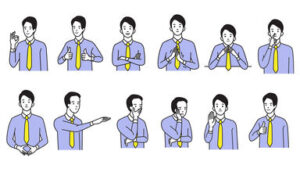
Body Language: Avoid These Blunders


Our bodies have a language of their own.


Body language is a very powerful tool.


DONTs:


Crossed Arms. Creates a physical barrier that suggests you’re not open to what the other person is saying. The other person may get a sense that you’re shutting him or her out.


Exaggerated Gestures. Instead aim for small, controlled, and open gestures.


Turning Yourself Away. Conveys that you are unengaged, uninterested, uncomfortable, and perhaps even distrustful.


 Slouching. It is a sign of disrespect. It communicates that you’re bored and have no desire to be where you are.


Avoiding Eye Contact. It arouses suspicion and also indicates a lack of confidence and interest. Sustained eye contact, on the other hand, communicates confidence, leadership, strength, and intelligence.


Too Intense Eye Contact. It may be perceived as an aggressive dominating approach. 


Watching the Clock Frequently. It is a sign of impatience and disrespect. It sends the message that you have better things to do than talk to the person you’re with.


Fidgeting and Exaggerated Nodding. It distracts and signals anxiousness.


Scowling or Unhappy Expression.  This sends the message that you’re upset by those around you, and it turns people away. Smiling, on the other hand, suggests that you’re open, trustworthy, confident, and friendly.


Weak Handshakes. A weak handshake signals a lack of confidence, while a too strong one could be perceived as an aggressive attempt at domination.


Getting Too Close. Standing too close makes people uncomfortable. Respect others’ personal space.


Bottom Line

Keep the Audience awake and interested.


Learnt with Experience

People love catchy phrases.


Suggestions and value additions are most welcome


For regular updates, please register here

Subscribe


References and credits

To all the online news channels.


249: UKRAINE WAR: MAYBE THE BIRTH OF A NEW GLOBAL MONETARY ORDER

Pic courtesy: The Borgen Project (Internet)


Western Sanctions on Russia


  • The United States and European Union have frozen nearly half the Russian central bank’s $640-billion foreign exchange reserves held in banks outside Russia.


  • Russian companies have been debarred from doing transactions in dollars and euros.


  • 400 odd western firms have closed operations in Russia.


  • A majority of the Russian banks have been cut off from the SWIFT (Society for Worldwide Interbank Financial Telecommunication), which executes financial transactions and payments among banks worldwide.


Expected results


  • The sanctions and curbs were expected to result in a big sell-off of the rouble.


  • It was expected to create insolvency risks for the Russian economy.


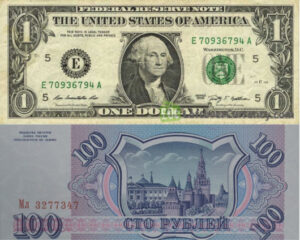
Rouble Performance

  • The rouble was trading at around 76 before the invasion.


  • It went down to a record low of 139 on March 7.


  • The rouble appreciated to 83 to the dollar intraday on 29 Mar.


  • The rouble has recouped most of its losses.


Sanction Effect (So Far)


Considering the severity of European and American sanctions on Russia, the effect on the rouble is modest. The recovery in the rouble suggests that the impact of the West’s economic sanctions is much lower than anticipated.


Likely reasons


  • European countries continue to buy oil and gas from Russia. The European Union gets 40 percent of its natural gas from Russia.


  • Major emerging markets (including China) continue to trade with Russia.


  • The biggest jump in the rouble occurred when the Russian president announced that unfriendly countries (EU, USA, Canada, Australia, New Zealand, Japan, South Korea, and Taiwan) would have to pay in roubles. This increased the demand for the rouble.


Implications


  • Energy Crisis. The sanctions on Russia might lead to a global energy crisis.


  • This could be the beginning of the de-dollarisation of global trade, especially in oil and gas.


  • This could be the beginning of a new global monetary order.


  • The new monetary order could be based on commodity-based currencies.


  • This would weaken the Eurodollar system.


It is wait and watch for long term repercussions.


Bottom Line

It is all about Money.


Question

Is this the end of the Petro-Dollar?


Suggestions and value additions are most welcome


Links to previous posts on Ukraine war:

USE OR NON USE OF AIRPOWER IN UKRAINE WAR

UKRAINE CRISIS & INDIA (02 FEB 22)

RUSSIA – UKRAINE CRISIS BLOWS UP: 24 FEB 22

UKRAINE CRISIS: A GAME OF DOG AND THE BONE

RUSSIA – UKRAINE CRISIS ESCALATES (24 FEB 22)

For regular updates, please register here

Subscribe

References and Credits

To all the online news channels.

248: INTERNATIONAL AEROSPACE SAFETY CONFERENCE 2022 (IASCON-22)


The international aerospace conference was conducted by the Indian Air Force recently. There were three sessions at the conference and the themes were as follows:


  • Session 1: Human error
  • Session 2: Maintenance safety
  • Session 3: Damage due to foreign objects and bird/animal strike.


I was lucky to be associated with the conference and it had lots of takeaways. The link to the video on excerpts is below:


For selective viewing click on the links below:


  • Summarising talk on FOD
    • Engine withdrawals
    • FOD prevention equipment becoming FOD source.
    • FOD at production agencies.
    • Alertness by everyone is essential.
  • Summarising talk on bird/animal strike.
    • Six verticals of anti-bird measures (habitat, exclusion, harassment, hard measures, platform features, and procedural)
    • Hazards due to reptiles and rodents.
    • Birds get used to the measures – need for constant change of measures.
    • Each airfield has its own peculiarities – it is not a one solution fits all.
    • Need for BIRDTAMS.
    • Environment control around the airfields.
    • Aircraft designs to prevent injury due to shattering of the canopy due to bird strike.
  • Q and A Session
    • Application of threat and error management concept to bird strike control.
    • Myth or reality – Birds fold their wings and dive down when threatened of collision.
  • Suggestions post-session 1 on Human error.
    • Importance of “ownership” in the flight safety culture (example of mother and child).
    • “It is my job – I will do it well and I will do it safely”.
    • CFIT – “Superior skill is required to avoid getting into dangerous situations rather than getting out of them”.
    • Review of carrot and stick policy of safety implementation.
    • Periodic assessment of “Risk Profile and Emotional Quotient” of the crew.
  • Suggestions post-session 2 on Maintenance safety
    • Increase of Flight safety element and weightage in the professional categorization tests.
    • Adverse effects of over monitoring.
    • Rules of delegation – “Don’t keep a dog and bark yourself”.


Bottom Line

Aerospace safety is everyone’s responsibility.


Question

Why do human beings insist on making their own mistakes rather than learning from others?


Suggestions and value additions are most welcome


For regular updates, please register here


Subscribe

English हिंदी