
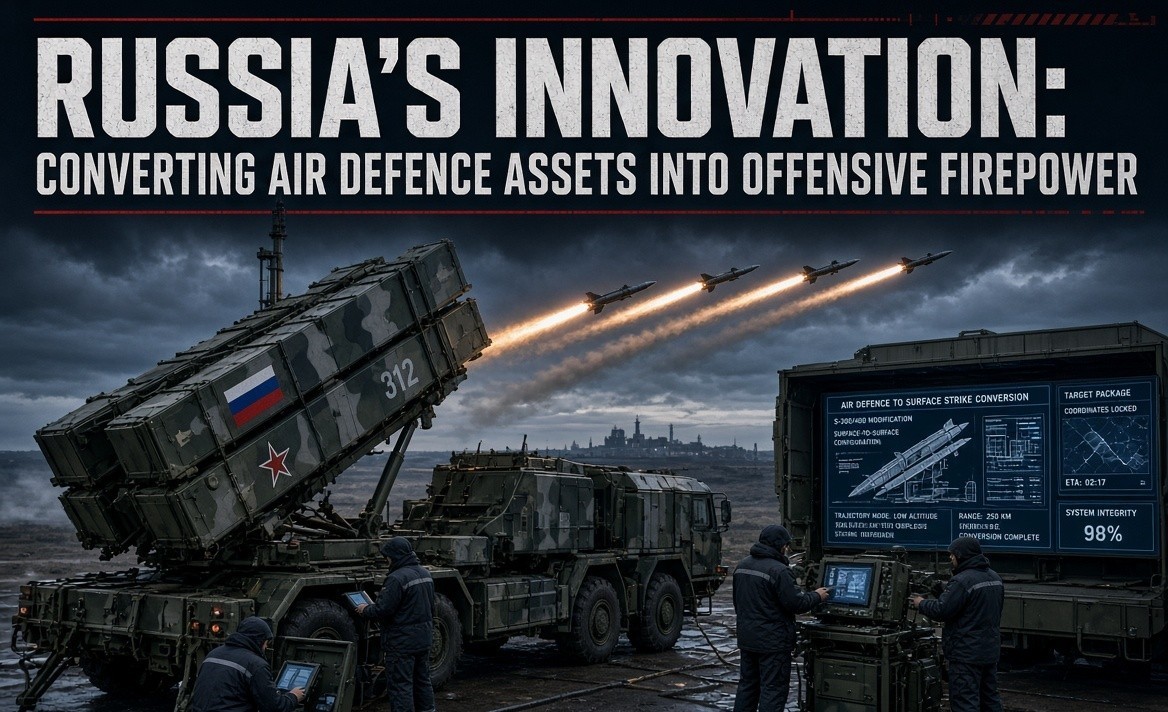
843: RUSSIA’S INNOVATION: CONVERTING AIR DEFENCE ASSETS INTO OFFENSIVE FIREPOWER


Russia is increasingly finding new ways to expand its ballistic-missile arsenal without relying entirely on purpose-built systems such as the Iskander-M. According to Ukraine’s Defence Intelligence Directorate (DIU), Russia has modified up to 17 S-400 launchers to fire RM-48U missiles against ground targets.

The modified launchers have reportedly been organised into five specialised missile groups deployed in Russia’s Bryansk and Rostov regions. Their emergence highlights a broader Russian effort to turn existing air-defence hardware and missile stocks into additional offensive capabilities.

At first glance, 17 launchers may seem relatively small. But their significance lies less in the number than in what they represent: Russia is creating another layer of ballistic strike capacity by repurposing weapons and equipment originally intended for air defence.


From Interceptor to Strike Missile

The RM-48U is essentially a ground-attack adaptation of missiles from the 48N6 family associated with the S-300 and S-400 air-defence systems. Instead of intercepting aircraft or other aerial targets, these missiles can now hit ground targets.

The conversion gives Russia a way to extract additional military value from an existing inventory. Older air-defence missiles that might otherwise remain in storage, require expensive maintenance or reach the end of their service life can potentially be refurbished and adapted for a different role.

The concept itself is not entirely new. Russia has previously used S-300 and S-400 air-defence missiles in ground-attack roles. What matters about the RM-48U development is the apparent effort to institutionalise that conversion rather than rely on improvised battlefield use. Ukrainian officials have confirmed the existence of specially modified S-400 launchers intended for these missiles.

Ukrainian intelligence assesses that the RM-48U is substantially cheaper than the purpose-built 9M723 ballistic missiles used by the Iskander-M system. Russia is also reported to hold a stockpile of roughly 400 RM-48U missiles.


A Cost-Effective Advantage

The most obvious advantage is cost, which makes the RM-48U attractive for sustained missile campaigns. Ukraine’s Defence Intelligence says Russia is using RM-48U missiles partly because they are significantly cheaper than the 9M723 ballistic missiles employed by the Iskander-M system. Ukrainian intelligence estimates Russia held around 400 RM-48Us in mid-2026, while production reportedly continued at roughly 50 missiles per month, with more than 480 planned for production during 2026.

A country conducting large-scale strikes does not need to attack every target with its most expensive or scarce missile. Purpose-built ballistic missiles such as the Iskander’s 9M723 are valuable assets, and using them against every target would place greater pressure on Russia’s stockpile and production capacity.

The RM-48U provides another option. Russia can therefore use a mixed arsenal: more capable or expensive missiles for some targets while employing converted air-defence missiles for others. The result is a larger pool of weapons that can contribute to a ballistic strike campaign.


Seventeen Launchers

The figure of 17 does not mean that the number of missiles is limited to 17. A launcher can fire, reload, and fire again. The real limitations are more likely to be missile availability, reload procedures, logistics, supply chain, and operational tempo rather than the headline figure of 17 launchers.

Russia reportedly possesses around 400 RM-48U missiles, making the size and replenishment of the missile stockpile more important for understanding the programme’s potential scale than the number of launchers.

If production and employment rates continue to rise, the missile stockpile becomes the key factor. Russia is simultaneously working to replenish that stockpile, meaning the conversion programme is not necessarily limited to older missiles already sitting in warehouses.

The modified launchers have reportedly been grouped into five specialised missile units positioned in Bryansk and Rostov oblasts, locations that provide practical reach toward Ukrainian territory.


Scalability with Existing Ecosystem

Another advantage is the existing launcher architecture. Russia already operates the S-400 system at scale. Its military-industrial sector can manufacture new launchers and modernise existing equipment. Ukrainian intelligence has identified Almaz-Antey and MKB Fakel among the principal companies associated with the S-400 system. In contrast, the Avangard Moscow Machine-Building Plant and AviaTek in Vyatka are identified as manufacturers of RM-48U missiles.

This means Moscow does not have to create an entirely new missile-launching ecosystem. The basic architecture already exists: launch vehicles, transport and handling equipment, personnel, logistics and command structures associated with the S-400 family. Modifying selected launchers to support the ground-attack mission can therefore be considerably more straightforward than developing a completely new operational missile system.

This is an important feature of Russia’s wartime adaptation. Rather than treating its enormous legacy inventory as obsolete, Moscow is looking for ways to turn existing stocks into new capabilities.


Augmentation of Missile Capability and Capacity

The RM-48U should not be viewed as a replacement for the Iskander-M. Russia still prioritises production of 9M723 missiles for Iskander-M, and Ukrainian Defence Intelligence has reported that Russia can produce more than 200 cruise and ballistic missiles of various types per month. Its estimates put monthly 9M723 production at around 60 missiles, with July production reportedly reaching 65.

The more logical interpretation is that Russia is attempting to expand the depth of its ballistic arsenal. A military does not necessarily need one weapon system to perform every task. It can be more effective to create several overlapping categories of missiles, each with different costs, capabilities and levels of availability.

The RM-48U fits neatly into that strategy. Instead of allowing older 48N6-family missiles to remain stranded in storage, Russia can convert them into offensive weapons. Instead of consuming an Iskander missile for every ballistic-strike requirement, Russian forces can draw on a second pool of missiles. And instead of developing an entirely new launcher, they can modify part of an existing S-400 infrastructure. The result is additional capacity without requiring every element of the system to be newly developed.


A Broader Look at the Russian Adaptation

The conversion of S-400 launchers illustrates a broader feature of Russia’s war effort: the attempt to squeeze additional combat value from existing inventories while expanding new production. The strategic importance of the RM-48U programme is therefore not simply that Russia has 17 modified launchers. It is that Russia appears to be building a second echelon of ballistic strike capability.

The missiles may be cheaper than Iskanders, the launchers are derived from an existing system, the missile stockpile is substantial, and production is continuing. The same basic concept could potentially be applied to large inventories of older air-defence weapons.

For Ukraine, this complicates defence against Russian missile attacks. The more diverse Russia’s strike arsenal becomes, the harder it is to predict which missile types will be used in a particular attack and how rapidly Russia can replenish weapons after a major strike.


Concluding Thought

The RM-48U programme should be seen not as Russia giving up on the Iskander, but as an attempt to expand its ballistic-missile stock. Instead of keeping the air-defence systems, Moscow is turning them into an offensive reserve. Although the 17 altered launchers are the obvious aspect of this initiative, the more significant point is the fundamental principle that when missiles already in existence can be refurbished and then combined with the modified launchers and used against ground targets, weapons which were originally intended to defend Russia’s airspace can be made into a further source of offensive capability.

Please Add Value to the write-up with your views on the subject.

2044
Default rating

Please give a thumbs up if you  like The Post?


For regular updates, please register your email here:-

Subscribe


References and credits

To all the online sites and channels.

Pics Courtesy: Internet

Disclaimer:

Information and data included in the blog are for educational & non-commercial purposes only and have been carefully adapted, excerpted, or edited from reliable and accurate sources. All copyrighted material belongs to the respective owners and is provided only for wider dissemination.


References: –

1. Defence Express, “Russia has up to 17 S-400 launchers adapted to fire RM-48U missiles at Ukraine”, 27 Aug 26.

2.Center for Strategic and International Studies, “S-400 Triumf. Missile Threat” 06 Jul 26.

3.Dotsenko, A, “Kyiv under S-400 fire: How Russia has turned air defence missiles into a weapon of terror and why they keep coming”, Ukrainska Pravda, 09 Aug 26.

4.Ukrainska Pravda, “Ukraine’s Defence Intelligence provides Ukrainska Pravda with data on Russia’s missile stockpiles and production rates”, 20 Aug 26.

5.Critical Threats Project, “Russian offensive campaign assessment”, American Enterprise Institute, 20 Aug 26.

6.Bronk, J, “Analysis of Russia’s use of converted surface-to-air missiles as an additional ballistic-strike capability”, Royal United Services Institute (RUSI), 2026.
842: OPERATION SINDOOR REVISITED


Operation Sindoor was a multi-domain, mostly non-contact military operation India carried out in the early hours of 7 May 2025. In the first phase, India carried out attacks on nine terrorist facilities associated with groups including Lashkar-e-Taiba and Jaish-e-Mohammed in Pakistan and in illegal Pakistan-occupied Kashmir. When the situation escalated, phase two was carried out with strikes being launched at military targets in Pakistan. Hostilities continued for about 88 hours before a ceasefire agreement was reached on 10 May.


Former CDS Gen Anil Chauhan (retired) delivered a talk on “Operation Sindoor and its Aftermath” on 25 August 2026.  This talk is significant from an analytical perspective.


Analytical Perspective and Takeaways

  • Military power serves as an instrument of political policy; the armed forces set their own military objectives based on the political aim. The military plans accordingly. This matters because it shows that Sindoor was designed as a limited, controlled operation rather than an open-ended war.
  • Political direction and freedom of action. The clear political directive was to send an unambiguous message that India will not tolerate cross-border terrorism. Therefore, the directive was that the action should be unthinkable, with no political pressure for immediate action, and carried out without failure and with suitable evidence. Clear intent and operational autonomy are ideal for the military.
  • Tactical Shift and evolution of India’s retaliatory doctrines (to preserve surprise and prevent operational predictability). Unlike the land route used post-Uri (2016) or the high-altitude/large-force air engagements used post-Pulwama/Balakot (2019), Operation Sindoor employed a “third option”: leveraging the lower airspace. Low-altitude operations kept the conflict threshold controlled, maximised surprise, and delivered high mission assurance without triggering immediate full-scale escalation. It was not about what weapons India possessed. It was about how those weapons were employed against the adversary’s surveillance and air-defence architecture. In military terms, this illustrates the importance of operational creativity over simply having superior hardware.
  • Redefining the area below the nuclear threshold. The operation has shown that India is capable of carrying out precise conventional strikes at targeted terrorist infrastructure within a carefully controlled time frame which remains below the nuclear escalation threshold, thus countering the ‘stability-instability paradox’ which adversaries rely upon.
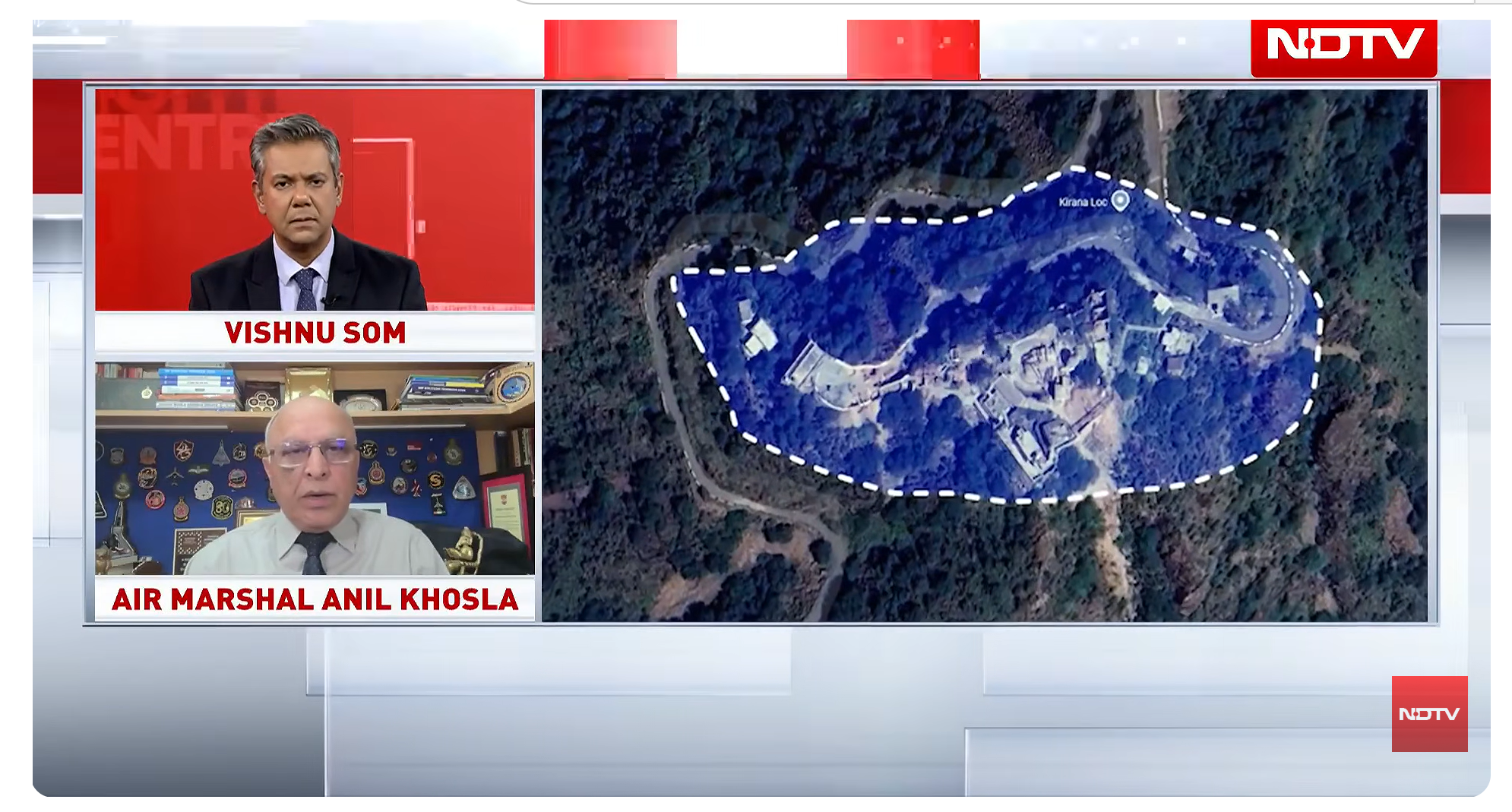
  • The fact that the strike hit the Kirana Hills has important strategic implications since it was not intended to target Pakistan’s nuclear infrastructure; if an intentional strike had been made on a nuclear-related facility, it might have been seen as an attempt to attack Pakistan’s strategic deterrent and would therefore have led to a very different escalation scenario. 
  • Skardu as a possible target. Skardu was a possible target but had to be changed to Bholari due to weather constraints. This shows India had multiple military options, rather than a single predetermined strike package. It also demonstrates the resilience and flexibility of IAF capability and planning.
  • On 10 May 2025, Pakistan pleaded for a ceasefire. India responded in its own time. This indicates that the aim was not merely to retaliate and jump at the first diplomatic opportunity. Instead, India chose to achieve its military objectives before agreeing to end the operations. This is an ideal example of aligning the military end-state with the political objectives.


  • Preparedness creates political choices. Peacetime shapes the options available during a crisis. If a military lacks long-range precision weapons, drones, ISR, electronic warfare, air defence and integration, political leaders have fewer options when a crisis occurs. Therefore, Sindoor resulted from years of military modernisation and capability development.
  • Multi-Domain Operation. It was India’s genuine multi-domain operation, involving the Army, Navy, and Air Force, along with cyber and information-warfare elements. The integration achieved during the operation validated the direction India had taken toward jointness.
  • Operation Sindoor was a controlled demonstration of India’s ability to calibrate force and capability to punish aggression without necessarily allowing every confrontation to become a full-scale war. The major lesson is that modern warfare is increasingly about precision, information, speed, networking and decision superiority rather than simply manpower or territorial capture.
  • Pakistan’s post-operation adjustments include reorganising its military command (by setting up a new CDF post) and seeking security agreements (the Mecca joint defence agreement between Pakistan, Saudi Arabia and Turkey), showing it is changing its approach.


Strategic Implications

The above analysis underscores a permanent shift in India’s strategic doctrine.  It indicates a pairing of firm political intent with evolving, technologically driven military execution. By adapting tactics every time (i.e. from ground raids to high-altitude strikes and now low-altitude/loitering assets), India maintains operational unpredictability while establishing clear redlines against cross-border terrorism.

Operation Sindoor is still going on. Although the official line since 10 May 2025 has been that a ceasefire or pause was agreed upon after Pakistan asked for it, the operation has not officially ended. By keeping it going in this way, India indicates that it sees its position following the Pahalgam incident (the “new red line”, the change from a policy of deterrence to one of declaring a willingness to take direct action) as a continuing stance, not as a single, one-off punitive operation which has now finished.


Discussed these aspects with Vishnu Som of NDTV on the Program “Left Right and Centre”.

Link to the discussion:-

Please Add Value to the write-up with your views on the subject.


2044
Default rating

Please give a thumbs up if you  like The Post?


For regular updates, please register your email here:-

Subscribe


References and credits

To all the online sites and channels.

Pics Courtesy: Internet

Disclaimer:

Information and data included in the blog are for educational & non-commercial purposes only and have been carefully adapted, excerpted, or edited from reliable and accurate sources. All copyrighted material belongs to the respective owners and is provided only for wider dissemination.


841: Indegenous Jet Engine: Single Most Technical Vulnerability


Inputs to the journalists on the subject


Q1. Has dependence on foreign engines been a major constraint in building more fighter jets?

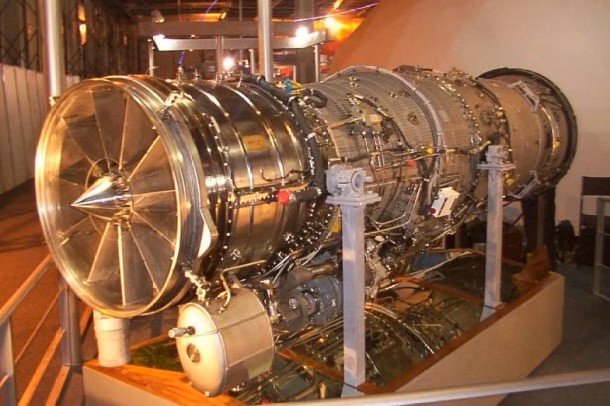
Yes, the trend is becoming more pronounced. The Tejas program exemplifies this clearly. India has undertaken the design and manufacturing of the aircraft; however, its domestically developed Kaveri engine failed to meet the necessary performance standards, resulting in dependence on GE’s F404 engine. More recently, delays in F404 deliveries have delayed the handover of completed Tejas Mk1A aircraft.

The problem is therefore not just cost or foreign exchange. It creates a bottleneck in the production chain. The dependence also extends into future programmes. Tejas Mk2 is planned around the GE F414, while the initial AMCA configuration is also expected to rely on a foreign engine.

India has displayed the capability to design and build airframes, integrate avionics and weapons, and increase its manufacturing capacity. However, the most important component (the engine) continues to be a bottleneck. The reliance on foreign engines has become a major constraint and a strategic weakness.


Q2. Is it critical for India to end this dependence?

It is strategically important for long-term military autonomy, operational readiness, and industrial self-reliance. Foreign dependence brings about several risks, such as vulnerability to interruptions or delays in supply (as was the case with the F404 engines), the possibility of the supplier country exercising leverage, greater lifecycle costs for spares and upgrades and for maintenance, repairs and overhaul (MRO), export restrictions (since engine OEM approvals are usually required), and a restricted capacity to fully optimise or upgrade the aircraft on one’s own.

 However, India cannot realistically wait for a completely indigenous engine before expanding its fighter fleet. The IAF needs aircraft now, so foreign engines remain necessary for programmes such as Tejas Mk1A and Mk2.

The more important objective is to ensure that future Indian fighters cannot be held hostage by the availability, pricing or export-control decisions of another country. This matters particularly because India expects a very large requirement for fighter engines.  GTRE estimated a need for roughly 1,100 engines through 2035. For AMCA and subsequent programmes, India therefore needs access to the underlying technology, not merely an Indian factory assembling a foreign-designed engine.


Q3. What are the advantages of securing access to engine technology possessed by only a handful of countries?

The list of nations that can genuinely design a modern high-thrust military jet engine remains limited to the United States, the United Kingdom, France, and Russia, with China having made still-contested progress. India has been exploring major partnerships with companies such as Safran and Rolls-Royce for high-thrust fighter propulsion. In August 2026, Reliance Industries and Rolls-Royce also announced a partnership to explore co-developing and manufacturing an engine for the AMCA programme.

Modern fighter engines involve high-temperature materials, turbine blades, coatings, cooling systems, compressors, combustion processes, digital controls, and precision manufacturing. Only a small number of countries have the full range of technological knowledge needed for such engines, and accessing these technologies through a co-development programme would be advantageous.

Strategic Autonomy. India would have much greater control over the availability, modification and upgrading of its fighters. It reduces the risk of export restrictions, supply interruptions, political pressure, unexpected price increases, and dependence on foreign approval for upgrades. It would give India the freedom to design future fighters. The engine constrains an aircraft designer. If you control the propulsion system, you can optimise the aircraft around your own requirements rather than designing around what a foreign engine supplier offers.

Faster Technological Learning. This may actually be more valuable than the first indigenous engine itself. India needs to learn how to design and manufacture the core technologies of an advanced turbofan. Once that knowledge exists domestically, subsequent engines can evolve rather than start from scratch. The Kaveri programme generated valuable expertise but did not achieve the required fighter performance. A genuine technology partnership could help India bridge precisely those gaps.

Aerospace Ecosystem. A successful engine programme would build capabilities in Superalloys, single-crystal blades, coatings, precision manufacturing, sensors, FADEC, testing, metallurgy, and additive manufacturing. Those technologies have applications beyond fighter engines, including UAVs, missiles, helicopters and civil aerospace.

Export Potential. If India eventually owns sufficient intellectual property and manufacturing capability, it could export engines or aircraft without needing permission from a foreign engine designer for every major modification. That would transform India from primarily an aircraft buyer/manufacturer into an aerospace technology power.

Bottom Line

India’s dependence on foreign suppliers is perhaps the single biggest technological vulnerability in its aerospace ecosystem, and developing an indigenous engine is a non-negotiable priority. As India considers these offers, the question is whether these companies will share the deepest layers of their process knowledge.


Link to the quoted article on the subject

https://www.defensenews.com/global/asia-pacific/2026/08/27/rolls-royce-safran-vie-for-indias-next-generation-fighter-engine/


Please Add Value to the write-up with your views on the subject.


2044
Default rating

Please give a thumbs up if you  like The Post?


For regular updates, please register your email here:-

Subscribe


References and credits

To all the online sites and channels.

Pics Courtesy: Internet

Disclaimer:

Information and data included in the blog are for educational & non-commercial purposes only and have been carefully adapted, excerpted, or edited from reliable and accurate sources. All copyrighted material belongs to the respective owners and is provided only for wider dissemination.


English हिंदी